SPICE SCAPE - the food hub


Project idea
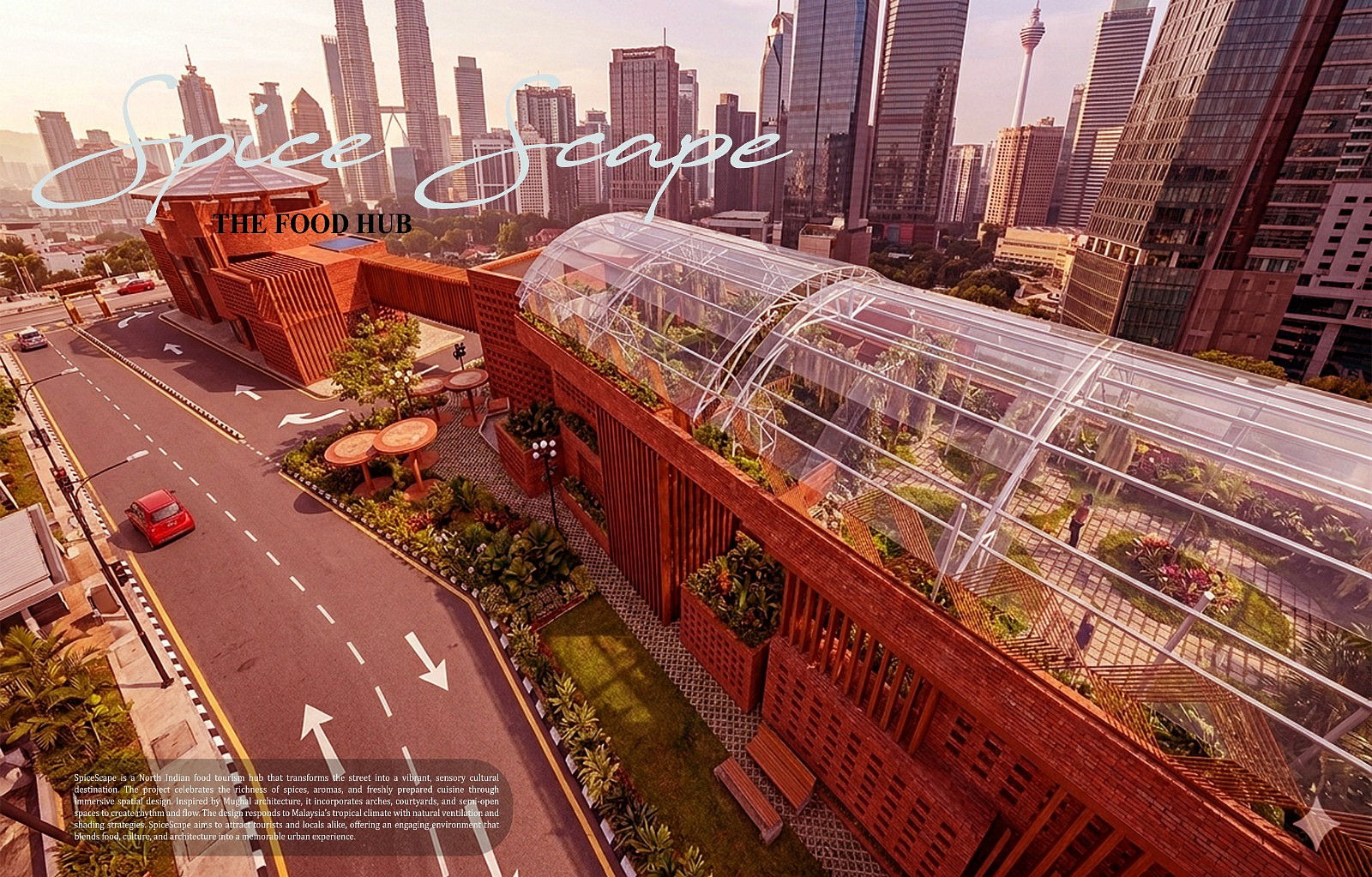
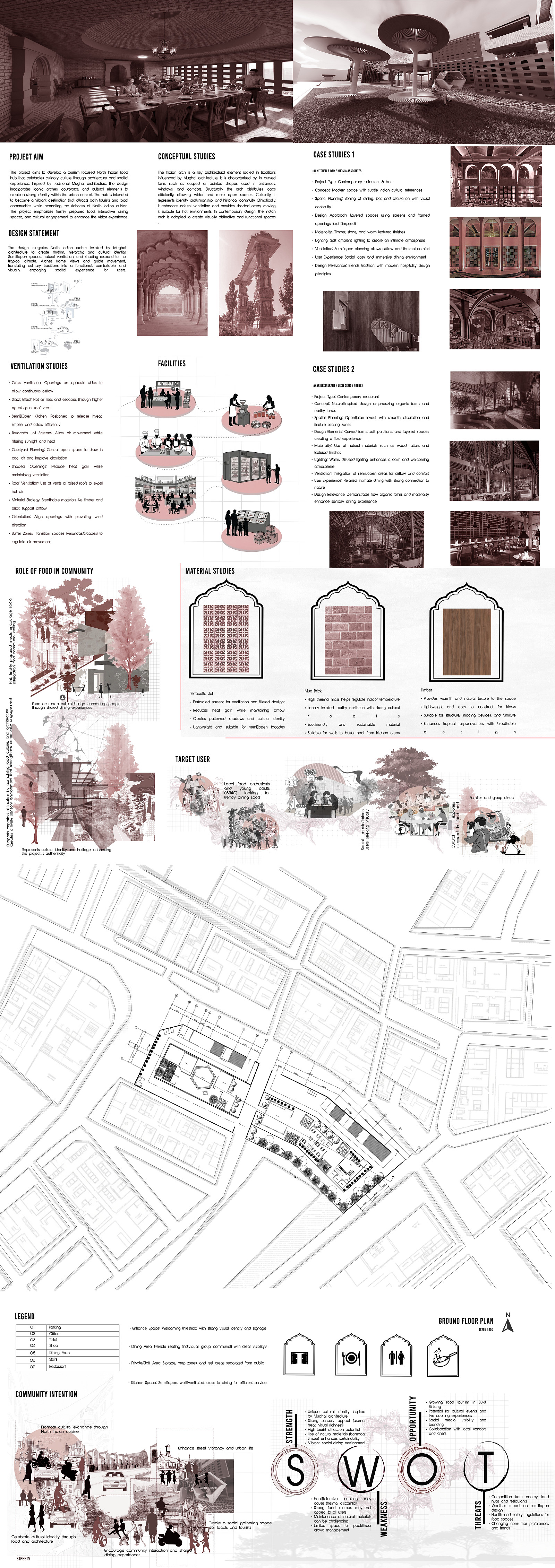
This project explores the architectural translation of North Indian food culture into a tourism food street experience. Inspired by the openness, social interaction, and sensory richness of North Indian street food environments, the design transforms traditional food stalls, bazaars, and public gathering spaces into a contemporary cultural kiosk. The primary concept is derived from North Indian arches and pavilion architecture, which symbolize hospitality, accessibility, and community engagement. The project aims to create a destination where food, culture, and architecture are experienced simultaneously through movement, interaction, and public participation.
Project description
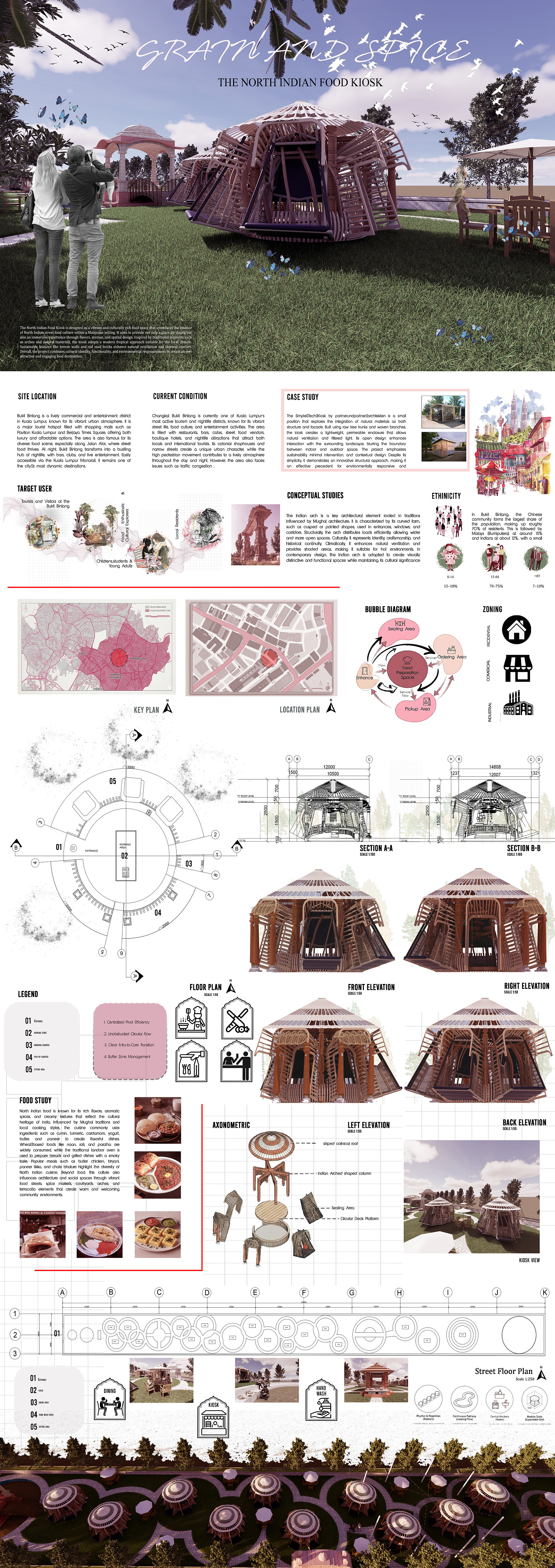
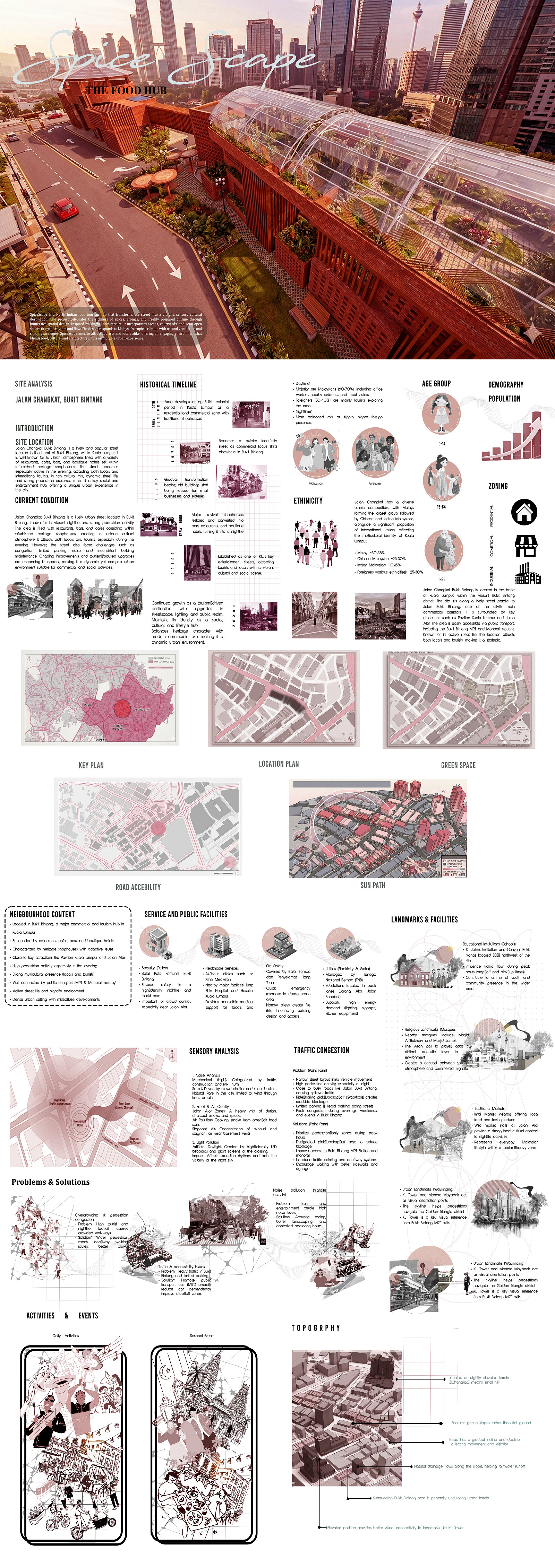
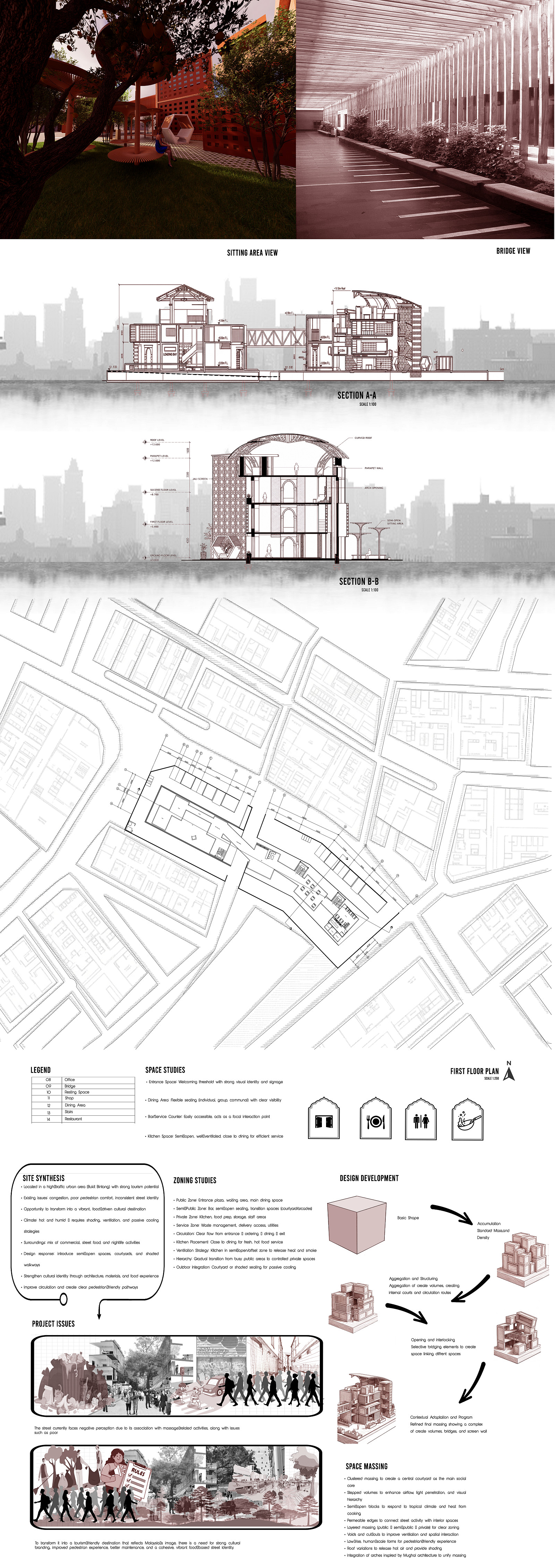
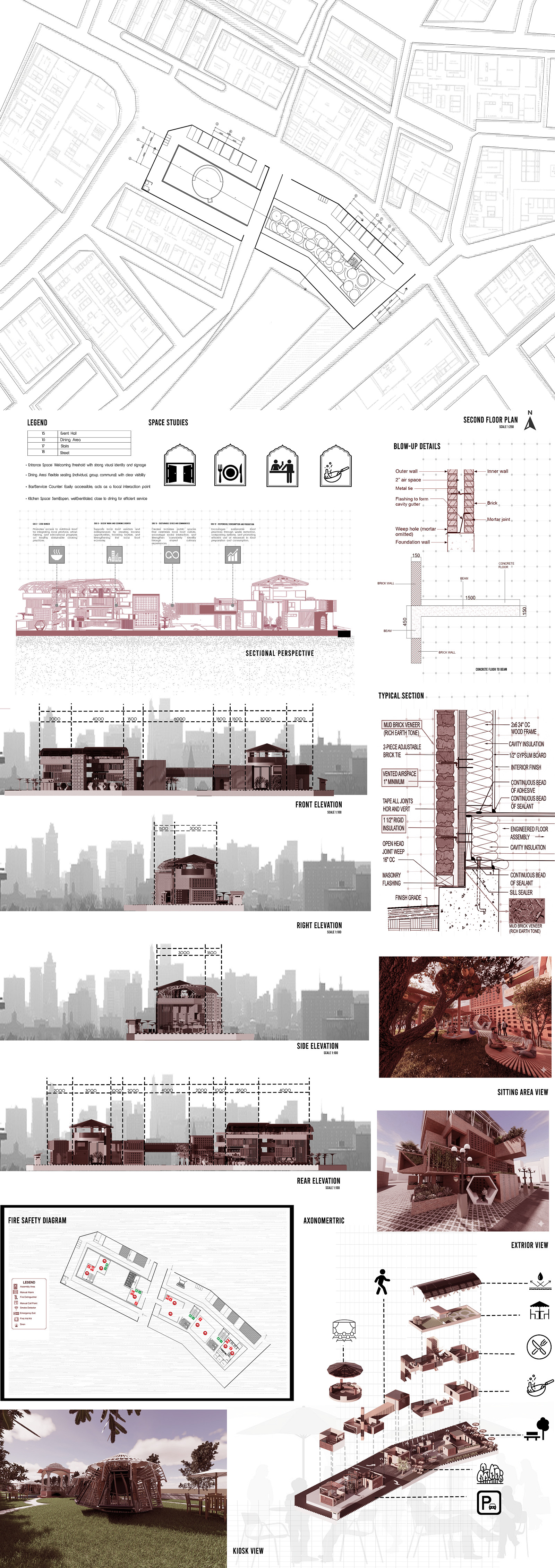
Located within the context of Bukit Bintang, Kuala Lumpur, the proposal celebrates North Indian culinary traditions and their associated social behaviours. The design draws inspiration from the region’s communal dining culture, open food preparation methods, vibrant street markets, and strong relationship between vendors and customers. The kiosk is conceived as a contemporary interpretation of a traditional North Indian street pavilion, where food preparation becomes a visible performance and social activity. Through open layouts, shaded gathering spaces, interactive food counters, and culturally inspired architectural forms, the project creates a lively environment that encourages exploration, cultural exchange, and community interaction while strengthening the identity of Bukit Bintang as a food tourism destination.
Technical information
The architectural form is developed from traditional North Indian arch typologies, including Mughal and Indo-Islamic influences, reinterpreted into a compact food kiosk structure. The primary construction material is treated bamboo, selected for its sustainability, structural strength, flexibility, and suitability for tropical climates. The design incorporates bamboo columns, beams, curved roof elements, and lightweight framing systems connected through steel joints. Environmental strategies include natural ventilation, shaded semi-open spaces, passive cooling, and permeable architectural elements that respond to the hot and humid climate. The kiosk layout promotes efficient food preparation and customer interaction through open counters, flexible circulation, and high visual accessibility. The overall design integrates cultural symbolism, sustainable materials, and climate-responsive strategies to create a functional and experiential tourism food street prototype.

Copyright © 2026 INSPIRELI | All rights reserved. Use of this website signifies your agreement to the Terms of Use, Privacy Policy, and use of cookies.