Conceptual design for the renovation and activation of Goražda Fortress in Boka Kotorska

Project idea
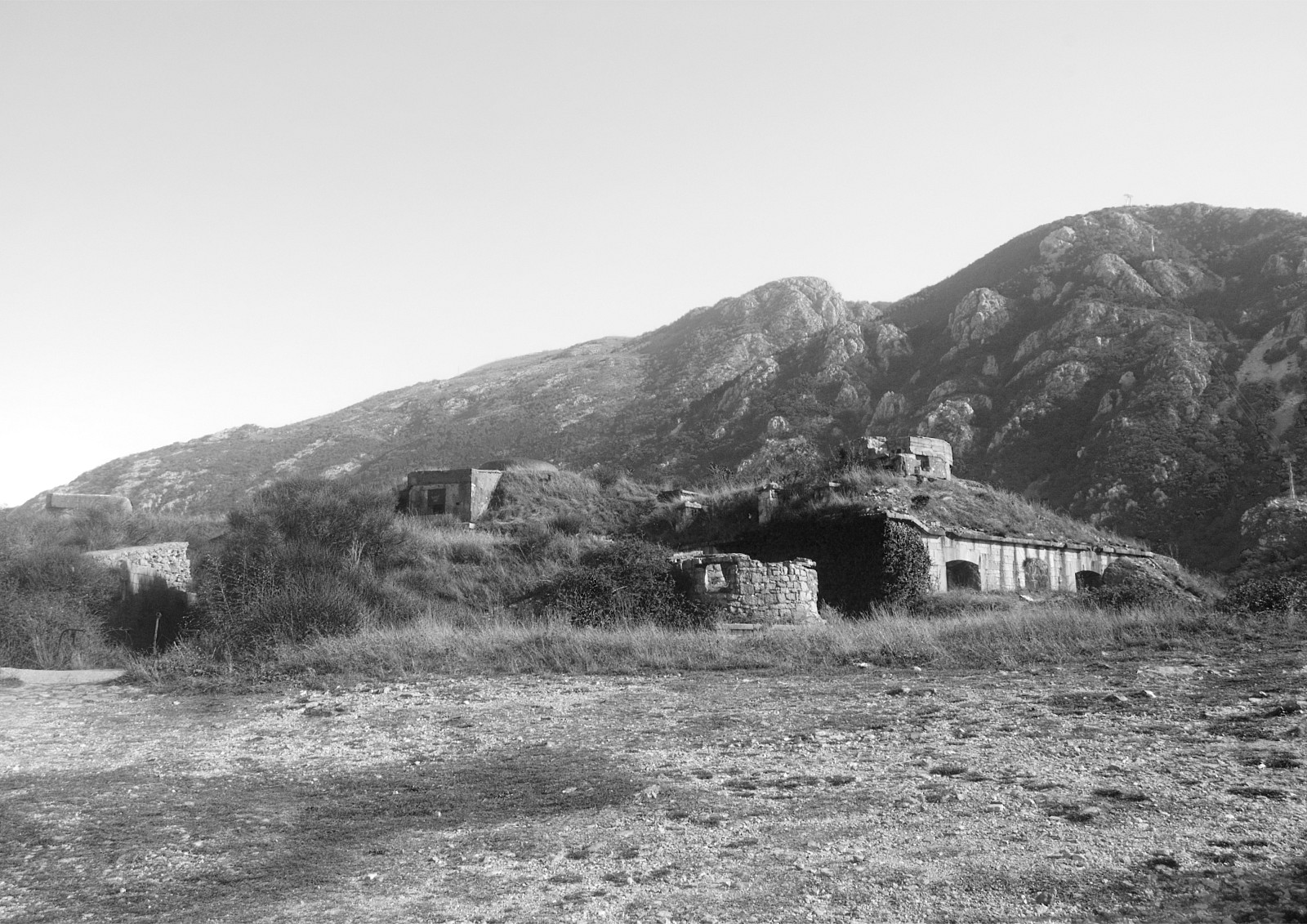
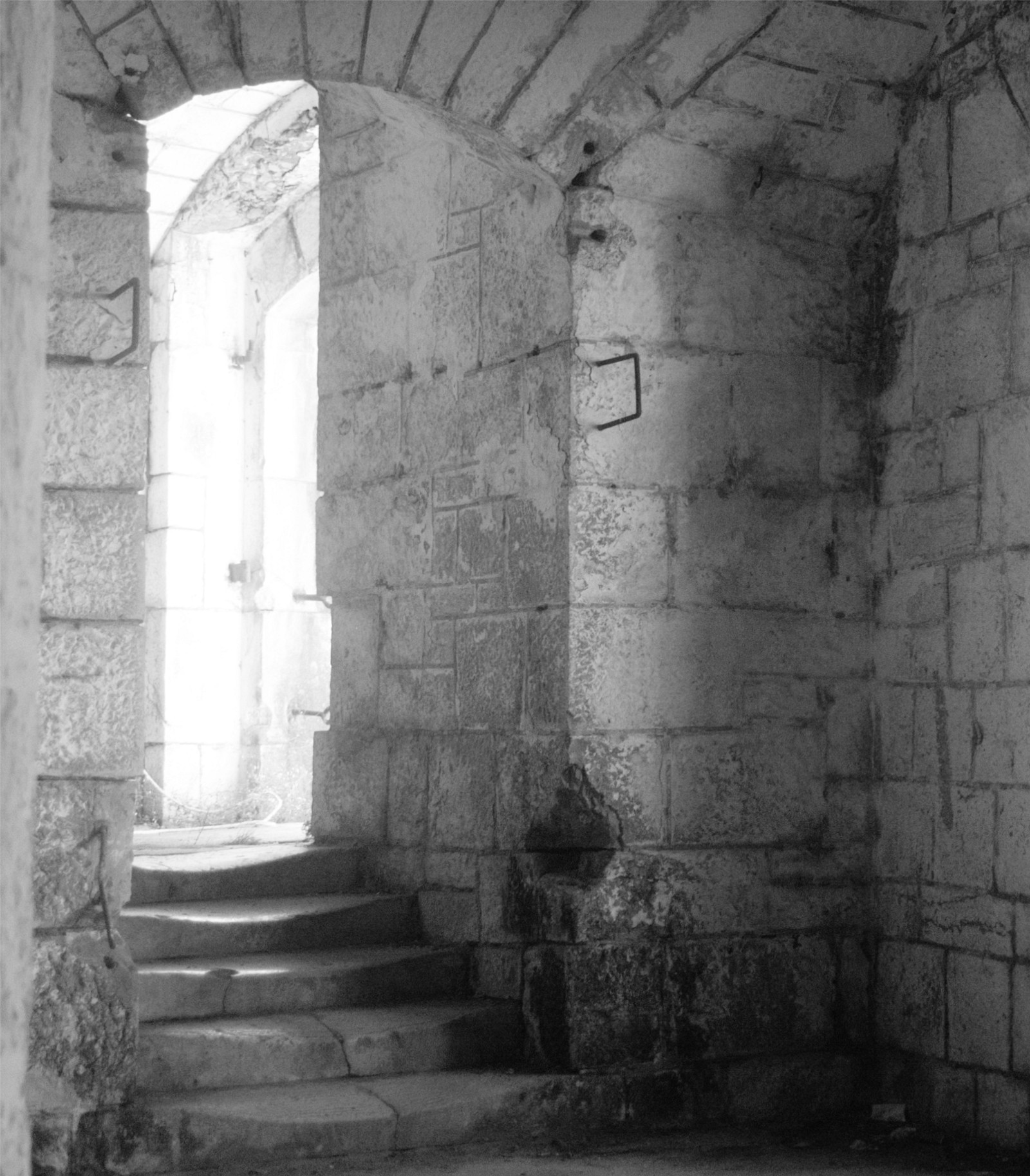
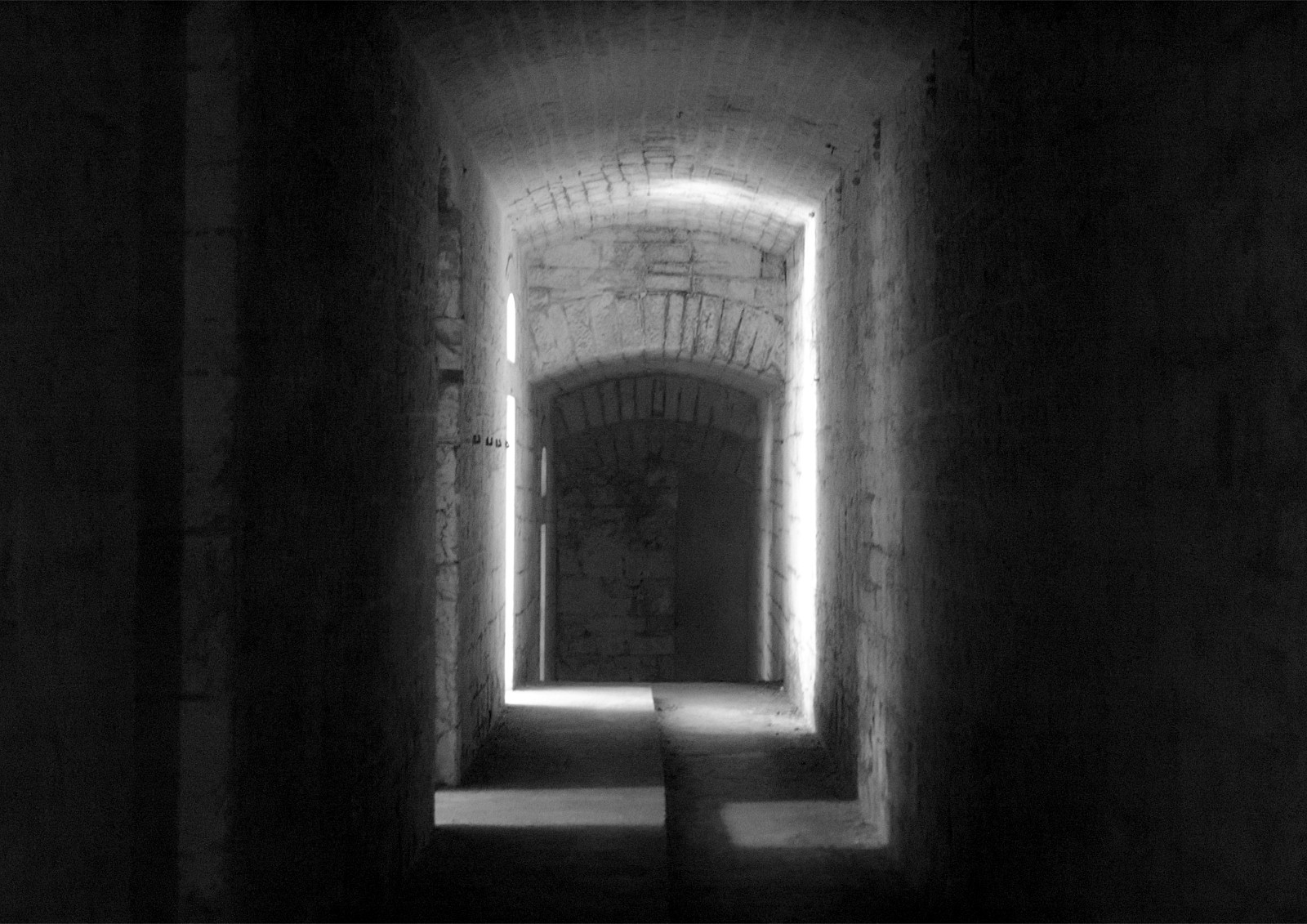
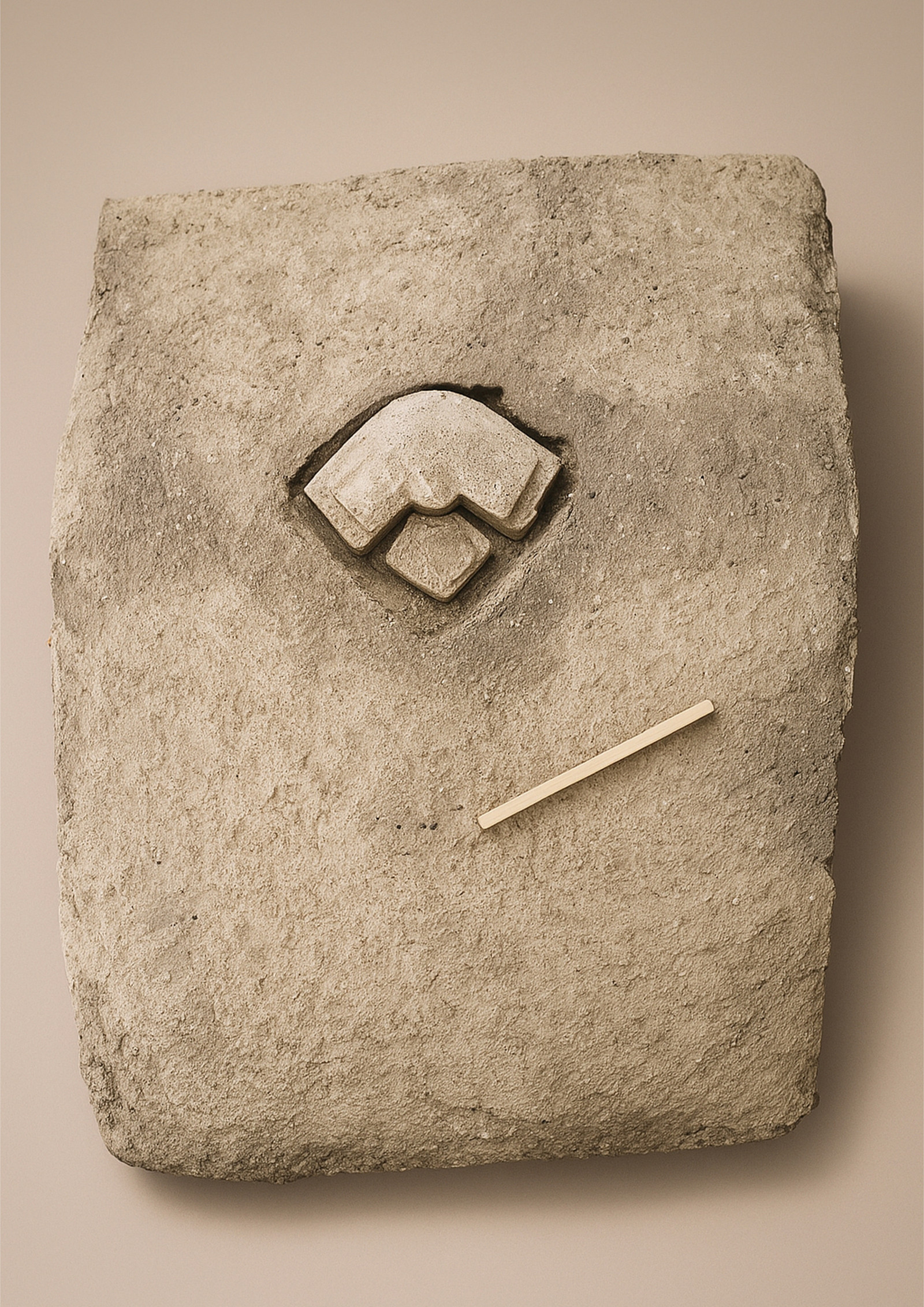
Goražda Fortress in Boka Kotorska stands in absolute silence. Abandoned, grown over, slowly returning to the mountain , yet paradoxically preserved by this very emptiness. Its stillness is not a problem to be solved. It is the essence to be protected.
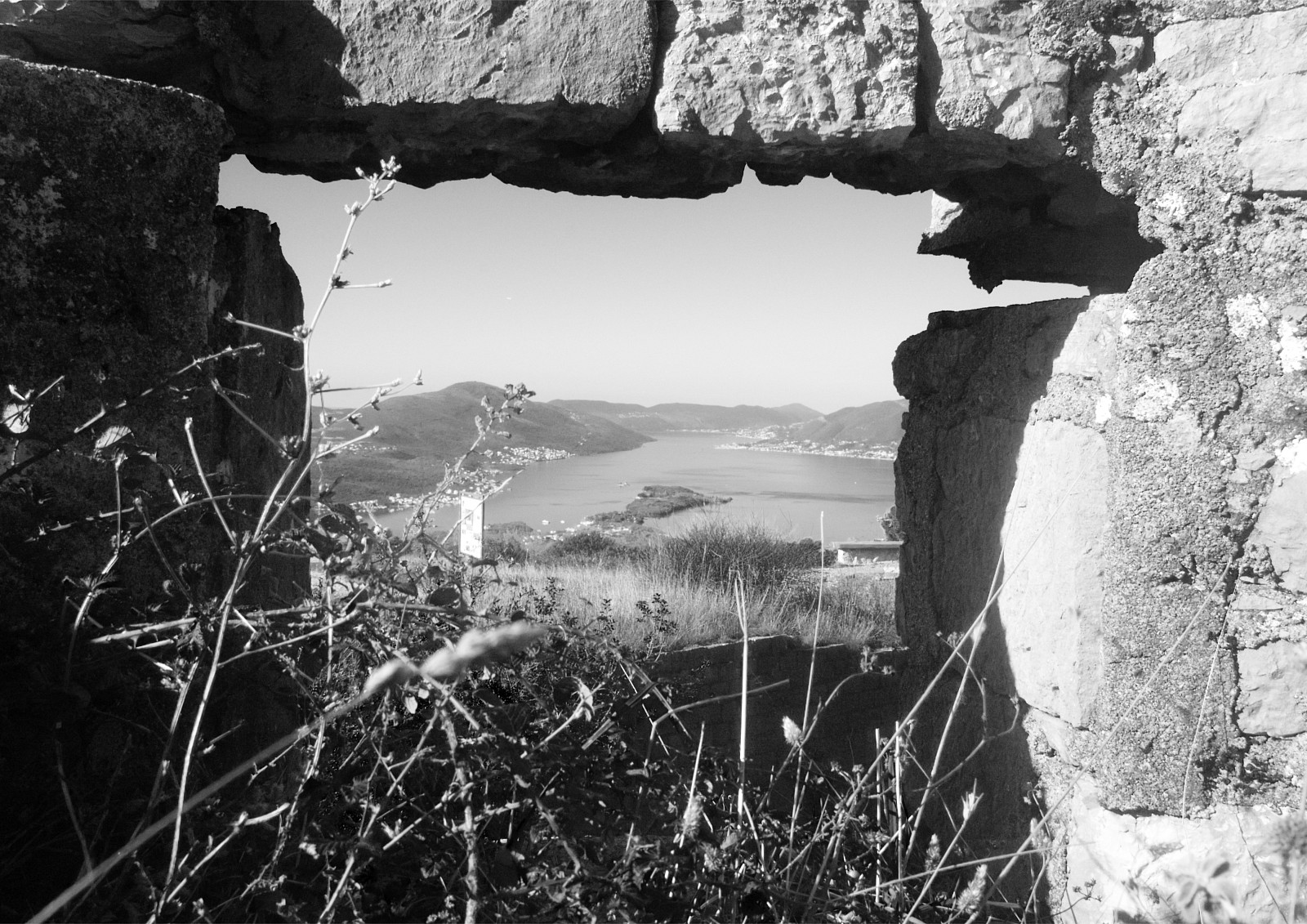
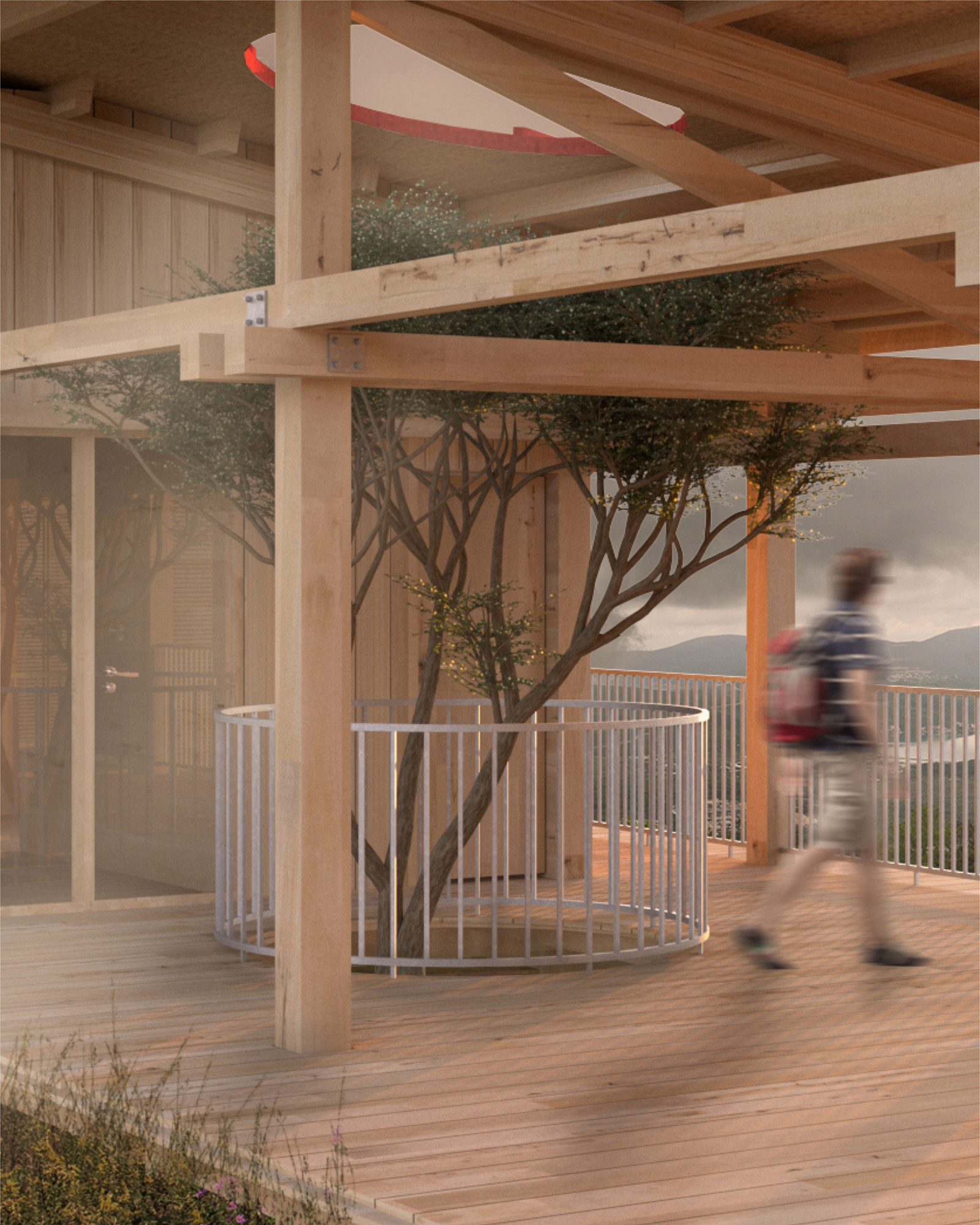
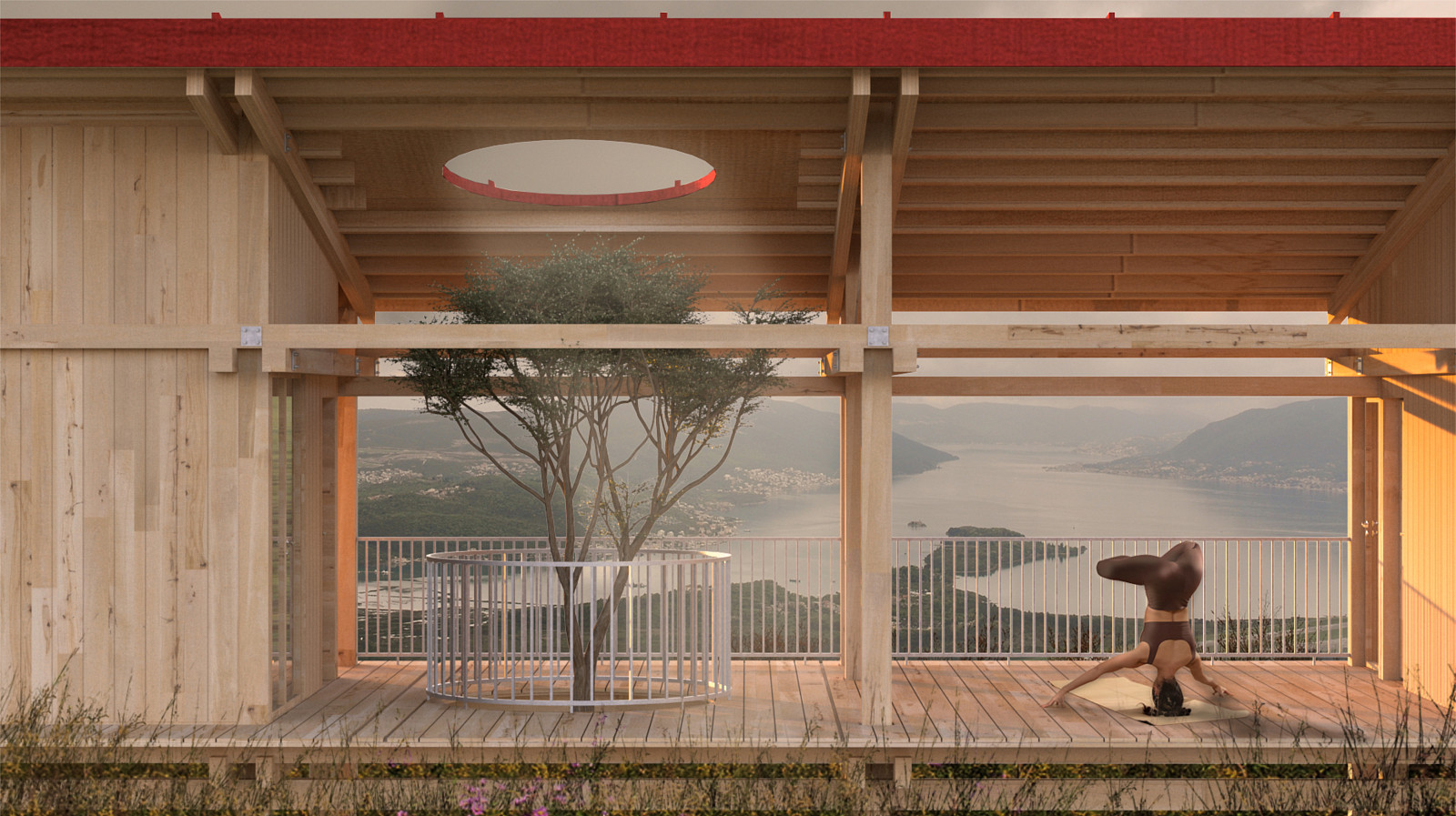
The project proposes a dialogue between two structures, two materials, two ways of inhabiting the world. The fortress, stone, dark, introverted, buried in the terrain, a carrier of memory, is met by a new pavilion-like Zen centre: wooden, light, transparent, elevated above the ground, open to the sea. Goražda embodies the mountain: solitude, introspection, the weight of history. The new building embodies the sea: gathering, movement, warmth.
Between them, a path. A connecting route laid with minimal intervention, following the existing topography. The walk from the new to the old is the project itself, a spatial and emotional transition between present and past, between community and contemplation, between the openness of Boka Kotorska and the enclosed silence of the fortress walls.
All interventions, both within the fortress and in the new building, are fully reversible. The monument remains primary. The landscape remains primary. Architecture here is a quiet guest.
Project description
The project operates on two scales simultaneously: the territorial and the intimate.
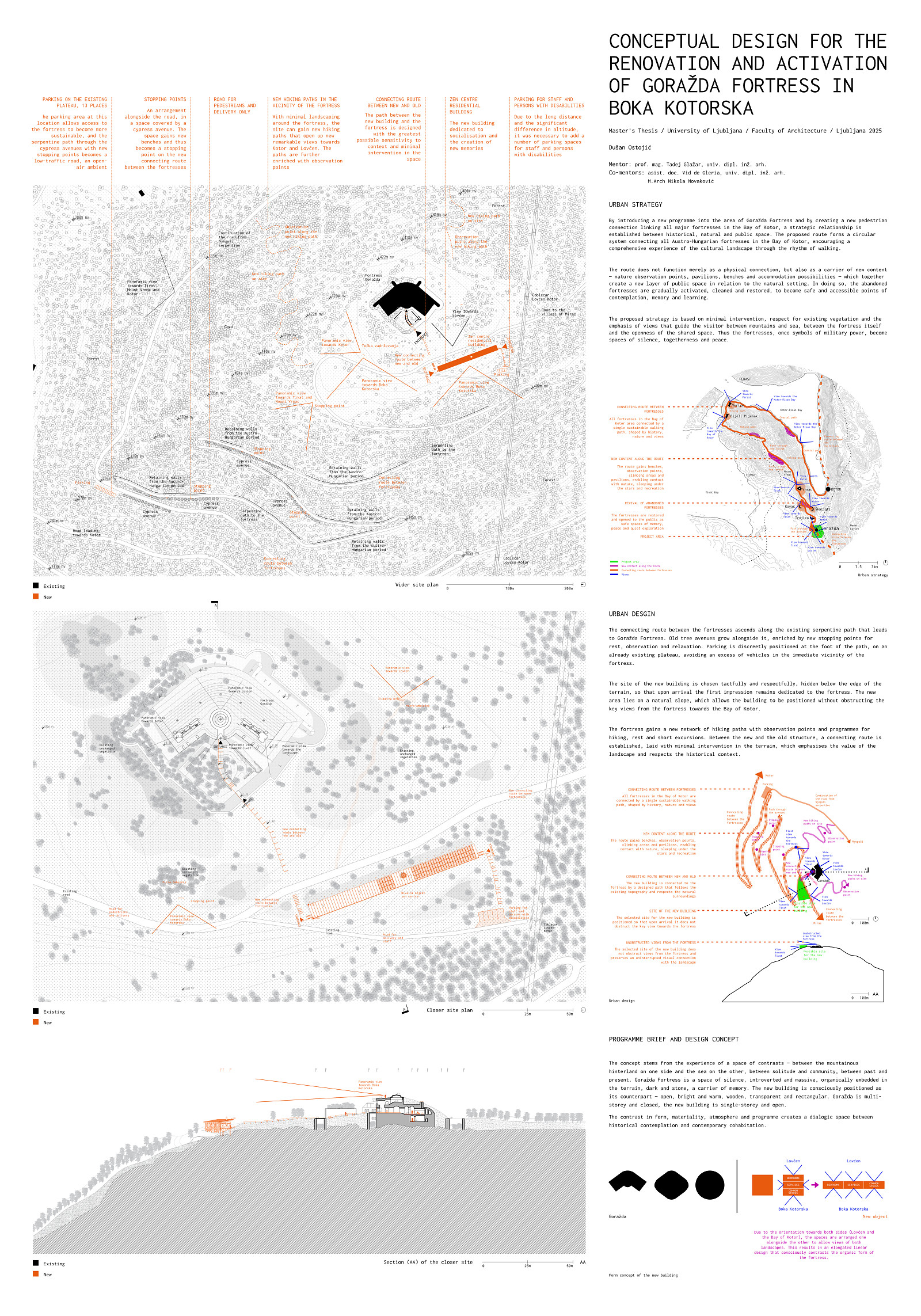
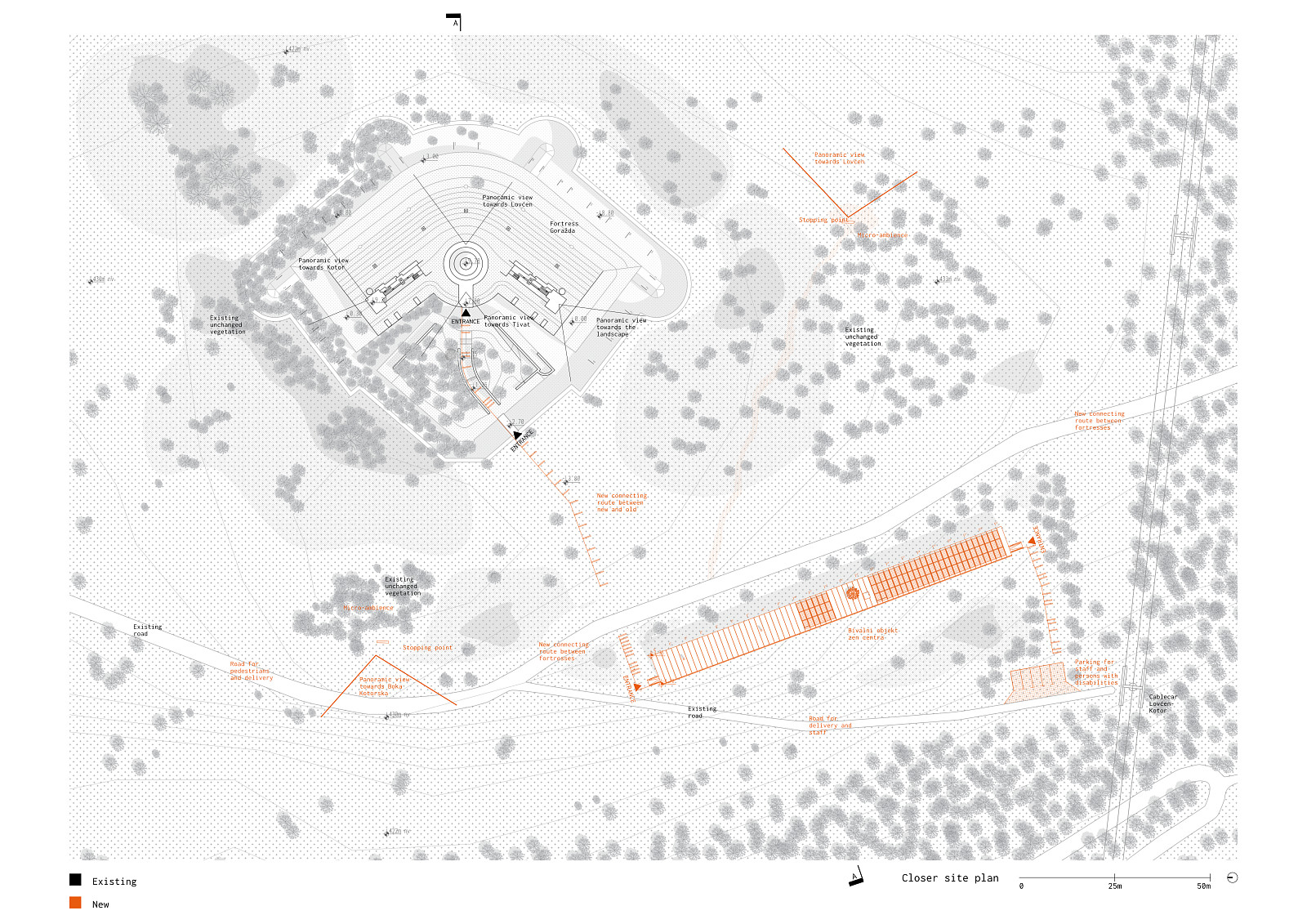
At the territorial scale, a new pedestrian route connects all major Austro-Hungarian fortresses in Boka Kotorska, forming a circular cultural landscape trail shaped by history, nature and views. Goražda, positioned at the heart of this system, becomes both destination and departure point.
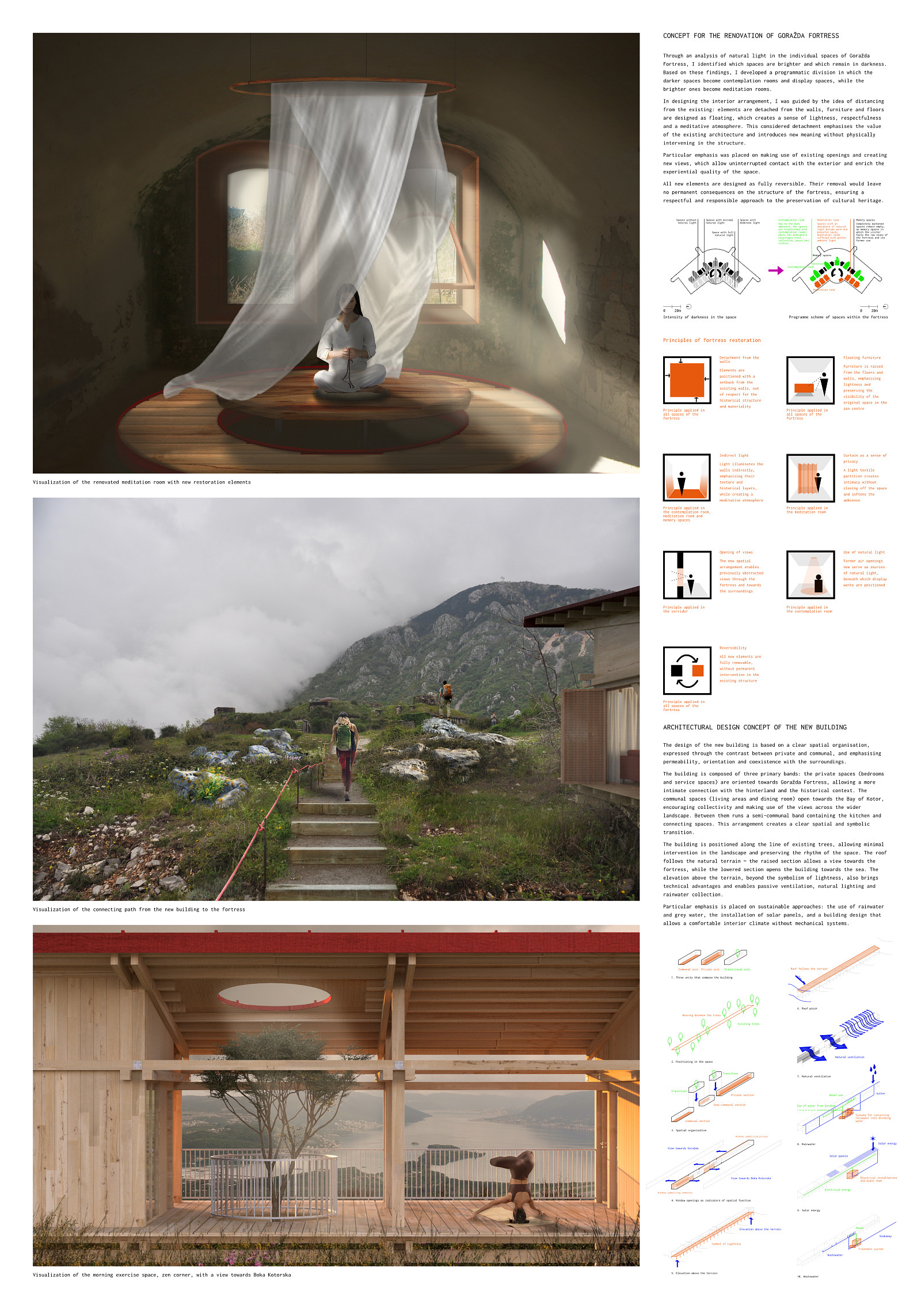
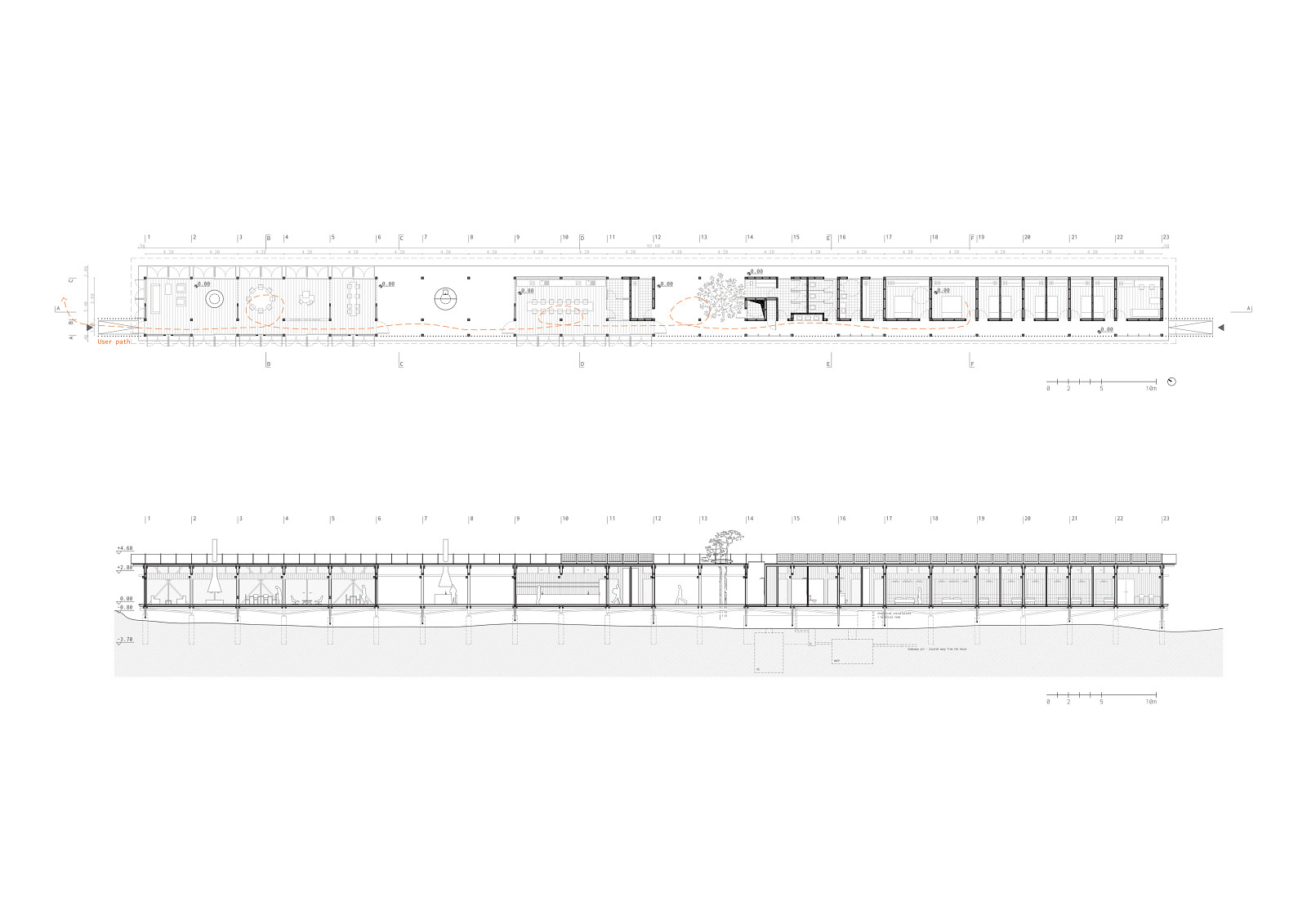
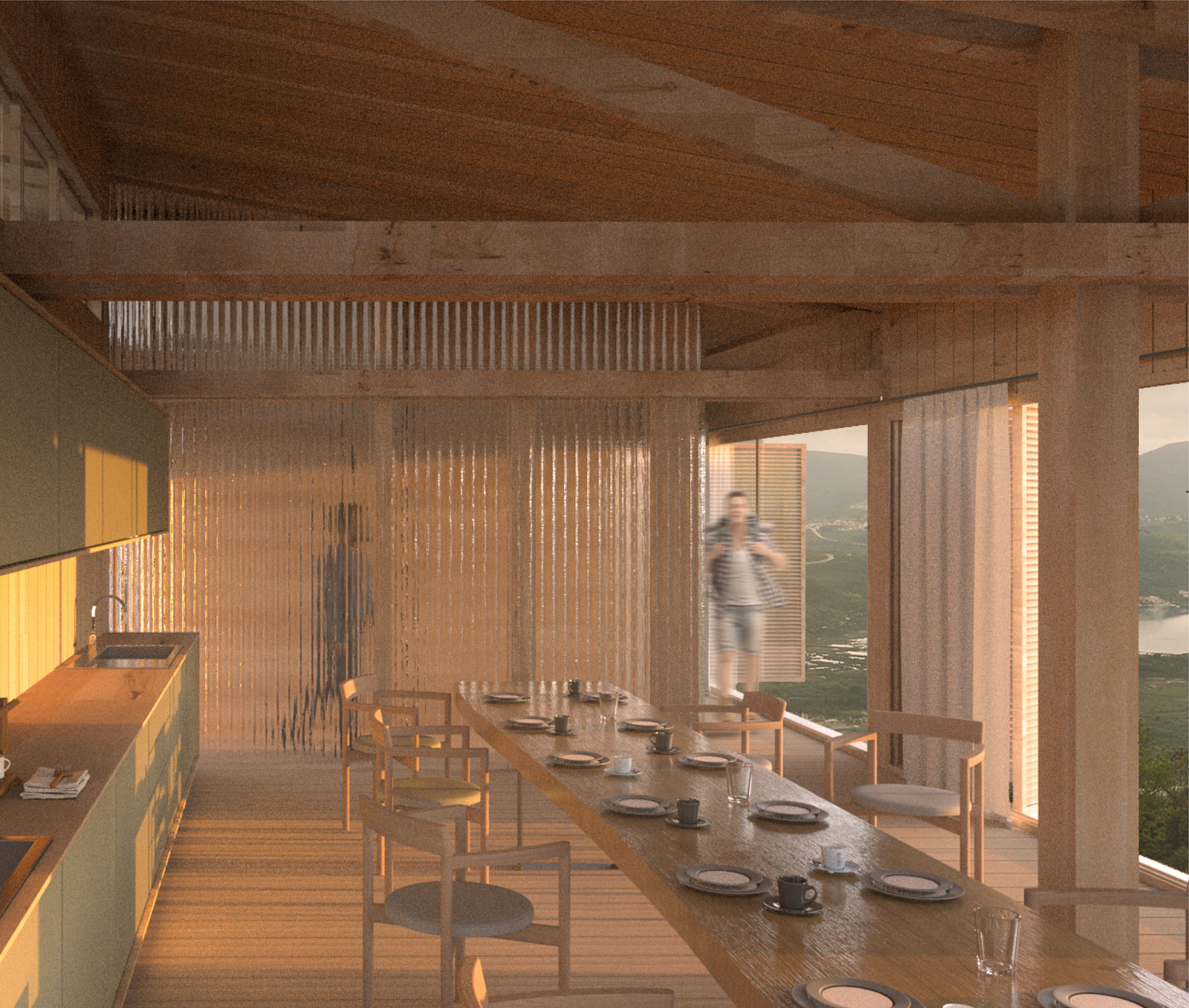
At the site scale, the new Zen centre is positioned discreetly below the terrain edge on a natural slope, ensuring that upon arrival the first impression remains dedicated to the fortress. The building is composed of three parallel bands: private spaces (bedrooms and service areas) oriented towards the fortress, communal spaces (living and dining) opening towards Boka Kotorska, and a semi-communal band between them containing the kitchen and connecting spaces. The roof follows the natural terrain, its raised section frames the view towards Goražda, while the lowered section opens towards the sea.
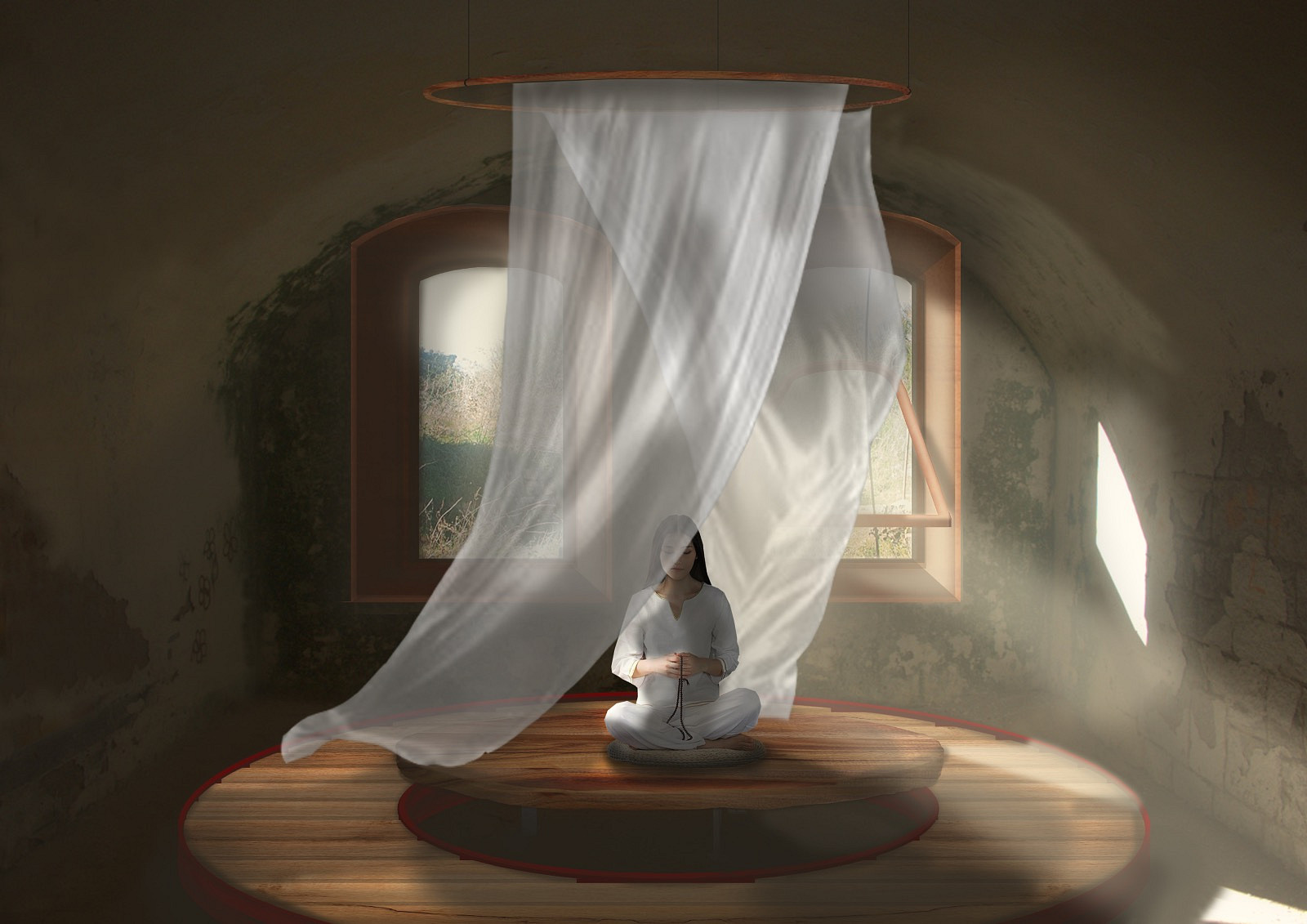
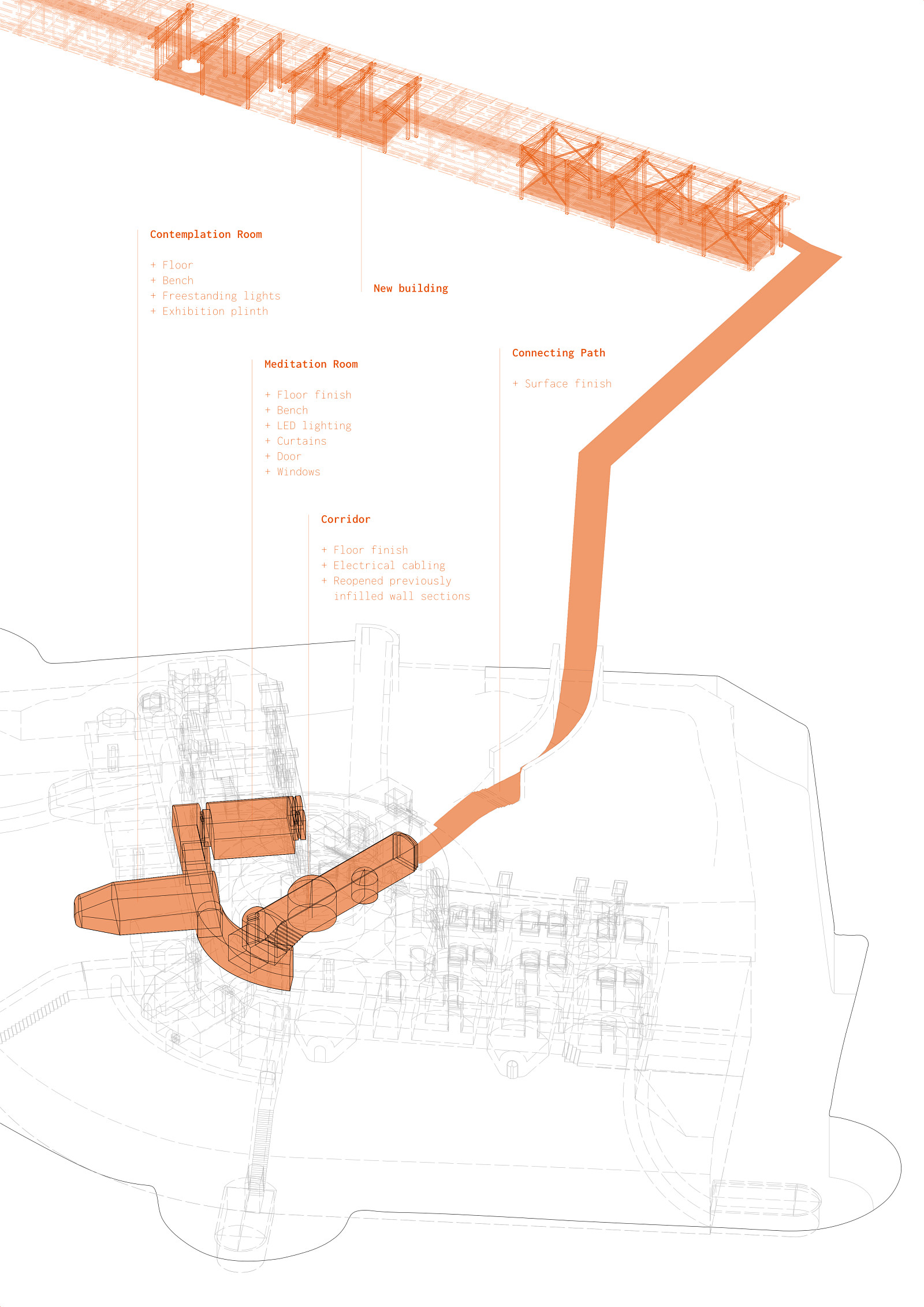
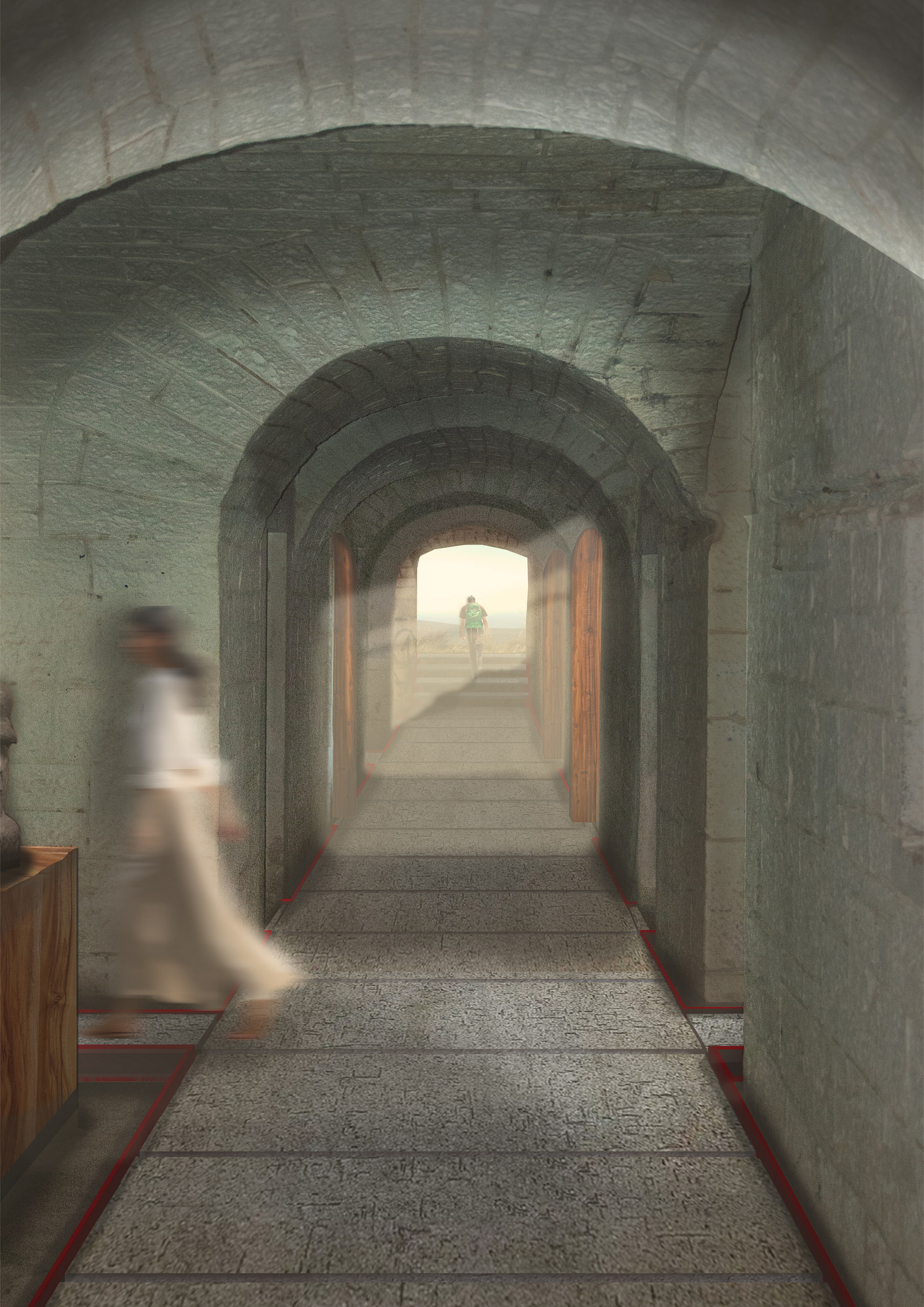
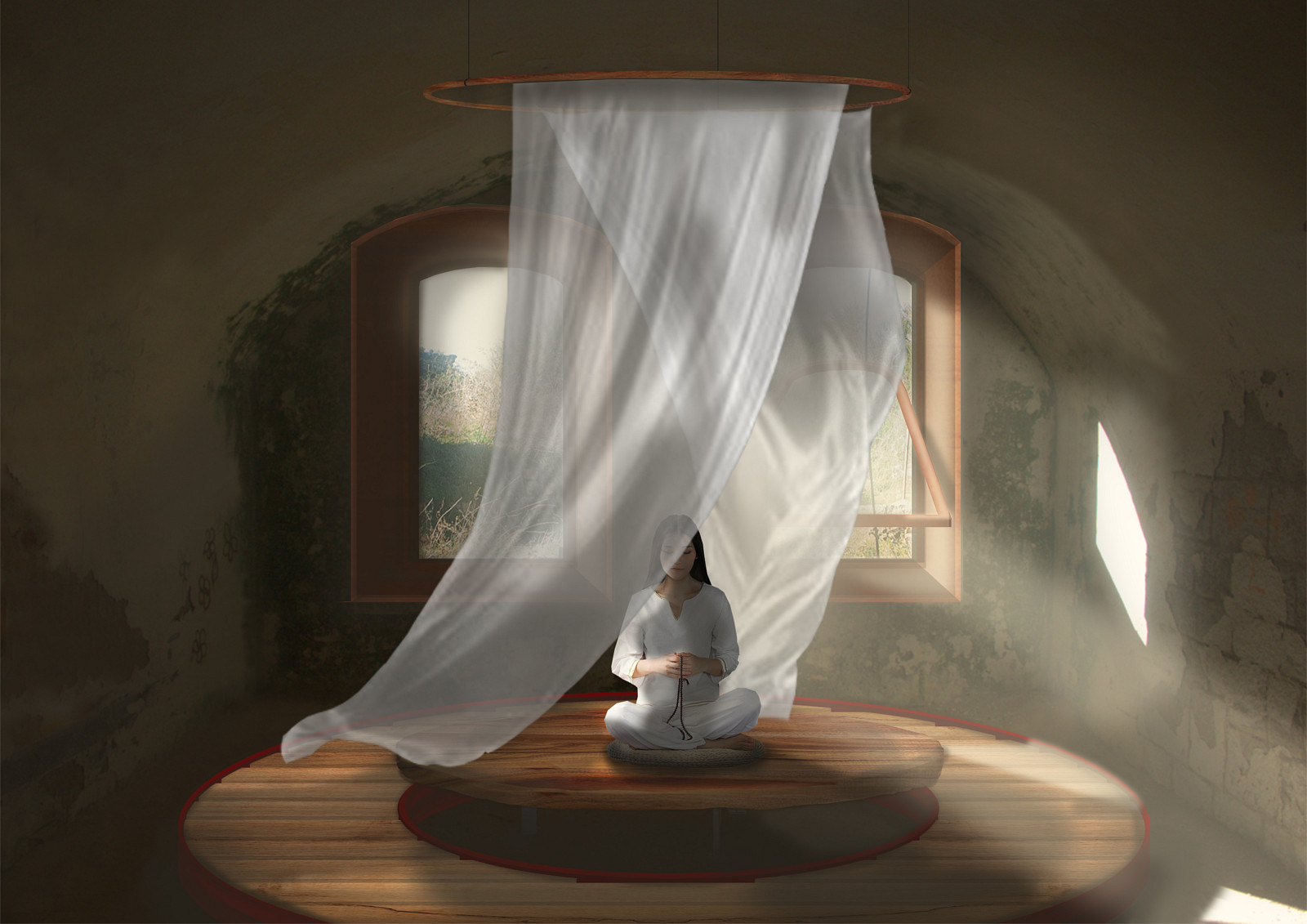
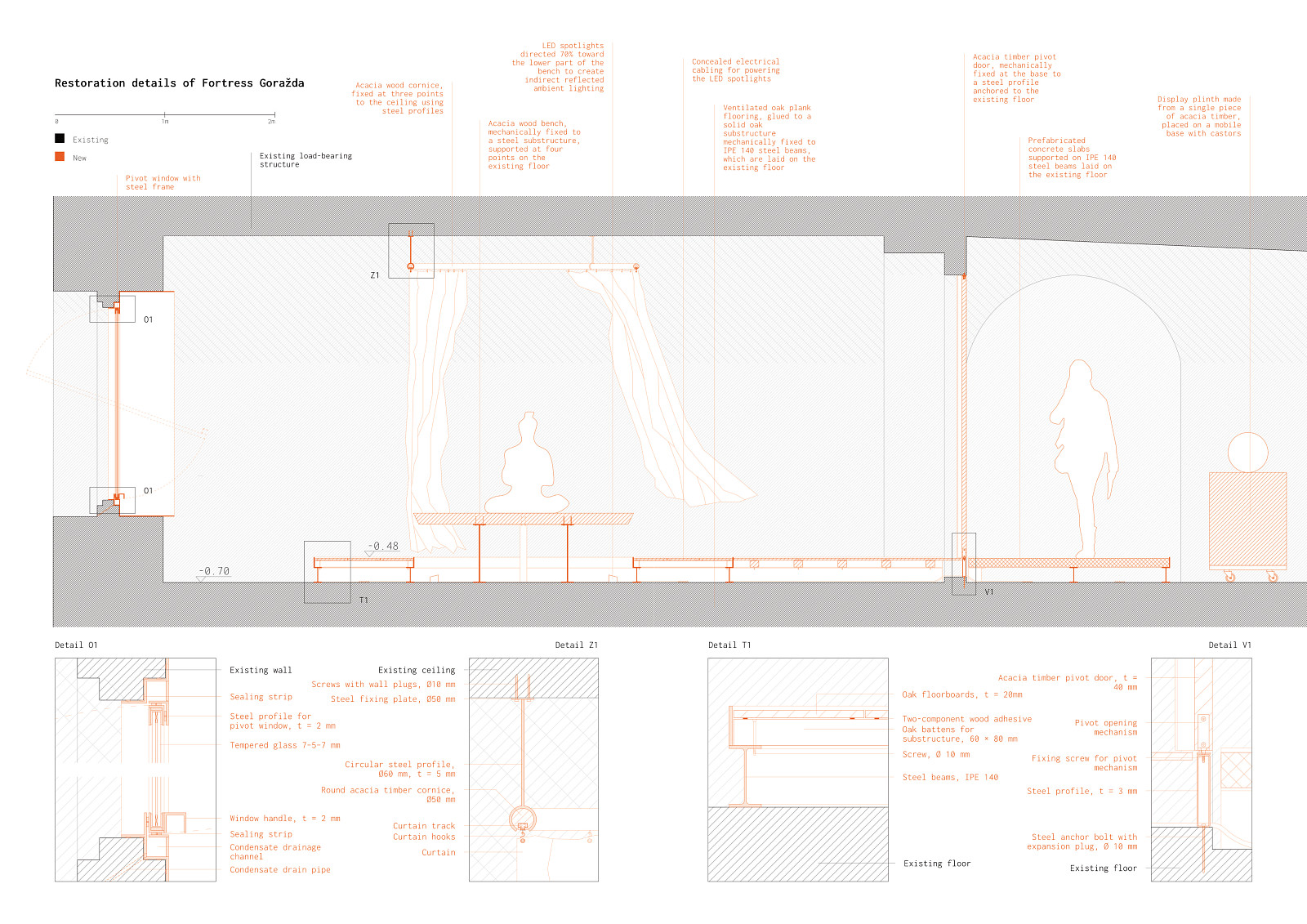
Within the fortress, intervention is reduced to the absolute minimum. Through analysis of natural light, darker spaces are designated as contemplation rooms and memory spaces, while brighter ones become meditation rooms. All new elements: furniture, lighting, floor layers, curtains are detached from the existing walls and fully reversible, leaving no permanent trace on the historical structure.
The connecting path between the two structures is designed with the greatest possible sensitivity to context: a gentle wooden boardwalk with steel posts, a red rope as guide, and two observation pavilions enriching the walk with views towards Kotor, Tivat and Lovćen.
Technical information
Goražda Fortress:
Existing Austro-Hungarian military structure, late 19th century, stone masonry construction, multi-storey, partially underground. Intervention is strictly reversible: prefabricated concrete floor panels, acacia wood furniture and benches, pivot windows with steel profiles, LED ambient lighting, wooden floor layers on I-beams, all detachable without structural intervention.
New building - Zen Centre:
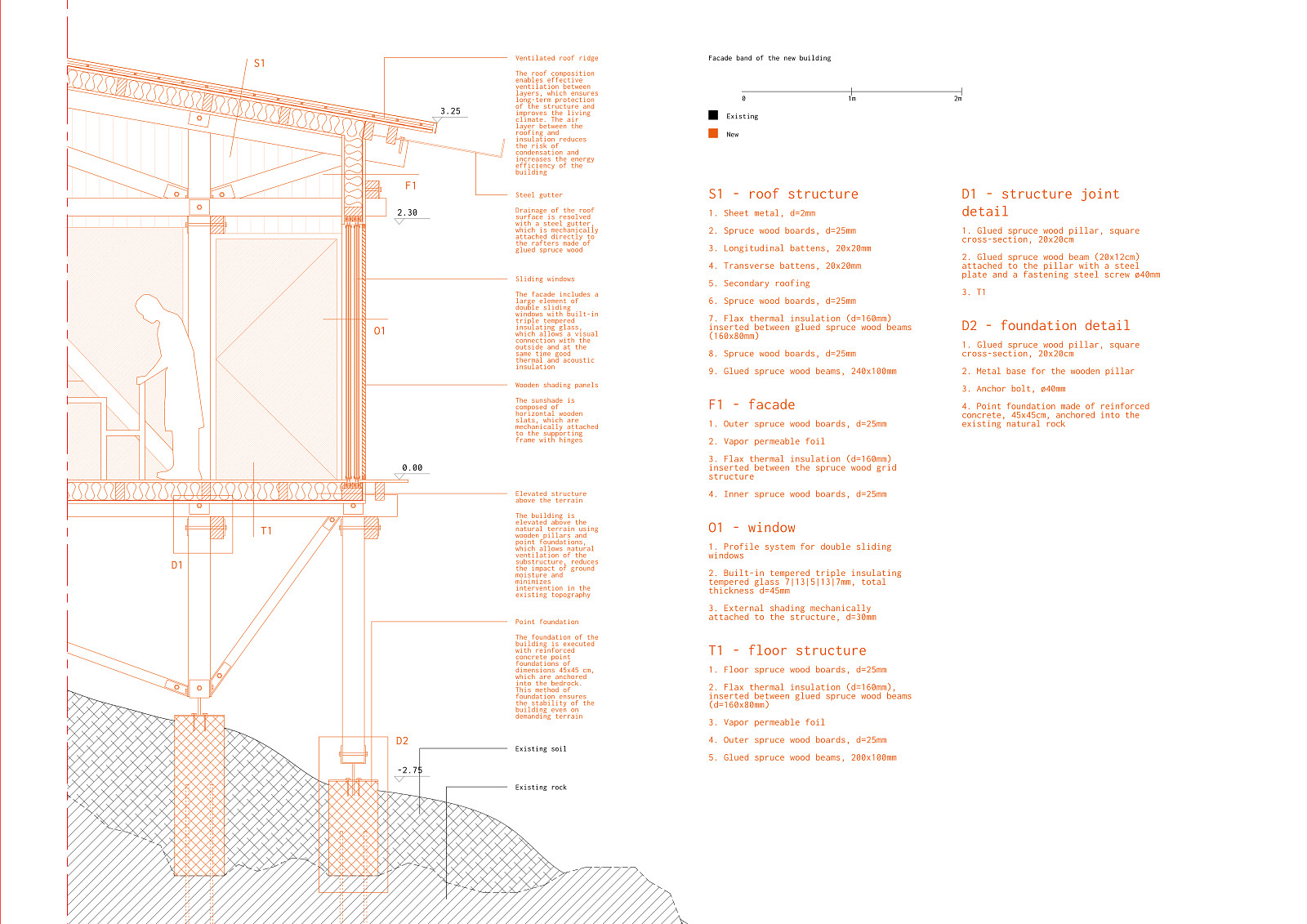
Structure: elevated timber frame on point reinforced concrete foundations, anchored to existing bedrock
Facade: spruce timber cladding, triple-glazed sliding windows, wooden louvred shading panels
Roof: ventilated roof construction, steel gutters, roof pitch following natural terrain
Services: fully off-grid, rainwater harvesting and filtration system, solar panels, passive cross-ventilation, biological wastewater treatment, soakaway
Materials: spruce and acacia timber, steel profiles, prefabricated concrete elements, tempered glass
All elements designed for minimal environmental impact and full reversibility


Copyright © 2026 INSPIRELI | All rights reserved. Use of this website signifies your agreement to the Terms of Use, Privacy Policy, and use of cookies.