Trophi Shell


 Assoc. Prof. Sapinah Danial
Project idea
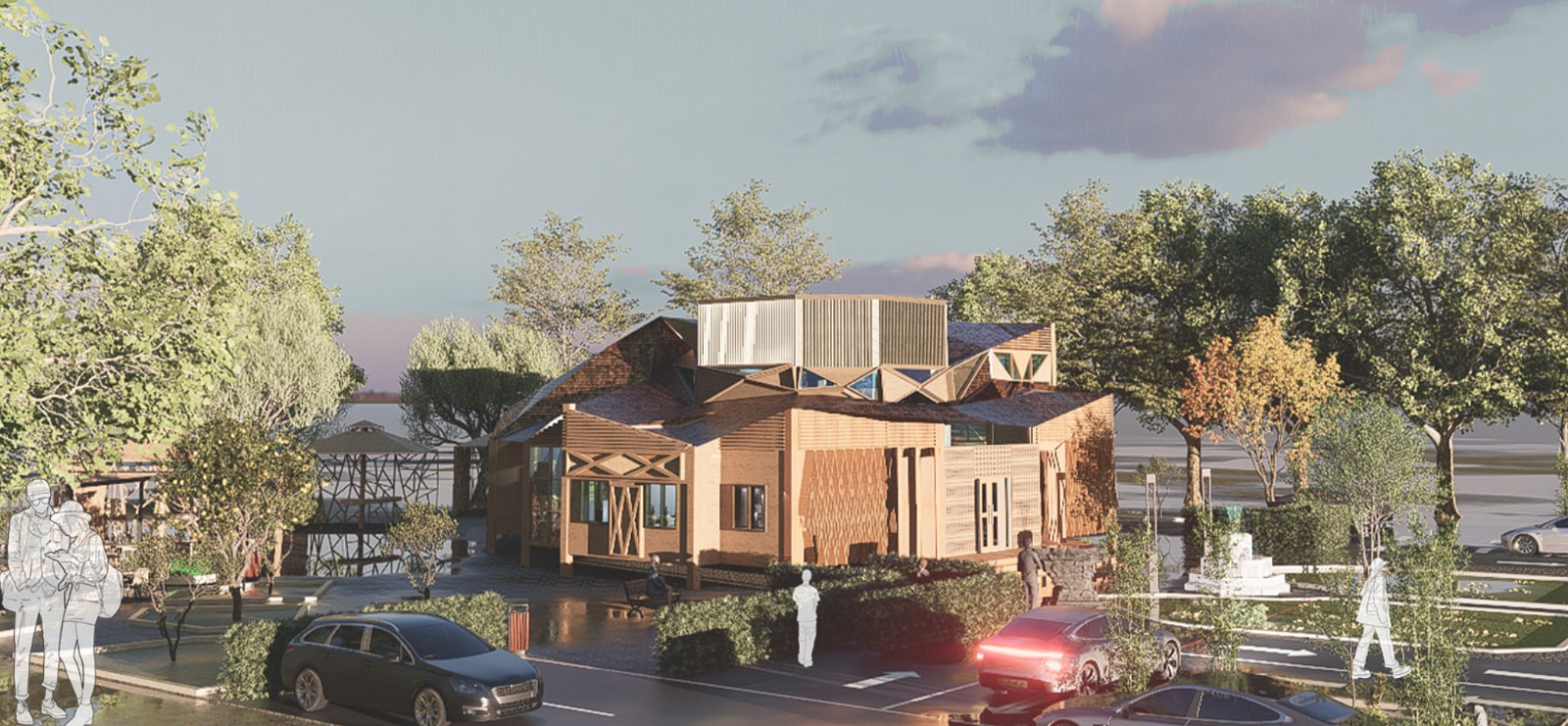
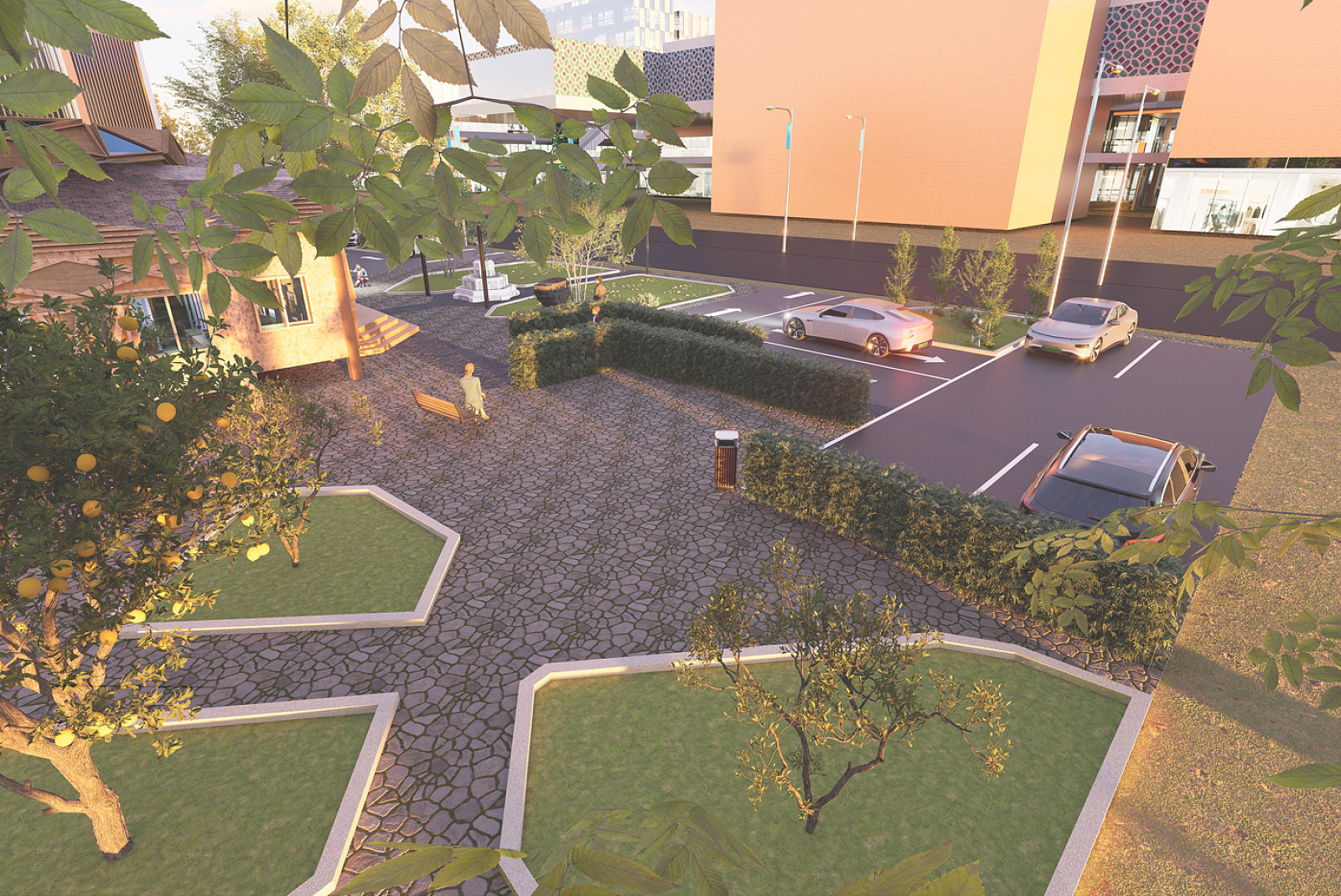
Trophi Shell is envisioned as a Farming and Educational Center that explores innovative farming techniques through an architectural concept inspired by the protective and adaptive qualities of a shell. The project serves as a platform where agriculture, education, and technology are integrated to create a dynamic learning environment for students, researchers, farmers, and the public. The shell metaphor represents growth, protection, and knowledge, forming a nurturing environment where agricultural innovation can thrive. Visitors are introduced to a variety of farming methods including hydroponics, aquaponics, vertical farming, precision agriculture, greenhouse cultivation, and sustainable crop management systems.
The center is designed as an interactive destination where learning occurs through direct engagement with farming activities and technologies. Educational galleries, demonstration farms, research zones, training facilities, and community workshops are organized around a central learning landscape that encourages exploration and discovery. The architecture responds to environmental conditions through organic forms that maximize natural light, ventilation, and climate control while creating a recognizable identity for the project. Trophi Shell aims to bridge traditional agricultural knowledge with modern farming innovations, promoting sustainable food production and environmental awareness. Through experiential learning and technological integration, the project becomes a catalyst for agricultural advancement while inspiring future generations to understand the importance of efficient farming techniques and resilient food systems in Malaysia.
Project description
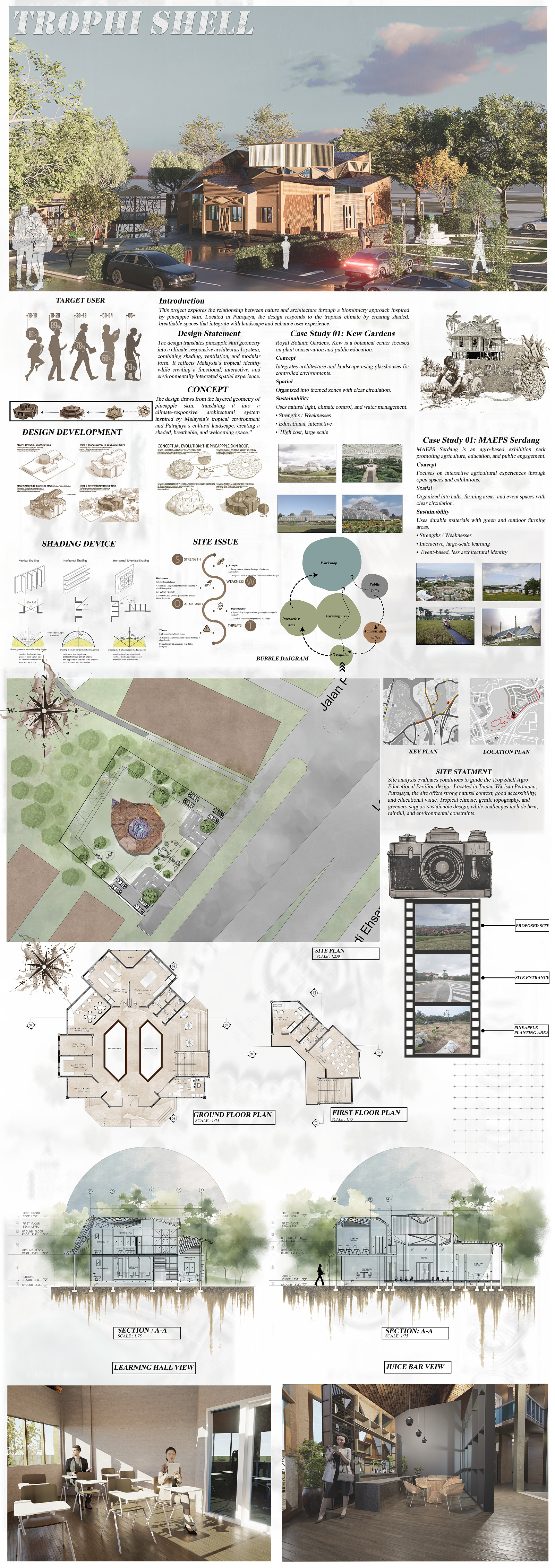
Trophi Shell is a Farming and Educational Center designed to provide an immersive environment for learning advanced and sustainable farming techniques. The project description focuses on creating a seamless connection between agricultural production, education, and innovation through carefully planned spaces that support both learning and practical application. The center consists of demonstration farms, greenhouse cultivation areas, hydroponic and aquaponic systems, training laboratories, research facilities, exhibition galleries, and interactive learning zones. These spaces allow visitors to observe, understand, and participate in modern agricultural processes while gaining knowledge about food production and environmental sustainability.
The architectural design is inspired by the layered structure of a shell, creating protective and adaptive spaces that respond to climate, function, and user experience. Curved forms, sheltered courtyards, and interconnected learning pathways guide visitors through different farming environments while maintaining visual connections to the surrounding landscape. Natural daylight, ventilation, and green spaces are integrated throughout the development to enhance comfort and environmental performance. The project promotes experiential learning by combining observation, research, and hands on activities within a single educational setting. Trophi Shell becomes a destination where agriculture, technology, and architecture work together to inspire innovation, strengthen farming knowledge, and encourage sustainable food production for future generations.
Technical information
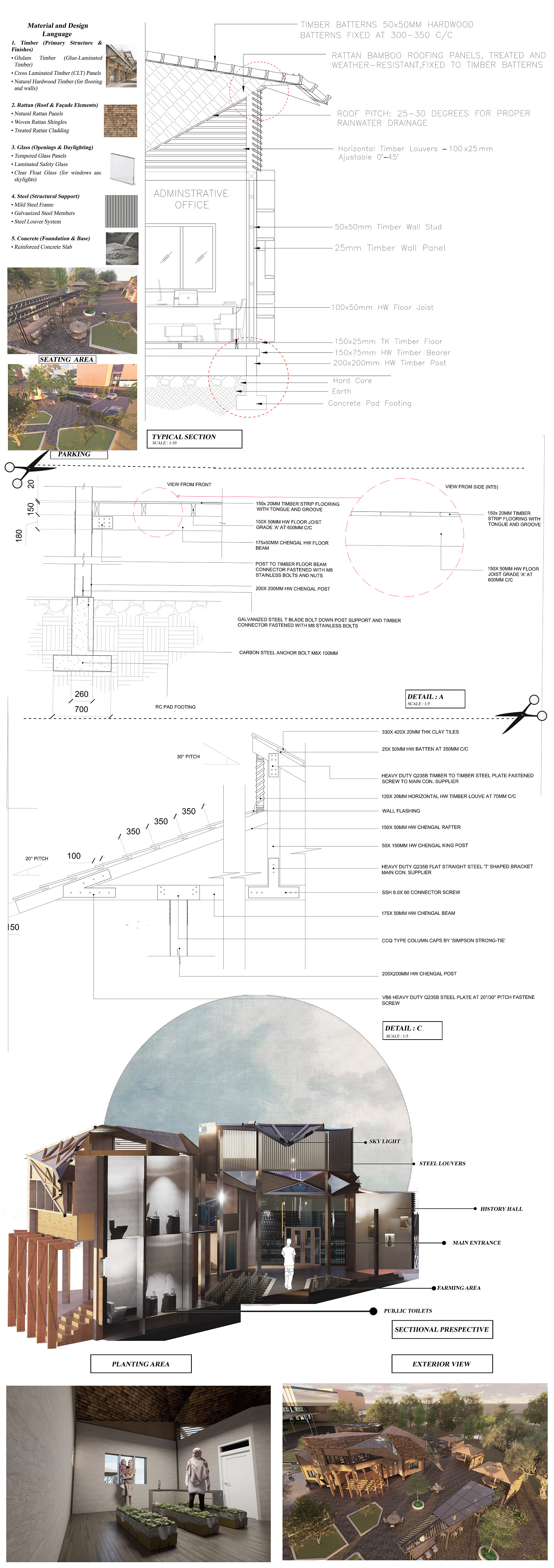
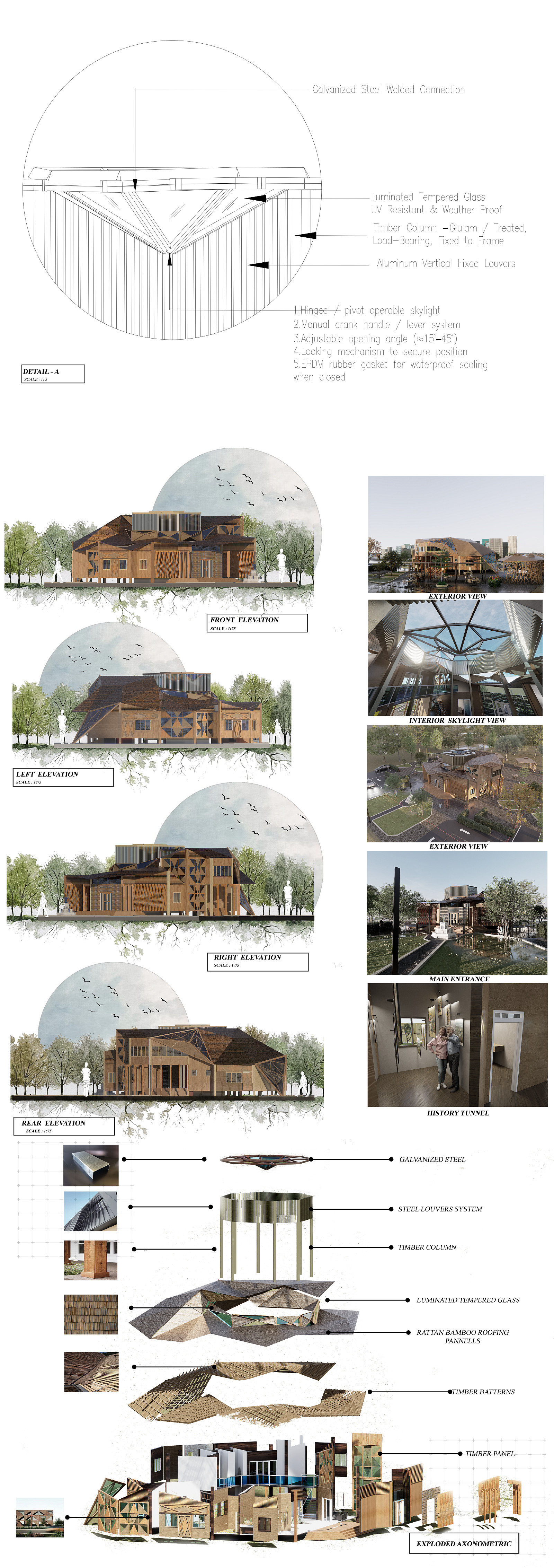
The technical framework of Trophi Shell is designed to support efficient farming operations, educational activities, and sustainable building performance. The project incorporates a variety of agricultural systems including hydroponics, aquaponics, vertical farming modules, greenhouse cultivation, and open field demonstration plots. Environmental control systems such as automated irrigation, climate monitoring sensors, mist cooling, and ventilation technologies help optimize crop growth while providing educational opportunities for visitors and researchers. Rainwater harvesting systems are integrated to support irrigation demands, while solar energy installations contribute to reducing operational energy consumption.
The building structure may utilize steel framing, engineered timber, and reinforced concrete depending on functional requirements and long term durability. Curved roof forms inspired by shell geometries are designed to maximize natural daylight, improve rainwater collection, and provide shaded outdoor learning areas. Passive design strategies including cross ventilation, thermal shading, and landscape integration help reduce energy usage and improve indoor comfort. Supporting facilities include research laboratories, seed storage rooms, equipment maintenance areas, composting stations, staff facilities, and agricultural workshops. Smart farming technologies are incorporated to demonstrate data driven agricultural management and precision farming techniques. Together, these technical systems enable Trophi Shell to operate as a productive educational farm that showcases innovative agricultural practices while promoting sustainability, resilience, and long term environmental responsibility.


Copyright © 2026 INSPIRELI | All rights reserved. Use of this website signifies your agreement to the Terms of Use, Privacy Policy, and use of cookies.