
Batu Kapur - Sustainable Limestone Quarry Education Center


Project idea
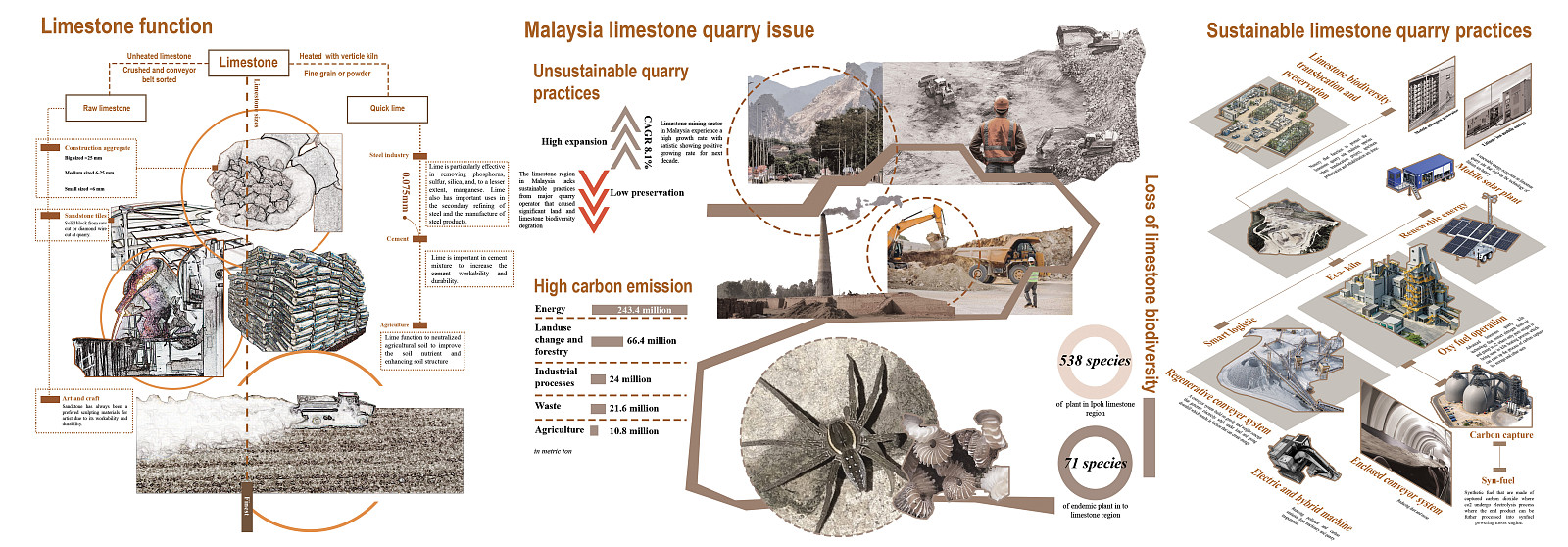
The main idea of the project is to showcase how a hard-to-abate carbon-emitting industry can be transformed into a more sustainable manner by spreading awareness and exposing the general public and the quarry operators to the latest technological applications in the limestone quarry industry. Limestone is abundant; while the world is pivoting towards sustainability, the limestone industry remains the major emitter of greenhouse gases.
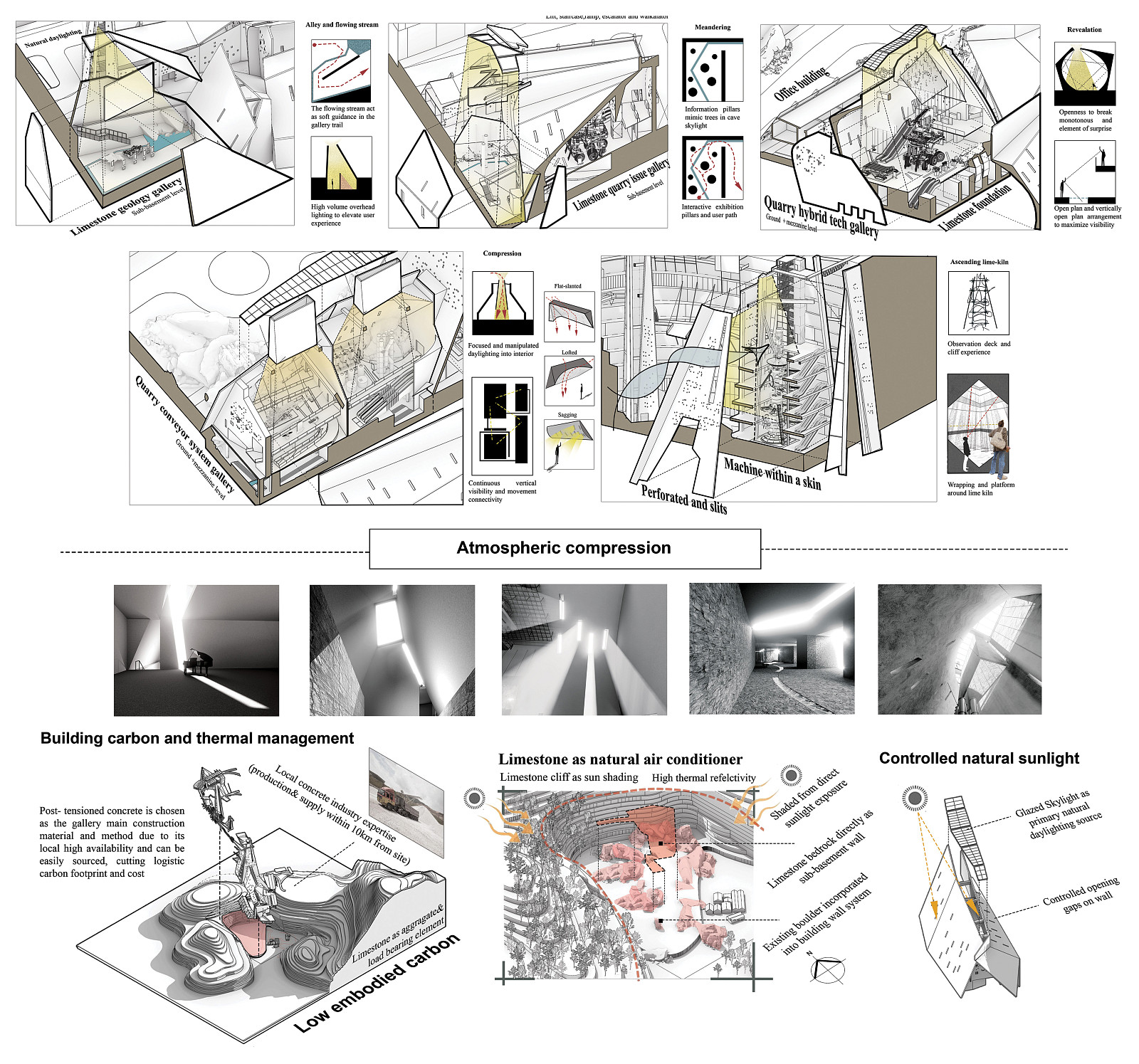
The beauty of limestone, which differentiates it from other stone, is it's porous nature. 90% of caves on earth are carved into limestone, forming fascinating natural geographical features such as sinkhole, underground streams and skylight inside the cave.
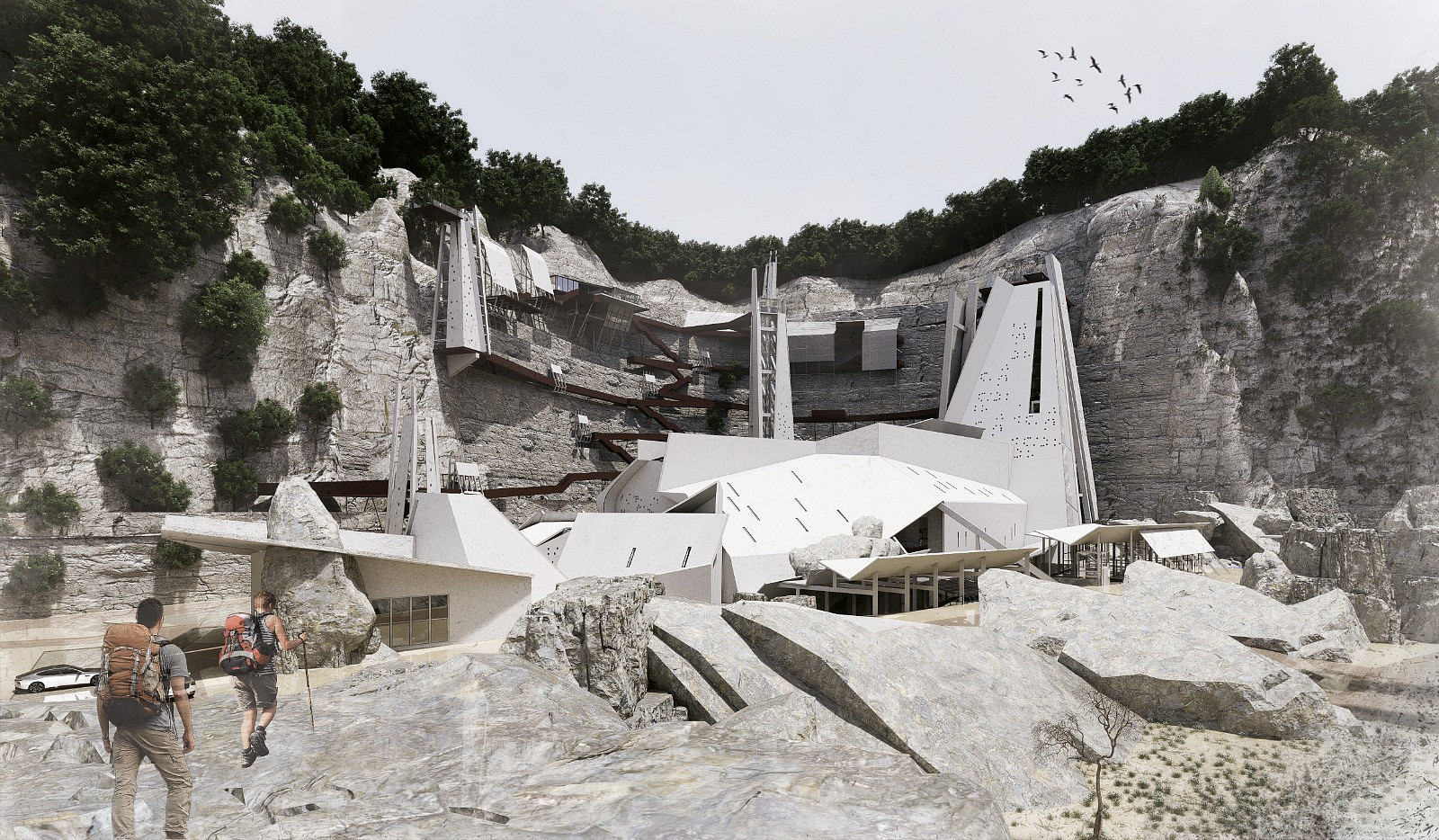
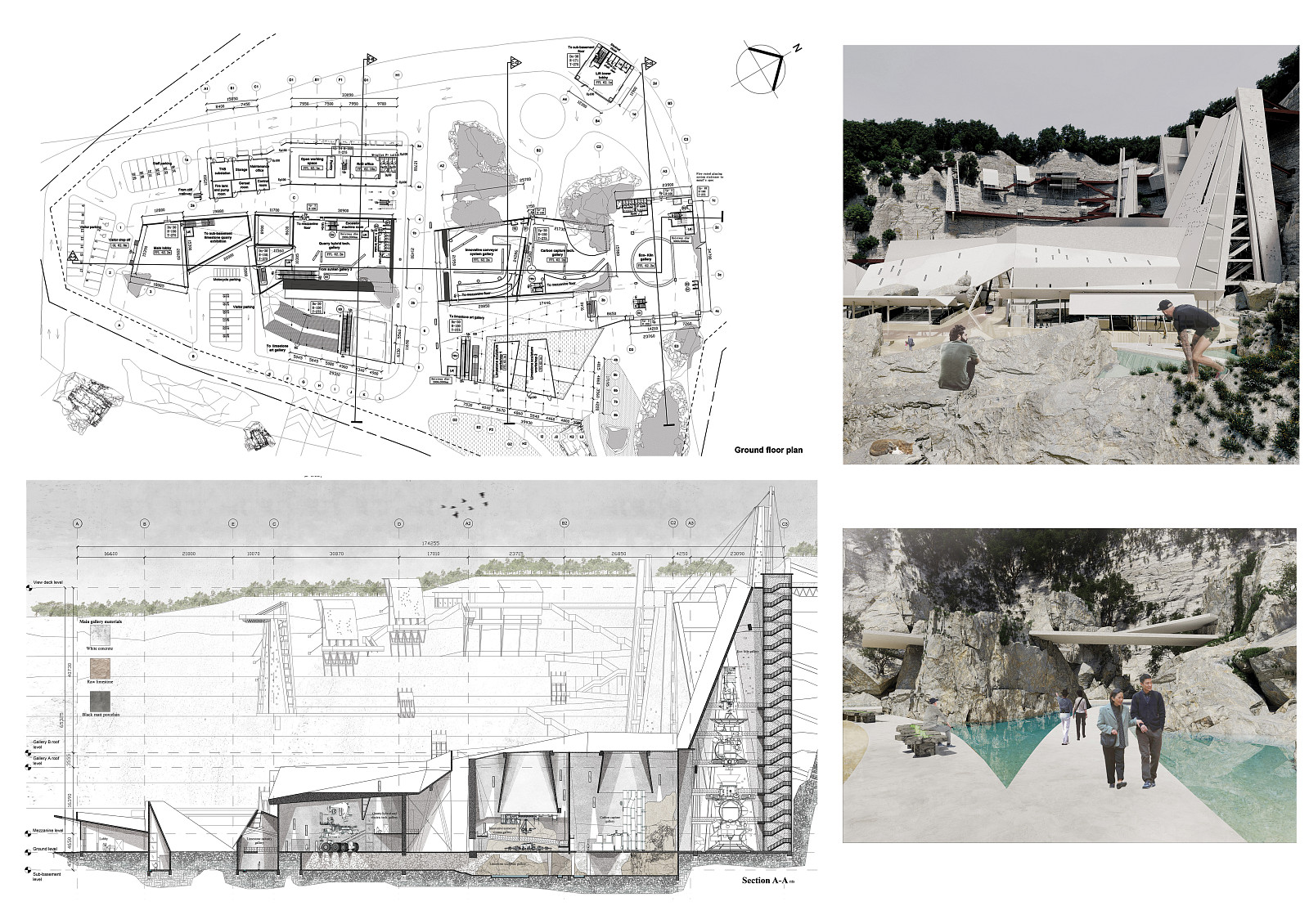
The project is located at a former limestone mining site at Ipoh, being surrounded by multiple ongoing limestone quarry sites. Ipoh was the major tin mining hub during the Malayan colonization era under the British. while tin resources have currently been exhausted, limestone became the main industry for the state of Perak and the Kinta Valley region. By looking backwards at the legacy of Ipoh mining industry, the beauty of limestone, and the growing limestone quarry industry, the project aims to showcase the essence of limestone and the future of its industry.
Project description
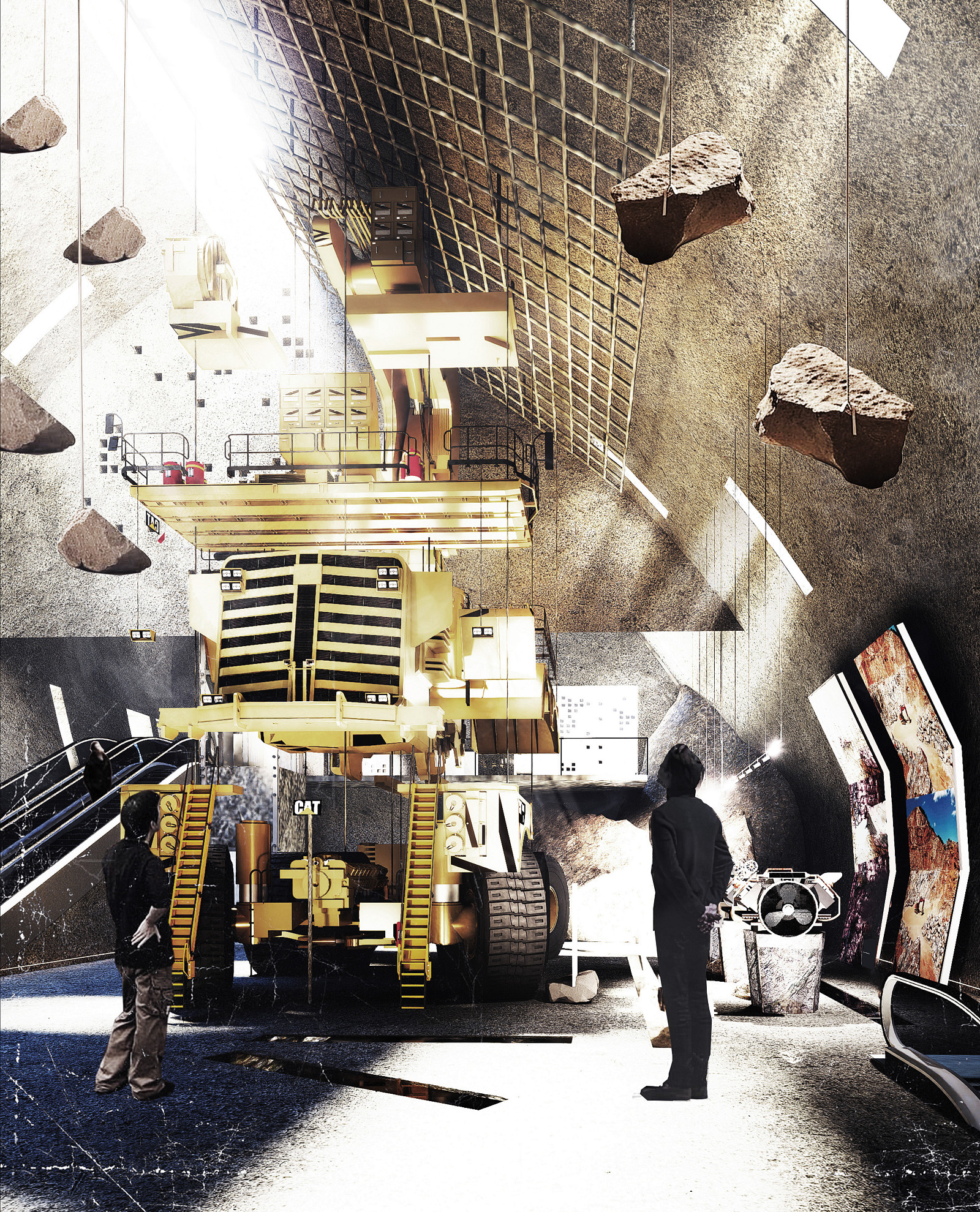
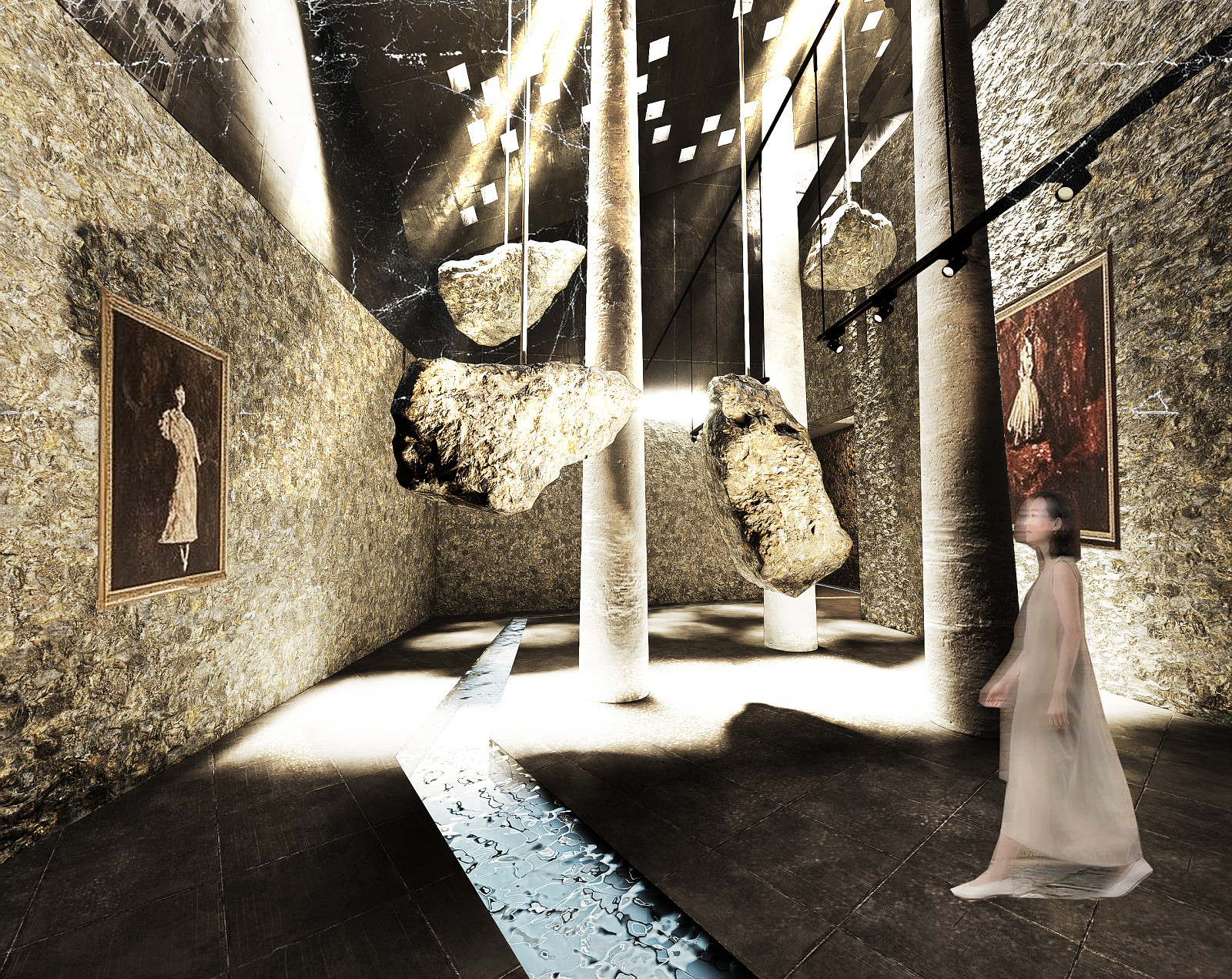
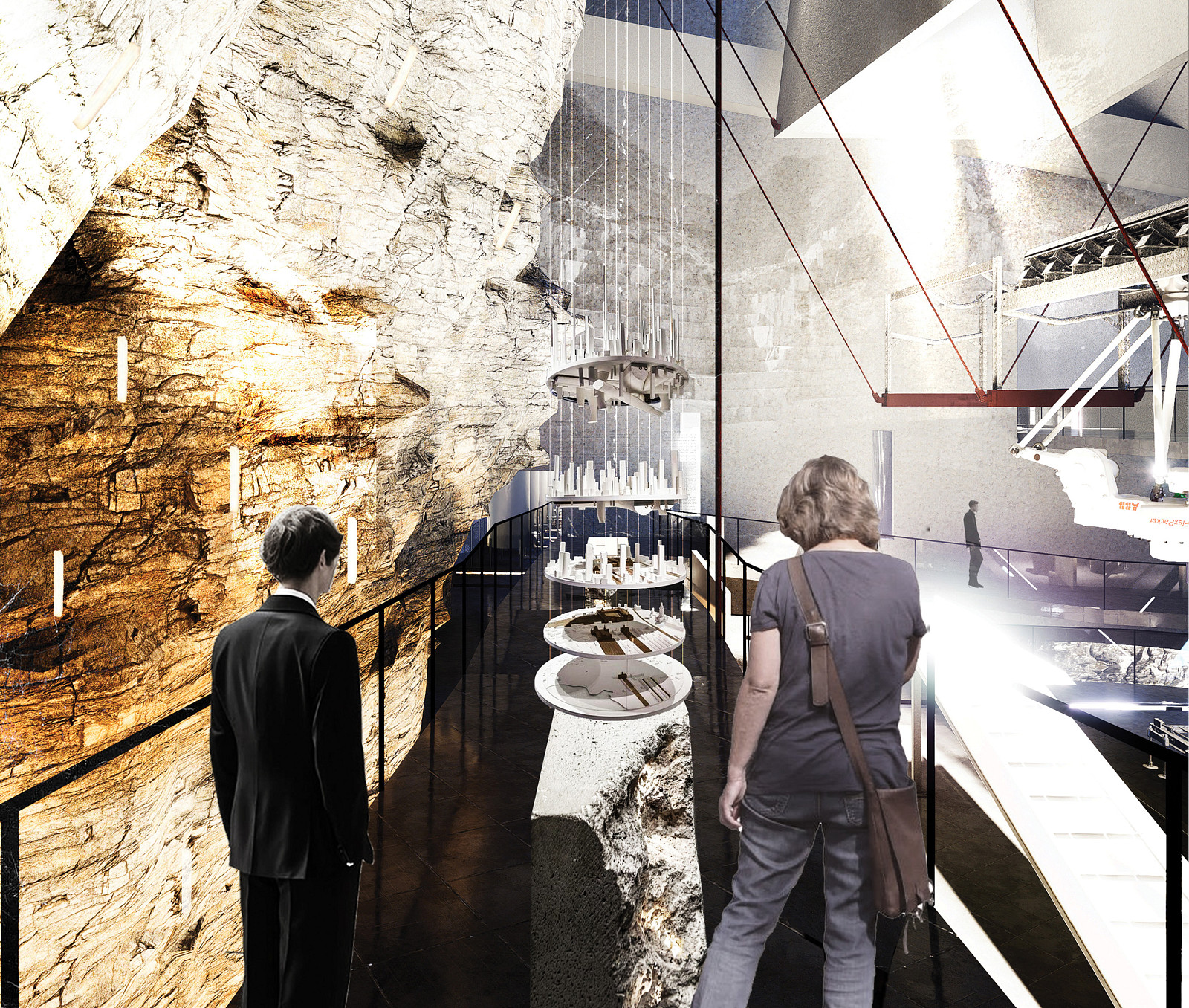
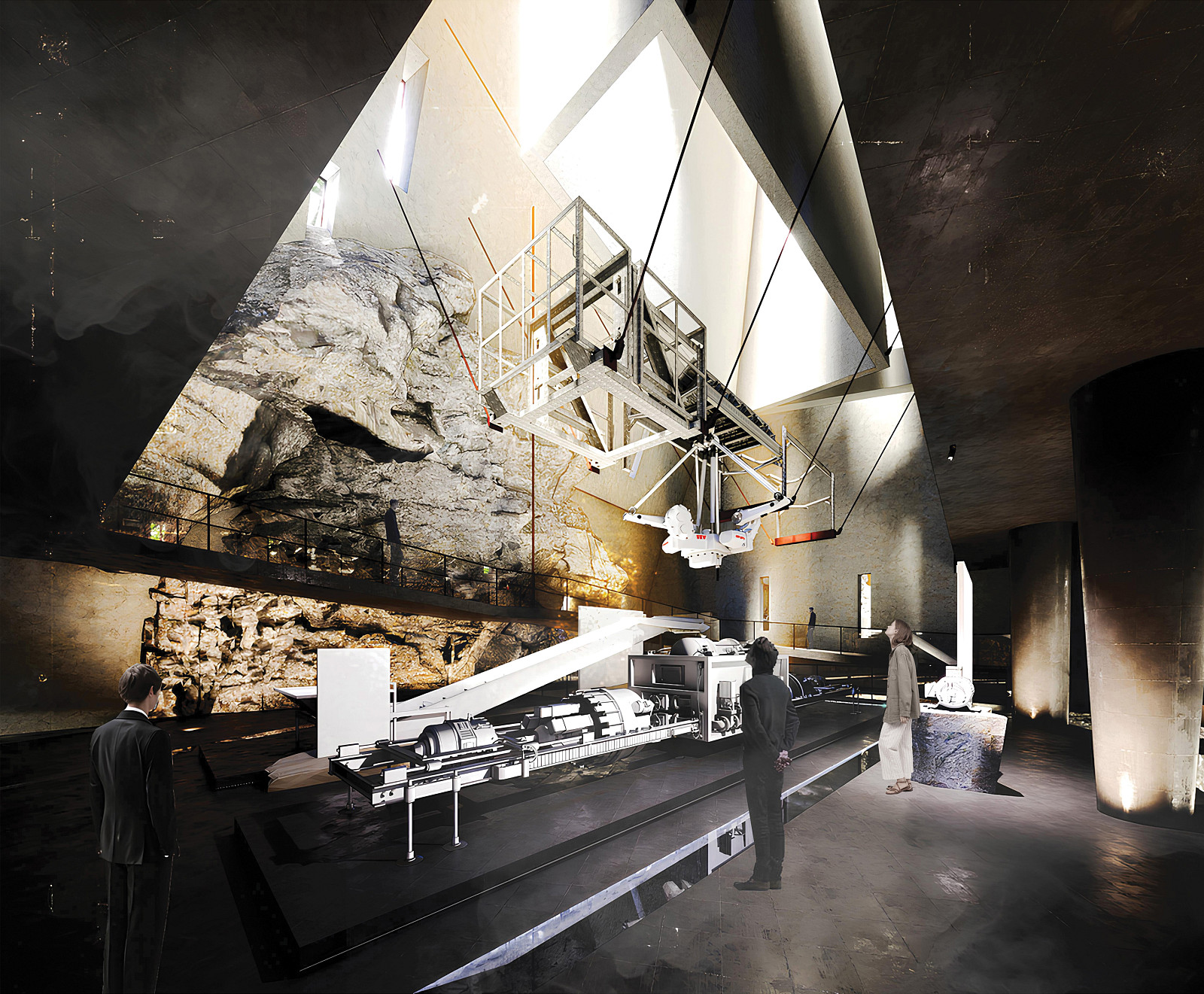
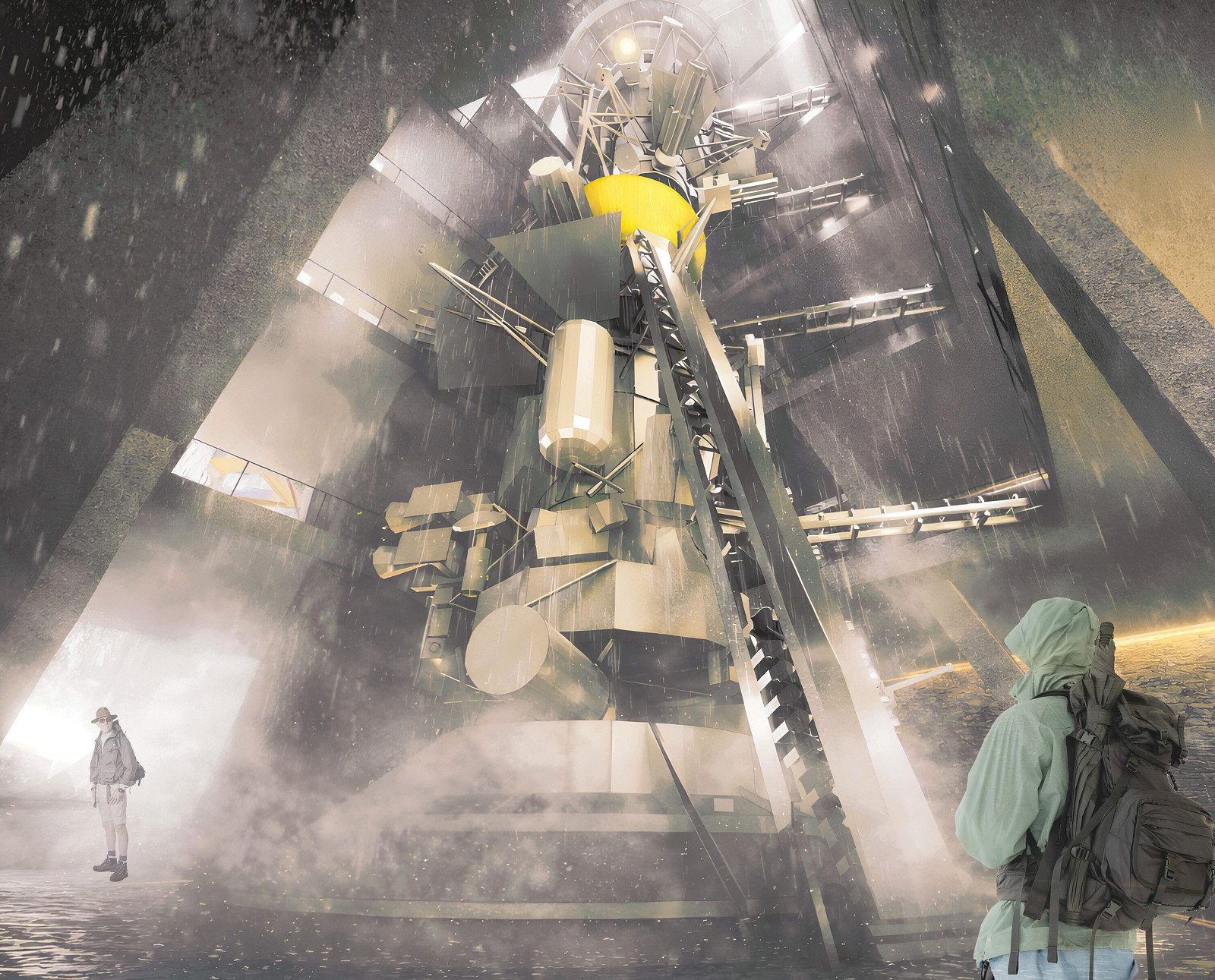
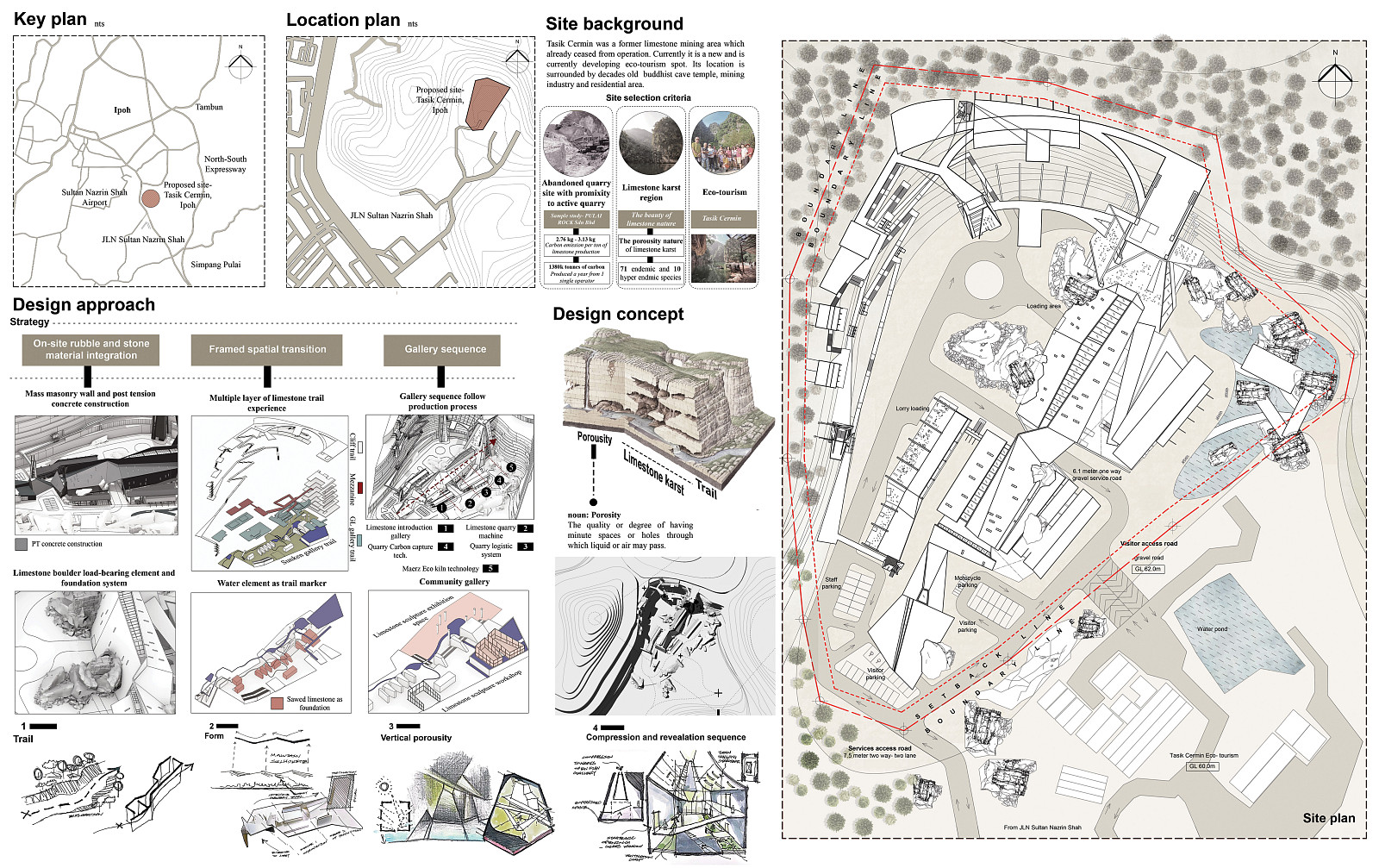
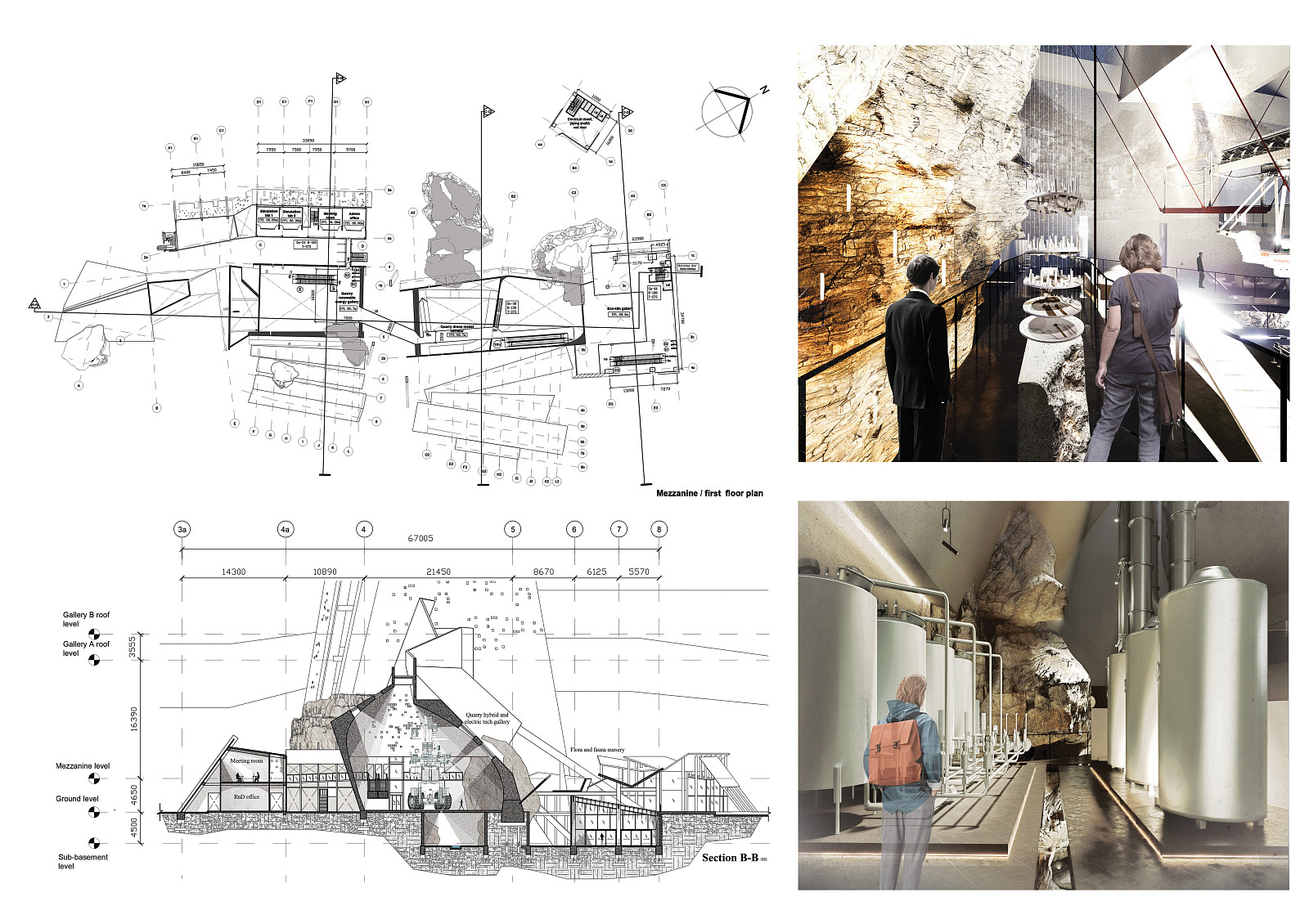
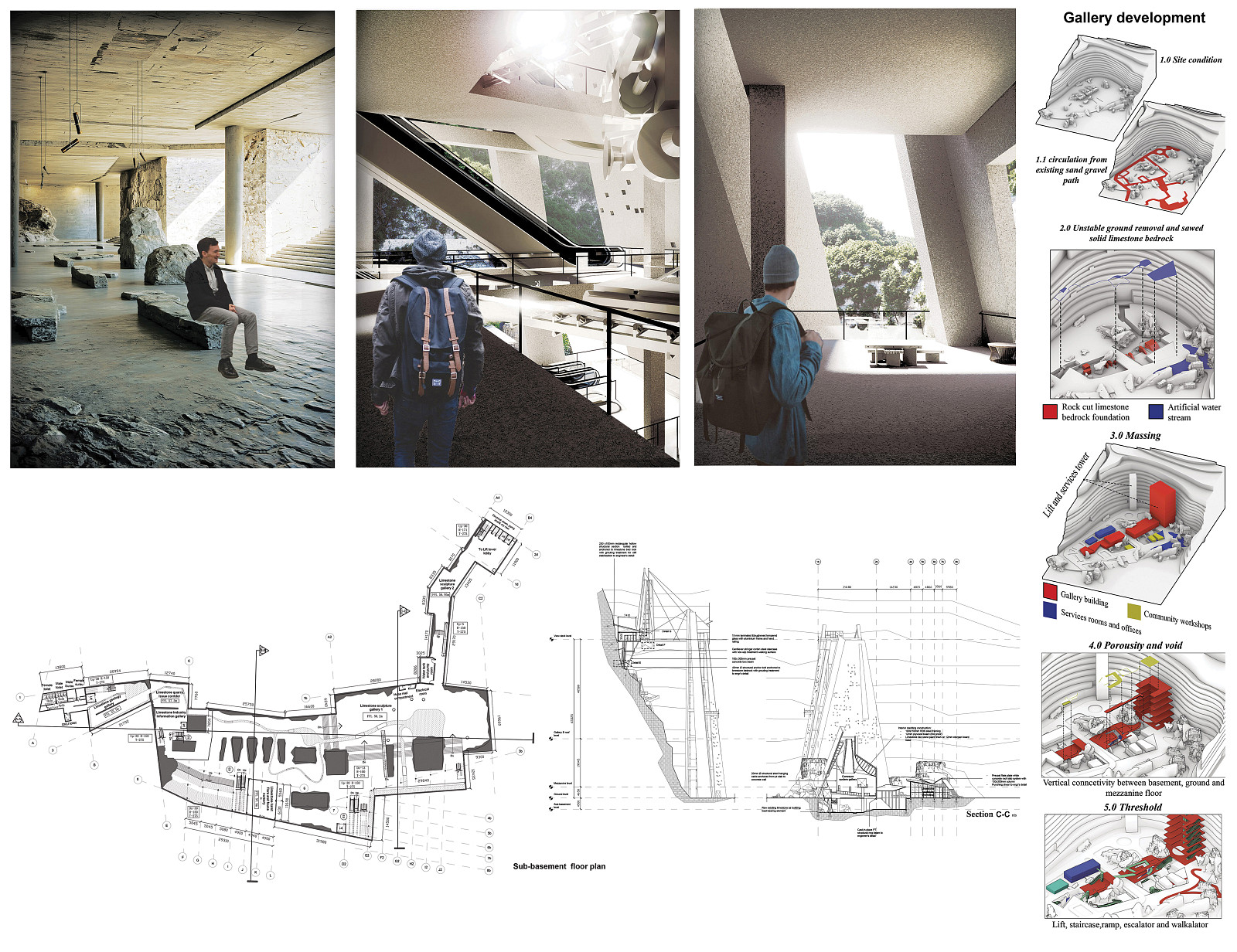
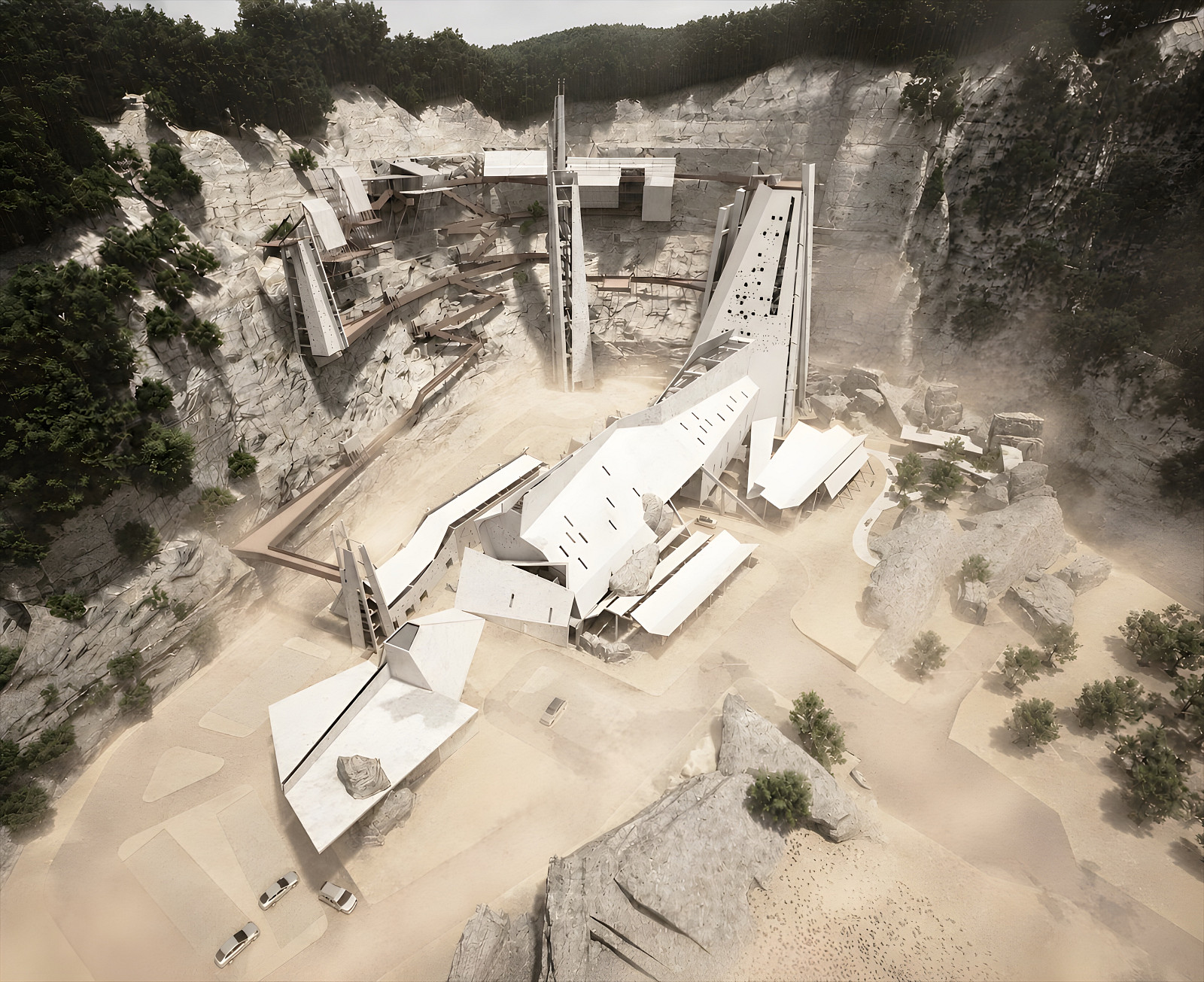
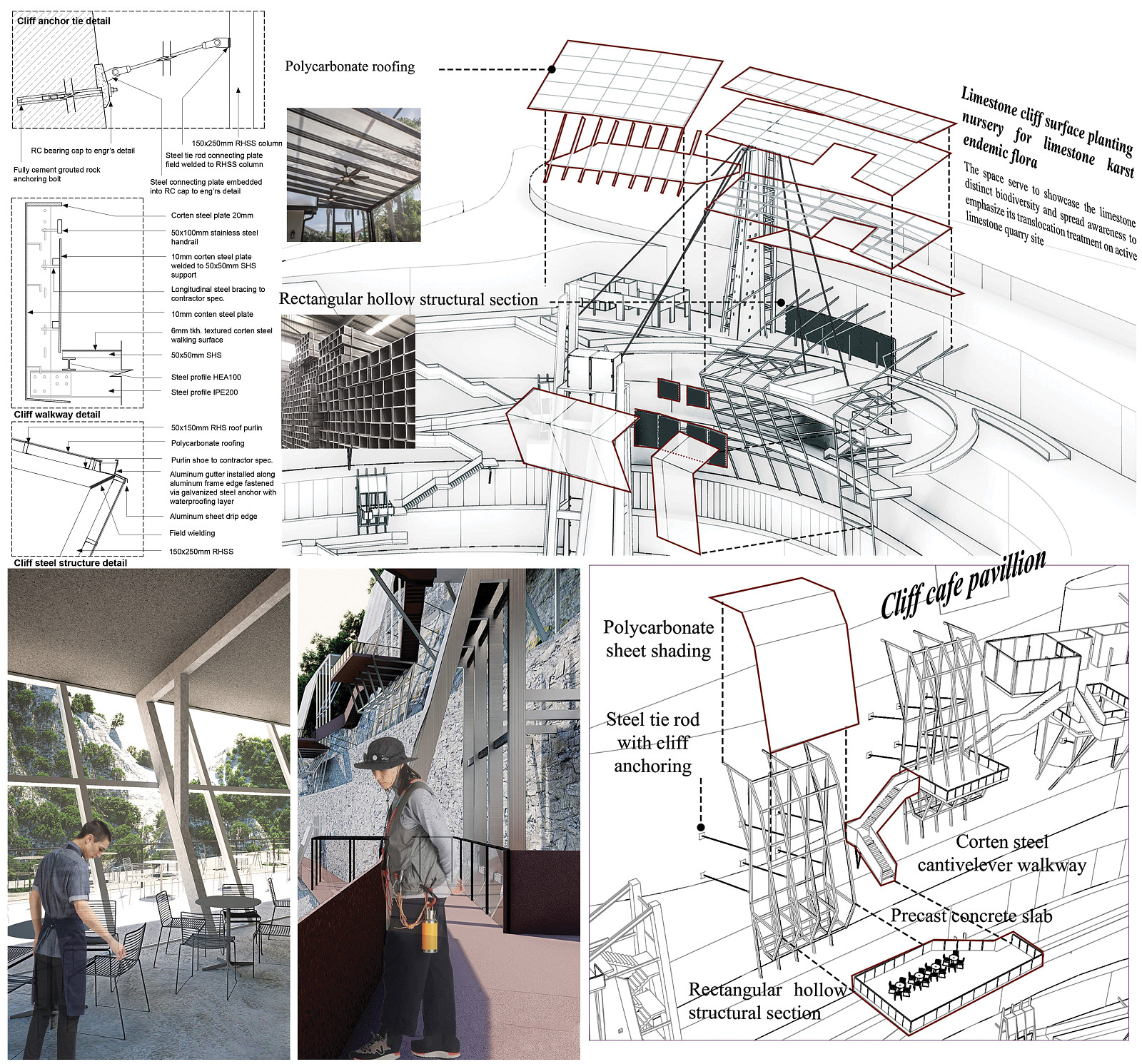
With the concept of limestone porosity, the project is functionally divided into 3 different circulation trails with the idea of compression and revelation. First, the limestone trail. This first phase of circulation threshold aims to introduce the visitor to the subject matter—limestone. It consists of 3 gallery zones, all located at the basement floor, directly carved into the limestone ground. These galleries introduce what limestone is, its function, and the quarry industry issue to the visitors. The directly carved sunken spaces with exposed limestone as the basement wall aim to inspire the idea of tectonic honesty where the user can touch and experience the limestone. Then, the visitors will be guided into the second circulation threshold, which at the ground level. This second trail consists of 4 technology gallery zones. This threshold's main function is to showcase the sustainable quarry technology innovation. These 4 gallery sequences are arranged in a way that they follow the limestone production sequence, from harvesting and transportation to the final processing of raw limestone into quicklime for cement industry applications. The end of the second trail will be marked by the eco-lime kiln gallery, which subtly carries the visitor to the final circulation threshold—the limestone cliff, which comprises of limestone biodiversity nursery, elevated cafe, souvenir shops, watchtower, and elevated walkway.
Technical information
The project is a brownfield reuse project. It is located on a former limestone harvesting site, where the raw limestone cliff surface and the limestone bedrock ground are exposed. Minimal vegetation exist on the site. The ground surface itself has fissures and fractures, suggesting the ground was damaged from the former mining operation. However, limestone was known for its durability. Thus, by directly incorporating the abundantly available material, the building's main materials are post-tensioned concrete shear wall and flat slab system, gunite, and mass masonry construction. Existing ground fractures which is unstable and hazardous is excavated and directly carved, forming a bench, which will directly become the sunken gallery spaces. Excavated limestone and on- site rubble will then be used as aggregate in the mass masonry wall construction. On- site stone boulders were marked and, with proper grouting treatment, incorporated as load-bearing elements for the gallery building.

Copyright © 2026 INSPIRELI | All rights reserved. Use of this website signifies your agreement to the Terms of Use, Privacy Policy, and use of cookies.
