OLYMAR Marine Life Center


Project idea
OLYMAR is an educational and recreational marine life center located in Aden, Yemen. The name combines “Olympic,” representing excellence and high standards, with “Mar,” meaning sea, reflecting the vision of a world-class marine destination.
Located on the Arabian Sea, Aden is surrounded by a rich marine environment and diverse aquatic ecosystems. OLYMAR was developed to showcase this natural wealth through an engaging destination that combines education, recreation, and environmental awareness. The project aims to introduce visitors to marine life and strengthen the connection between people and the underwater world through immersive and interactive experiences.
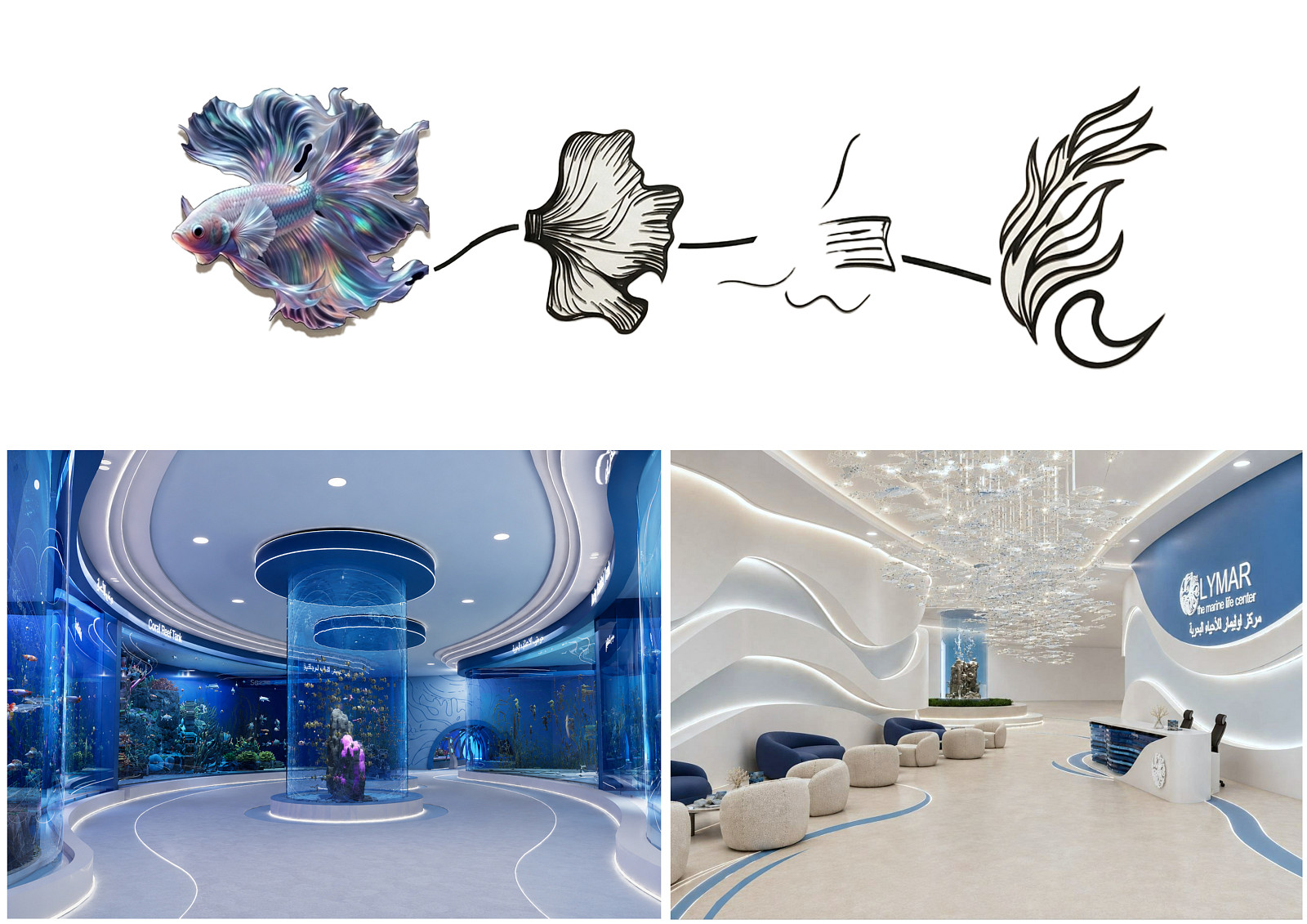
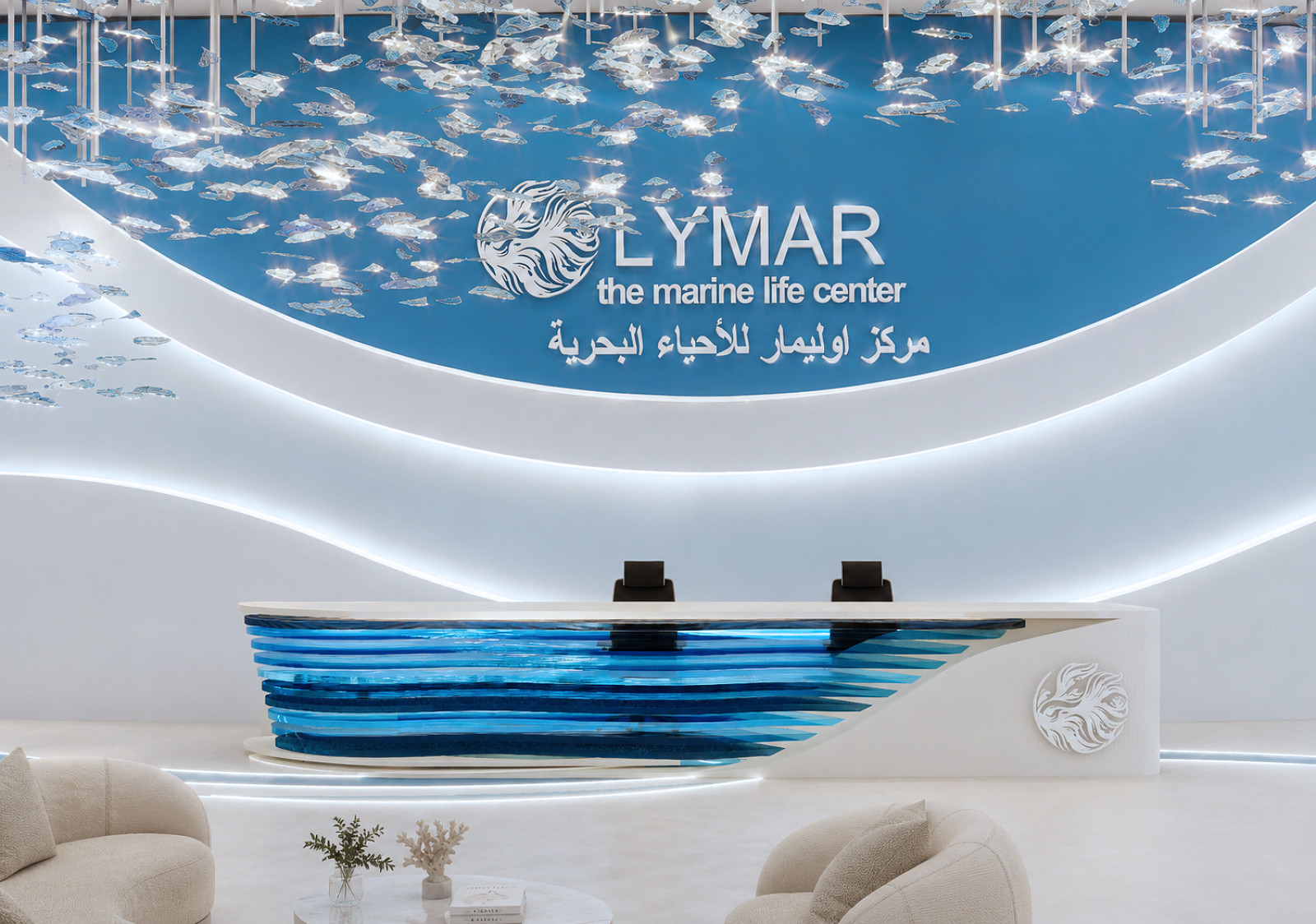
Inspired by the Betta fish tail, the design adopts organic forms and fluid circulation patterns that reflect the movement and beauty of marine life.
Project description
OLYMAR is an educational and recreational marine life center. The architectural design and floor plans were designed by Architect Hamzah Anwar Noman, while I focused on creating an immersive marine-inspired interior design experience across six main spaces.
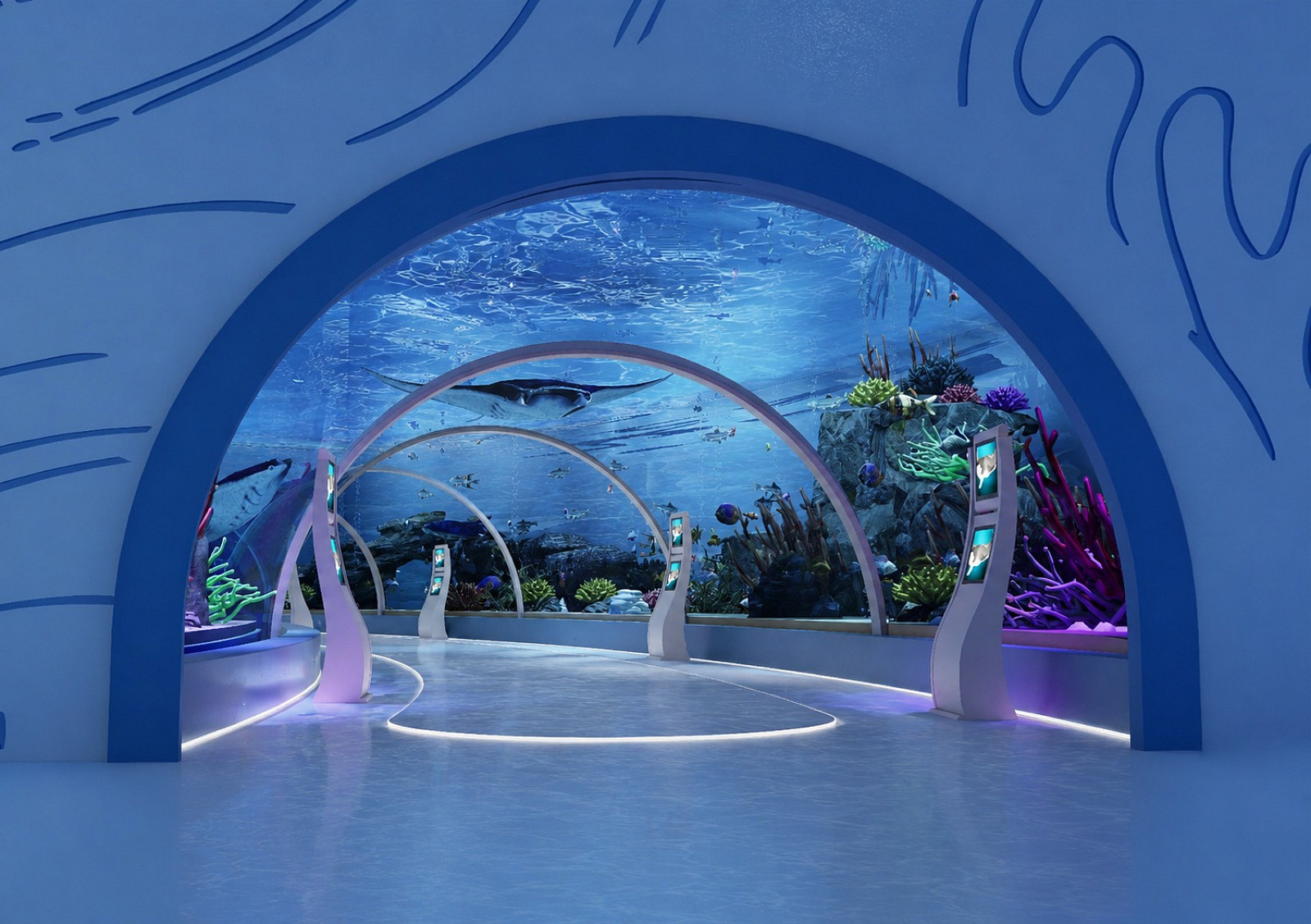
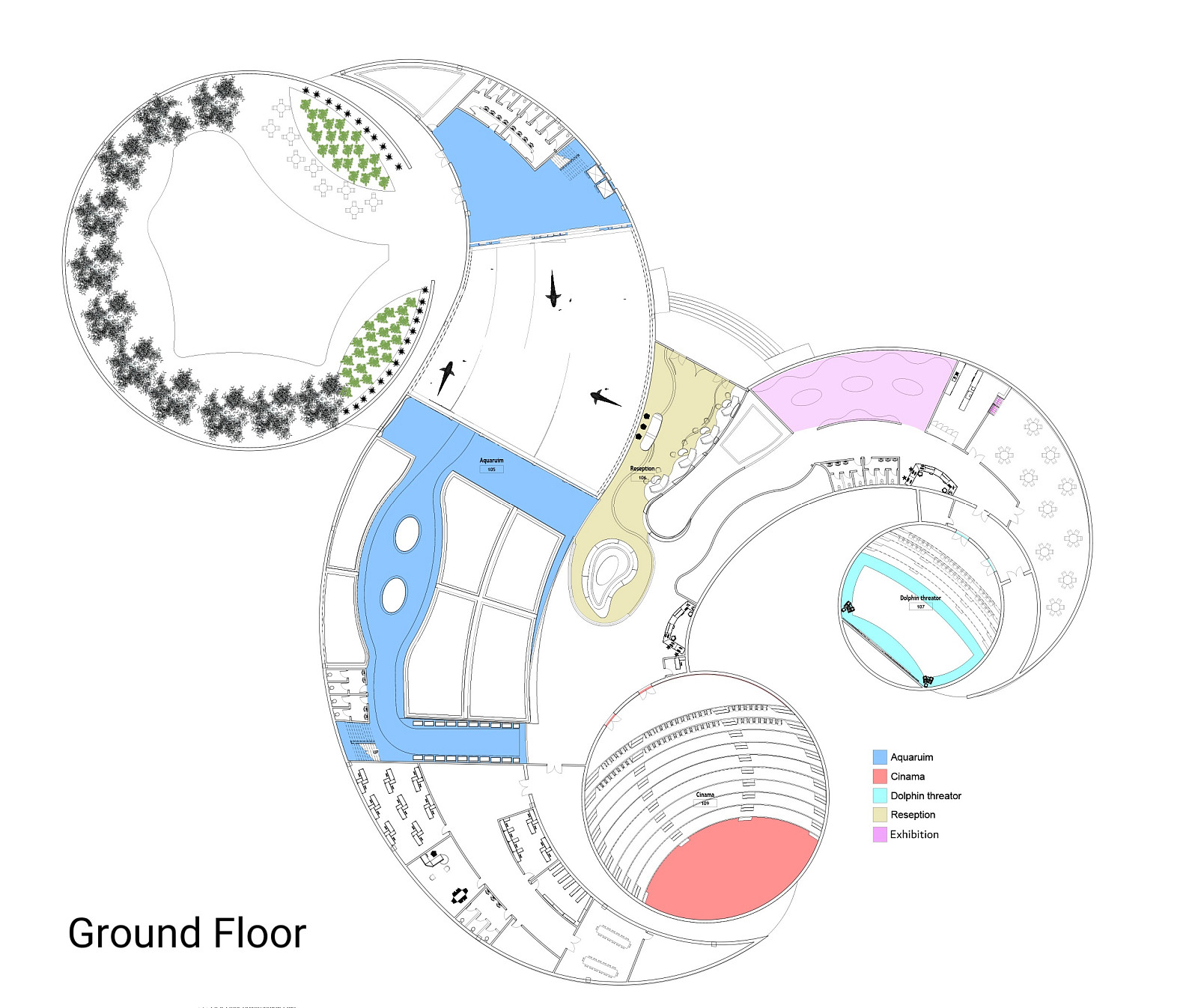
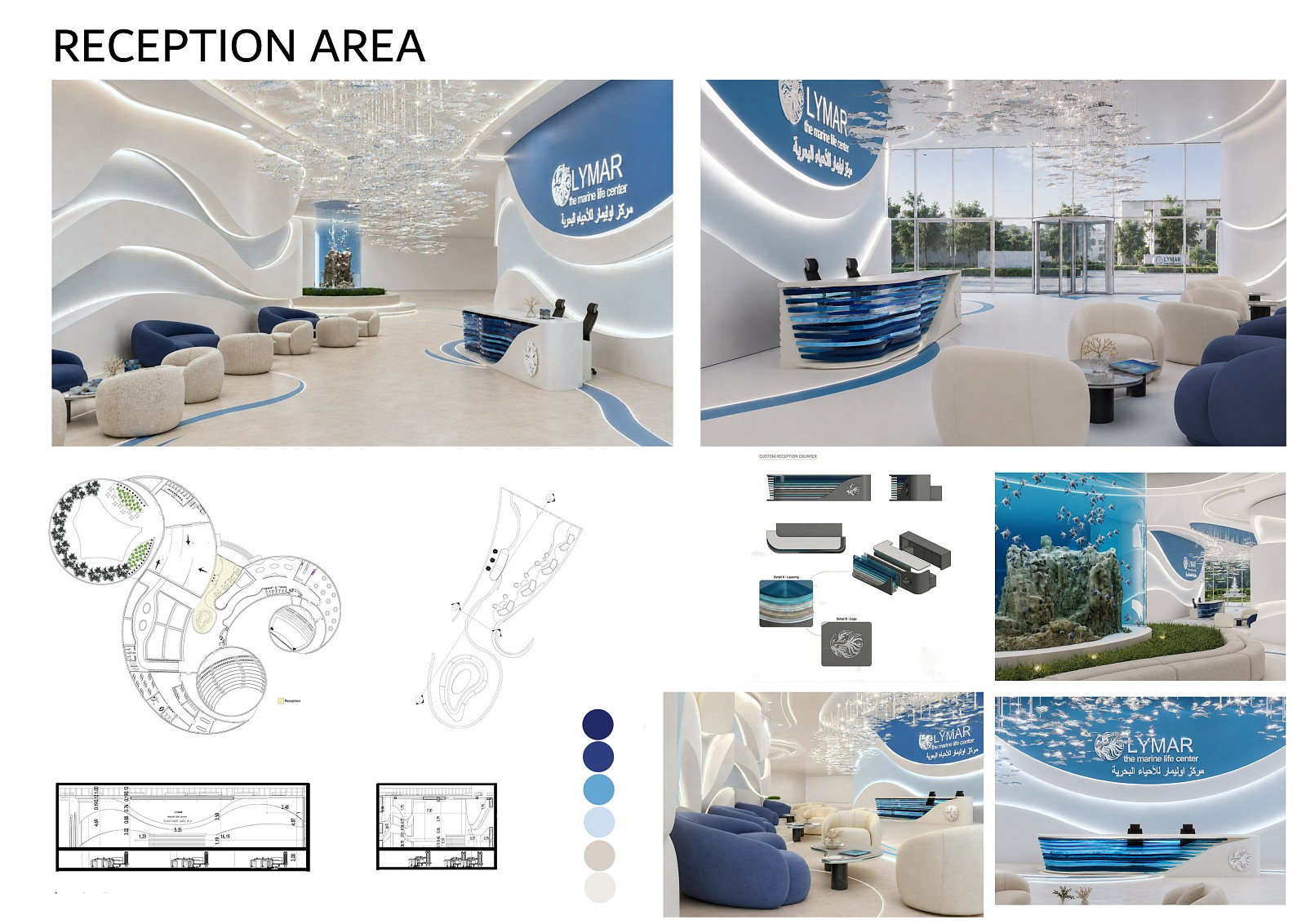
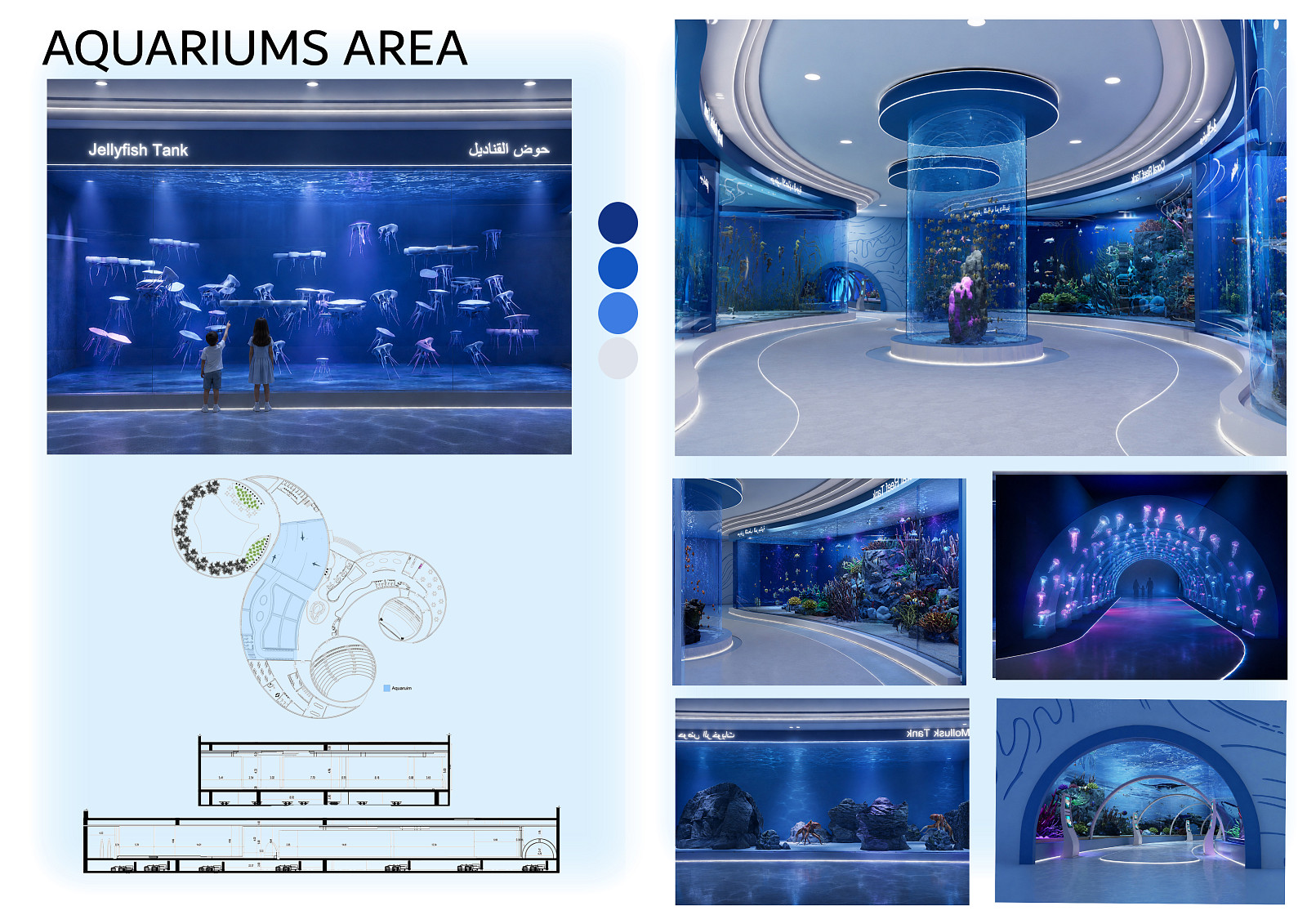
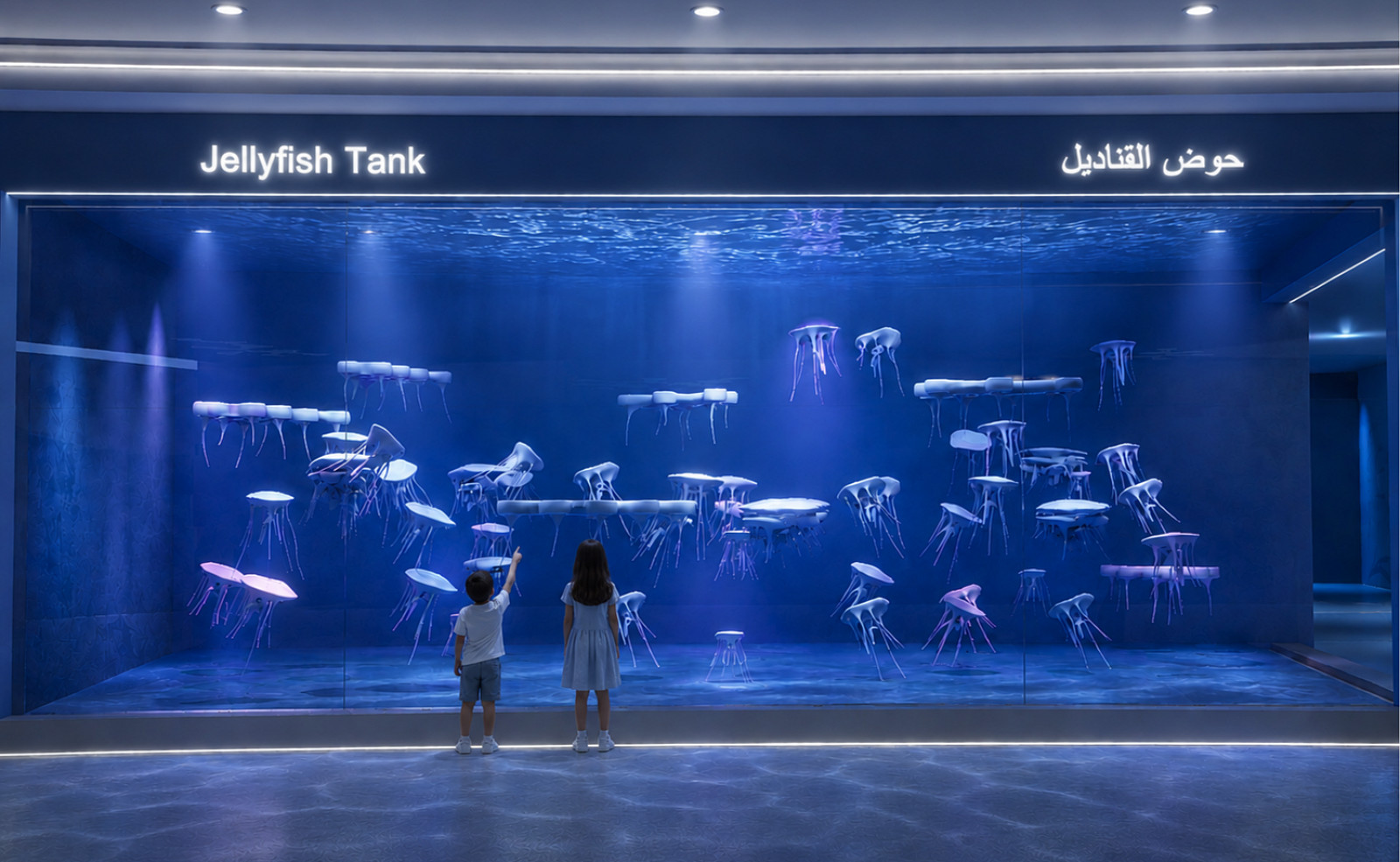
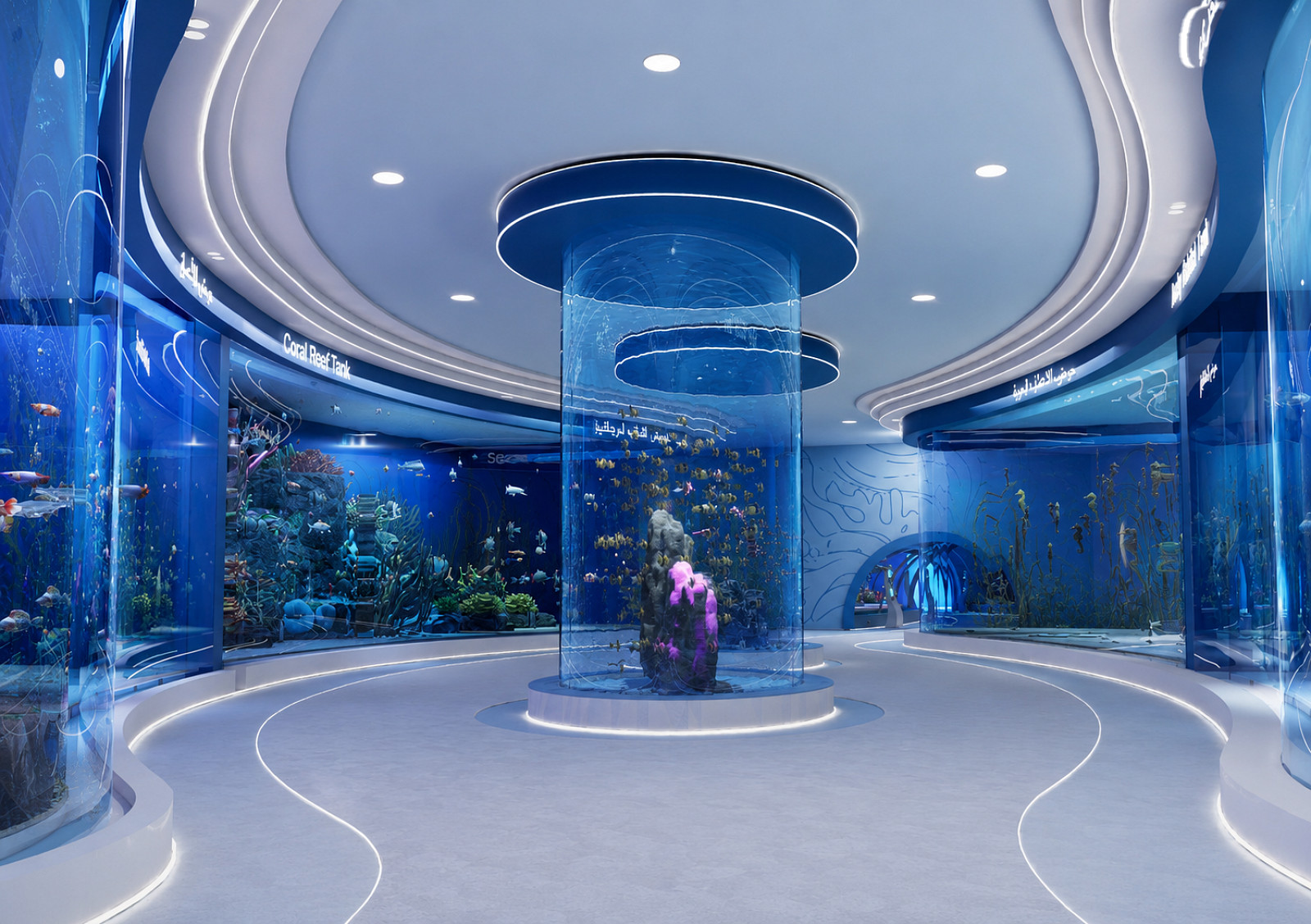
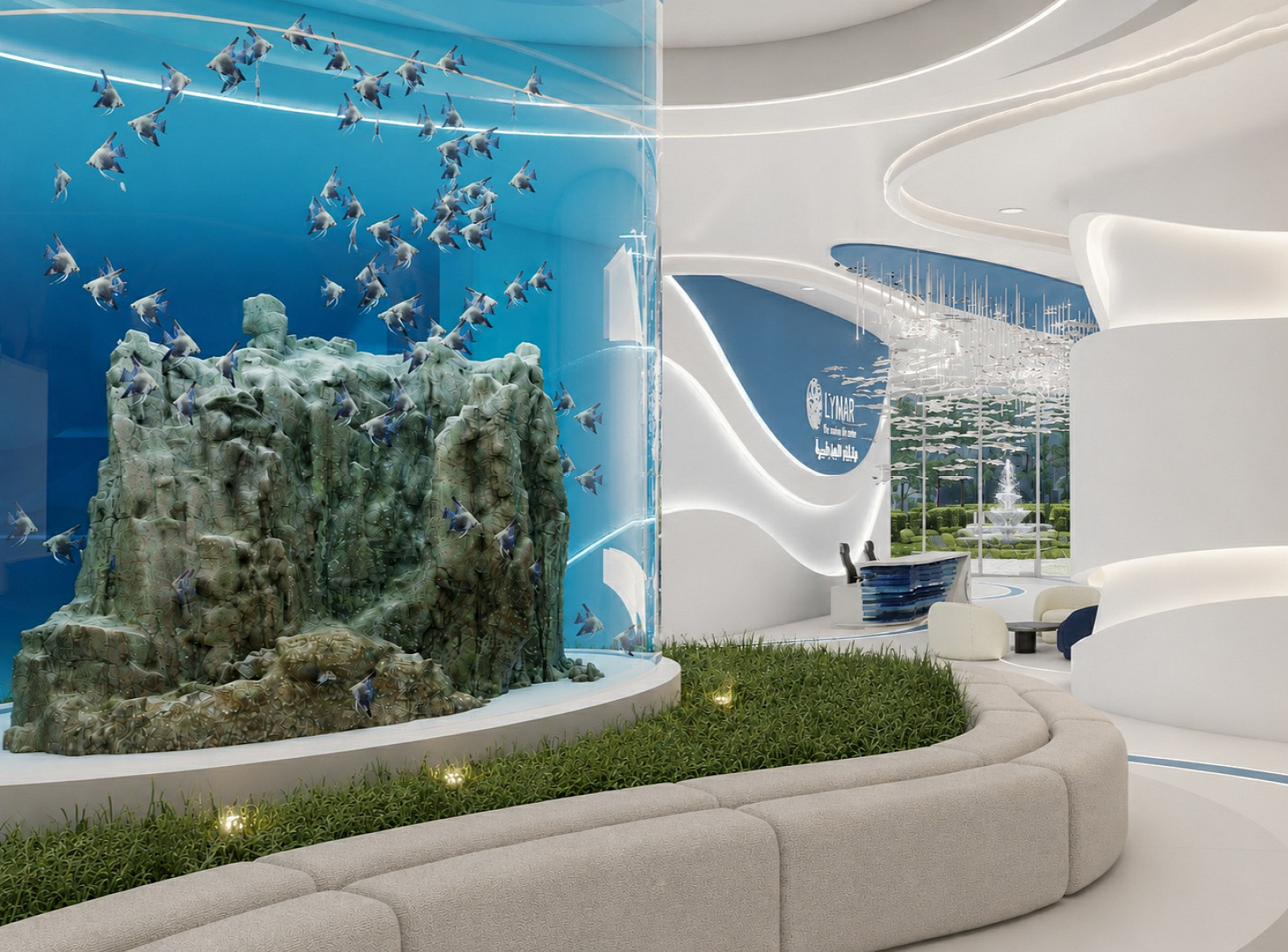
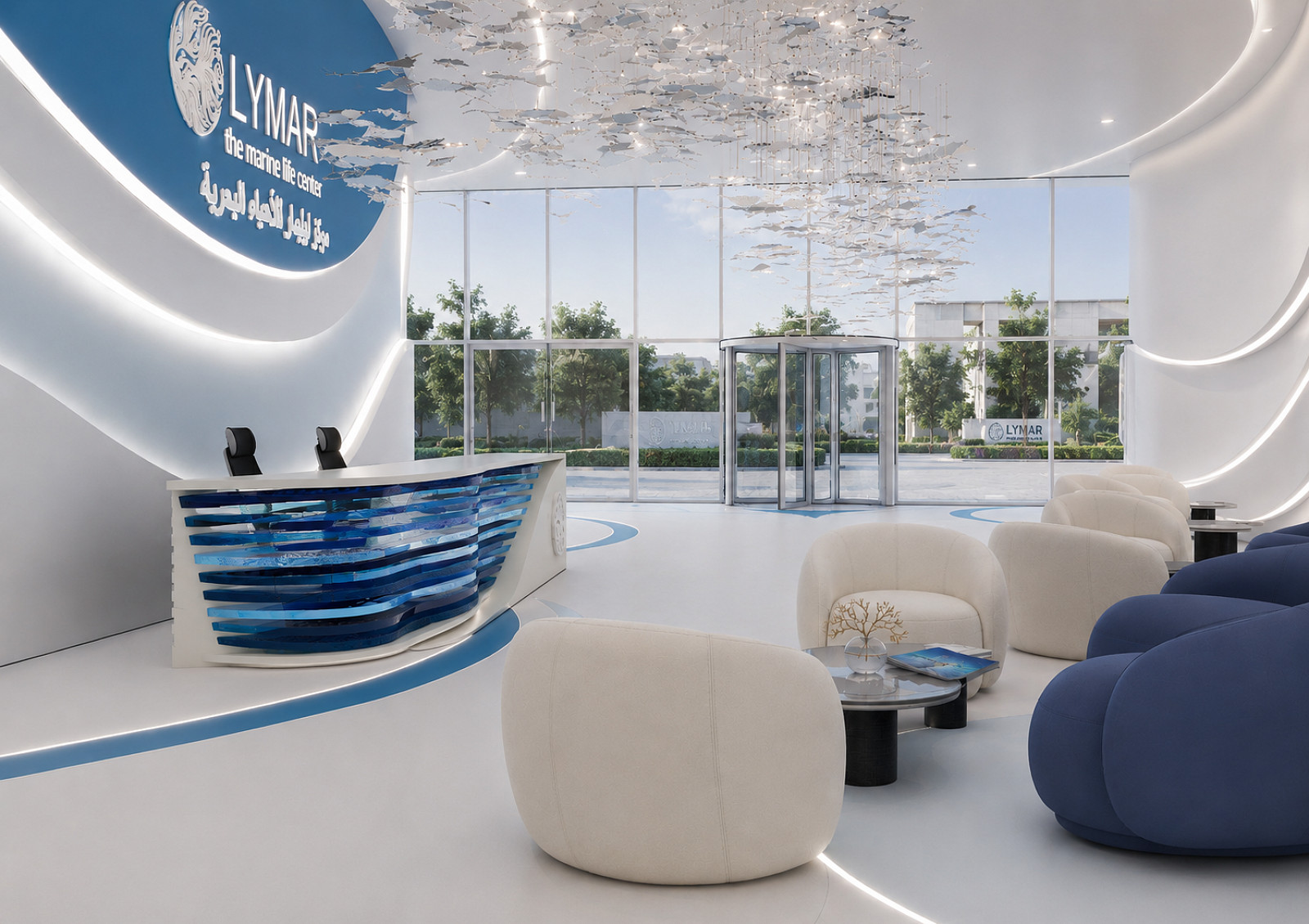
The project consists of a ground floor and a first floor. The journey starts at the reception, introducing the project identity through organic and fluid design. It continues to the aquarium galleries, the main attraction, featuring marine species in immersive displays and underwater viewing experiences.
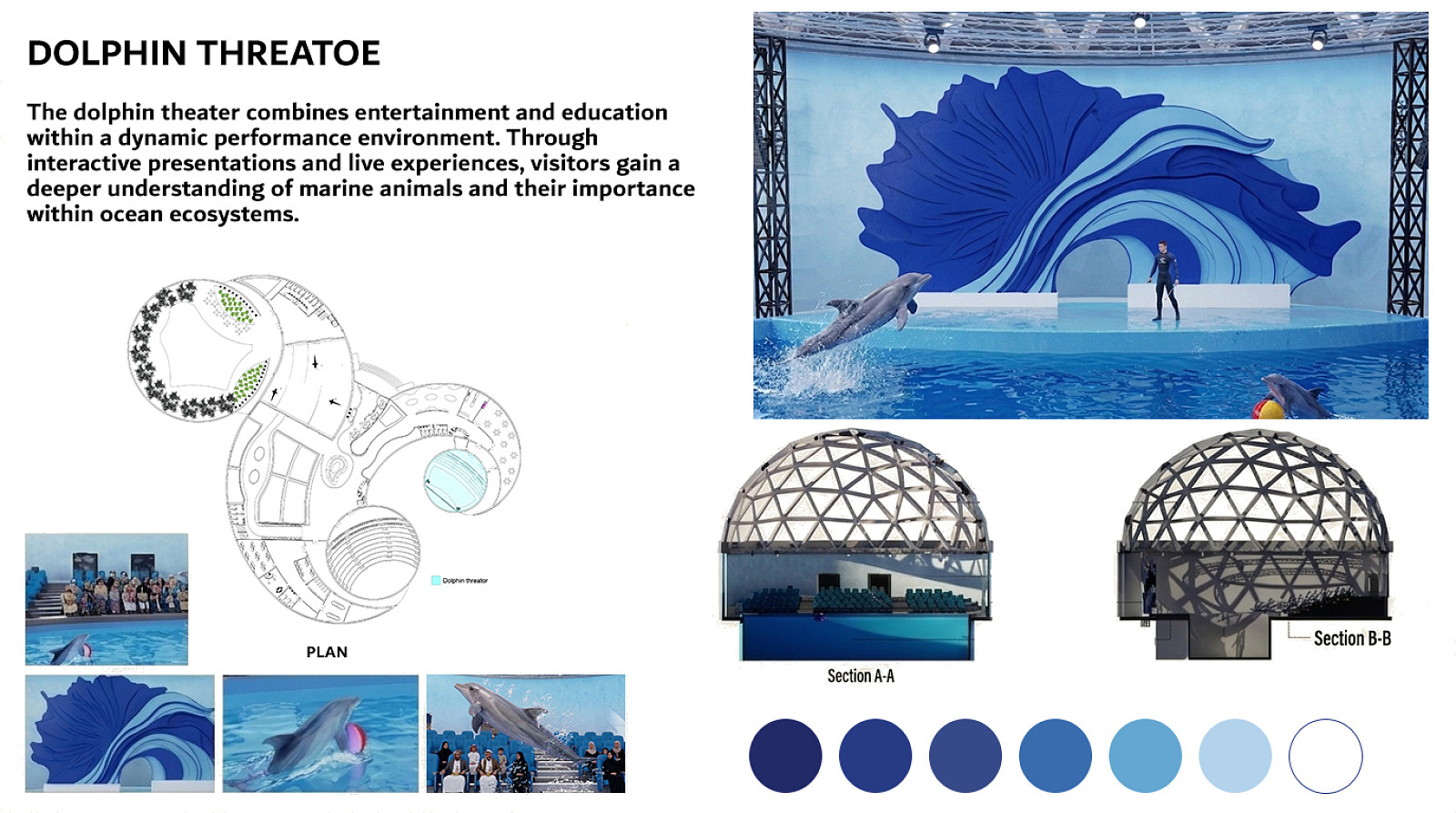
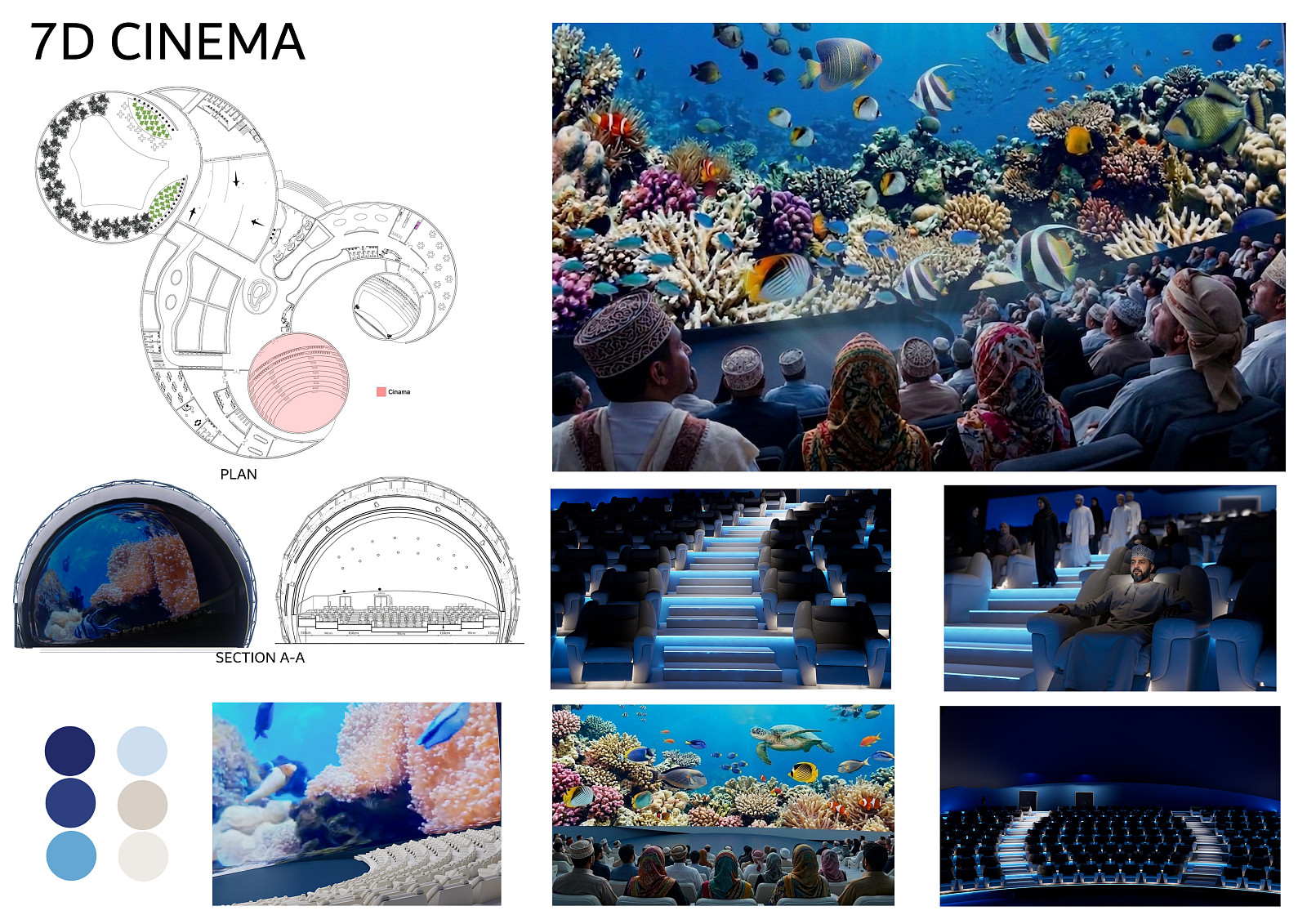
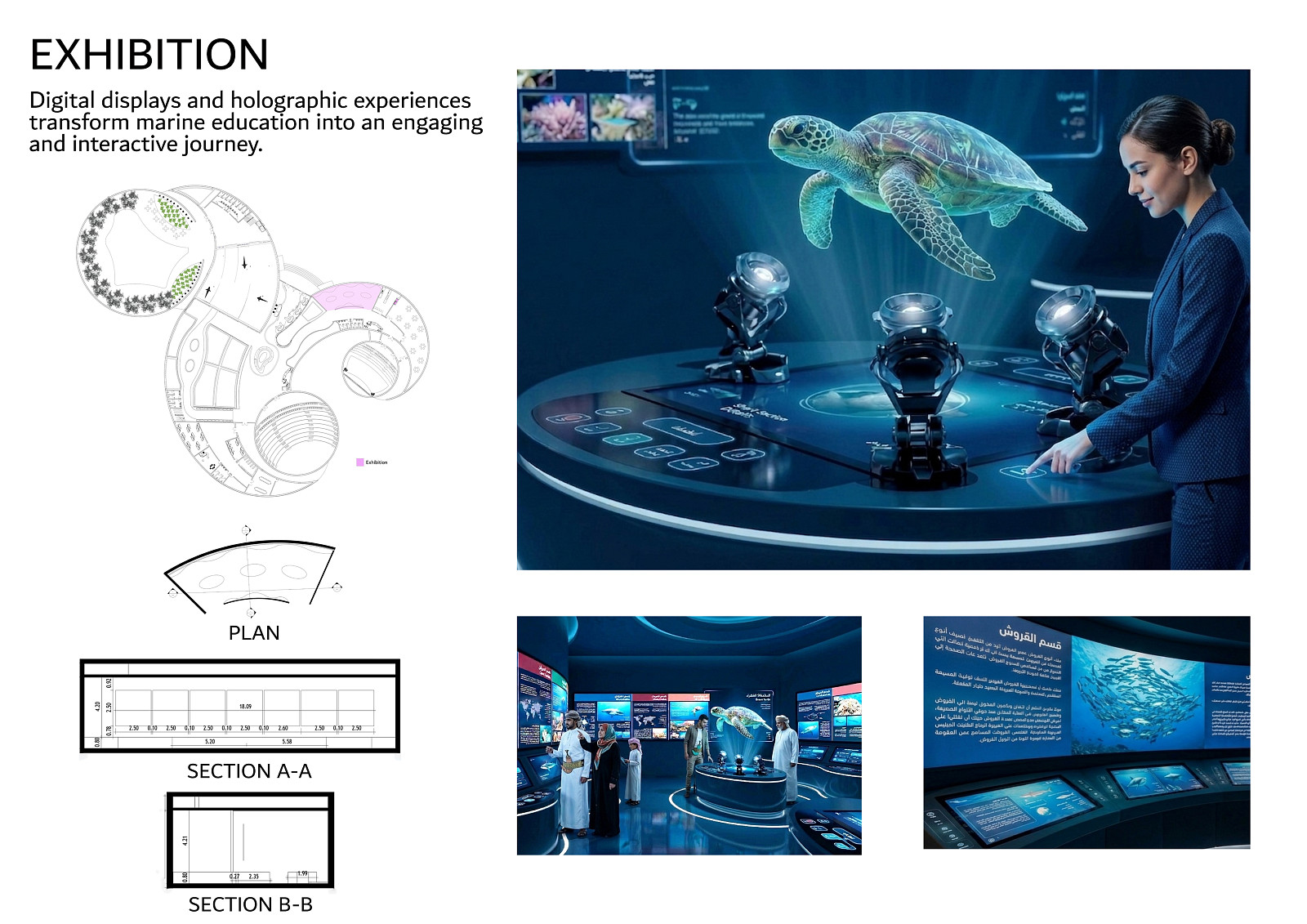
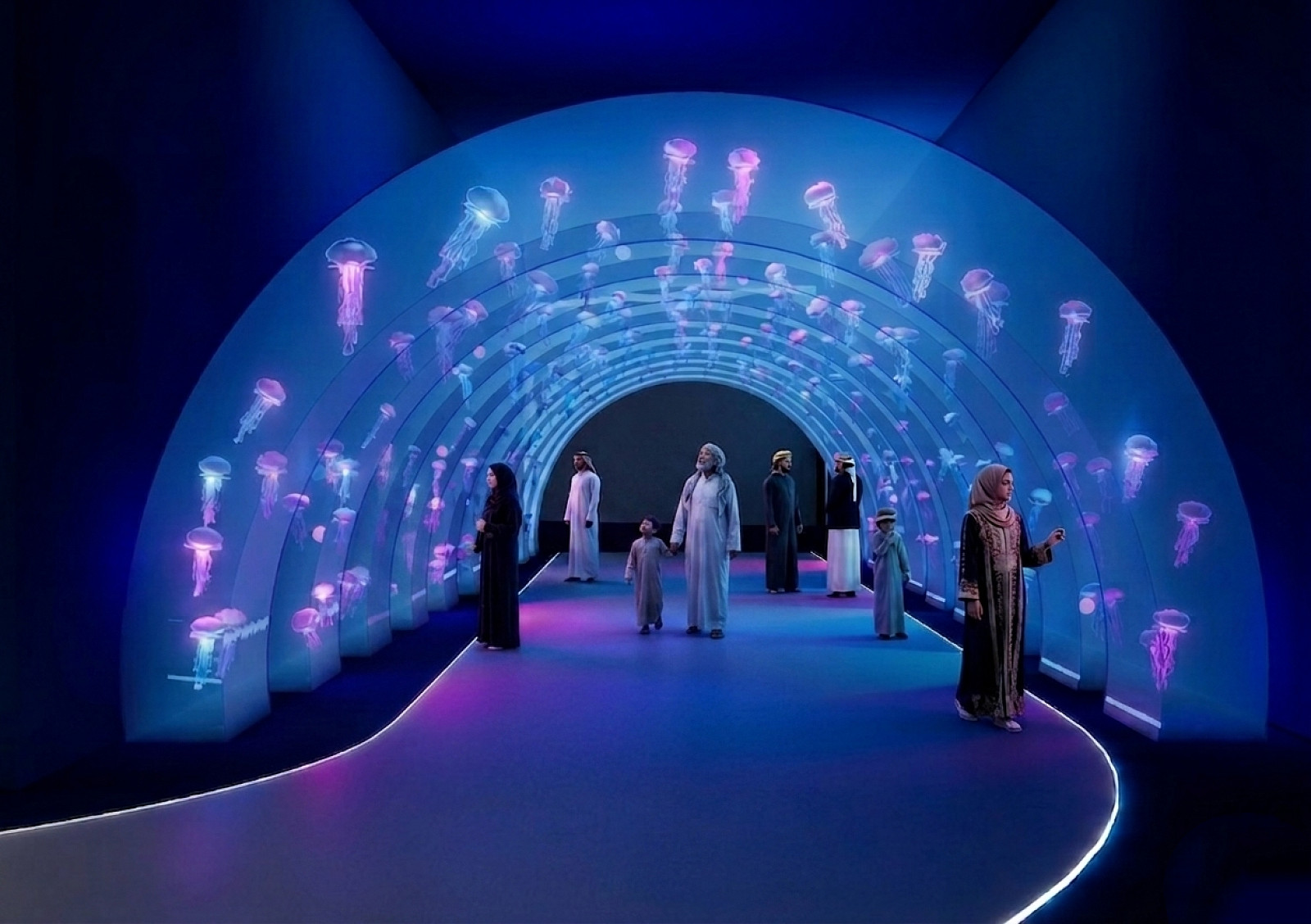
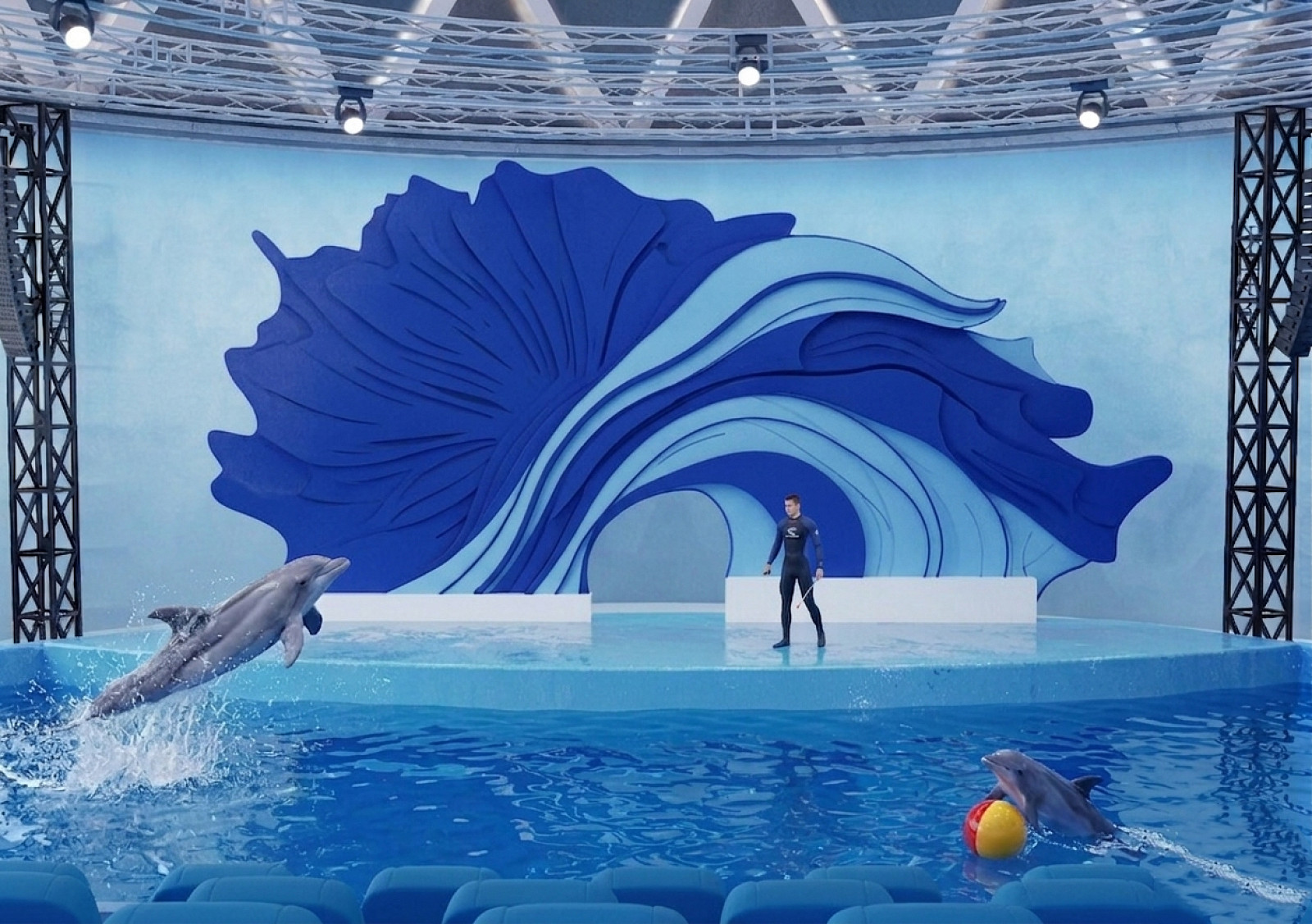
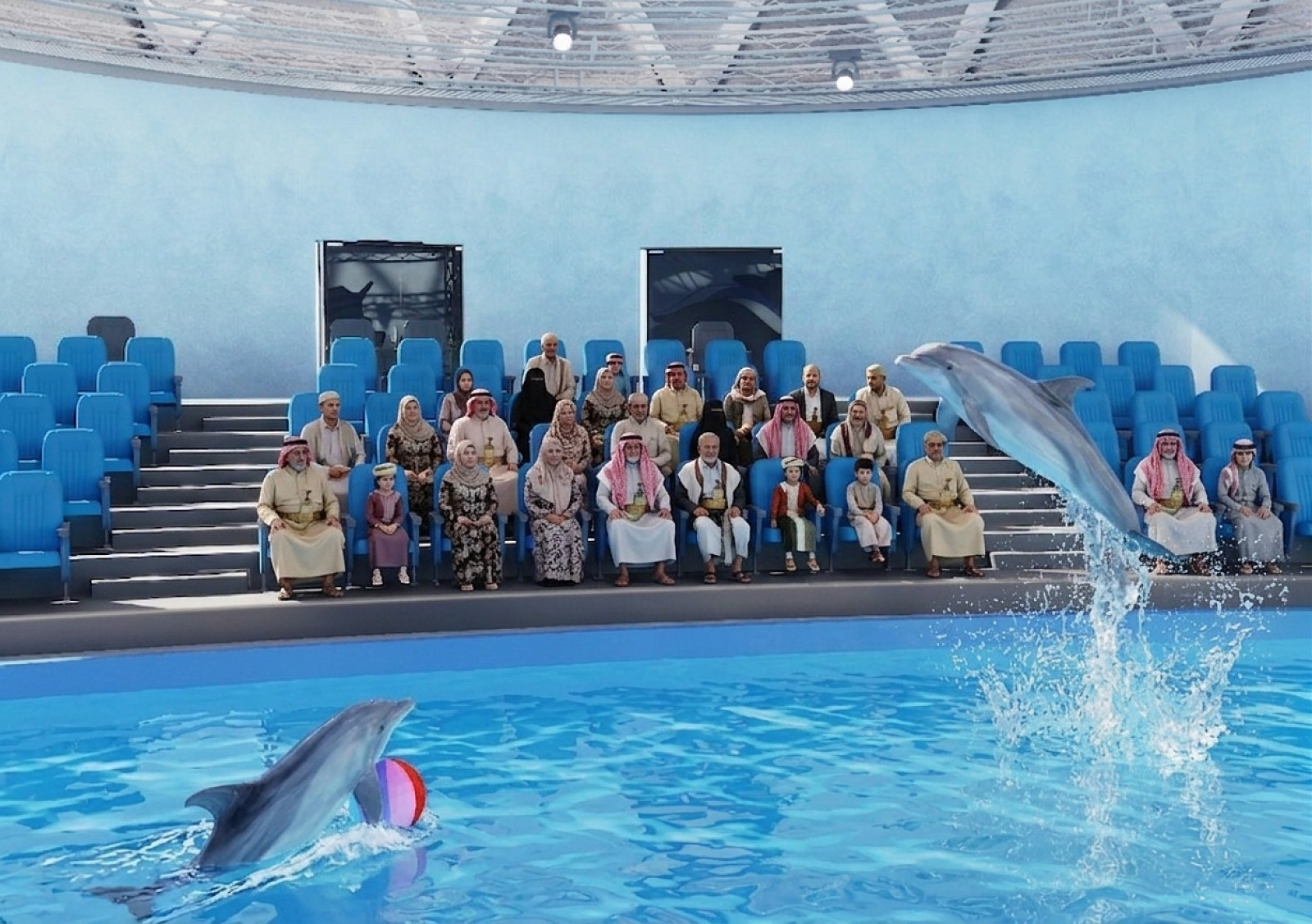
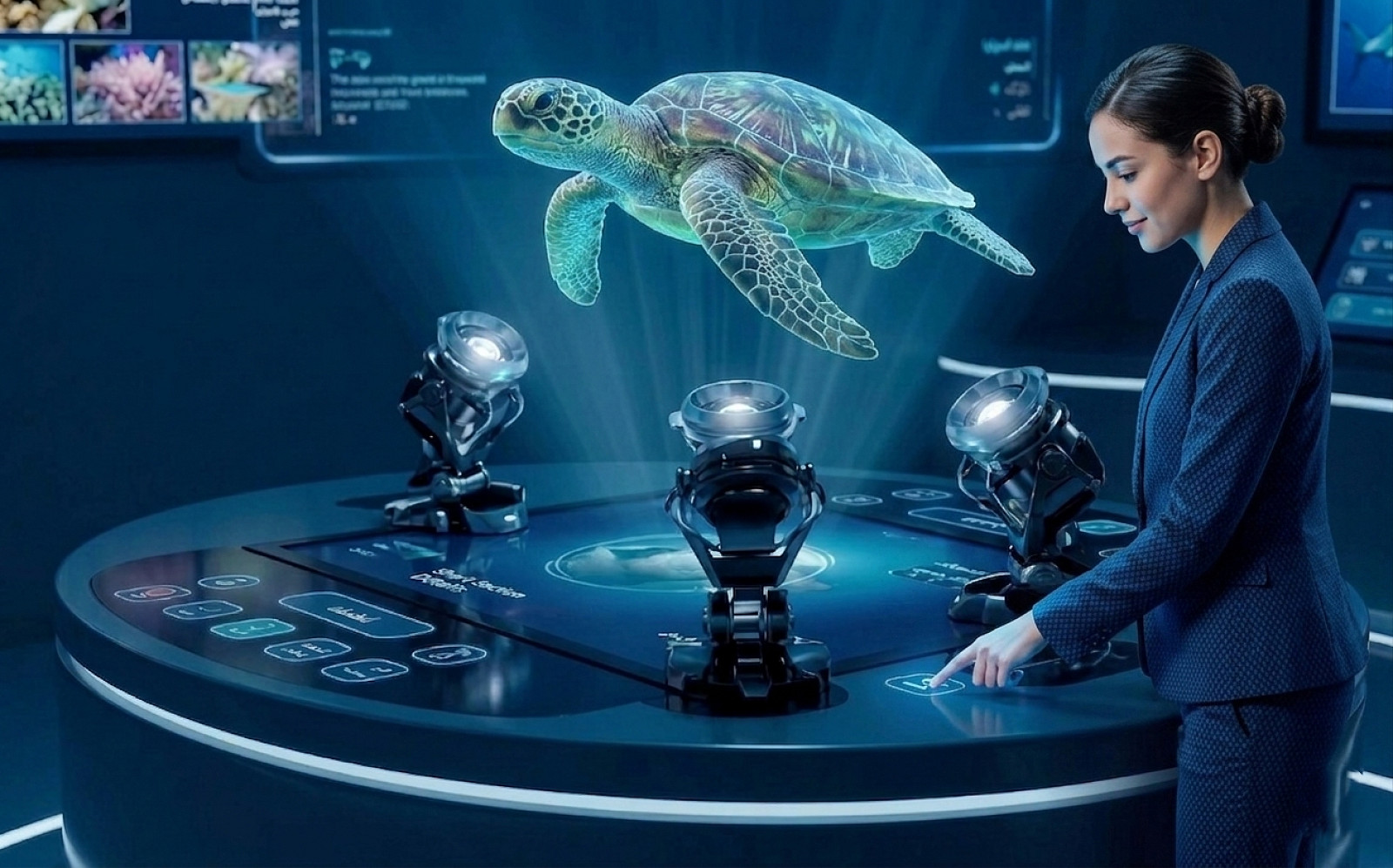
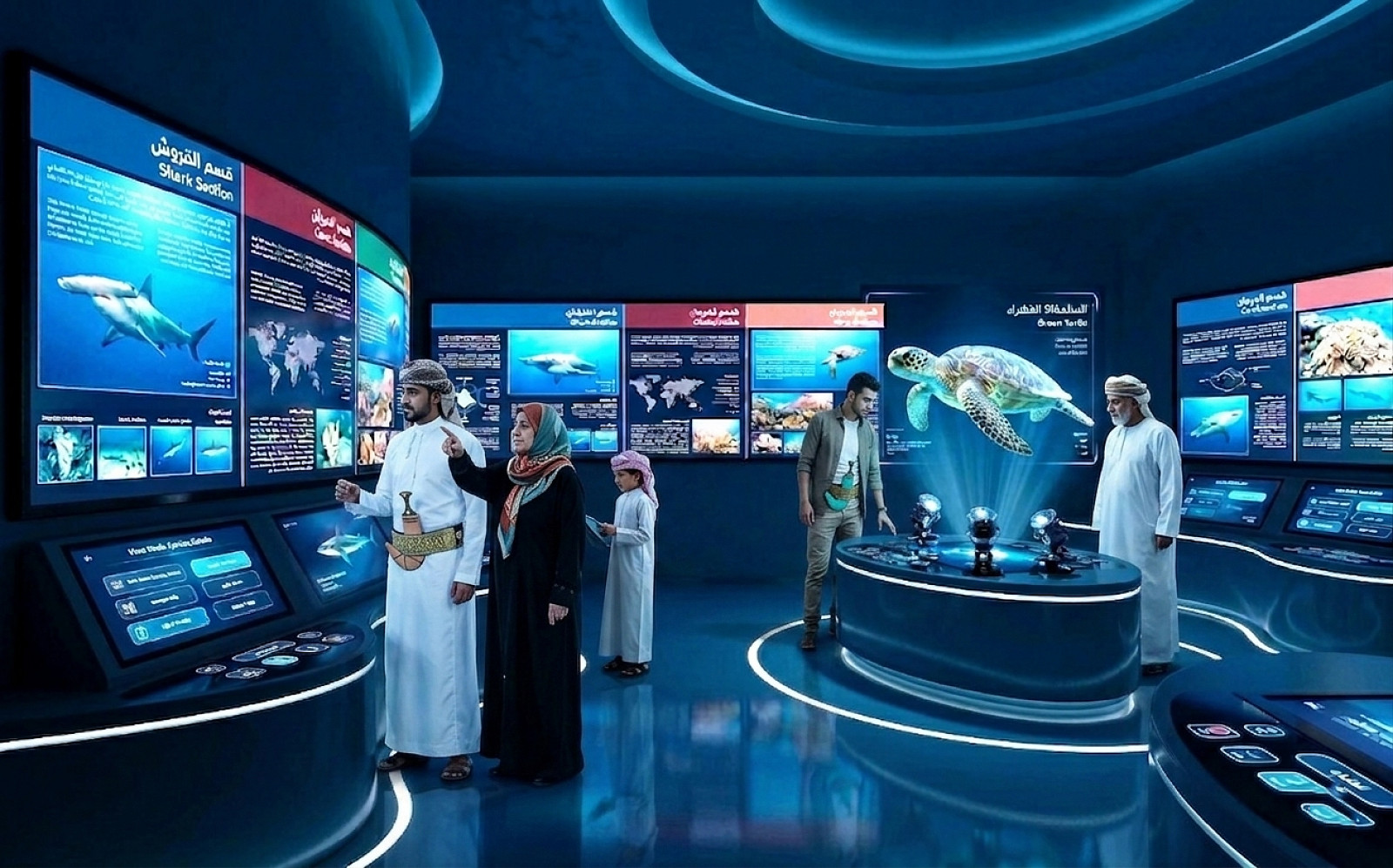
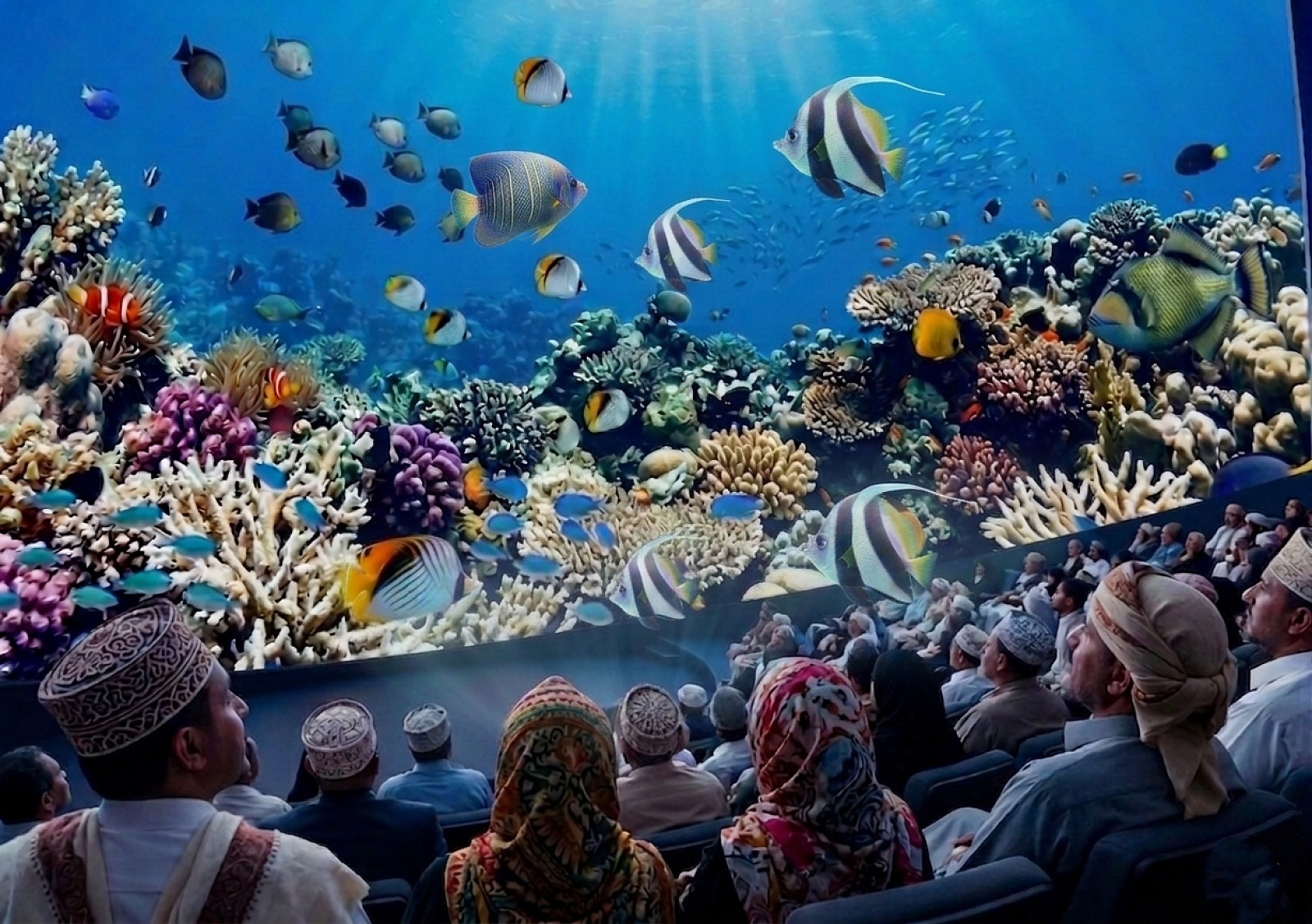
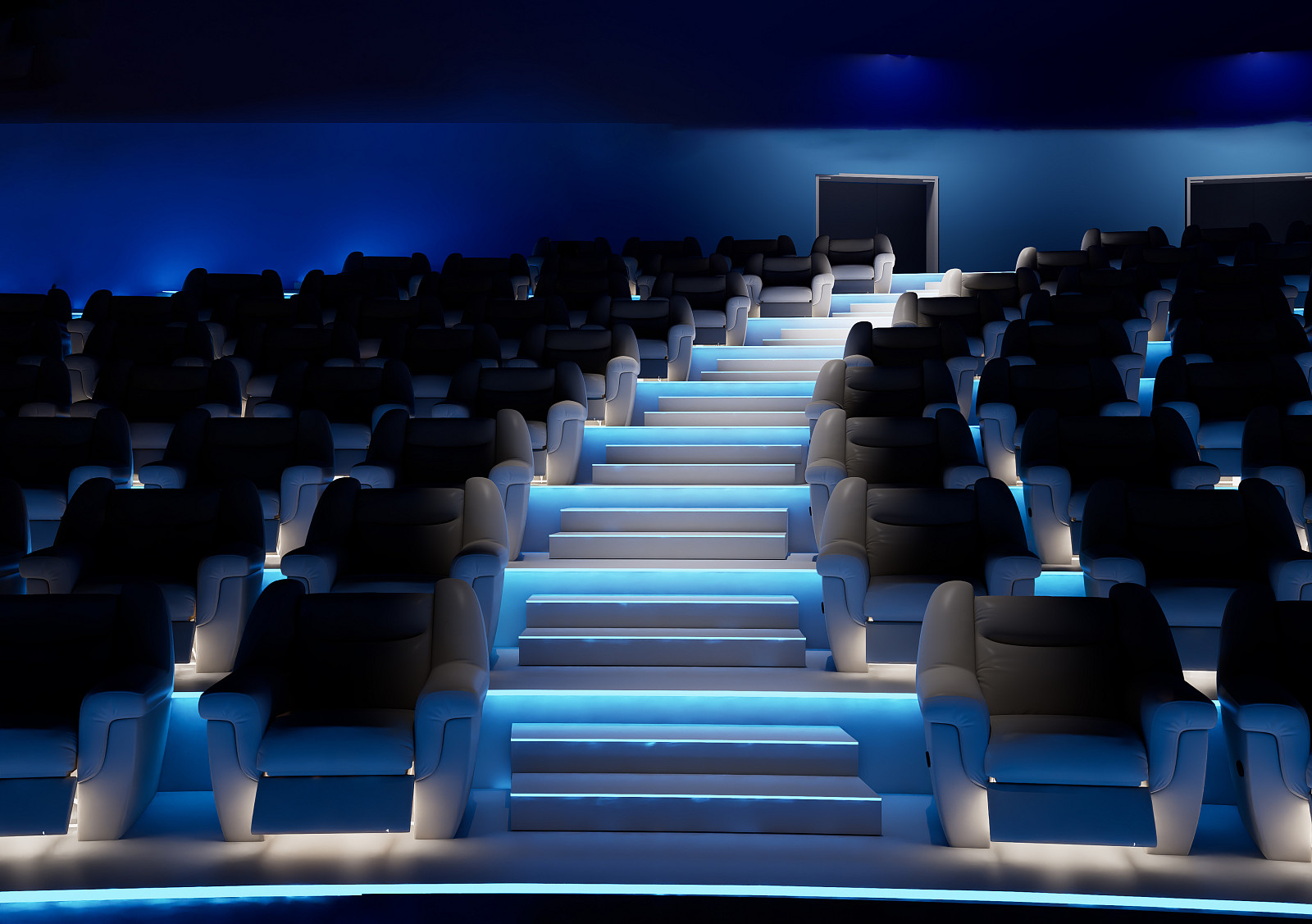
The ground floor also includes an interactive exhibition area with digital screens and 3D content about marine ecosystems, as well as a 360-degree cinema with an immersive visual experience enhanced by holographic elements. The experience continues in the dolphin theater, designed for educational and recreational marine performances.
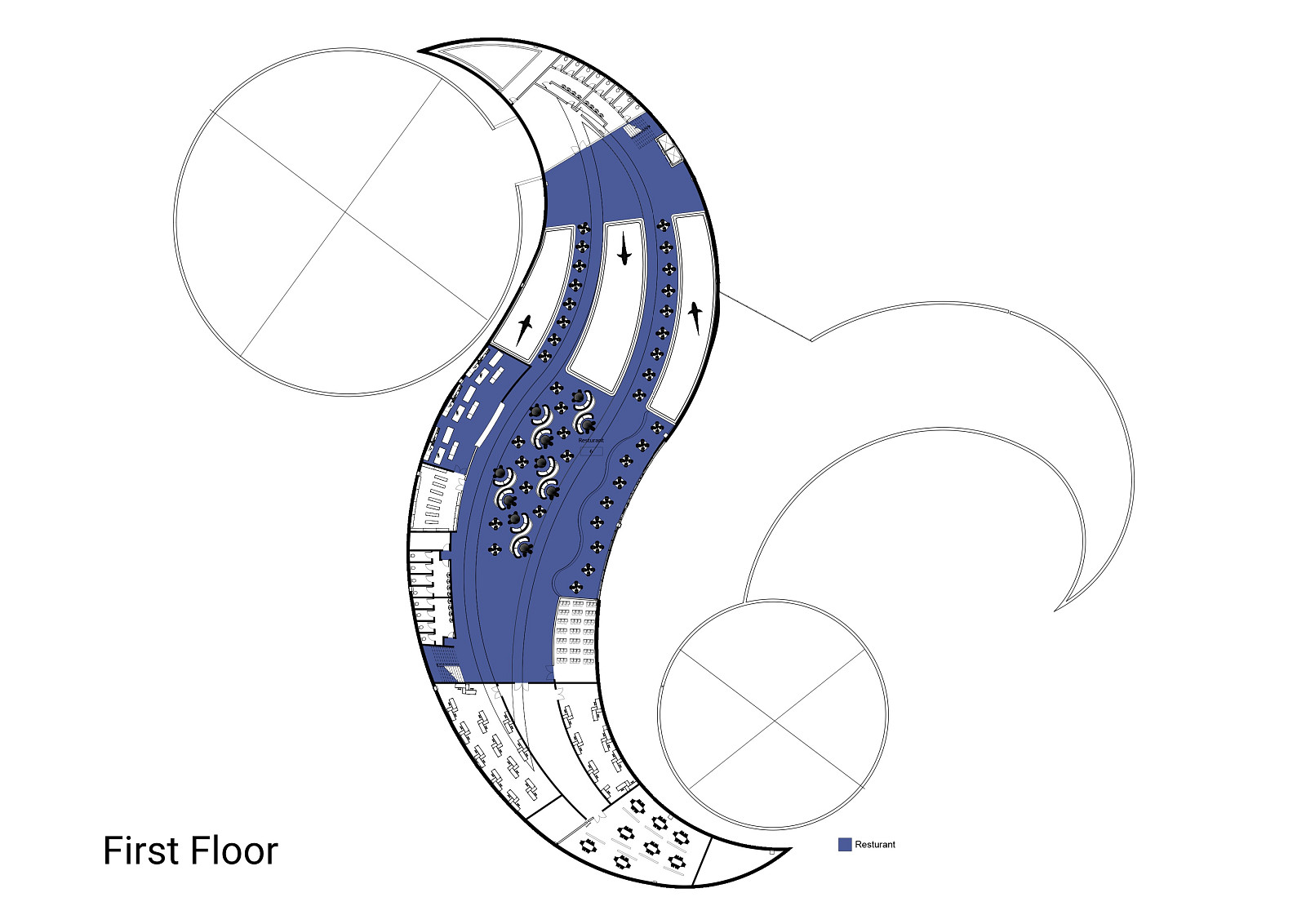
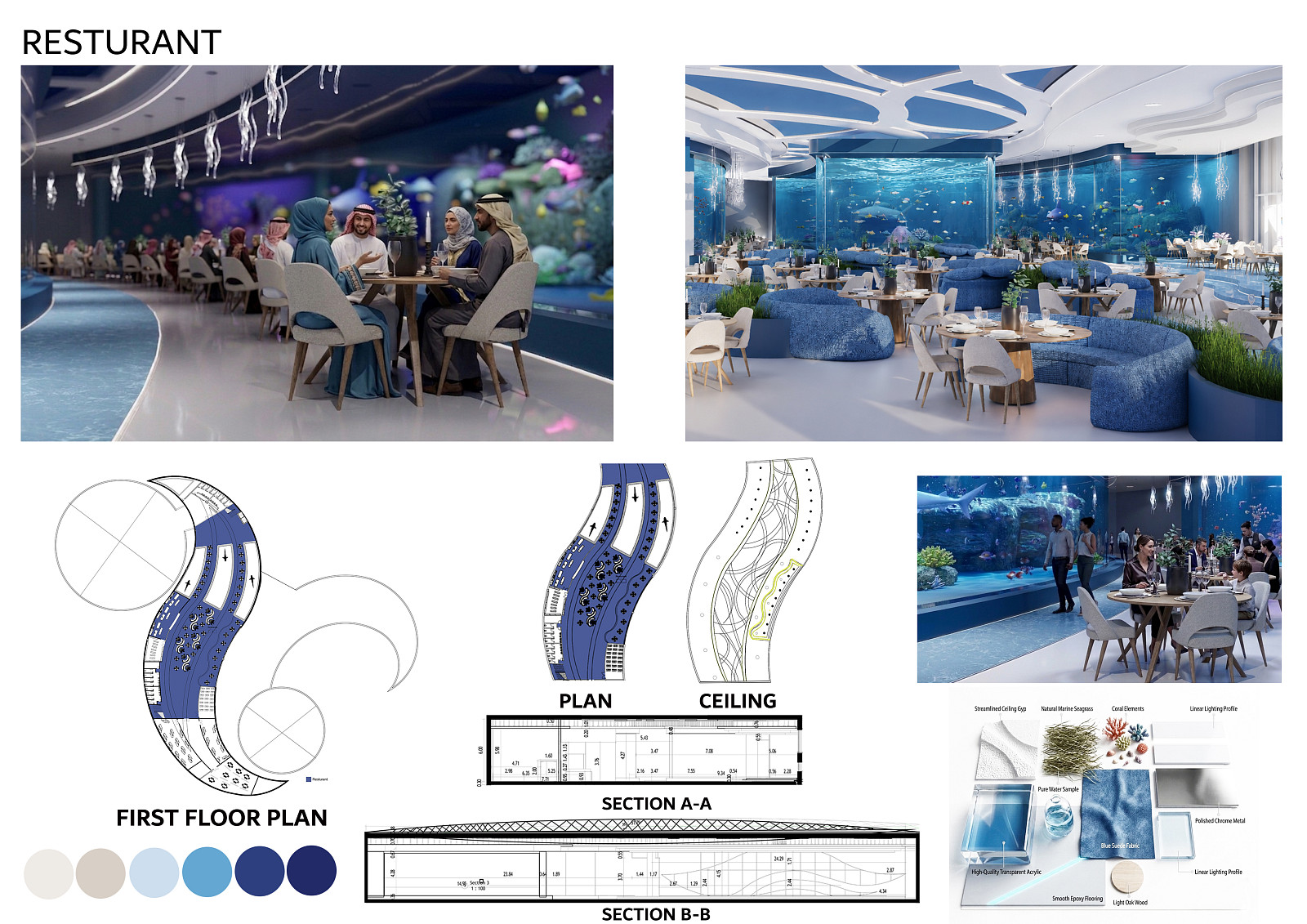
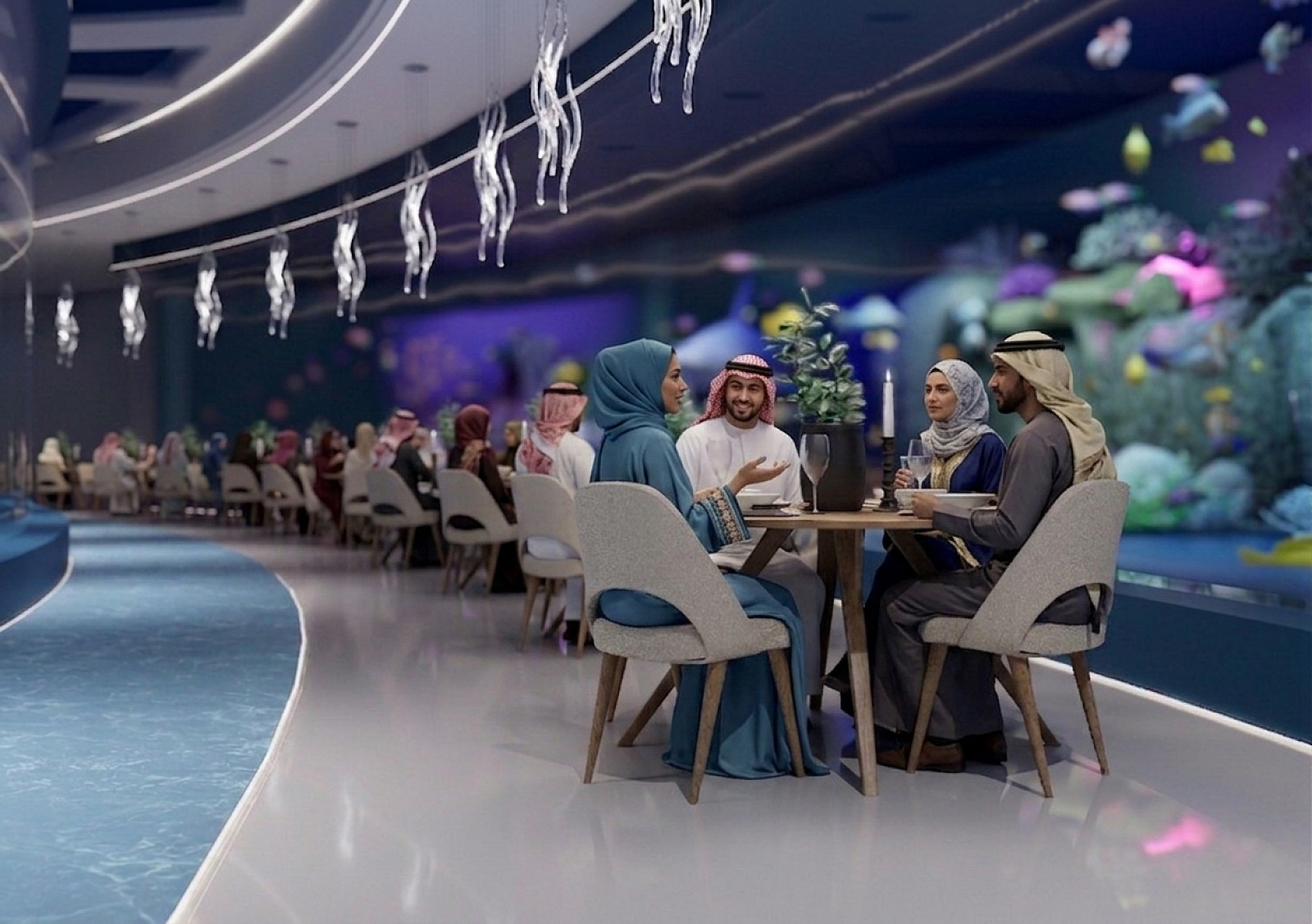
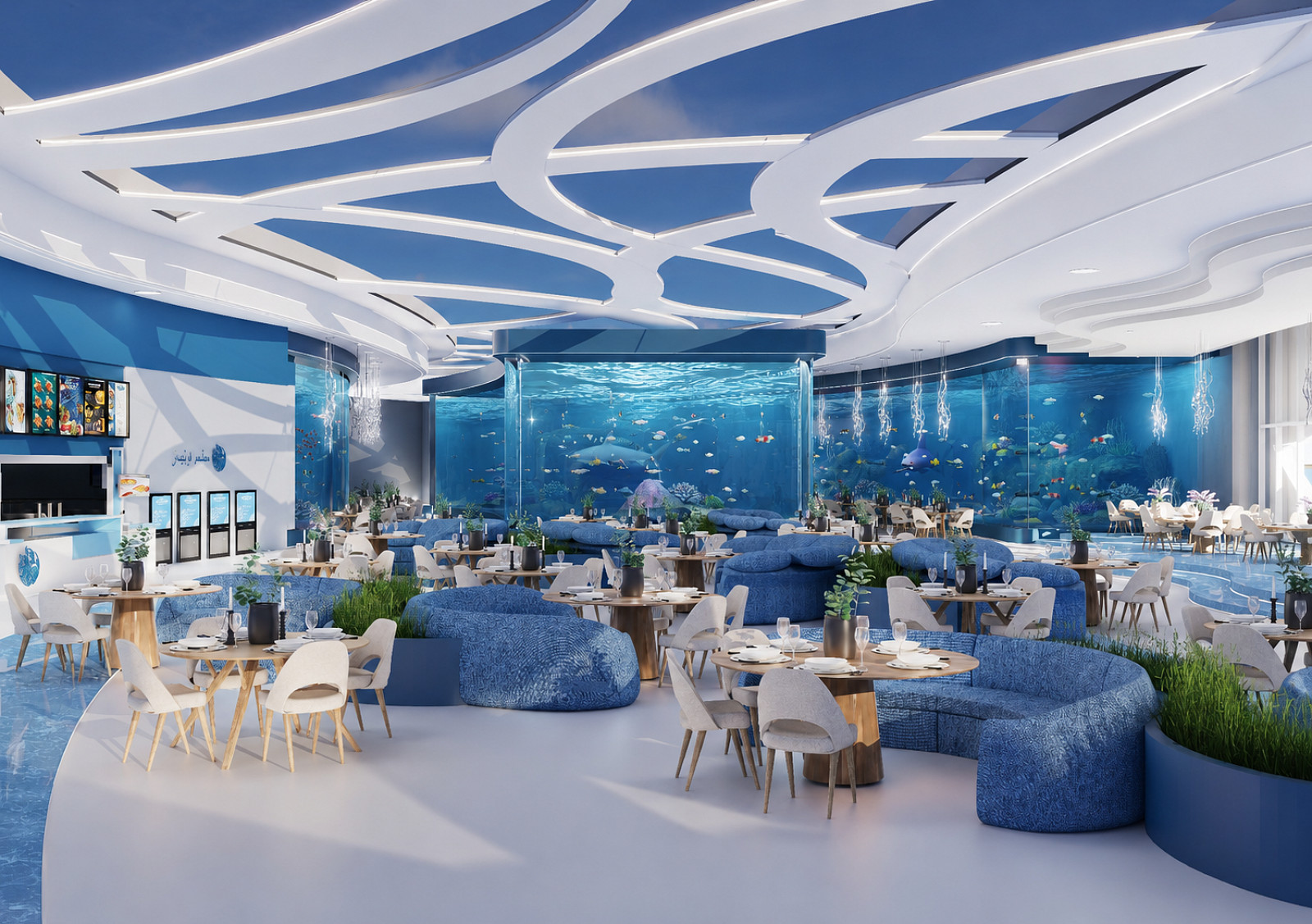
On the first floor, the journey ends at the restaurant, which overlooks marine exhibits and maintains a visual connection with the aquatic environment.
Through education, entertainment, and interactive technology, OLYMAR creates an engaging experience that highlights marine life and biodiversity.
Technical information
OLYMAR integrates advanced interactive technologies, including 3D display screens in exhibition areas, holographic systems in the 360-degree cinema, and smart screens around aquarium tanks to present real-time marine information.
The project also uses lighting design, material selection, and spatial proportions to support the marine-inspired atmosphere and enhance the immersive experience.

Copyright © 2026 INSPIRELI | All rights reserved. Use of this website signifies your agreement to the Terms of Use, Privacy Policy, and use of cookies.