THE SILENCE THAT SPEKAS


Project idea
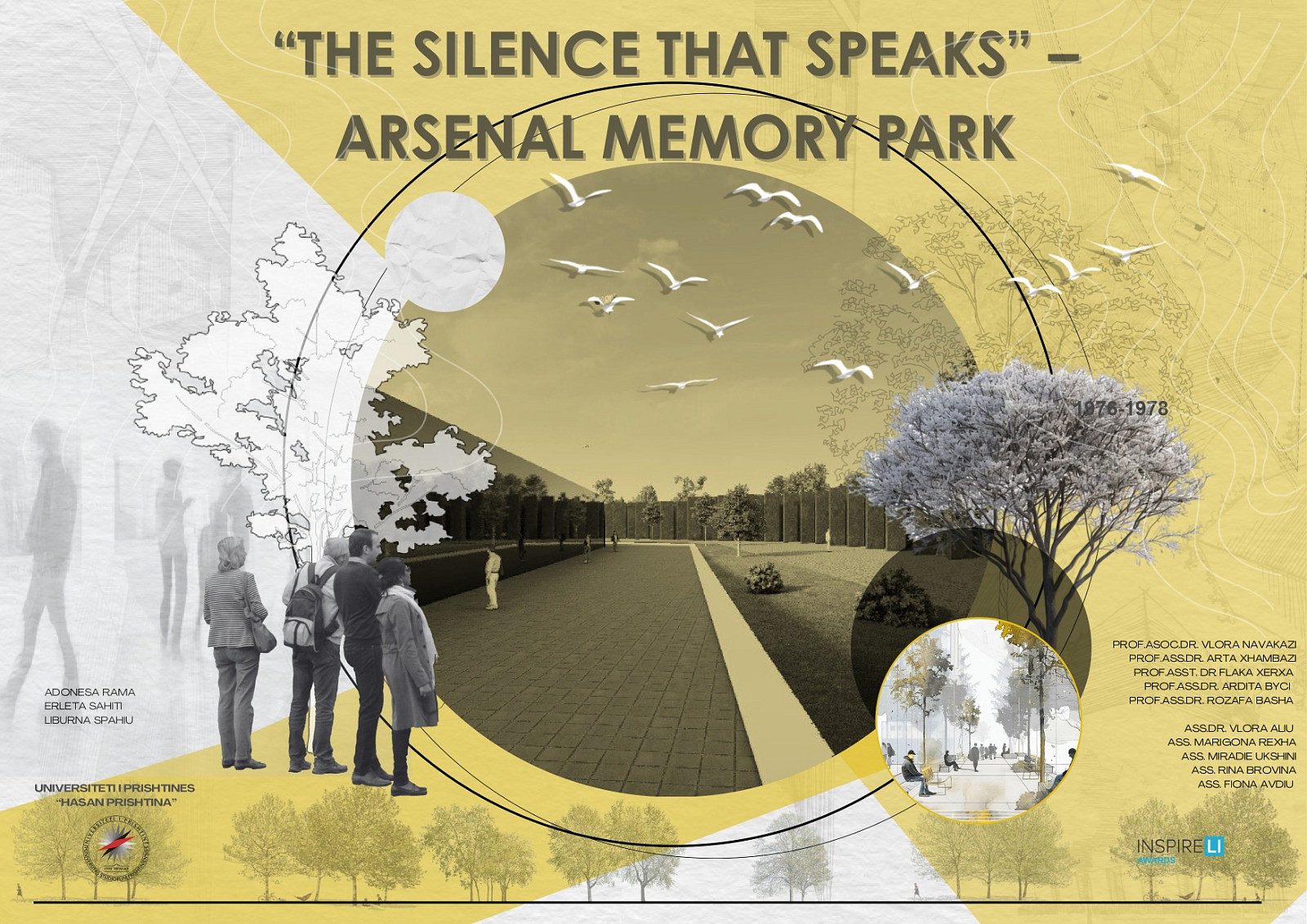
The idea of the project is to create a Memorial Park designed as a place of reflection, remembrance, and contemplation. The park is carefully shaped so that, while moving through its quiet spaces, visitors can experience a silent narrative that tells the story of memory and history.
The pavilions are integrated into the landscape, with some sections positioned partially underground and others emerging above the surface. These architectural elements, together with the memorial gallery and the surrounding park, form a unified composition where architecture and nature coexist harmoniously.
The entire site is designed in such a way that silence becomes a form of expression—allowing the space itself to communicate emotions, memories, and meaning. Through its paths, pavilions, and open landscapes, the Memorial Park invites visitors to engage in a journey of reflection where, in the absence of words, the environment itself speaks.
Project description
The project was developed around the idea of centralizing the site, creating a strong focal point at its center. Surrounding this central space are a series of functions that contribute to the memorial character and identity of the park.
On one side of the site is the Art Gallery, which serves as a space for cultural expression and remembrance. On another side is the Amphitheater, providing a venue for gatherings, commemorative events, and public engagement. The Memorial Park itself extends throughout the site, offering spaces for reflection and contemplation, while the Commercial Center supports the park’s activities and enhances its accessibility for visitors.
In addition, a network of pavilions is distributed across the entire area, creating points of interest and interaction within the landscape. Together, these elements form a cohesive composition in which architecture, culture, and memory are interconnected, reinforcing the memorial significance of the project
Technical information
The primary structural material used in the project is reinforced concrete, chosen for its strength, durability, and suitability for underground construction. Since a significant portion of the buildings is located below ground level, concrete provides the necessary structural stability while allowing the architecture to integrate seamlessly with the surrounding landscape.
Its use also reinforces the project's memorial character, conveying a sense of permanence, solidity, and timelessness that reflects the themes of memory and remembrance embedded within the design
Documentation
Created in:


Copyright © 2026 INSPIRELI | All rights reserved. Use of this website signifies your agreement to the Terms of Use, Privacy Policy, and use of cookies.