Bloom - Homeless Educational Centre


Project idea
“Bloom - Homeless Education Centre: A Space for Growth” is a community-based learning hub designed to provide homeless children and youth with access to education, personal development, and social support within a safe and nurturing environment.
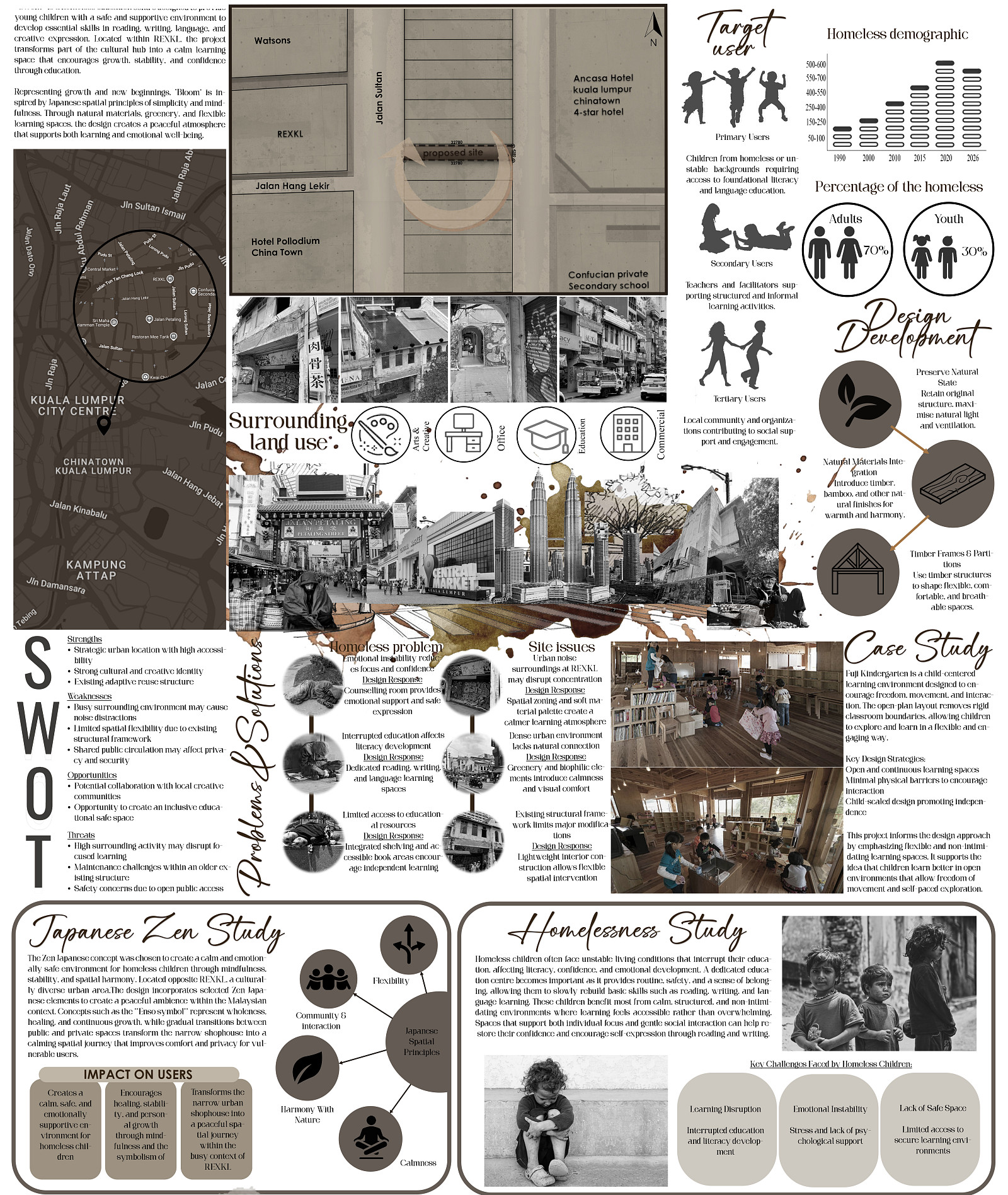
Inspired by the principles of Japanese Zen architecture, the project creates a calm, restorative, and inclusive atmosphere that promotes healing, self-discovery, and lifelong learning. Located within the urban context of Kuala Lumpur’s Chinatown district, the centre responds to the growing issue of homelessness by transforming an underutilized urban site into a meaningful educational sanctuary.
Through the integration of natural materials, spatial simplicity, and contemplative learning environments, the project aims to empower vulnerable individuals by offering opportunities for academic enrichment, skill development, and social reintegration. The primary objective is to bridge educational inequality while fostering dignity, confidence, and a sense of belonging among its users.
Project description
The proposed Homeless Education Centre serves as a multifunctional facility that addresses the educational and social needs of homeless children and youth. The development consists of learning spaces, classrooms, counselling rooms, reading lounges, open study areas, a library, recreational zones, gathering spaces, and support facilities designed to facilitate both formal and informal learning experiences.
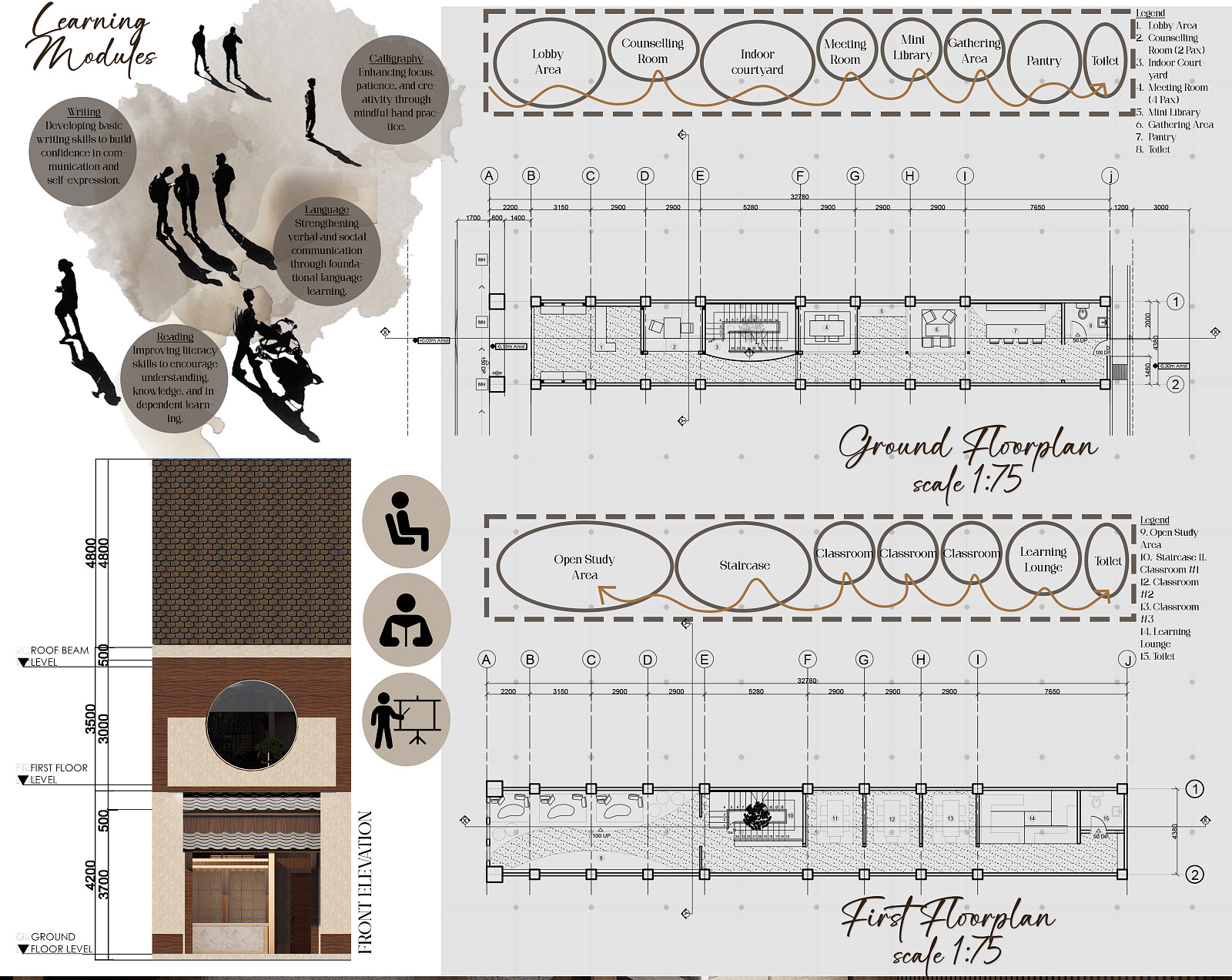
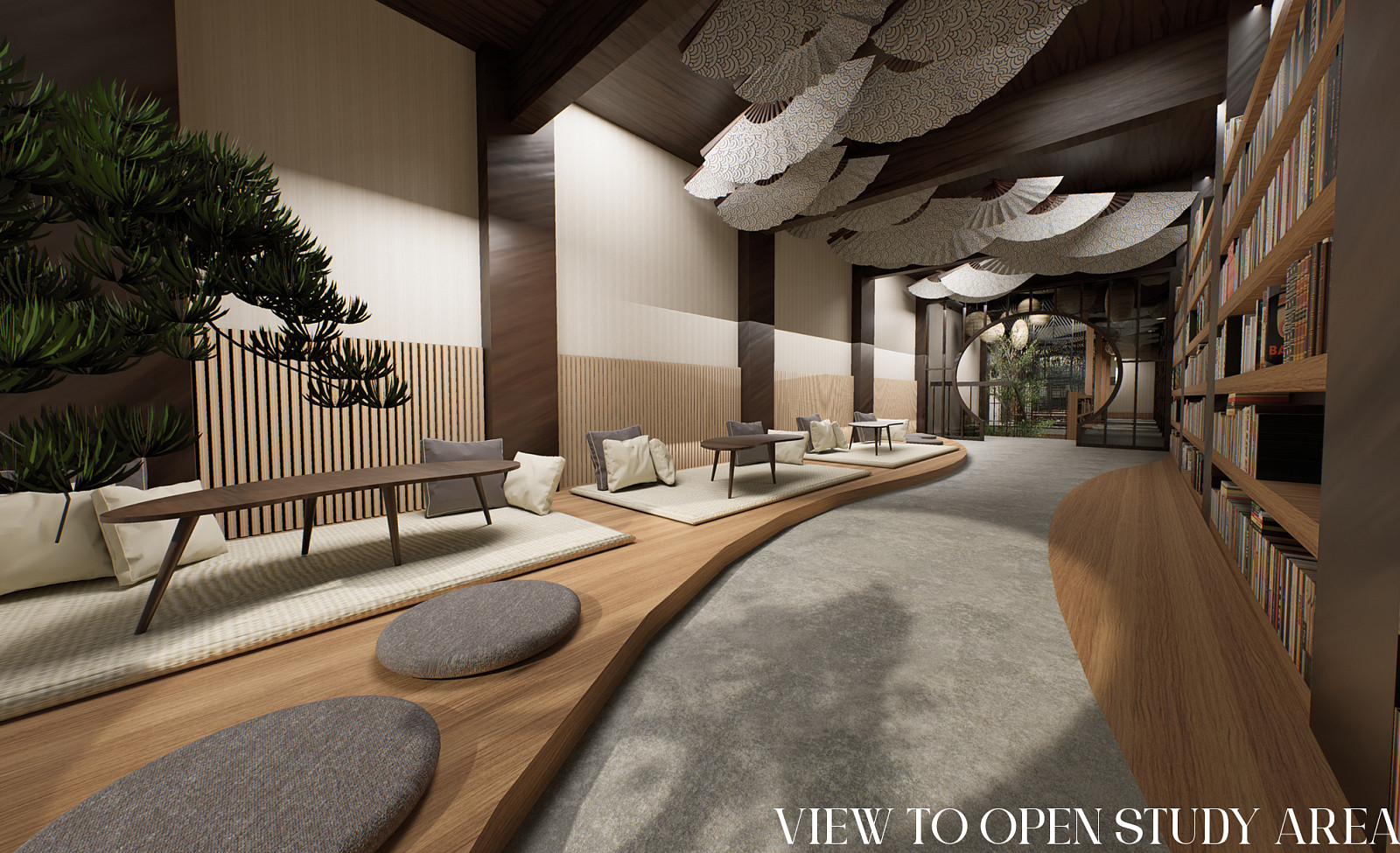
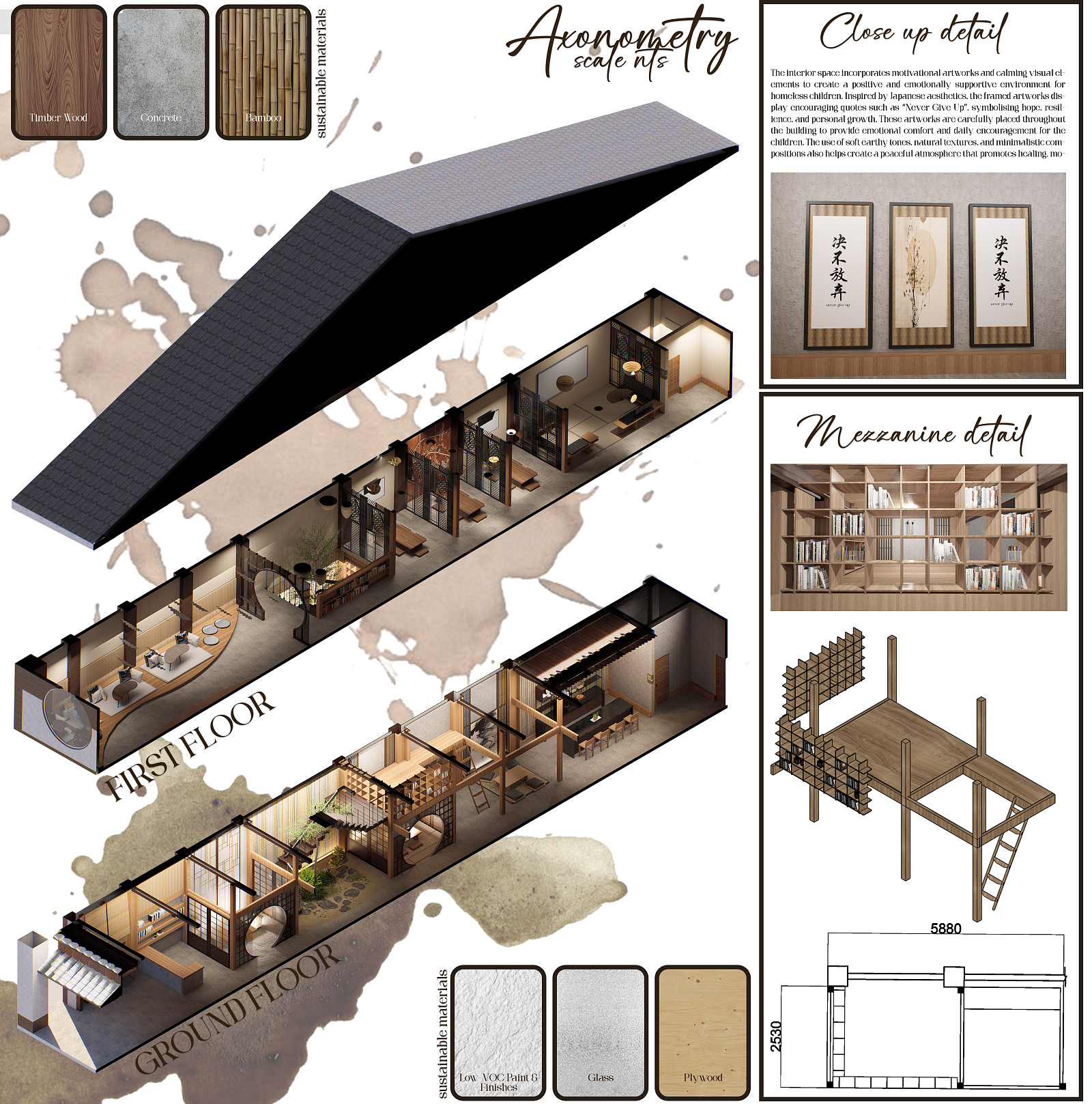
The ground floor accommodates public and communal functions including reception, counselling services, indoor courtyard spaces, meeting areas, and open study zones that encourage interaction and engagement.
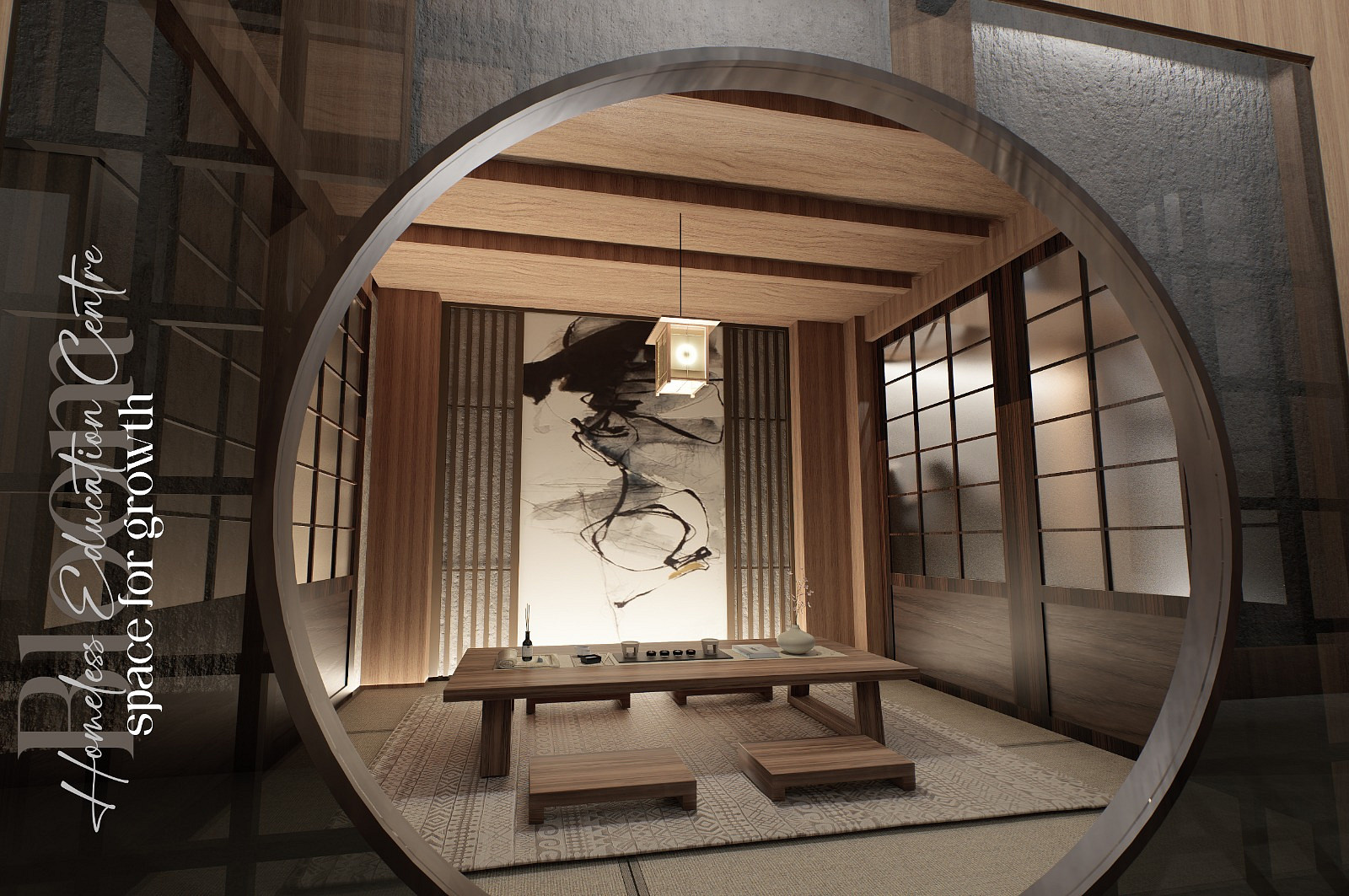
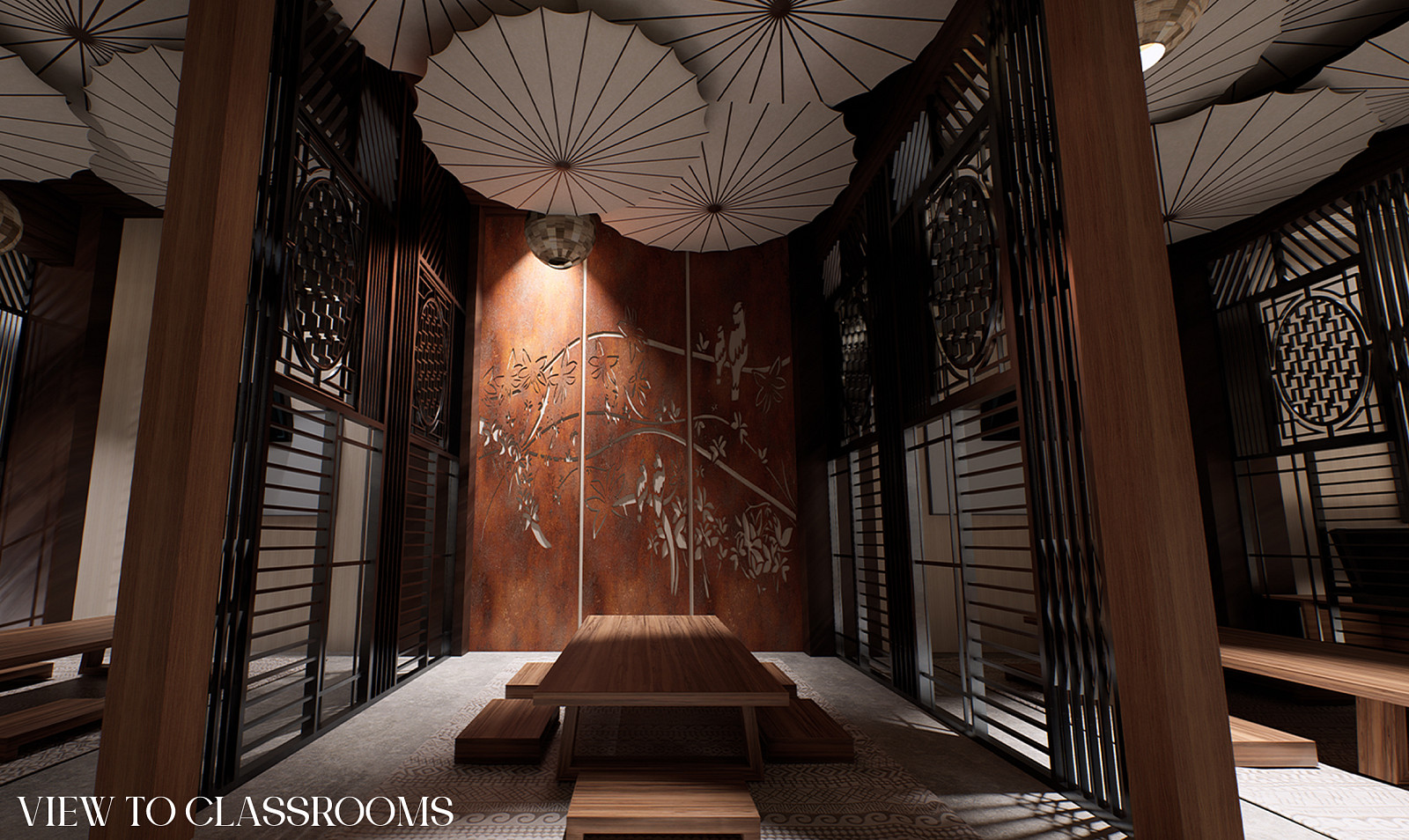
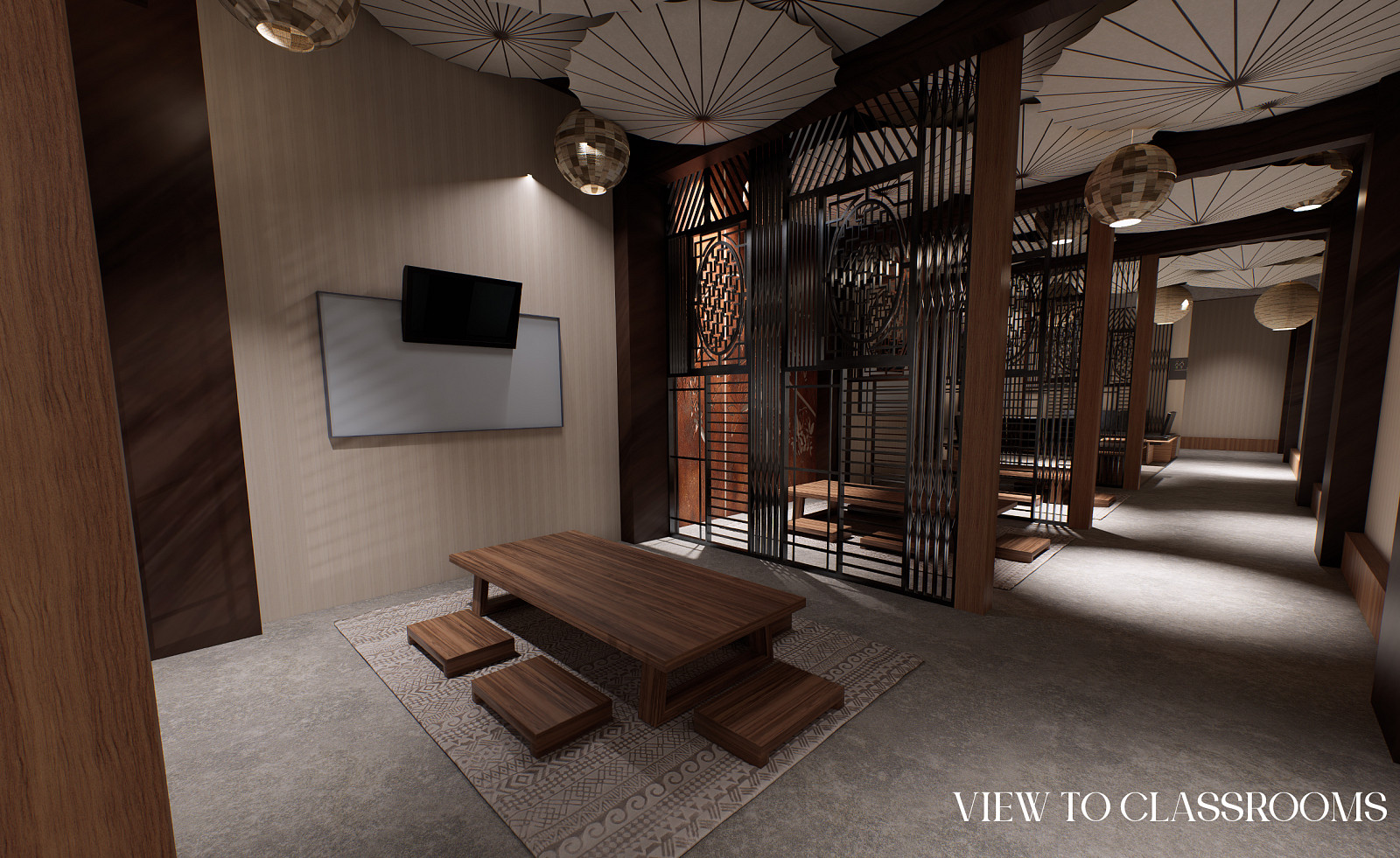
The first floor contains dedicated educational facilities such as classrooms, learning lounges, and collaborative study areas that support various teaching and learning methods. The design incorporates Zen-inspired spatial elements including circular portals, natural lighting, visual connectivity, and quiet reflection areas to create a peaceful environment conducive to learning and emotional well-being.
The centre acts not only as an educational institution but also as a social support platform where users can access guidance, mentorship, and personal development opportunities.
Technical information
The project adopts a contemporary interpretation of Japanese Zen architecture through the use of sustainable and locally sourced materials. The primary structural system consists of reinforced concrete foundations and columns combined with timber framing and engineered wood elements for interior features and mezzanine structures.
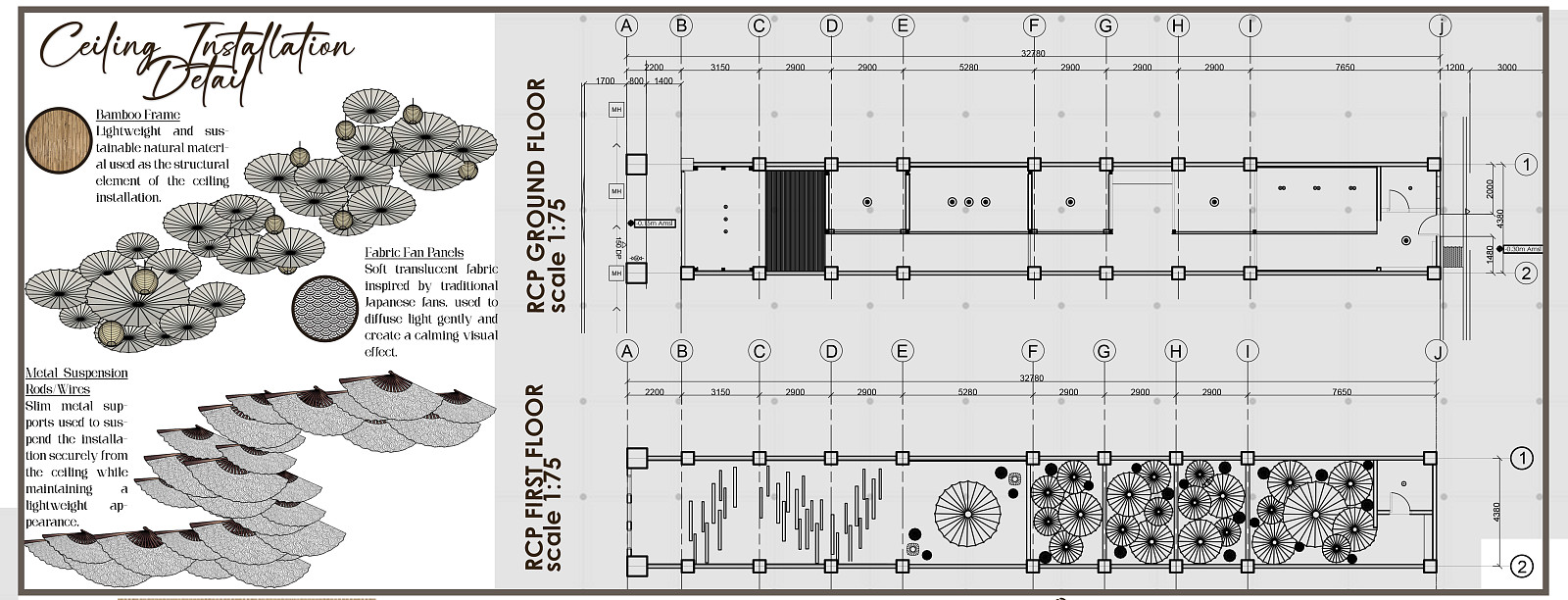
The building envelope incorporates timber screens, bamboo-inspired partitions, textured plaster finishes, and large glazed openings that maximize natural daylight while maintaining privacy and thermal comfort. A pitched roof structure provides efficient rainwater drainage and contributes to passive ventilation strategies. Internal spaces are organized around a central courtyard that enhances cross-ventilation and introduces natural elements into the learning environment.
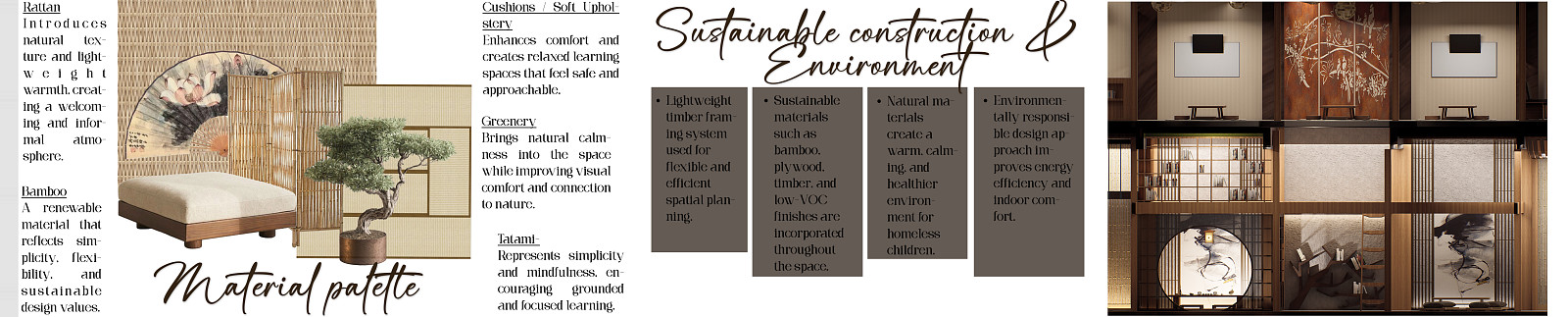
Sustainable design considerations include the use of natural lighting, passive cooling techniques, low-maintenance materials, and energy-efficient building systems. Interior finishes consist of timber flooring, textured wall treatments, woven natural materials, and acoustic panels that create a warm and calming atmosphere.
The project is designed to comply with accessibility standards, ensuring barrier-free circulation for users of all ages and abilities while supporting a safe, healthy, and inclusive educational environment.


Copyright © 2026 INSPIRELI | All rights reserved. Use of this website signifies your agreement to the Terms of Use, Privacy Policy, and use of cookies.