URBAN EXHALE: A Multistoried Parking with integrated Turf Facility


Project idea
"Parking becomes structure; structure becomes landscape; landscape becomes commons. A lifted ground where the city exhales above its own congestion. What is built for vehicles becomes a terrain for human interaction."
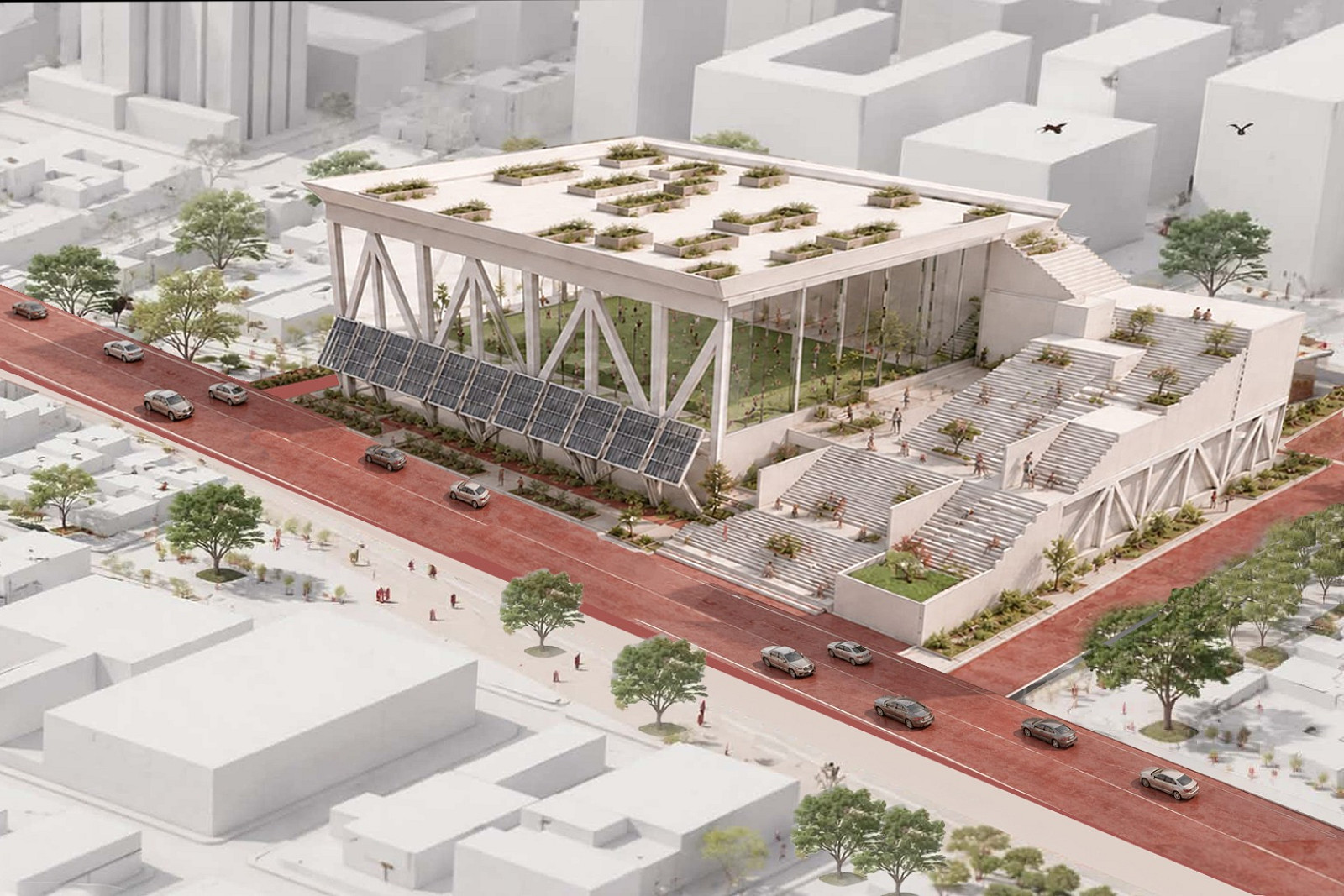
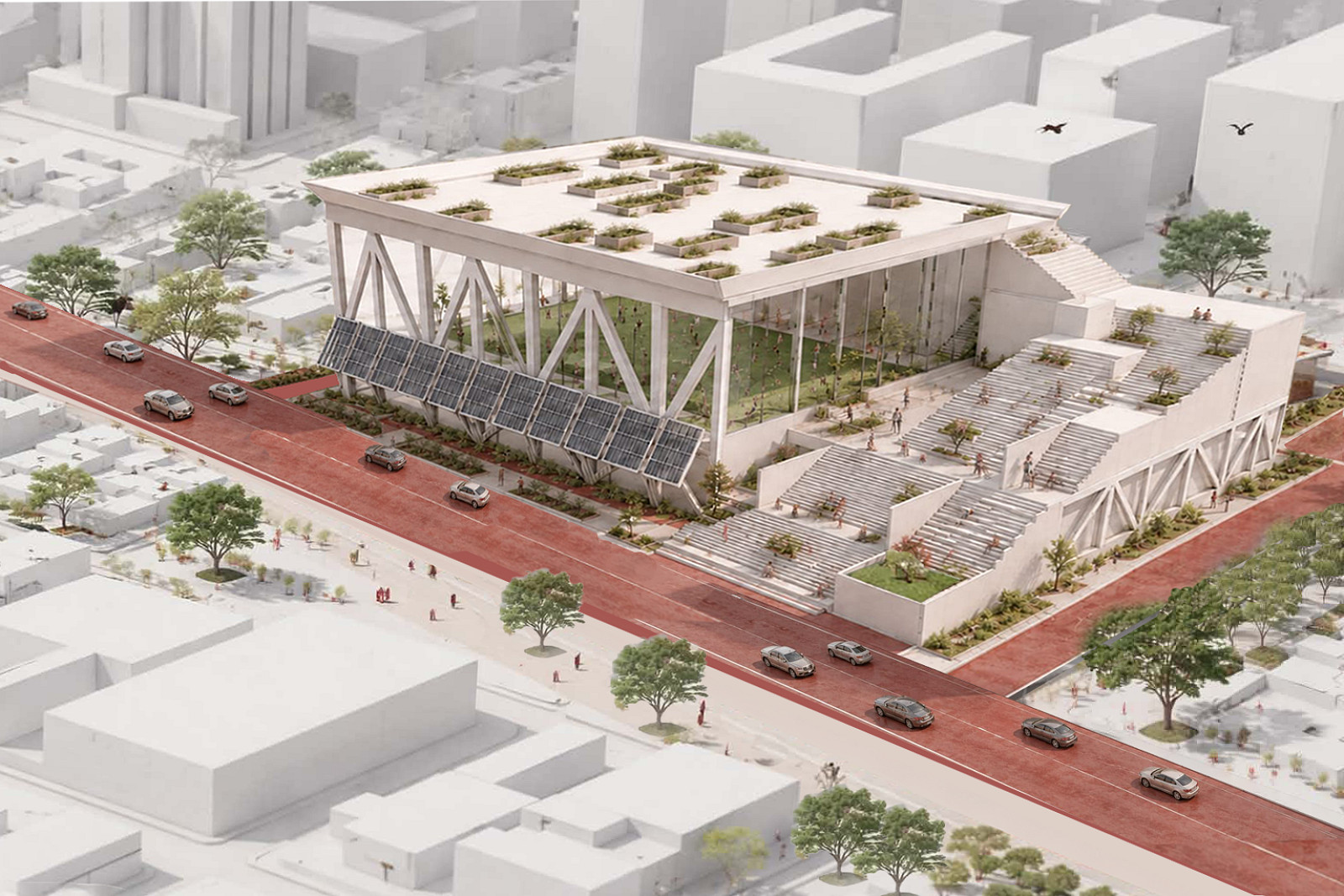
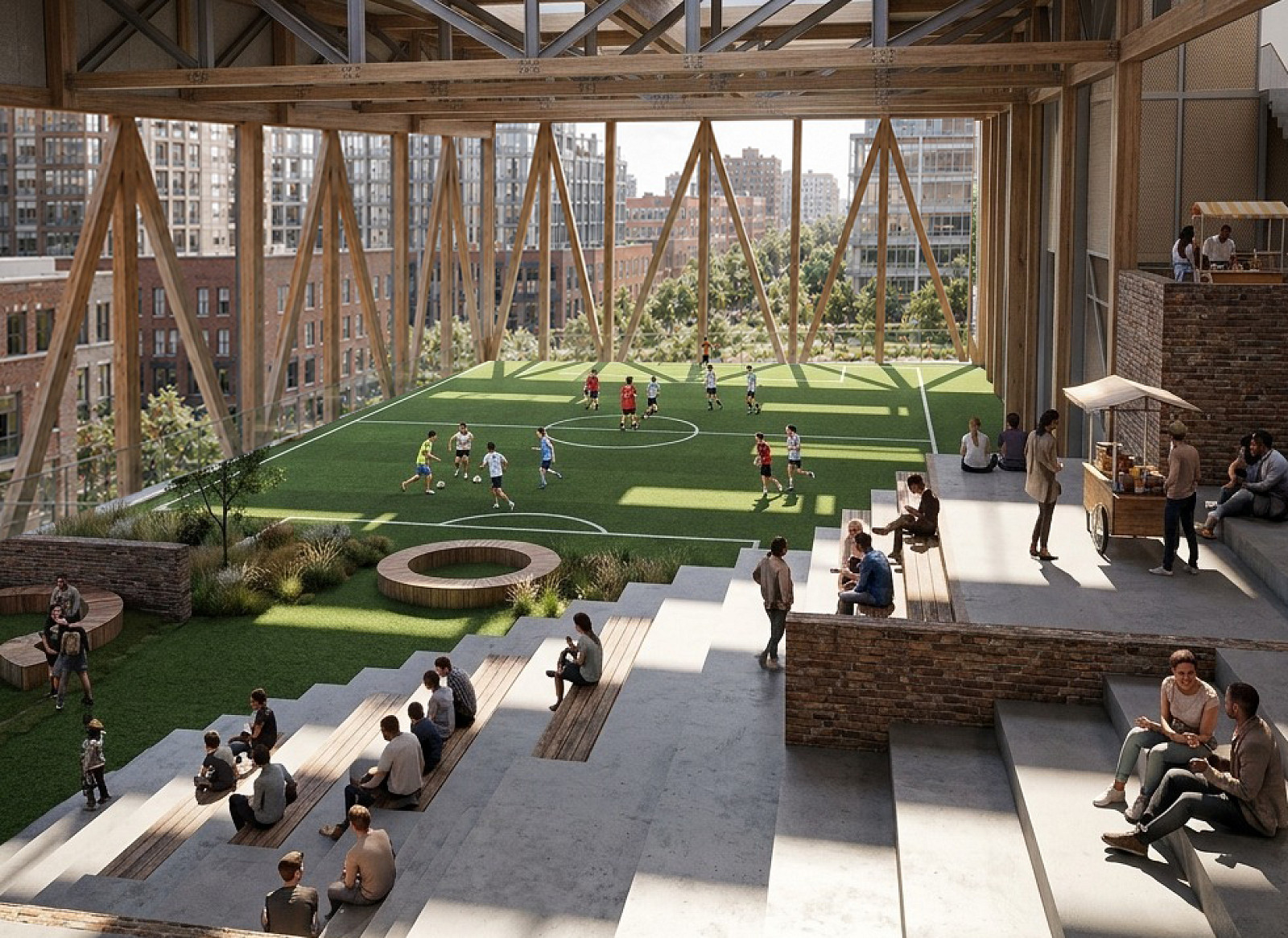
Urban Exhale proposes a multi-storied parking structure that redefines mobility infrastructure as a civic opportunity. Instead of functioning solely as a car parking system, the building integrates a turf and public plaza, transforming the top layer into an active urban ground for recreation, interaction, and collective use.
Project description
As one of the world's fastest-growing and most densely populated cities, Dhaka faces increasing pressure from rapid urbanization, a growing number of private vehicles, and a severe shortage of accessible open spaces. Valuable urban land is continuously being consumed by infrastructure and development, leaving residents with limited opportunities for recreation, social interaction, and relief from the dense built environment. This project proposes a multi-storied parking facility that transcends its conventional function by transforming its roof into a vibrant public recreational landscape. Rather than dedicating scarce urban land solely to vehicle storage, the design integrates parking and community space within a single vertical structure, maximizing land efficiency while enhancing urban livability.
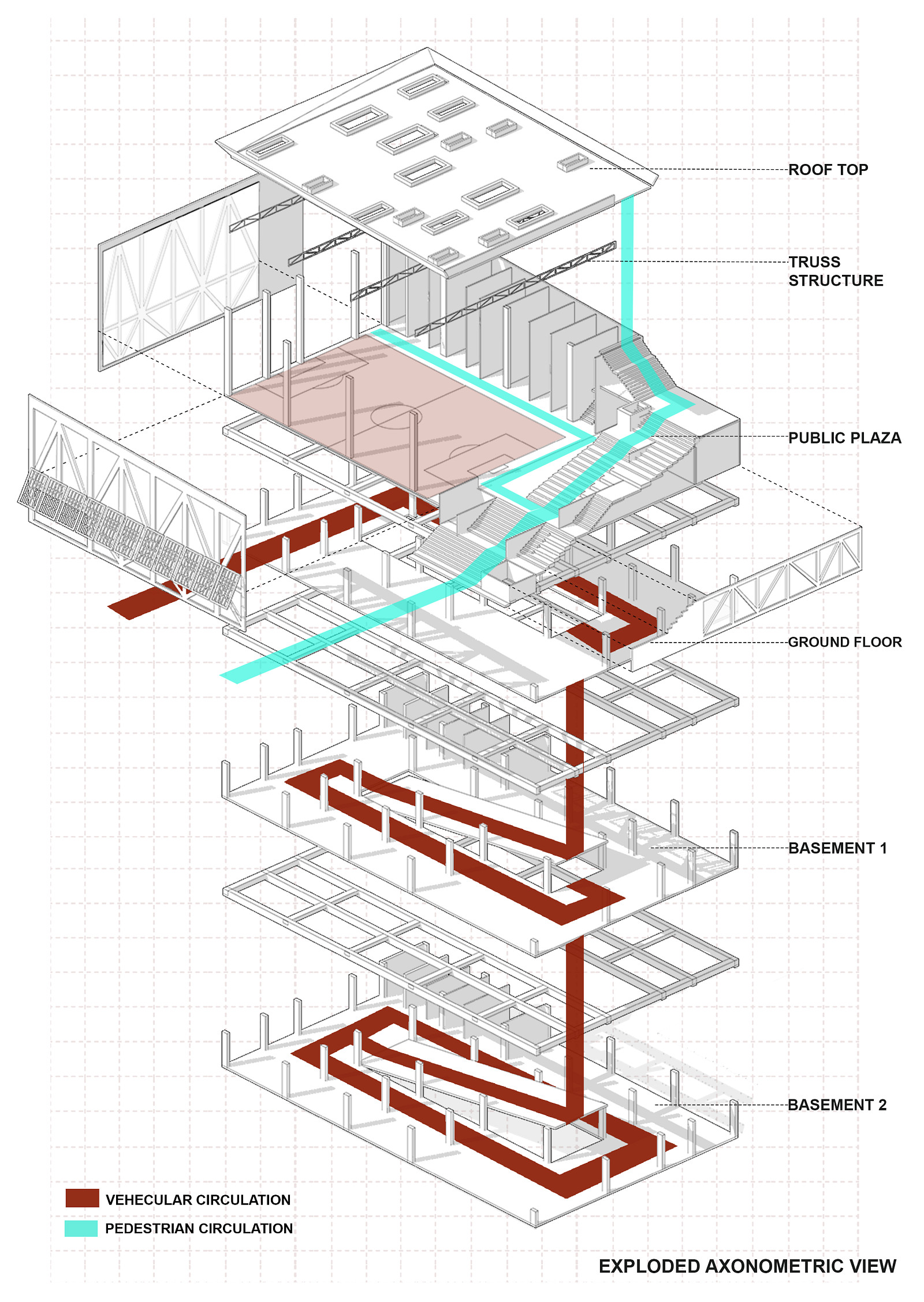
The project introduces a vertical layering strategy where movement (vehicles) is absorbed below, while human activity and landscape occupy the elevated plane above. This creates a dual condition of infrastructure and commons within a single footprint maximizing land efficiency while restoring public life in a dense urban fabric.
Technical information
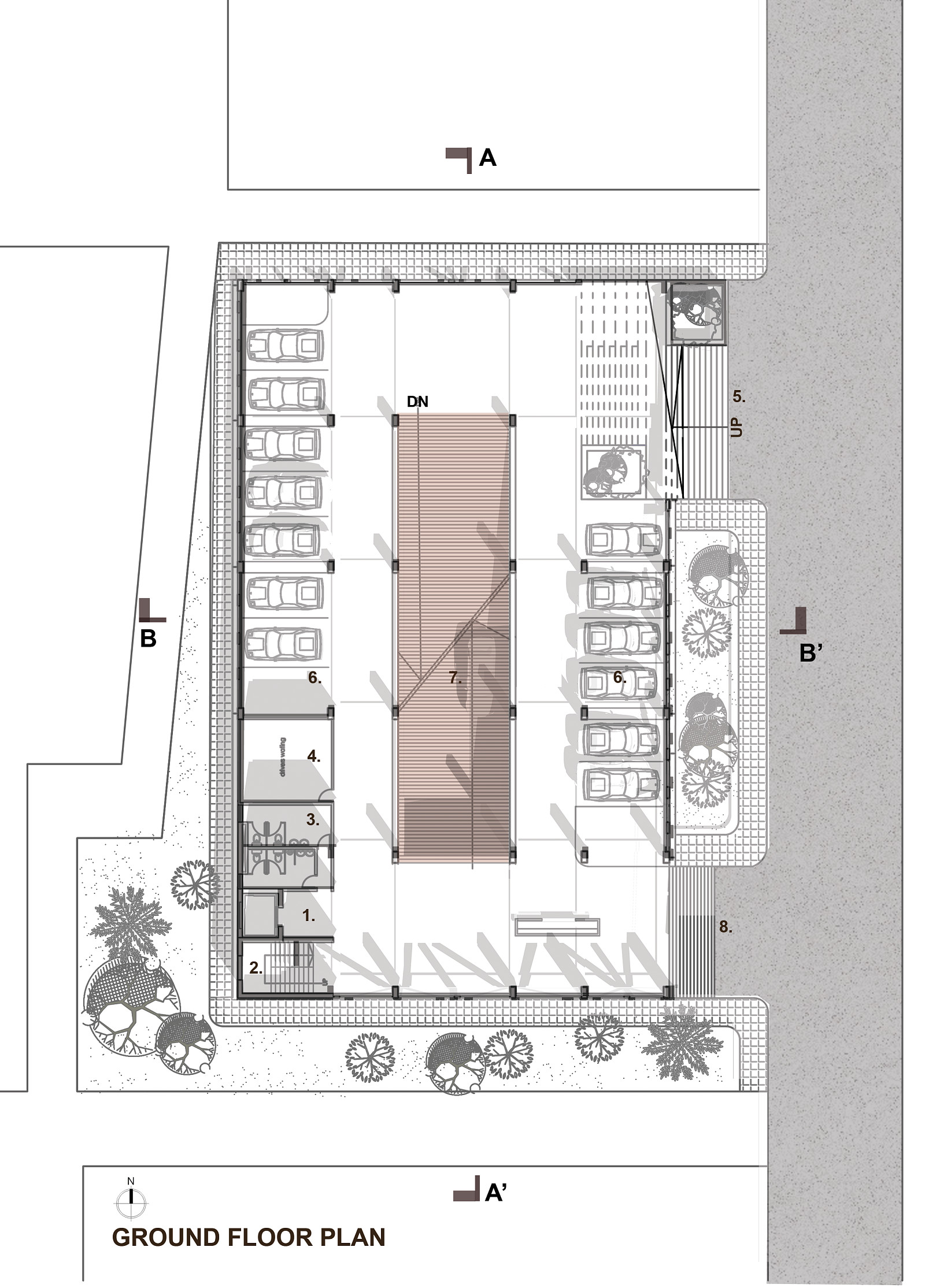
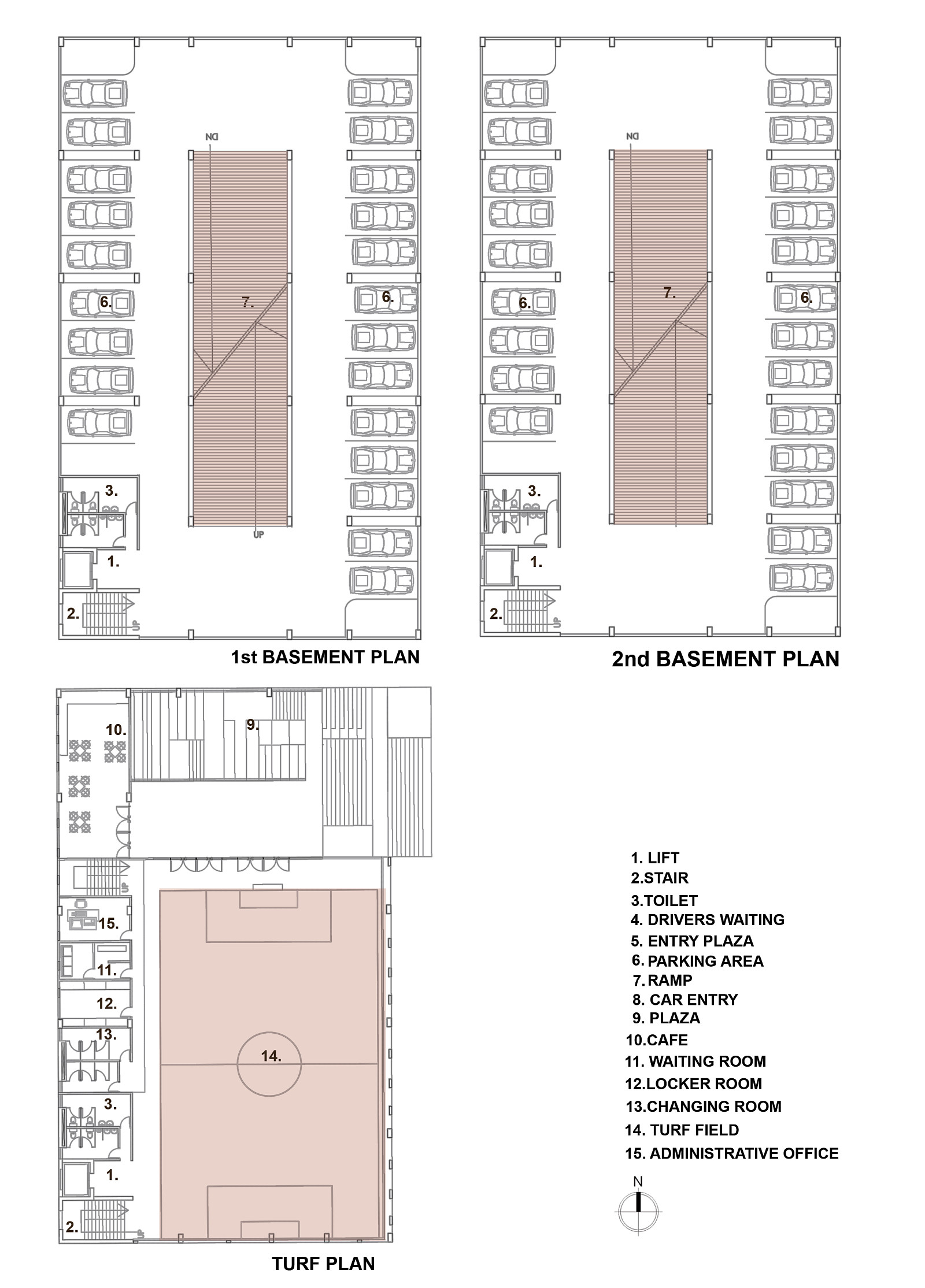
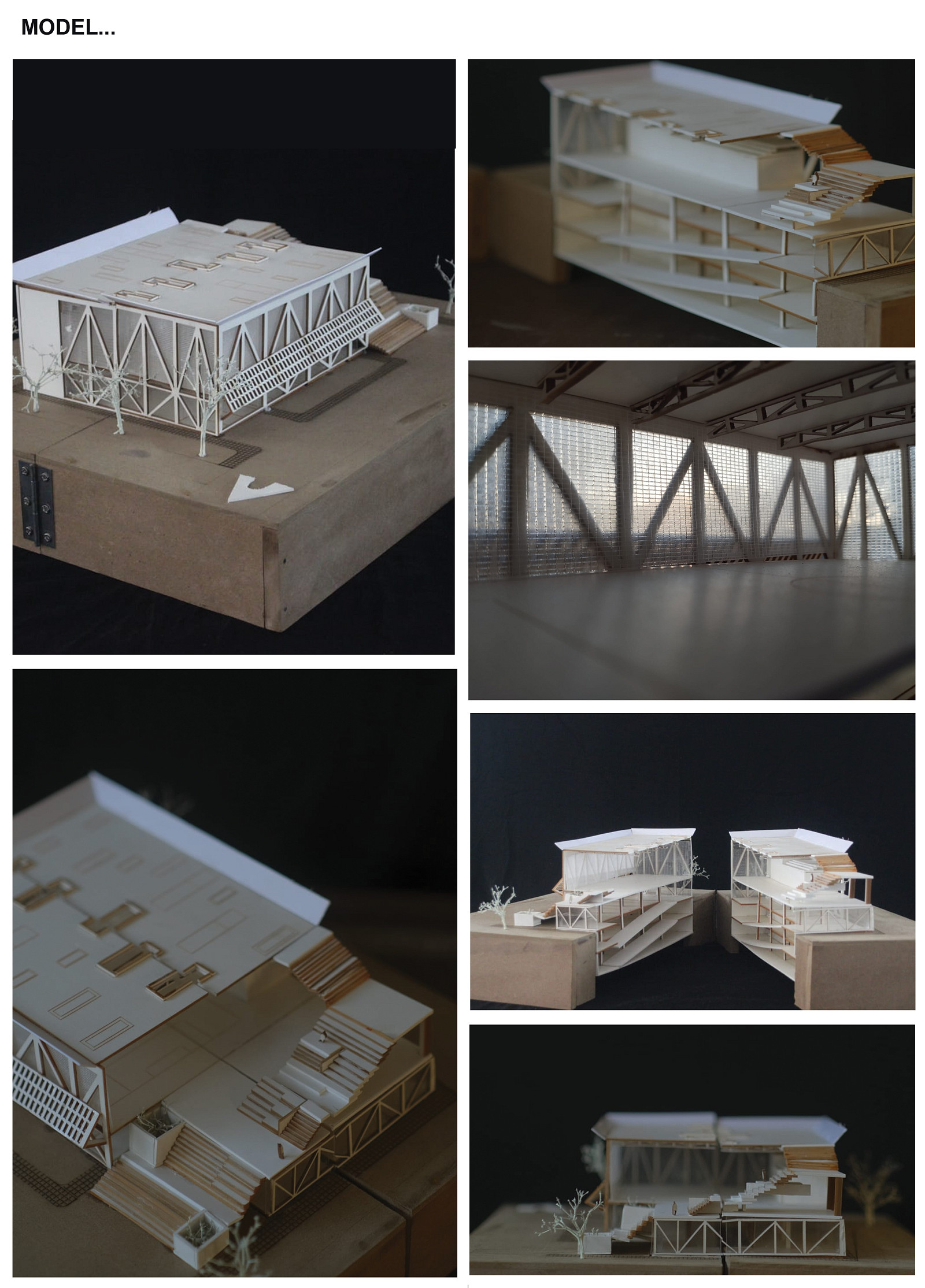
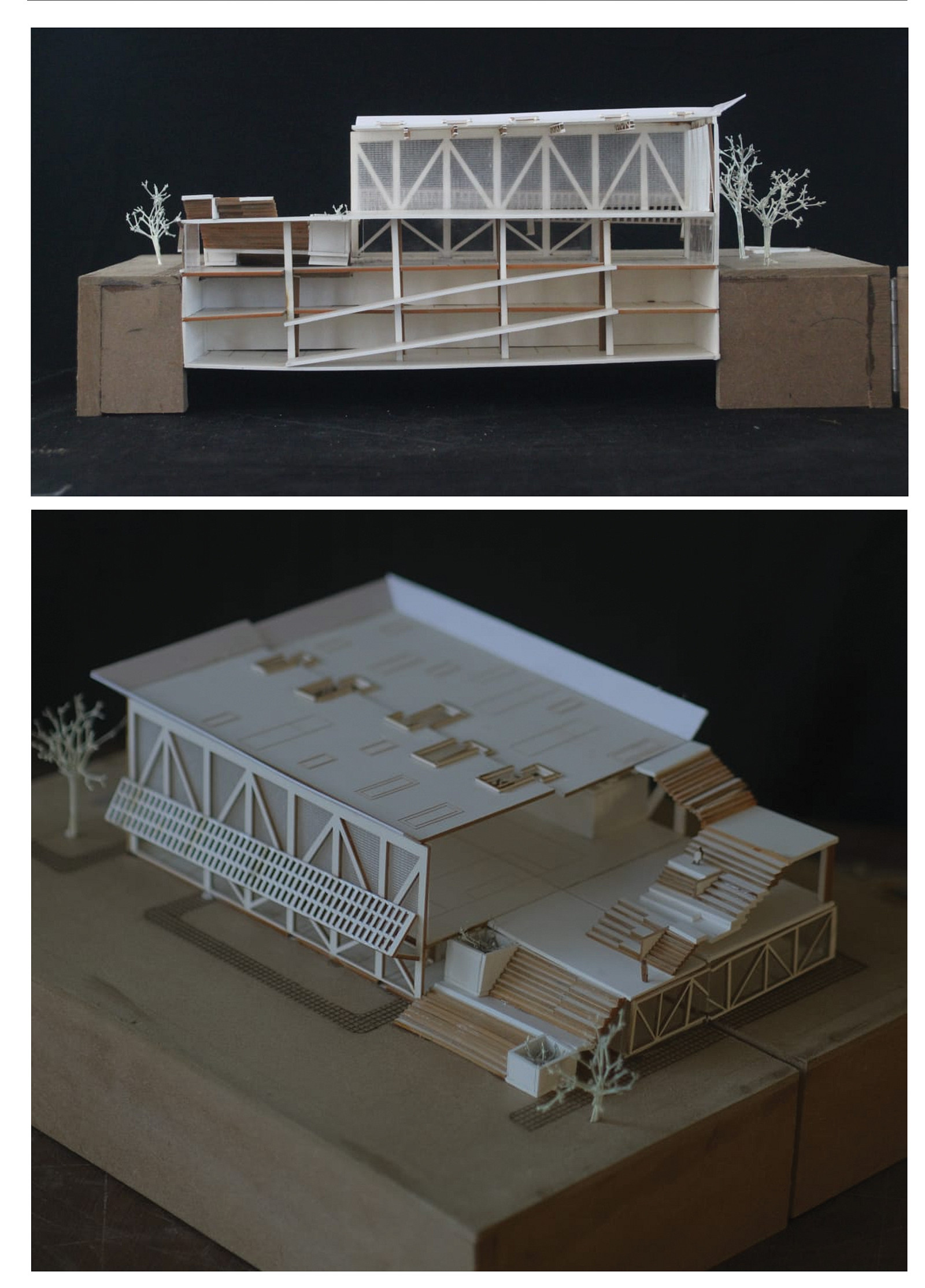
Urban Exhale is designed as a multi-level parking and public recreation facility that integrates mobility infrastructure with an elevated civic landscape. The project consists of two basement parking levels and one above-ground parking level with 60 cars, maximizing vehicle capacity while preserving the uppermost level for public use.
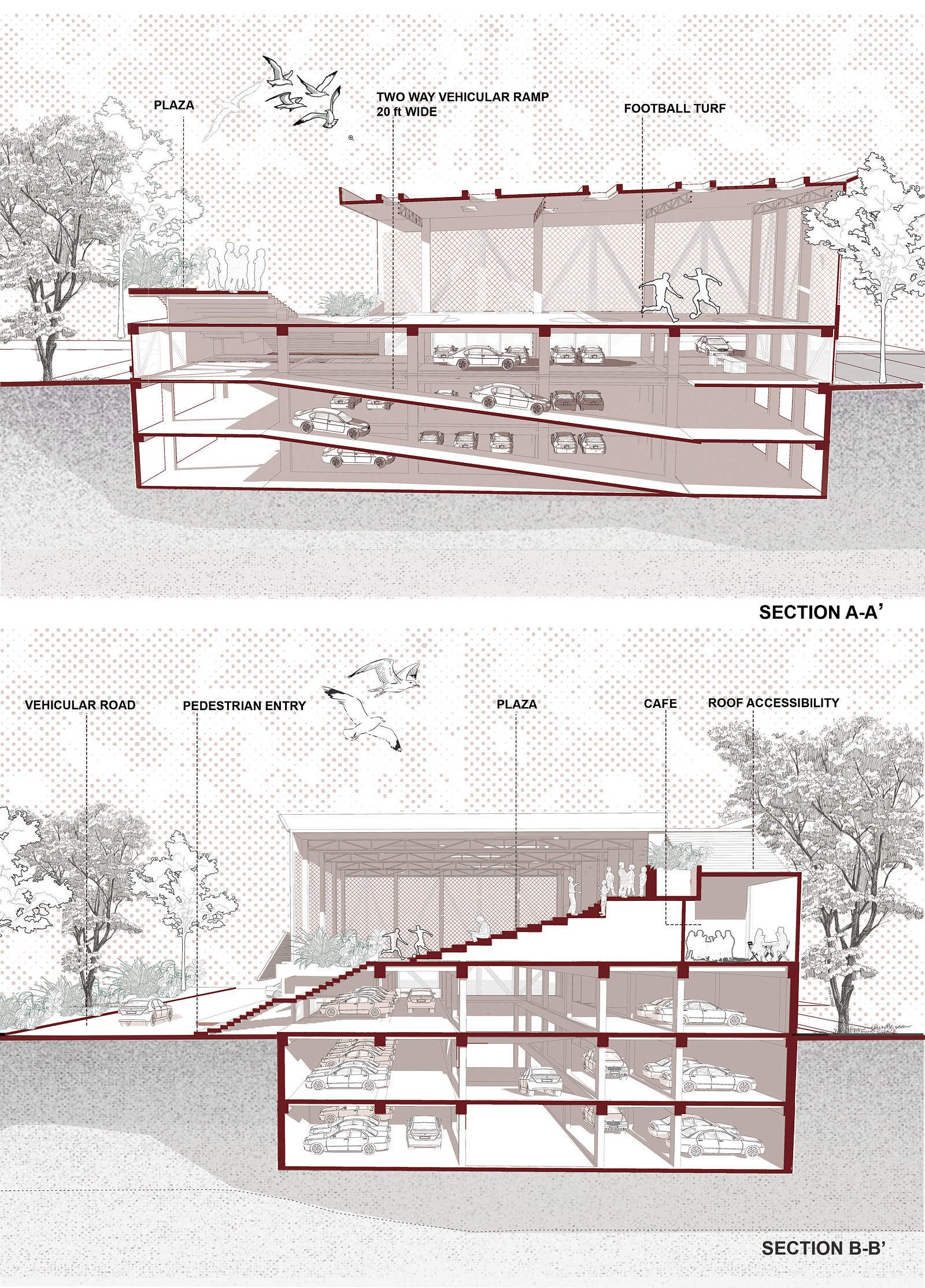
The structural system is based on a reinforced concrete frame, providing durability and efficiency for the parking decks. To achieve the large unobstructed span required for the turf field and its roof canopy, a steel truss system is employed. The trusses transfer loads efficiently while creating a column-free public space beneath and around the recreational zone.
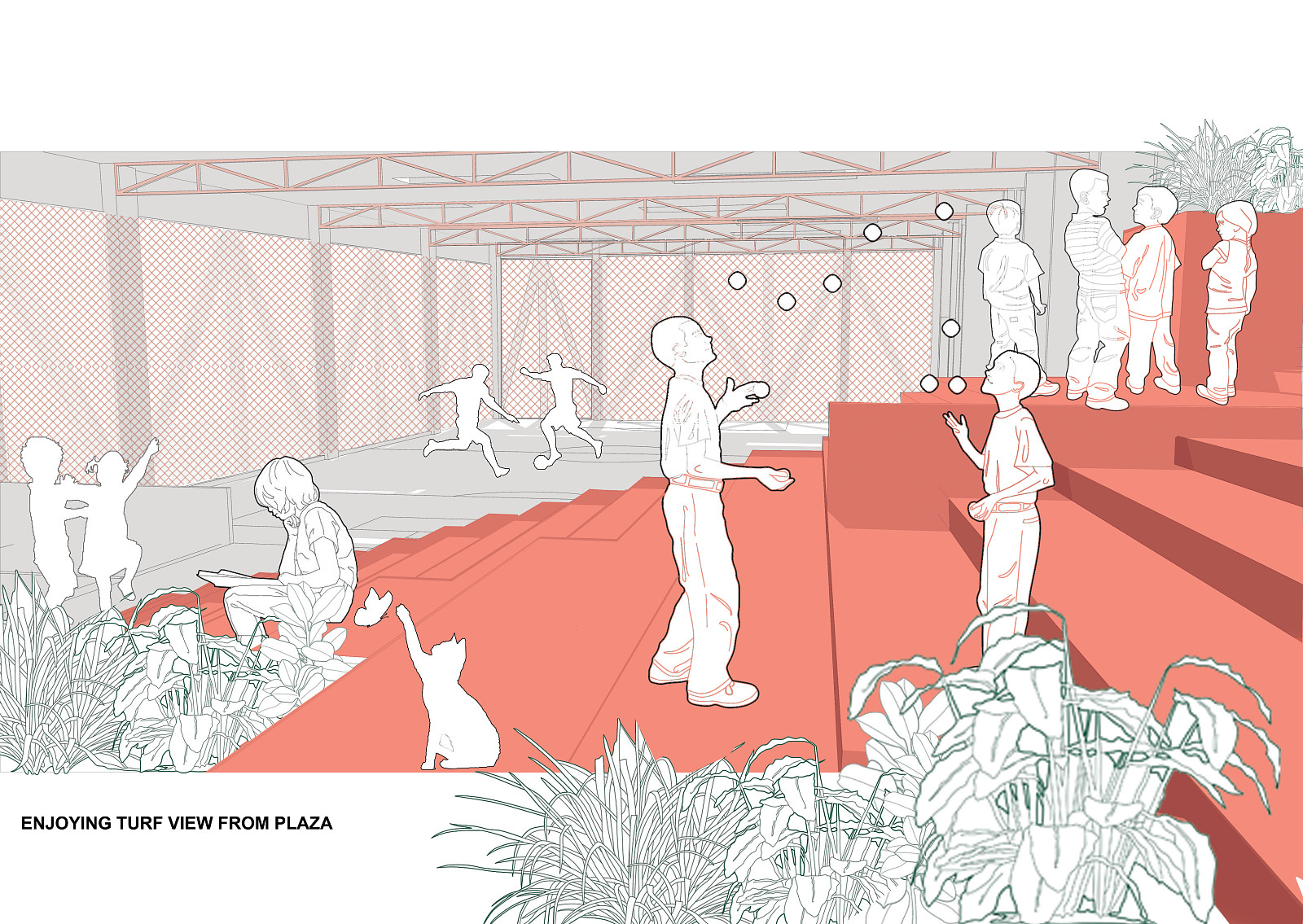
A lightweight roof canopy, supported by long-span steel trusses, shelters the rooftop turf extending usability throughout different weather conditions.
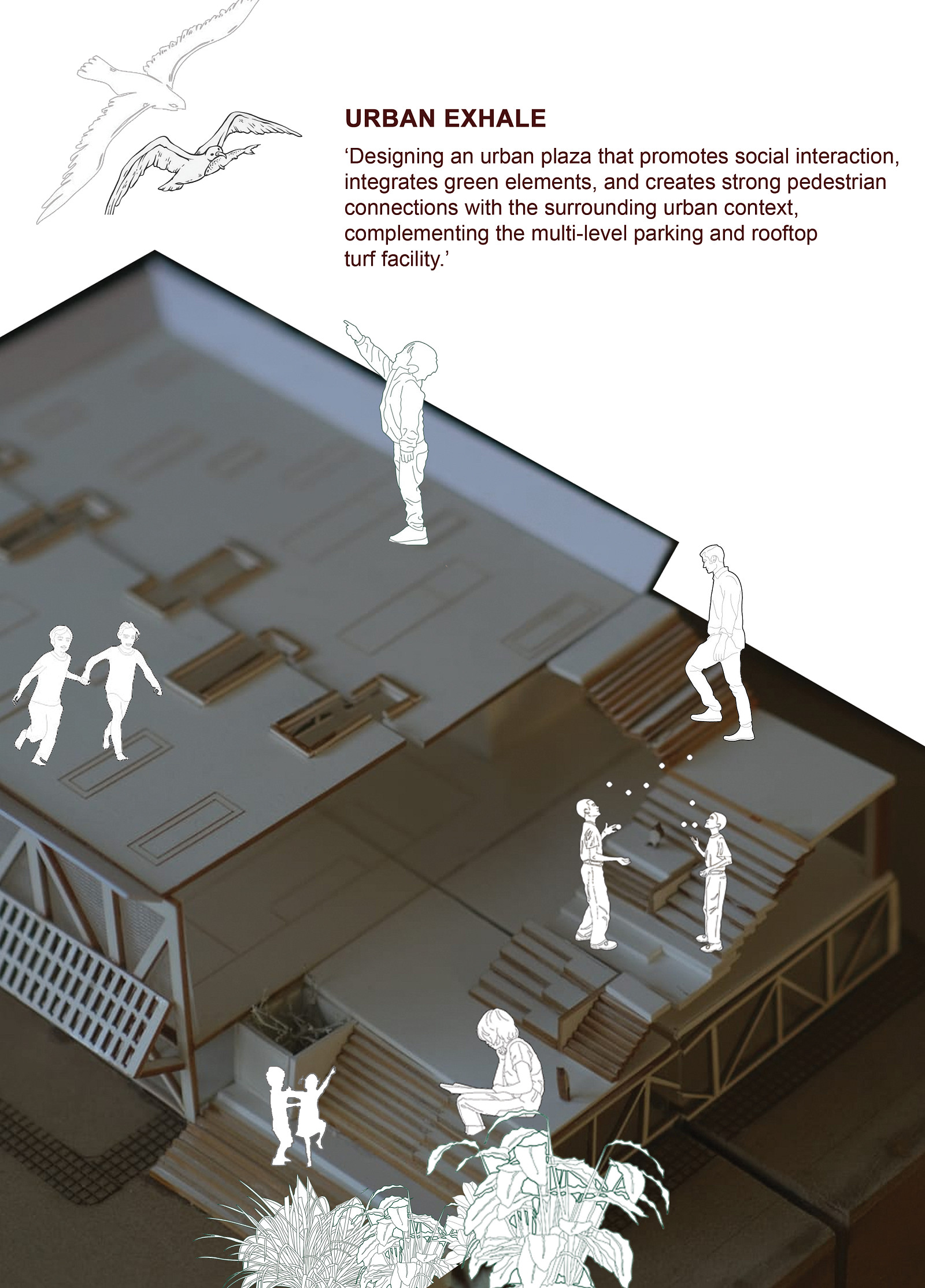
Public accessibility is established through a series of stepped plaza terraces that rise from the ground level to the rooftop. Rather than treating circulation as a purely functional element, the stair-plaza acts as an extension of the public realm, encouraging movement, interaction, and visual connection between street level and the elevated landscape.
The building envelope is articulated through an external truss-based facade system, which serves both structural and architectural purposes. The exposed truss framework creates a distinctive identity for the project while providing depth, shading, and visual permeability to the parking structure.

Copyright © 2026 INSPIRELI | All rights reserved. Use of this website signifies your agreement to the Terms of Use, Privacy Policy, and use of cookies.