SAHYOG KENDRA


Project idea
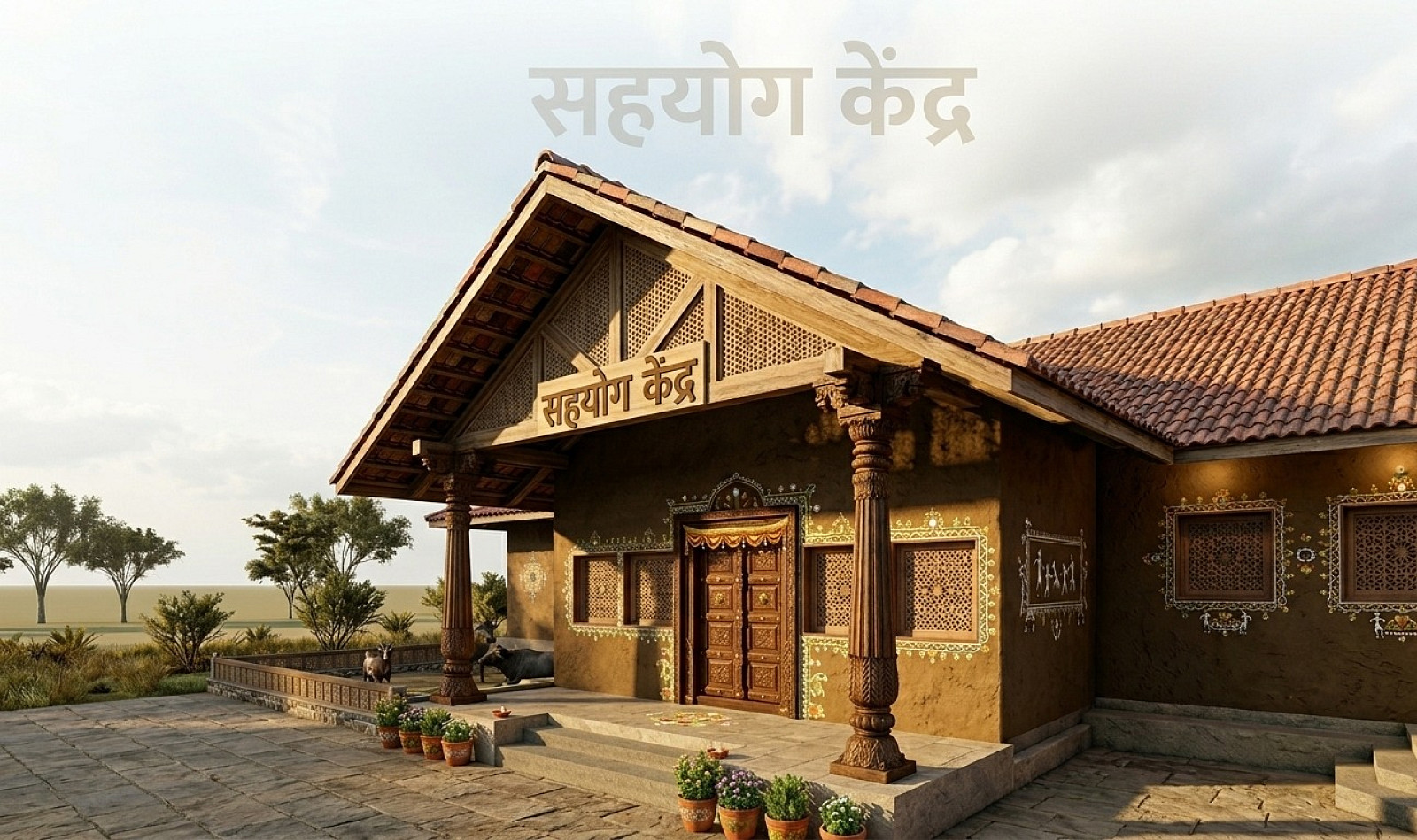
A climate-responsive architectural project in Hodka Village, Banni Grasslands, Gujarat, India, that leverages vernacular building traditions such as the Bhunga house typology while addressing seismic resilience and cultural preservation in a hot-arid environment.
Project description
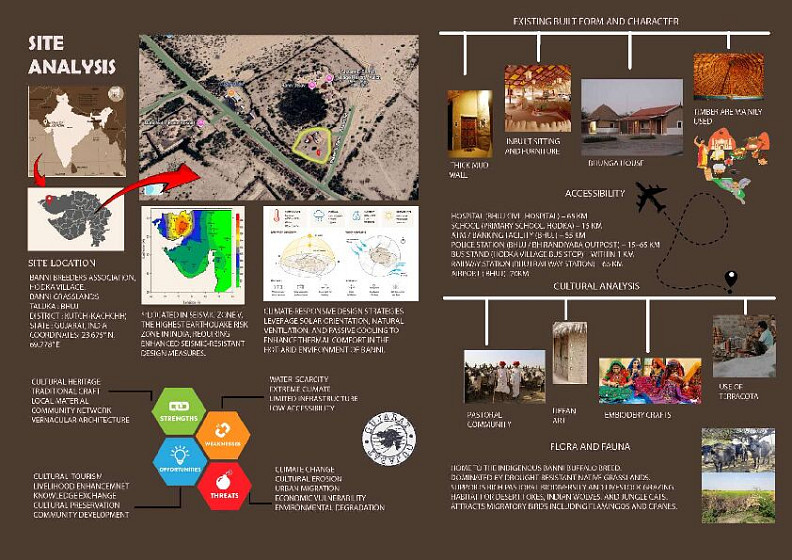
The project is situated in Hodka Village within the Banni Grasslands of Kutch district, Gujarat, India, located in Seismic Zone V. The site analysis examines existing built form and character including traditional Bhunga houses with thick mud walls, inbuilt sitting and furniture, timber construction, and terracotta elements. The cultural analysis highlights the pastoral community, Lippan art, and embroidery crafts. Climate-responsive design strategies leverage solar orientation, natural ventilation, and passive cooling to enhance thermal comfort. A SWOT analysis identifies strengths in cultural heritage, traditional craft, local materials, and vernacular architecture, while noting challenges of water scarcity, extreme climate, and limited infrastructure. Opportunities include cultural tourism, livelihood enhancement, and community development.
Technical information
Located at coordinates 23.675°N, 69.778°E in Seismic Zone V requiring enhanced seismic-resistant design measures. Sun path and wind analysis inform climate-responsive strategies. Existing construction uses thick mud walls, timber framing, and terracotta materials. Site accessibility includes distances to hospitals (65 km to Bhuj), schools (15 km), police stations (15-65 km), bus stand within 1 km, railway station 65 km, and airport 70 km.
Documentation


Copyright © 2026 INSPIRELI | All rights reserved. Use of this website signifies your agreement to the Terms of Use, Privacy Policy, and use of cookies.