Hive Shelter - Homeless Education Centre


Project idea
The Honeycomb Pottery Workshop and Learning Shelter is a community-focused interior design project that provides a safe and supportive environment for homeless individuals through creative learning and social interaction. Inspired by the natural structure of a honeybee hive, the design uses hexagonal forms to symbolize cooperation, growth, and belonging. The project combines pottery education, skill development, and communal spaces to encourage personal empowerment and social inclusion within an urban setting.
Project description
Located in Chinatown, Kuala Lumpur, the project transforms an urban site into a creative learning hub where homeless individuals can develop practical pottery skills while rebuilding confidence and independence. The area is characterized by strong pedestrian activity, cultural diversity, and excellent accessibility through nearby public transportation.
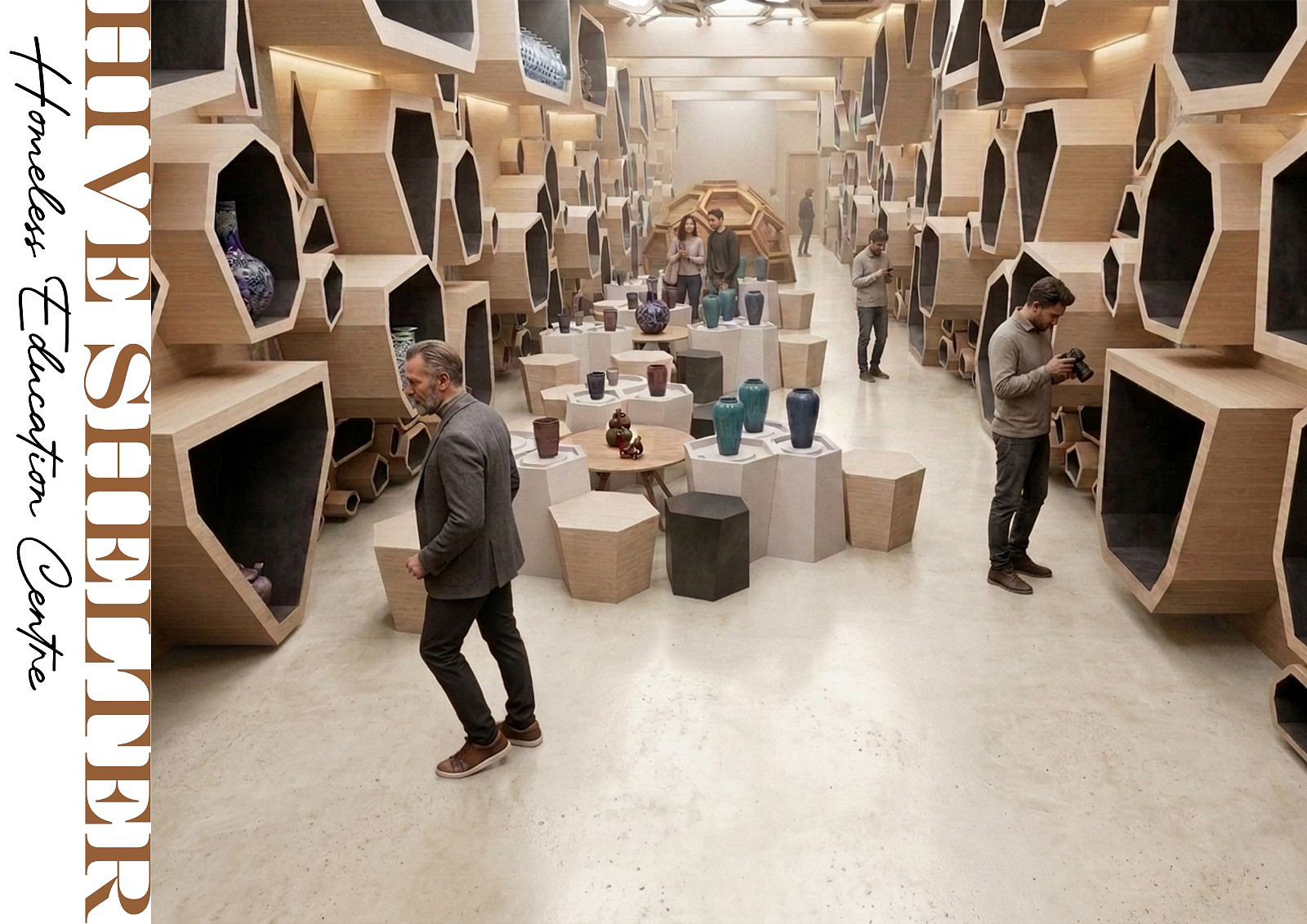
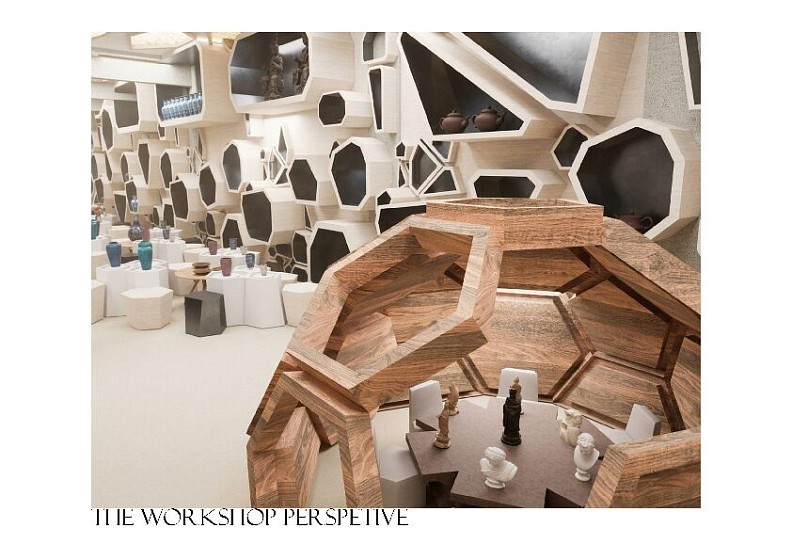
The design concept draws inspiration from the honeycomb structure found in beehives. Hexagonal spatial arrangements create an interconnected environment that promotes collaboration, communication, and a sense of community. Warm natural materials and organic forms establish a welcoming atmosphere that supports both learning and social engagement.
The facility includes pottery workspaces, learning areas, exhibition spaces, social gathering zones, and support facilities. Through pottery-making activities, users gain hands-on experience in clay preparation, shaping, drying, firing, and finishing processes. These activities encourage creativity, develop vocational skills, and provide opportunities for personal growth.
The project also addresses social challenges by creating an inclusive environment where vulnerable individuals can engage with the community, learn new skills, and work toward a more stable future. Inspired by precedents such as the Clusterwohnen Wabenhaus in Germany and the Hive Building in India, the design integrates honeycomb geometry as both a functional and symbolic element, enhancing spatial organization while reinforcing the project's core values of cooperation and resilience.
Technical information
The interior design is based on a modular hexagonal planning system inspired by honeycomb geometry. This layout improves circulation, spatial efficiency, and visual connectivity between different functional zones. Natural materials such as timber, bamboo, and textured finishes are incorporated throughout the project to create a warm and sustainable environment.
Large openings and passive ventilation strategies improve natural airflow and reduce heat accumulation within the building. Interior spaces are carefully organized to accommodate pottery production processes, including clay preparation, shaping, drying, firing, and exhibition. Acoustic considerations and spatial buffering are introduced to reduce the impact of surrounding urban noise.
The design prioritizes accessibility, safety, and user comfort while supporting educational and social activities. Through the integration of sustainable materials, flexible learning spaces, and community-oriented planning, the project creates an environment that encourages creativity, skill development, and social reintegration.
Documentation

Copyright © 2026 INSPIRELI | All rights reserved. Use of this website signifies your agreement to the Terms of Use, Privacy Policy, and use of cookies.