Revivifier l'intélligibilité d'un milieu sensible - Cas de la Sebkha de Kélibia


Project idea
Reviving the Intelligibility of a Sensitive Environment: The Case of the Sebkha of Kélibia is an academic architectural thesis project that investigates the transformation of a fragile lagoon landscape into a legible, accessible, and meaningful public environment. Located between the city, the Mediterranean Sea, and the Fort of Kélibia, the Sebkha is treated not only as an ecological milieu, but also as a collective urban memory that has gradually become fragmented, enclosed, and difficult to understand. The project proposes to reconnect the lagoon with its surrounding urban fabric through architectural, landscape, and programmatic interventions that restore visual axes, soften physical boundaries, and create new cultural, recreational, and educational uses. Its main objective is to transform a neglected and sensitive site into a civic interface where ecology, memory, mobility, and public life coexist.
Project description
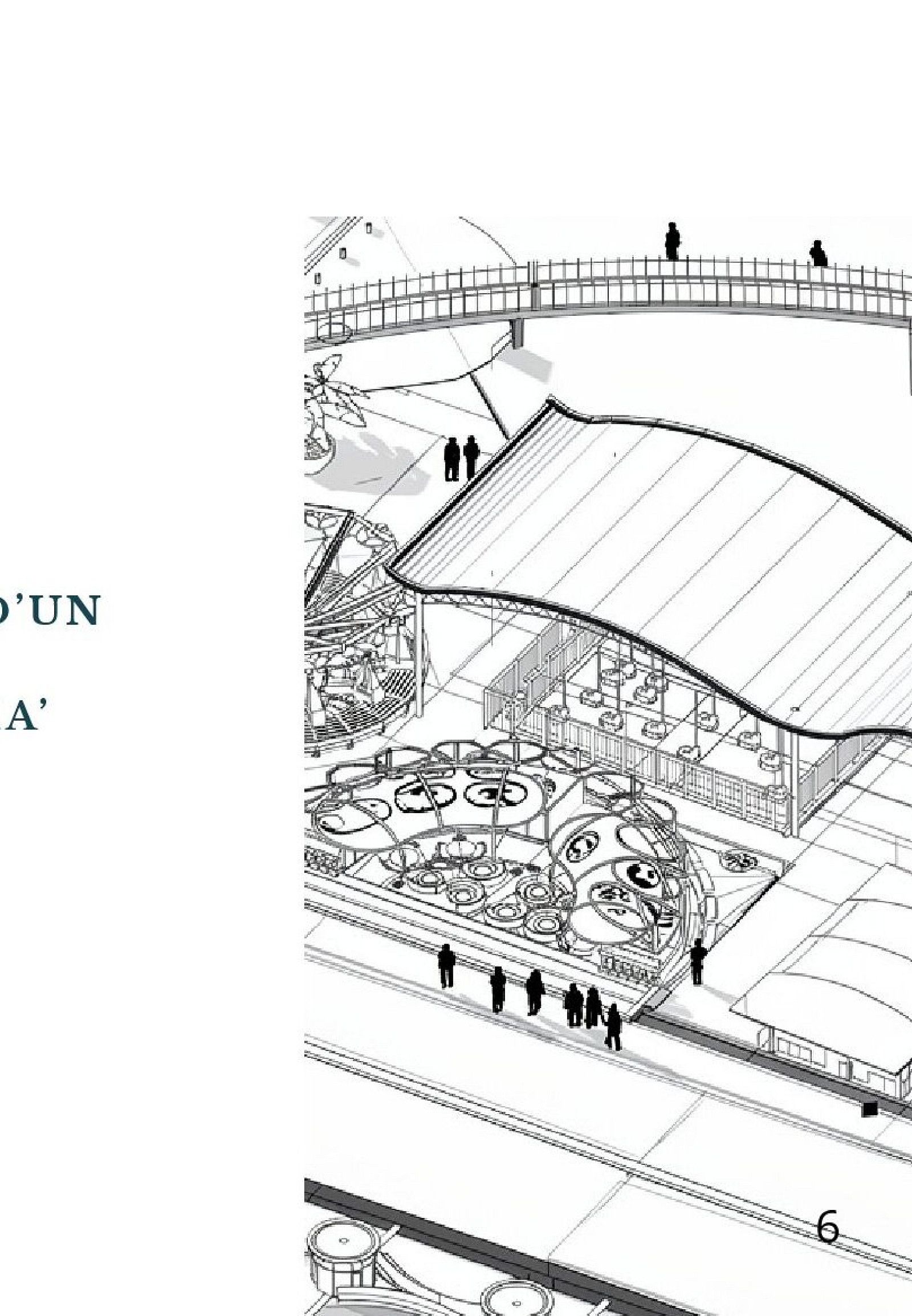
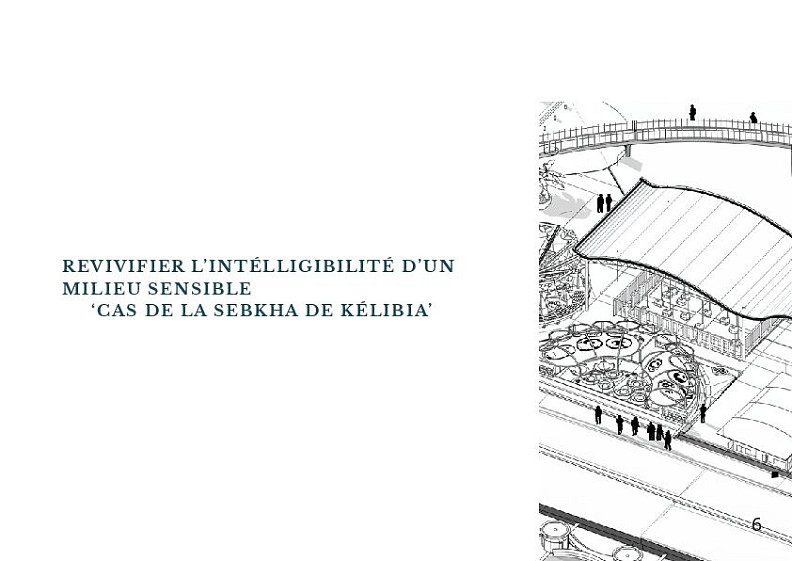
The project develops a comprehensive revitalization strategy for the Sebkha of Kélibia through a sequence of urban, landscape, and architectural interventions. At the territorial scale, it reopens connections between the city, the lake, the sea, and the historic fortress, while introducing soft mobility paths, pedestrian promenades, cycling routes, planted public spaces, and observation points. At the architectural scale, the existing enclosed amusement area is reinterpreted as an open and inclusive public platform containing recreational, cultural, ecological, and social programs. The proposal includes a lake park, a floating amphitheatre, an ecological museum/reception space, kiosks, rest areas, a skateboard area, a restaurant island, an observatory platform, and an intergenerational tourist train. Together, these elements create a continuous experience that allows visitors to read the site, observe its ecological qualities, and engage with it as a renewed public landscape.
Technical information
The project combines landscape infrastructure, lightweight architectural systems, and reversible construction principles adapted to a sensitive lagoon environment. The main built interventions rely on a steel frame system, tensile membrane structures, compression rings, elevated platforms, and light pavilions that reduce ground impact and preserve the ecological character of the Sebkha. Public paths and mobility bands are designed with permeable and locally available materials such as draining concrete, limestone, compacted gravel, granite, and wooden decking, allowing water infiltration and improving durability in a Mediterranean climate. The project also integrates planted buffers, lake-edge promenades, observation platforms on piles, cycling and pedestrian routes, kiosks, shaded rest areas, and elevated circulation elements. This technical approach supports a low-impact, legible, and adaptable intervention that balances environmental protection, public accessibility, and architectural expression.
Documentation

Copyright © 2026 INSPIRELI | All rights reserved. Use of this website signifies your agreement to the Terms of Use, Privacy Policy, and use of cookies.