Nuit de Sine


Project idea
Femme, allume la lampe au beurre clair, que causent autour
Les Ancêtres comme les parents, les enfants au lit.
Écoutons la voix des Anciens d’Elissa. Comme nous exilés
Ils n’ont pas voulu mourir, que se perdît par les sables leur torrent séminal.
The verse is from Leopold Sedar Senghor's poetry "Nuit de Sine". In traditional Senegalese culture, women are symbolic of Mother Earth, caring, and the family's fire-bearers. The call "Femme" (roc woman) at the beginning of the poem is reminiscent of an appeal to the angels. This scenario demonstrates the inevitability of bloodlines and culture: the aged enter the soul, the young mature, and the lifeline is never complete. Senegalese people create communities based on longstanding traditions.
Each community is built around gathering places where individuals can meet, exchange stories, and connect. The project establishes a Community Center, which organizes activities to increase awareness, give training, and encourage local growth.
Project description
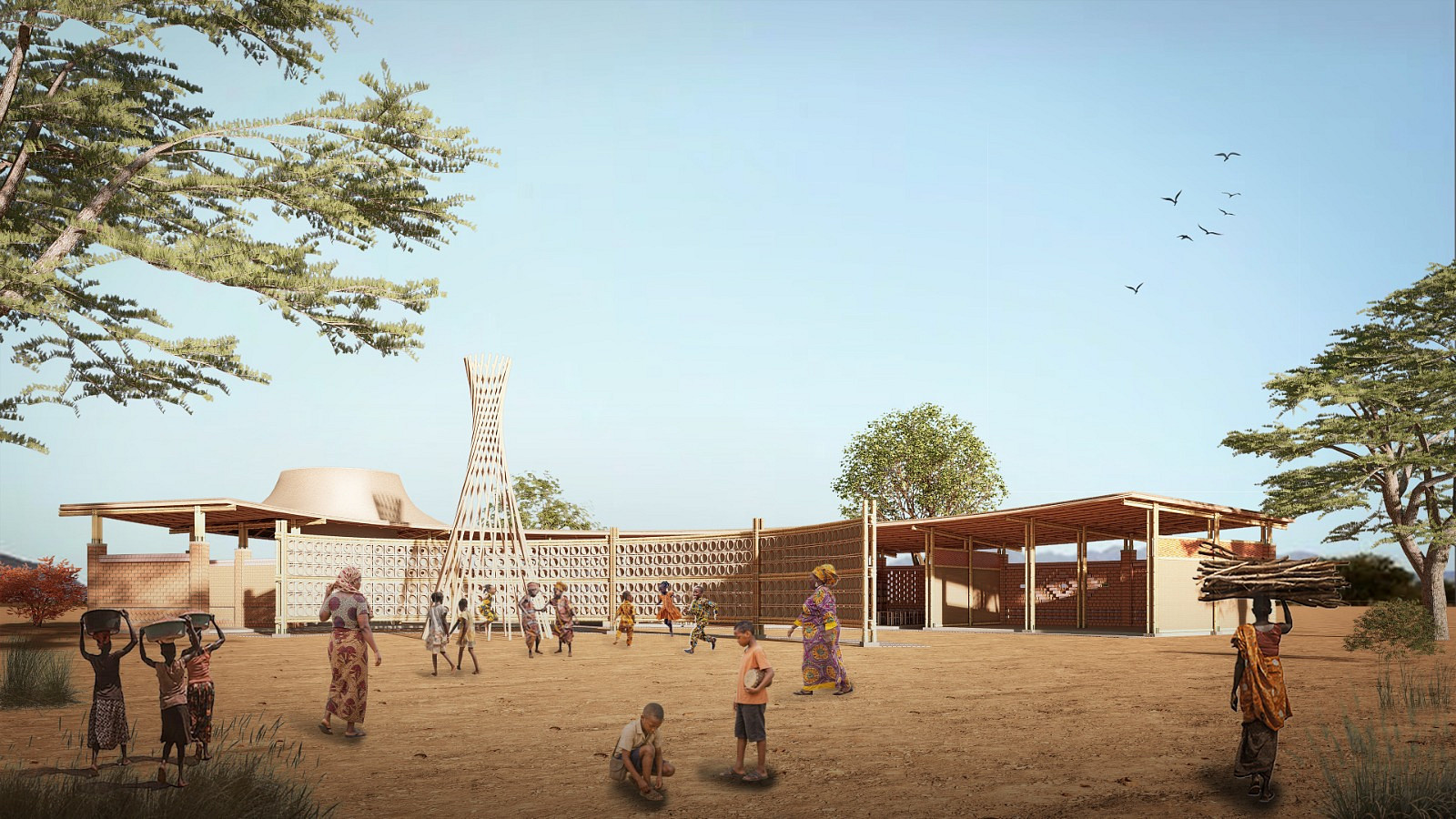
Because of the lengthy dry season, winds transport sand and soil from the desert to southern Senegal, creating a diverse and fertile natural habitat. One of the issues here is a shortage of clean water, food, and living space. The fundamental objective is to create a space that blends in with the natural surroundings, hence promoting people's growth. Men in southern Senegal must travel far to make a living, and the settlements are populated solely by women and children. Another aspect of the project is raising awareness of Senegal's cultural values; the structure will foster a bond that is both "familiar and unfamiliar."
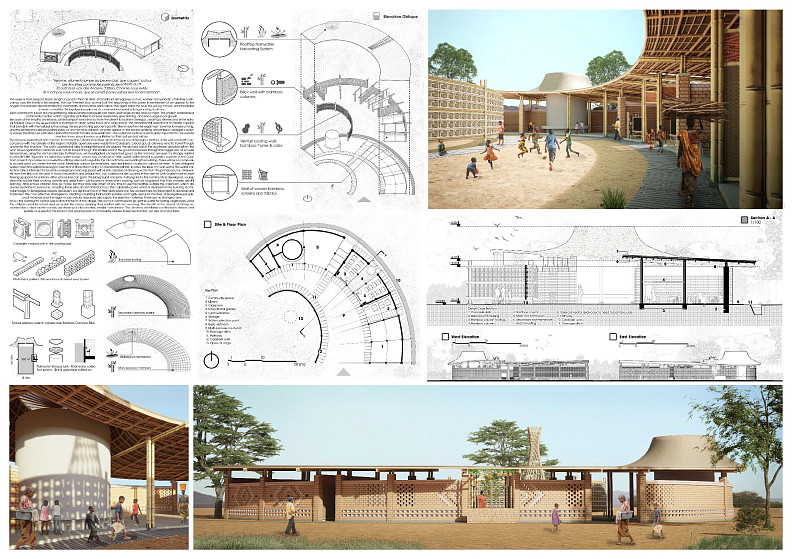
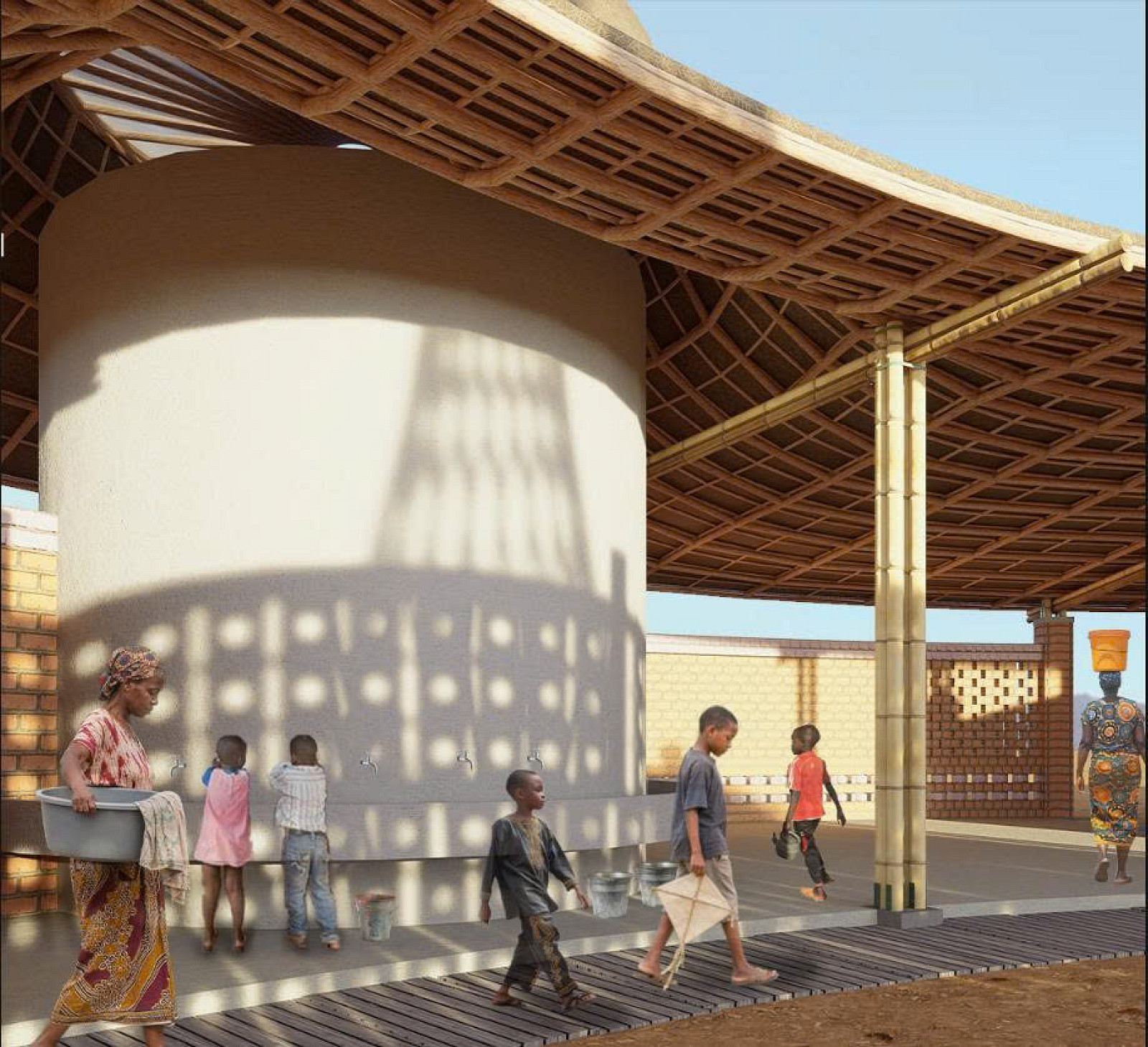
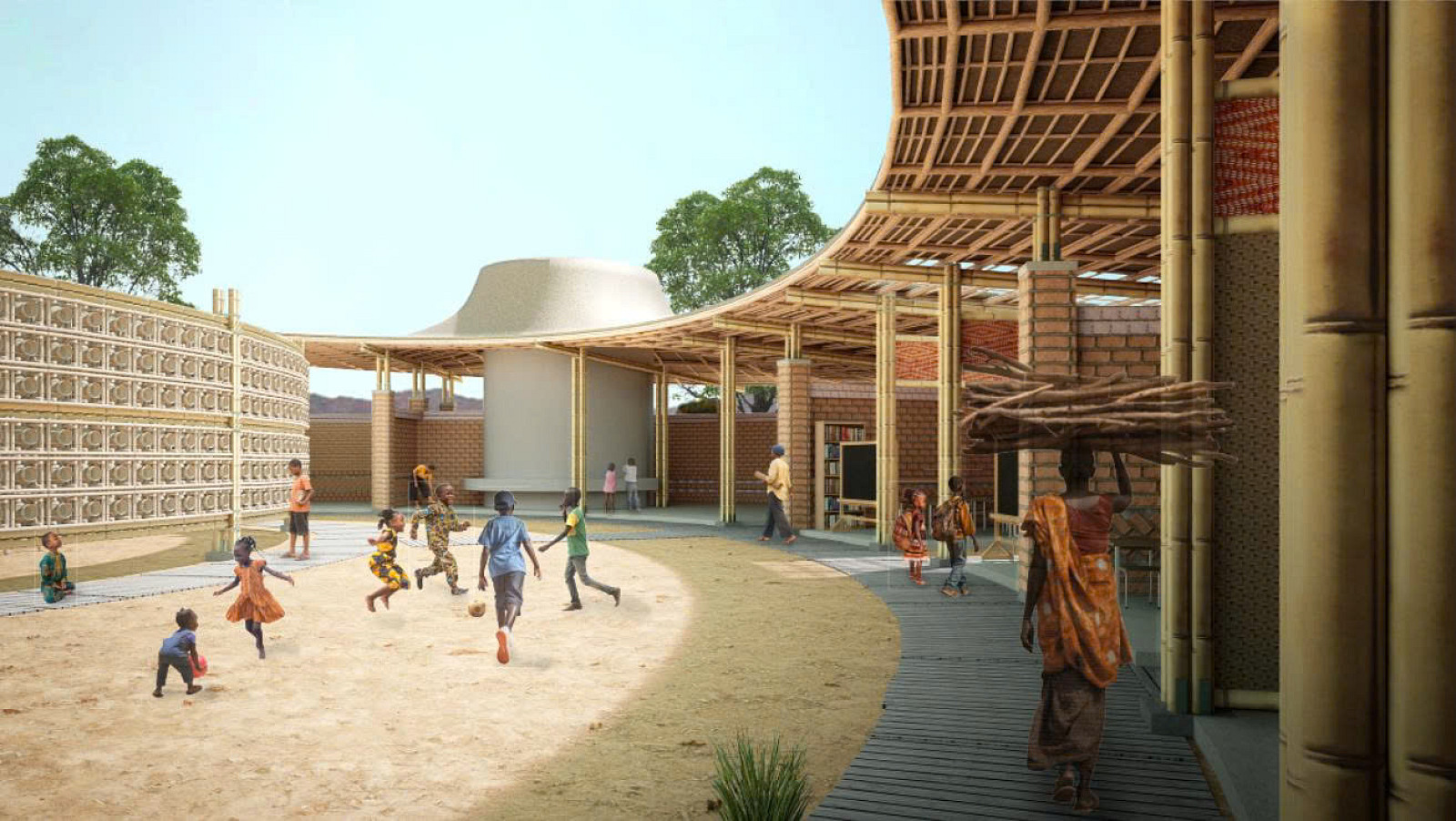
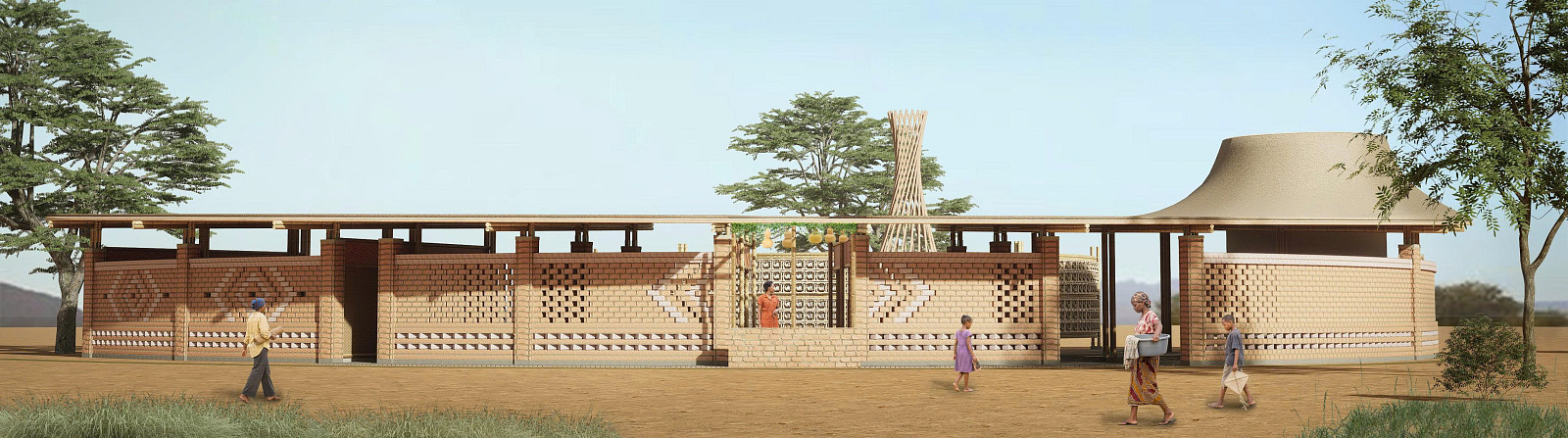
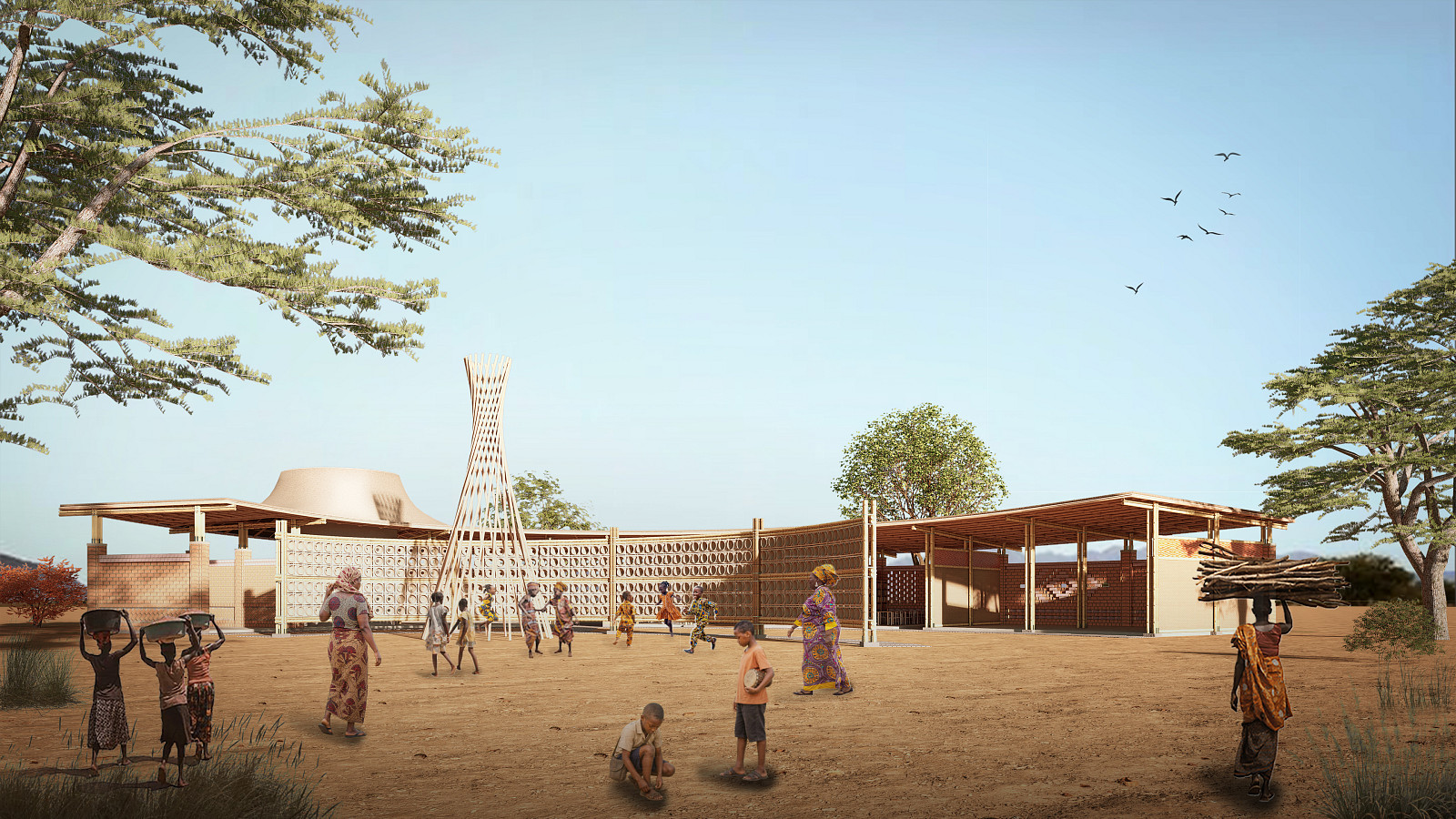
The community center project we are presenting is not only an embodiment of culture and spirit, but also a sustainable structure.A fire wall was built in accordance with the climate of the region. Notably, apertures were made from Calabash, a local gourd, allowing wind to travel through and enter the structure. The wall's operational idea is straightforward: we placed the arched wall in the southwest direction.When the wind blows against the Calabash wall, hot air travels through the smaller end of the gourd and leaves through the bigger end at a lower temperature, using the Venturi principle. Furthermore, we investigated and selected gourd as the material because it is strongly related to people's life. Typically, it is used as a water scoop, a Kora ring, or a bowl of fresh, sweet water served to guests. However, in the Calabash project, it provides a cool wind by utilizing science to regulate the microclimate surrounding the building. There will be no community access once you enter the first point. Meetings cannot be extended, and the interior courtyard cannot be seen. A well-designed water collection system in Senegal collects and stores the country's considerable rainfall. To solve the issue of clean water, the water collection tank is intended to be semi-underground and equipped with a sink capable of drawing water from the primary source. Greywater from the sink can be used in food preparation and production. Two classrooms are located in the center, with a green buffer zone freeing up space for a library. After school, kids can go to the playground and play. A strong link to the community is developed; youngsters may locate their working parents and assist them, while parents, even when working, can be cognizant that their children are still learning. After school, children may go home, but they may also return at any time to use the facilities outside the classroom, which are always available to everyone, including those who do not attend school. The Calabash gourd, which is displayed in the building, is a familiar image to Senegalese people because it is a significant part of their daily existence. We worked hard on this project to develop and implement the most effective strategies for creating a building that is both suitable and highly useful for the lives of Senegalese people. Local materials and the region's vast natural resources also supply the essential materials. There are no strangers here.
When the community center was built in the heart of the village, the woman continued to go gather water for boiling vegetables, while the children went to school and sat under the eaves, assisting their mother with her weaving. The breath of the desert, of history, remained like a clear butter candle, yet there was also another, smaller component. The vibrancy and flame continued to dance and sparkle as a result of the letters i and a being read in community classes. It seemed familiar, yet also odd and fresh.
Technical information
The construction system uses a perforated brick pattern with ventilation and desert wind barrier, secondary bamboo purlins, typical bamboo-column connections with bamboo-concrete-brick, and steel connectors linking brick columns to bamboo poles. The cooling wall operates on the Venturi principle where wind blows against the calabash wall and hot air travels through the smaller end of the gourd, creating cooling airflow. Rainwater storage tanks with roof water collection system provide water supply. The building uses waterproof membrane over main bamboo members. Section A-A at 1/100 scale shows the relationship between the thatched roofing, main roof framework, secondary roof framework, and bamboo columns. Foundation details include concrete slab, brick column footing, and bamboo column footing with drainage ditch.
Documentation

Copyright © 2026 INSPIRELI | All rights reserved. Use of this website signifies your agreement to the Terms of Use, Privacy Policy, and use of cookies.