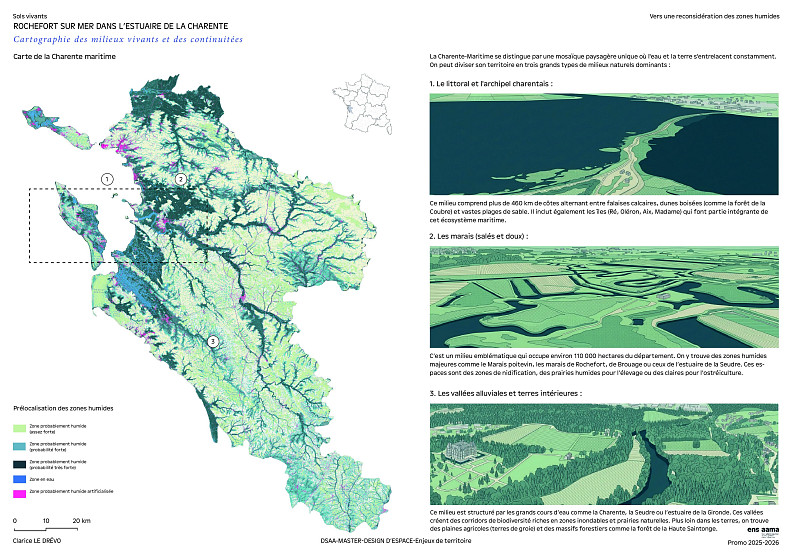
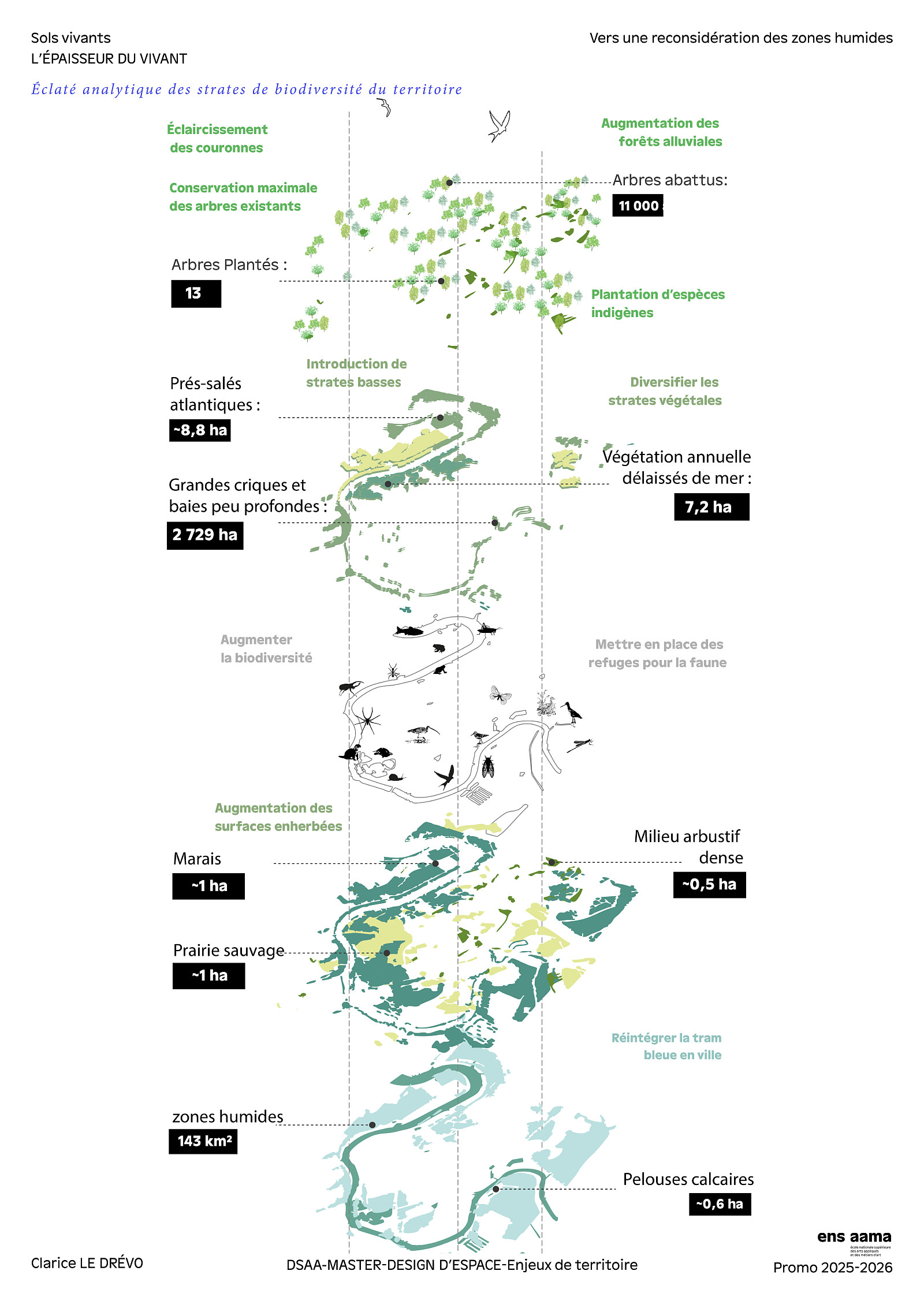
Sols vivants - Rochefort sur Mer dans l'estuaire de la Charente


Project idea
Towards a reconsideration of wetlands through cartography of living environments and continuities in the Charente estuary at Rochefort-sur-Mer.
Project description
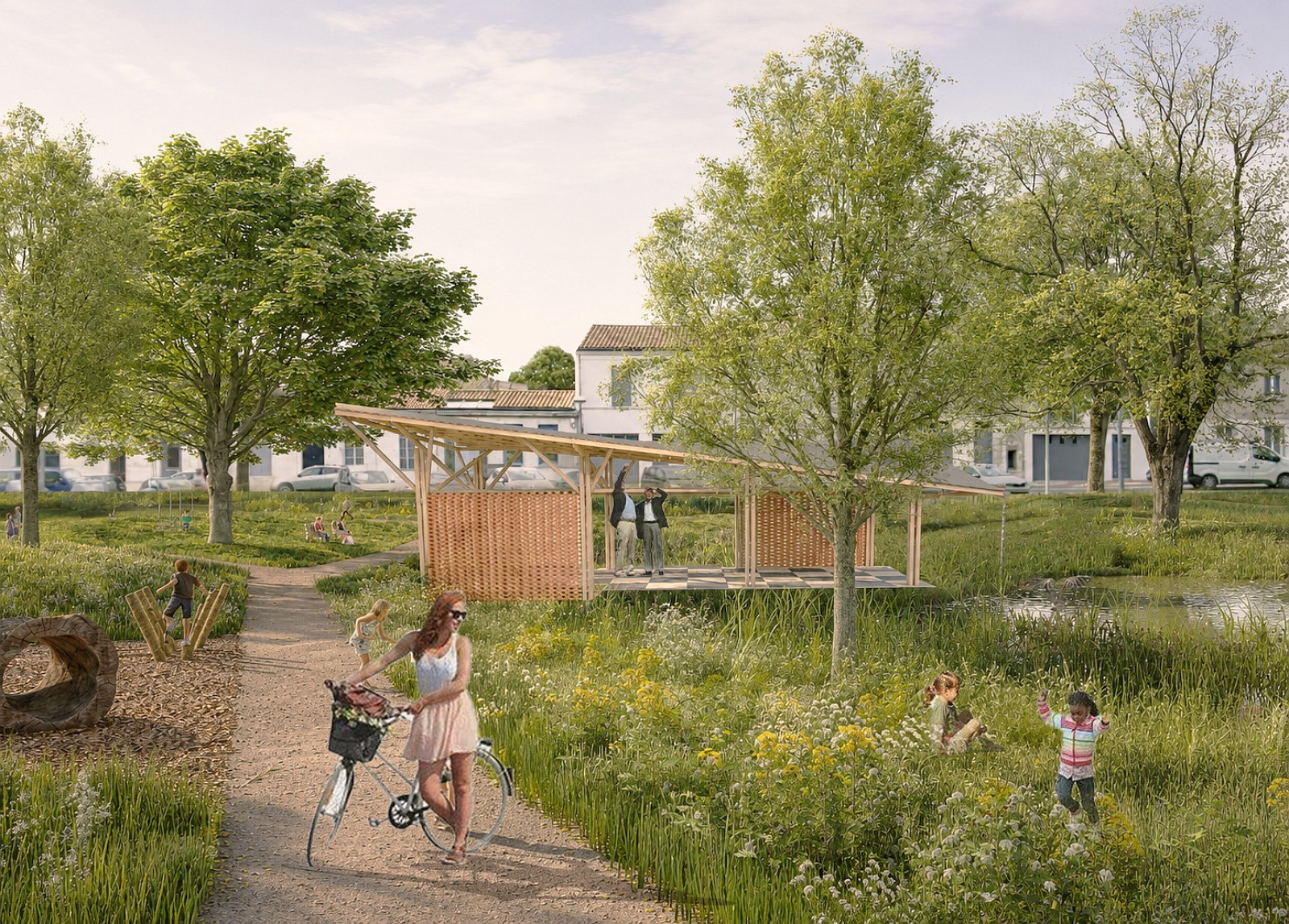
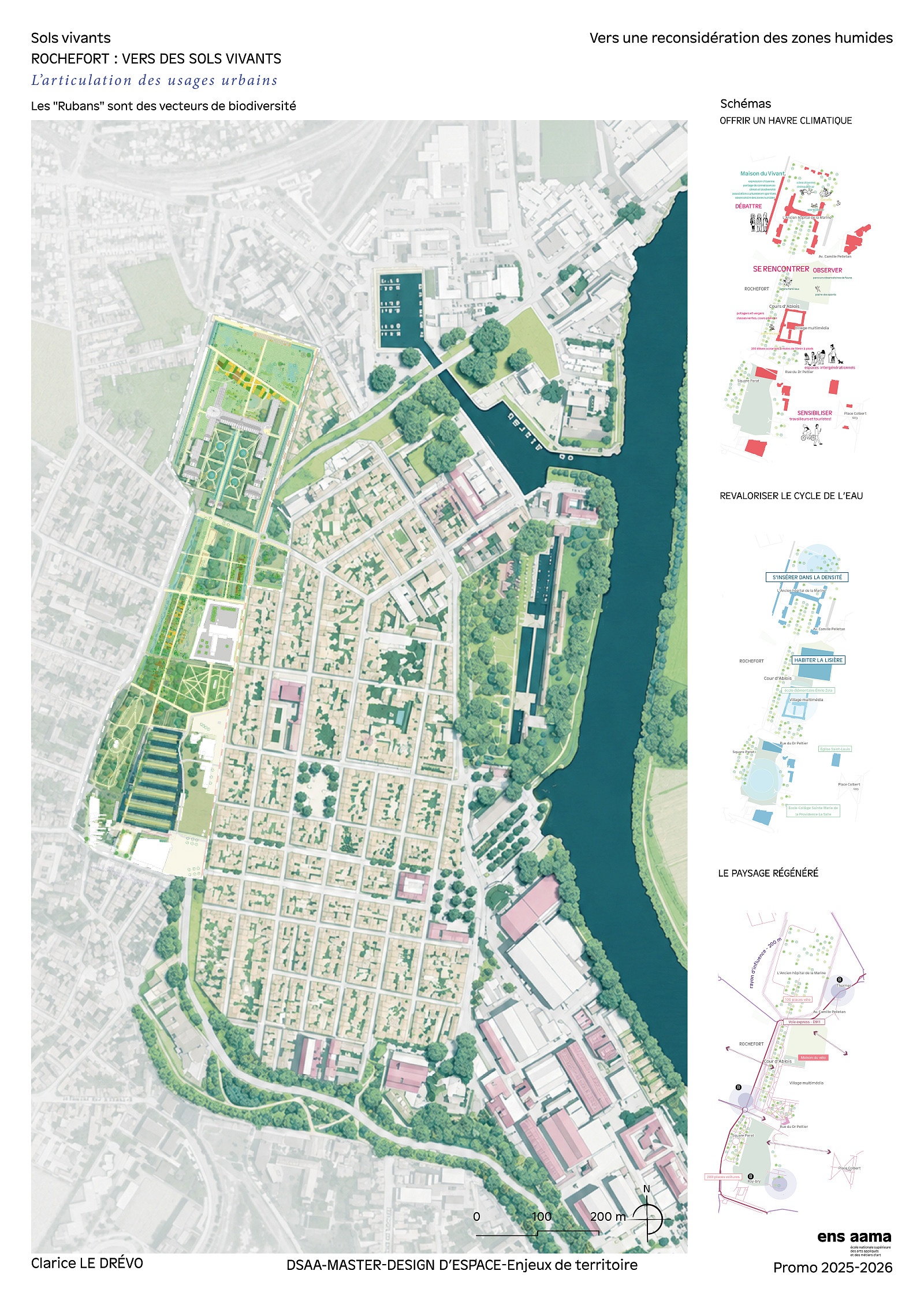
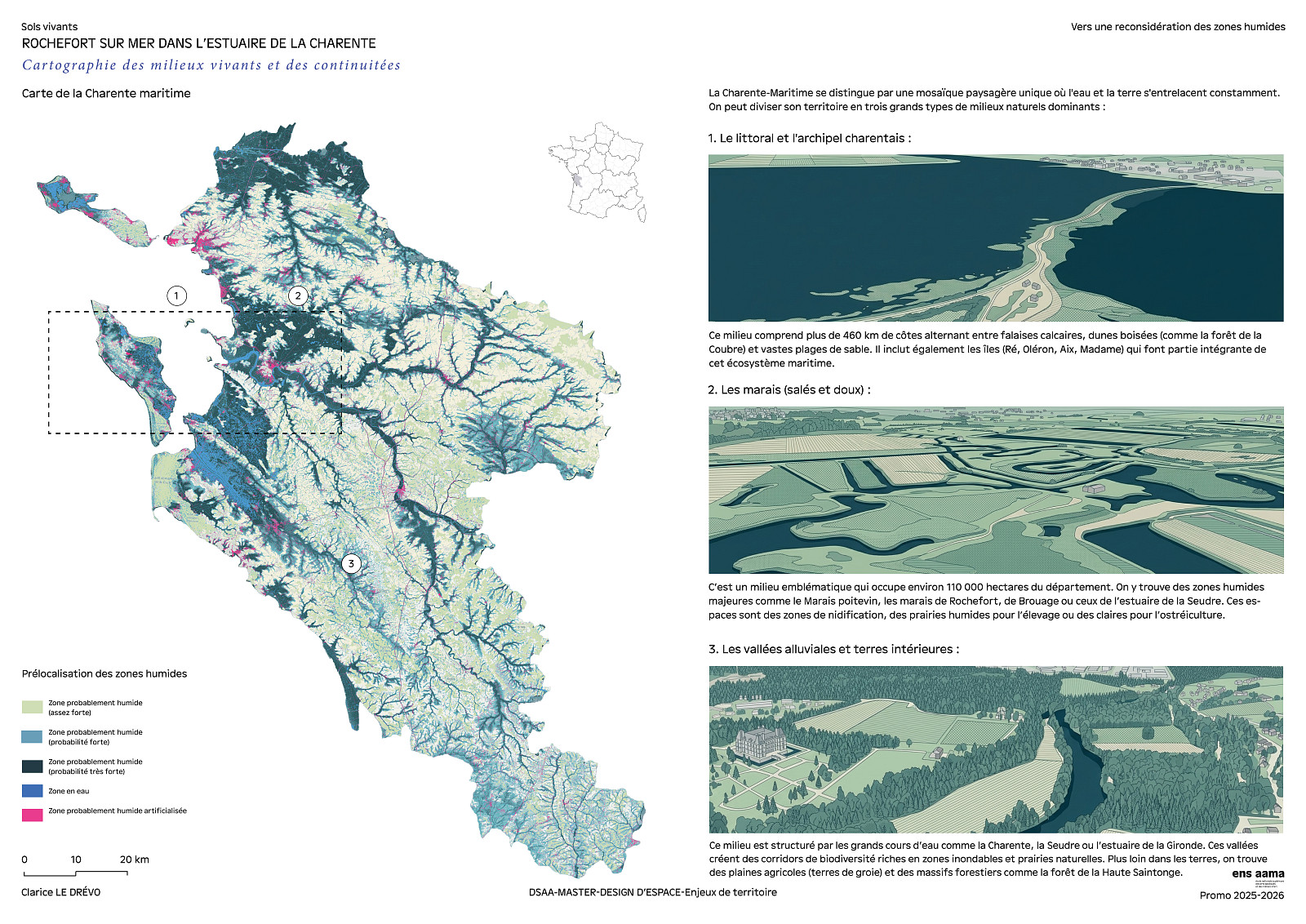
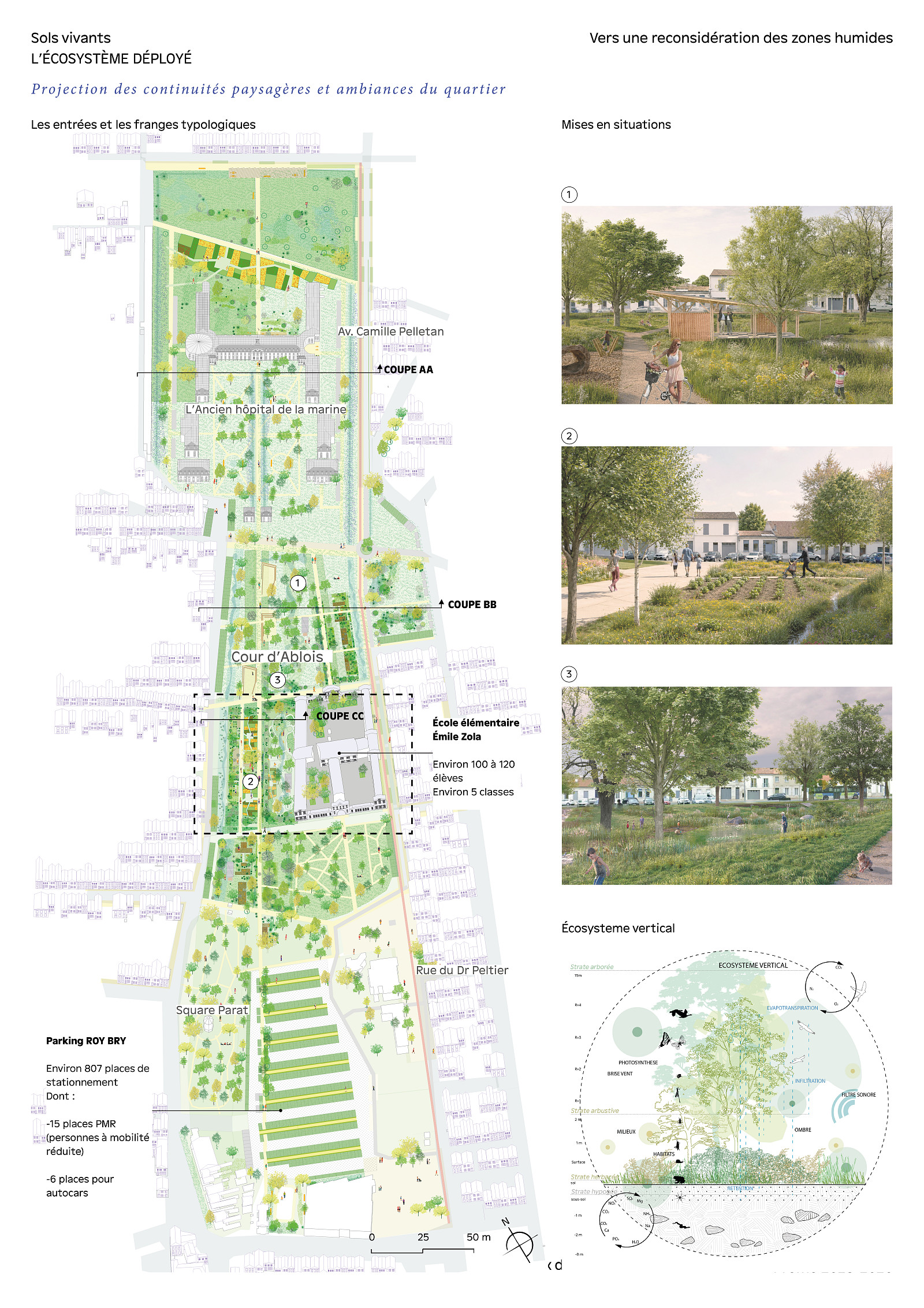
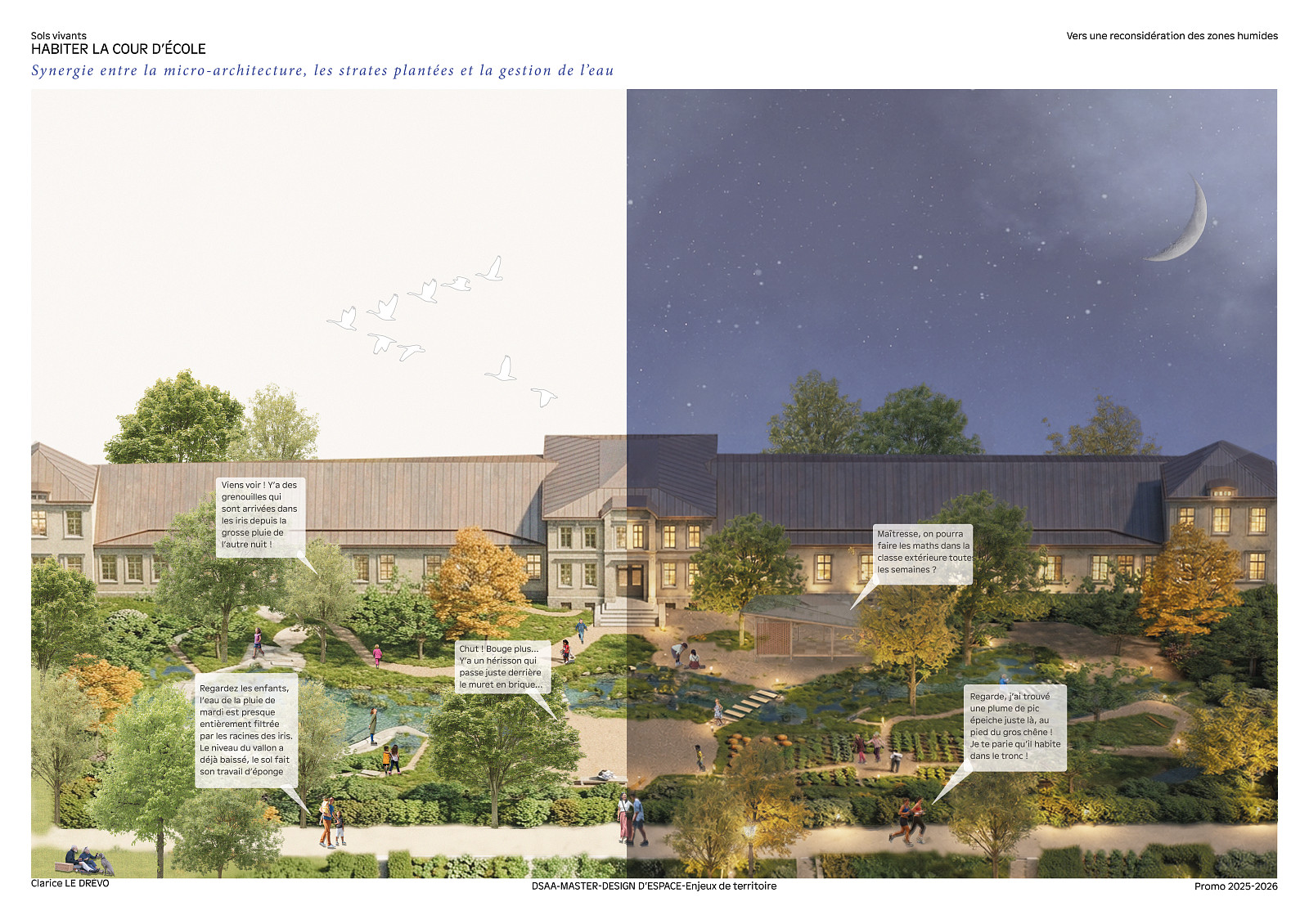
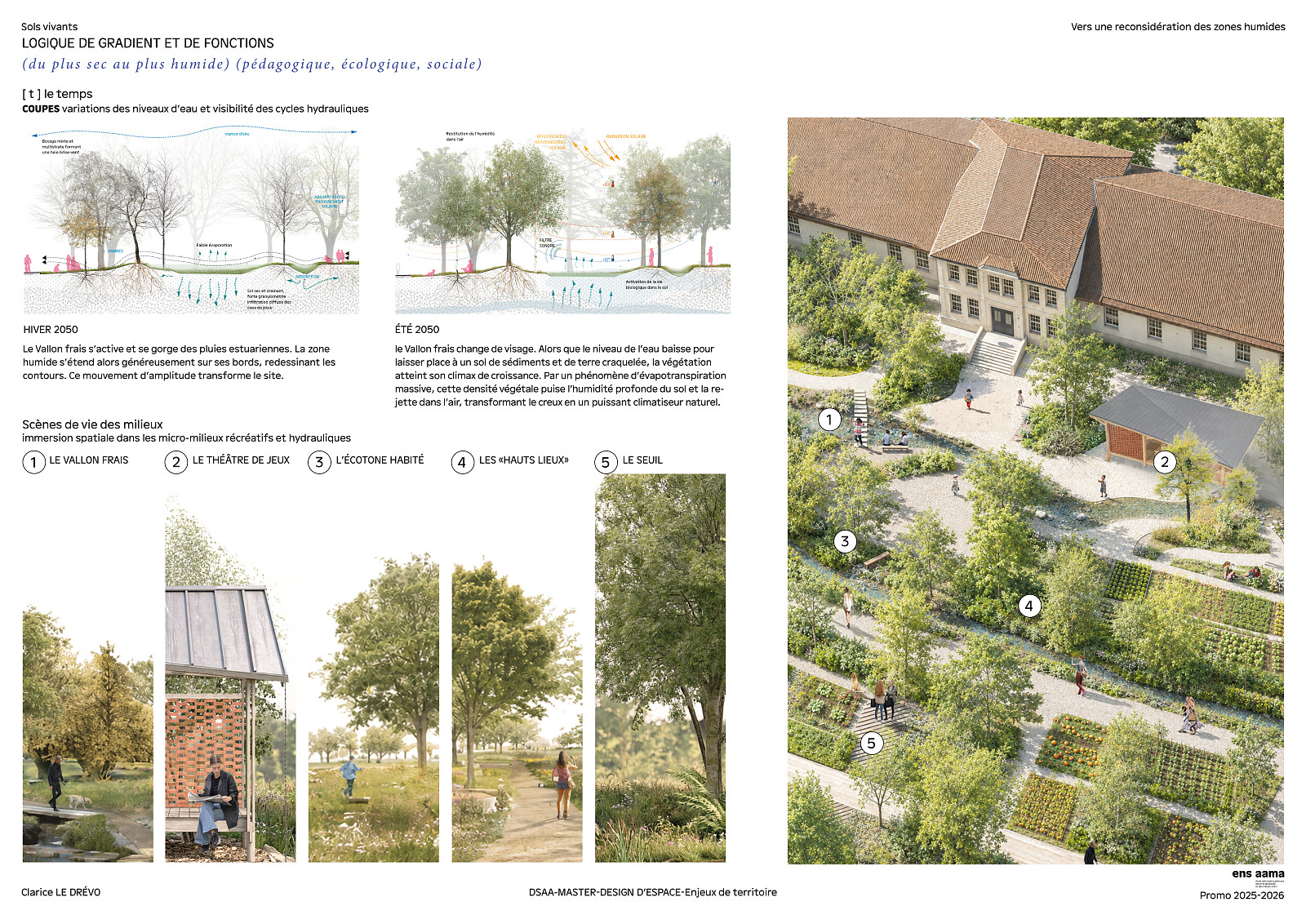
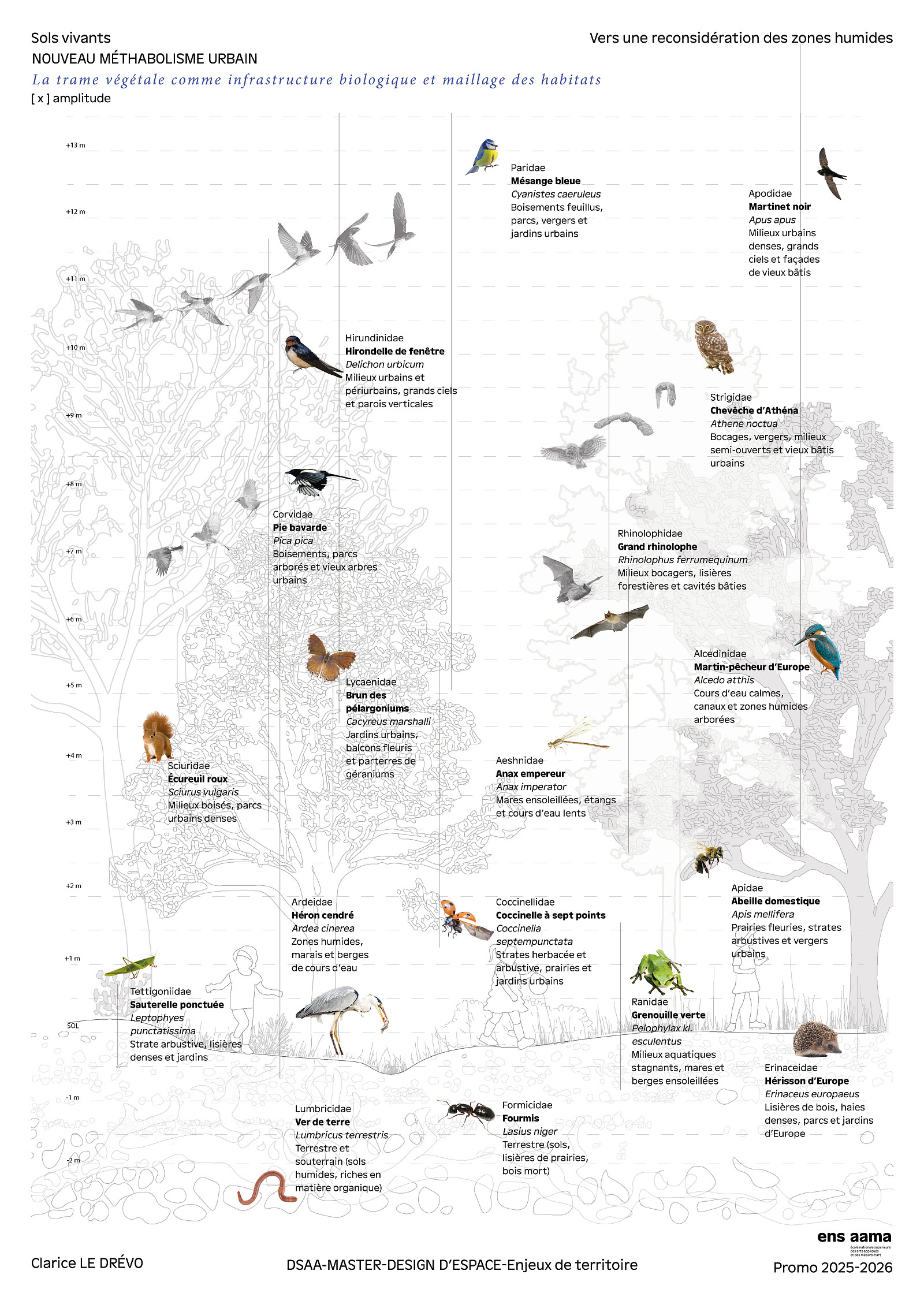
Face à l'urgence climatique et aux vagues de chaleur et aux inondations récurrentes, nos modèles urbains ultra-imperméables atteignent leur point de saturation. Historiquement perçues comme malsaines, les zones humides ont été systématiquement drainées et exclues de la ville. Le projet "Living Soils" propose un changement radical de paradigme : arrêter de construire la ville contre l'eau et réapprendre à concevoir avec. Le terrain d'essai est situé à Rochefort (Charente-Maritime), au cœur de la Cour d'Ablois dans l'ancien hôpital naval. Ce secteur stratégique de 10 hectares est actuellement l'archétype d'une "croûte urbaine stérile" : il est occupé par un parking de surface de 800 places et est imperméable à 80 %. L'ambition est d'établir un laboratoire de résilience urbaine en transformant ce site minéral en un véritable "sol éponge". Programmation basée sur la coexistence Le projet considère la ville comme un métabolisme vivant unique où les besoins universels (habitation, respiration, déplacement, nutrition) sont partagés à parts égales entre les humains et les non-humains. Le rôle de la conception ici est d'ajuster les curseurs spatiaux et temporels pour permettre à une communauté élargie de "voisins" de cohabiter : les résidents, la ville bâtie et la faune et la flore locales. Pour aller au-delà de la simple intention écologique, le projet fonctionne sur trois échelles interconnectées : Régénération du sol (échelle macro) : Passer au-delà du simple traitement de la "peau" de la ville (son pavage) à la réparation de sa "chair" (son sol). Le projet reconnecte le site aux couloirs écologiques de la ville grâce à un système de salés filtrants, de haies de Benjes (abris de faune en bois mort) et d'une lisière forestière dense agissant comme un régulateur thermique passif. Conception pédagogique (échelle méso) : En zoomant sur l'extension de la cour d'école Émile Zola, le projet transforme un espace asphalté et standardisé en un pays des merveilles en plein air. L'eau coule à la surface, devenant un outil pour apprendre les cycles naturels. Les terrains deviennent poreux et sensoriels (dépage en bois, paillis, revêtement de coquillages stabilisés) pour apaiser le flux des enfants et le rendre plus inclusif. Micro-architecture symbiotique (micro-échelle) : Un pavillon fait de bois local et de briques récupérées est intégré le long du swale pour accueillir la "salle de classe extérieure". Son toit impluvium guide visuellement l'eau de pluie vers le sol. Sa façade - un mashrabiya épais et poreux - est conçue comme un habitat inter-espèces partagé : elle assure un confort thermique pour les enfants tout en incorporant des perchoirs de chauves-souris, des nichoirs pour oiseaux et des briques creuses pour les insectes pollinisés.
Technical information
1. Hydrological and Ecological Engineering (Macro Scale)
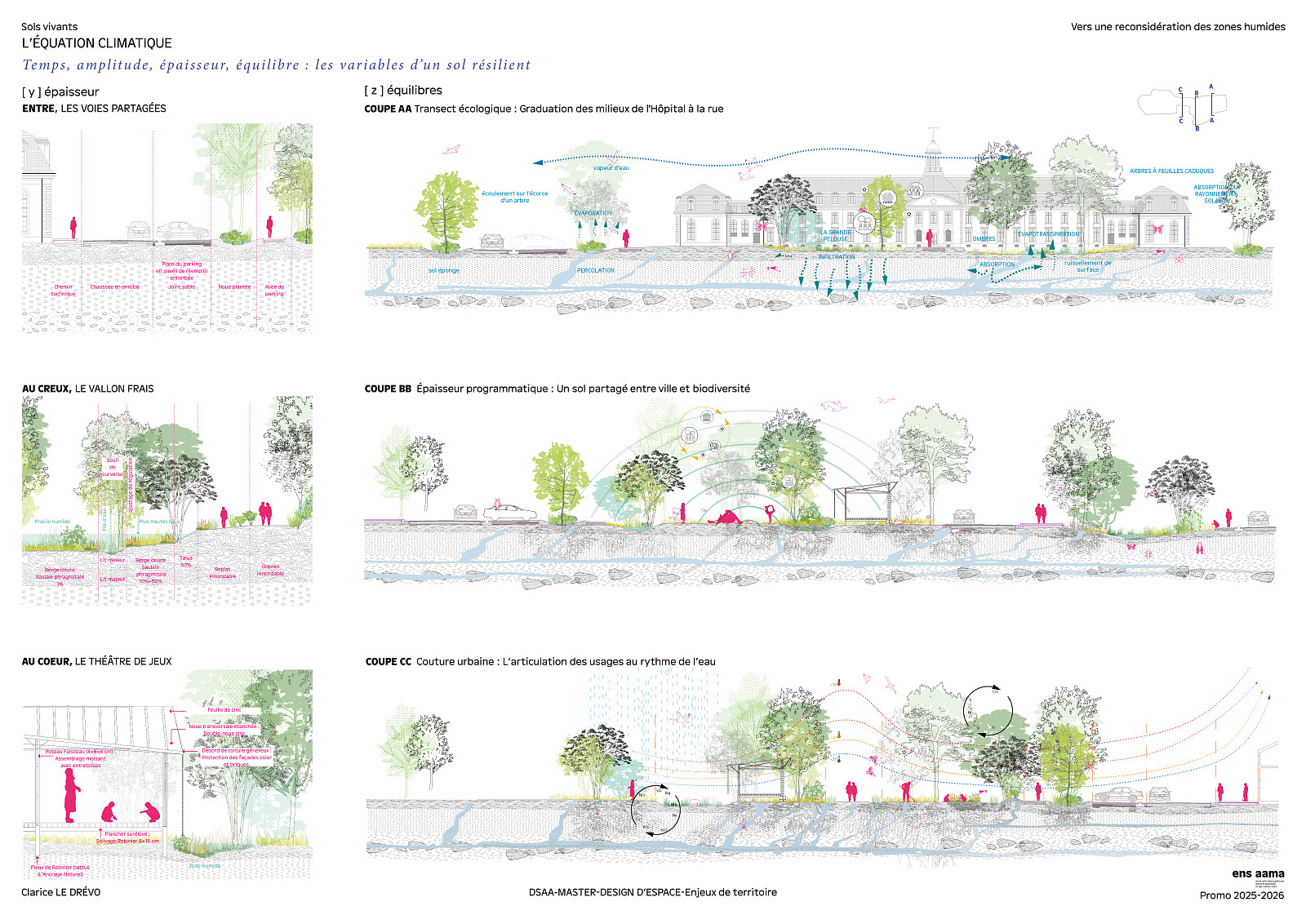
The primary objective is to drastically lower the site’s runoff coefficient (currently at 0.8) to achieve a sponge-soil functionality.
Intermittent Filtering Swales: Designed with gentle slopes (under 4%) to guarantee safety and accessibility, these swales do not store water permanently. The soil profile is reconstructed using a highly filtering complex (sandy-loam substrate over a draining gravel bed), allowing complete infiltration of standard rainfall events in less than 48 hours. This prevents water stagnation and the proliferation of mosquito larvae.
Benjes Hedges (Bioengineering): Self-supporting structures formed by stacking local deadwood (sourced from municipal pruning). They act as sediment filters during runoff, retain soil moisture, and provide an immediate micro-habitat for terrestrial and avian fauna, while slowly enriching the soil with carbon through decomposition.
Buffer Forest Edge: A dense planting of local hygrophilic species (willows, alders, ash trees) along the wetland border. They maximize evapotranspiration during the summer, actively lowering the ambient air temperature by several degrees through natural cooling (urban cool island effect).
2. Materialities and Soil Permeability (Meso Scale)
Within the Émile Zola schoolyard, the asphalt paving is entirely removed in favor of alternating porous and sensory coverings, managing the transition towards the buildings.
Compacted Stabilized Seashell Surfacing: Used for main circulation areas and accessible routes (PMR/ADA). Composed of local crushed shells mechanically compacted with a natural hydraulic binder (lime). This material guarantees excellent, stable load-bearing capacity (for wheelchairs and strollers) while maintaining high porosity for direct rainwater infiltration.
Textured Mulch (Calibrated Wood Chips): Large-diameter ramial chipped wood placed in play areas and under trees. This heavy mulch does not blow away, absorbs impacts (acting as a natural shock absorber for children), and retains soil moisture without creating sticky mud.
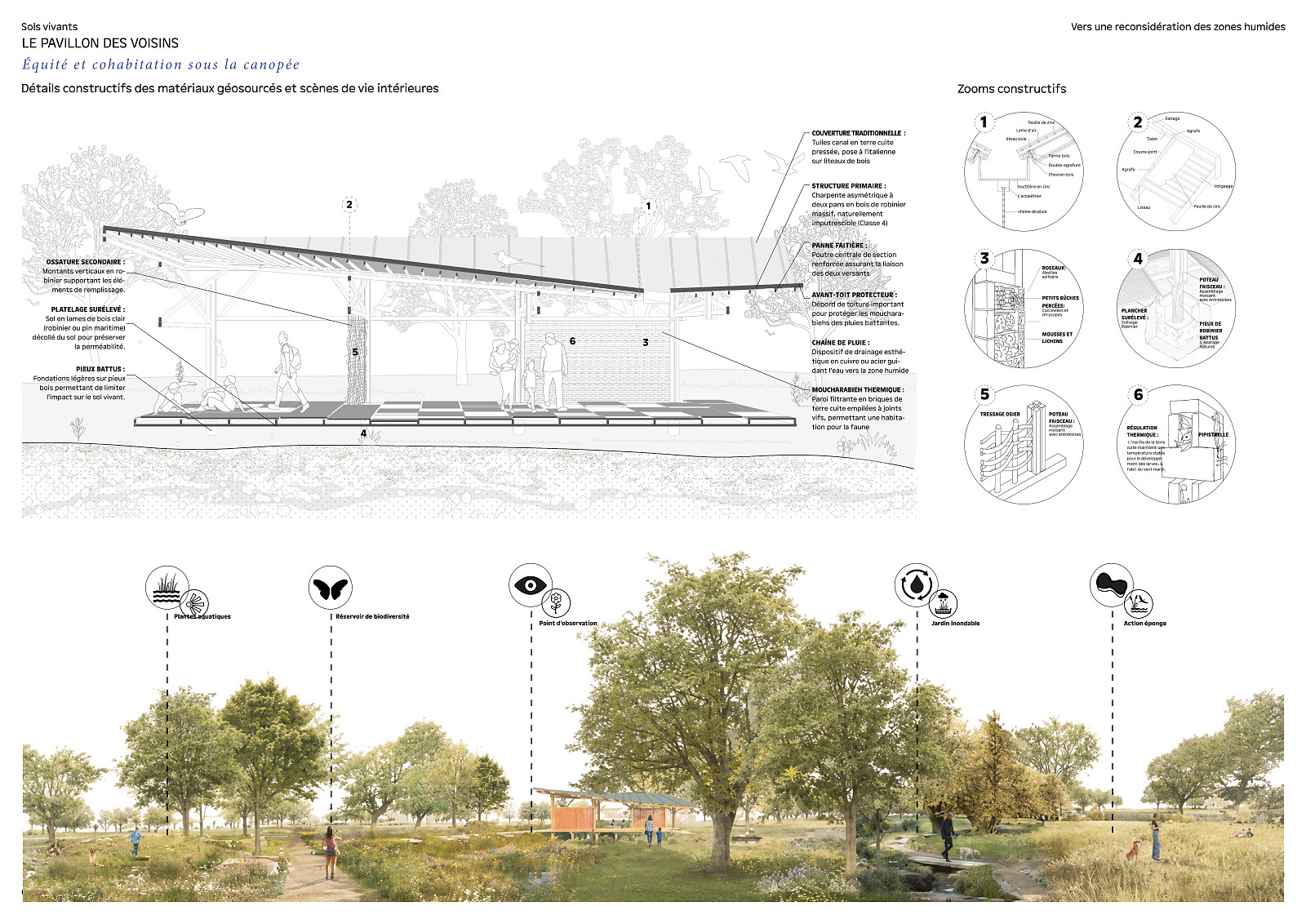
Elevated Wooden Decking: Crafted from local Class 4 timber (Chestnut or Black Locust), which is naturally rot-resistant and free of chemical treatments. Installed on joists, it is brushed or grooved to eliminate any risk of slipping in wet weather, serving as a buffer zone to clean shoes before children enter the classrooms.
3. Bioclimatic Features of the Pavilion (Micro Scale)
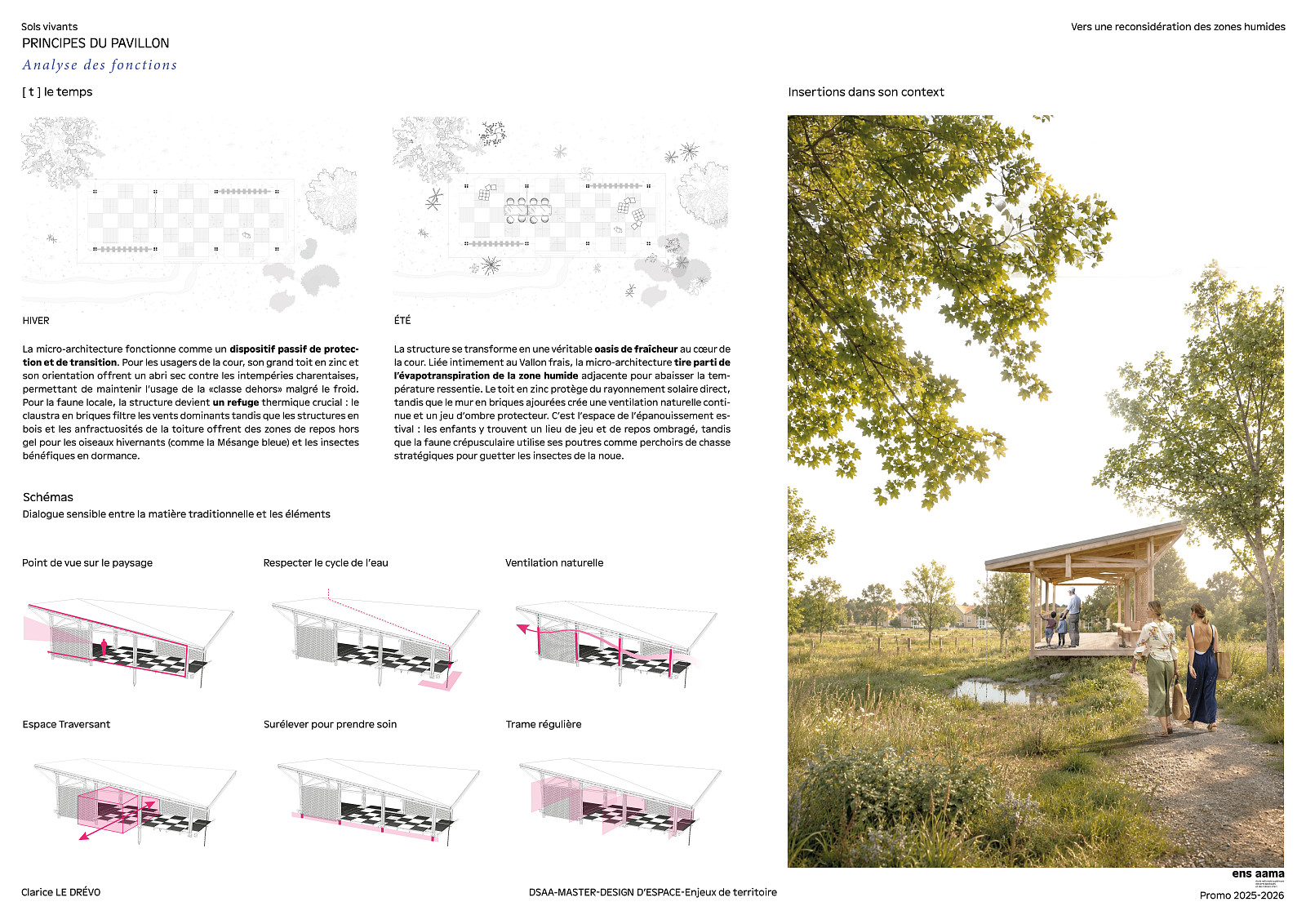
The "outdoor classroom" pavilion is a reversible micro-architecture designed using low-tech and symbiotic construction principles.
Lightweight and Reversible Foundations: To avoid disrupting the surrounding root systems and the soil's hydraulic function, the pavilion does not use poured concrete foundations. It is elevated and anchored via local stone plinths or micro-piles, protecting the timber structure from capillary rise and dampness.
Impluvium Roof and Drainage: The inverted geometry of the roof captures rainwater and channels it toward an open weathering steel (Corten) gargoyle. The water cascades visibly into the adjacent swale, transforming a technical constraint (stormwater drainage) into a pedagogical and acoustic feature. In the event of exceptional rainfall, a safety overflow drain is integrated into the core of the structure.
Mashrabiya Façade and Stack Effect: The reclaimed clay brick wall is assembled in a mashrabiya pattern (openwork latticework). The wall's thickness breaks the force of prevailing winter winds. In summer, the façade's porosity combined with the high roof opening creates a natural cross-ventilation (stack effect), drawing in fresh air cooled by the wet swale to ventilate the interior space.
Structural Wildlife Integration: The architectural double-skin incorporates specific cavities. Unpointed hollow bricks offer nesting sites for solitary, non-aggressive pollinating insects. In the upper part of the ventilated cladding, 2 cm wide slots provide access to integrated dark, dry roosts for bats (protected insectivorous species), whose guano naturally drains toward the external pairings without ever coming into contact with the interior space occupied by the children.
Documentation

Copyright © 2026 INSPIRELI | All rights reserved. Use of this website signifies your agreement to the Terms of Use, Privacy Policy, and use of cookies.
