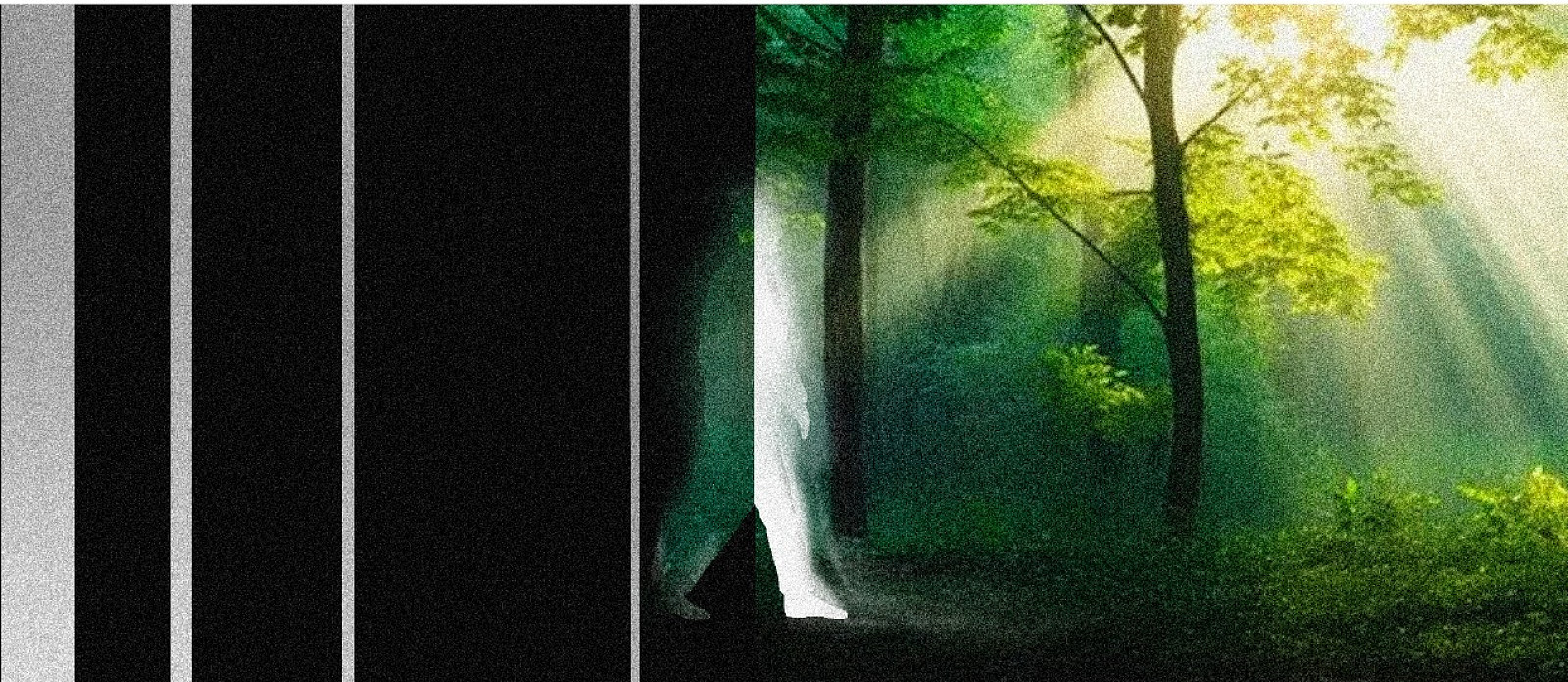
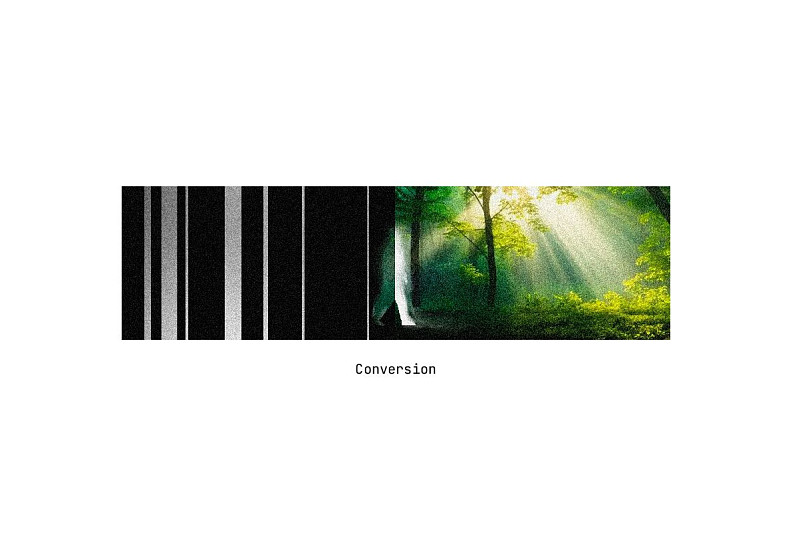
Conversion

Project idea
We're not creating a park. We're creating a meeting place. A thin skin between the world of the living and the world of spirits.
On the site where truth was once murdered, we're building a space where it can finally breathe. There will be no monuments here that demand silence. Here will be landscapes that listen.
We are the Conversion team. We believe: even if there are no witnesses left, souls remember everything. Every stone. Every root. Every broken breath.
Our project is not a reanimation of the past. It is a transformation. We transform pain into freedom. Horror into a landscape you can walk through. Silence into a silence full of voices.
We don't force you to forget. We give form to memory.
Enter our park, and you'll feel: the truth hasn't gone anywhere. It's simply taken on a different form. The form of grass, water, light, and shadow. The form of forgiveness that requires no words.
We are Conversion. We are building a bridge. Where he never was.
Come and listen. The spirits are already waiting
Project description
A Manifesto for the In-Between
They said a park is for the living. We say: a meeting place is for everyone.
Conversion is not a memorial. It is a threshold. On this ground—where a lie was once made stone, where a truth was silenced with finality—we are not erecting new stones. We are opening the soil.
Our architecture is the horizon. Our monument is the echo.
The Design
There will be no gates. Only a gradual quieting of the city’s pulse. The path is not paved; it is worn—by intention, not by force. You will walk through fields of wild grass that remember. The grass does not judge. It bends. It listens.
The Circle of Unfinished Sentences: A low, circular depression in the earth, lined with moss. Here, sound travels strangely. Whisper a truth no one heard. The wind will carry it—not away, but through.
The Water That Holds Names: Not a fountain. A still, dark mirror of rainwater. Words can be spoken into the water. Or not. The water remembers both. Ripples answer nothing. They only acknowledge.
The Grove of Witness Trees: Birch and oak, planted not in rows but in a spiral. Each tree is a receiver. Lean your forehead against the bark. The sap runs like memory—slow, patient, beneath the surface of the world. The dead lean back.
The Bench of No Explanation: A single, unadorned bench of unplaned wood. You may sit alone. You may sit together. You do not have to speak. The bench asks nothing. It only holds space—for grief, for rage, for the first small breath of something that is not yet forgiveness but is no longer silence.
The Invitation
We do not ask you to reconcile. We do not ask you to heal on a schedule. We ask only that you enter without armor.
Here, the past is not a wound to be closed. It is a root system—alive, dark, entangled. Step carefully. Or don’t. Stumble. Sit down in the grass and cry. Speak to someone who is no longer there. They will not answer in words. But you will feel the air change.
What Happens Here
At dawn: A volunteer silently rings a cracked bell once. The crack is not a flaw. It is the place where the sound escapes differently.
At dusk: All lights go out. You may stay. You may hold a candle. Or you may learn to see in the dark.
Every day: Nothing is demanded. Everything is possible. A child may run through the Grove. An elder may weep at the Water. A stranger may hand you a cup of cold tea without a word. That is the ritual.
The Bridge
We are building a bridge where he—the one who built his power on lies, the one who murdered truth—never was. He does not cross here. He has no shadow in this place.
The bridge connects the living who carry wounds they cannot name and the spirits who carry truths that were never heard.
You do not need to believe in spirits to feel them here. You only need to stop pretending that the dead are gone.
Final Words for Those Who Enter
This is not a place of answers. It is a place of meeting.
The spirits are already waiting. Not to haunt you. Not to forgive you. Not to demand anything.
They are waiting because, for the first time, someone is building a place where they are not asked to be silent.
Come. Listen. The grass is growing over the place where truth was murdered. The roots are bringing it back up.
Conversion.
Where the past becomes presence. Where silence becomes a conversation. Where the bridge has no abyss beneath it—only the ground that was always there, waiting to be remembered.
Technical information
Here, the earth is not underfoot. The earth is the main text. We do not import foreign soil. We work with what remembers footsteps, screams, silence. Each layer is a page. The top layer is the present — learning to breathe. The lower layer is that very morning when everything happened.
From earth, we build: gently sloping ramps that lead you down into the Circle of Unfinished Sentences. We build shallow聆听 bowls — depressions in the ground where sound lingers differently. We build a raised earthen ridge that separates the Grove of Witness Trees from the path, creating a threshold you cross without noticing. We build a buried retaining wall of compacted soil that holds the edge of the Water That Holds Names. We build a low earthen bench, formed and tamped by hand, where you can sit without any back support — only the ground holding you.
We cut, shift, and shape the relief so that the walker feels: beneath me is not just soil. Beneath me is an archive.
Stone as Voice
Glacial erratic boulders and roughly broken limestone from the nearest quarries. The stones are not polished to perfection. We keep their wrinkles, cracks, lichens.
From stone, we build: the broken ring of the Circle of Unfinished Sentences — each boulder placed so it barely touches the next. We build a dry-stone retaining wall along the eastern slope, mortared only with gravity. We build a stone threshold at the entrance to the Grove — three flat slabs set into the earth, uneven on purpose. We build a scatter field of small field stones near the Bench of No Explanation, not as a path but as an invitation to slow down. We build a single standing stone at the far edge of the Water — not a monument, just a vertical pause.
Every stone in "Conversion" is a syllable. In the Circle of Unfinished Sentences, they are gathered into an imperfect ring — broken open, like breath. The stones do not command silence. They warm in the sun and give heat to your back when you sit by the water.
No pedestals. A stone lies as it fell. Or as it was placed by a hand that still remembers.
And from the landscape itself — the primary structure — we build:
We build hills into walls. We build hollows into rooms. We build a curved earthen berm that funnels wind into a whisper. We build a sunken pathway whose side slopes rise above your head, so you walk through a corridor of grass and roots. We build a flat meadow that is actually a constructed plateau — filled, leveled, and seeded with native grasses that bend but do not break. We build a depression that collects fog and morning sound. We build an overlook formed entirely from excavated soil, where you stand on nothing but reshaped ground and see the entire site as a single breath.
We do not add landscape. We reveal what the landscape already wanted to say
Documentation



Copyright © 2026 INSPIRELI | All rights reserved. Use of this website signifies your agreement to the Terms of Use, Privacy Policy, and use of cookies.