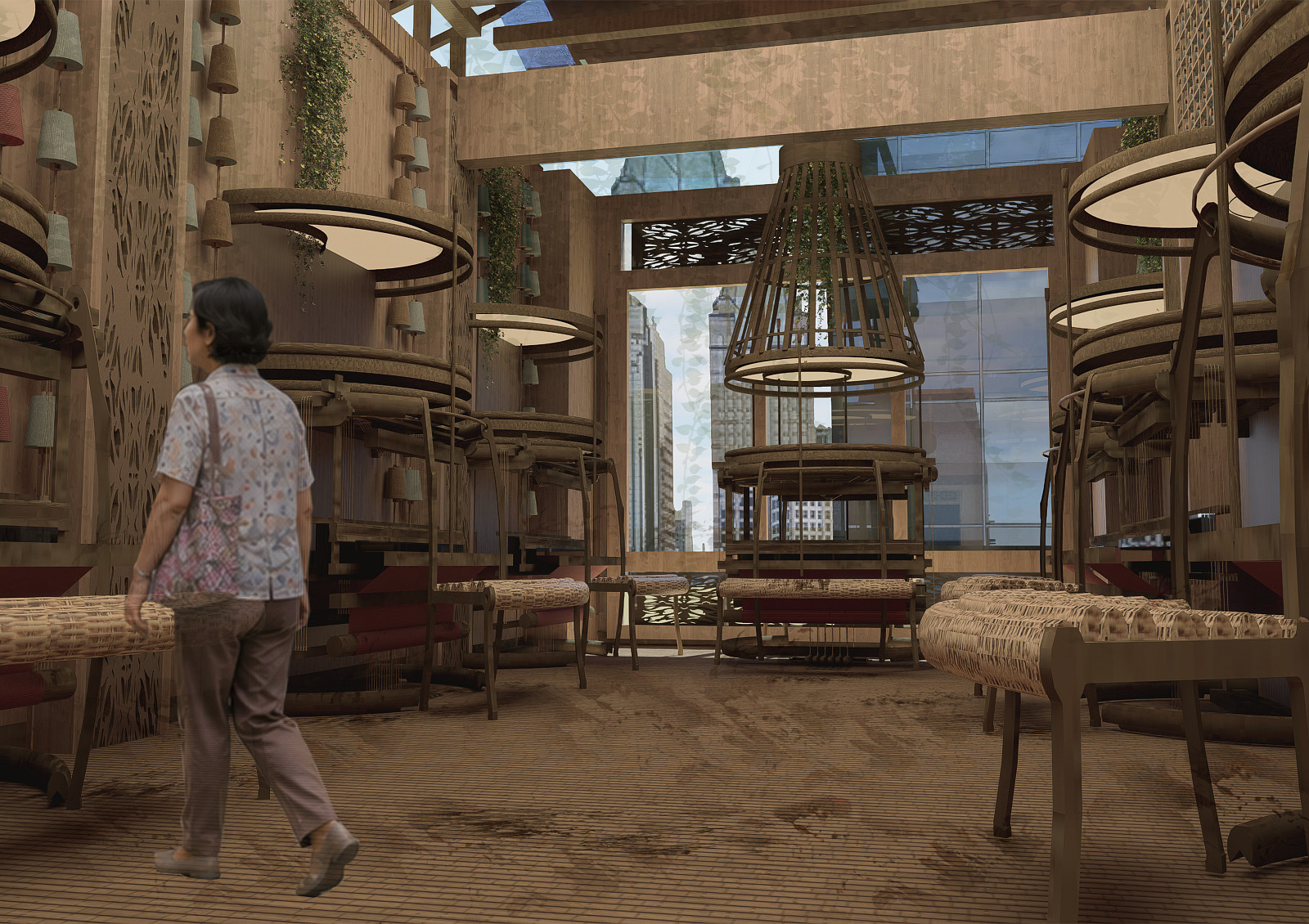
Anyama Community Crafting Center


Project idea
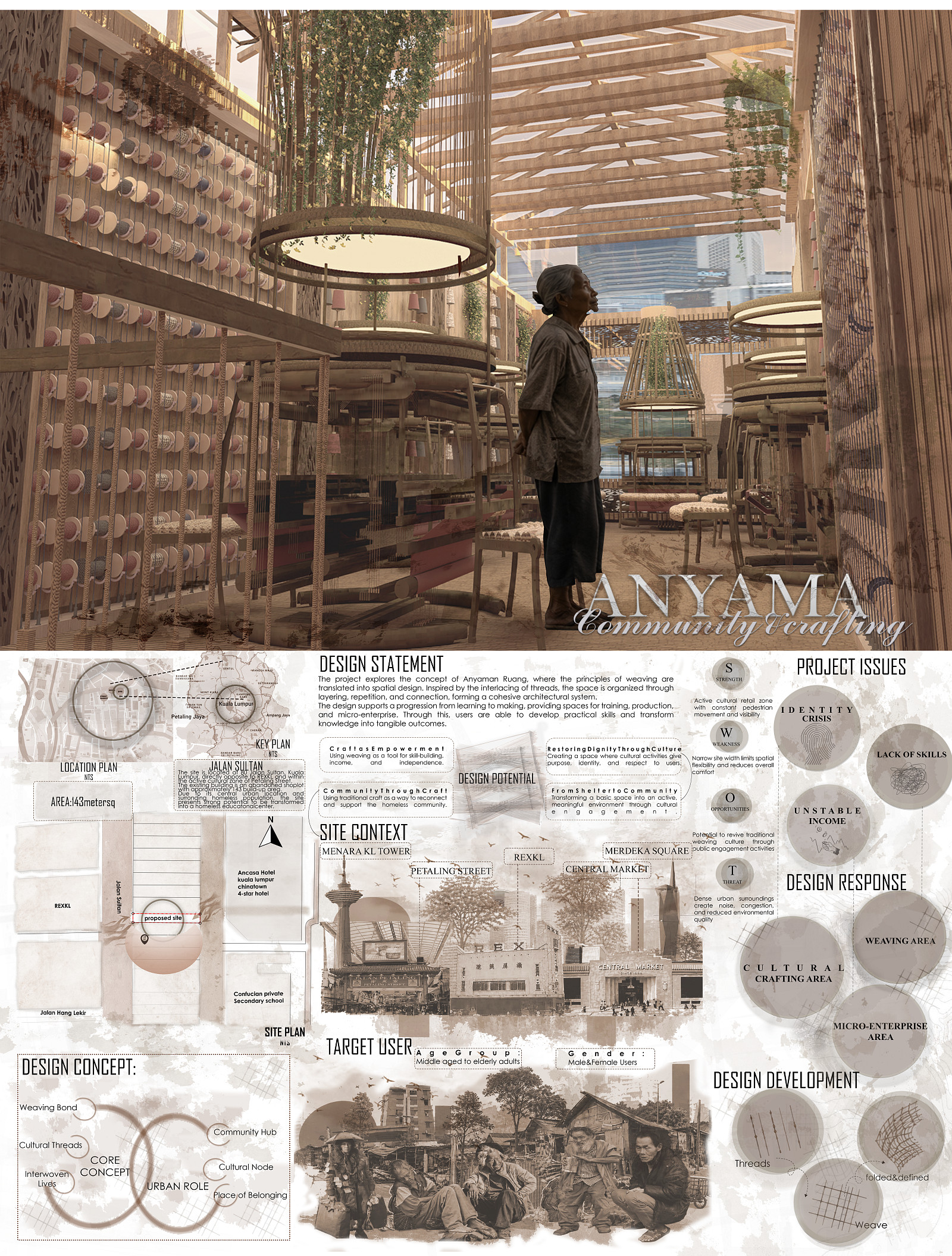
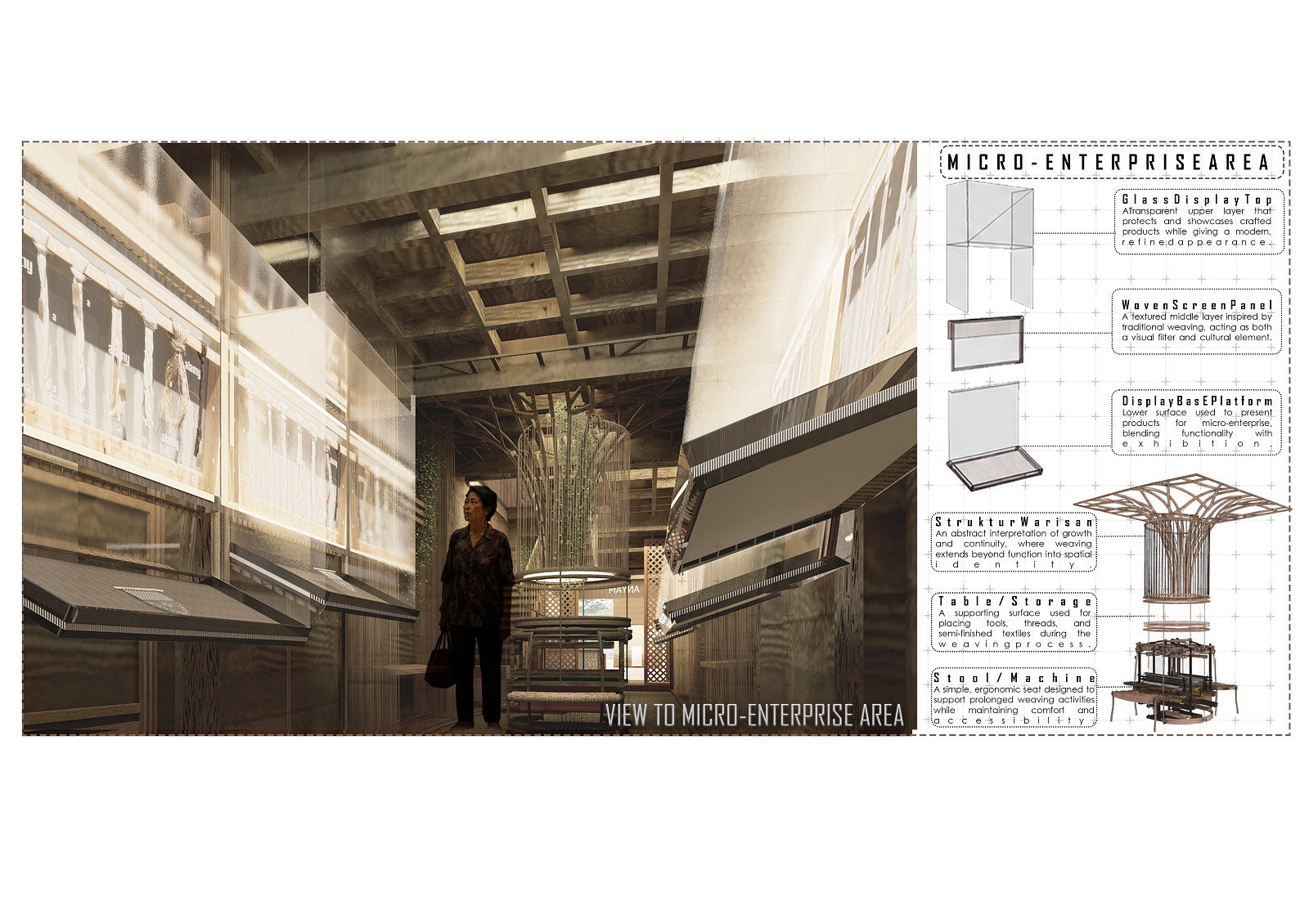
Anyama is a community weaving and craft centre that supports homeless individuals through skill development, cultural activities, and economic opportunities. Located within Kuala Lumpur's Chinatown, the project occupies a narrow two-storey shop lot surrounded by active commercial streets and cultural landmarks. The project explores traditional weaving as a living tradition that encourages learning, creativity, and social interaction. Through weaving, display, and micro-enterprise activities, the project creates a supportive environment that promotes dignity, independence, and social connection while preserving cultural identity through craft practices.
Project description
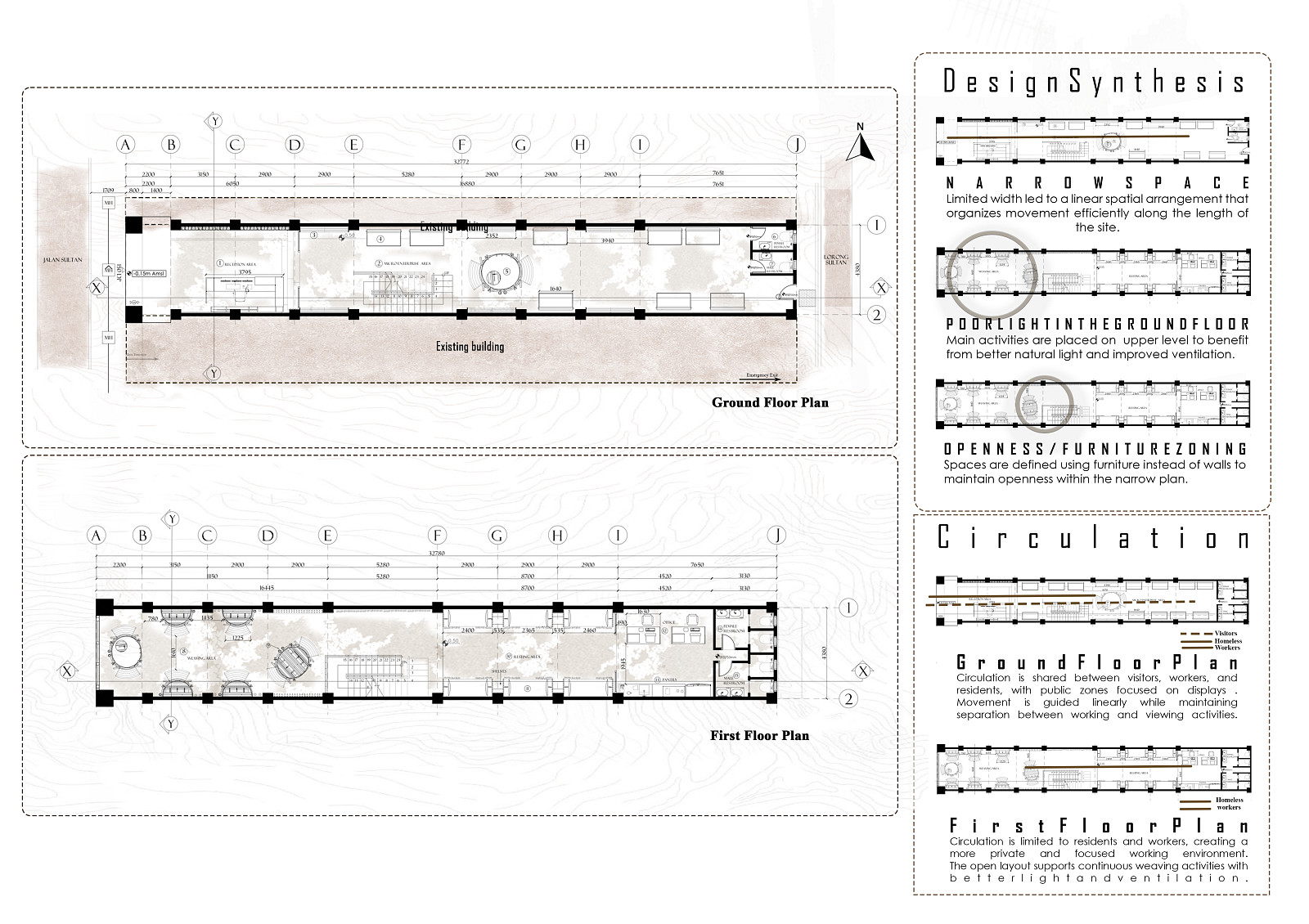
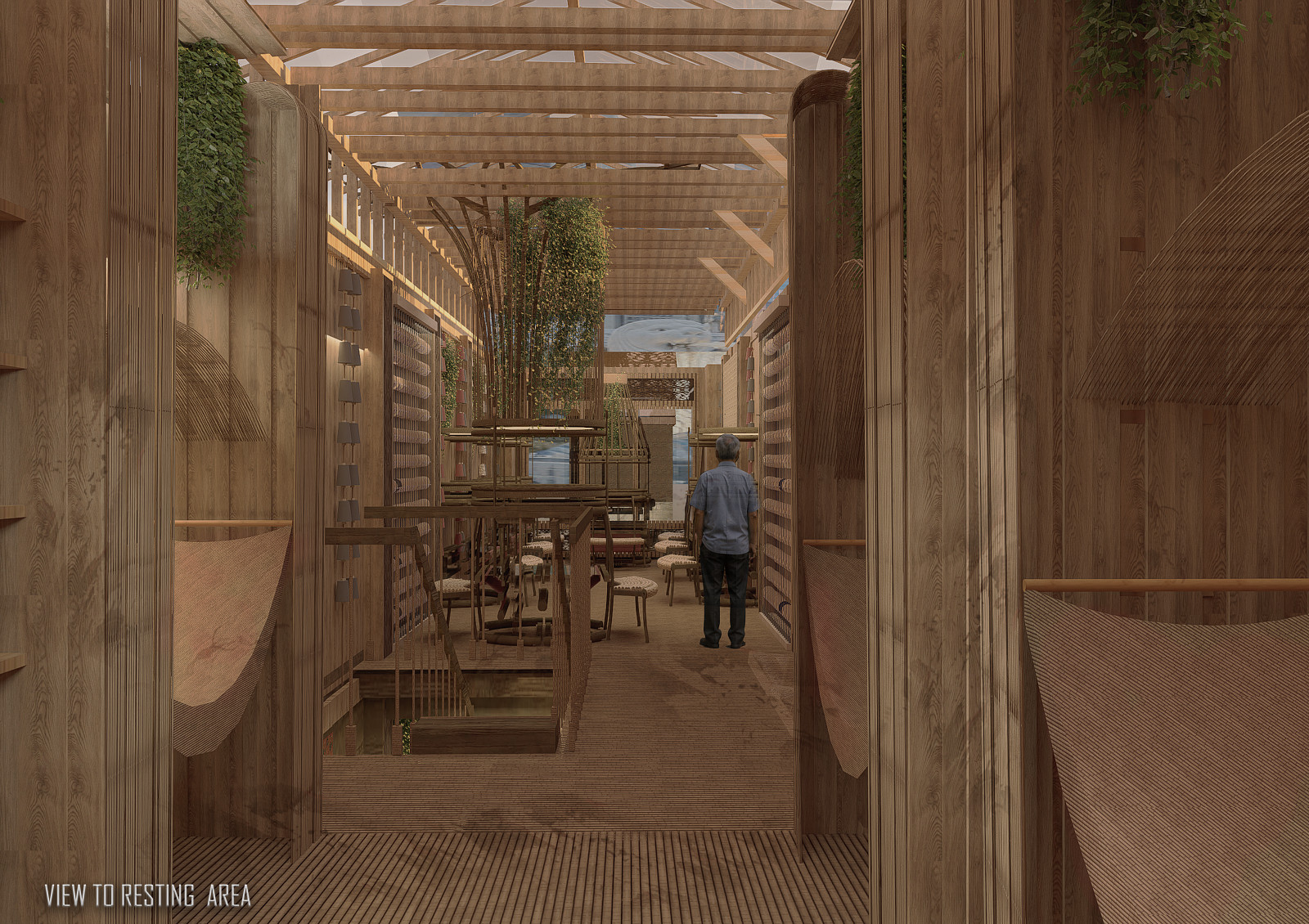
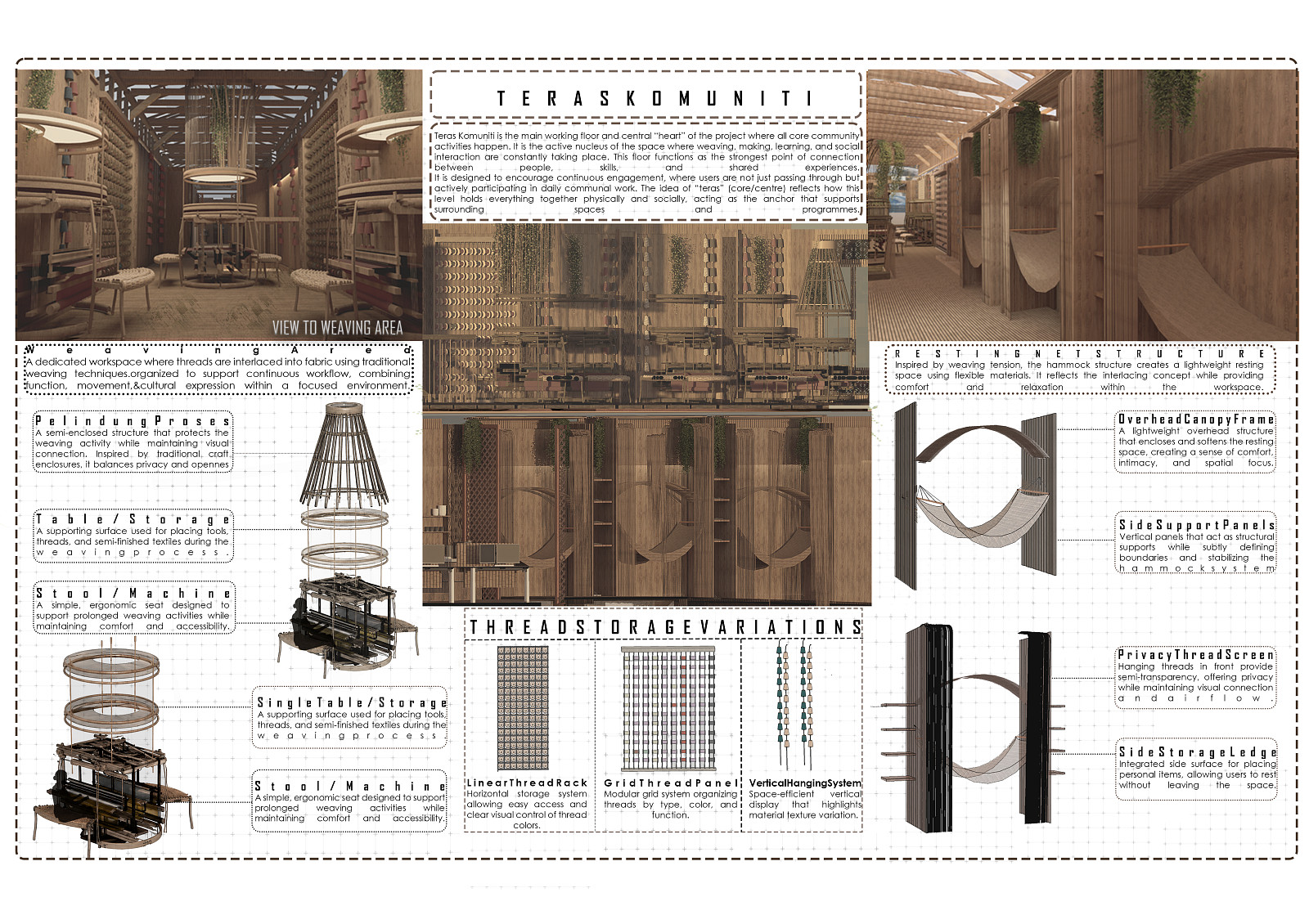
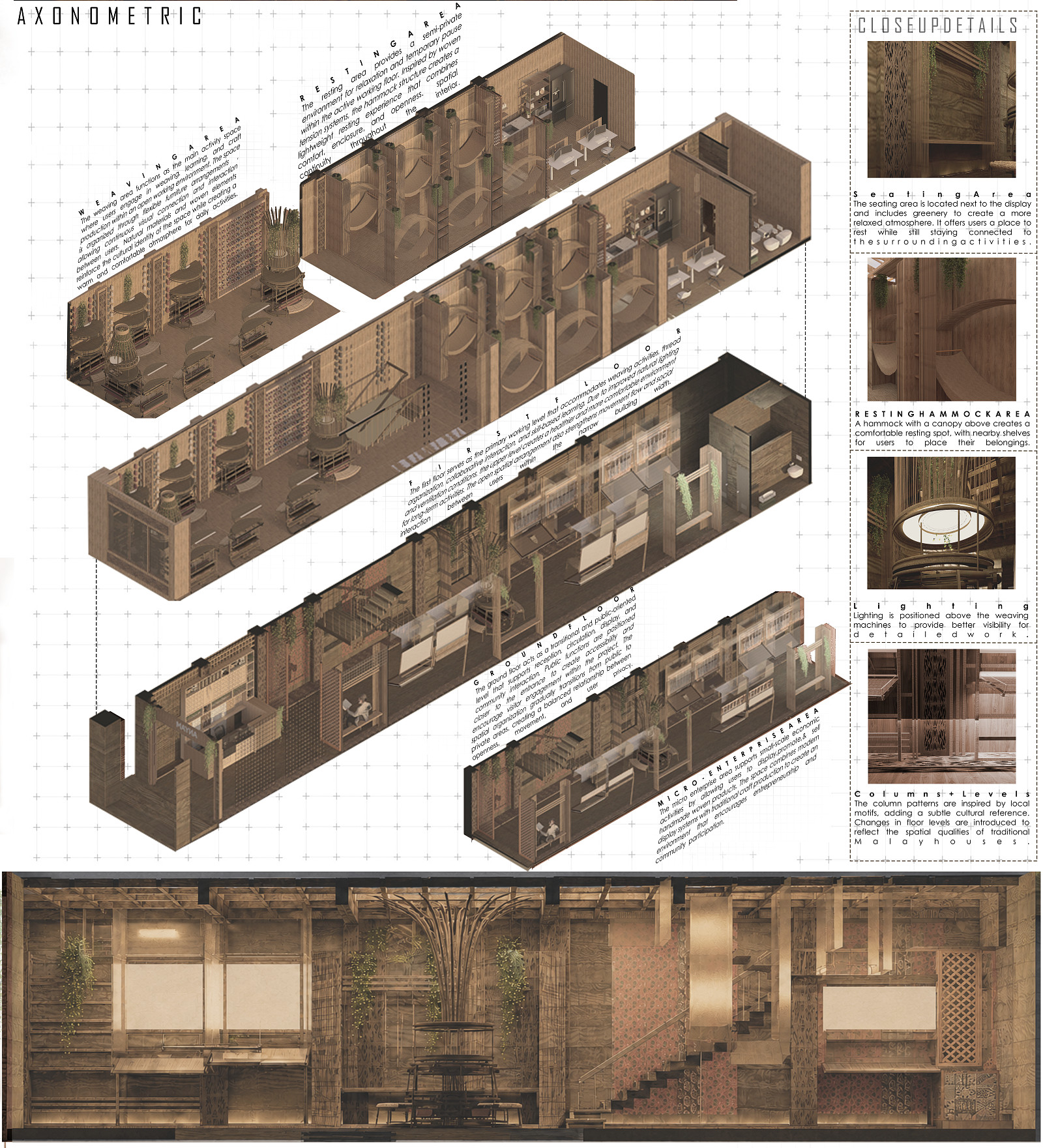
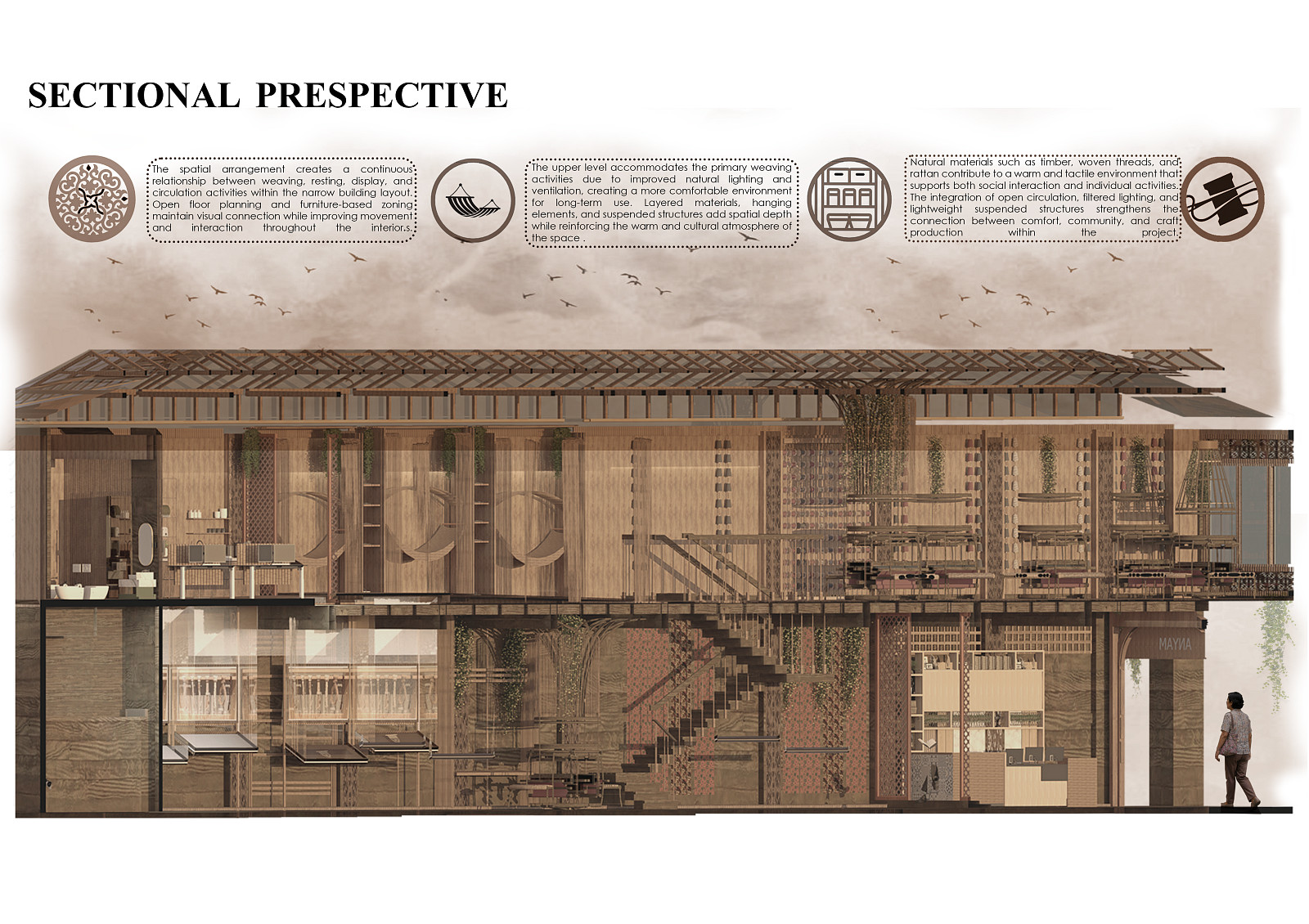
The design responds to the challenges of a narrow shop lot by introducing a clear and flexible spatial arrangement that improves circulation, comfort, and functionality. Organized across two levels, the ground floor accommodates display and micro-enterprise activities, while the upper floor serves as the primary weaving and resting environment.
A linear layout is adopted to maximize the limited width of the building and create a clear movement sequence throughout the interior. Open planning and furniture-based zoning replace solid partitions, allowing spaces to remain visually connected while supporting different functions and levels of privacy. Larger openings on the upper floor improve natural lighting and ventilation, creating a more comfortable environment for weaving, resting, and daily activities.
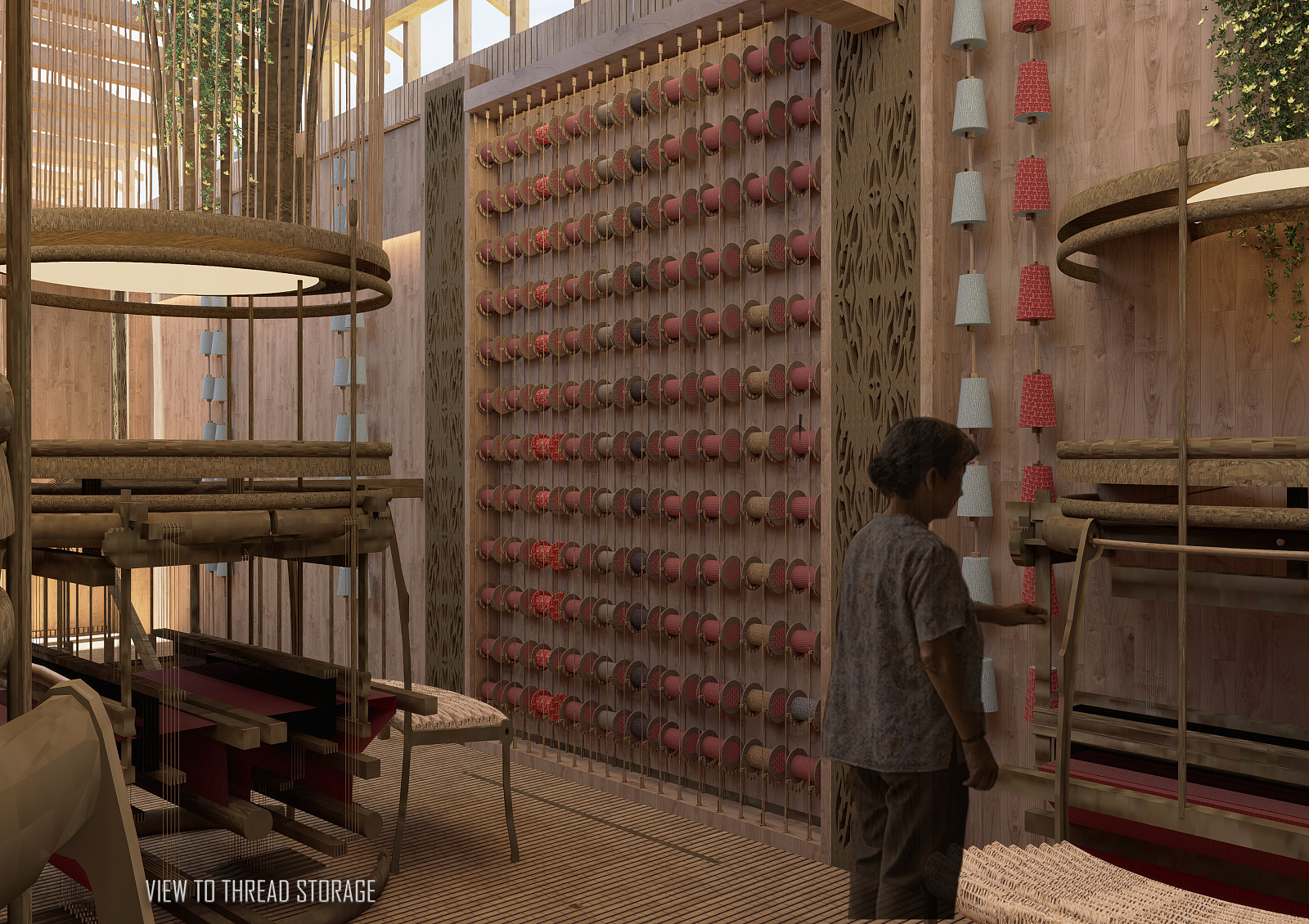
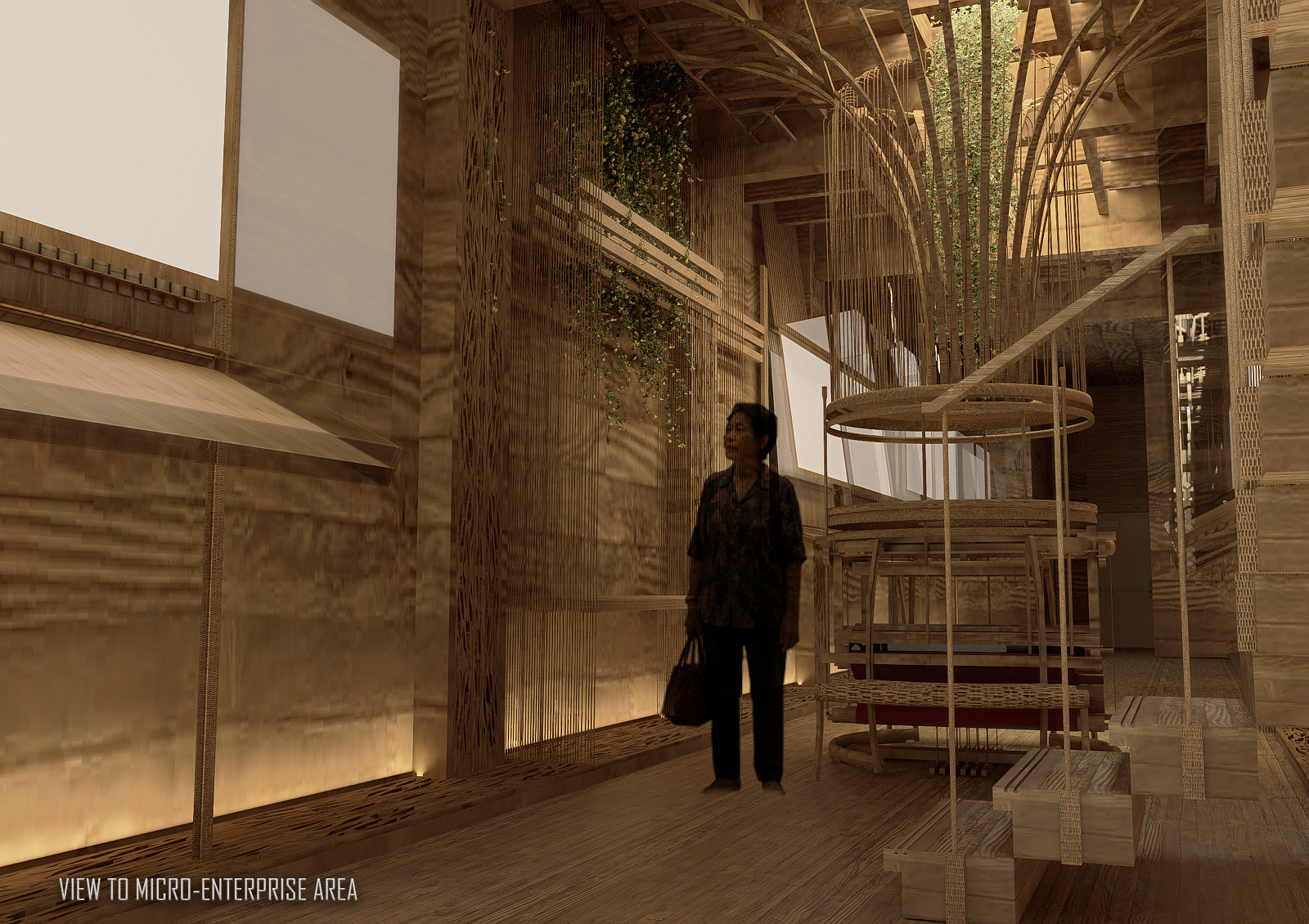
The project integrates weaving areas, display zones, resting spaces, and income-generating facilities within a single environment, allowing different activities to coexist while supporting the overall function of the centre. Through the combination of flexible spaces, cultural craft activities, and community-focused facilities, the design creates an environment that is both functional and welcoming for its users.
Technical information
The project is developed within an existing two-storey shop lot using an adaptive reuse approach that gives new purpose to the building while minimizing construction waste. A linear spatial arrangement is adopted to respond to the narrow building width, creating clear circulation and a more efficient use of the available space.
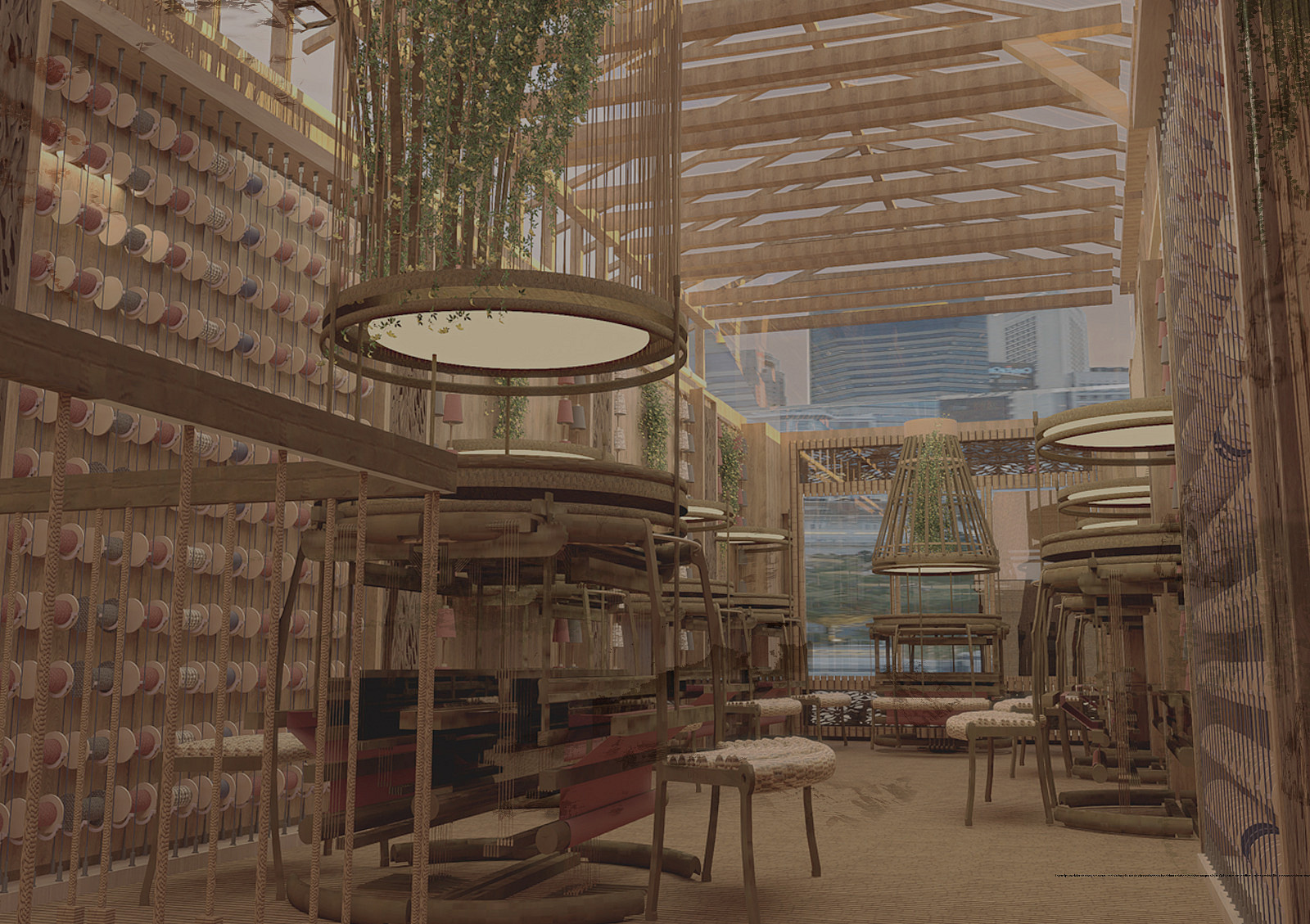
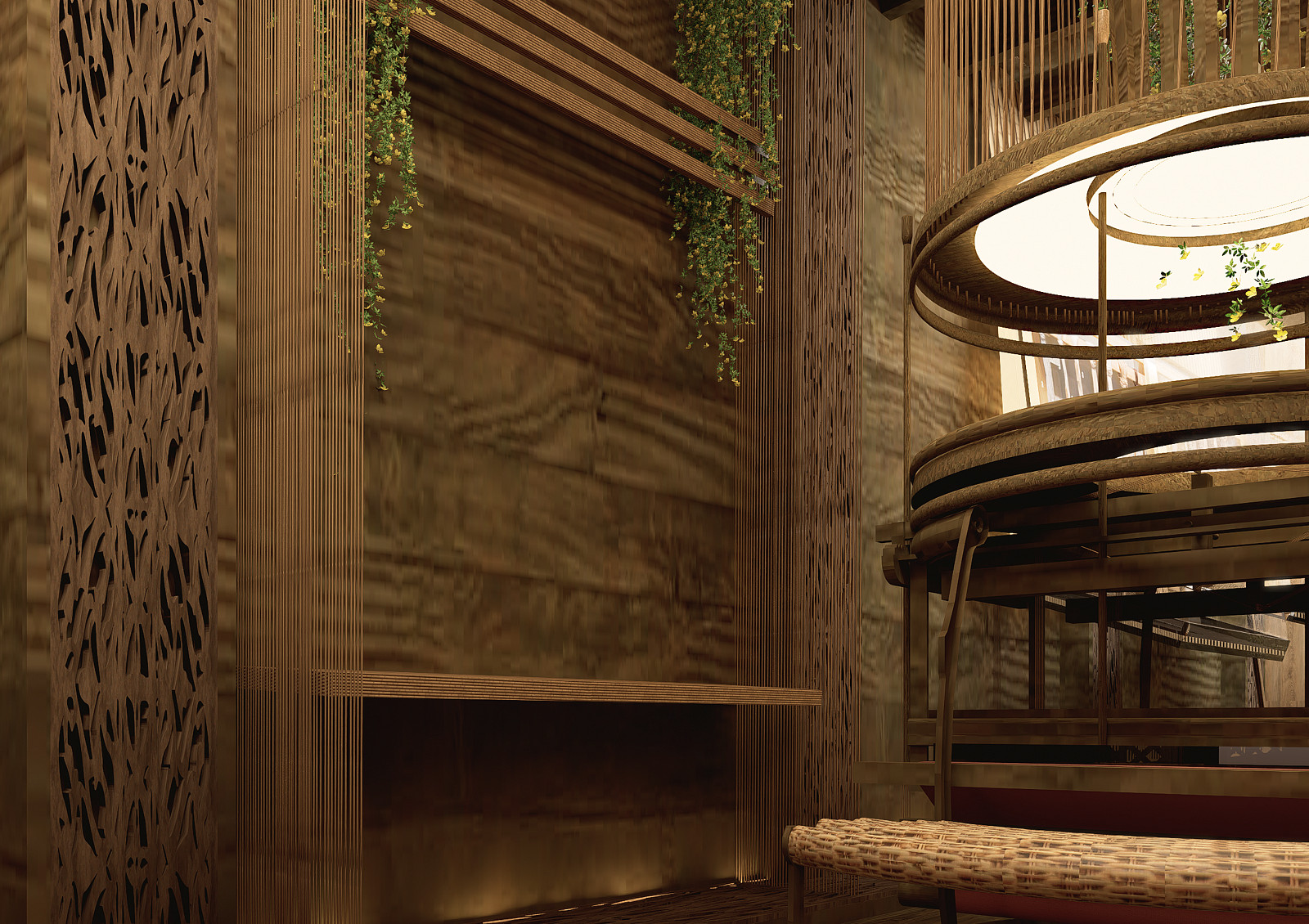
Natural materials such as timber, rattan, bamboo, woven threads, and fabric are incorporated throughout the project to create a warm and culturally connected environment. Timber is primarily used for furniture, platforms, and ceiling elements, while woven materials are integrated into screens, partitions, and decorative features that reflect the craft-based identity of the space.
The ceiling design combines a linear system with a modular grid arrangement to improve spatial organization and visual continuity. Openings between the ceiling elements allow light and air to circulate naturally throughout the interior, reducing dependence on artificial systems and improving user comfort.
Environmental strategies include natural ventilation, daylighting, open planning, and furniture-based zoning. The main weaving activities are positioned on the upper floor where larger openings provide better airflow and natural lighting conditions. Together, these strategies create a comfortable working environment while supporting the project's social, cultural, and environmental objectives.

Copyright © 2026 INSPIRELI | All rights reserved. Use of this website signifies your agreement to the Terms of Use, Privacy Policy, and use of cookies.