Symbiotic Tides and Vernacular Resilience


Project idea
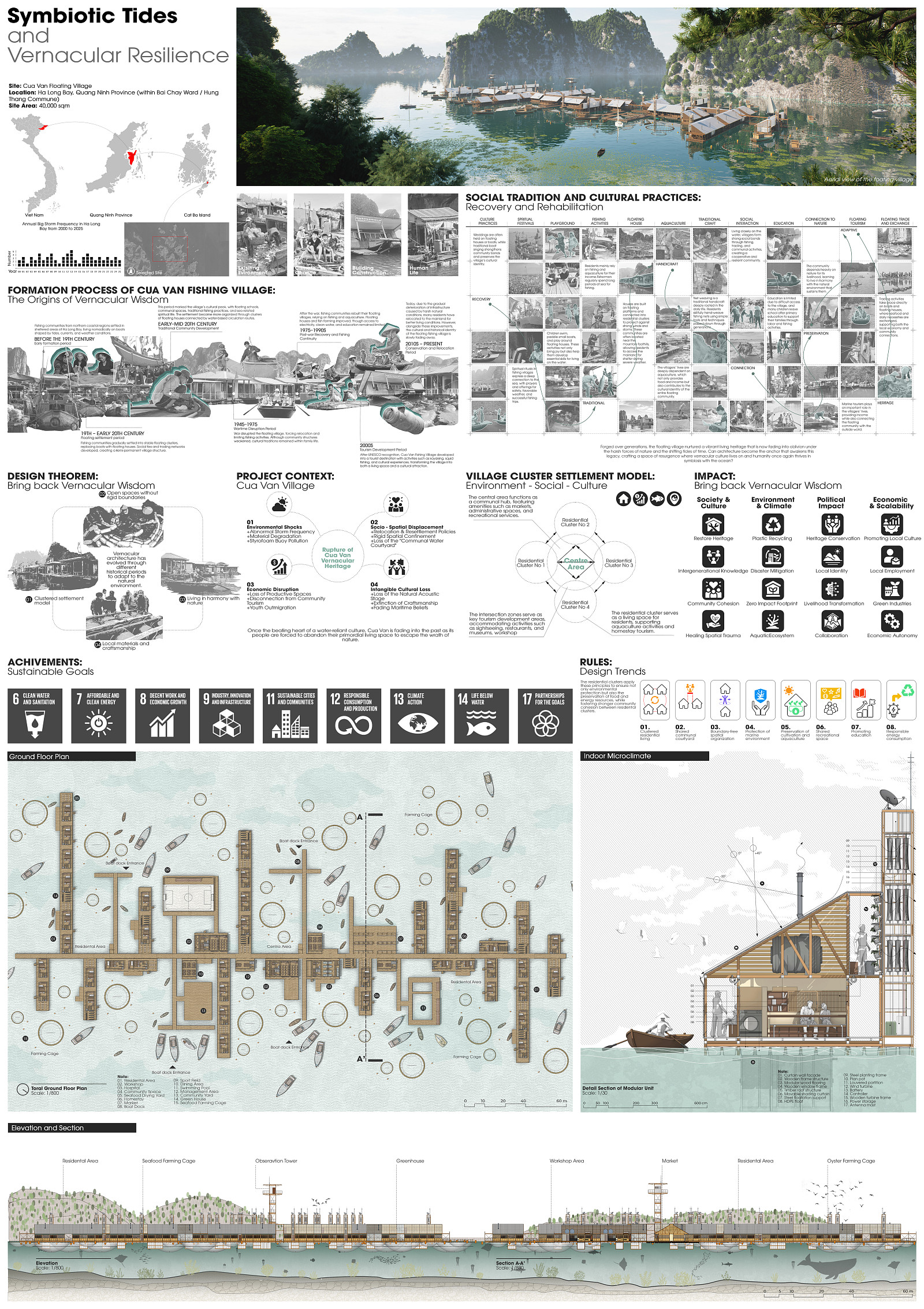
This project responds to the gradual disappearance of the cultural and historical identity of a traditional floating fishing village that had existed for centuries. The relocation of local communities to the mainland has caused collective memories, cultural practices, and local histories to fade over time. Many former villagers struggled to adapt to land-based living conditions, faced difficulties finding suitable livelihoods, and gradually lost the traditional way of life that had shaped generations.
The proposal seeks to revive and reinterpret the floating village by reconstructing its traditional spatial structure while integrating contemporary environmental and infrastructural solutions. Rather than creating a nostalgic replica, the project re-establishes a living maritime community that can sustain local culture and support future generations.
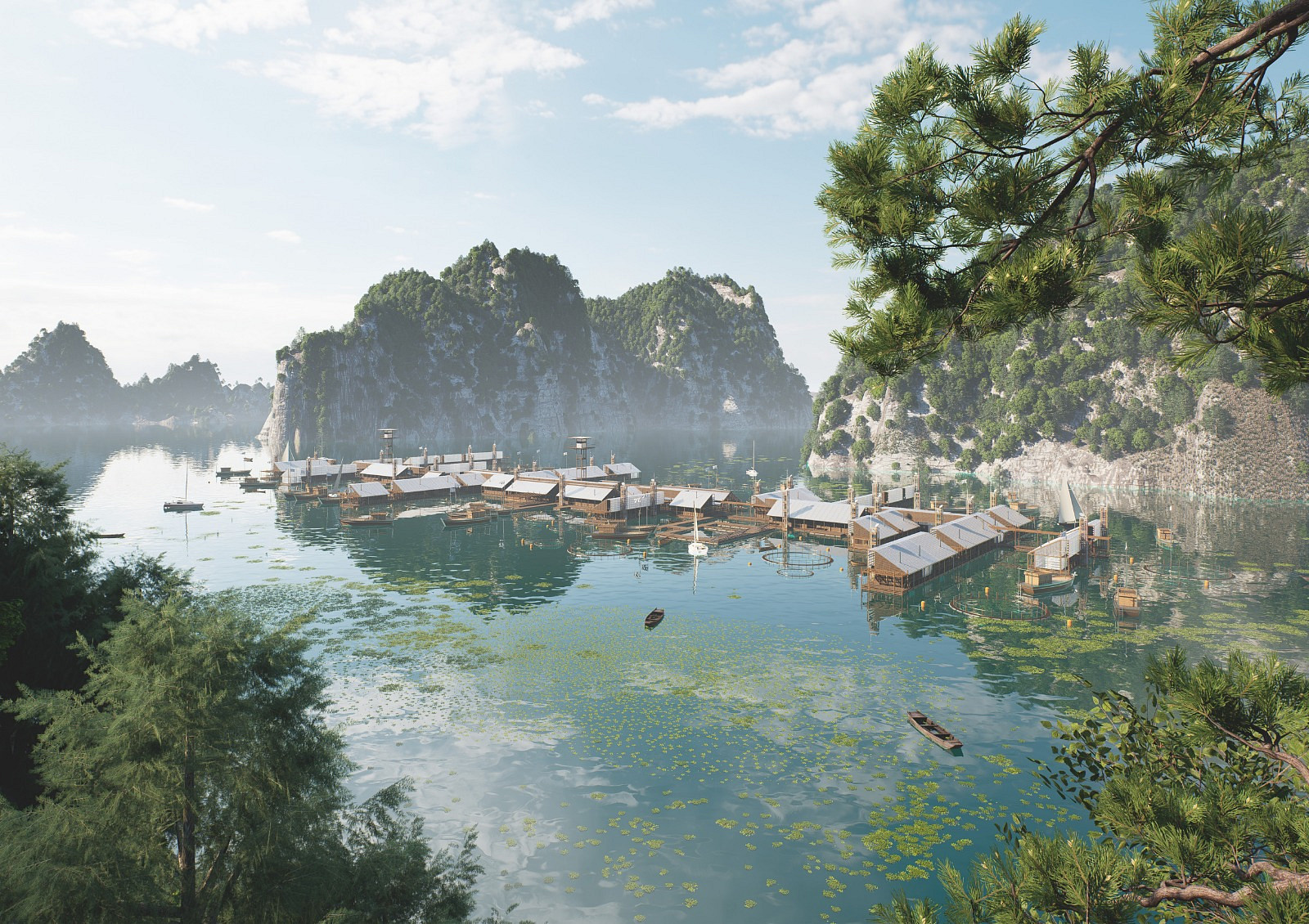
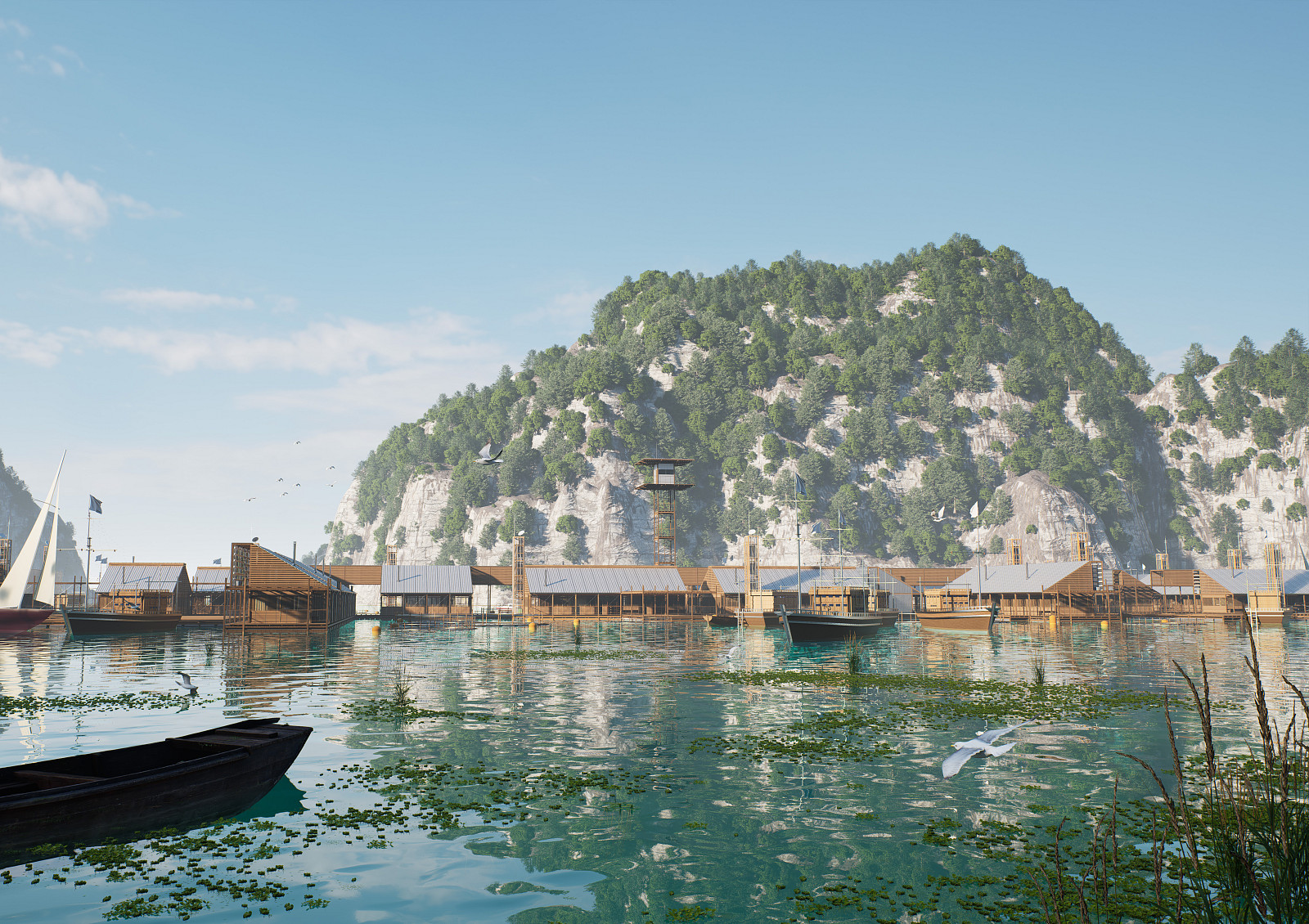
Located within a coastal bay characterized by continuous water currents and surrounded by dramatic limestone formations, the site sits within one of Vietnam’s most iconic marine landscapes. Ha Long Bay, recognized by UNESCO as a World Natural Heritage Site, has long attracted settlement due to its abundant marine resources and exceptional scenery. These natural conditions historically encouraged the formation of floating communities whose lifestyles became inseparable from the sea.
To ensure long-term adaptability and resilience, the proposal addresses critical challenges including freshwater scarcity, food security, environmental pollution, and changing climate conditions. The spatial organization draws inspiration from the original indigenous settlement pattern: communal facilities occupy the center, while residential clusters extend outward around a shared social core.
Project description
The floating village is structured through a fishbone-inspired masterplan, with a central circulation spine acting as the primary connector across the settlement. Community facilities—including schools, healthcare services, and local markets—are concentrated at the core to strengthen social interaction and accessibility. Around this central zone are residential units and homestay accommodations that support the local marine tourism economy.
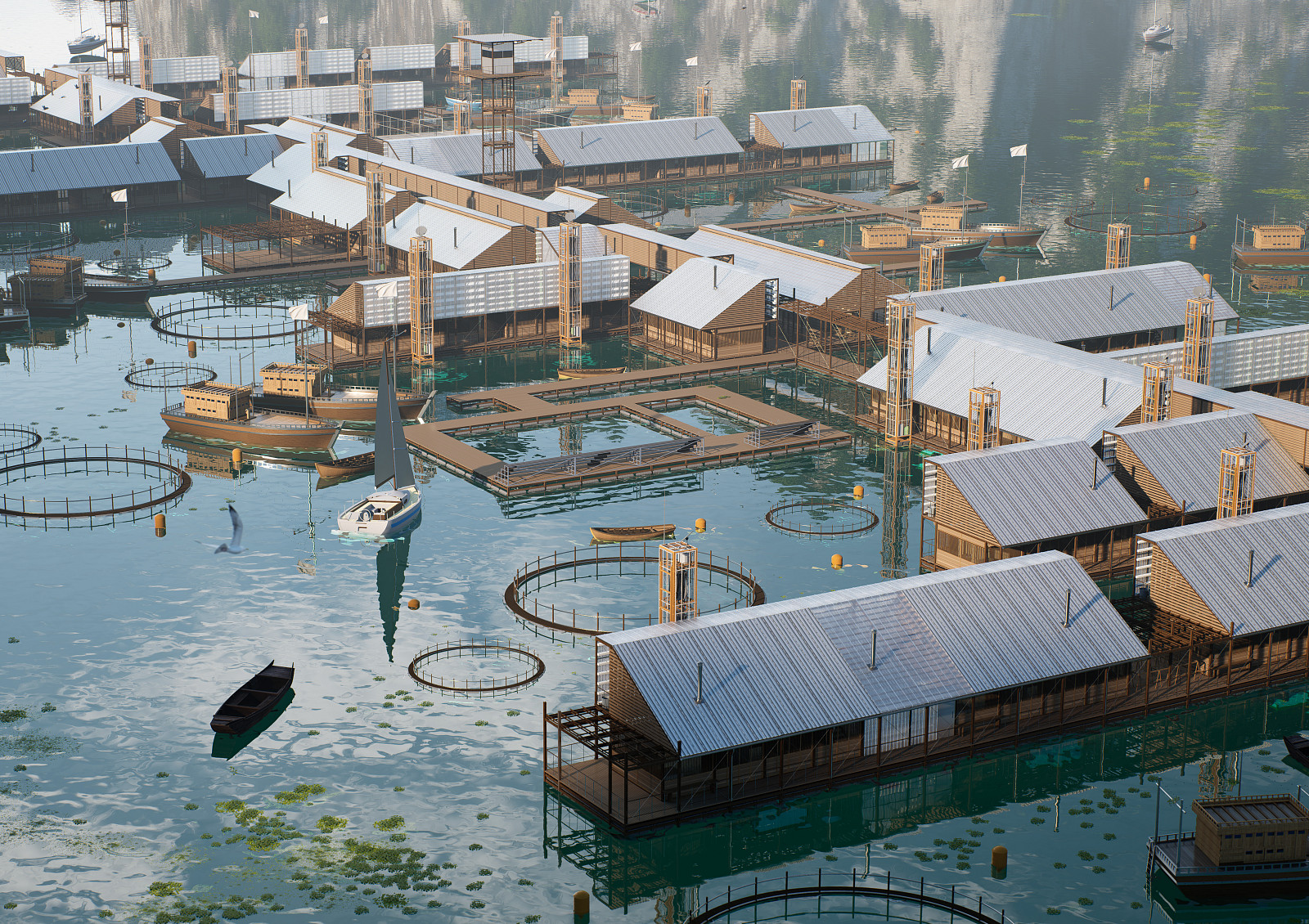
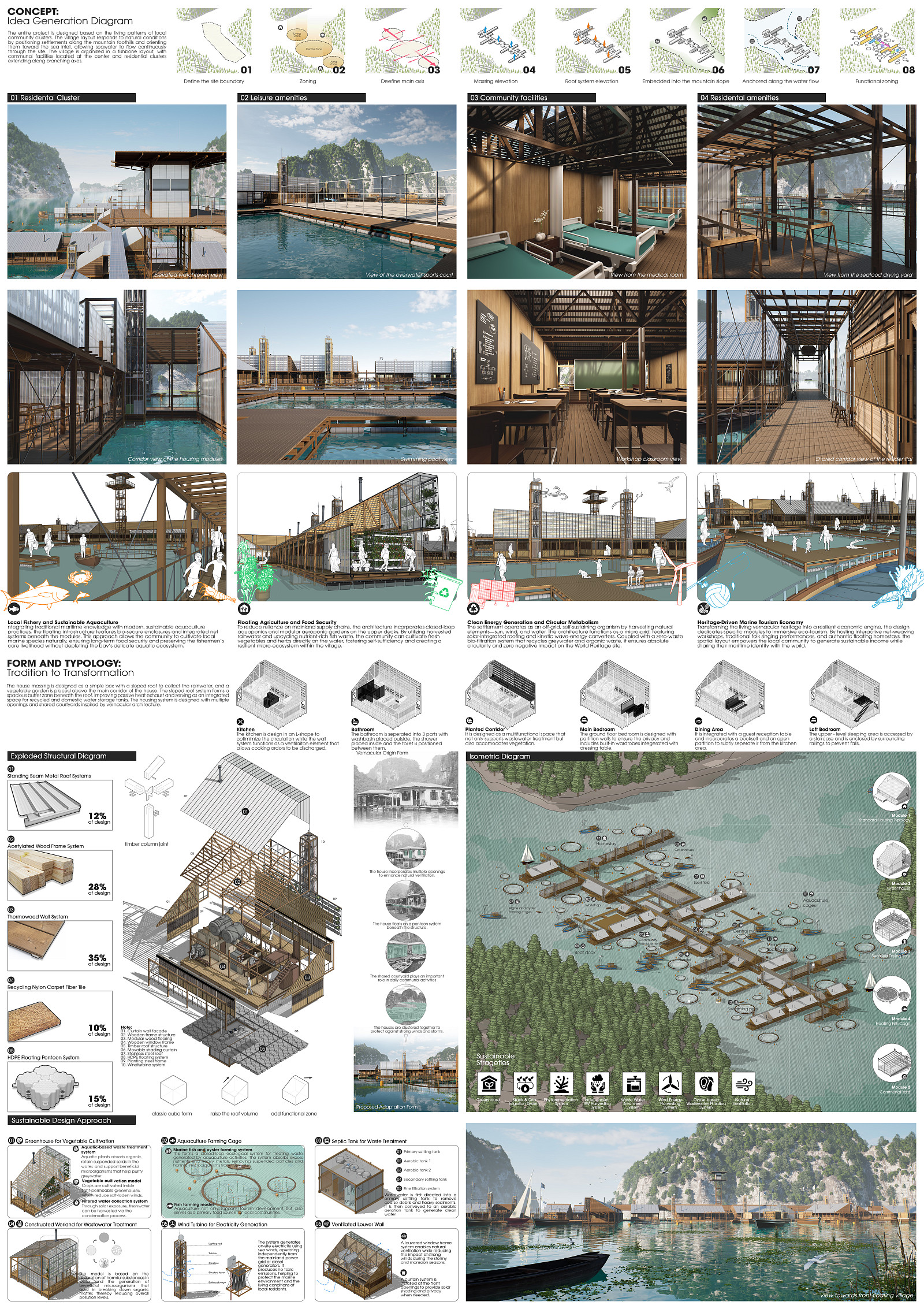
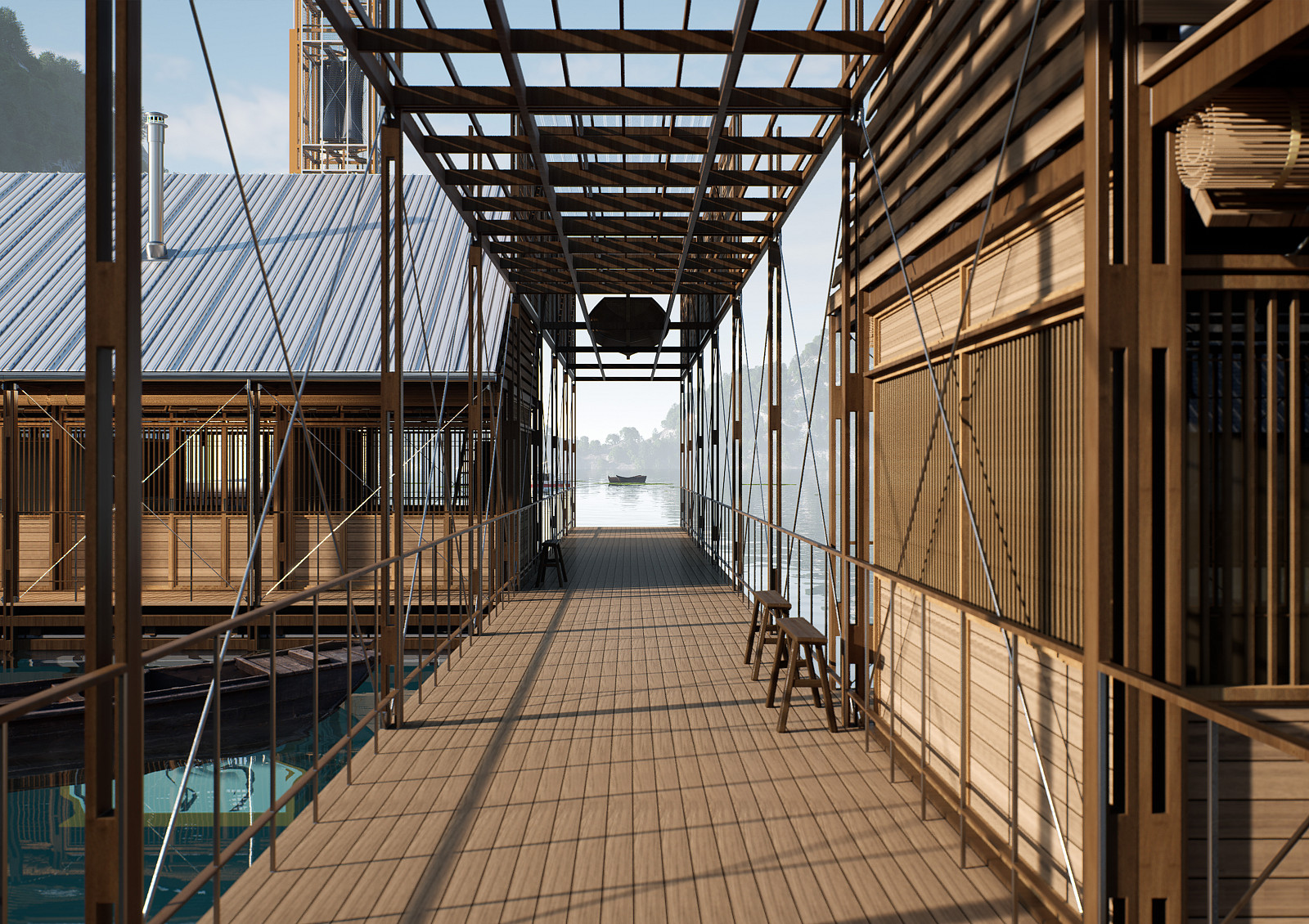
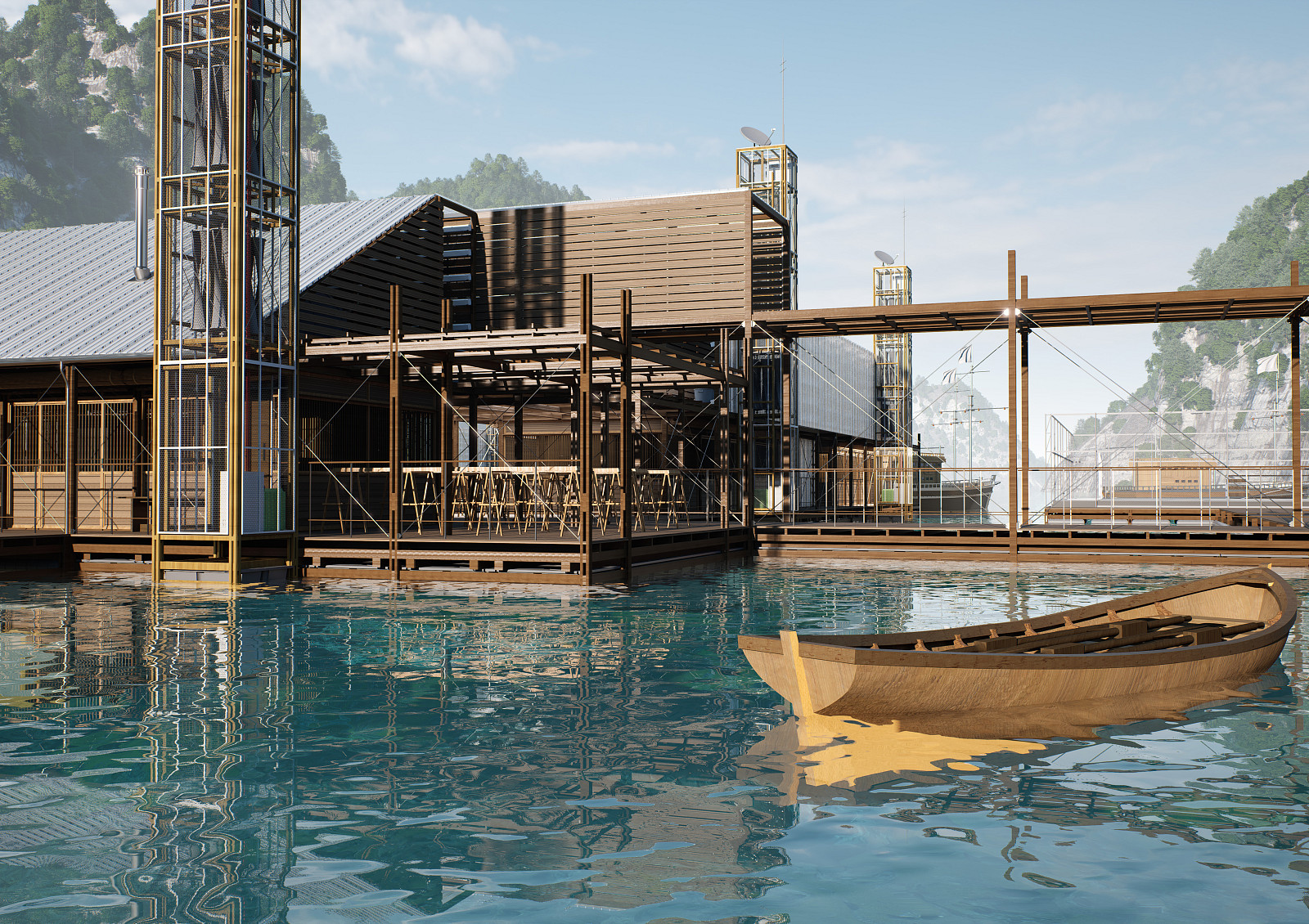
Architecturally, the built forms reinterpret traditional floating houses once found in the bay. By adopting familiar construction techniques and local building logic, residents are empowered to participate directly in constructing and expanding their community. A modular system allows flexible growth while maintaining spatial coherence.
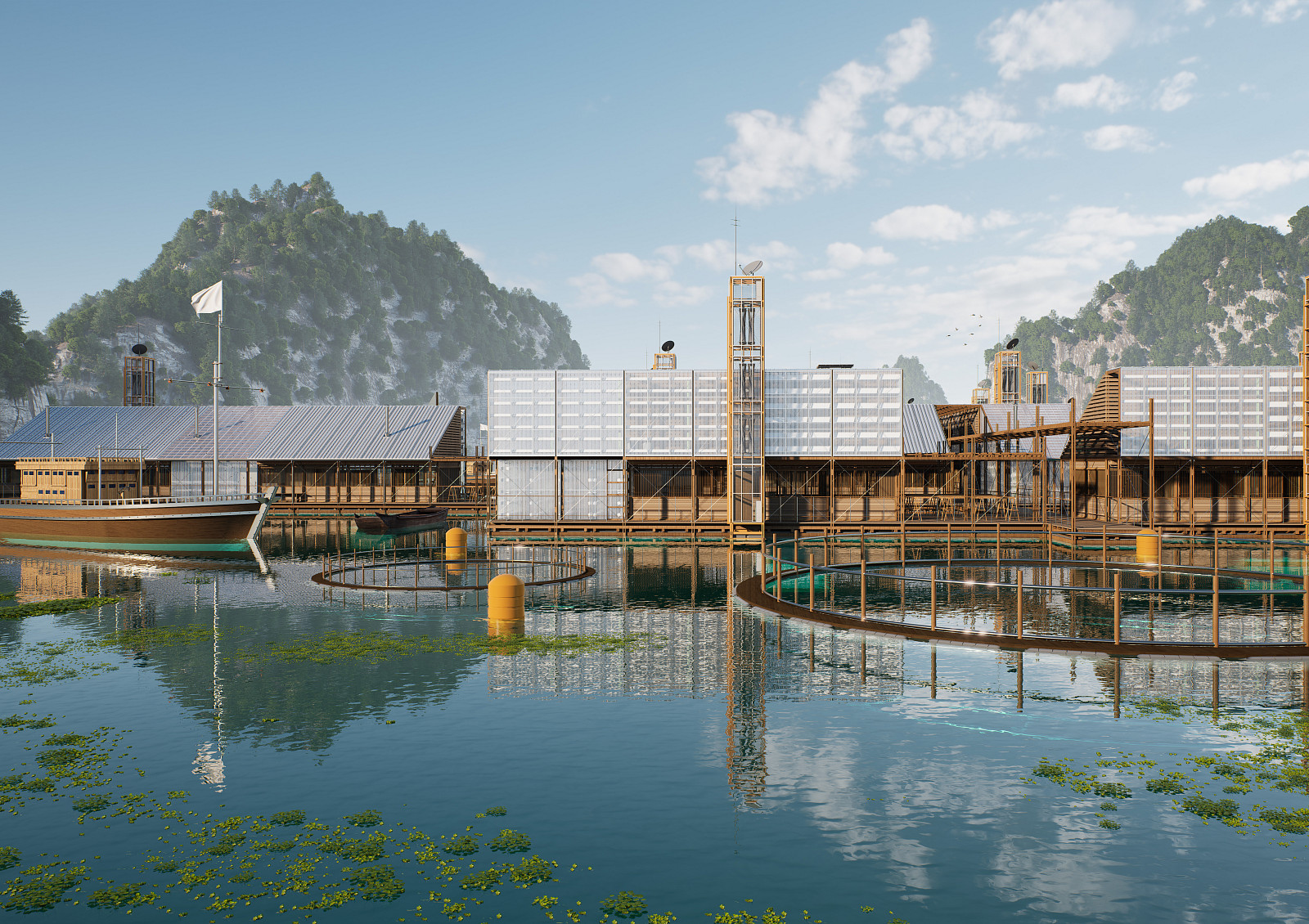
Residential areas are interwoven with greenhouse structures used for vegetable cultivation and seawater treatment systems that generate freshwater. Shared courtyards are distributed throughout the housing clusters—reviving an important local spatial tradition where neighbors once gathered to repair fishing nets, socialize, and share communal meals.
At the village center, public amenities including restaurants, markets, swimming facilities, and recreational spaces support both residents and the region’s tourism economy.
Technical information
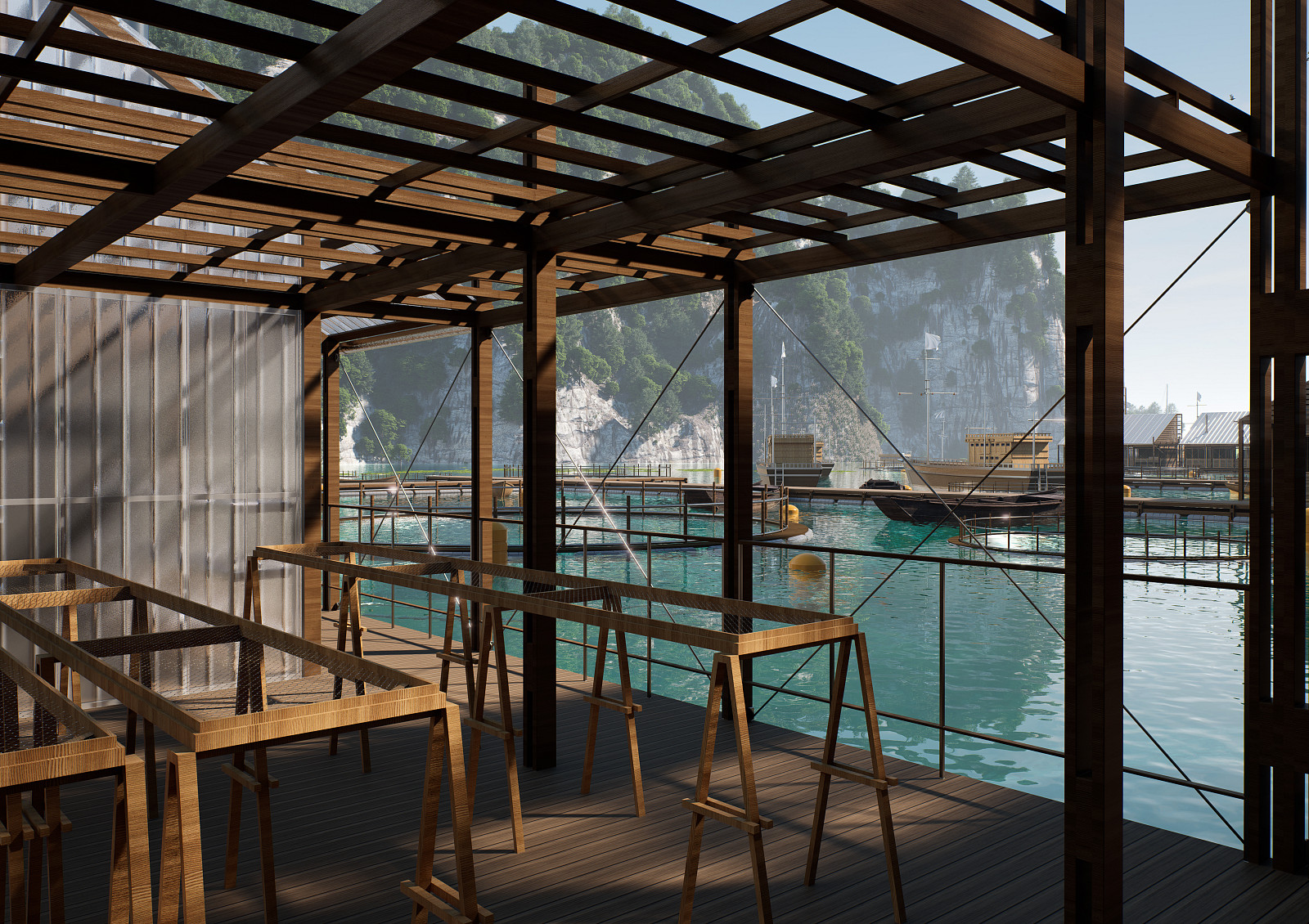
The structural framework employs marine-resistant engineered timber, while floating platforms are produced from recycled plastic components. Flooring systems are constructed using recycled fishing nets, transforming marine waste into architectural resources. Traditional timber joints and wooden cladding techniques are reinterpreted to preserve local construction knowledge and allow residents to self-build using familiar methods.
The sloped roof system performs as a rainwater harvesting infrastructure, collecting and filtering water for domestic use and irrigation. Surrounding the floating settlement are aquaculture zones that secure local food production. Oyster farming is integrated alongside fish cultivation to naturally filter and improve water quality affected by intensive aquaculture practices.
Ultimately, the project is not only a reconstruction of physical space, but also an act of restoring identity, preserving cultural memory, and enabling a sustainable future for communities whose lives have always belonged to the sea.In addition, the floating village efficiently harnesses renewable energy sources naturally available on site, particularly solar and wind energy, to support the daily needs of the community and reduce dependence on external infrastructure.
The building envelope is designed using a timber louver system, allowing the structures to better respond to the marine environment. This façade strategy reduces structural vibration and wind pressure during periods of strong coastal winds while maintaining stability for the floating units. At the same time, the permeable wooden screens improve natural ventilation and regulate solar exposure, preventing excessive heat gain within interior spaces during hot seasons and creating a more comfortable living environment without relying heavily on mechanical cooling systems.

Copyright © 2026 INSPIRELI | All rights reserved. Use of this website signifies your agreement to the Terms of Use, Privacy Policy, and use of cookies.