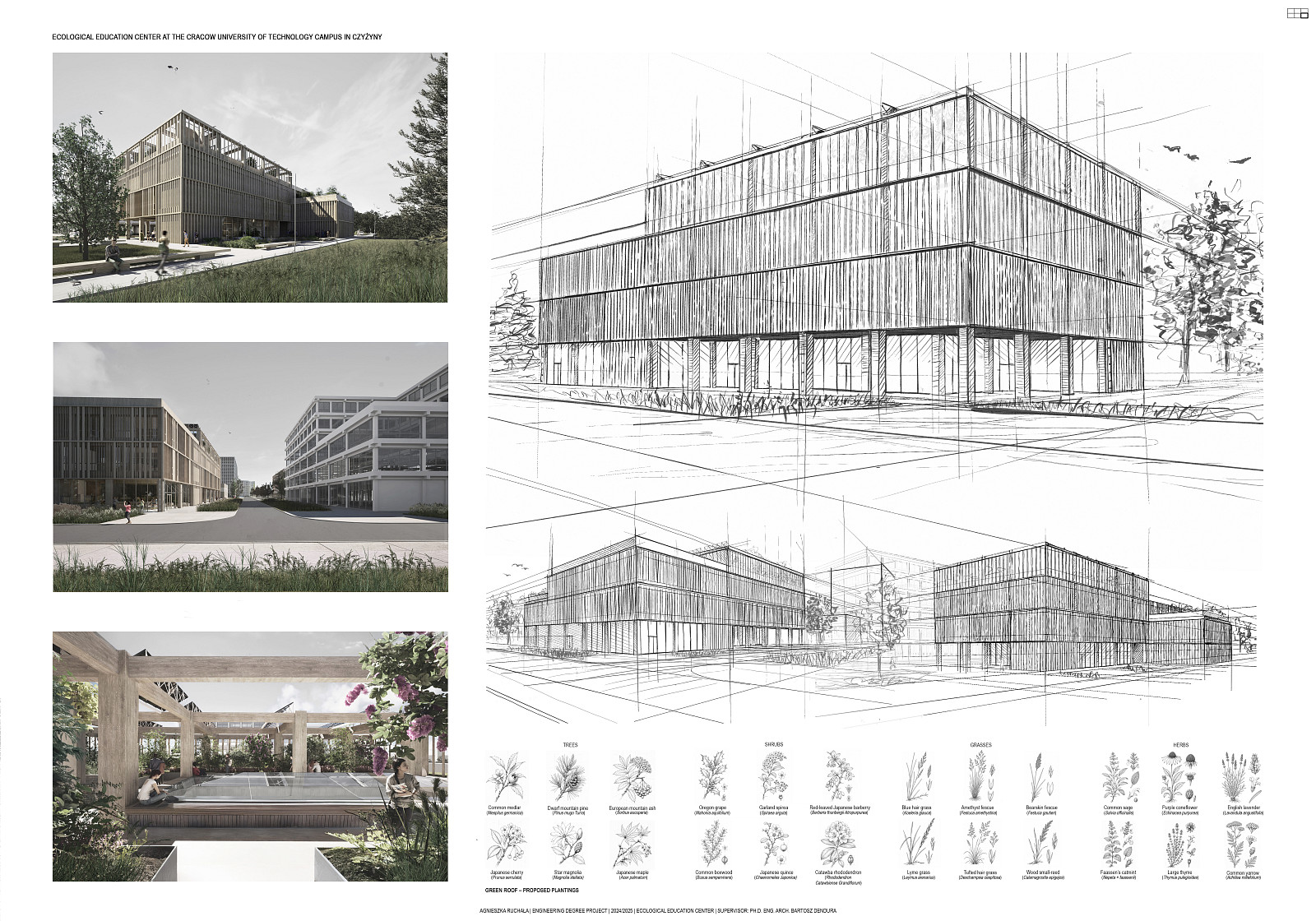
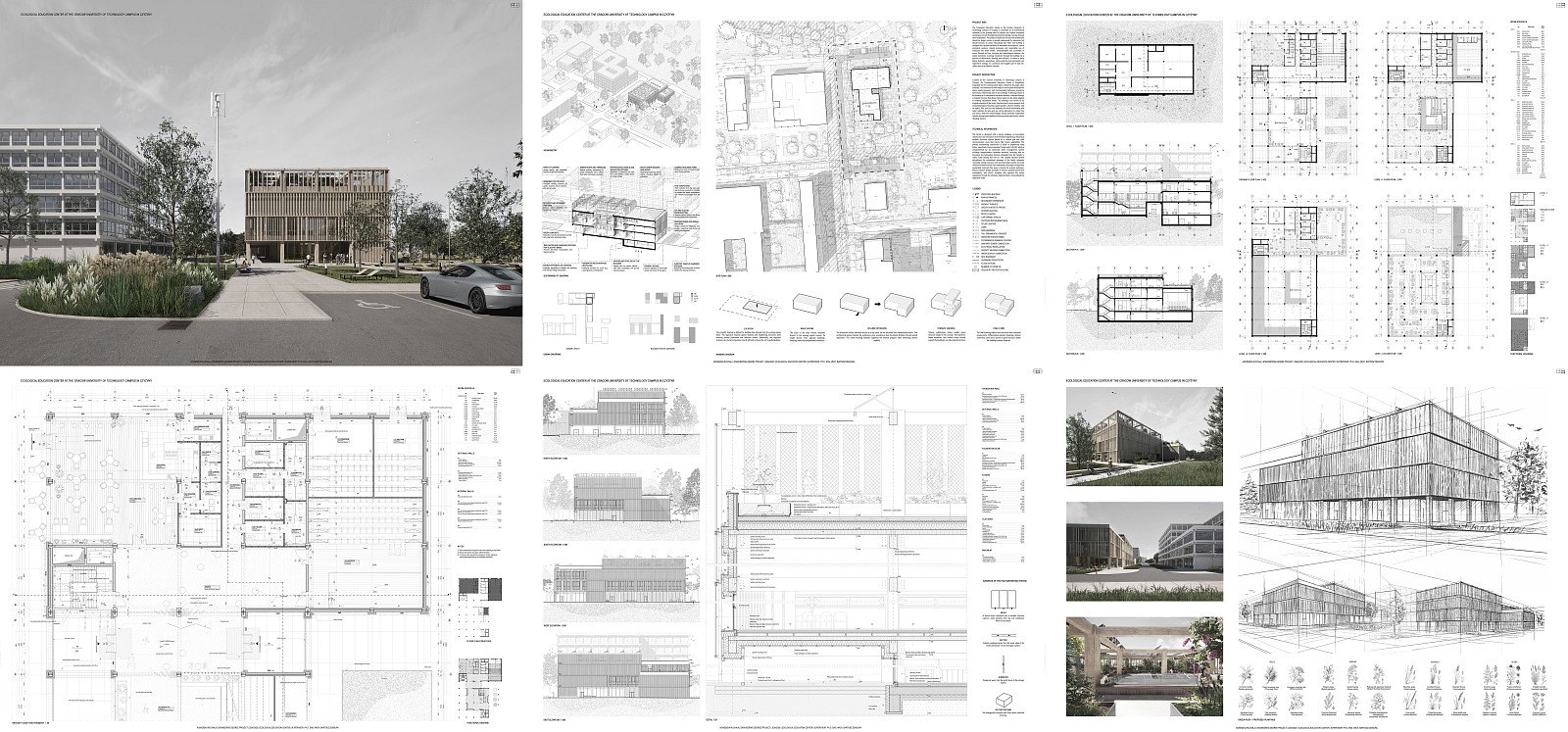
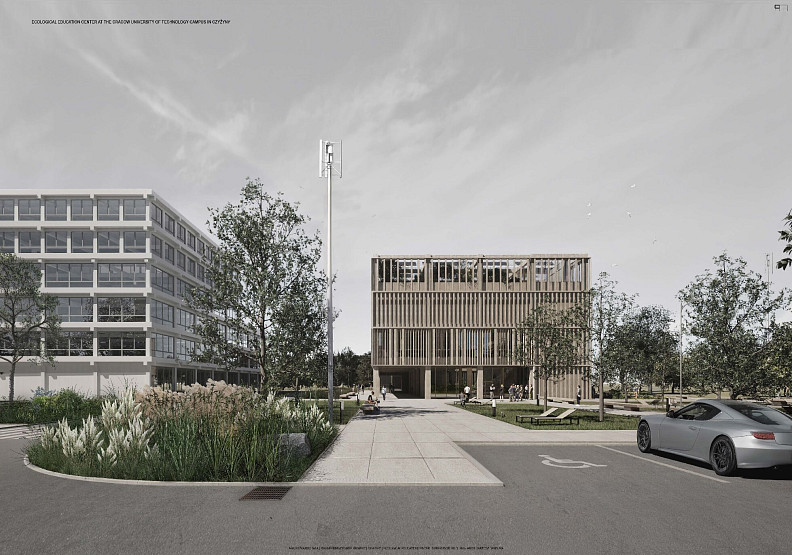
Ecological Education Center at the Cracow University of Technology Campus in Czyżyny


 Bartosz Dendura
Project idea
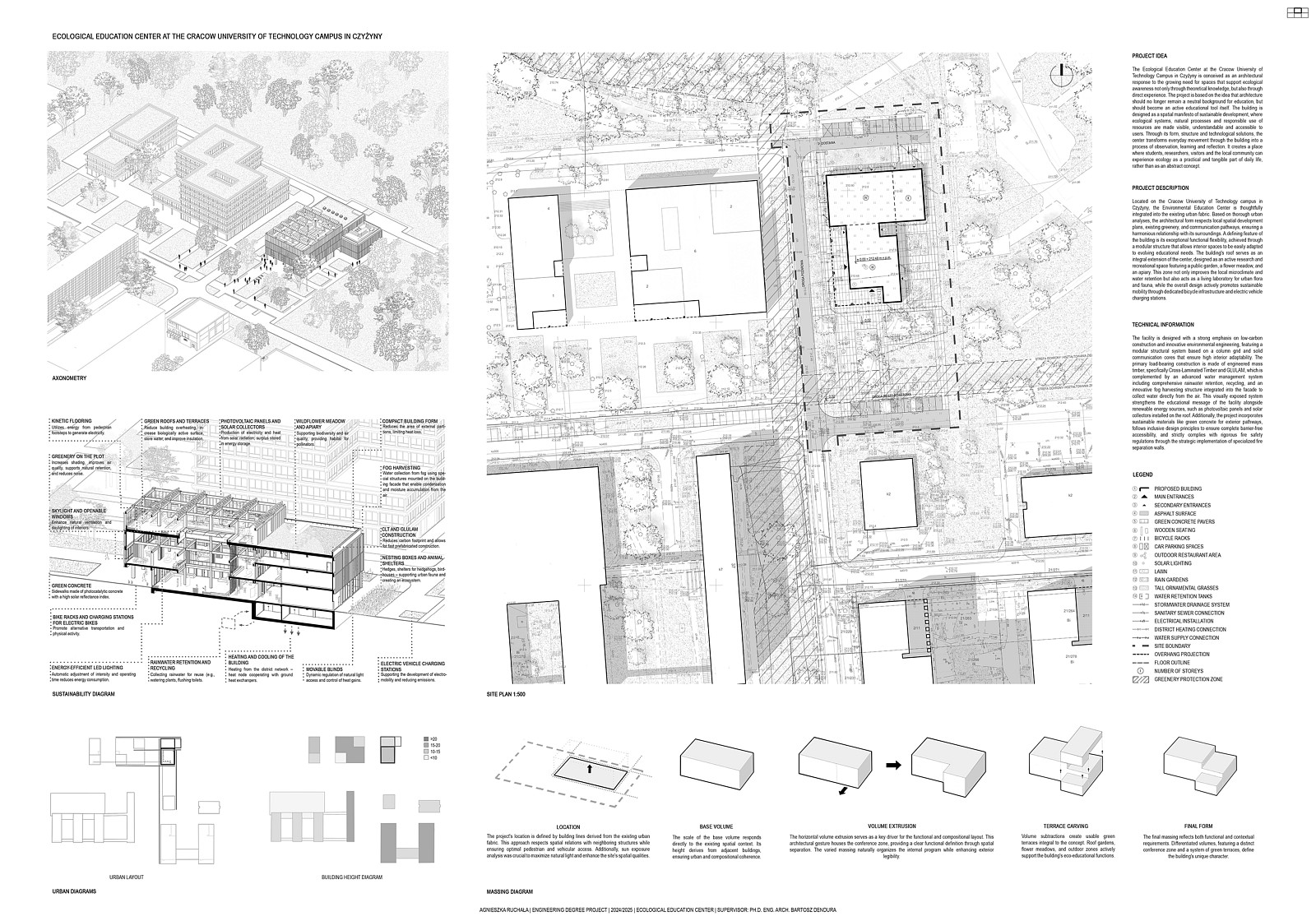
In the face of intensifying climate change, environmental education emerges as a crucial element of climate resilience and sustainable development strategies. Since traditional forms of knowledge transmission are often insufficient to foster deep behavioral changes, there is an urgent need for environments that do not merely teach ecology but actively embody it. The Ecological Education Center at the Cracow University of Technology Campus in Czyżyny serves as a spatial manifesto of environmental stewardship and zero-emission goals. Rather than being just a passive backdrop for learning, the architecture becomes an active, living tool for shaping ecological awareness. The facility functions as a demonstrational ecosystem where users can directly observe, experience, and analyze the operation of pro-ecological systems in real-time. By bridging the gap between abstract climate concepts and tangible architectural solutions, the building itself becomes a fundamental instrument of environmental education, proving that architecture can exist in true symbiosis with nature.
Project description
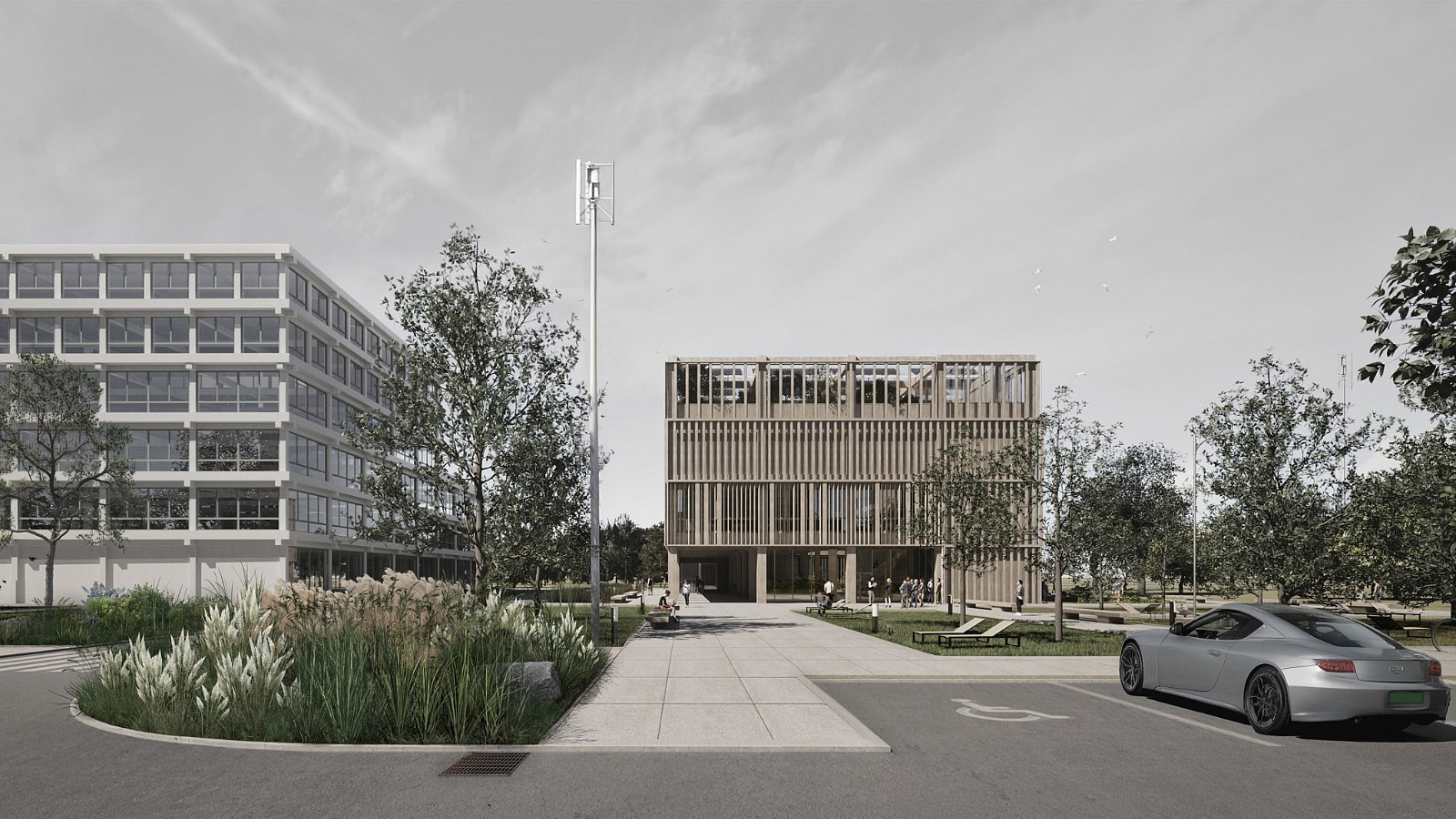
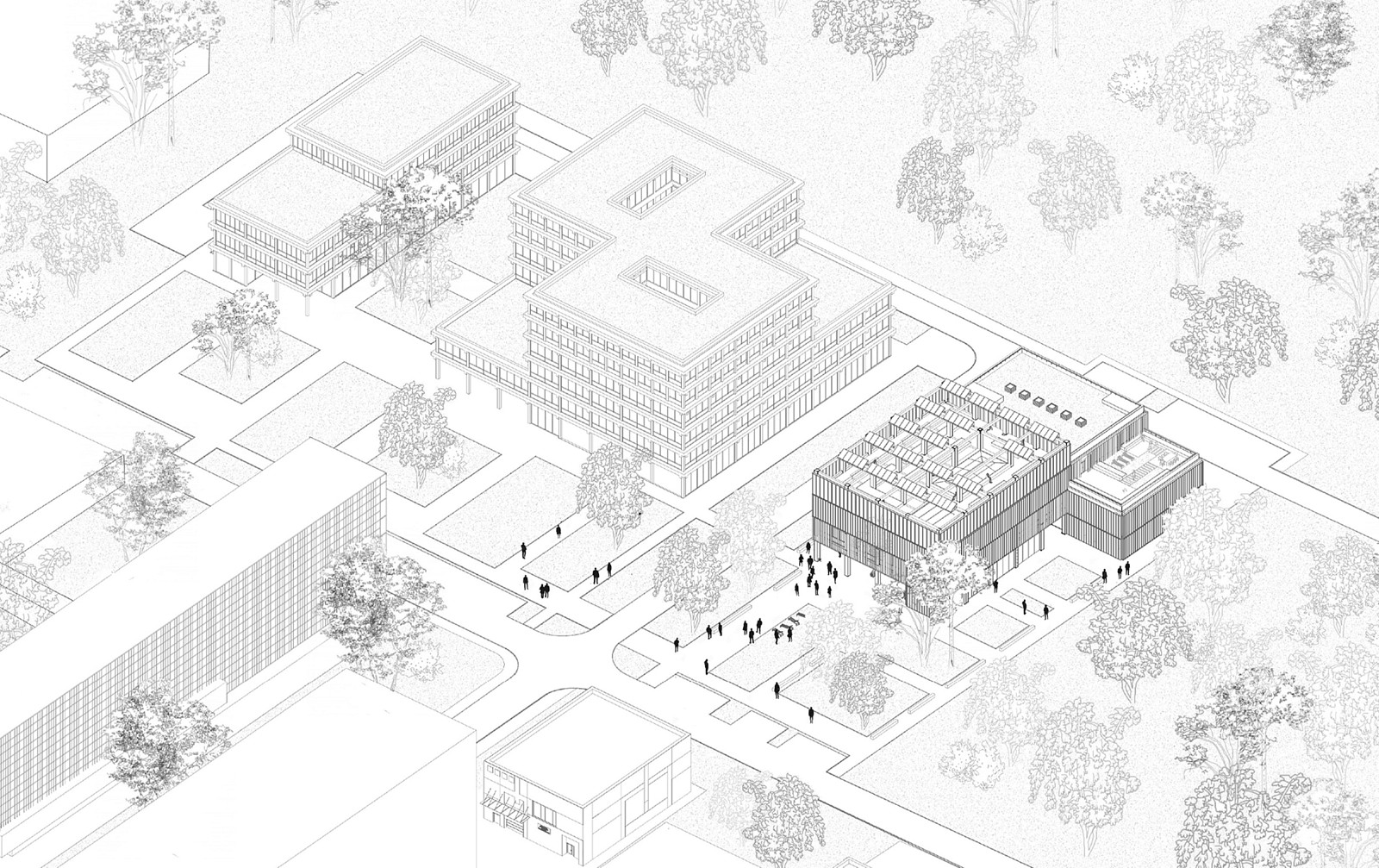
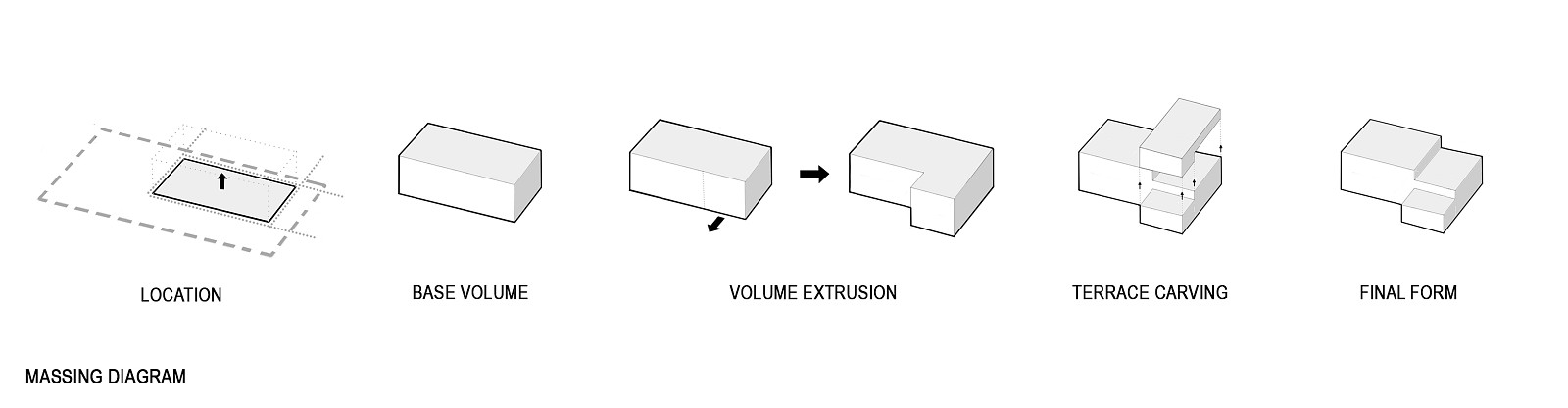
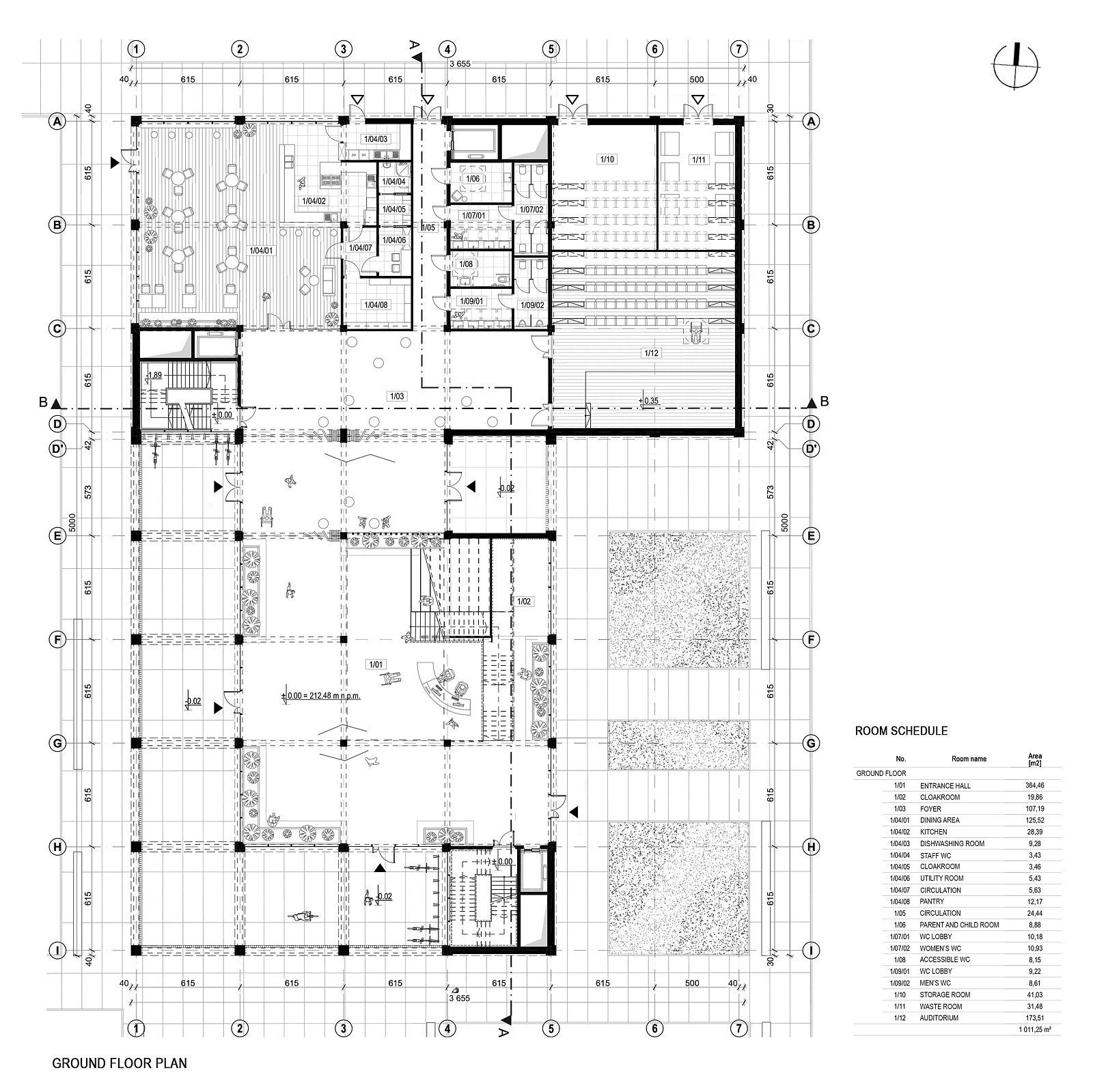
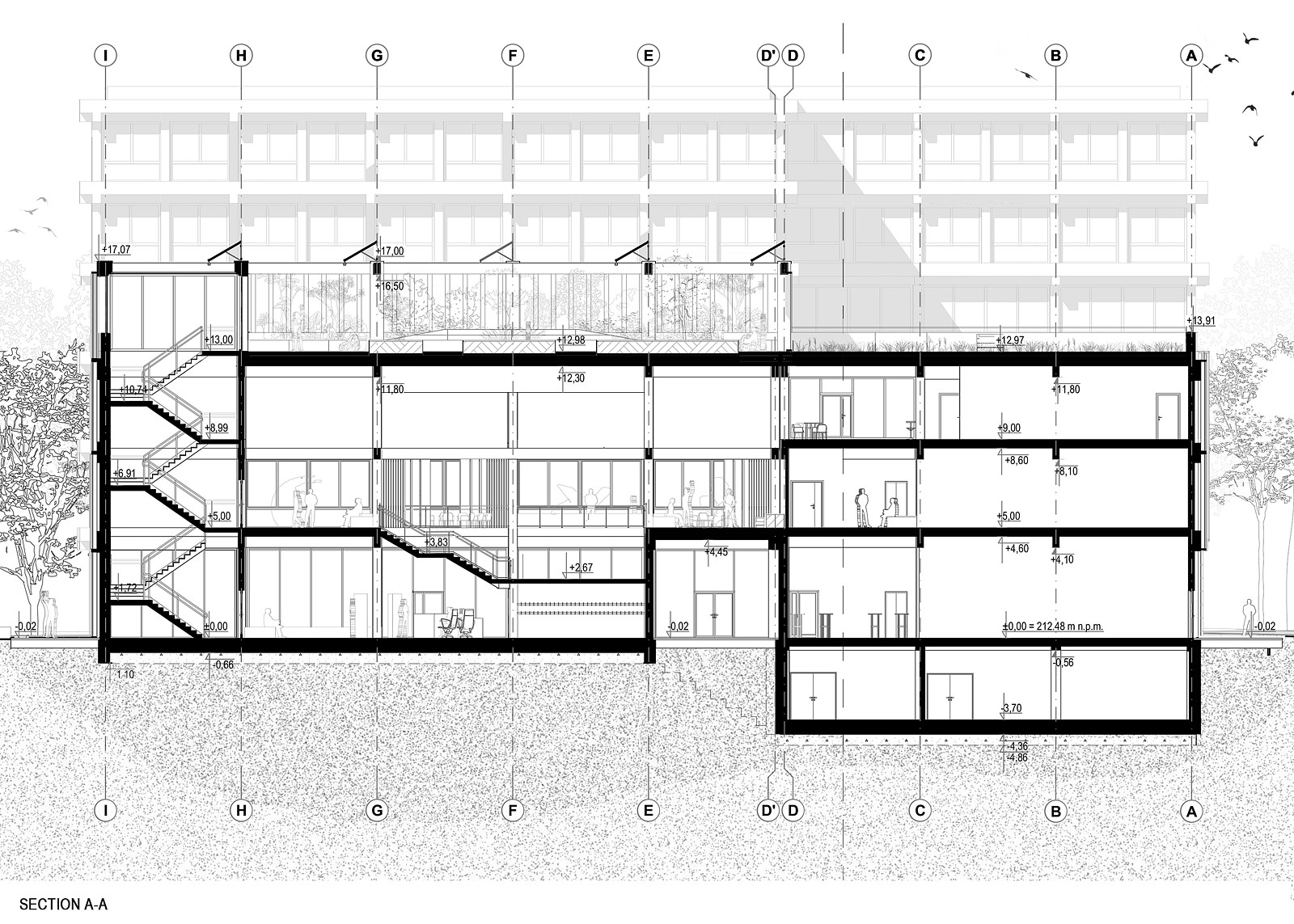
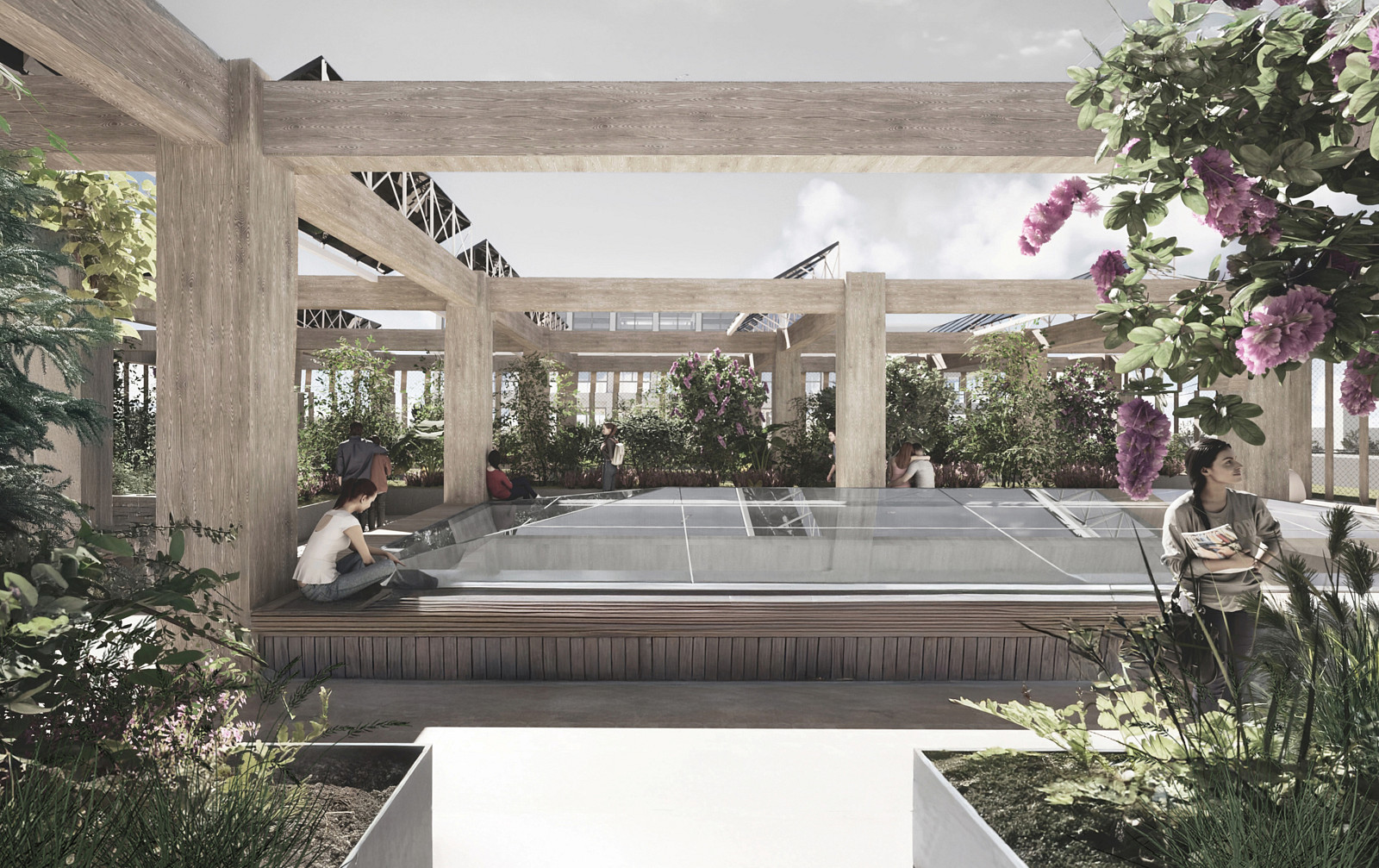
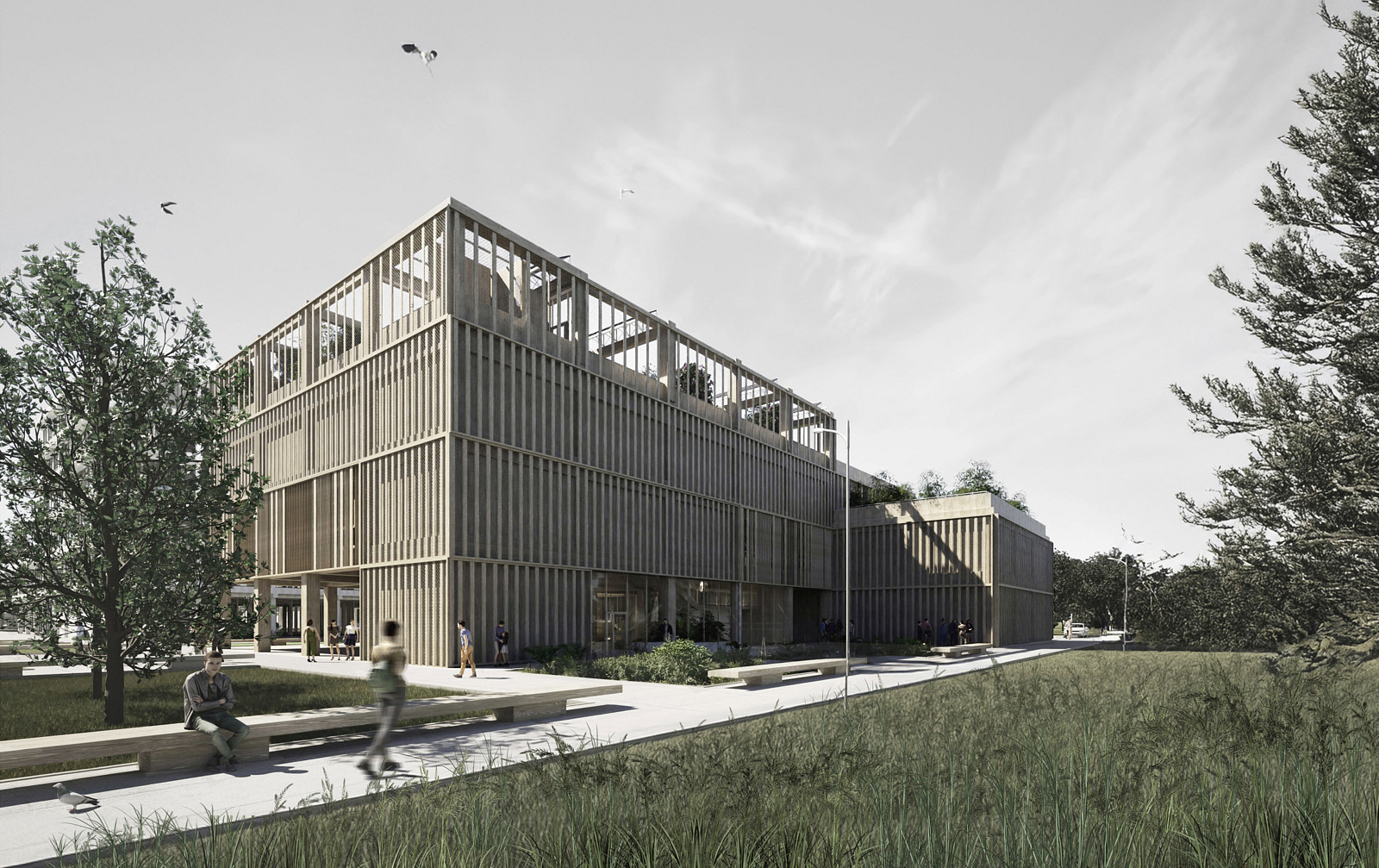
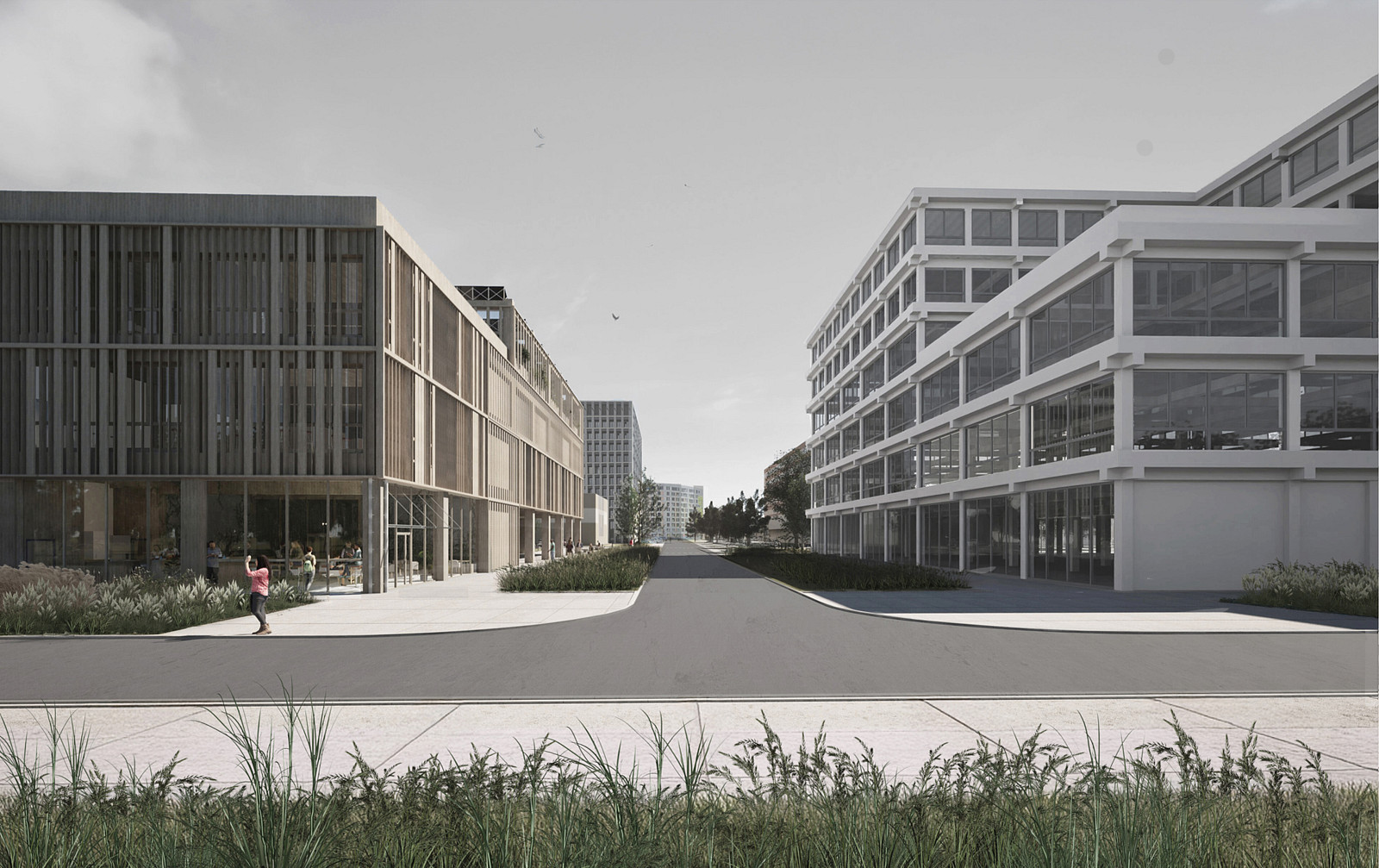
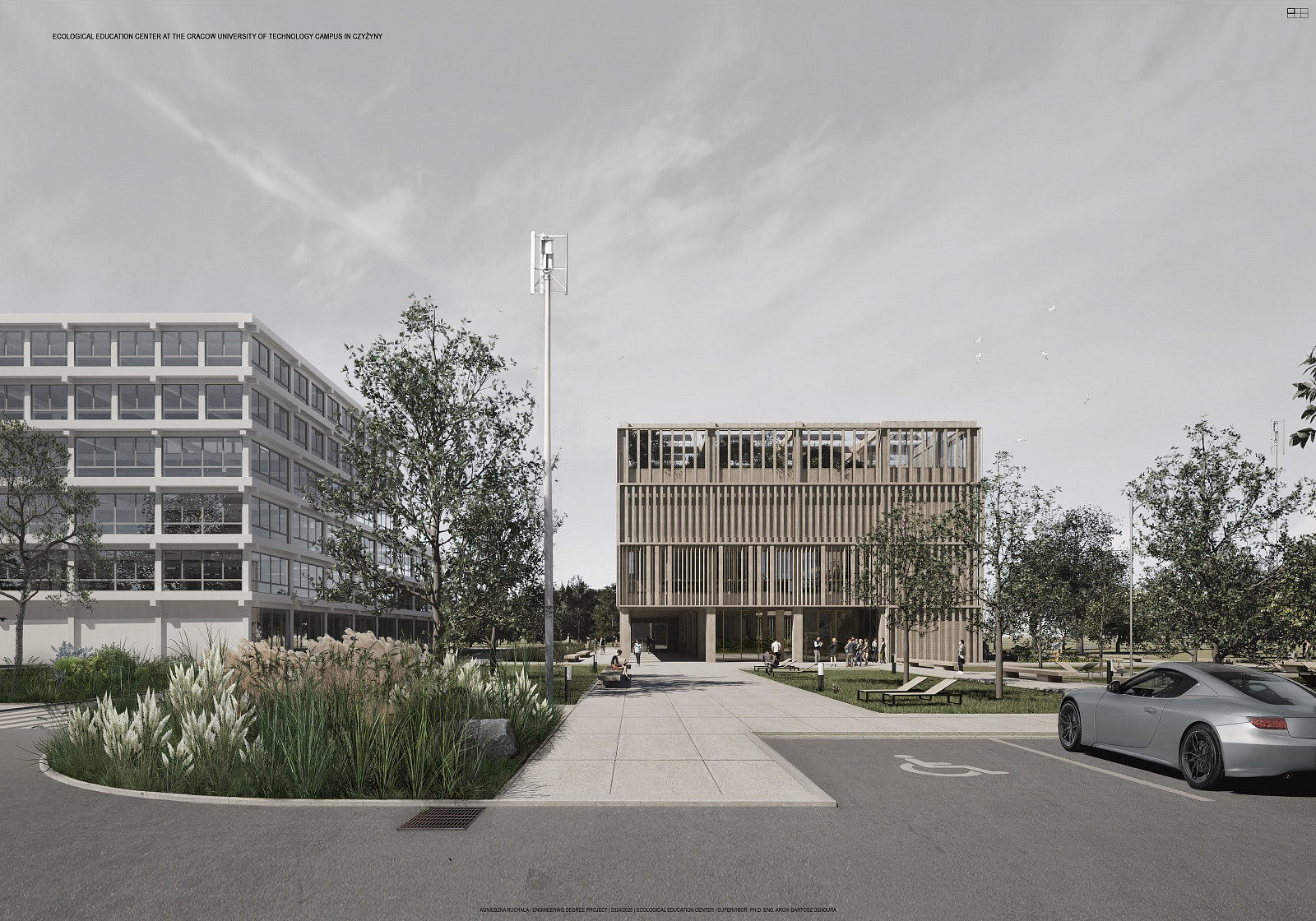
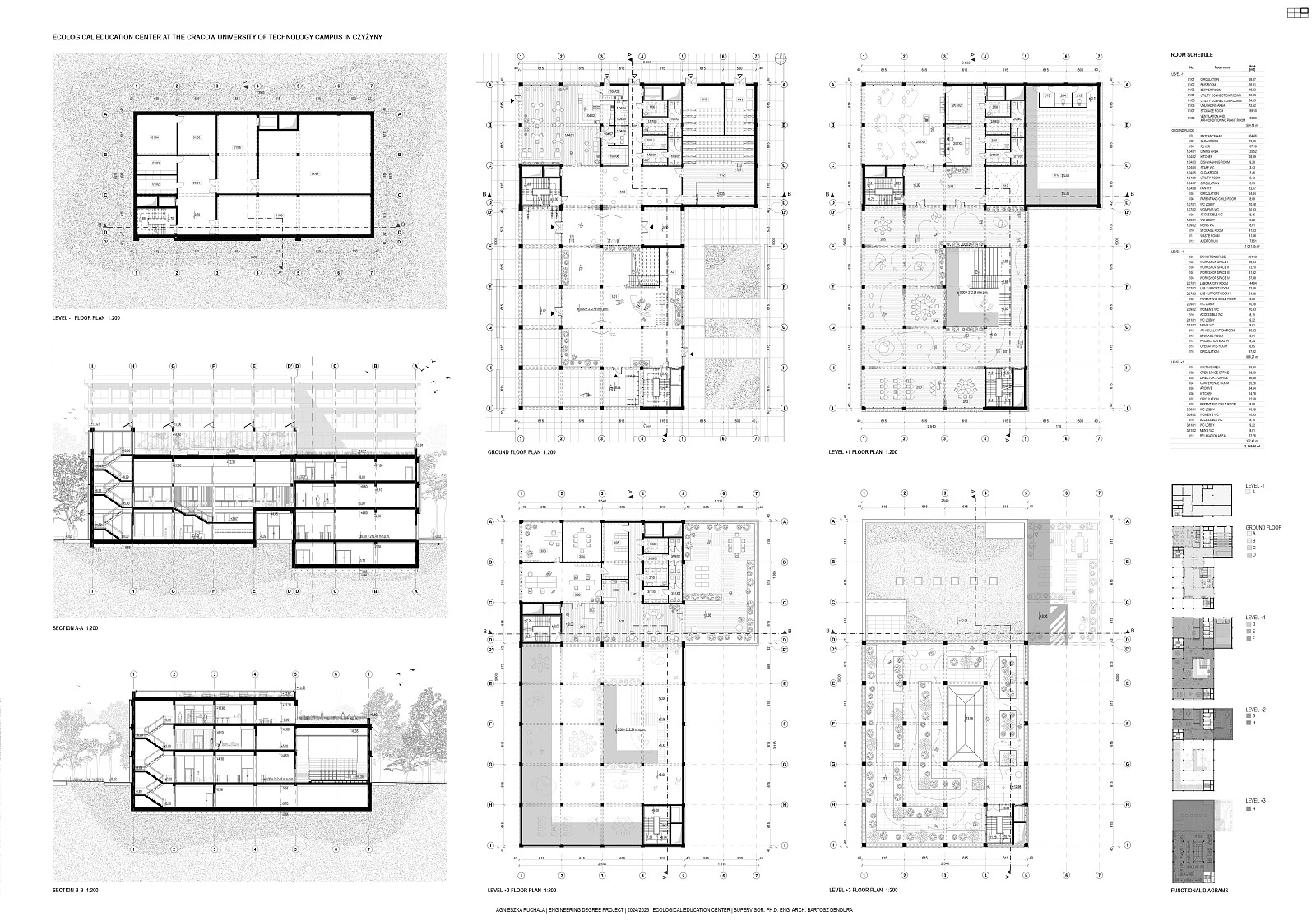
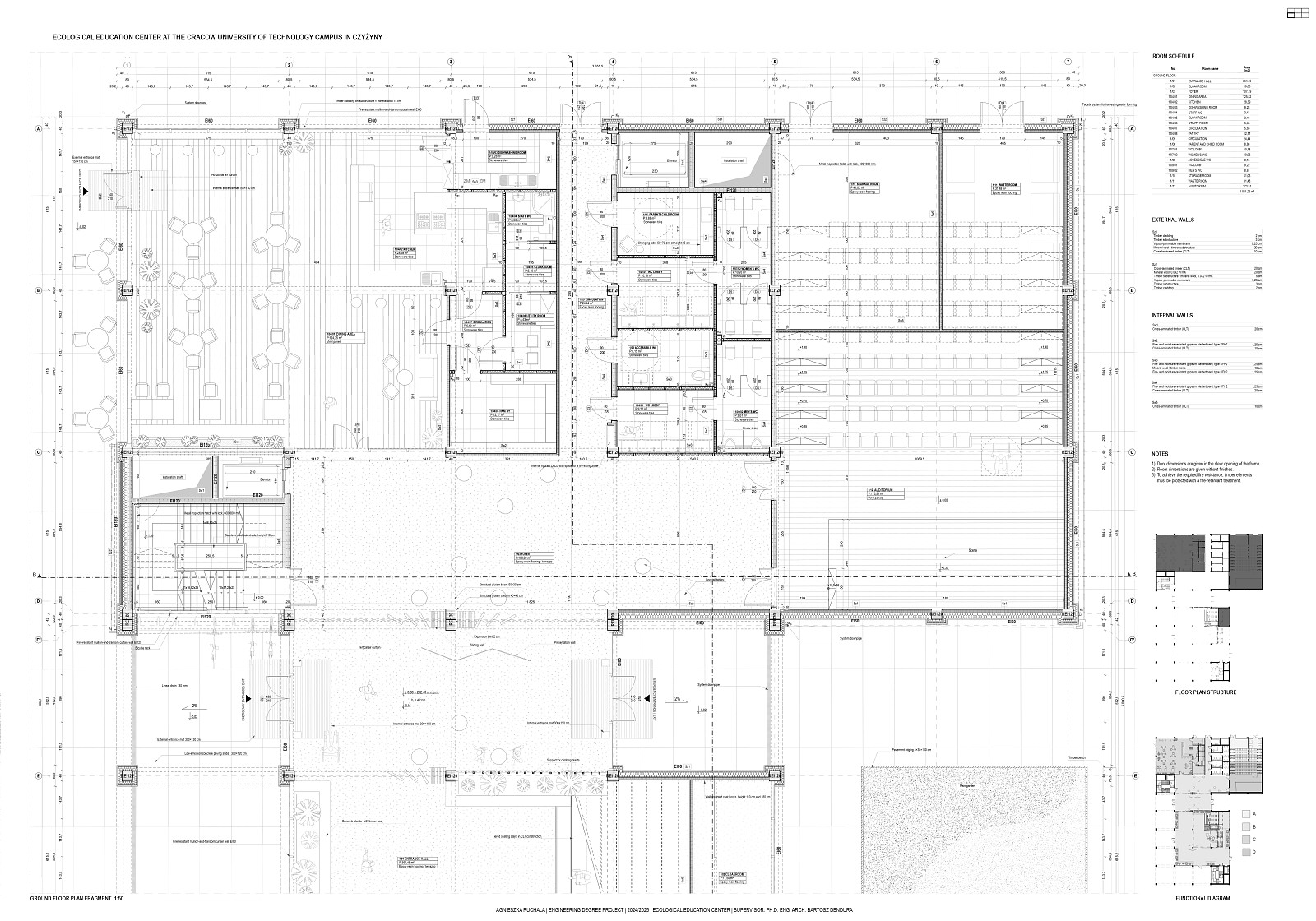
The spatial structure of the Ecological Education Center is designed as a "living laboratory" based on a flexible, modular column-and-core system that adapts to evolving educational needs while minimizing construction waste. The functional layout encompasses workshop spaces, laboratories, and open common zones, all meticulously designed to maximize natural ventilation and daylight, thereby reducing operational energy demand. Carefully integrated into the existing urban context, the building respects and actively enhances local green networks, preserving the site's natural biodiversity. The architectural form—shaped by natural arcades, overhangs, and stacked terraces—organically emerges from passive design strategies, providing natural shading and regulating the local microclimate. A major aspect of the design is the promotion of a low-carbon lifestyle, supported by comprehensive bicycle infrastructure, electric vehicle charging stations, and community-driven environmental actions. Ultimately, the design seamlessly integrates pedagogy and nature into a holistic, climate-conscious educational platform.
Technical information
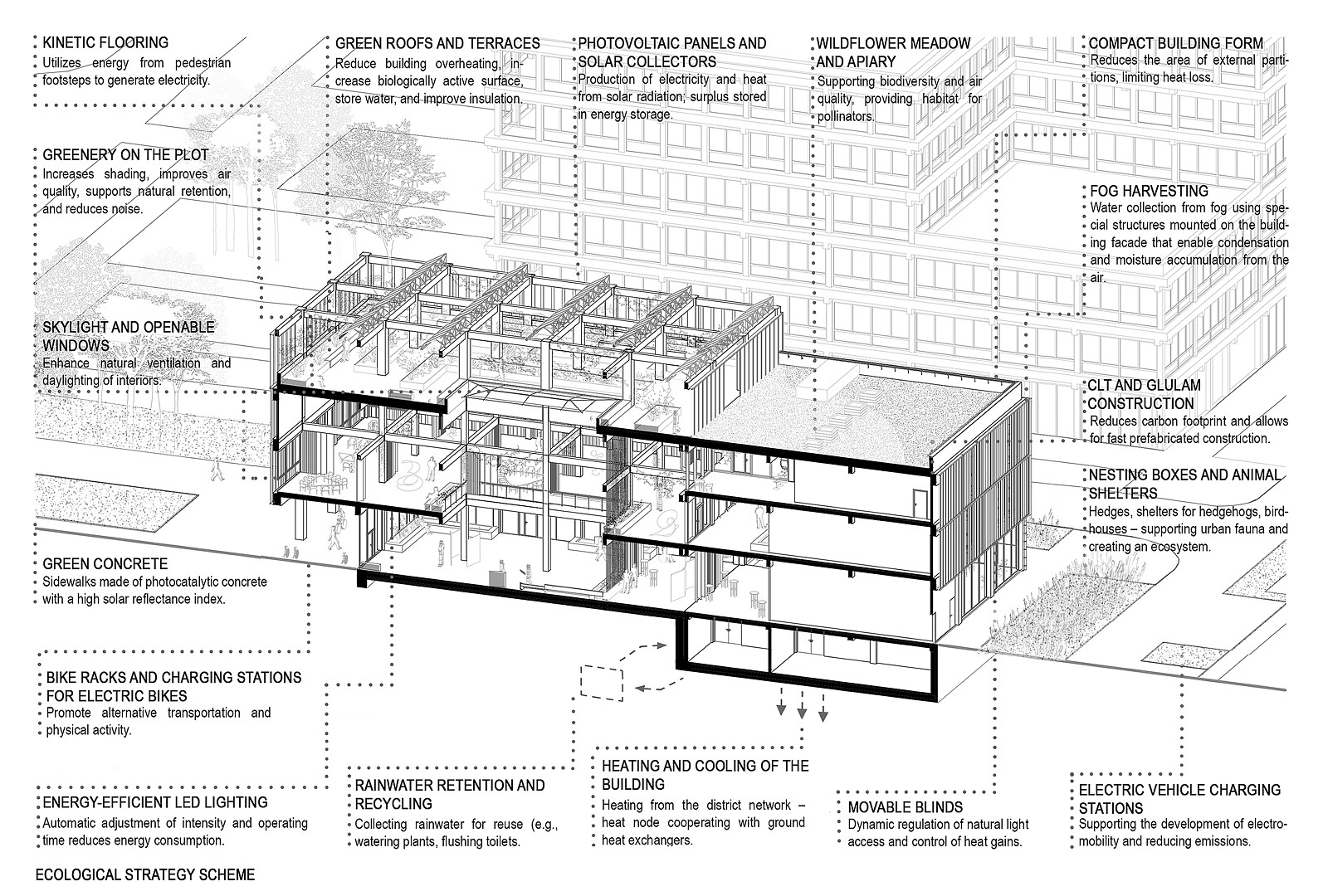
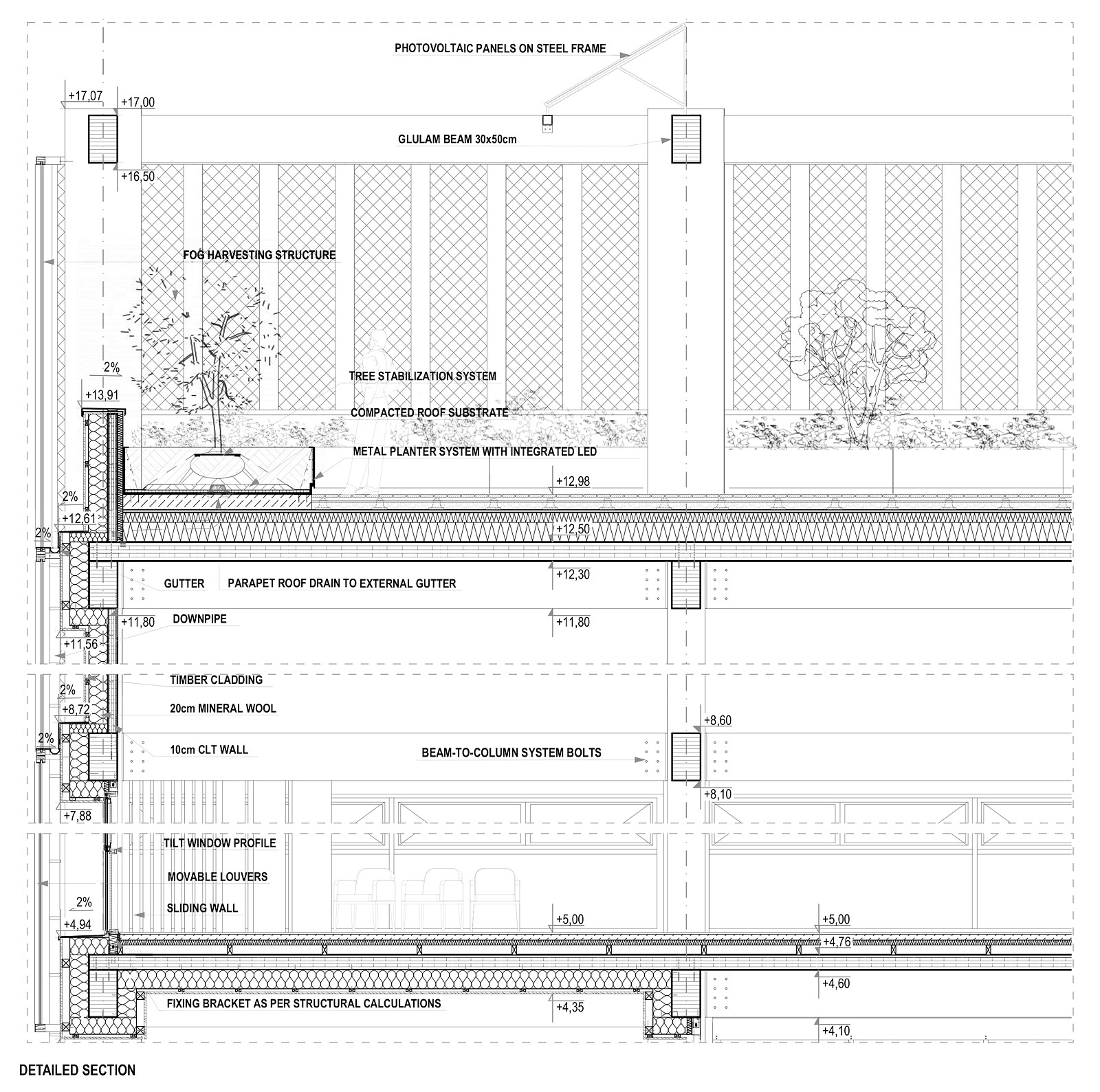
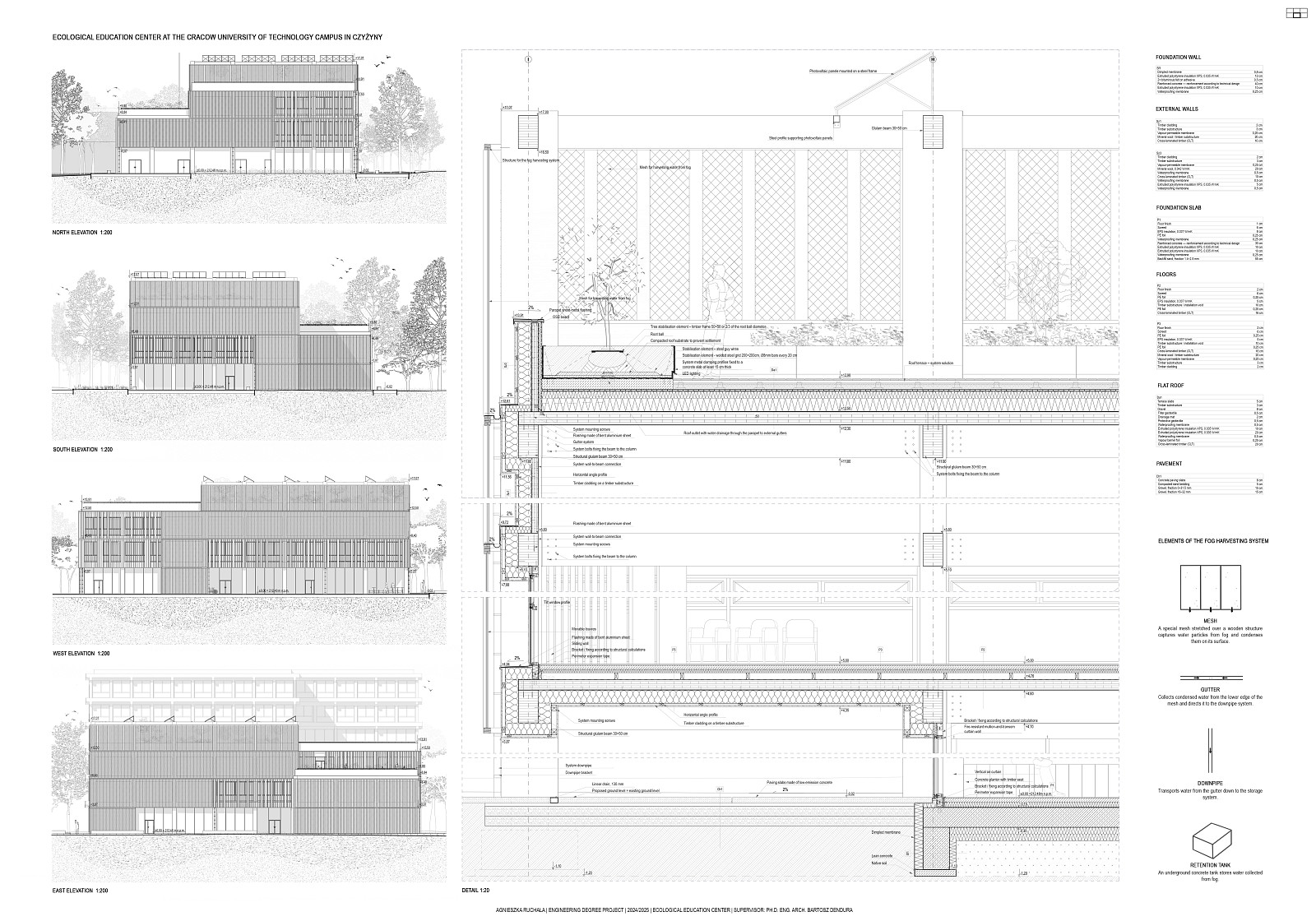
The facility is a freestanding scientific building designed with circular economy principles at its core. With a built-up area of 1,177.26m2, a volume of 20,527.21 m3, and a maximum height of 17.09 meters, the structural framework relies heavily on renewable, low-embodied-carbon materials-primarily utilizing cross-laminated timber (CLT) and GLULAM components. The exterior features natural spruce wood cladding accented by light-grey joinery. A comprehensive, closed-loop ecological strategy drives the technical design. The building pioneers a highly visible fog harvesting system integrated directly into the facade, capturing atmospheric moisture and serving as a prominent educational feature. Additionally, the project incorporates extensive rainwater retention and recycling systems with multi-chamber underground concrete tanks (28m3) to sustain the surrounding greenery. Renewable energy is generated on-site via photovoltaic panels and solar collectors. The roof area acts as an active biodiversity hub, hosting accessible green roofs a wildflower meadow, and an apiary. These elements significantly increase water retention, support local pollinators, and combat the urban heat island effect. The site's hardscaping further minimizes environmental impact by utilizing low-emission green concrete for pedestrian and bicycle paths.
Documentation
Created in:


Copyright © 2026 INSPIRELI | All rights reserved. Use of this website signifies your agreement to the Terms of Use, Privacy Policy, and use of cookies.