LYWAN


Project idea
Damascene Haven: A Boutique Hotel Inspired by the Courtyard Heritage of Damascus
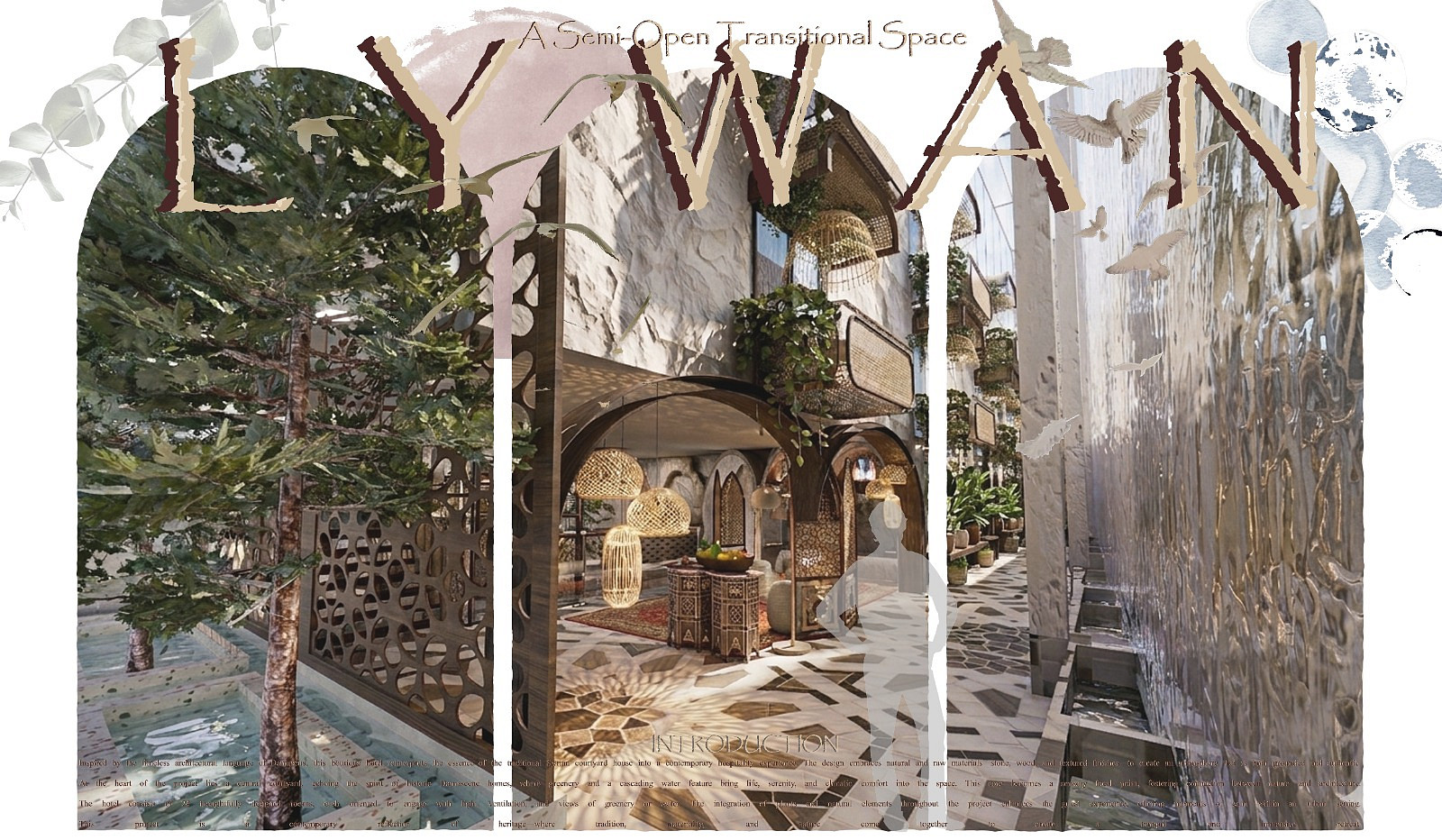
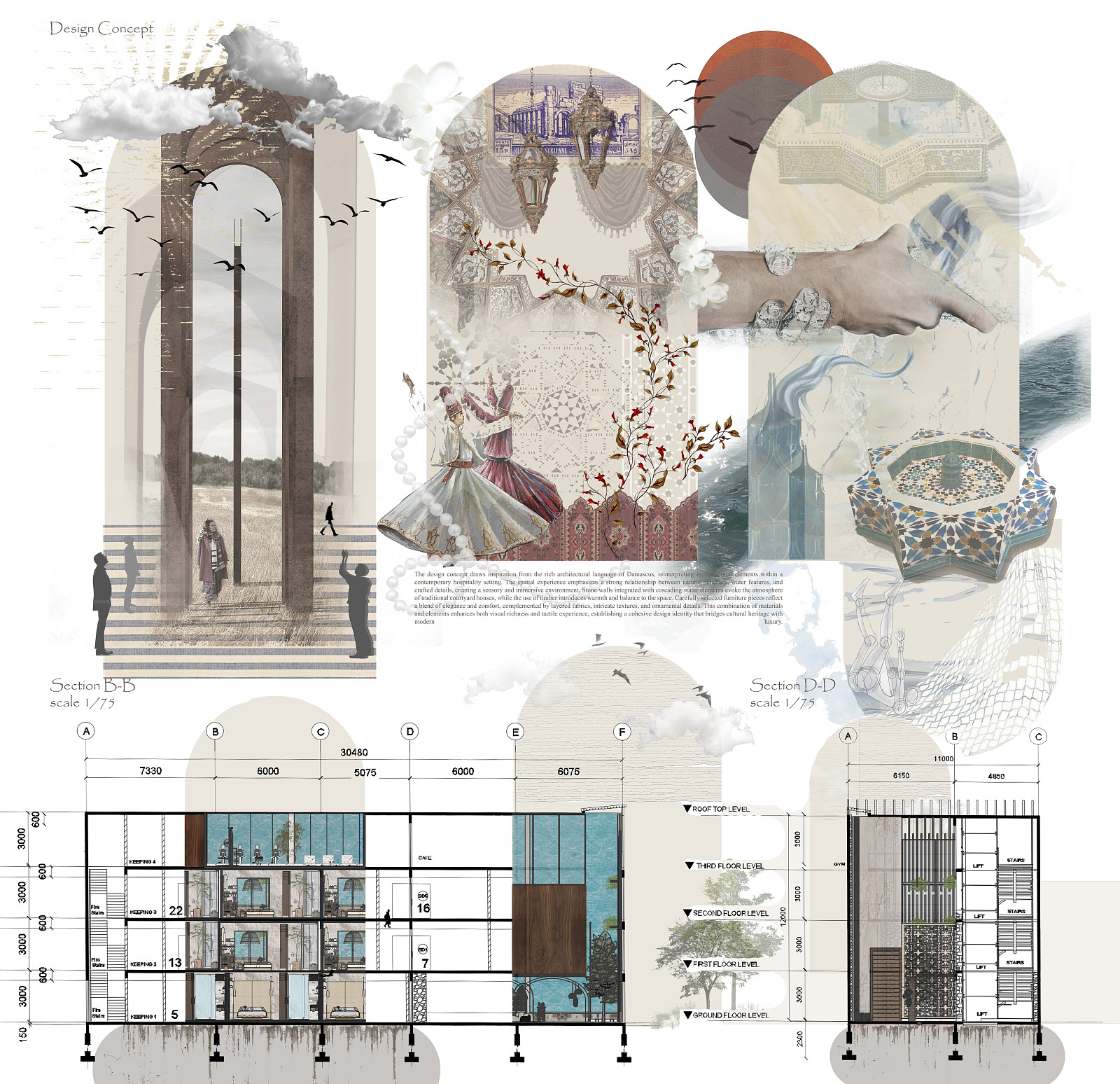
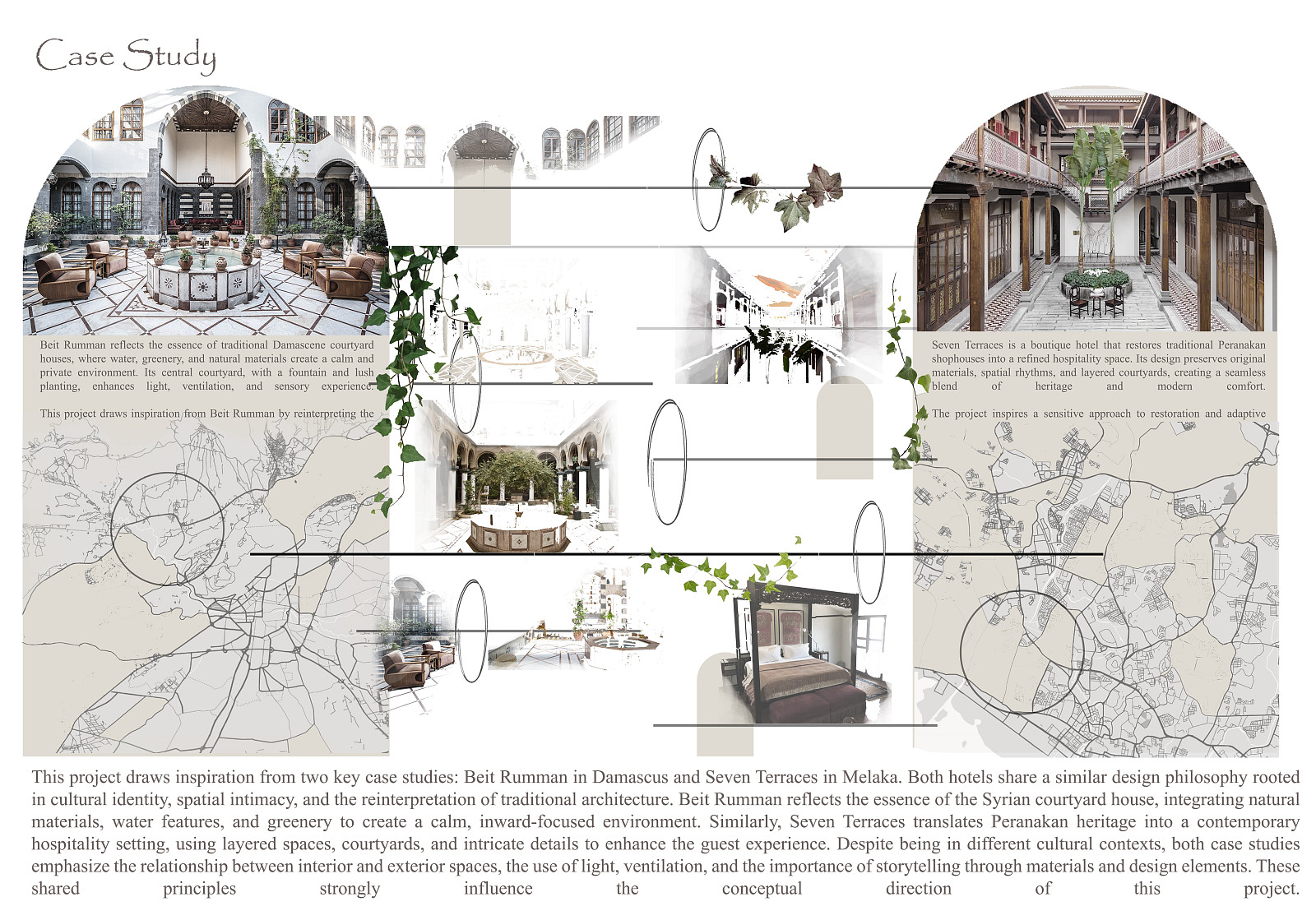
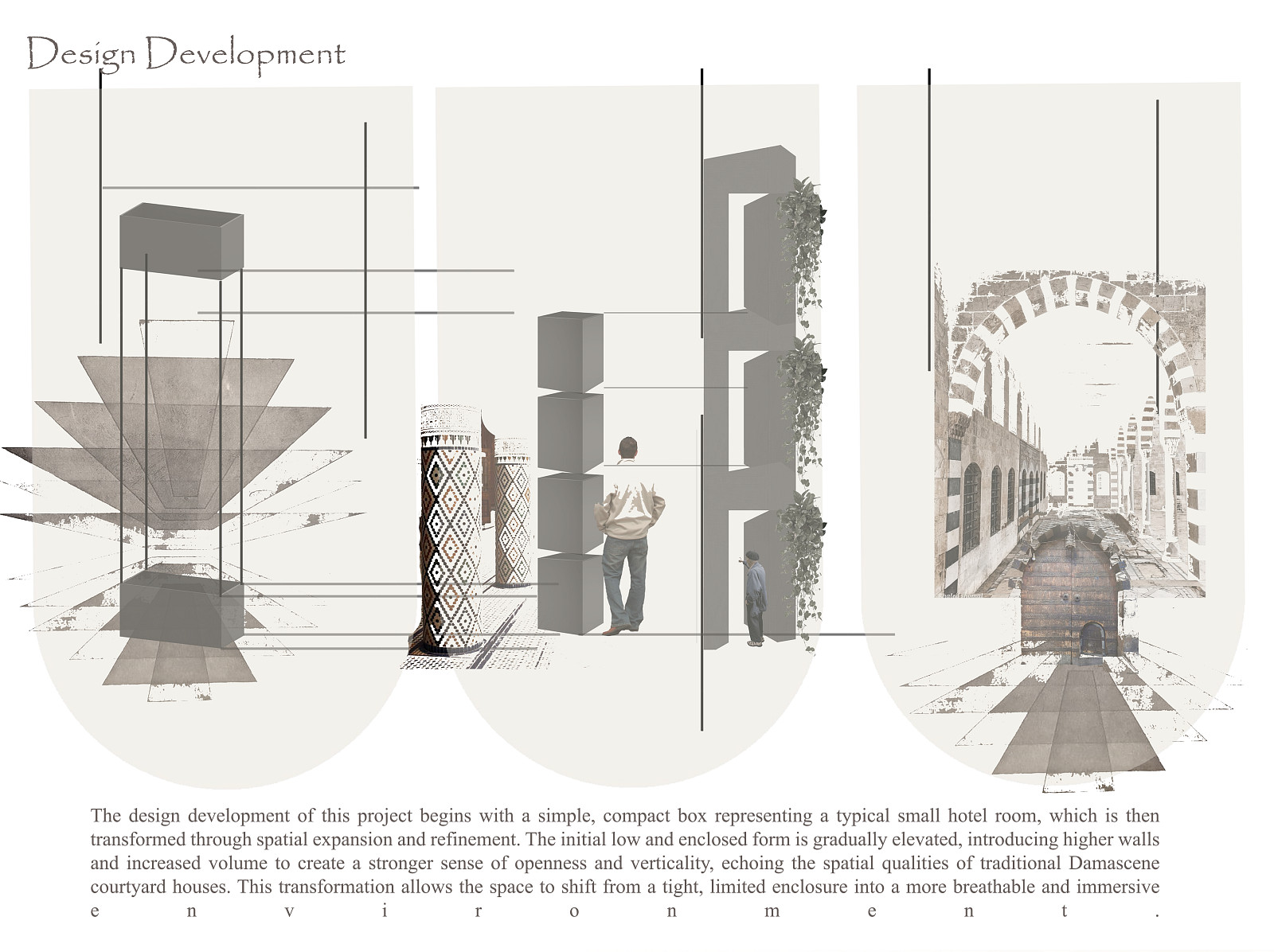
This project proposes the development of a boutique hotel that reinterprets the cultural and architectural heritage of Damascus within a contemporary hospitality setting. Inspired by traditional Damascene courtyard houses, the design seeks to create a tranquil and immersive environment that promotes relaxation, cultural appreciation, and meaningful guest experiences. The concept is rooted in the harmonious relationship between architecture, nature, and human well-being, where water features, natural materials, greenery, and filtered light are integrated to evoke a sense of serenity and retreat.
The project aims to transform hospitality spaces into experiential environments that celebrate storytelling through design. Architectural elements such as arches, intricate screens, handcrafted furnishings, textured surfaces, and courtyard-inspired spatial arrangements are adapted to suit modern lifestyles while preserving the essence of Syrian cultural identity. The design also incorporates sustainable strategies through the use of natural ventilation, locally sourced materials, and biophilic design principles.
The primary objective of the project is to provide guests with a unique hospitality experience that combines comfort, wellness, and cultural authenticity. By bridging traditional craftsmanship with contemporary design, the hotel serves as a destination that encourages relaxation, social interaction, and a deeper connection to heritage, ultimately creating a memorable and enriching environment for both local and international visitors.
Project description
Project Description
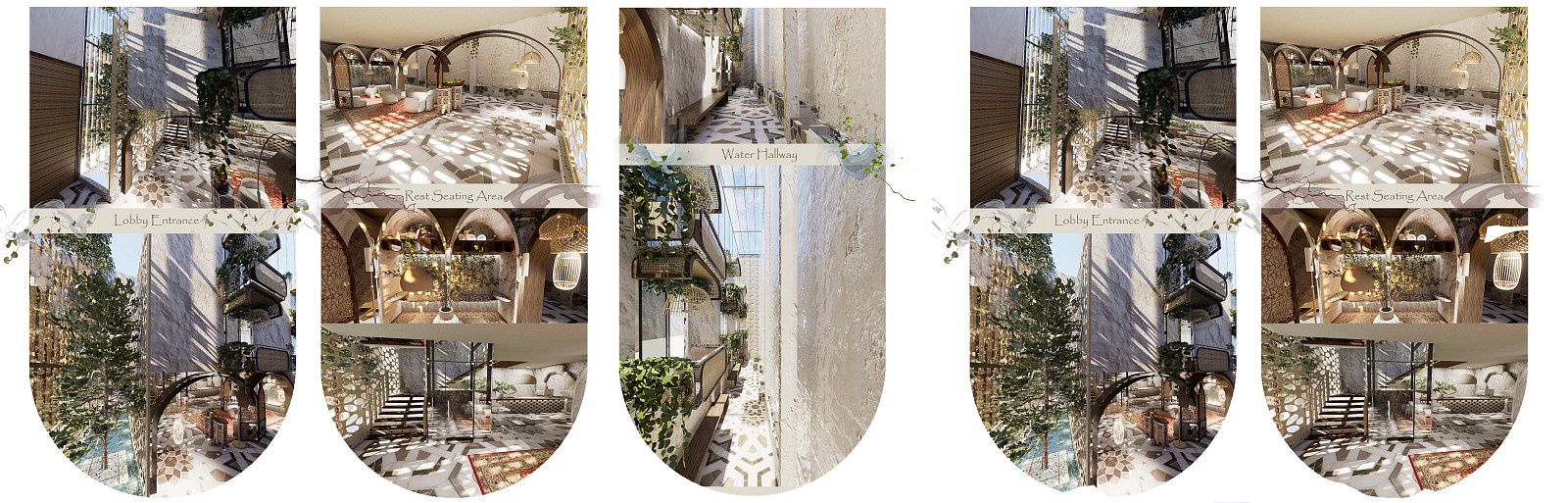
The project involves the design and development of a boutique hotel that offers a culturally immersive hospitality experience inspired by the architectural heritage of Damascus. The scope of the project encompasses the planning, interior design, spatial organization, and architectural detailing of guest accommodations and shared hospitality spaces. Key components include a welcoming lobby, guest rooms, balcony spaces, wellness and recreational facilities, circulation areas, and supporting service functions that collectively create a cohesive guest experience.
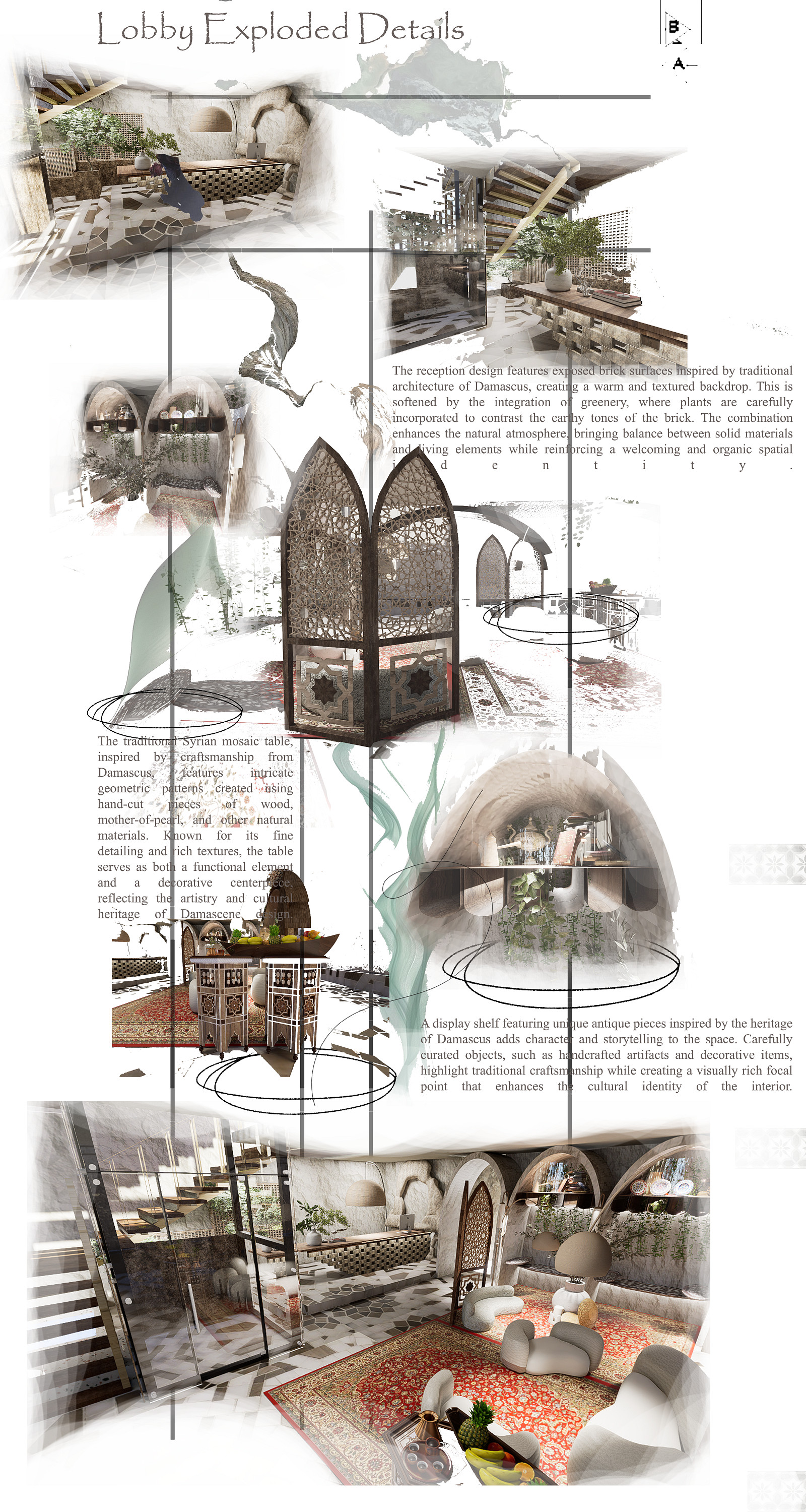
The design solution focuses on translating traditional Damascene architectural principles into a contemporary context. Courtyard-inspired spatial arrangements, arched forms, decorative screens, water elements, natural materials, and handcrafted furnishings are integrated throughout the hotel to establish a strong cultural identity. The project also emphasizes the connection between interior and exterior environments through the incorporation of greenery, natural lighting, and ventilation strategies that enhance comfort and well-being.
Special attention is given to creating sensory-rich spaces that encourage relaxation, social interaction, and cultural appreciation. Sustainable design considerations are incorporated through material selection, passive environmental strategies, and biophilic design elements. The project serves both local and international travelers seeking an authentic and memorable hospitality experience. Overall, the proposed solution aims to balance heritage preservation, contemporary functionality, and environmental responsibility while providing a distinctive boutique hotel destination that reflects the timeless character of Damascus.
Technical information
Technical Information
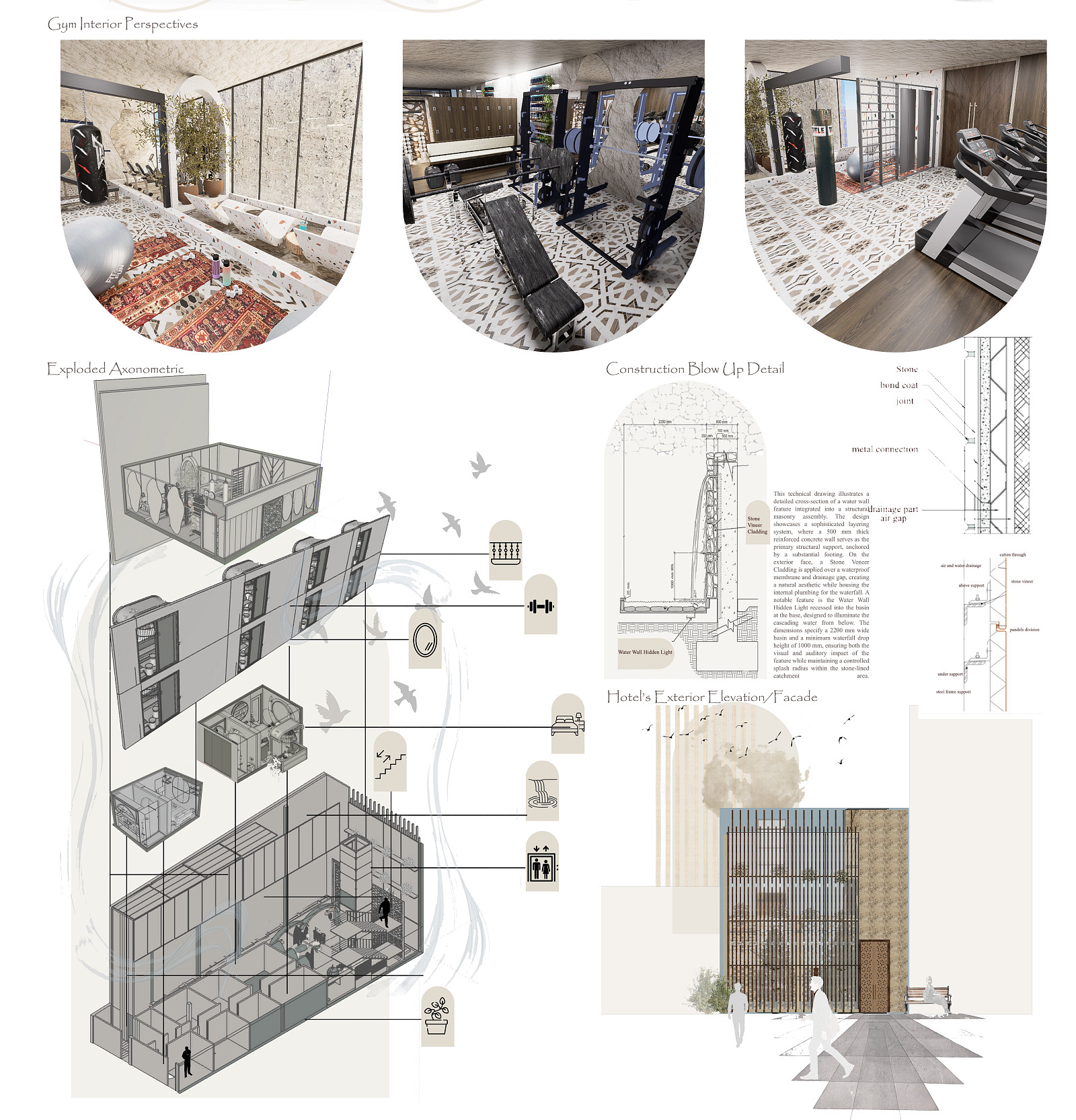
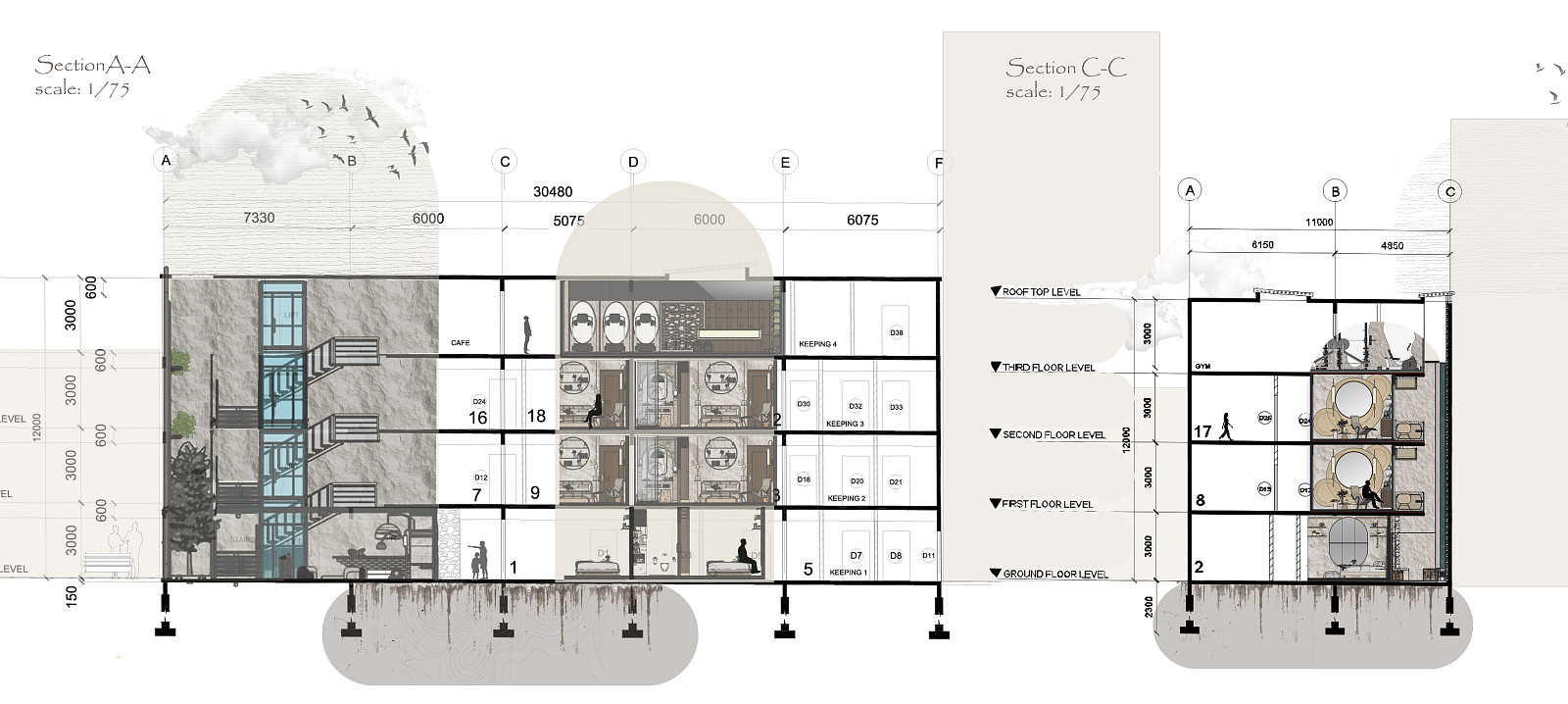
The proposed boutique hotel is designed as a multi-storey hospitality facility that combines traditional Damascene architectural principles with contemporary construction methods. The building comprises guest accommodation units, a lobby and reception area, wellness and fitness facilities, circulation spaces, service areas, and private balconies integrated within the overall spatial composition. The structural system utilizes reinforced concrete framing to ensure stability, durability, and compliance with current building regulations.
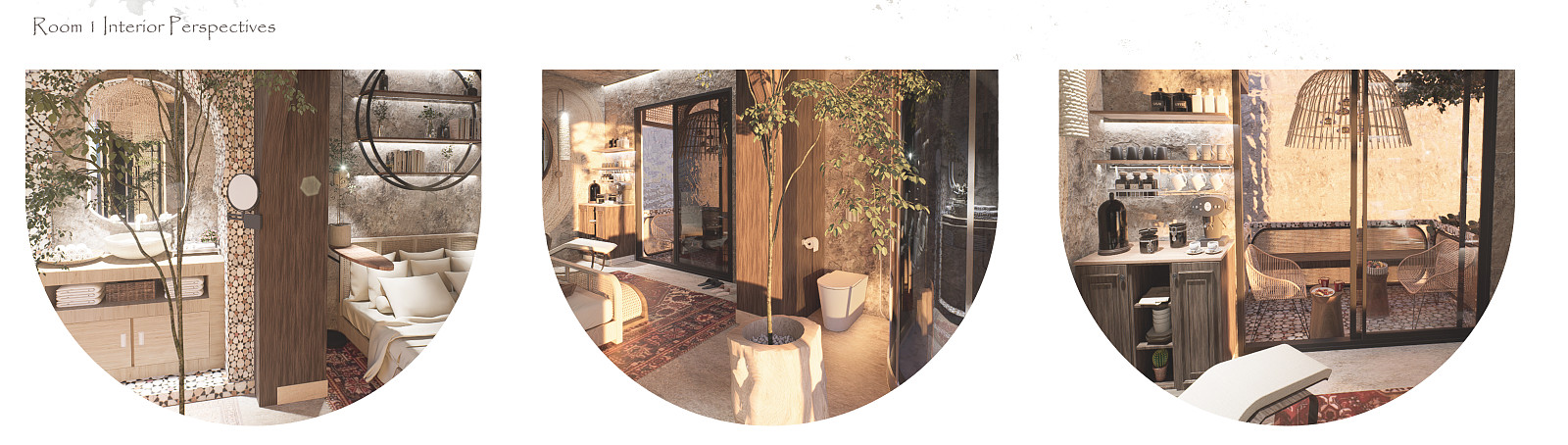
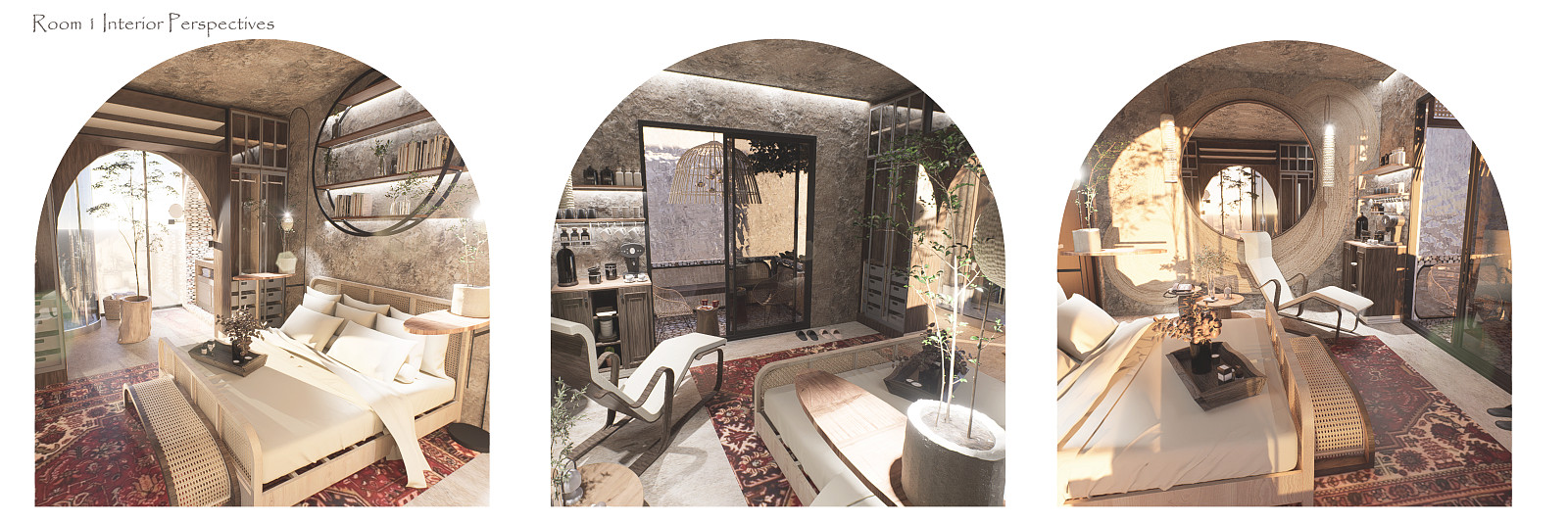
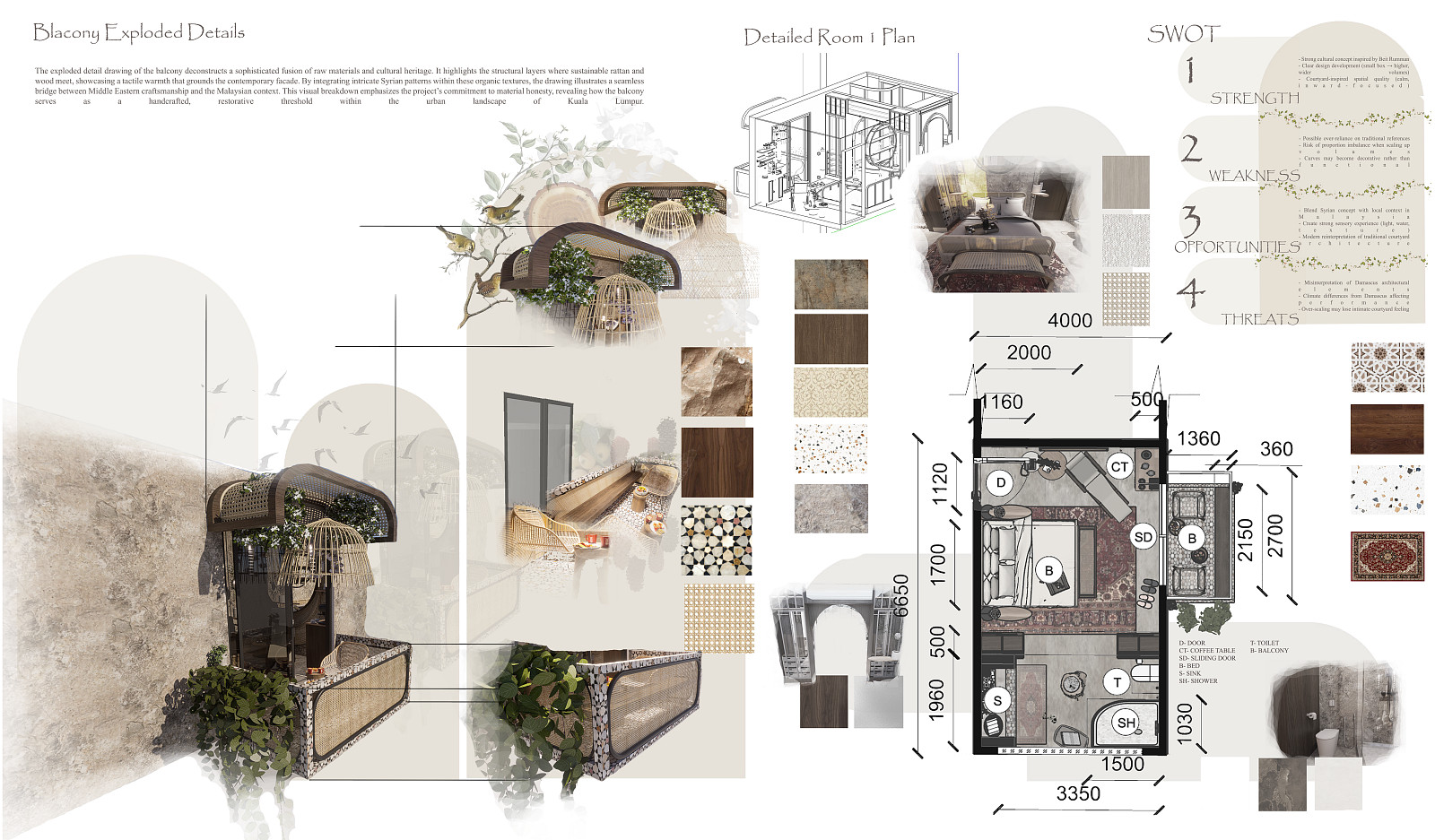
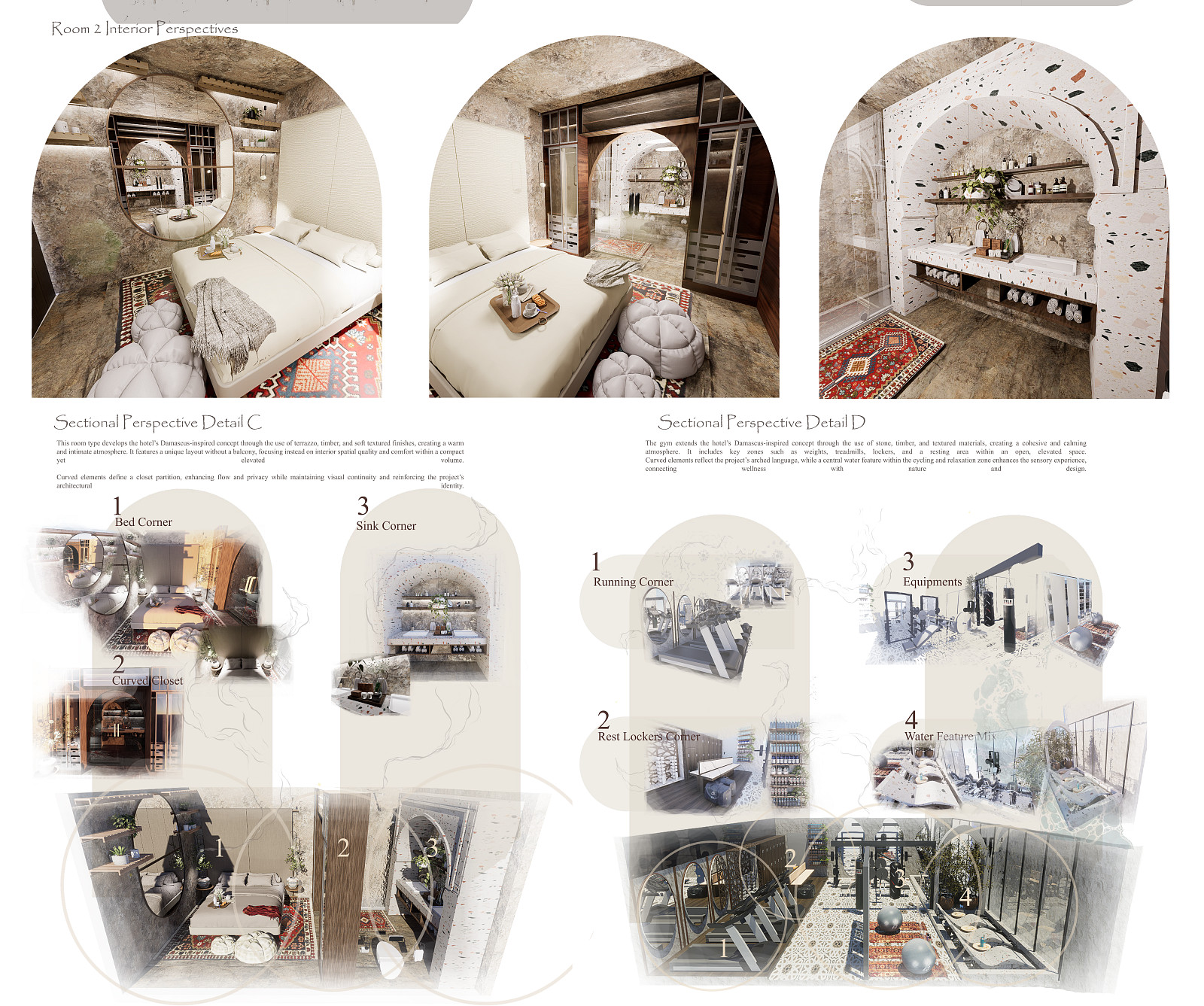
The interior design incorporates natural stone, terrazzo flooring, timber finishes, rattan elements, decorative screens, and handcrafted furnishings inspired by Syrian craftsmanship. Large glazed openings and balcony spaces maximize natural daylight while promoting visual connectivity between interior and exterior environments. Passive design strategies, including natural ventilation, shaded openings, perforated screens, and greenery, contribute to thermal comfort and energy efficiency.
Building services include energy-efficient LED lighting, mechanical ventilation and air-conditioning systems, plumbing and sanitary facilities, fire protection systems, security monitoring, and vertical transportation through lifts and staircases. Water features are strategically integrated within public areas to enhance the sensory experience and reinforce the project's cultural identity.
The typical guest room is planned with sleeping, bathing, storage, and relaxation zones to ensure functionality and comfort. Material selections prioritize durability, low maintenance requirements, and environmental sustainability while supporting the overall design concept. These technical specifications ensure that the hotel delivers safety, operational efficiency, guest comfort, and long-term performance.

Copyright © 2026 INSPIRELI | All rights reserved. Use of this website signifies your agreement to the Terms of Use, Privacy Policy, and use of cookies.