Waste Recycling Technology Park

Project idea
The world’s environmental improvement is directly linked to solid household waste disposal. The creation of special waste recycling engineering facilities is a key solution in the fight against debris. The lack of social policies for separate collection of solid household waste and the non-acceptance by the population of refuse disposal facilities, prevents their integration into urban infrastructure. The aim of the project is to identify the specifics of the functional and planning organization of a technopark with a waste recycling function, taking into account the technological production scheme, as well as to find solutions to improve the ecology of the planet. The state of the planet depends entirely on human accountability, and it is necessary to create an infrastructure that will allow people to be conscious and ensure a comfortable transition to the concept of "zero waste". I believe that it is the architect who can promote the introduction of such special objects in cities, which through architectural design will contribute to the socialization and education of the topic of sorting and disposal of household waste by people.
Project description
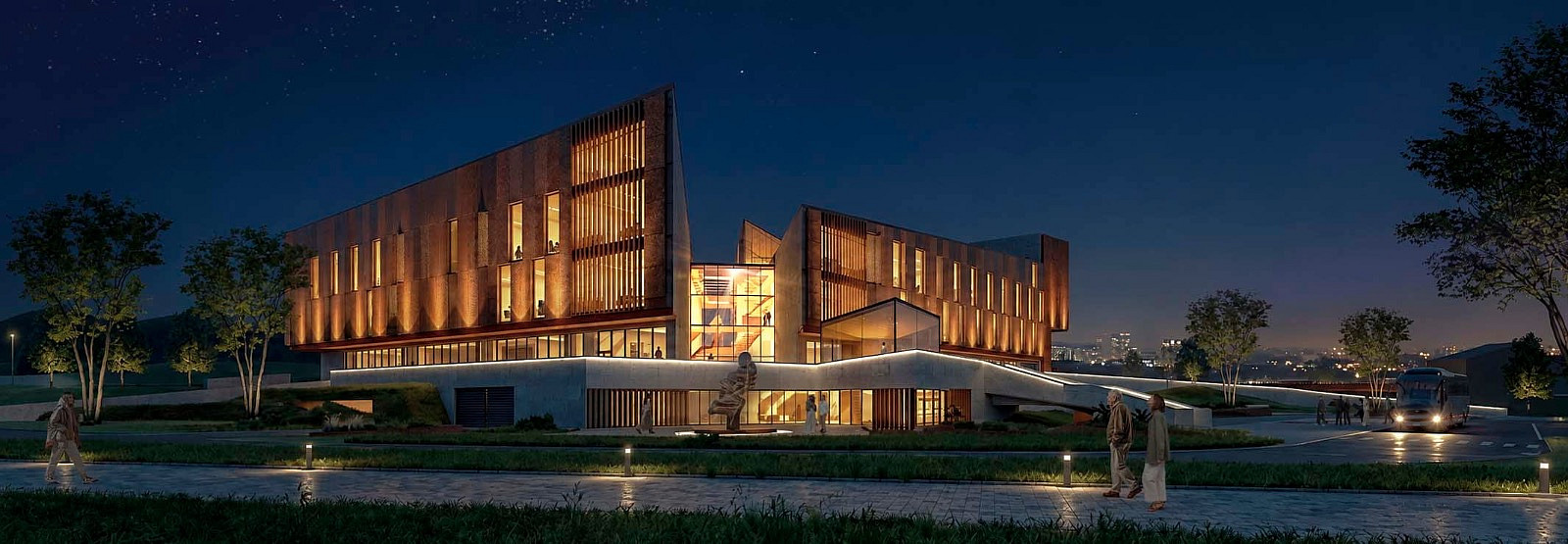
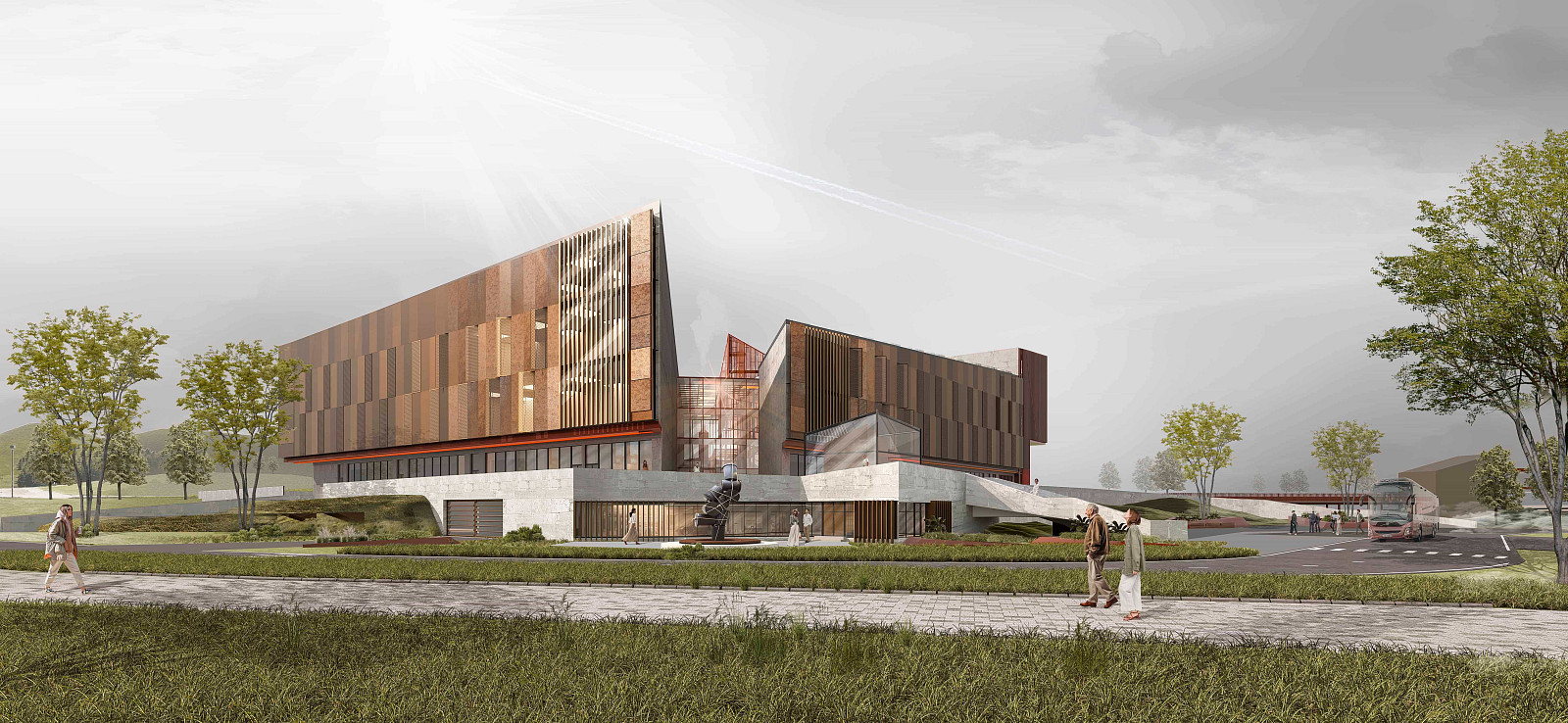
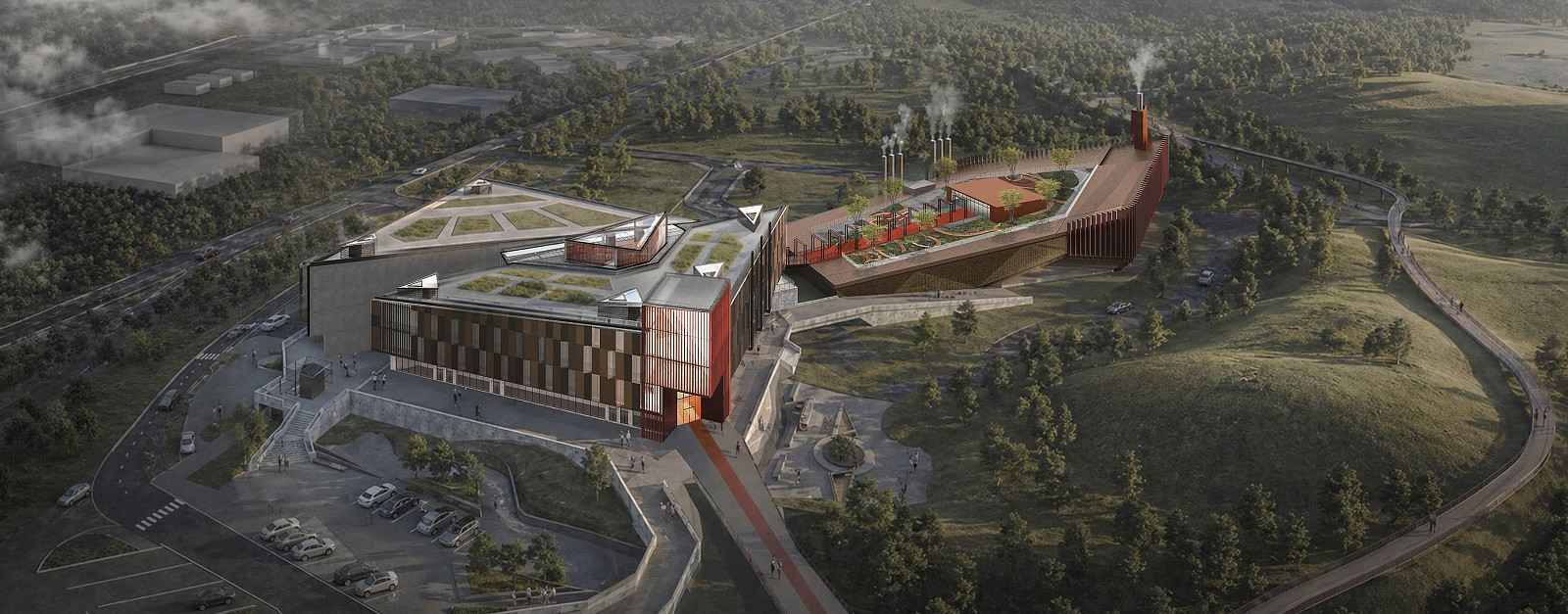
The building consists of three blocks, each of which is assigned an order number:
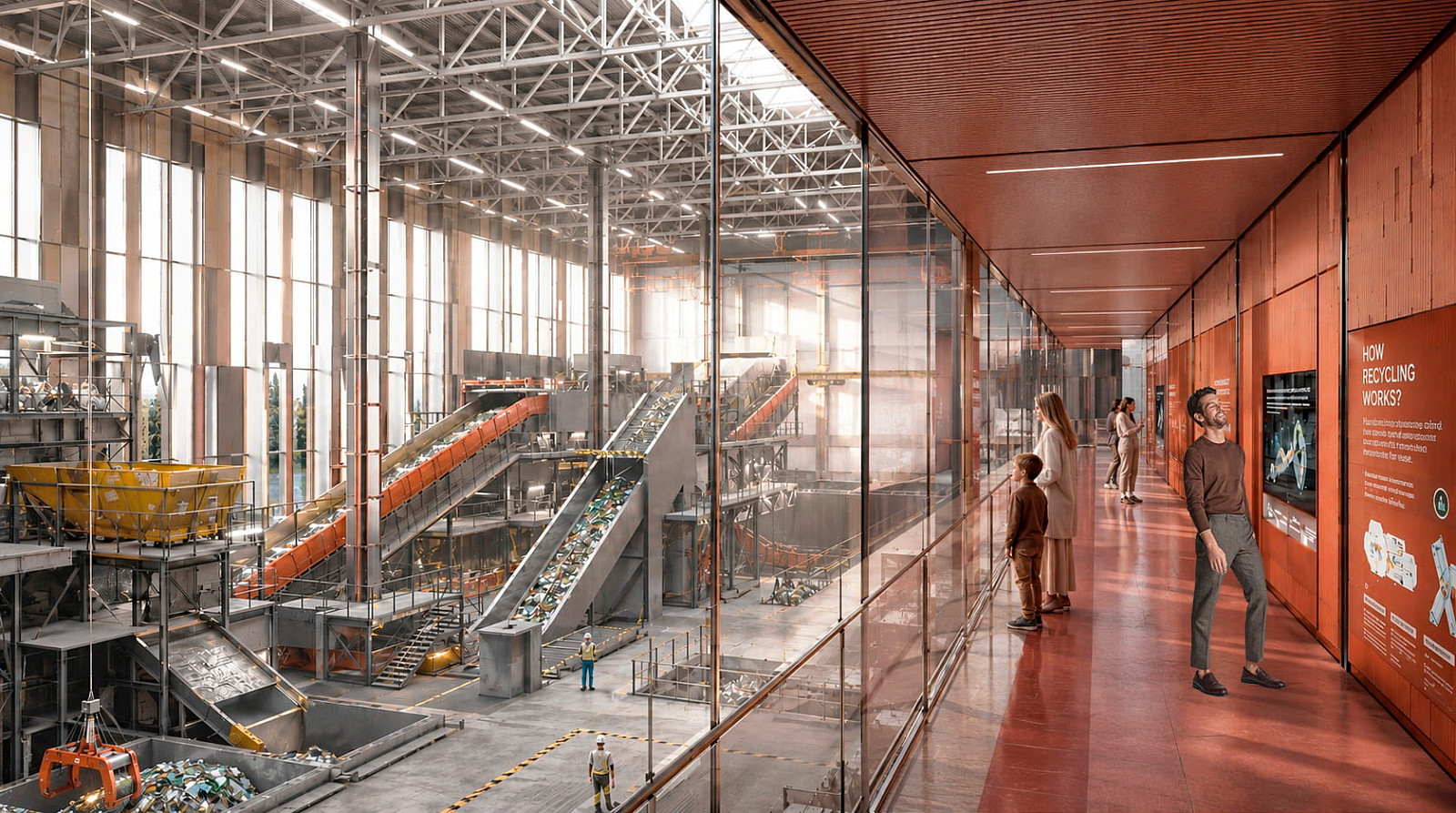
1. A garbage disposal unit that takes into account all sanitary regulations and the latest waste treatment technologies.
2. Research Unit, for study and search for the latest technologies in the field of recycling;
3. Public block with exhibition function. This unit is aimed at humanizing the image of the waste disposal facility, as well as attracting professional staff to environmental issues and garbage disposal.
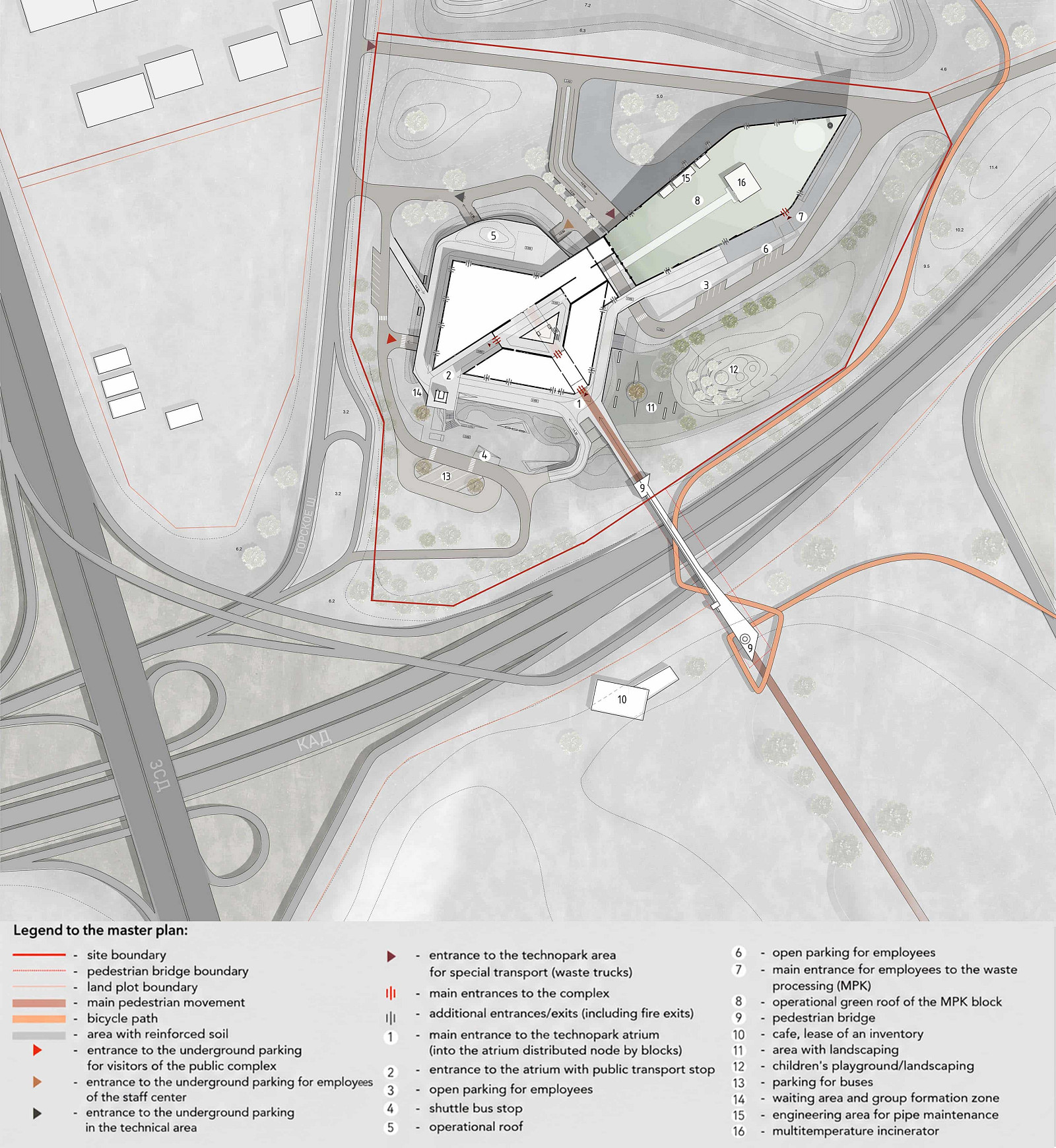
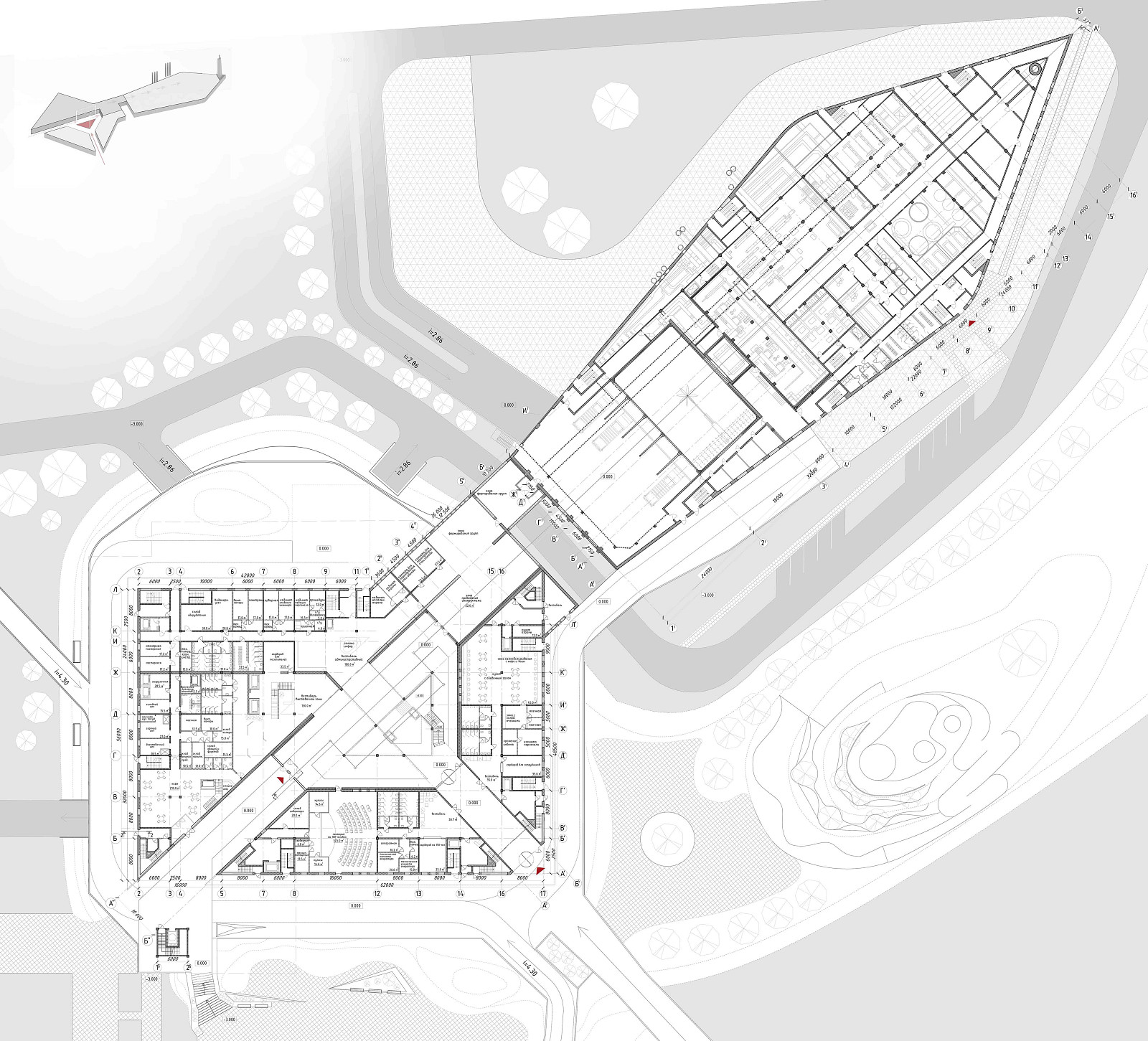
The special feature of the planning organization of the technopark consists in organizing connections between units. A refuse collection unit is located with a sanitary gap. 10 m from the public and scientific block.
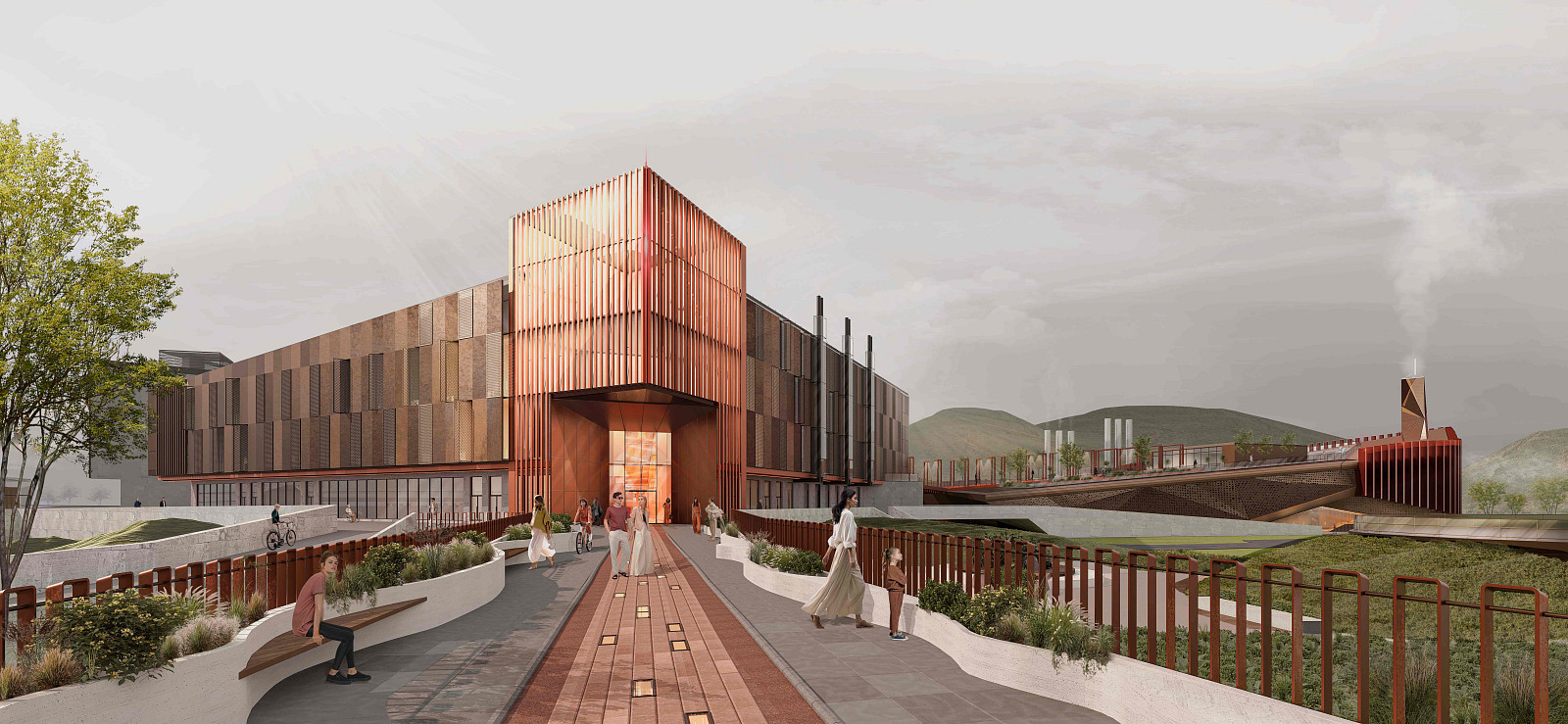
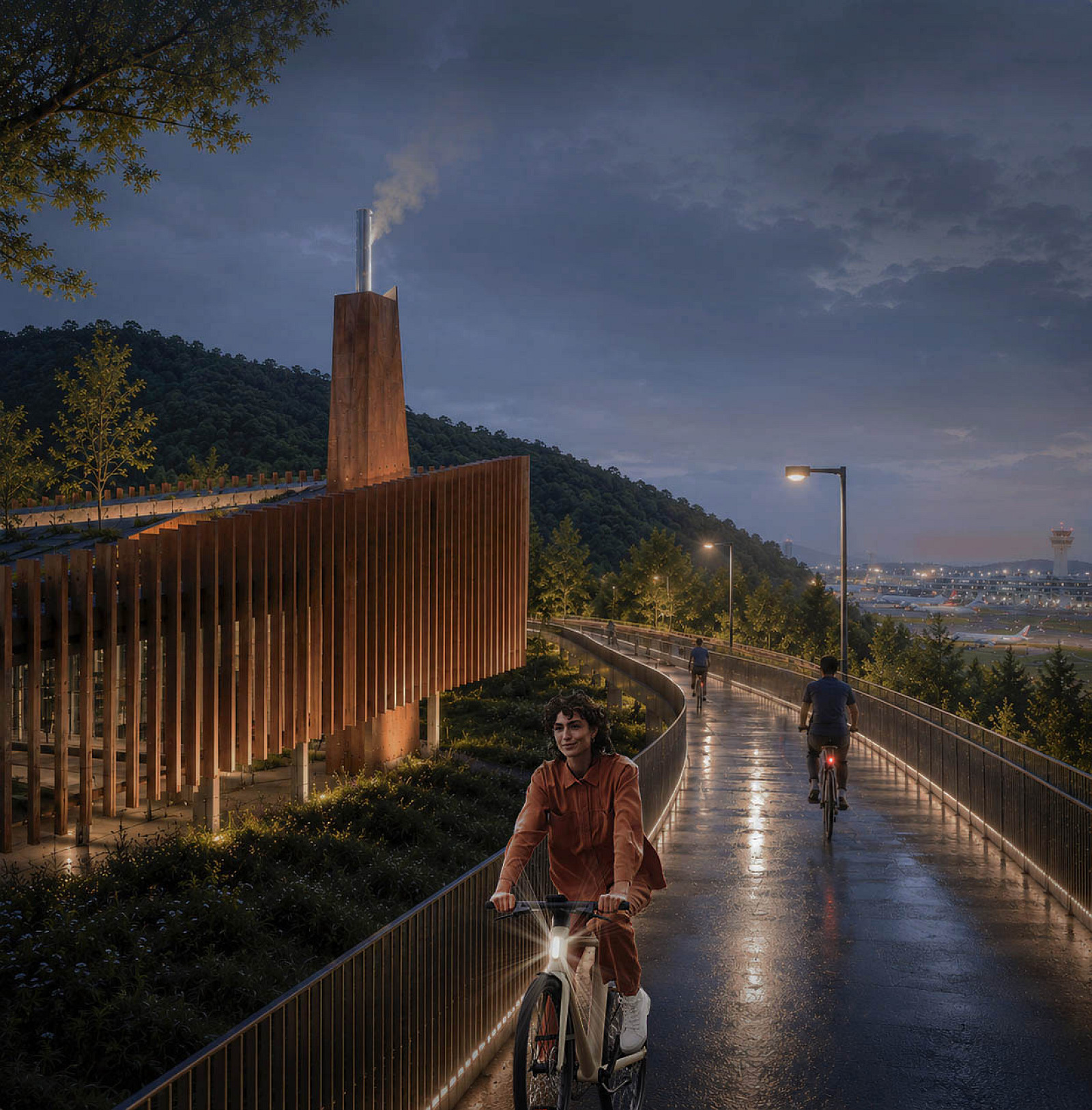
At the same time, communication is organized for excursions per object, by means of the glass gallery on the supports.
The shape of block 1 dictates the selected horizontal conveyor scheme of the recycling process.
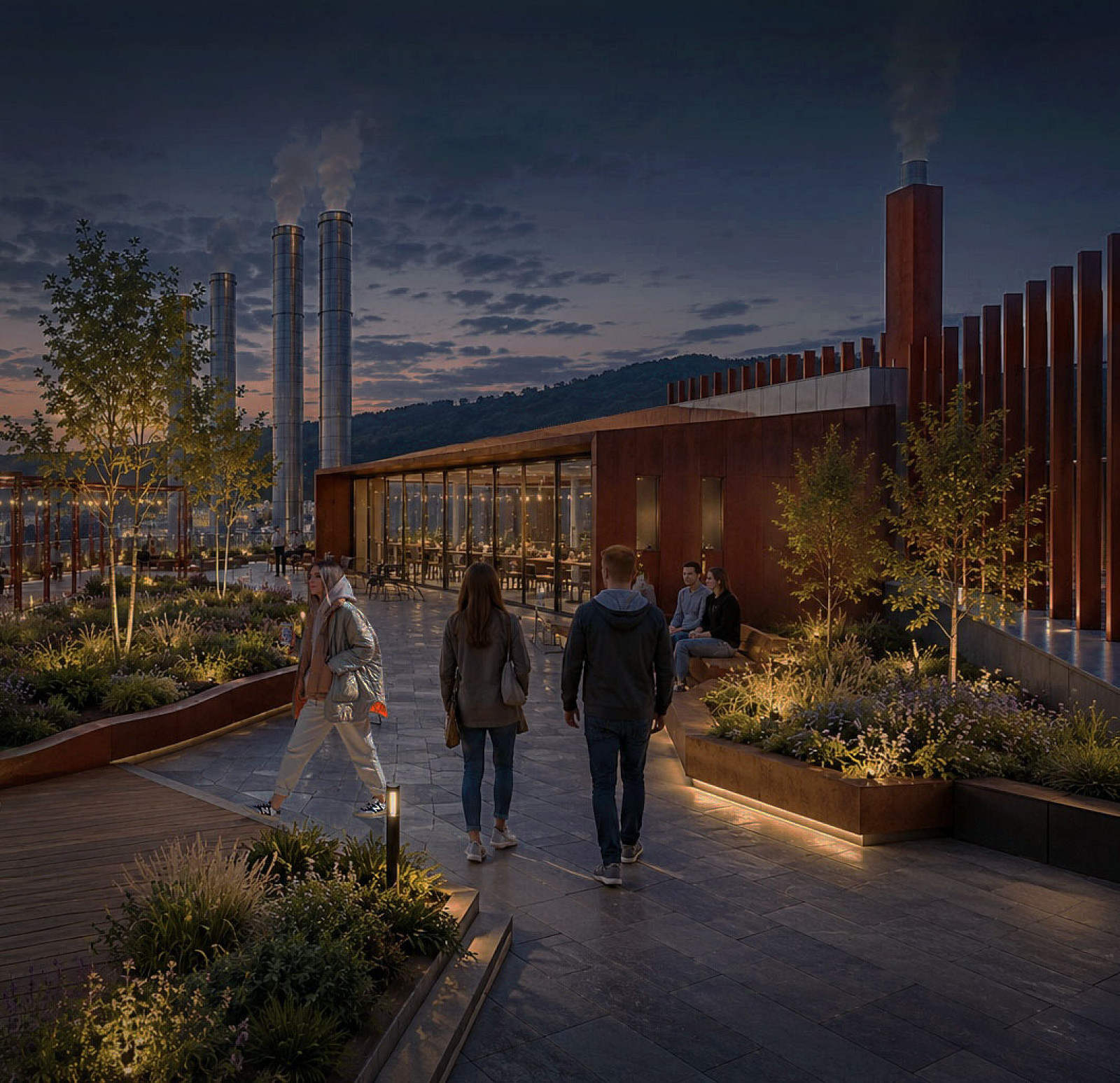
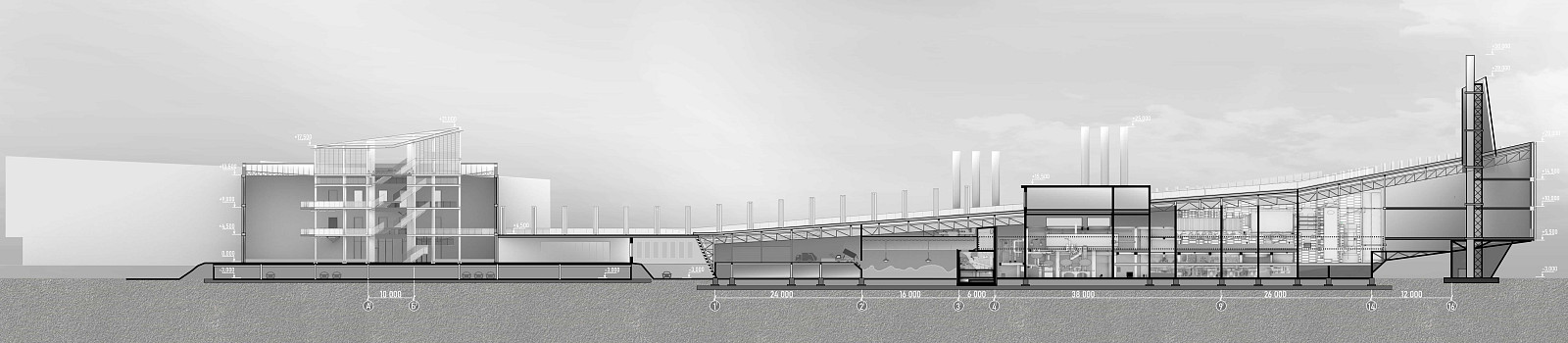
As a dominant, a technological pipe is located at the upward corner of the roof. The pipe is the main dominant, its top design mark is +25,000 m and is the highest.
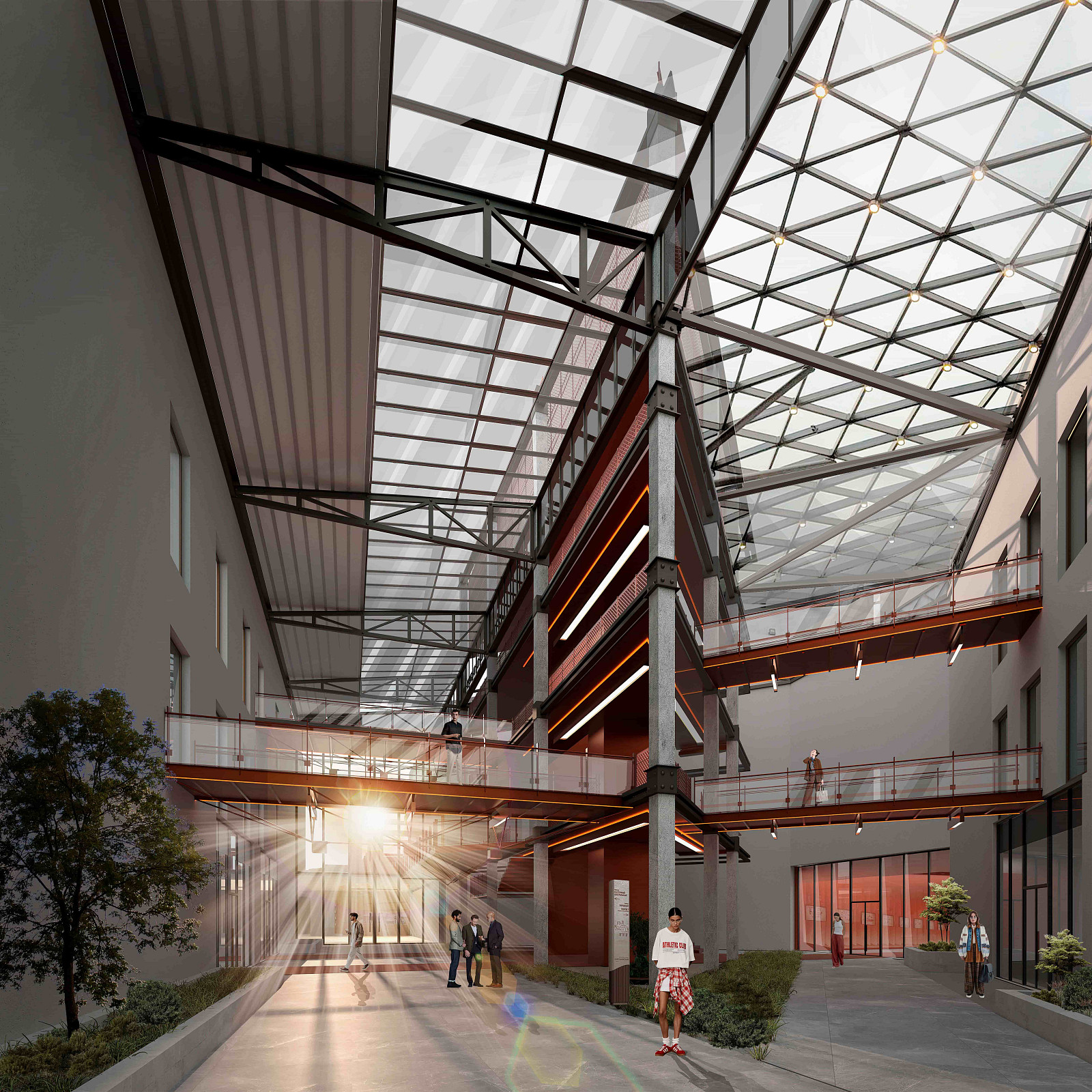
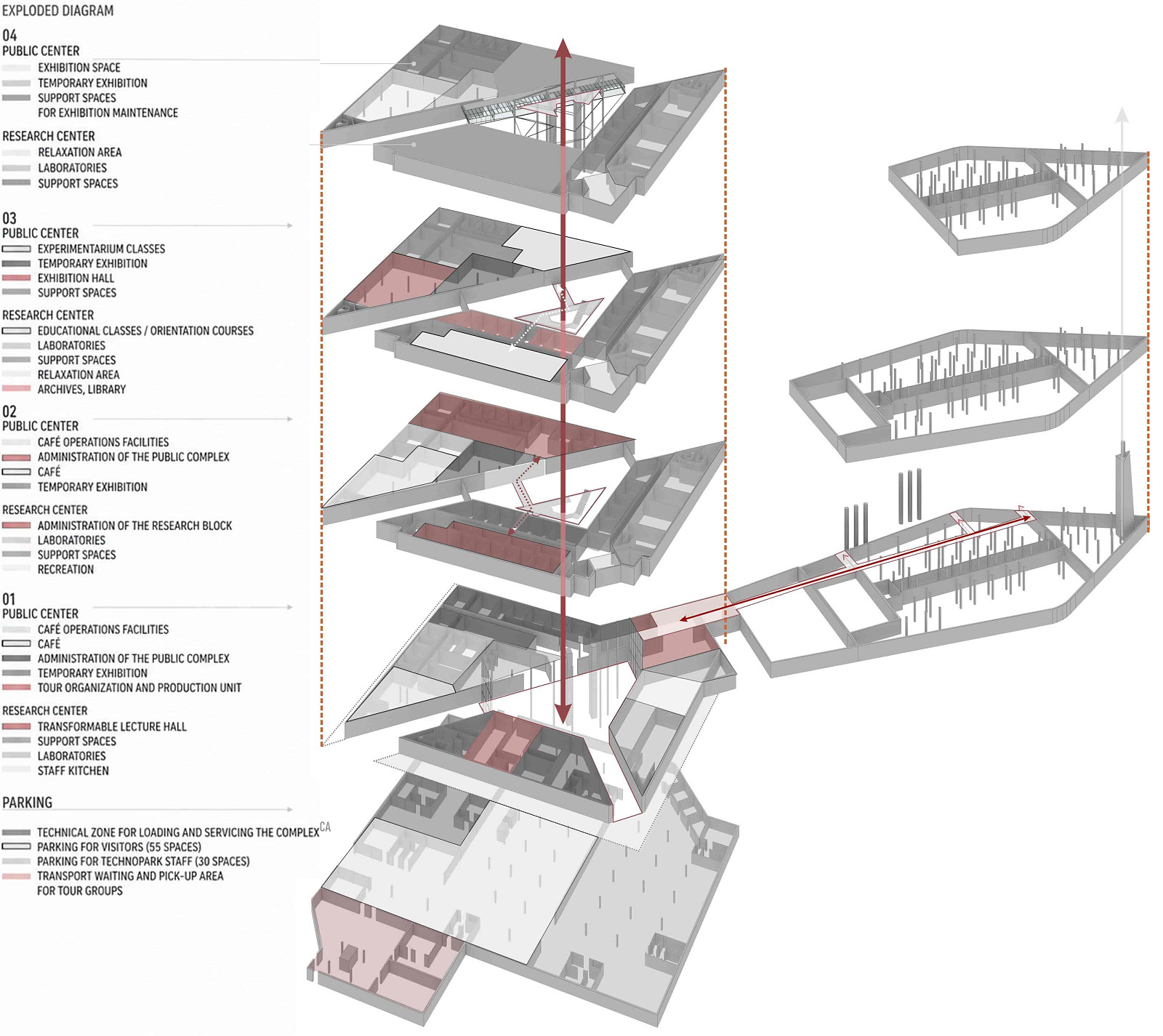
Block 2 and Block 3 are connected via the atrium with aerial transitions in different levels of floors. These transitions are not chaotic and aesthetic, but a functional-layout design. Thanks to the attribute with transitions, there is interaction between parts of the exposition in the public block and classes of career orientation in research.
The architectural and artistic image is represented by a dynamic form, but at the same time by restrained solutions of facades. The eco-stability of this complex is also achieved with the help of the operated roof, a landscaped park that is located on the roof of the processing unit. The roofs of blocks 2 and 3 are also operable and differential-oblique, which also creates image dynamism.
The functional layout of an object has a complex structure that provides for both horizontal and vertical connections. The entire facility environment aims to improve people’s education in waste management.
Technical information
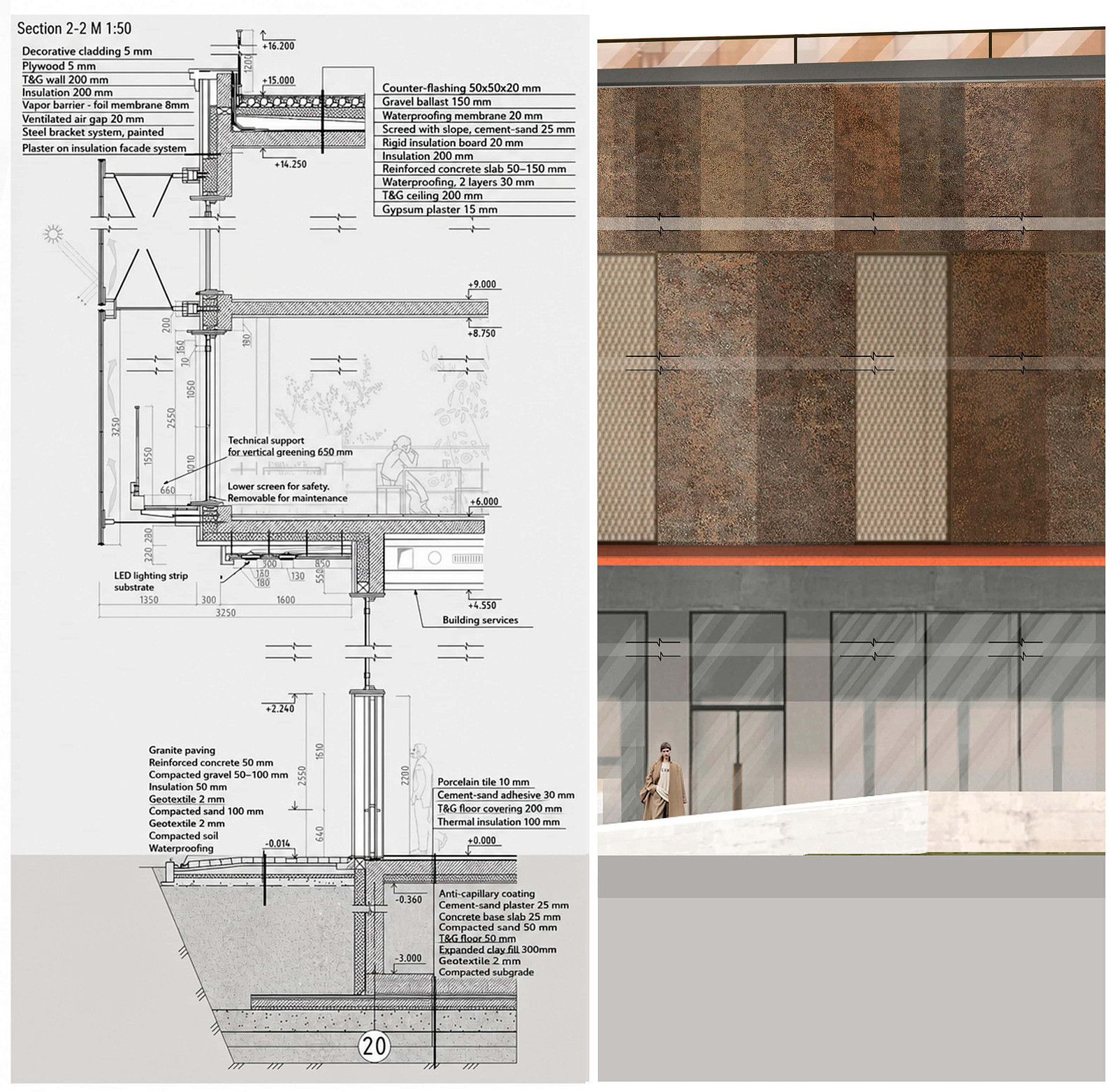
Volume planning solution of the object directly depends on functional assignment. According to the concept, a technopark means having large areas with free planning, in addition to regular premises - classrooms, laboratories, offices, with stable dimensions of the premises. The design scheme is an incomplete framework. An anaerobic recycling unit is organized in the waste disposal unit with a hermetic chamber. The chamber is a monolithic reinforced concrete cube, and the structure of the chamber is independent. Based on the architectural and planning solutions of the project, the roof of the entire complex is in operation. The rubbish bin shed is a park area, therefore operated with intensive greening. The pitch of the roof is variable, for the arrangement of the park area the pitch of the roof is 80, for the arrangement of the technical part of the roof. With the maintenance of the pipe and air intakes, a gradient 10-120 is arranged.
On the roof at a distance of 1,000 mm along the perimeter from the edge of the roof, a park area is established with intense greening.


Copyright © 2026 INSPIRELI | All rights reserved. Use of this website signifies your agreement to the Terms of Use, Privacy Policy, and use of cookies.
