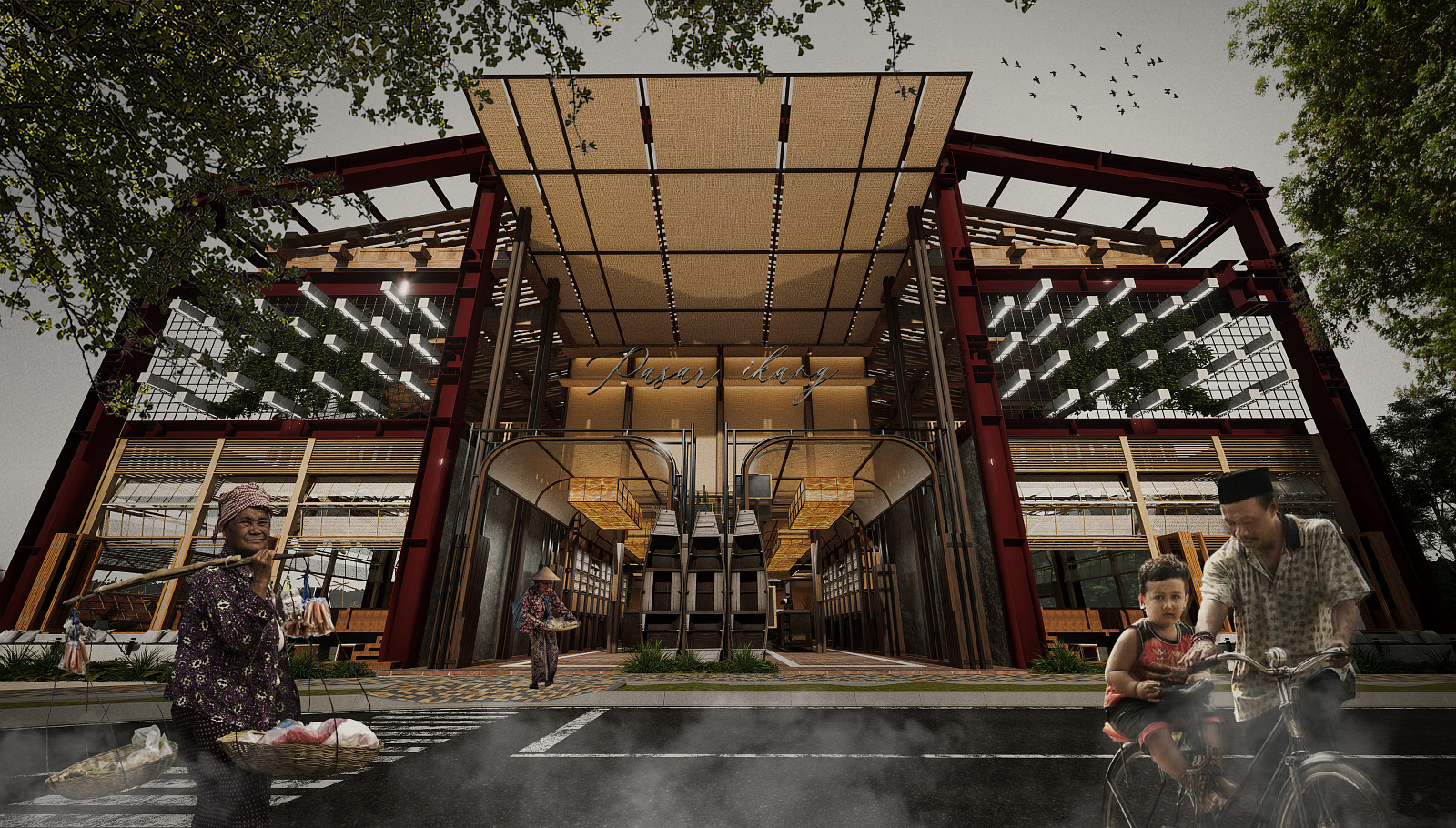
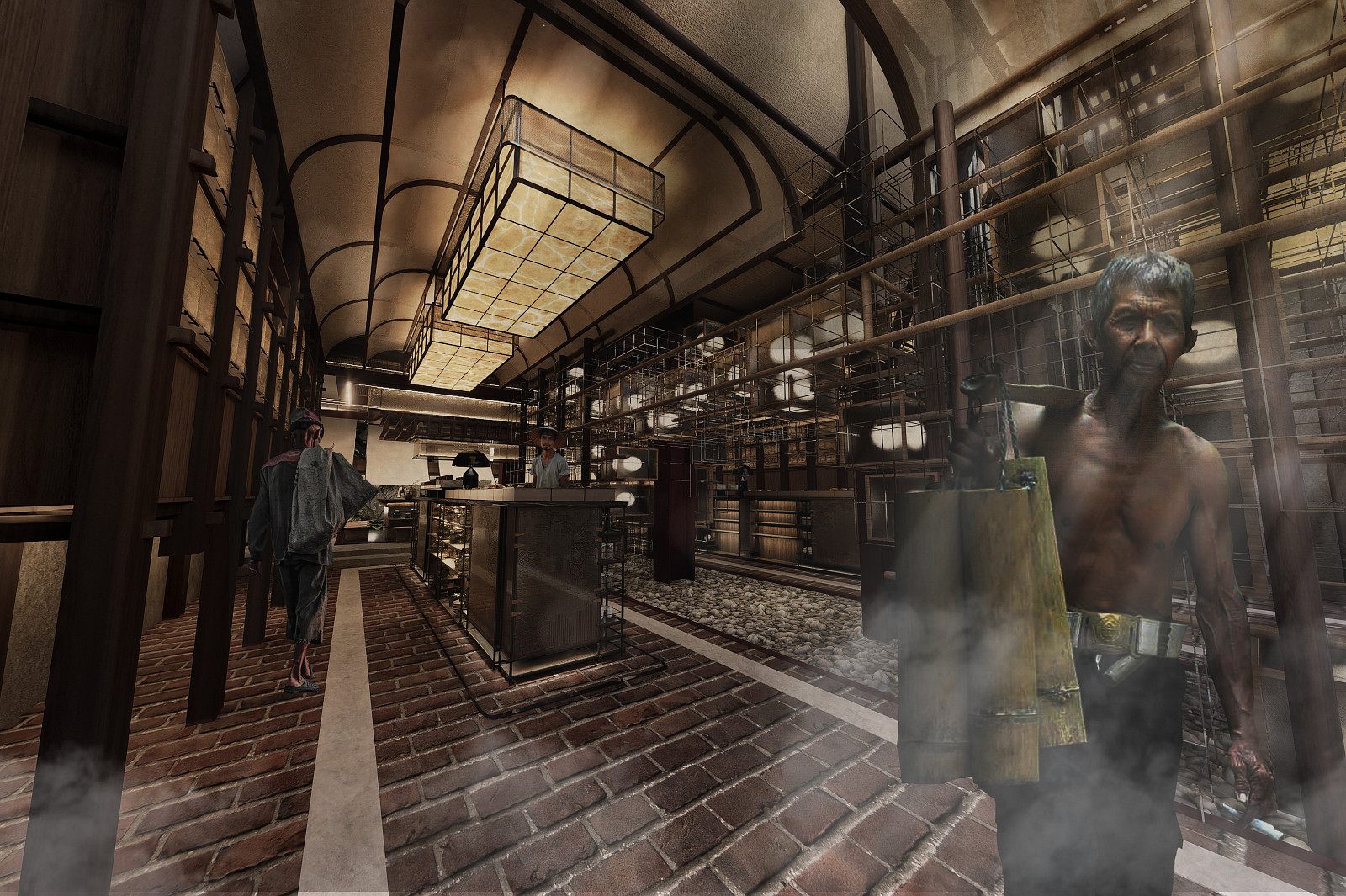
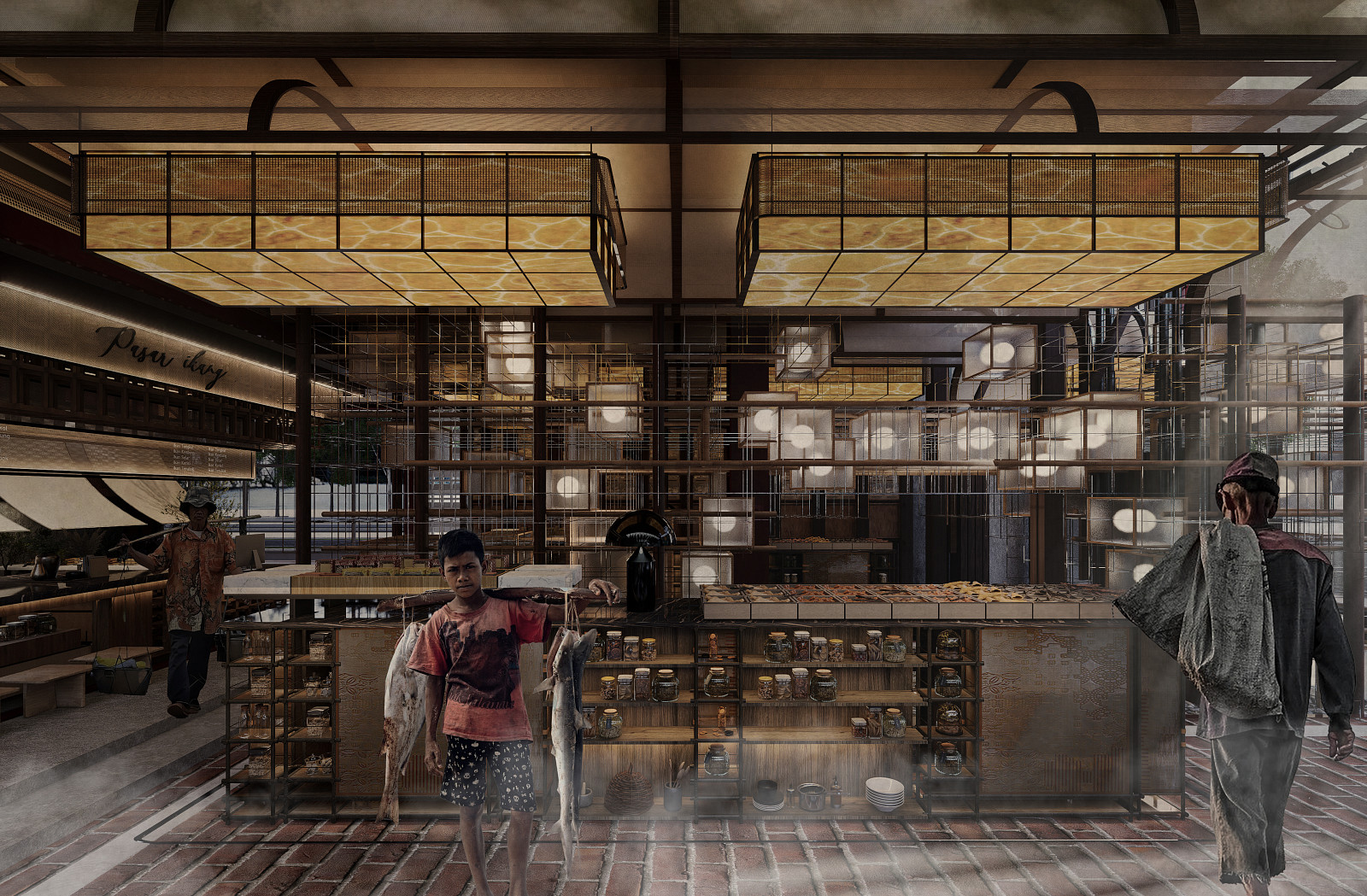
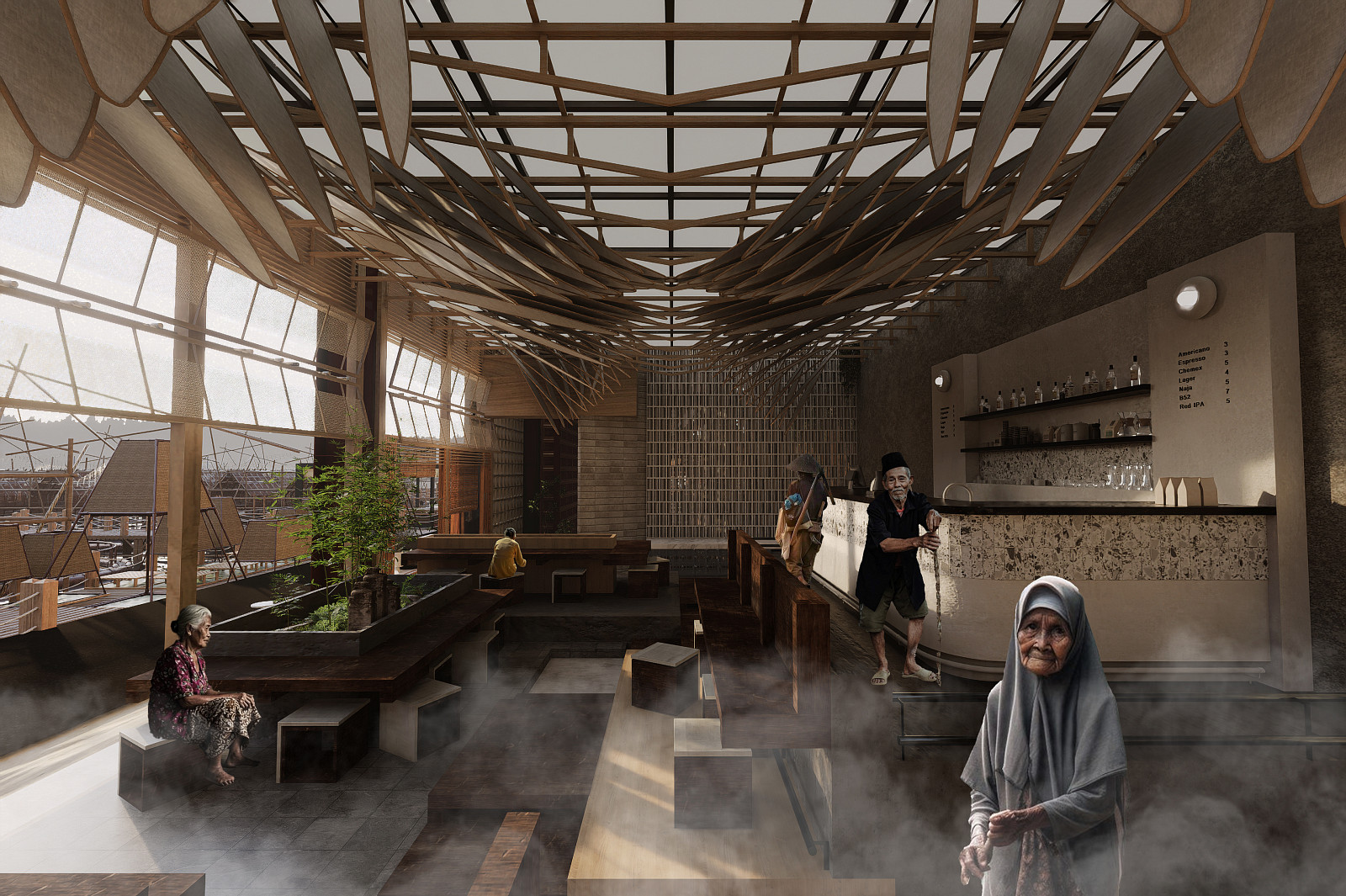
PASAR IKANG


 Muzamil Mutalib
Project idea
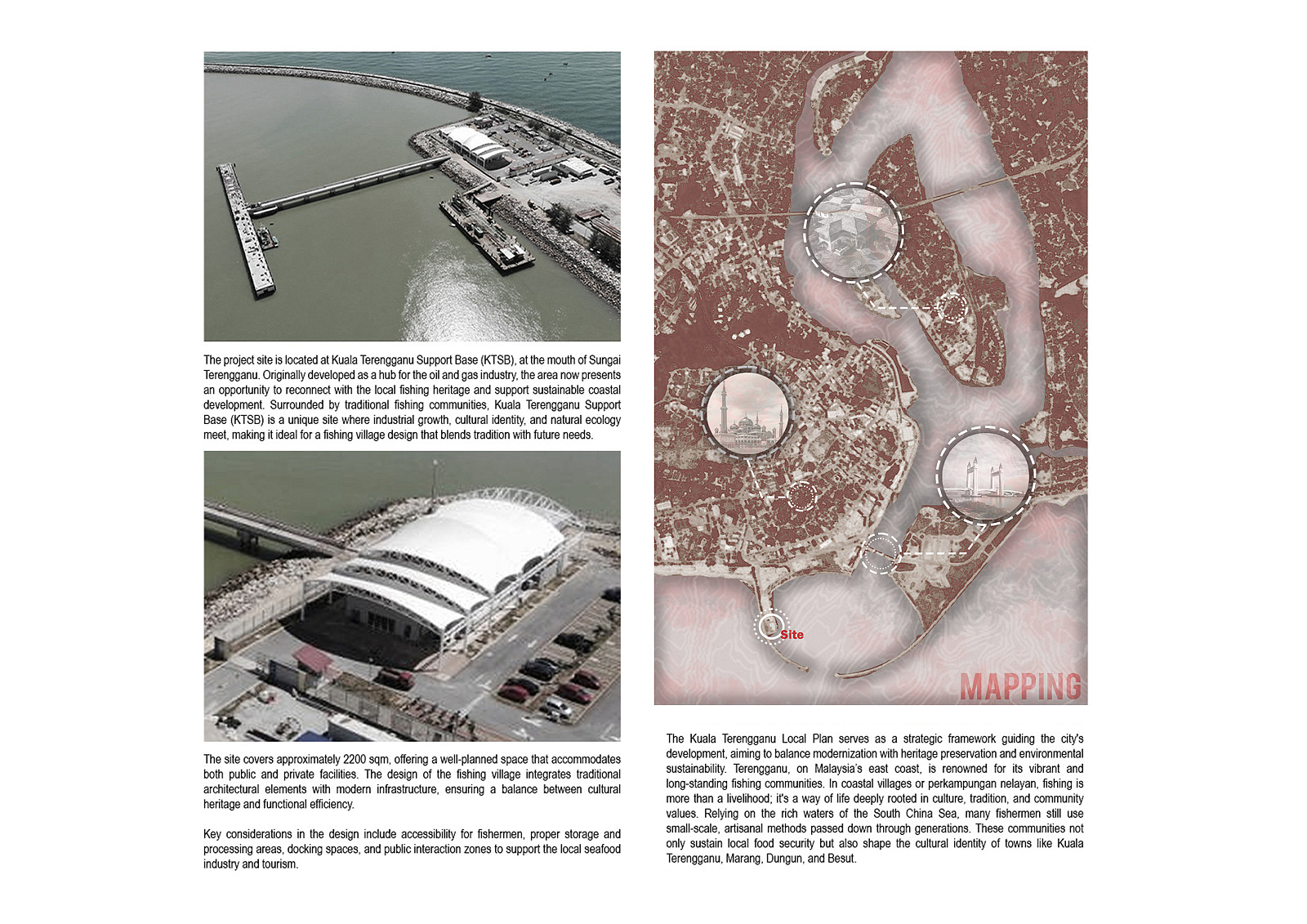
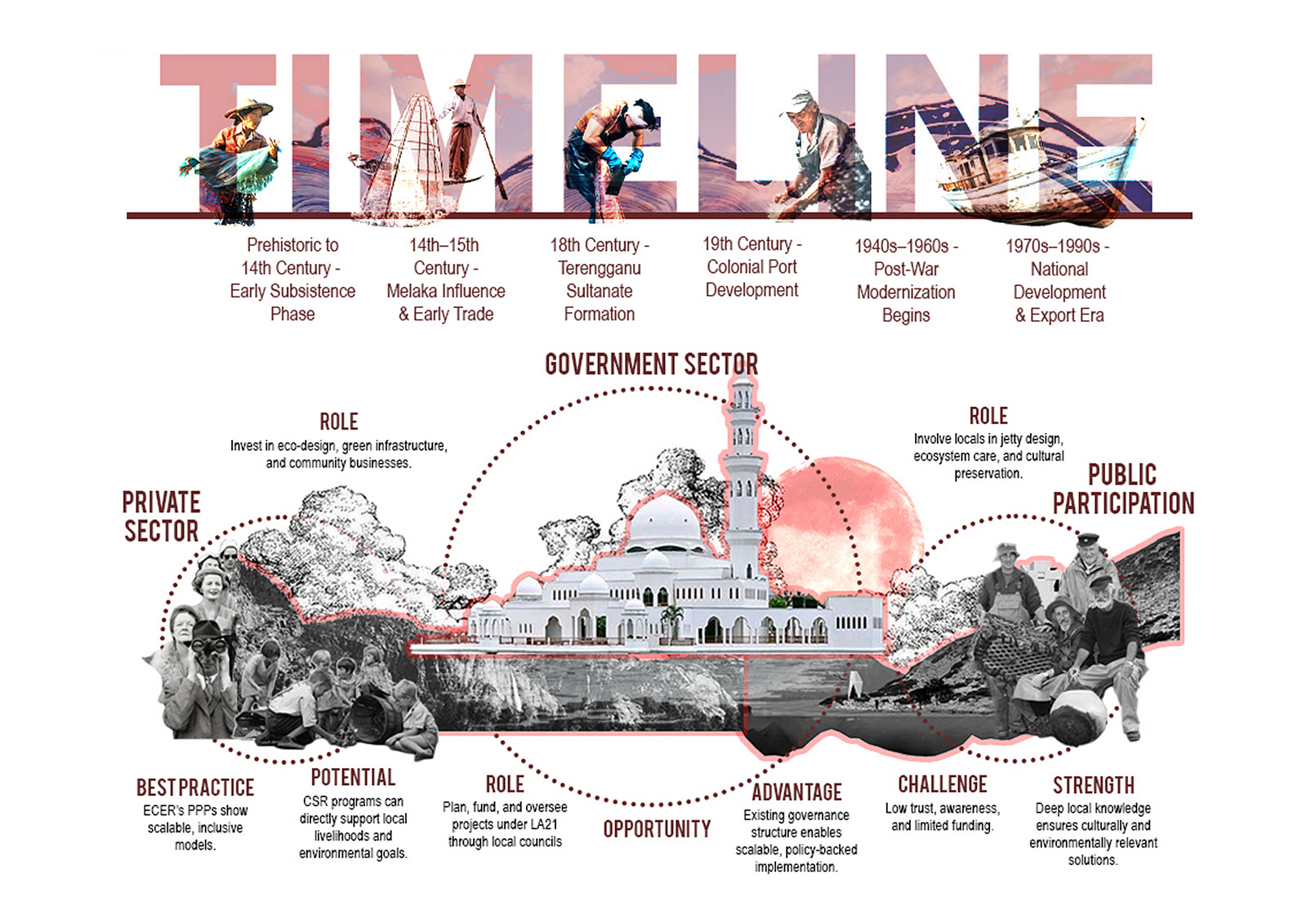
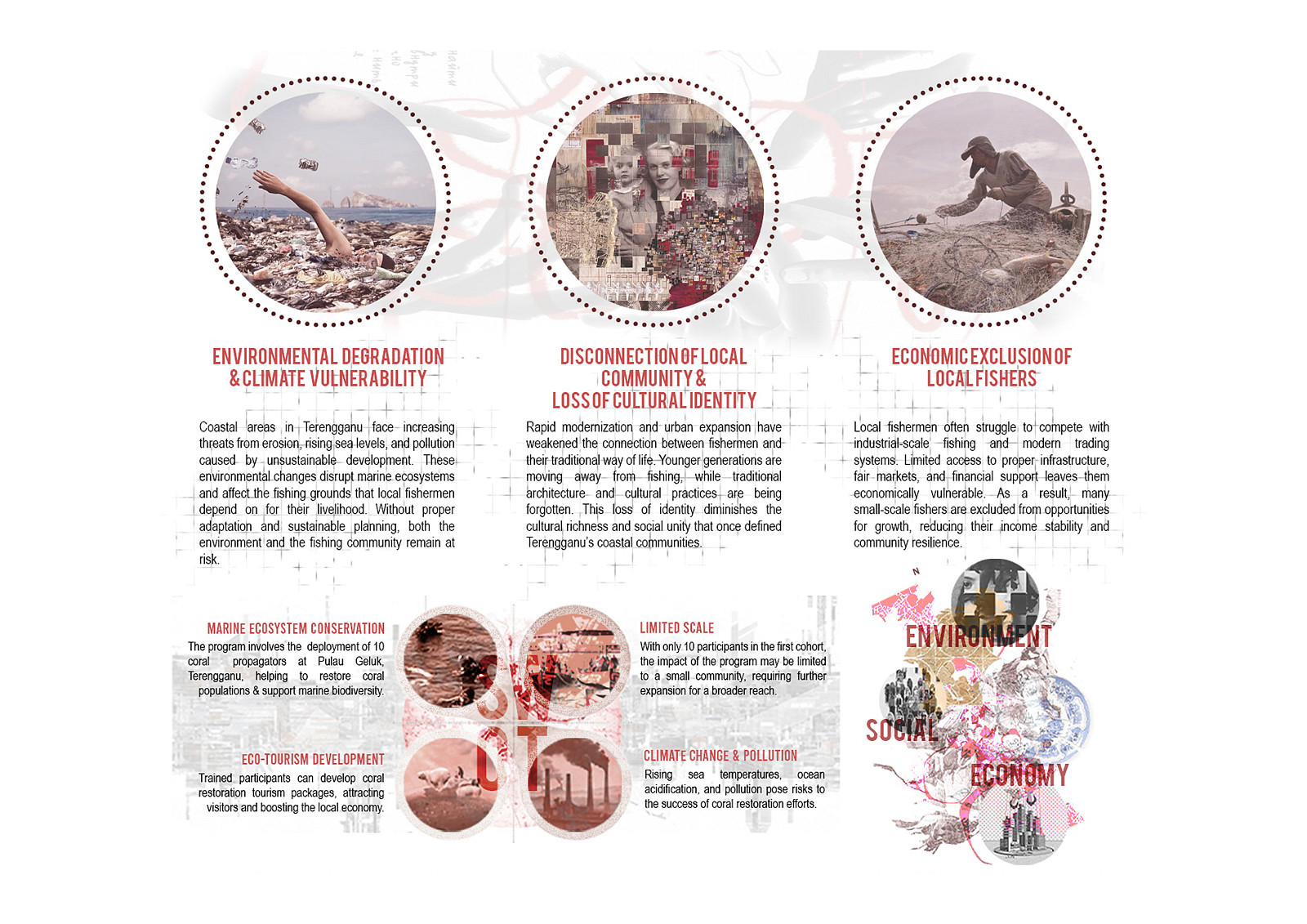
Through research, there are two interconnected challenges faced by site and community.
First – Cultural disconnection and identity loss. Where the younger generations are leaving the fishing industry. Leaving the traditional crafts behind such as boatbuilding, net weaving, and fish-drying.
Second – Local economic. Small-scale fishermen lack of facilities. Because of that they depend on middlemen and lose control over their income.
Design Concept:
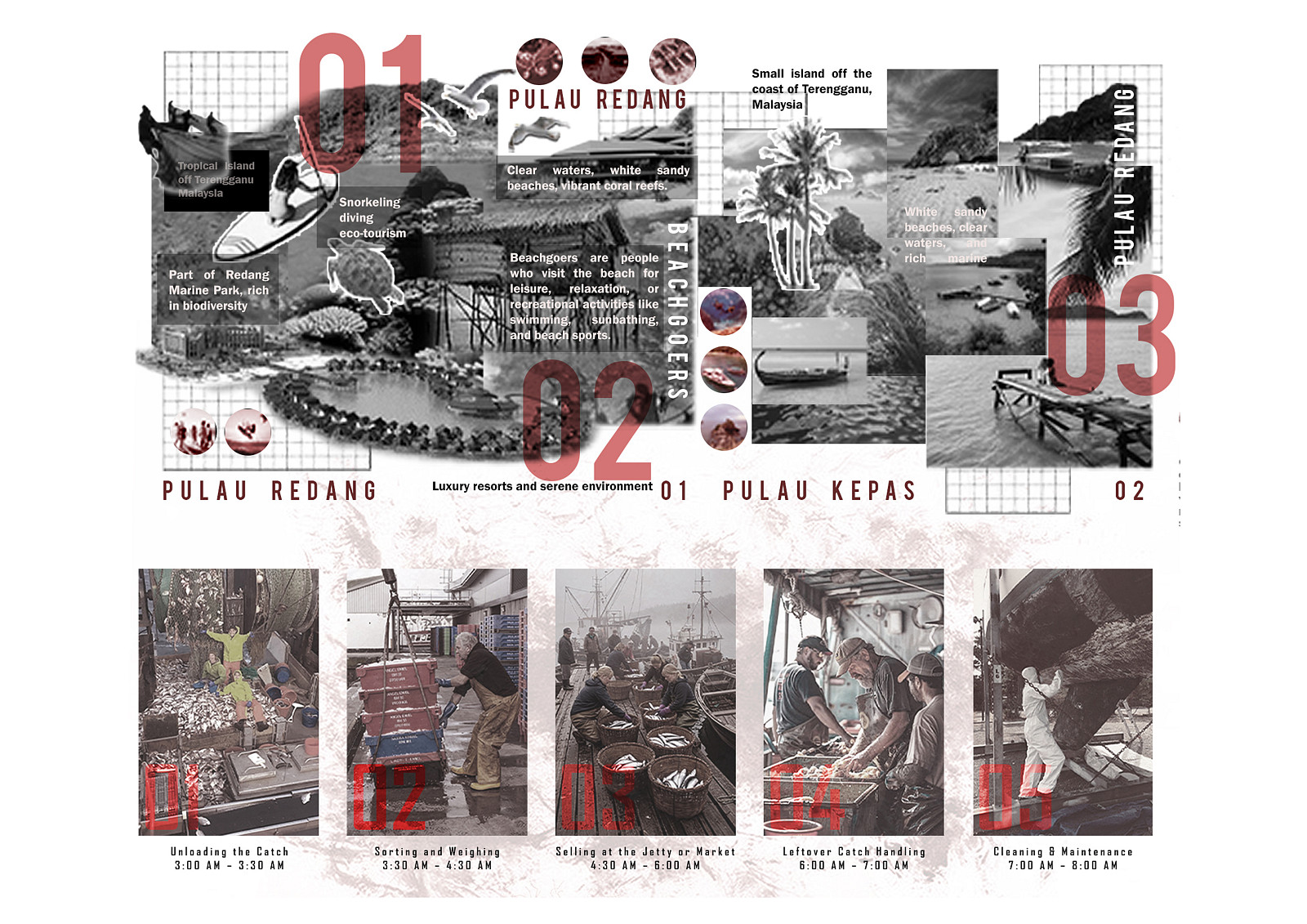
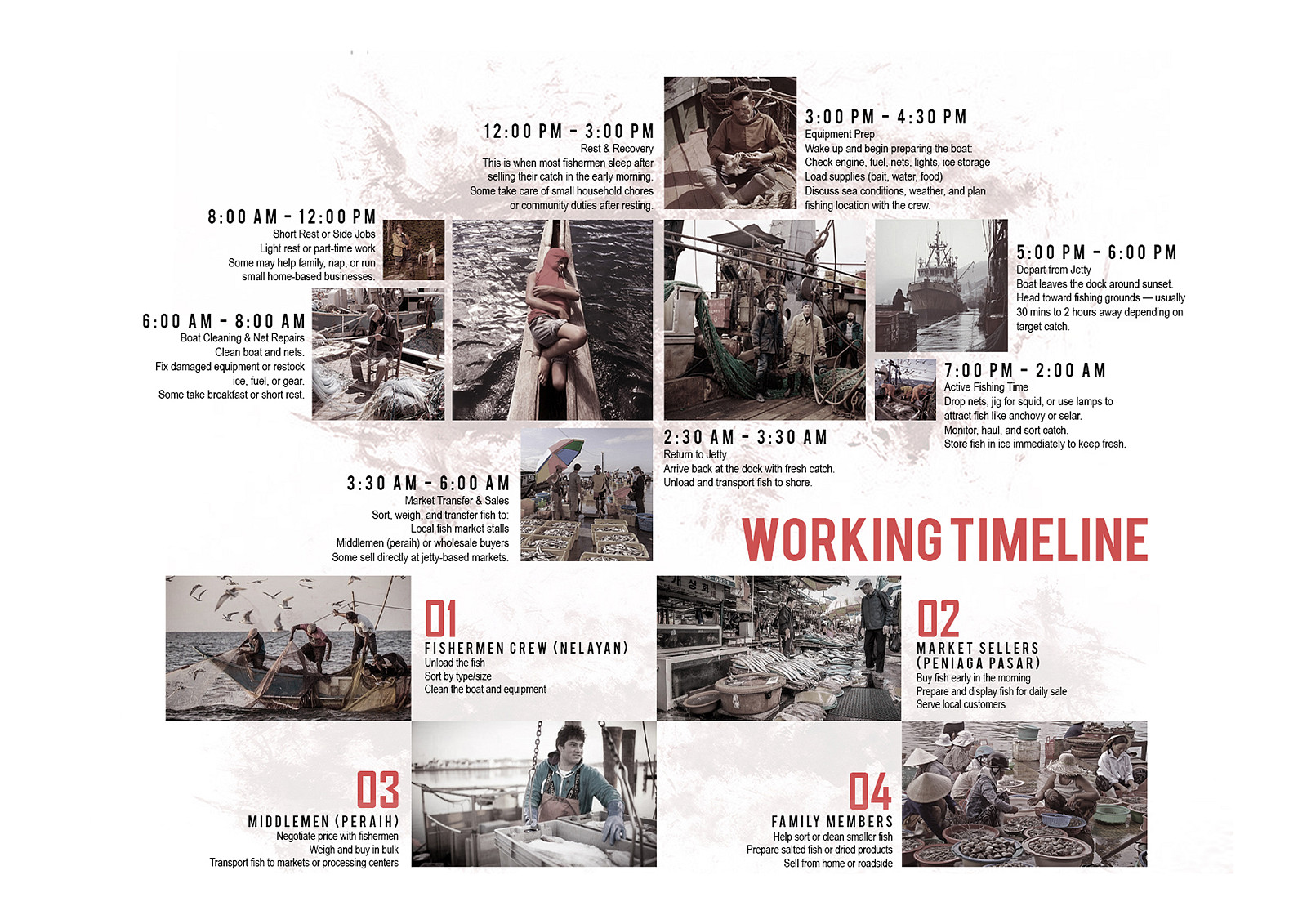
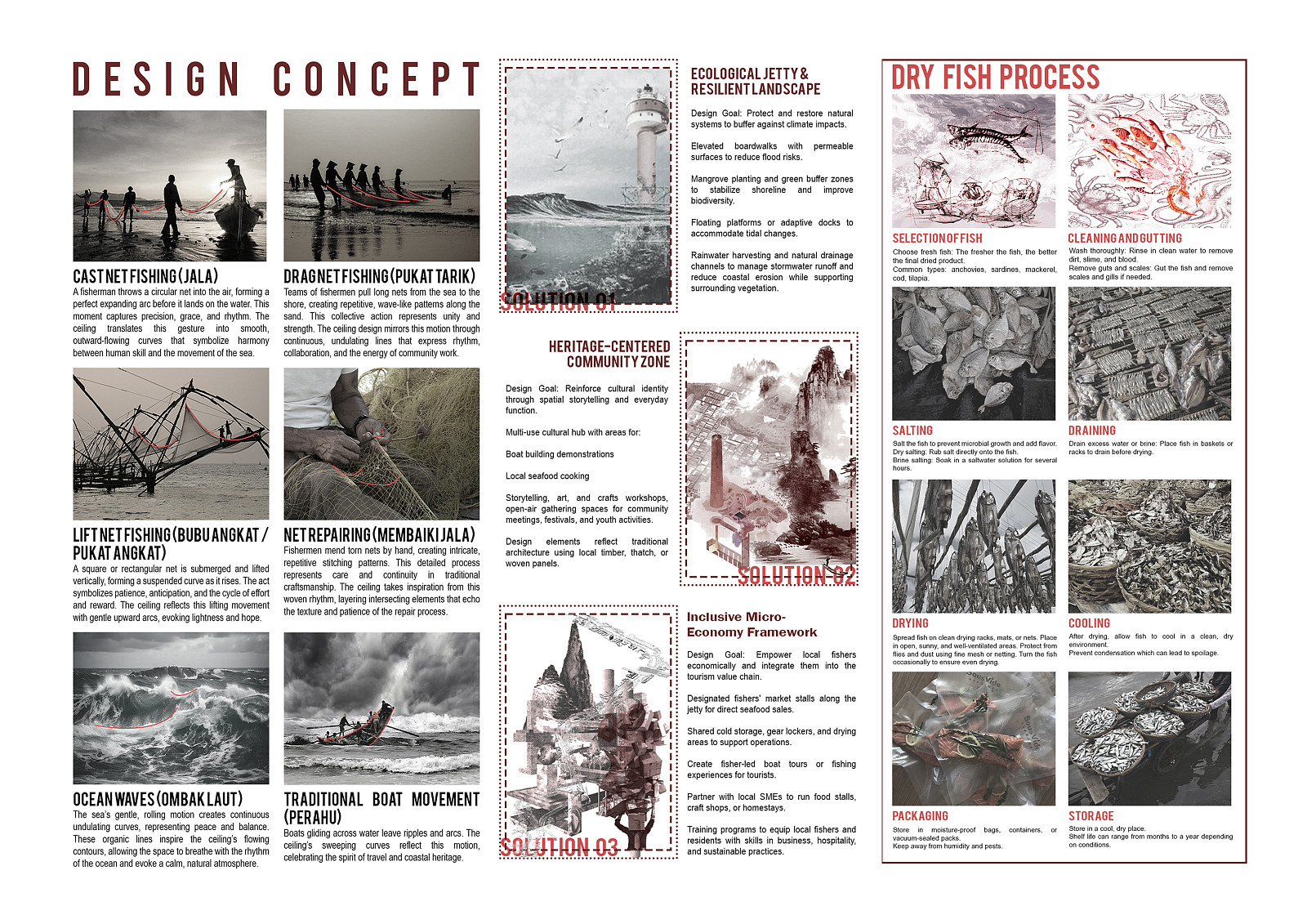
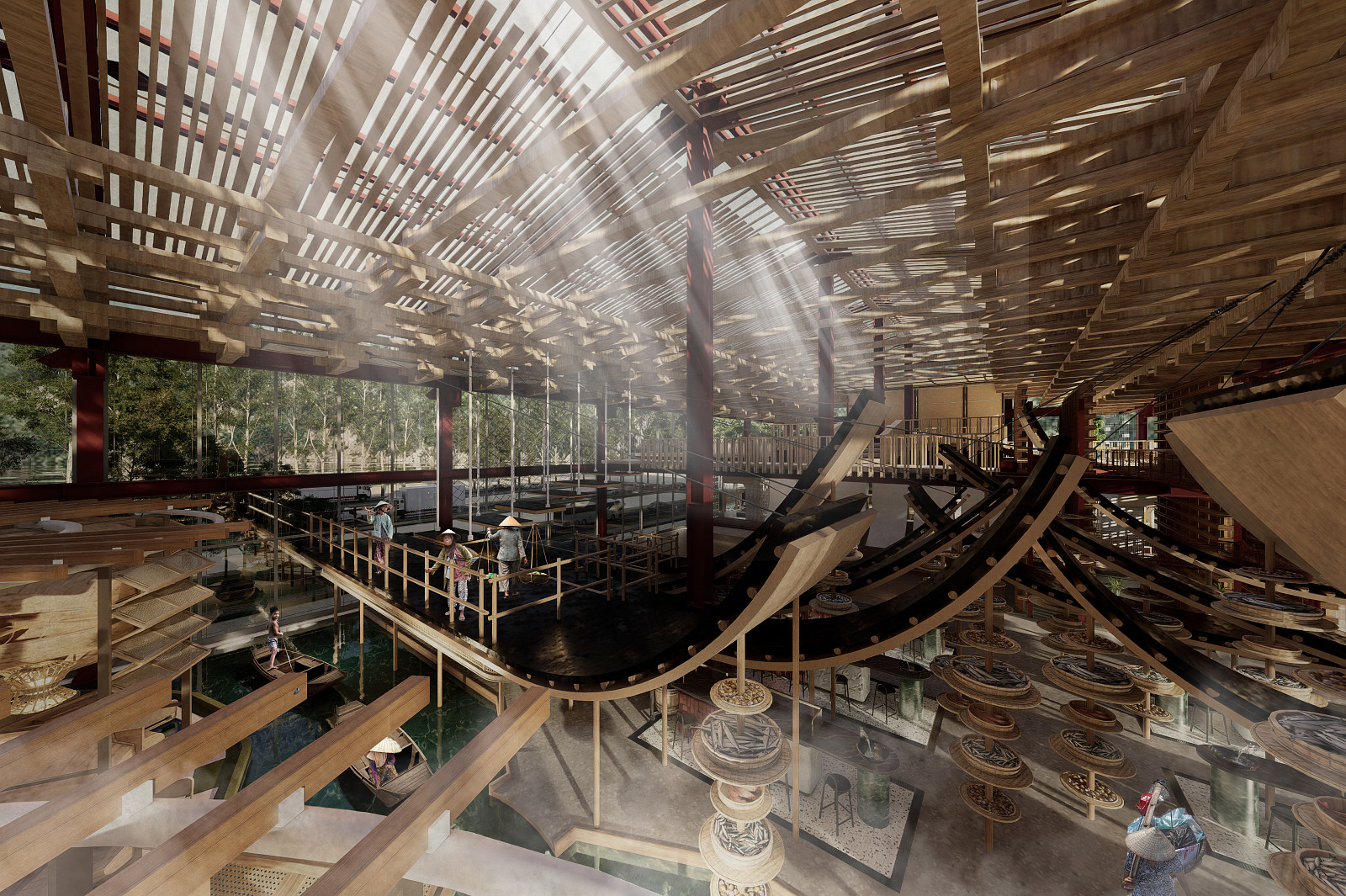
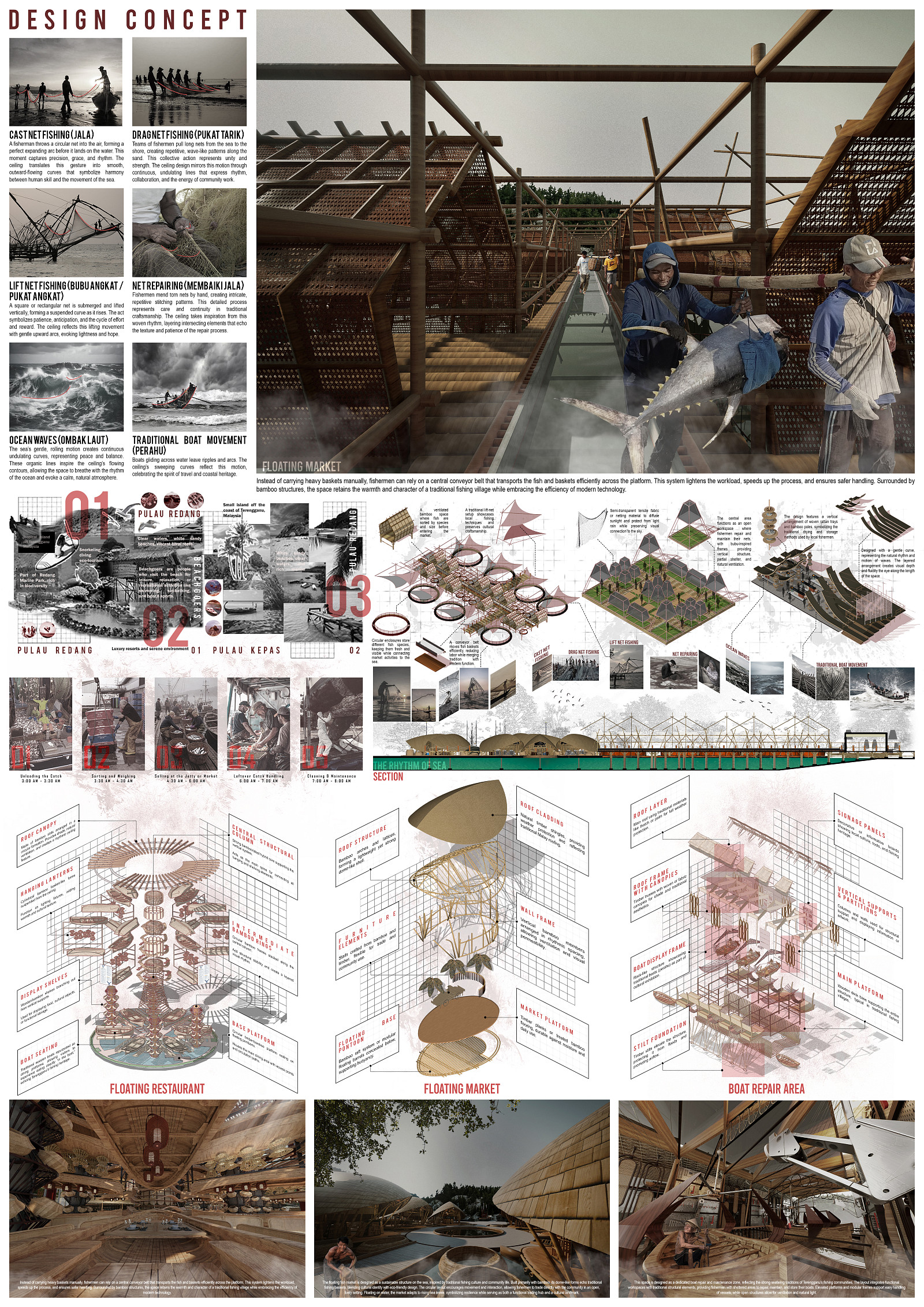
The design takes inspiration from the daily rhythm of the fishermen, from the first glow of boats at 3 AM to the scent of fresh catch at sunrise. Each architectural form embodies a fragment of their life at sea, the curve of the casting net, the rhythm of the drag net, the texture of the woven net, and the subtle motion of the waves. Together, these expressions shape the architectural language of PASAR IKANG, a space that connects tradition, craft, and the coastal spirit of Terengganu.
Project description
Proposed Design Solutions
1. Cultural Preservation and Heritage Revitalization:
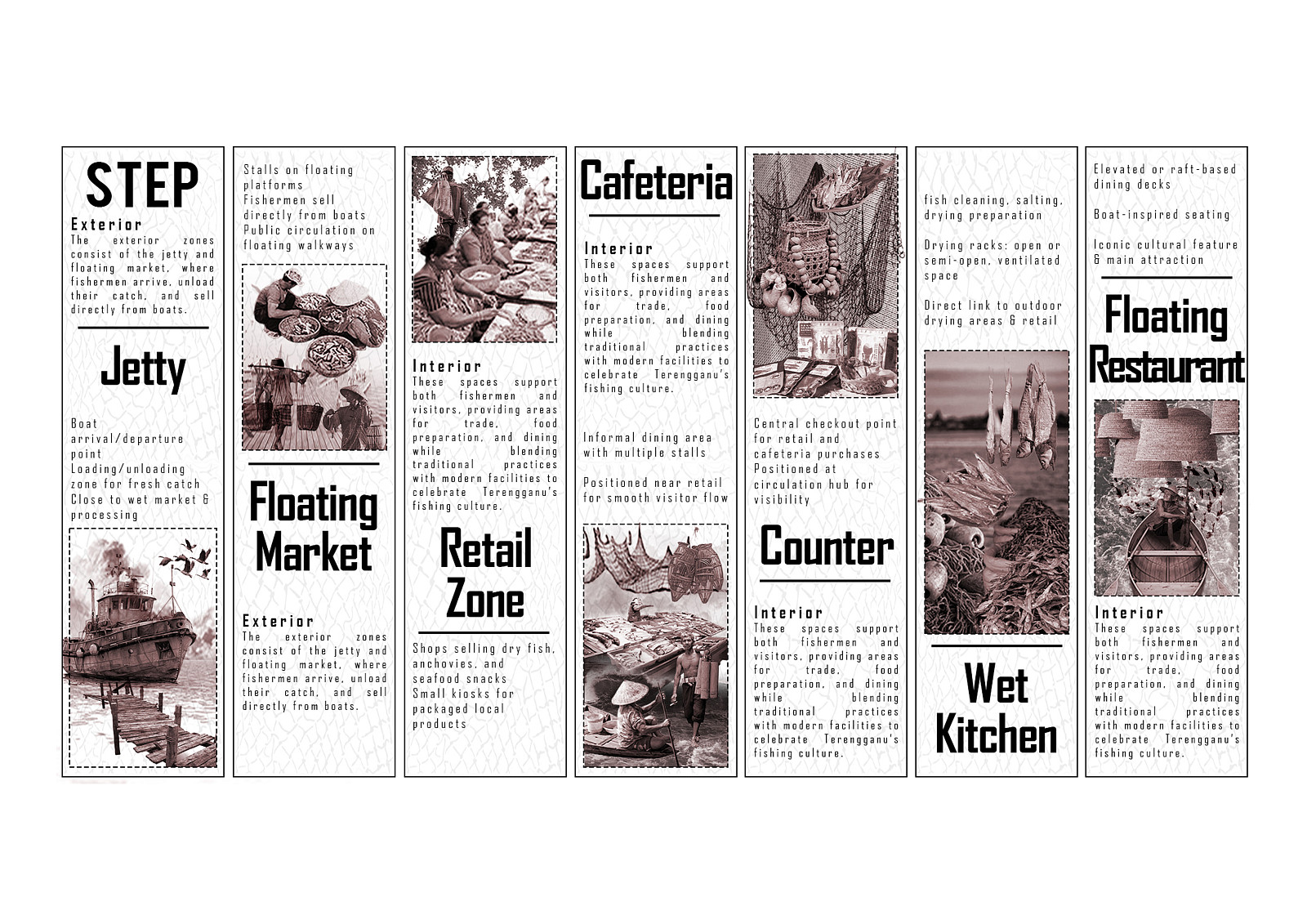
To address the declining interest among younger generations in the fishing industry and the gradual loss of traditional fishing heritage, Pasar Ikang will function as a cultural hub that celebrates and preserves Kuala Terengganu's fishing identity.
Proposed Facilities:
Boat Repair and Demonstration Area:
A dedicated space where visitors can observe traditional boat repair and maintenance activities carried out by local fishermen. Serves as an educational platform to showcase local craftsmanship and maritime heritage.
Traditional Fish Processing Viewing Area:
An interactive zone that allows visitors to witness the traditional fish-drying process. Educational displays and demonstrations help communicate local knowledge and cultural practices to younger generations and tourists.
Cultural Interpretation Spaces:
Exhibition panels and storytelling installations that highlight the history of Kuala Terengganu's fishing communities, traditional fishing methods, and local maritime culture. Creates awareness and appreciation of the community's heritage while strengthening local identity.
2. Economic Empowerment of Local Fishermen
To improve the economic sustainability of small-scale fishermen, Pasar Ikang provides facilities that enable direct sales, value-added production, and diversified income opportunities, reducing dependence on middlemen.
Proposed Facilities:
Retail Market Area:
Spaces for fishermen and local entrepreneurs to sell dried fish products, seafood-based snacks, souvenirs, and other locally made products directly to consumers. Supports local businesses while increasing fishermen's profit margins.
Dry Fish Processing Area:
A dedicated processing facility equipped for cleaning, drying, packaging, and storing fish products. Improves product quality, hygiene standards, and market value.
Seafood Restaurant:
A dining space that promotes fresh local seafood sourced directly from fishermen. Creates a stable demand for local catches while enhancing visitor attraction.
Local Snack Cafeteria
Cafeteria featuring traditional Terengganu snacks such as keropok lekor, sata, otak-otak, and other local delicacies. Generates additional economic opportunities for local food vendors and small businesses.
Technical information
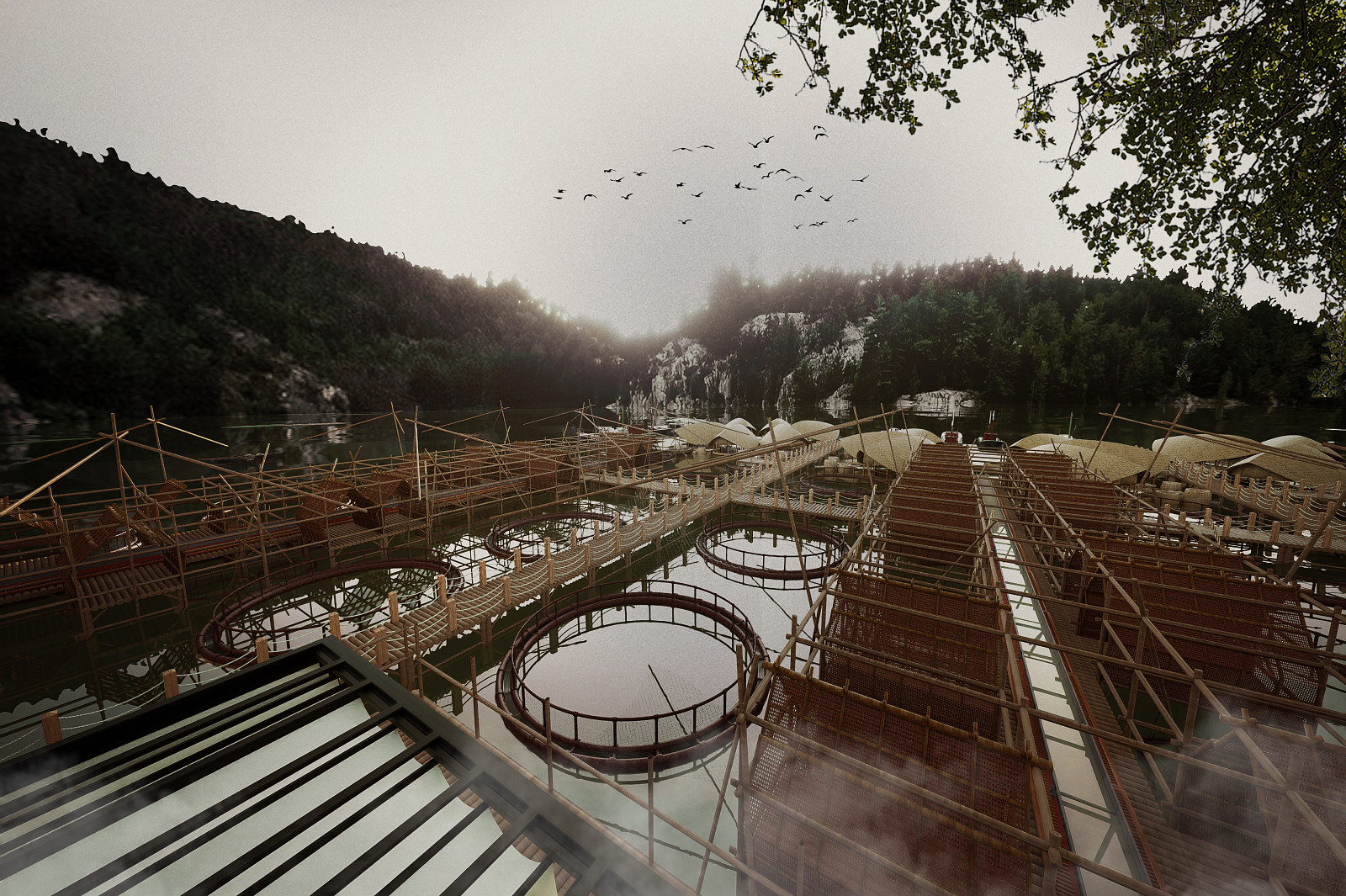
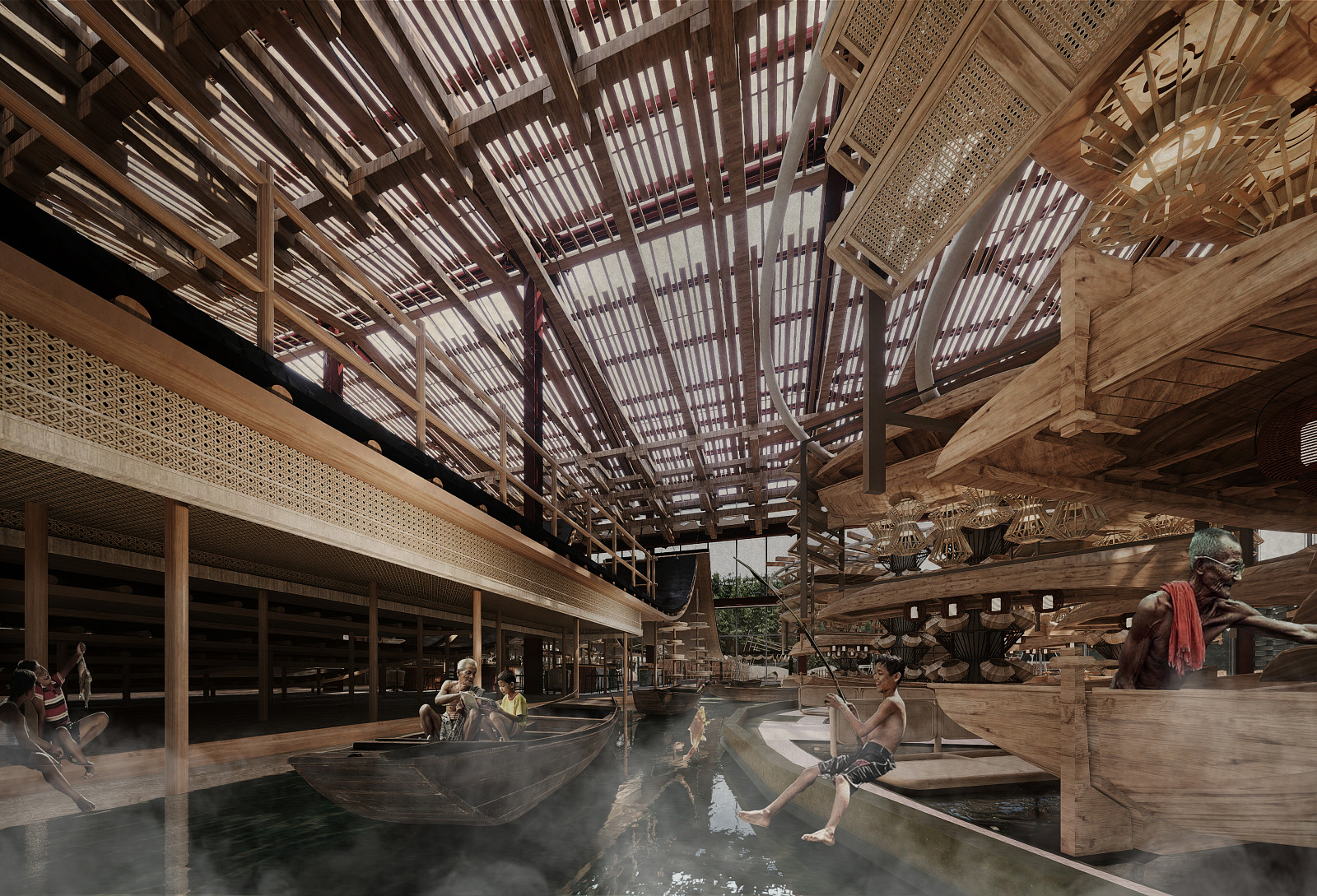
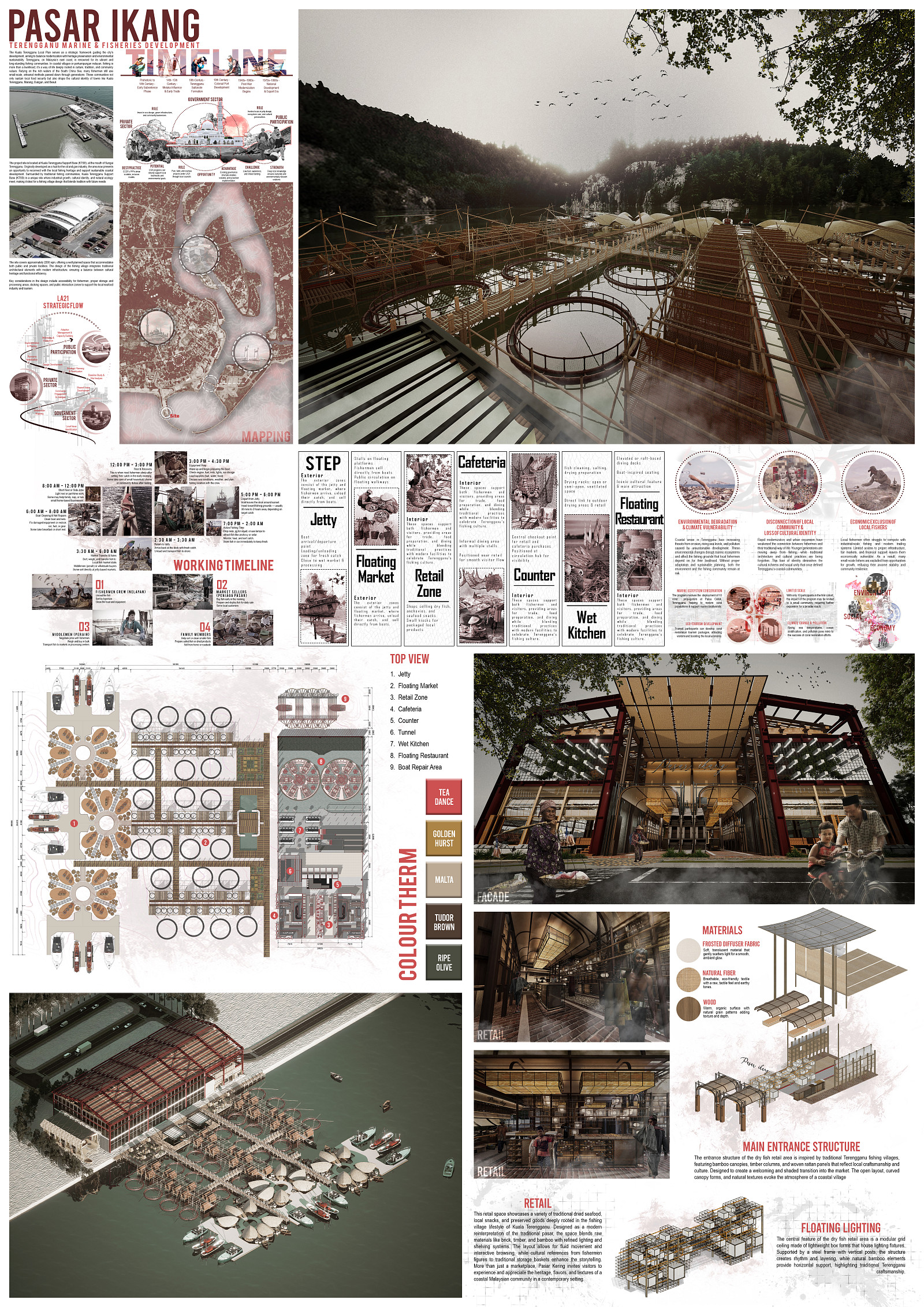
Kelong Ganu
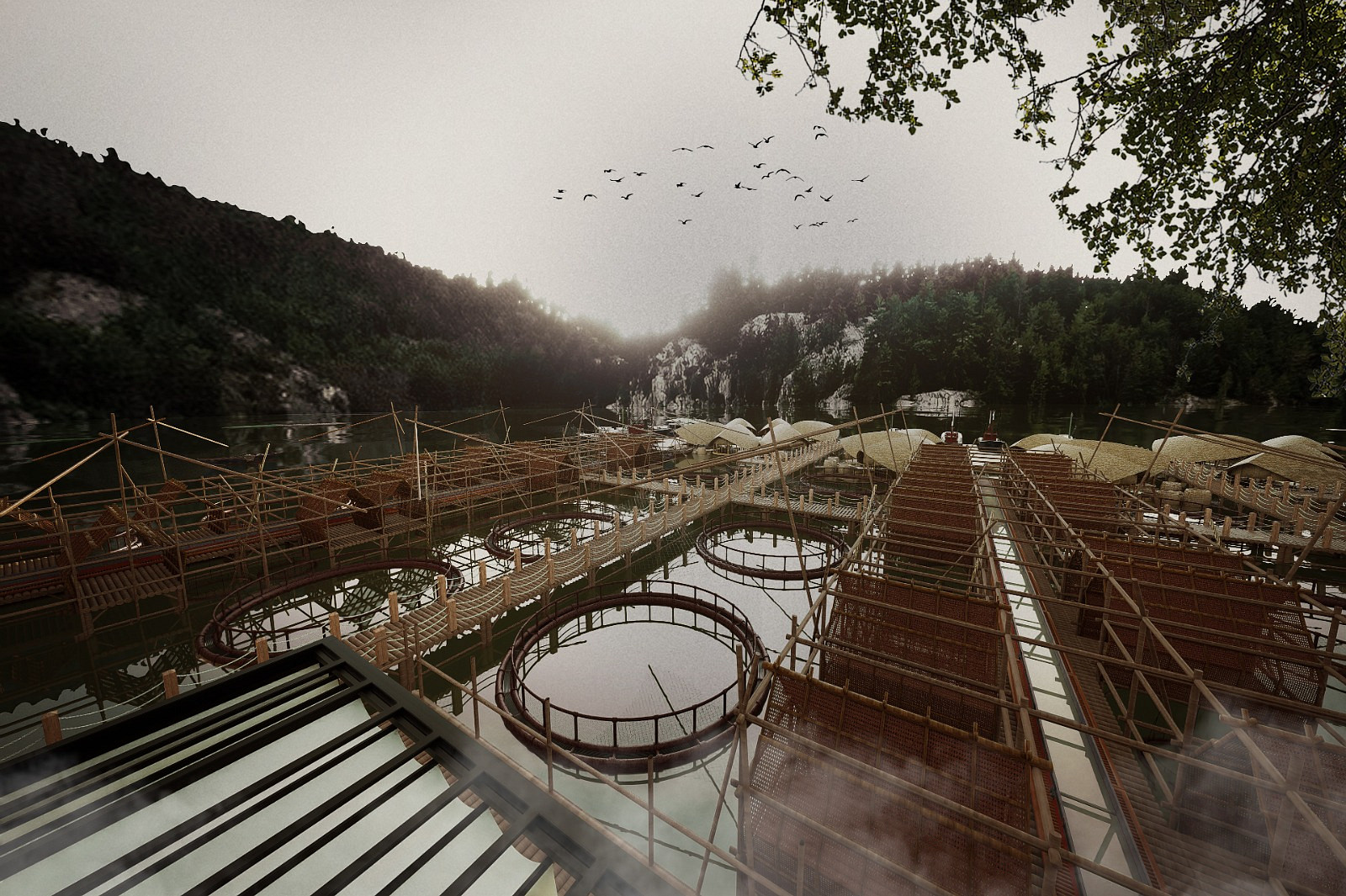
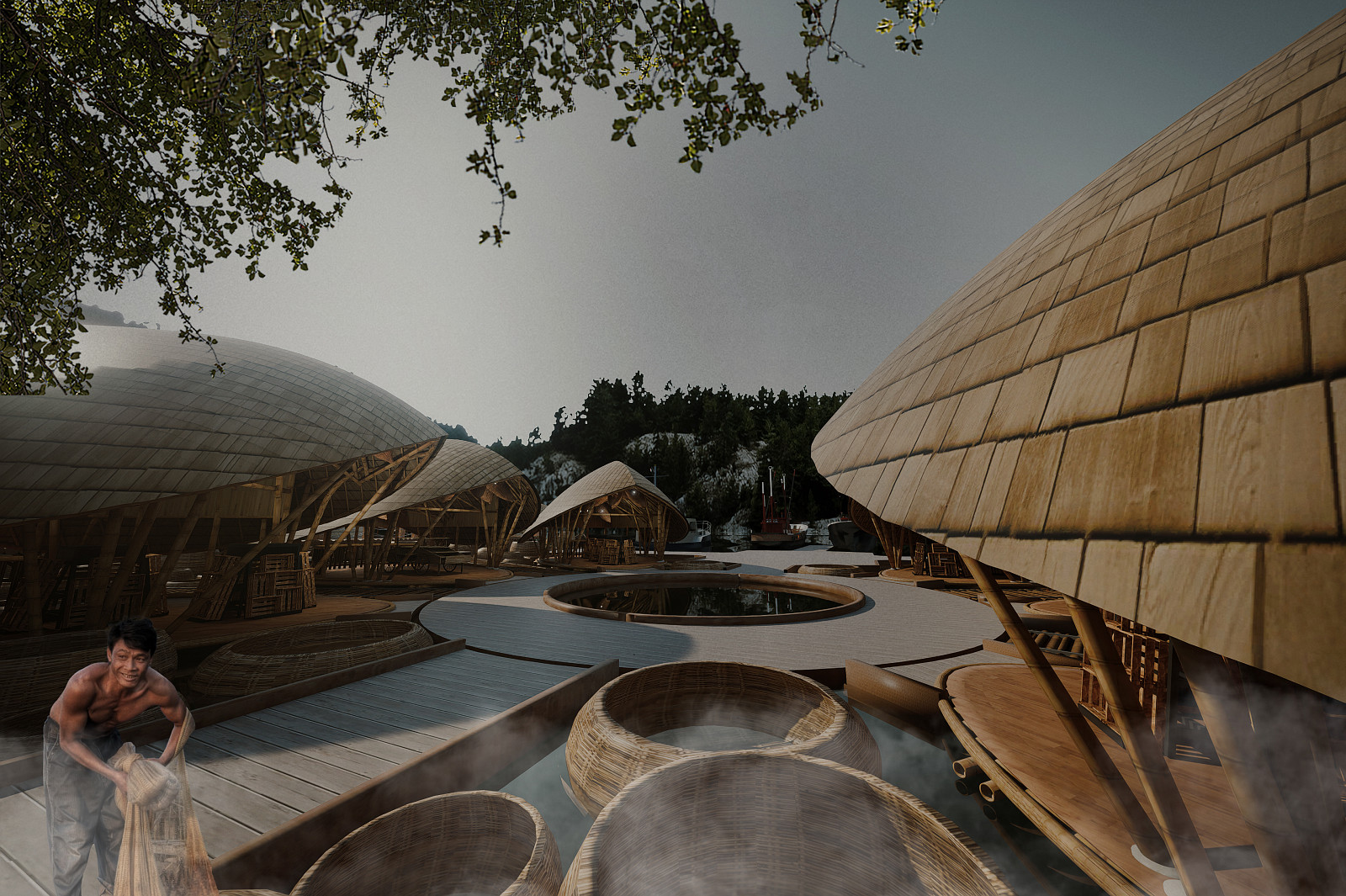
Kelong Ganu is envisioned as a floating market that reflects the strong connection between Kuala Terengganu's fishing community and the sea. Strategically located over the water, the platform allows fishermen to conveniently dock their boats upon returning from fishing activities, facilitating the unloading of their daily catch and enabling direct sales to consumers. This approach helps reduce reliance on middlemen while creating a more efficient and transparent marketplace. In terms of material selection, bamboo is used as the primary structural element due to its sustainability, strength, and local availability. The roof is finished with timber shingles, while coconut timber is utilized for furniture and interior components, reinforcing the local identity of the space. Chengal wood is selected for the flooring and base structure because of its durability and suitability for marine environments. To enhance the performance and longevity of the timber materials, using water proof coating for finishing. These coatings provide resistance against moisture, salt exposure, mould growth, and weathering, making them highly suitable for coastal conditions. The use of locally sourced materials not only strengthens the project's connection to Terengganu's vernacular architecture but also supports ease of maintenance. Should any structural components become damaged over time, local fishermen and craftsmen can readily repair or replace them using familiar materials and traditional construction techniques.
Dermaga Ikang
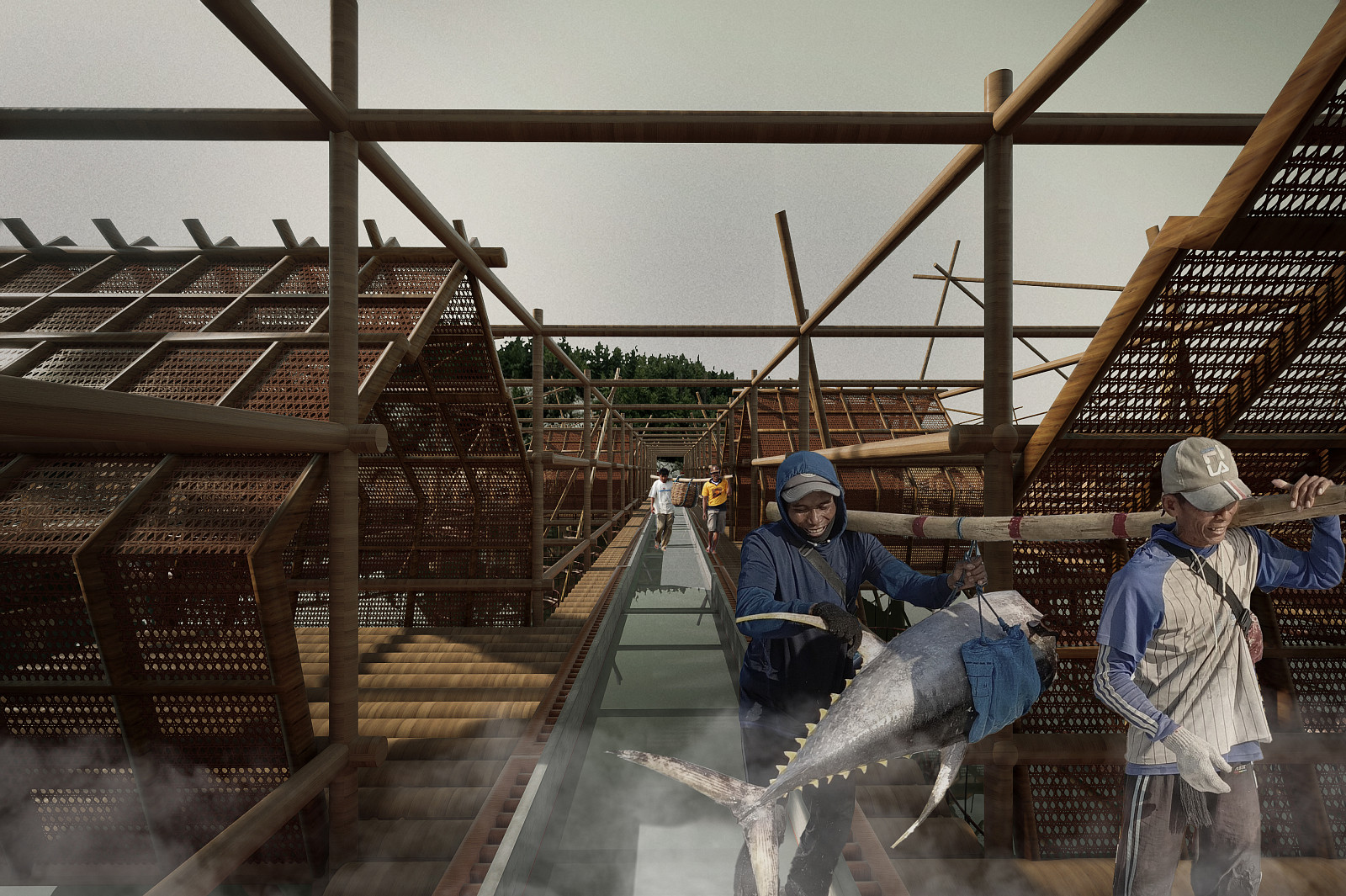
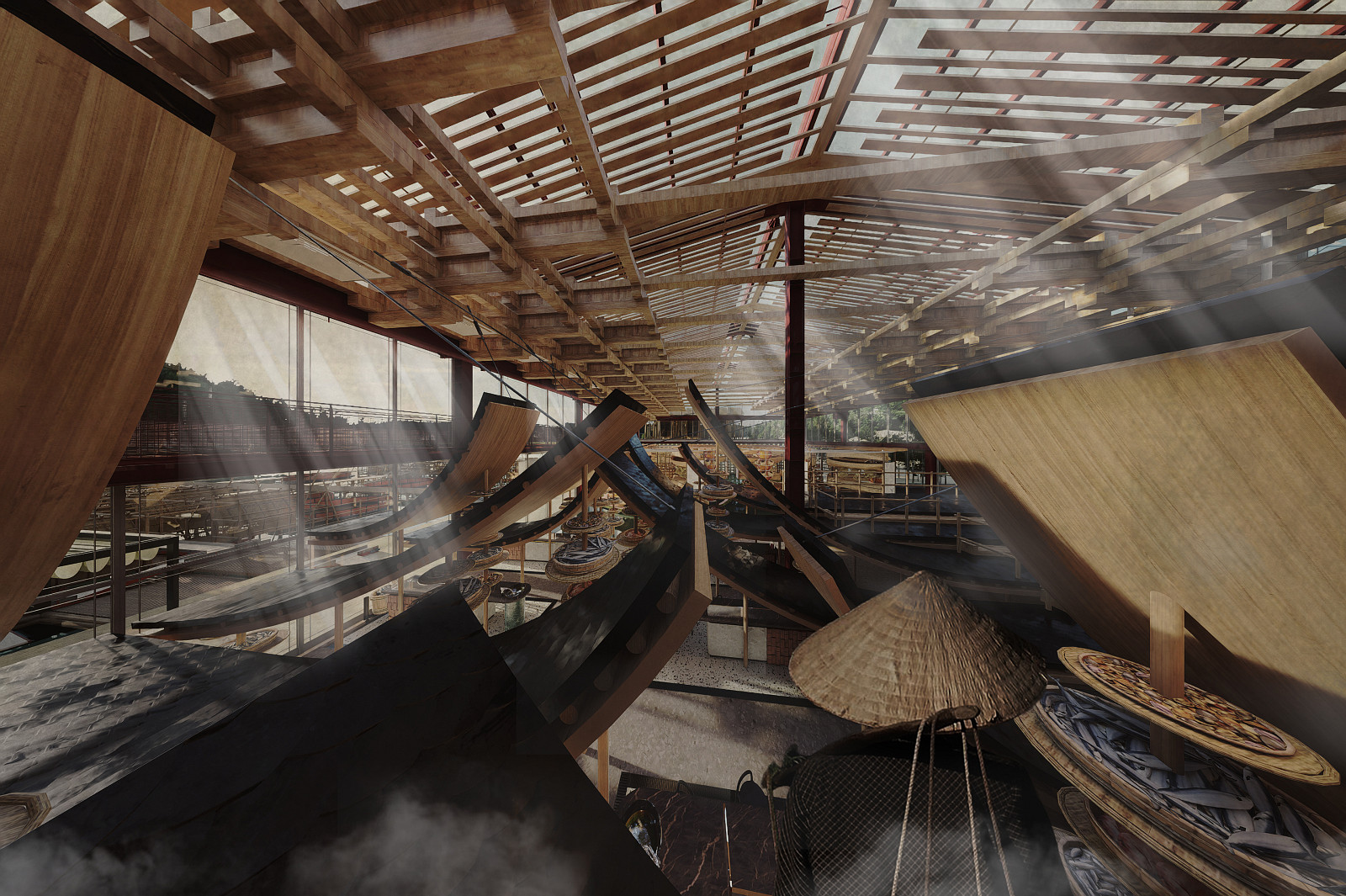
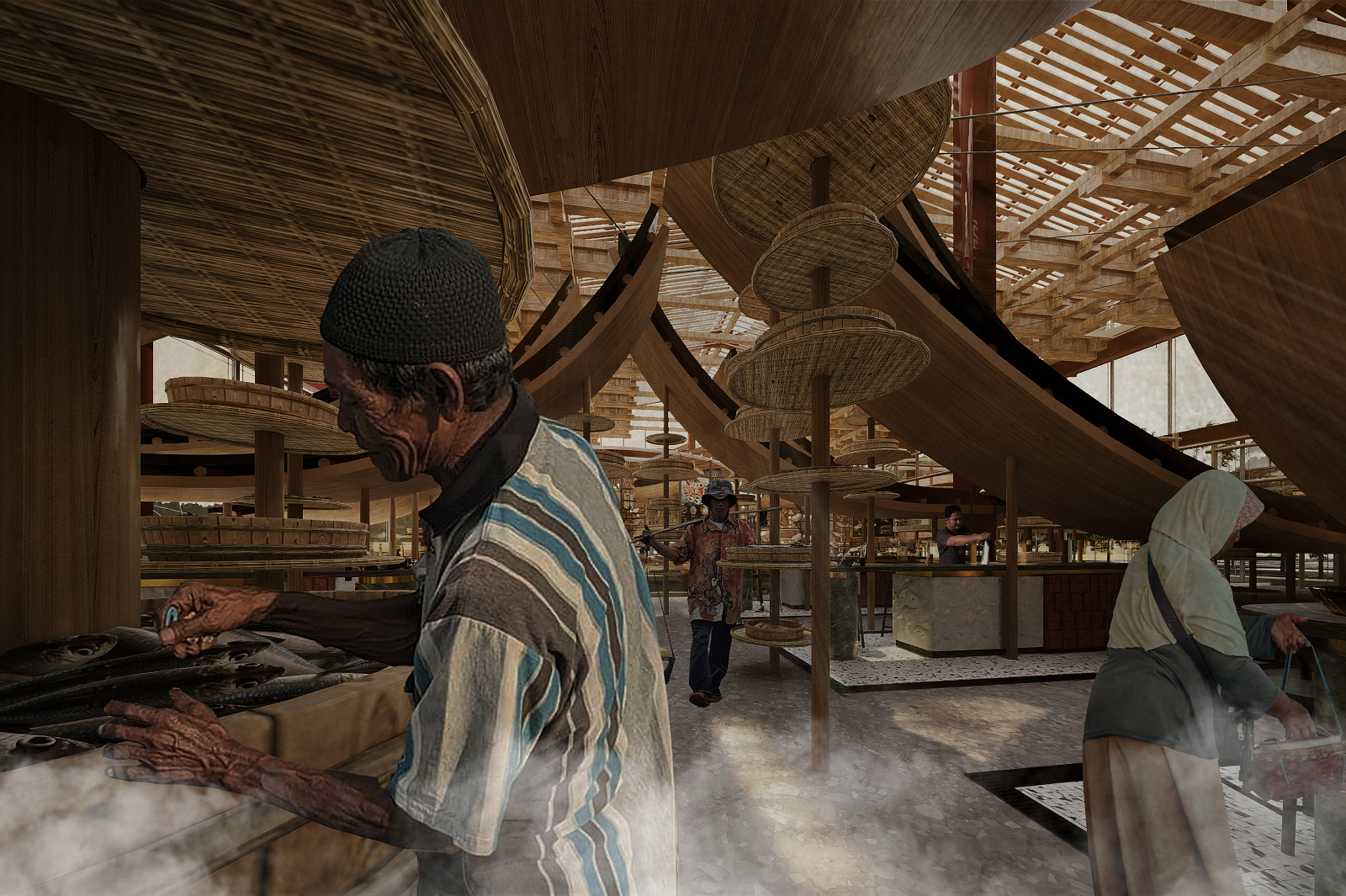
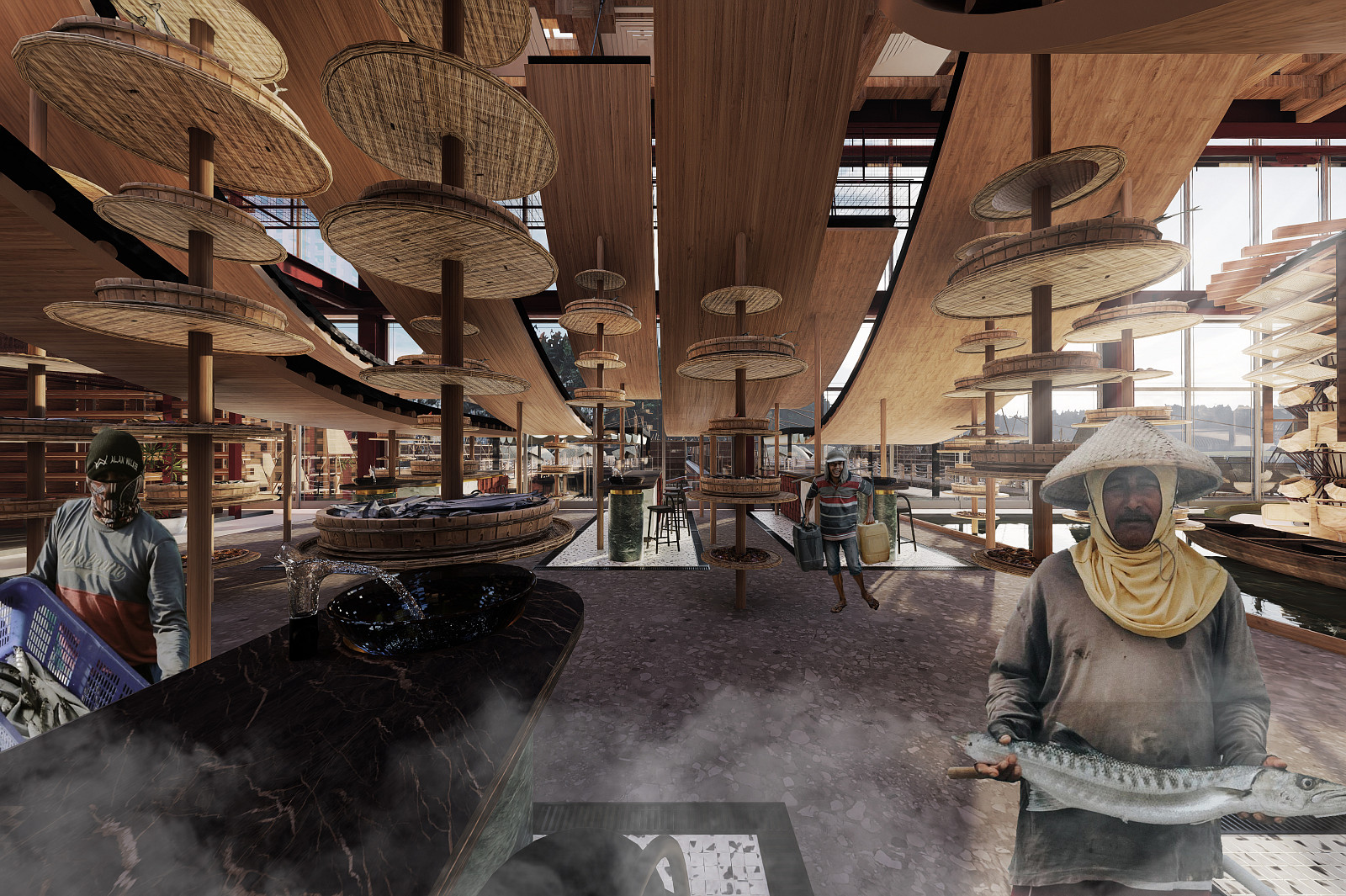
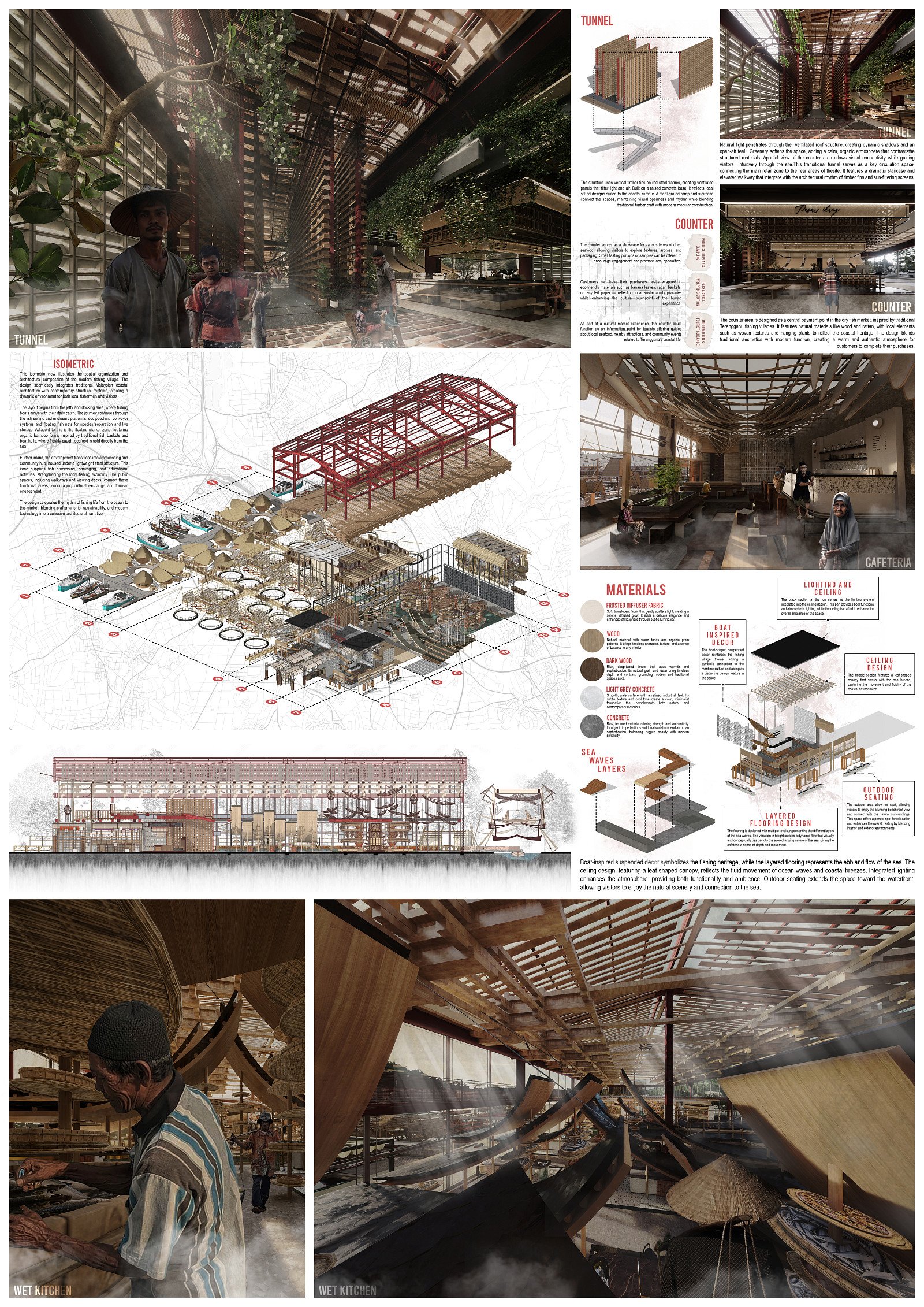
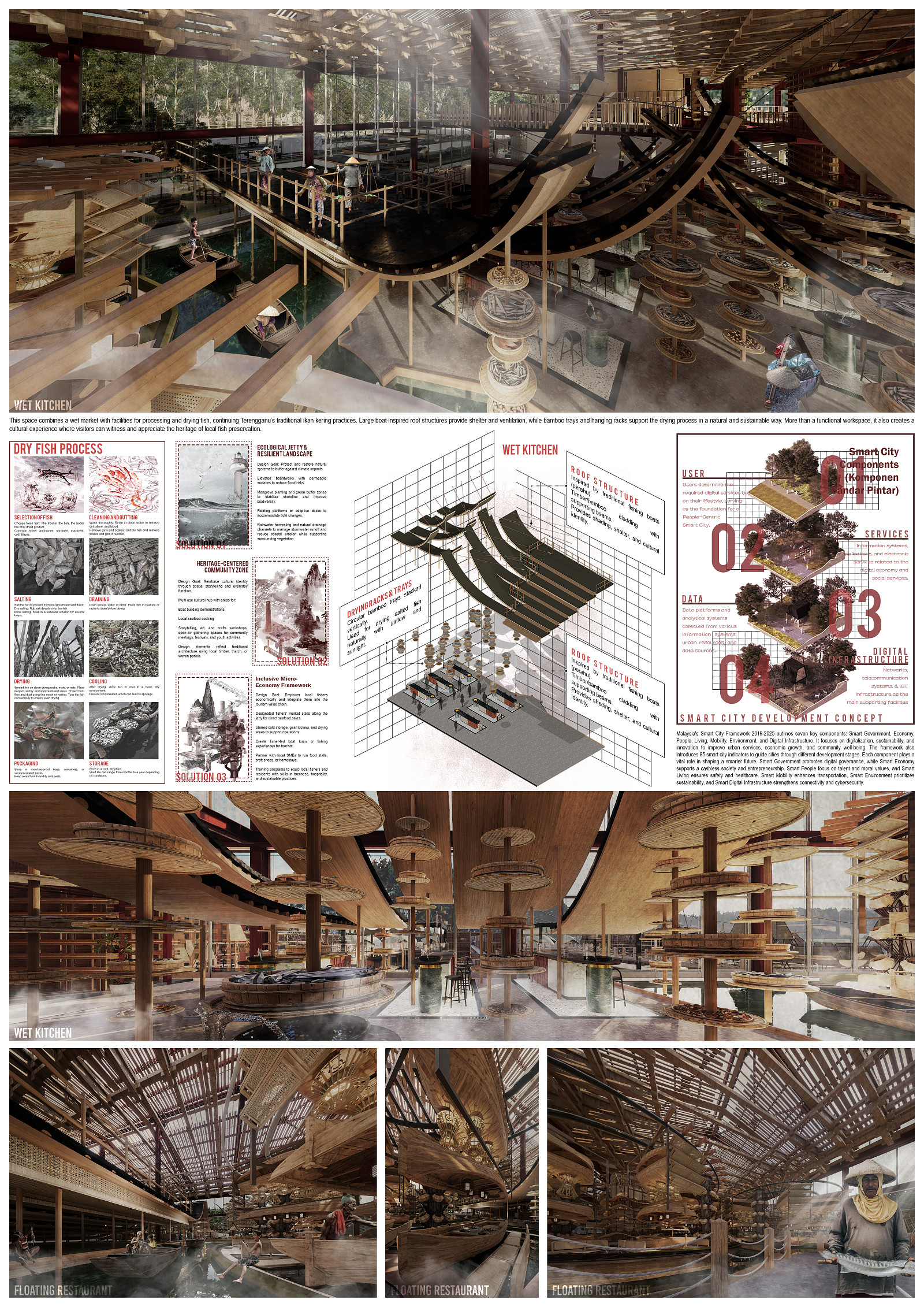
Dermaga Ikang serves as the primary fish storage and handling facility within the project, providing a dedicated space for fishermen to sort, organize, and store their daily catch. Different species of fish can be separated and stored according to their requirements, ensuring a more efficient and systematic handling process. As shown in the floor plan, *Dermaga Ikang* is strategically located adjacent to *Kelong Ganu*, allowing fishermen to transfer their catch directly from the docking and trading area to the storage facility with ease. This close proximity minimizes transportation time and improves the overall operational workflow. The design of the space emphasizes natural daylighting and ventilation to reduce energy consumption while creating a comfortable and productive working environment. The circulation layout is carefully planned to support a continuous flow of activities, from unloading and sorting to storage and distribution. Upon arrival, the fish are first brought to *Pelantar Ayak*, a sorting platform where fishermen separate and organize different types of fish before they are transferred into storage. The fish are then stored in *Teluk Bulat*, a circular storage facility designed to preserve freshness while providing efficient access and organization. To enhance operational efficiency, *Lorong Gerek* functions as a conveyor system that transports fish baskets throughout the facility, reducing the need for excessive manual labour and ensuring a smoother movement of goods.
Rang Ikang
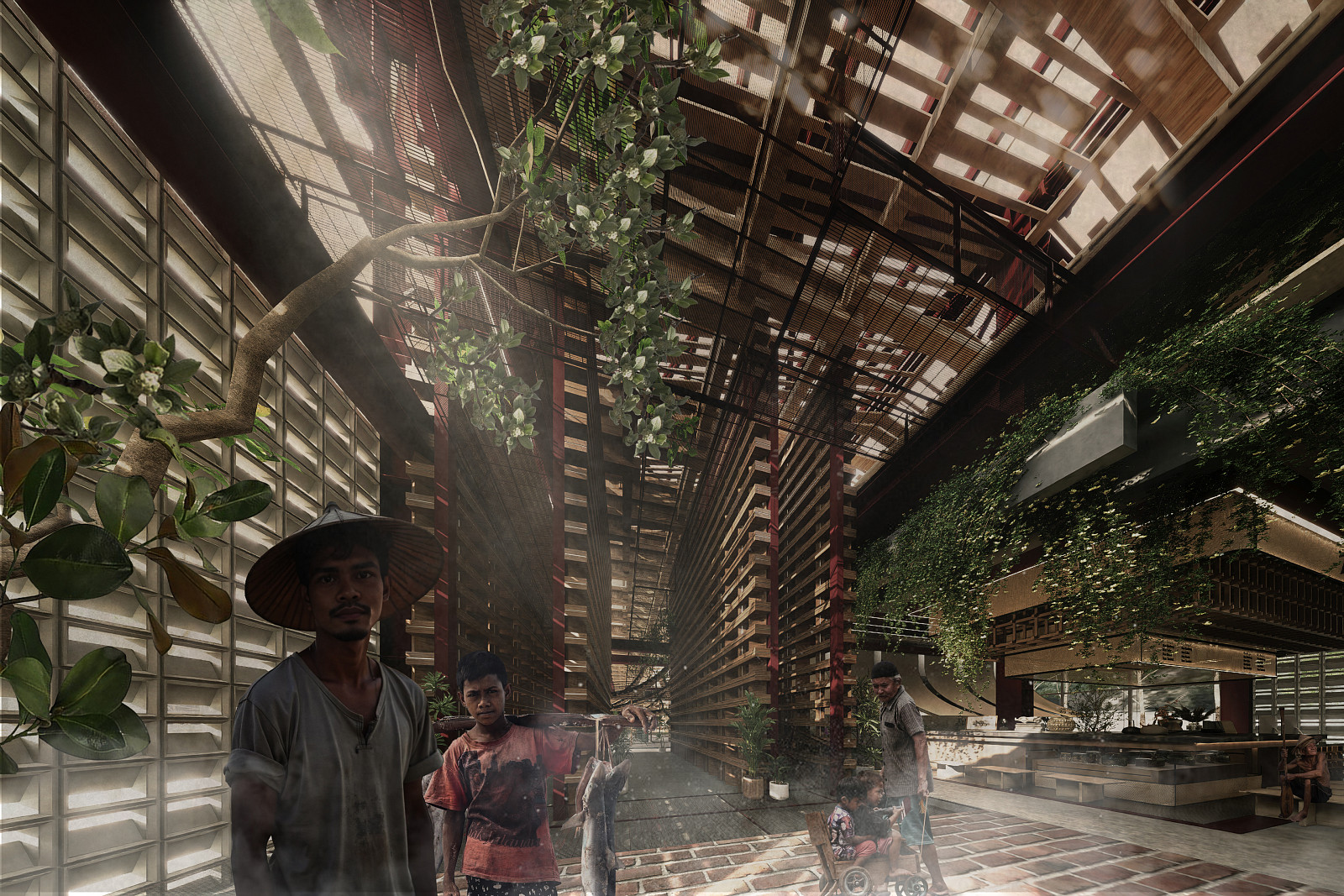
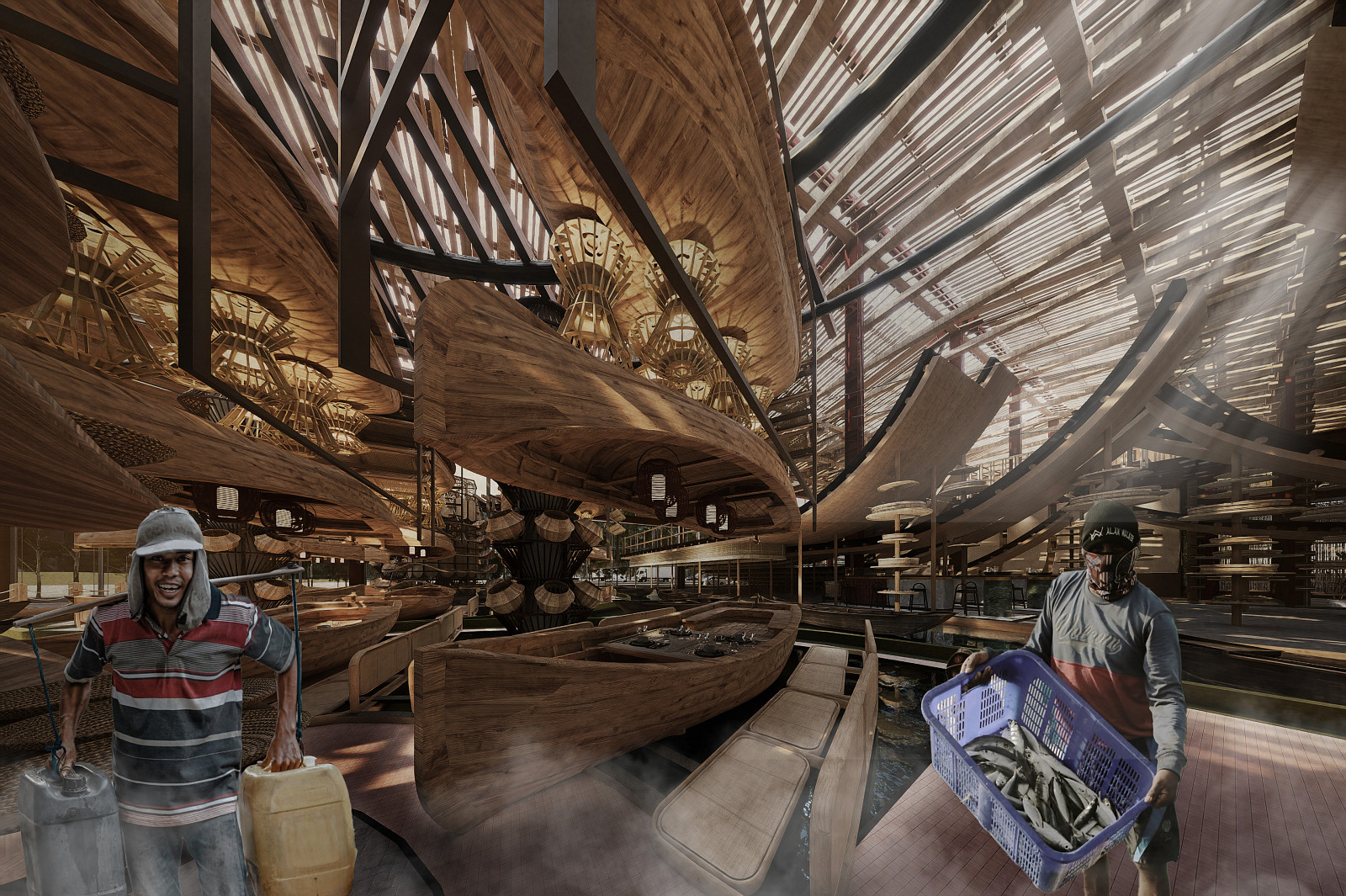
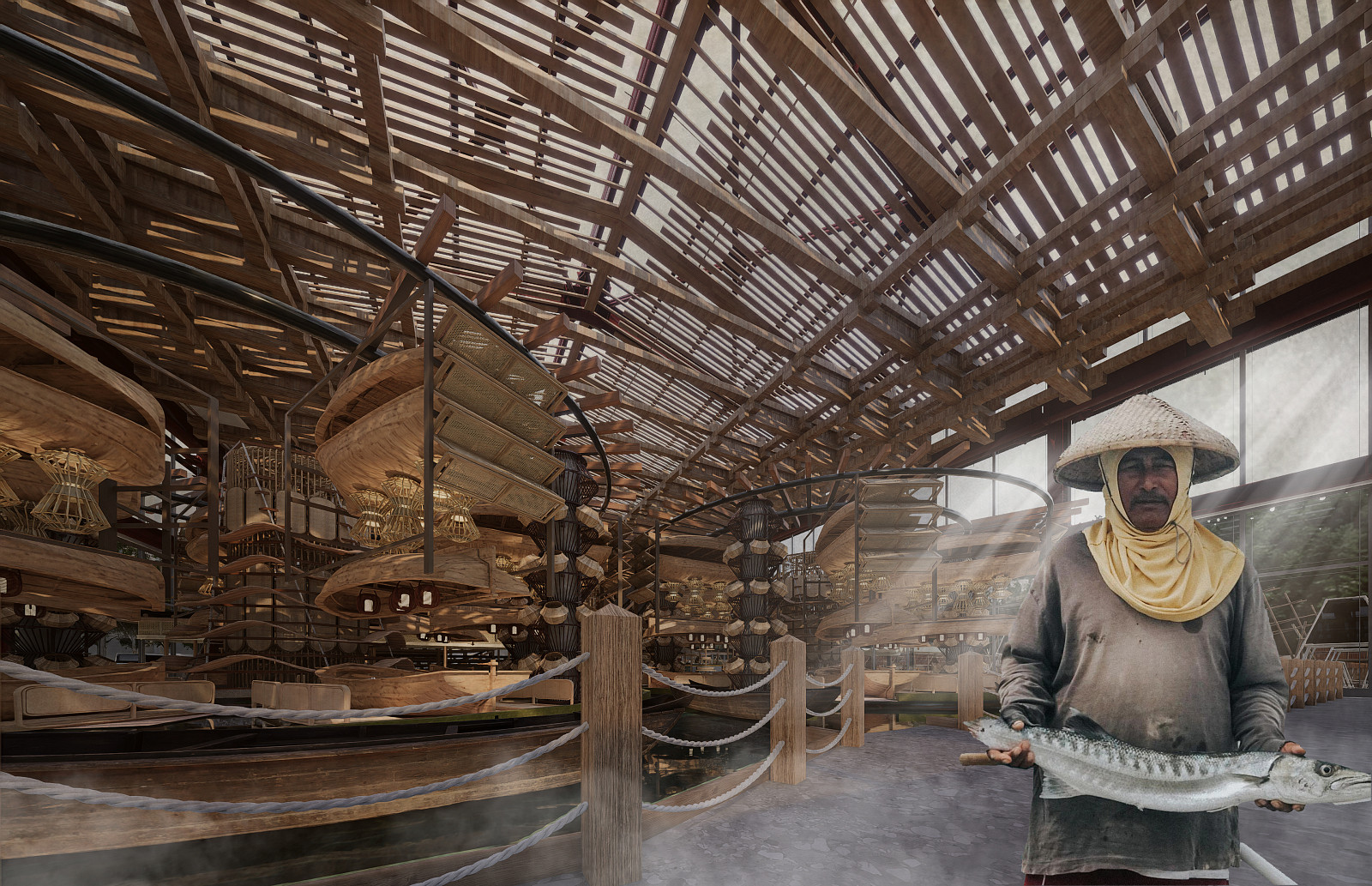
Rang Ikang functions as a dedicated dry fish processing facility that supports both the preservation of traditional fishing practices and the economic development of the local community. Strategically located adjacent to Dermaga Ikang, the facility enables fishermen to transfer freshly stored fish directly into the processing area, creating a seamless workflow between storage and production. The rationale behind this facility is supported by global fish processing trends. In 2022, more than 55% of fish products in high-income countries were preserved through freezing methods. In contrast, only approximately 7% of fish products in low-income countries were frozen, while around 20% were preserved through drying. This indicates that many coastal communities continue to rely on traditional fish preservation techniques due to their practicality, accessibility, and lower operational costs. Therefore, Rang Ikang is designed to celebrate and enhance this traditional practice while creating opportunities for value-added seafood production and local economic growth. The ceiling design is inspired by the movement of ocean waves, reflecting the strong relationship between the fishing community and the sea. Beyond its aesthetic function, portions of the ceiling structure are designed to integrate with the circulation system, forming stair elements that connect different levels of the space. Suspension cables are introduced to strengthen the structural connection between the ceiling and the walls, enhancing the overall stability of the building. The structural framework serves a dual purpose, functioning not only as support for the architectural form but also as a practical drying structure for fish processing activities. The overall form is further influenced by the traditional "bubu" fish trap, translating a familiar fishing tool into a contemporary architectural expression.
Rang Kering
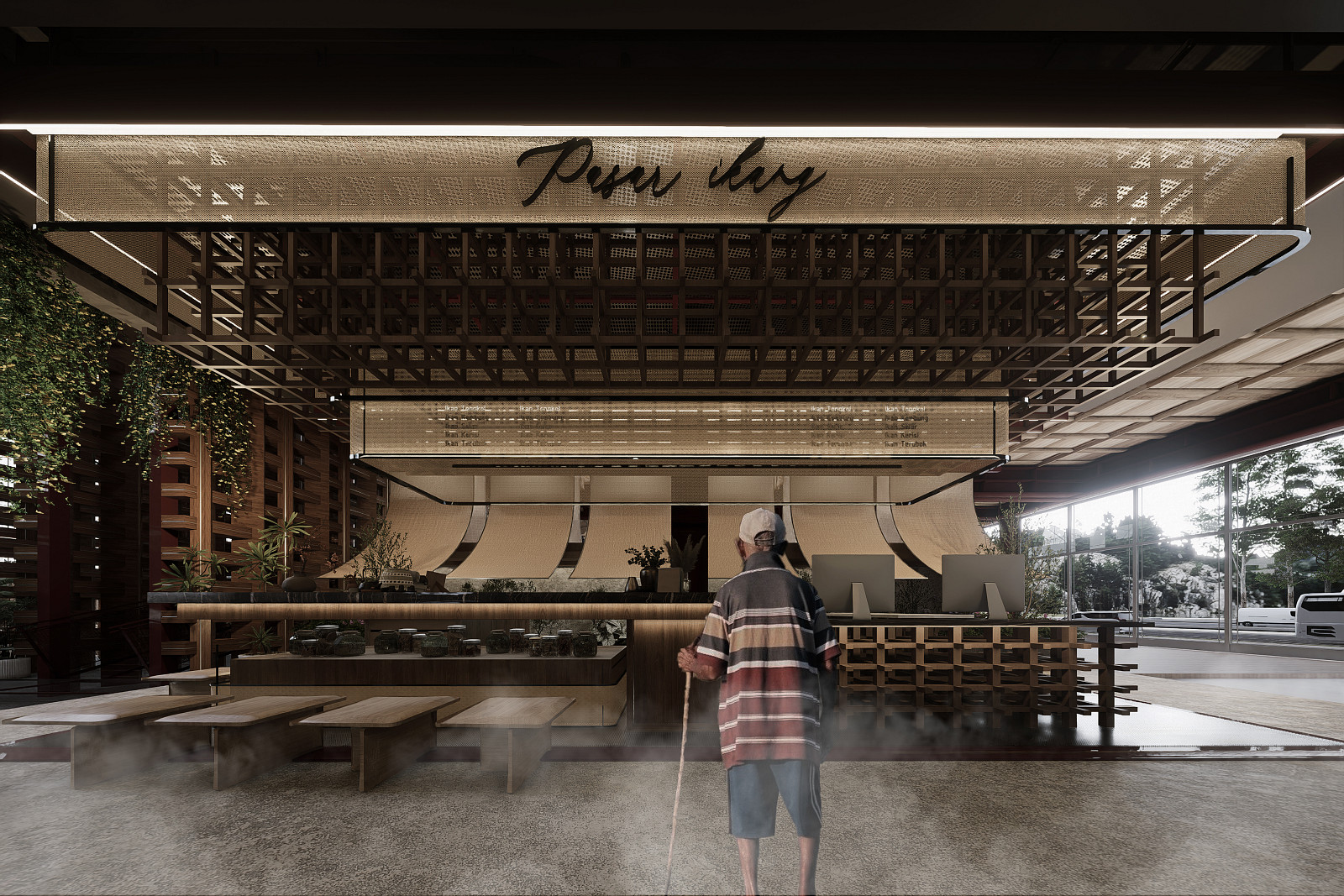
Rang Kering is the main retail area of the project, located at the entrance to maximise visibility and encourage visitor spending. It functions as a commercial hub selling dried fish, local snacks, souvenirs, and other local products, directly supporting fishermen and small producers by strengthening their income and reducing reliance on middlemen. The space is designed with natural ventilation and daylighting to reduce energy consumption and enhance sustainability. Structurally, it combines bamboo with a steel frame system, reflecting a balance between traditional material use and modern stability.
Pelantar Makang
Pelantar Makang is an open dining and social space where visitors can experience local food culture within the context of a working fish market. The area allows users to dine while engaging with the sensory atmosphere of the site, including the natural sea breeze and characteristic ambience of fresh seafood activities. It also provides direct visual access to fishermen as they carry out their daily operations, strengthening the connection between community, culture, and livelihood. The spatial design incorporates a large open layout supported by LED lighting installed overhead to ensure visibility and ambience during both day and night use. A leaf-shaped canopy is introduced to provide shading and shelter, encouraging outdoor seating while maintaining comfort in response to the coastal climate. The flooring design is composed of multiple levels, symbolising the layered movement of sea waves. This stepped composition not only enhances spatial experience but also reflects the project’s conceptual relationship with the ocean and fishing environment.
Lepa Ikang
Lepa Ikang is designed as a floating restaurant that offers visitors a unique dining experience on the water. Access to the restaurant is provided via traditional "perahu", which departs from the dry fish processing area. This journey allows visitors to experience the surrounding seascape and observe the daily activities of local fishermen, creating an immersive cultural and environmental experience. The architectural concept is inspired by traditional fishing culture, particularly the "bubu" fish trap. This influence is expressed through the roof canopy and suspended bamboo lantern installations, which create a distinctive spatial atmosphere while reinforcing local identity. The structure is composed of several key elements, including display shelving, boat-inspired seating arrangements, a central structural column, intermediate bamboo ring components, and a stable base platform. These elements work together to create a cohesive floating system that is both functional and culturally expressive, reflecting the relationship between architecture, water, and fishing heritage.
Lempuh Ikang
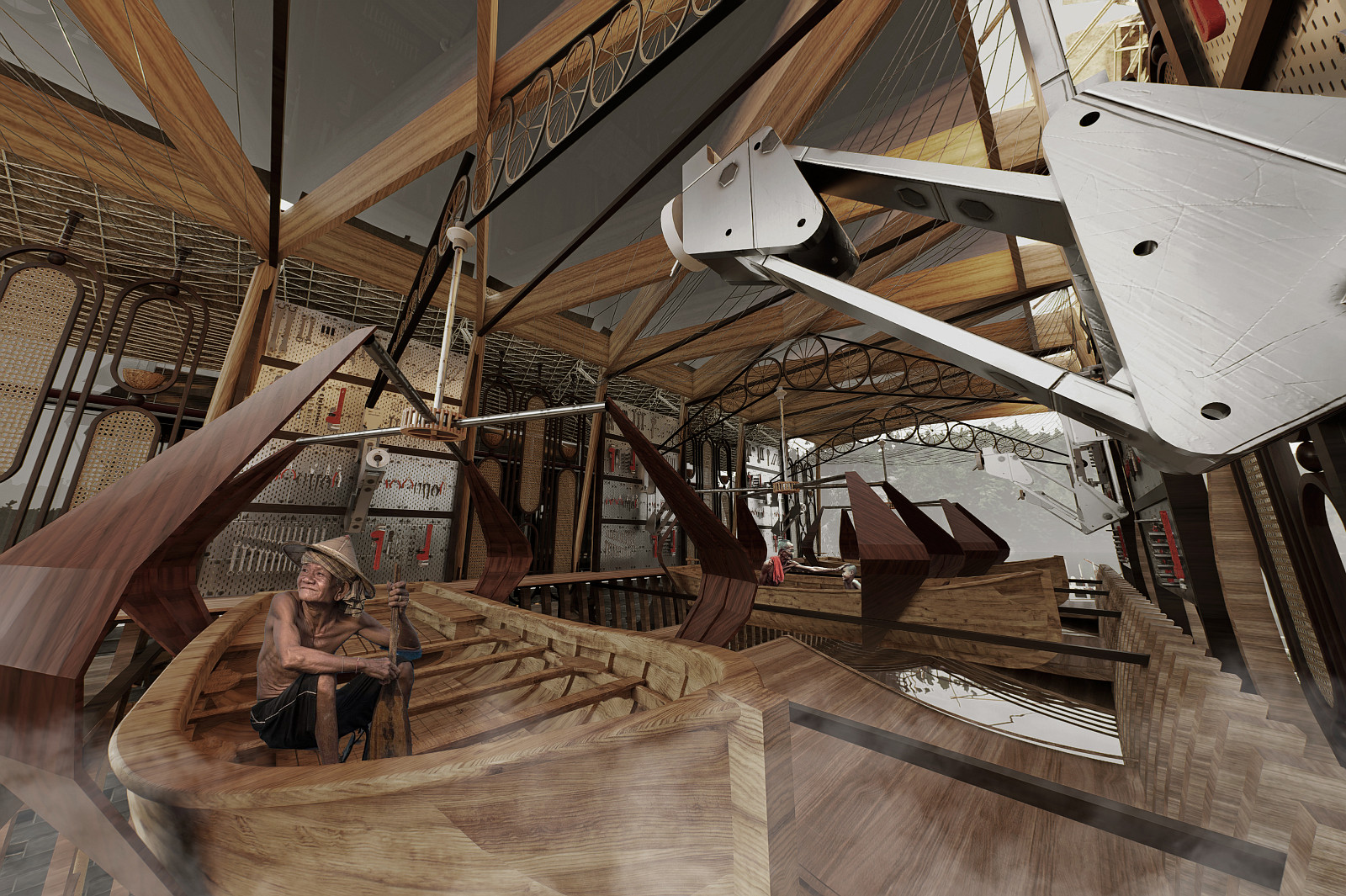
Lempuh Ikang is the boat repair hub located at the rear of the site, separated from public areas to minimise disturbance from dust and heavy maintenance activities. The space is designed as an open layout to maximise natural daylight and cross ventilation, reducing energy consumption while maintaining a comfortable working environment. The structure uses locally available and durable materials, including palm roofing, woven panels, and chengal wood with protective finishes suitable for coastal conditions. Built on a stilt foundation inspired by the "rumah atas tiang" typology, the design responds to the local climate and maritime context. A key feature is the boat lifting system, which functions like a mechanical hoist to elevate boats for repair work. The space also includes boat display areas, allowing visitors and younger generations to observe traditional boat-building and repair techniques, helping to preserve and continue local fishing heritage.

Copyright © 2026 INSPIRELI | All rights reserved. Use of this website signifies your agreement to the Terms of Use, Privacy Policy, and use of cookies.