Whispering Garden


Project idea
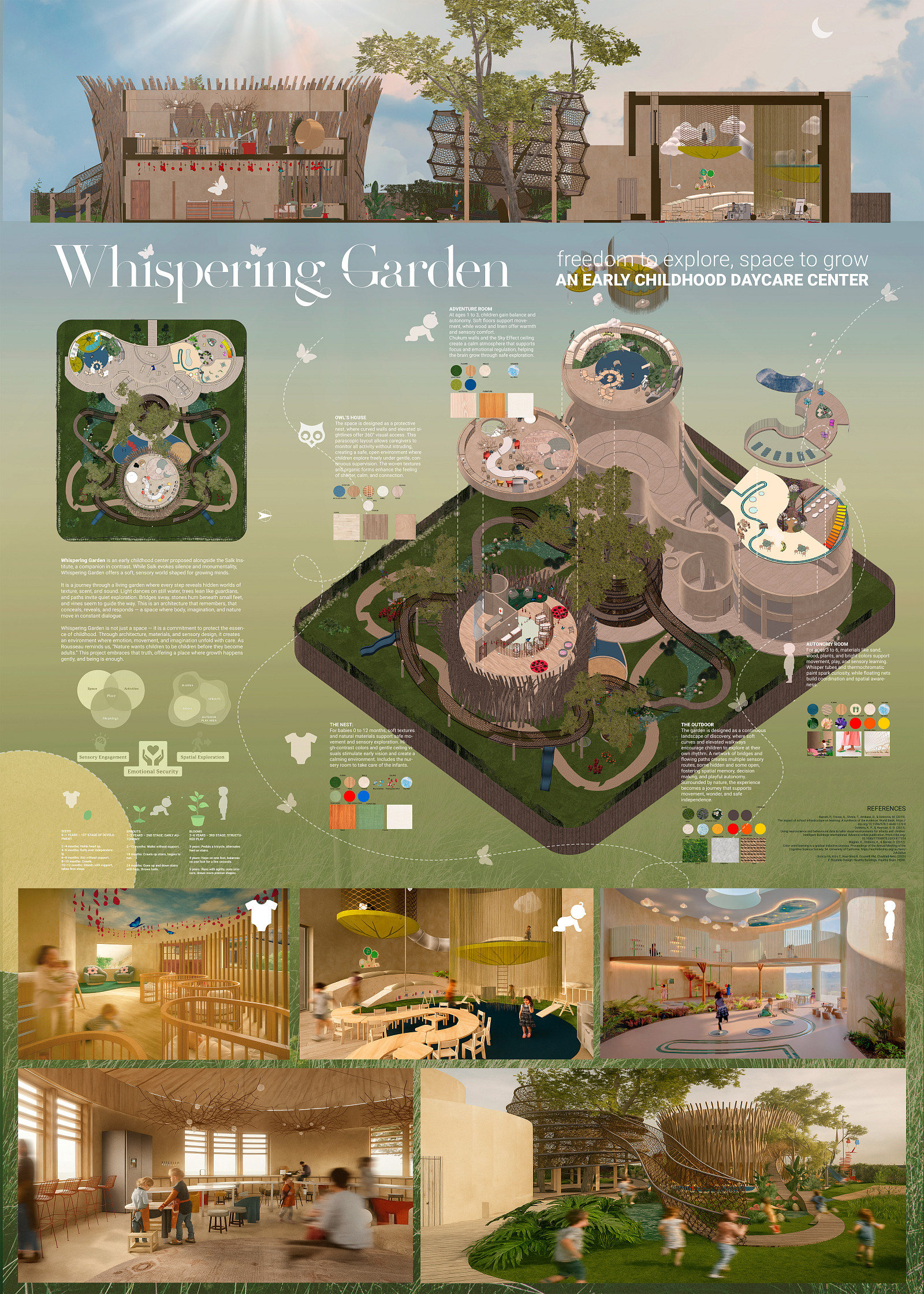
The project consists of the design of a Child Care Center located at the Salk Institute for Biological Studies (USA). Guided by the concept Whispering Garden, the proposal conceives the learning environment as a garden that nurtures children's development.
The proposal is grounded in findings from neuroscience and environmental psychology, which are translated into architectural and spatial design decisions aimed at promoting well-being, learning, and exploration. In addition, it incorporates pedagogical principles inspired by the Waldorf approach, creating environments that respond comprehensively to the cognitive, socio-emotional, and physical needs of early childhood.
Through this approach, the project establishes an interdisciplinary dialogue between architecture, pedagogy, and child development, exploring how the built environment can support learning, autonomy, and well-being. Like a garden that provides light, shelter, and nourishment for growth, the center is designed to offer children the spatial conditions necessary to thrive.
Project description
Whispering Garden consist in the following areas:
-The infant area (0–1 years). It is designed in response to the rapid visual and sensory development that occurs during the first year of life. Research on early visual perception suggests that infants are more responsive to high-contrast stimuli and moving objects, which can support visual engagement and tracking abilities.
As infants spend a significant portion of their time lying on their backs, the ceiling becomes an important visual field within the space. For this reason, the design incorporates a blue ceiling representing the sky and suspended red elements inspired by flower petals. The contrast between these colors creates visually engaging focal points while reinforcing the project's garden-inspired concept.
Suspended elements also introduce gentle movement within the environment, providing dynamic visual stimuli that encourage observation, attention, and early sensory exploration. Together, these features create a nurturing environment that supports the developmental needs of infants while maintaining a calm and nature-inspired atmosphere.
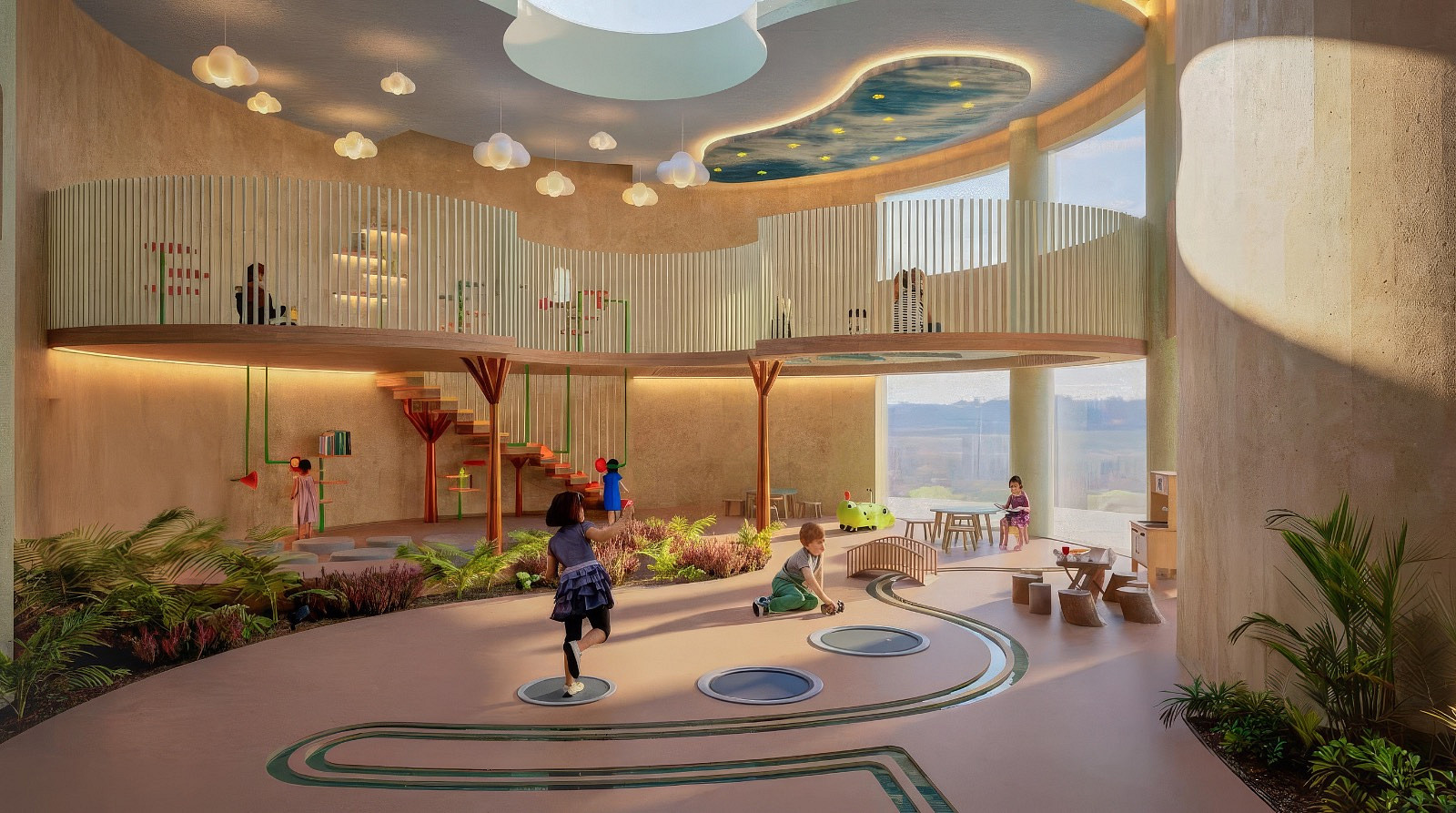
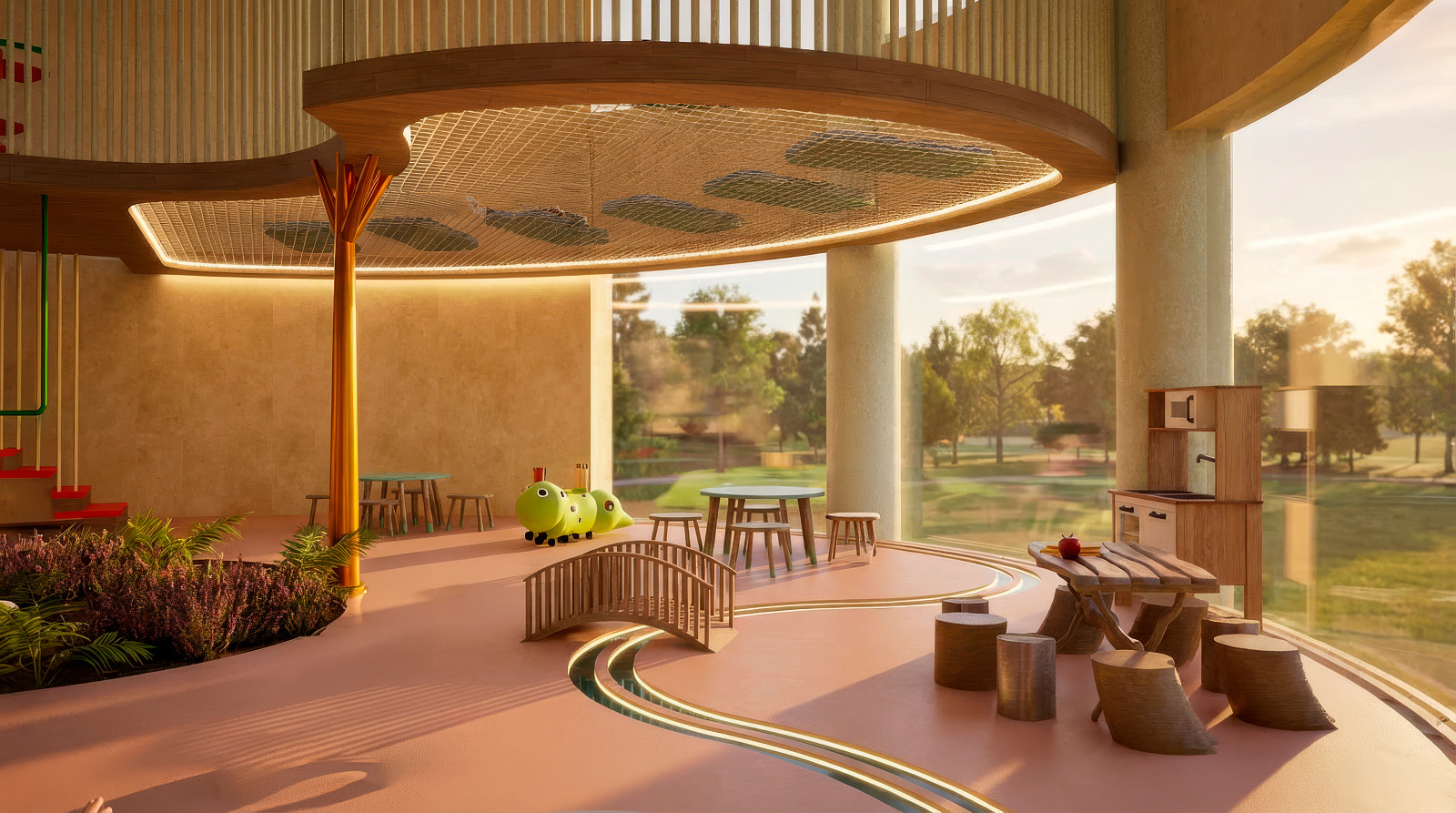
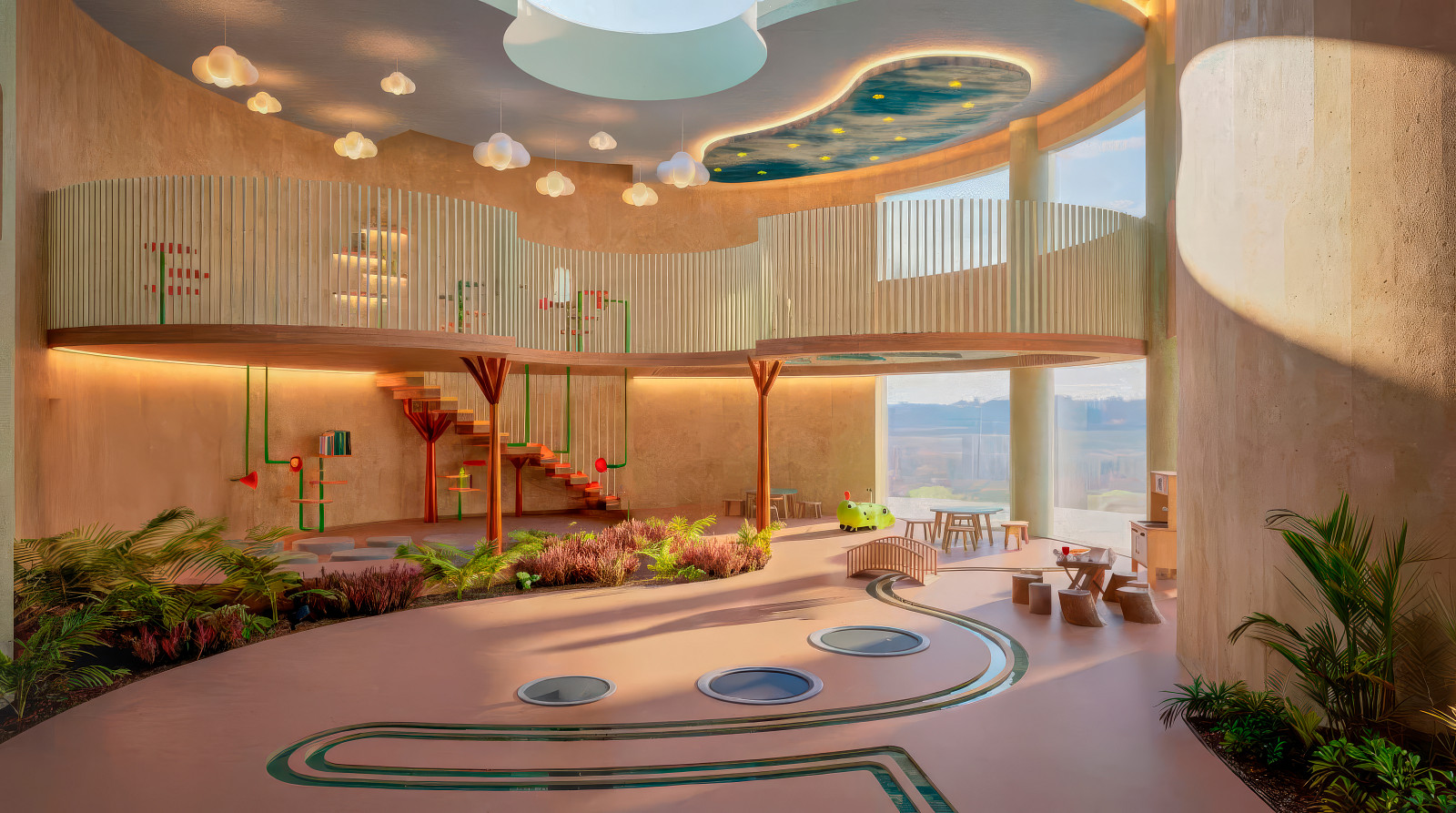
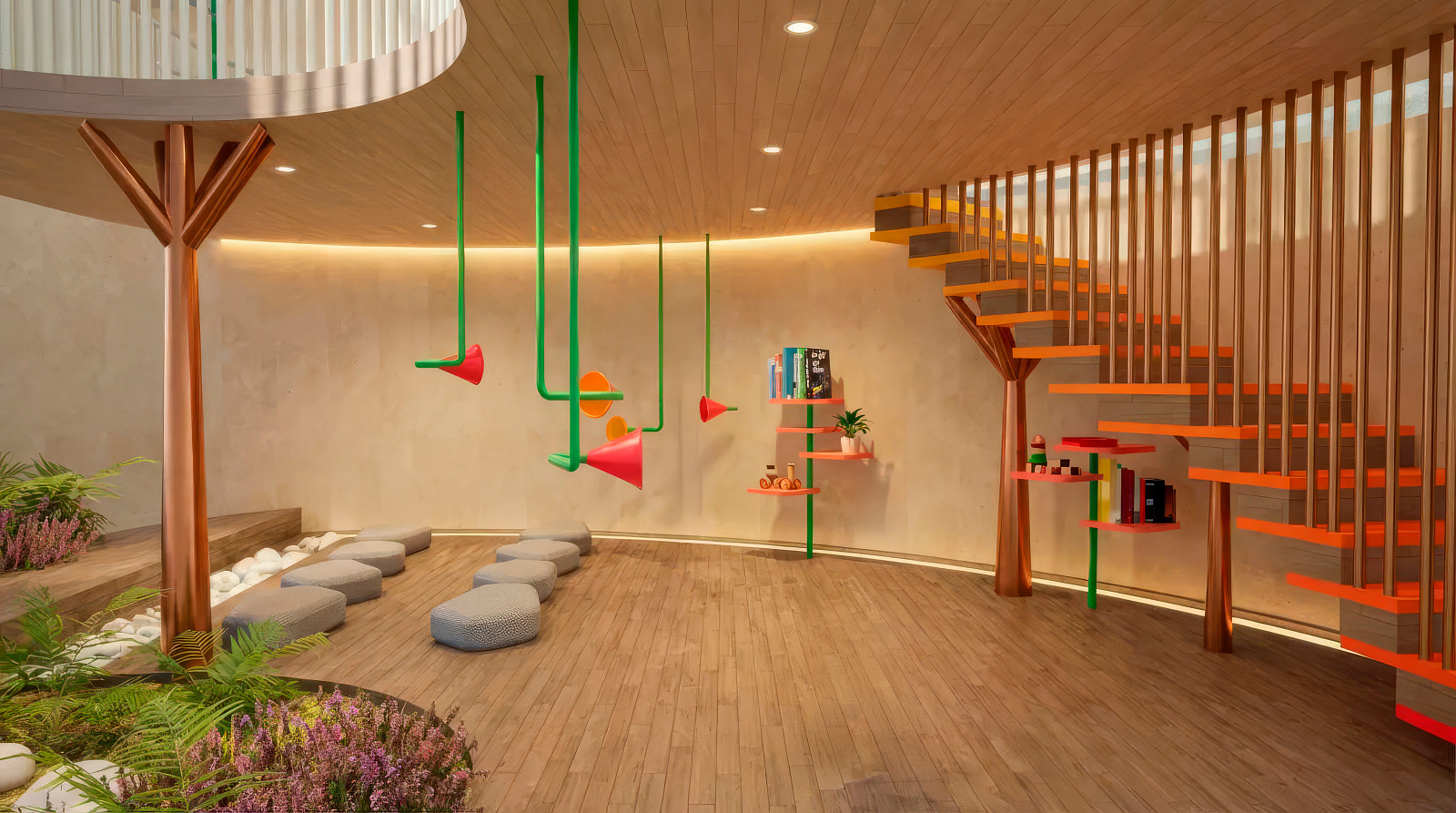
-Children aged (1–3 and 3–6 years). These environments are designed to encourage movement, exploration, motor development, creativity, and social interaction through play-based learning experiences. Spatial elements such as ramps, climbing structures, varied pathways, and flexible activity areas promote physical engagement and independent discovery.
Throughout the project, natural environments play a central role. Gardens, vegetation, natural materials, and outdoor learning spaces are integrated to support emotional well-being, attention restoration, and self-regulation. These spaces provide opportunities for both active exploration and quiet retreat, accommodating the diverse sensory and emotional needs of young children.
Together, the different learning environments create a comprehensive developmental landscape that supports children's cognitive, socio-emotional, and physical growth from infancy through early childhood.
-Dining area. Designed to serve both children and staff members. Beyond its primary function as a cafeteria, the space is conceived as a multi-purpose environment that can accommodate cooking workshops, group activities, celebrations, and community events.
By encouraging shared experiences around food and daily routines, the dining area supports social interaction and strengthens the sense of community among users. This approach seeks to maintain continuity between children, educators, and caregivers, fostering meaningful relationships within the center while maximizing the adaptability and use of the space throughout the day.
-Gardens- They function as outdoor classrooms, play environments, and restorative spaces that support exploration, sensory engagement, and social interaction. Through vegetation, natural materials, varied topography, and opportunities for free play, these spaces encourage physical activity while also providing quieter areas for observation, reflection, and emotional regulation.
This continuity between architecture and landscape reinforces the project's Whispering Garden concept, allowing nature to become an active participant in children's daily experiences and development.
Technical information
The project prioritizes the use of natural materials, including timber finishes, vegetation, and tactile surfaces, to create a warm and stimulating environment. Large openings and skylights maximize natural daylight and visual connections with the surrounding landscape. Play elements such as ramps, climbing structures, elevated pathways, and interactive installations are incorporated into the architecture to encourage movement, discovery, and independent learning.
The design follows principles of biophilic architecture and environmental psychology, emphasizing sensory engagement, emotional well-being, spatial flexibility, and child-centered development through carefully controlled environmental stimuli.

Copyright © 2026 INSPIRELI | All rights reserved. Use of this website signifies your agreement to the Terms of Use, Privacy Policy, and use of cookies.
