Bridging the Gap


Project idea
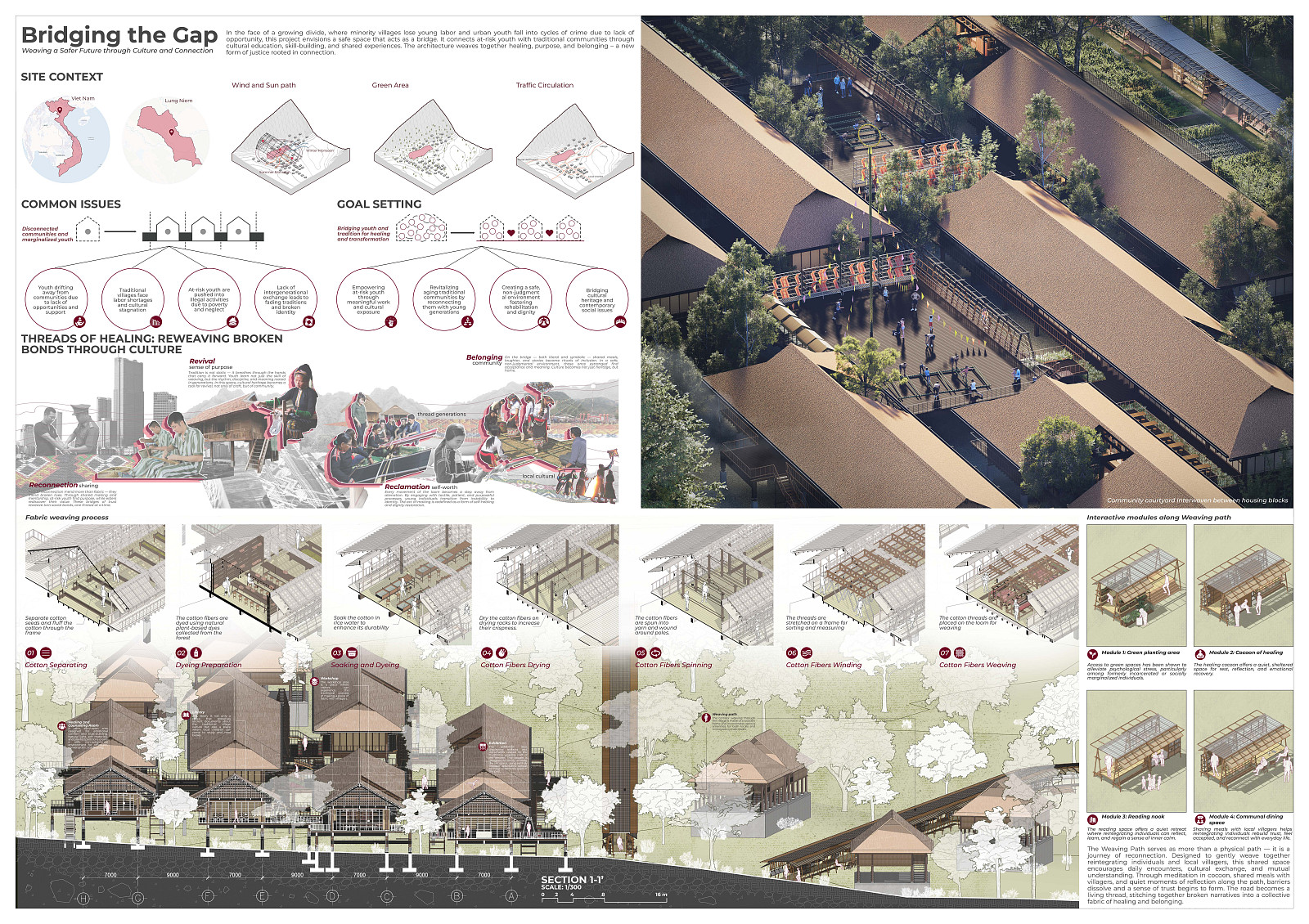
Vietnam records a significant number of individuals returning to society after rehabilitation or imprisonment each year. Yet despite completing their sentences, many continue to face social stigma, limited employment opportunities, and exclusion from community life—conditions that often increase the risk of returning to cycles of crime.
At the same time, traditional craft villages in Vietnam’s mountainous regions are experiencing another quiet crisis: the gradual loss of younger generations and the shortage of labor needed to sustain long-standing cultural practices such as cotton harvesting, weaving, and textile production.This project emerges at the intersection of these two realities. Located at the heart of a mountain village, the proposal is envisioned not simply as a textile production facility, but as a community infrastructure that creates opportunities for social reintegration while safeguarding local cultural identity. Through the act of making, learning, and living together, the project becomes a place where people are given the opportunity to rebuild trust, reconnect with society, and rediscover dignity through meaningful work.
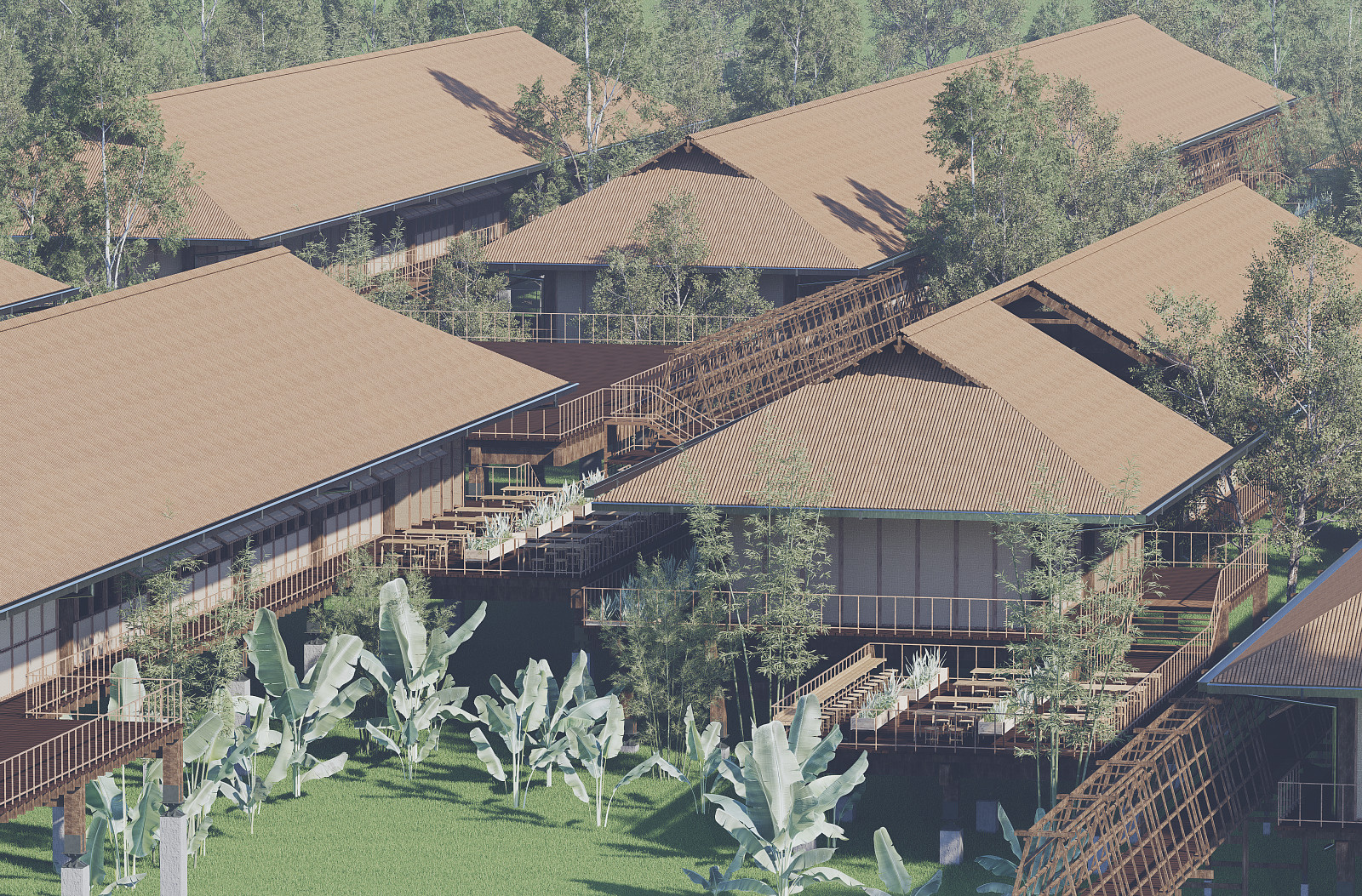
Architecturally, the project draws inspiration from the traditional stilt houses of the local ethnic community. Their familiar spatial language is reinterpreted and extended into a contemporary linear form capable of accommodating larger communal and productive functions while remaining deeply rooted in local identity.
Project description
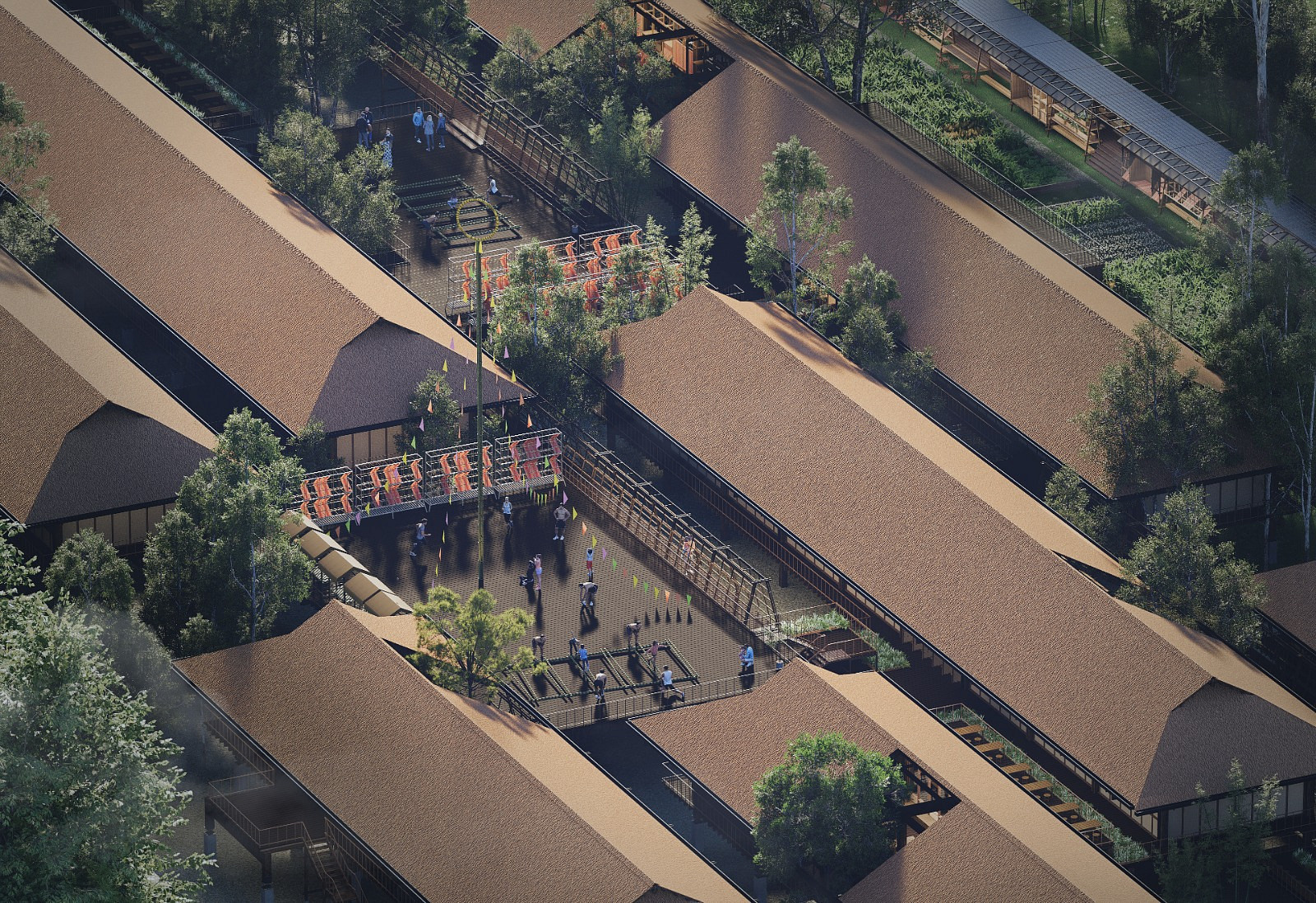
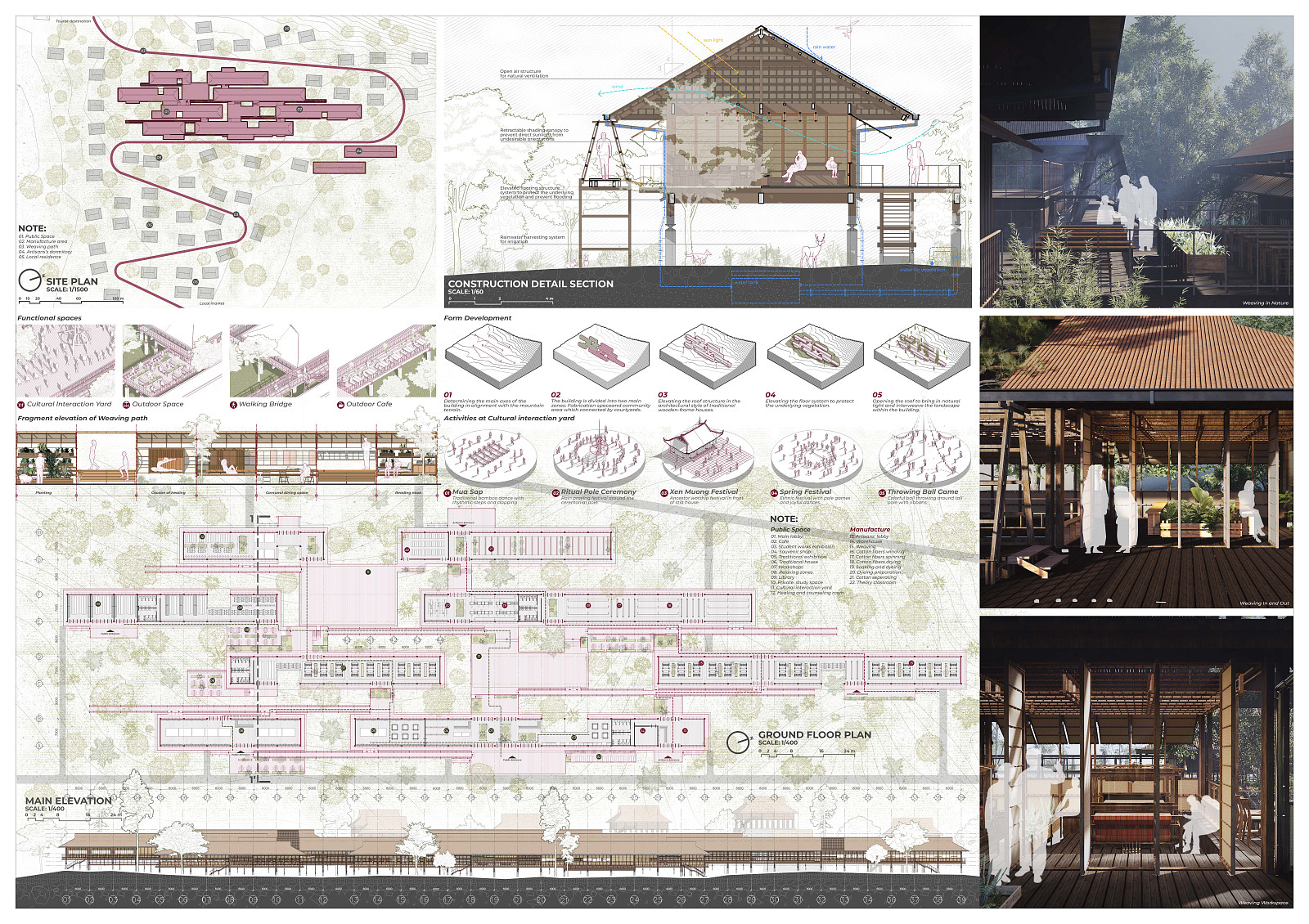
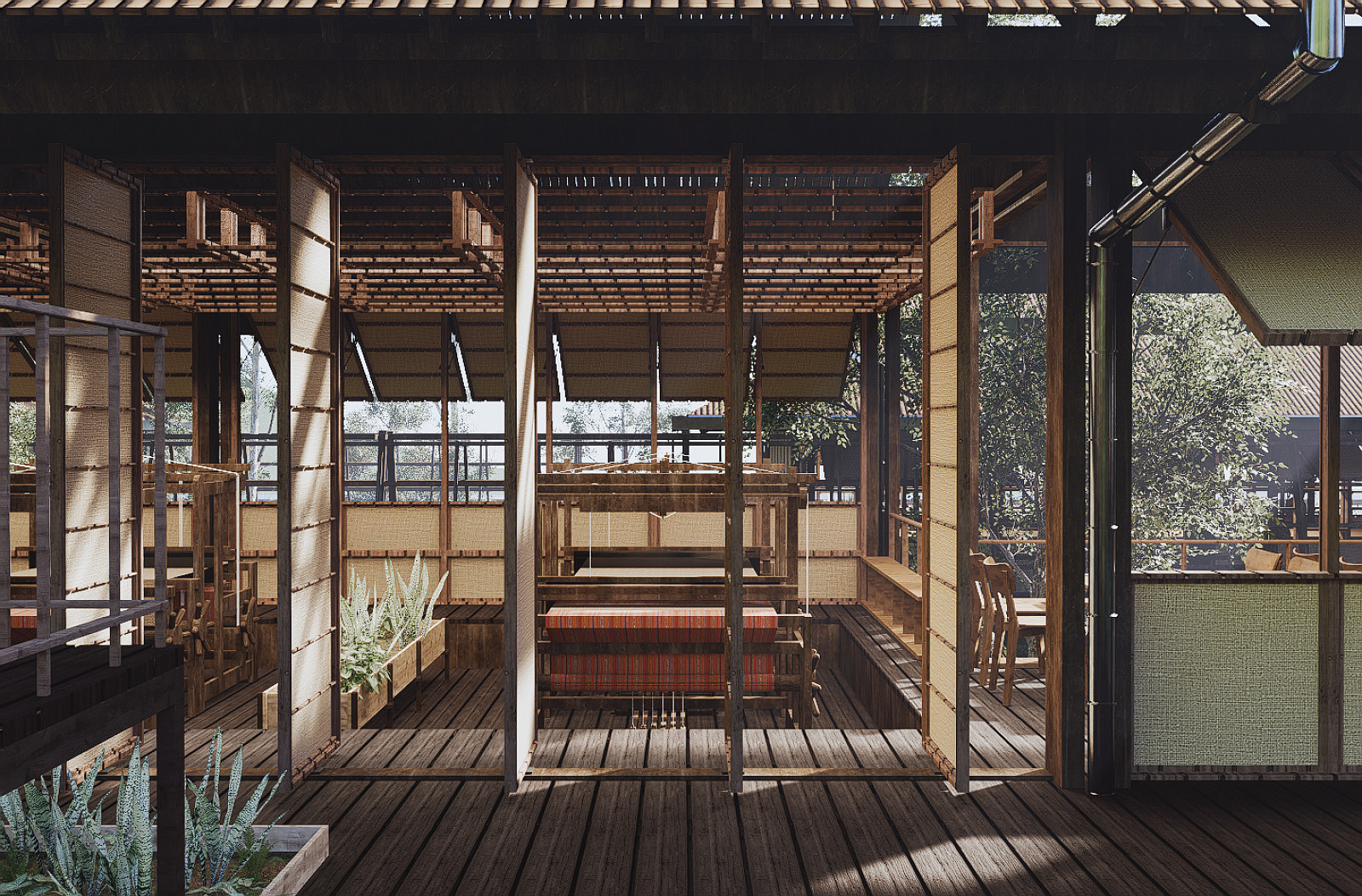
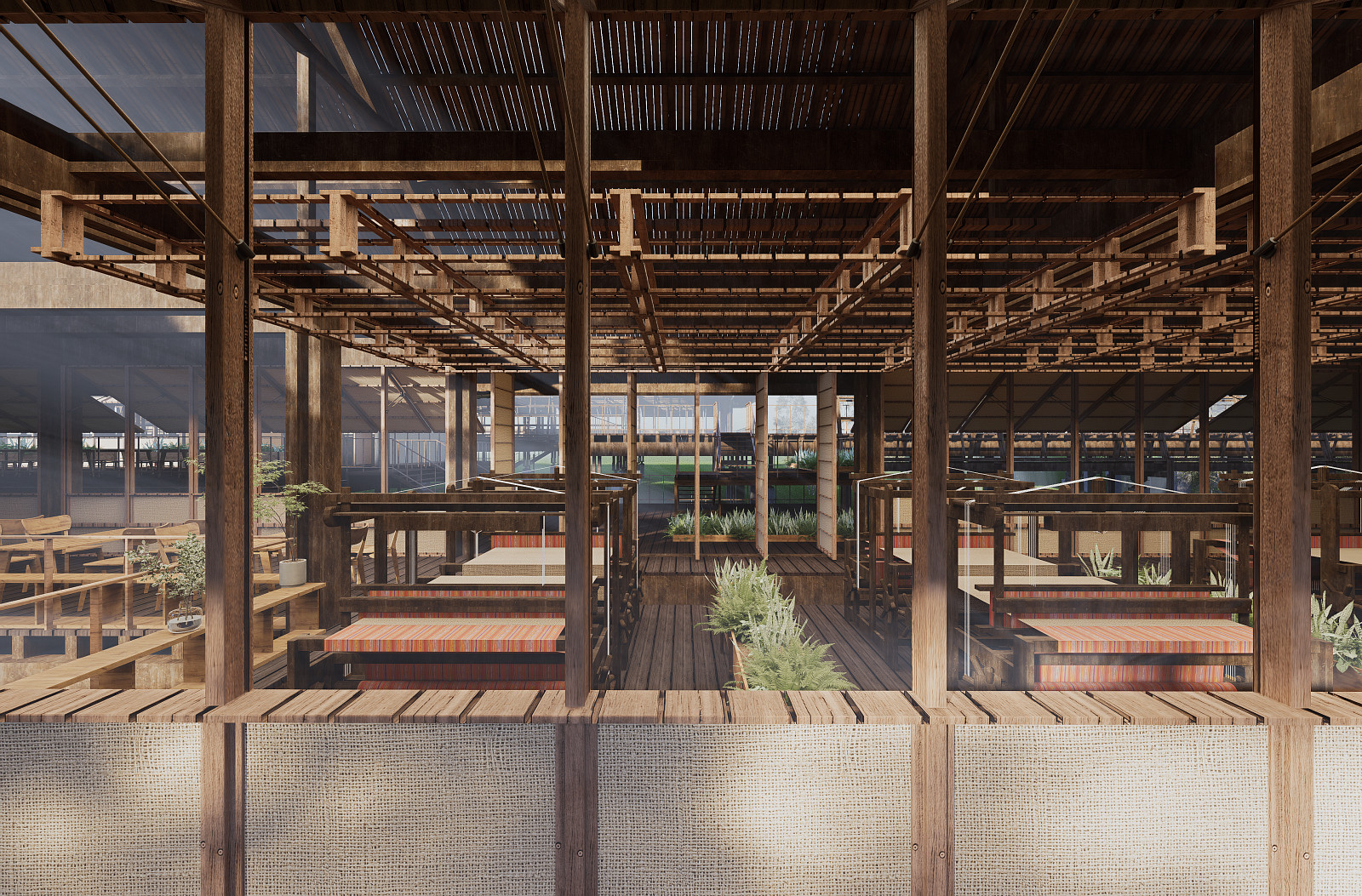
The program is organized into two primary zones. The first functions as a community and cultural hub, accommodating educational and public spaces including classrooms, a library, community courtyards, exhibition and museum spaces, and workshop areas—open to all villagers and visitors. The second forms the productive heart of the project—a weaving and craft-making environment where local artisans pass down knowledge and work alongside young adults seeking a second chance after rehabilitation. Production here becomes more than labor; it becomes a process of rebuilding social belonging.
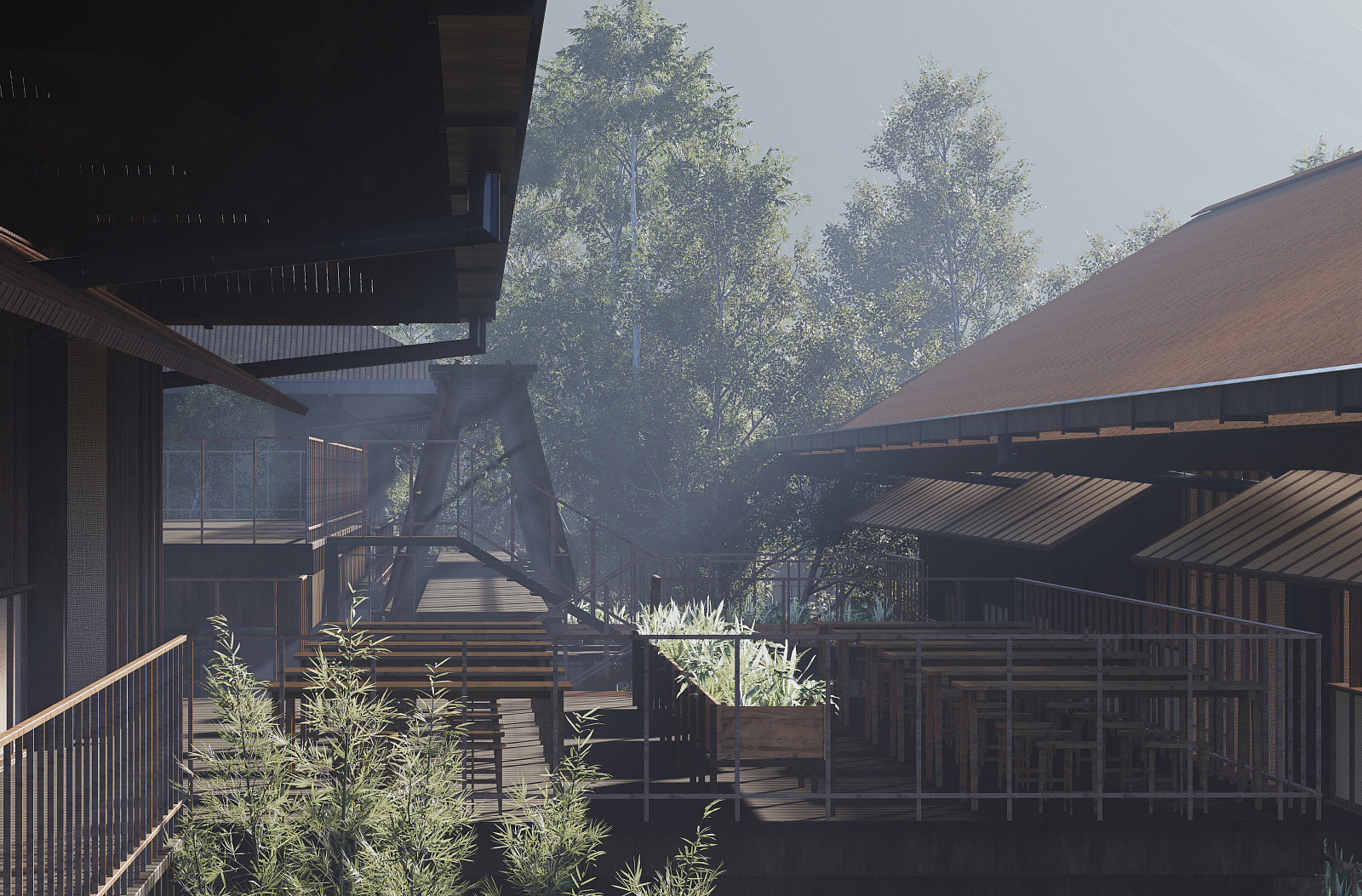
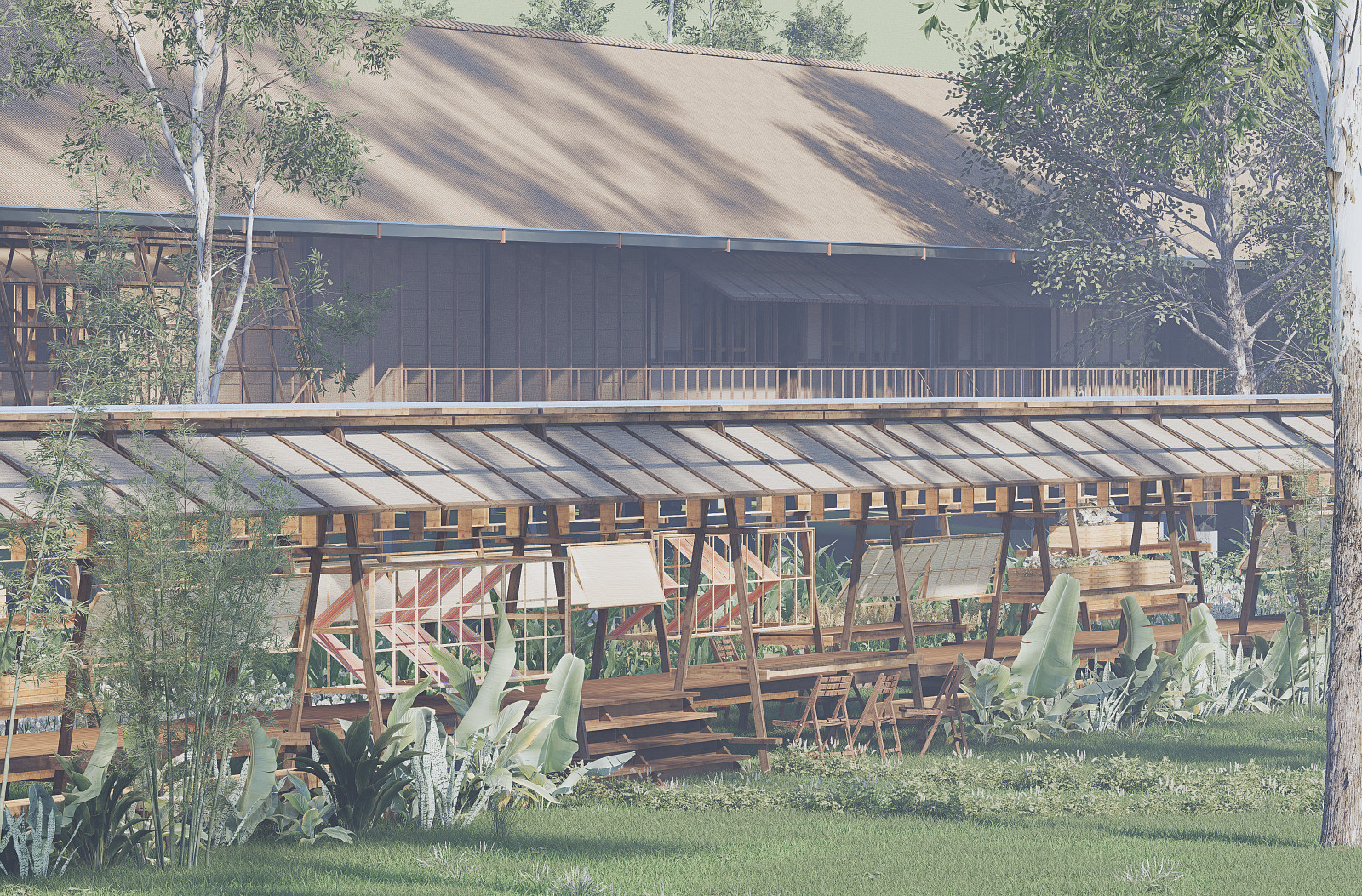
The elevated stilt-house system minimizes disturbance to existing vegetation and allows the landscape to remain continuous beneath the architecture. Following the natural mountain topography, the buildings gradually rise and extend across the terrain. Green pockets and native vegetation weave upward through the gaps between structures, creating a layered relationship between architecture and nature. Open wall systems and elongated roof overhangs encourage natural cross ventilation, reducing dependence on mechanical systems while creating comfortable gathering spaces. Rainwater is collected through integrated roof systems and reused to irrigate surrounding landscapes.
Extending beyond the main building is a network of multifunctional modules that runs throughout the village—conceptualized as a Ribbon of Connection. This architectural thread links people to place through everyday occupation and interaction. Along this route are spaces for resting, reading, gathering, eating, planting, and informal exchange, transforming circulation into a shared social experience.
Technical information
Construction methods are rooted in local knowledge and collective participation. Inspired by traditional stilt-house structures, the timber framework is designed to be assembled together with local residents using regional construction techniques. Primary wooden elements are sourced locally, while woven straw panels—crafted from harvested and dried agricultural materials by village women—form lightweight roofs and wall surfaces.
Bridges connecting the building volumes reinterpret the structural language of traditional weaving looms. As people move through these elevated paths, they experience a subtle physical reminder of the village’s cultural memory—turning movement itself into an act of reconnecting with tradition. This project is ultimately not only about preserving a craft. It is about weaving together culture and future, architecture and landscape, and most importantly, people and people.

Copyright © 2026 INSPIRELI | All rights reserved. Use of this website signifies your agreement to the Terms of Use, Privacy Policy, and use of cookies.