NYSA SCYTHOPOLIS CAMPUS


Project idea
Equi·lib·ri·um - “a state of balance between opposing forces or actions that is either static (as in a body acted on by forces whose resultant is zero) or dynamic (as in a reversible chemical reaction when the rates of reaction in both directions are equal)”.
Merriam-Webster Dictionary
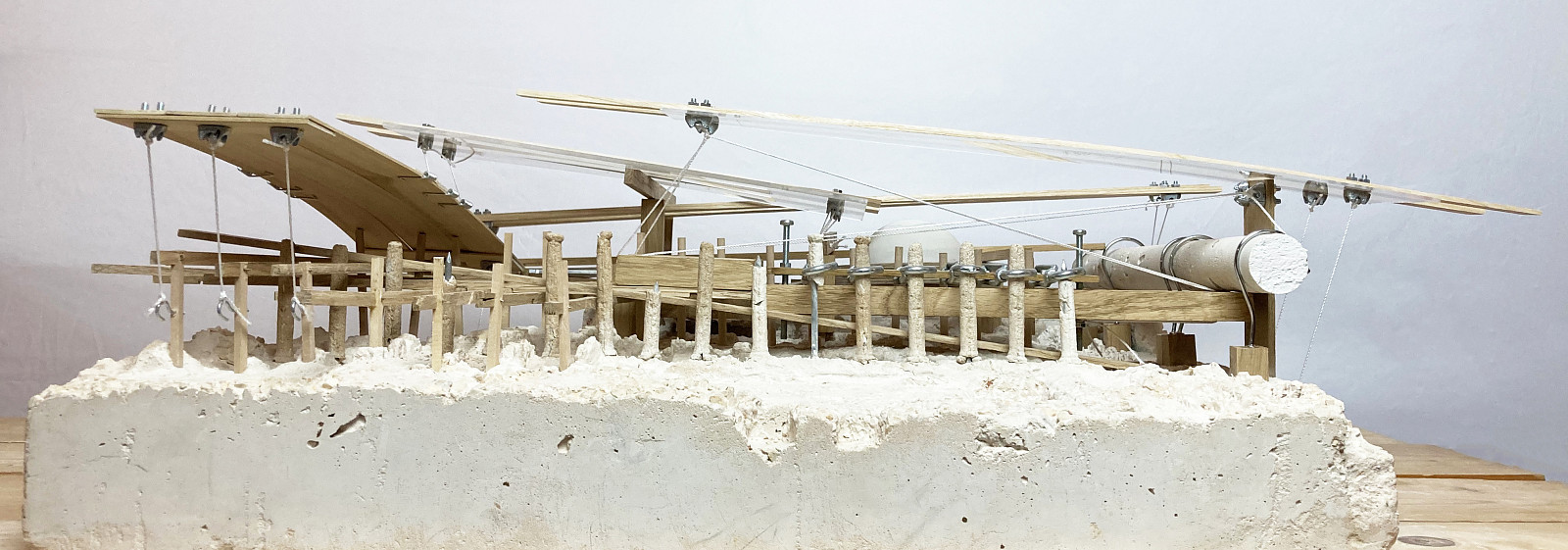
Equilibrium, is my new interpretation for the missing sixth chapter of Italo Calvino's book "Six Memos for the Next Millennium". Nearly 40 years ago, Harvard University invited writer and thinker Italo Calvino to deliver six lectures on the next millennium. He passed away in 1985 after completing five, exploring lightness, quickness, exactitude, visibility, and multiplicity. In 1993, these lectures were compiled into a book. "Writing" the missing personal chapter, chapter six of the current millennium, serves as an architectural thesis for the twenty-first century. Like Calvino's approach of explaining each chapter using a pair of words and the gap between them, I also chosen a pair of words: System and Liberty. This architectural document proposes a new order – one that is more liberated than the classical orders, an order that relates to the forces of gravity. By experimenting with wood, carved stone, wire, and employing hand and digital drawings, I developed a language that contrasts the weight of stone with the flexibility of wood, emphasizing the interplay between opposing forces. The works presented in the exhibition maintain a state of tension on the verge of bursting - that is where freedom lies, in the desire to break free - while remaining in equilibrium.
Project description
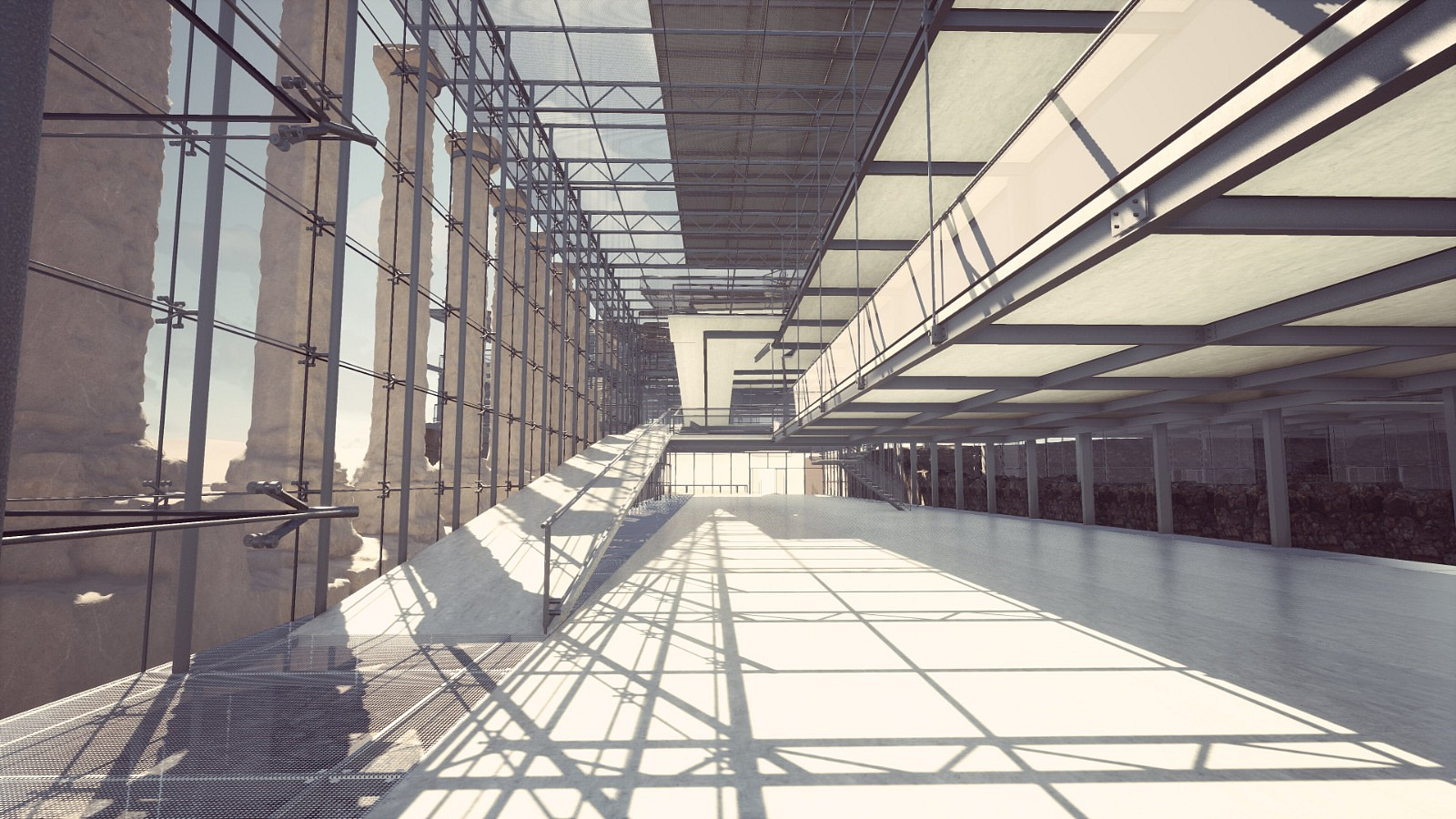
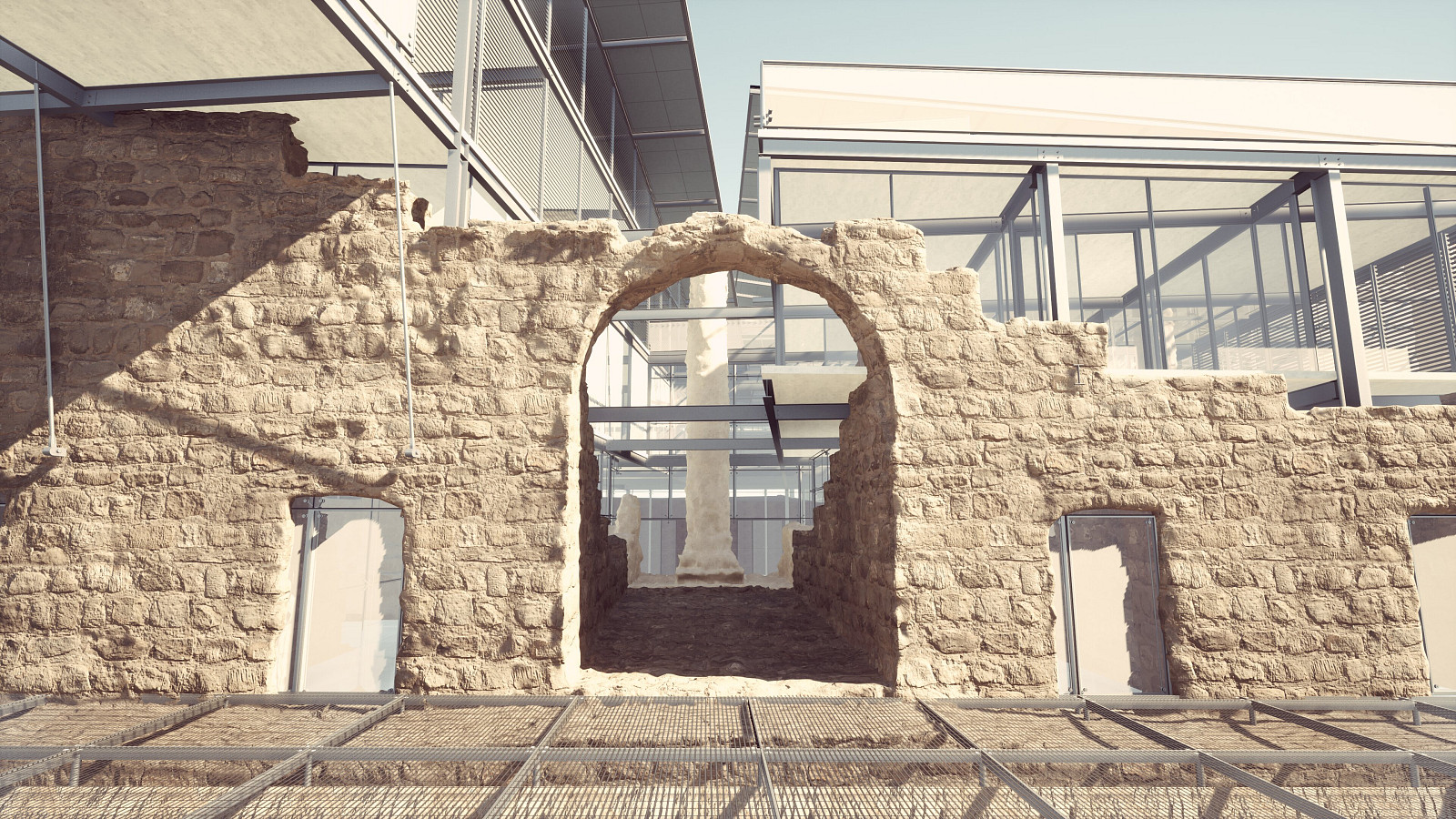
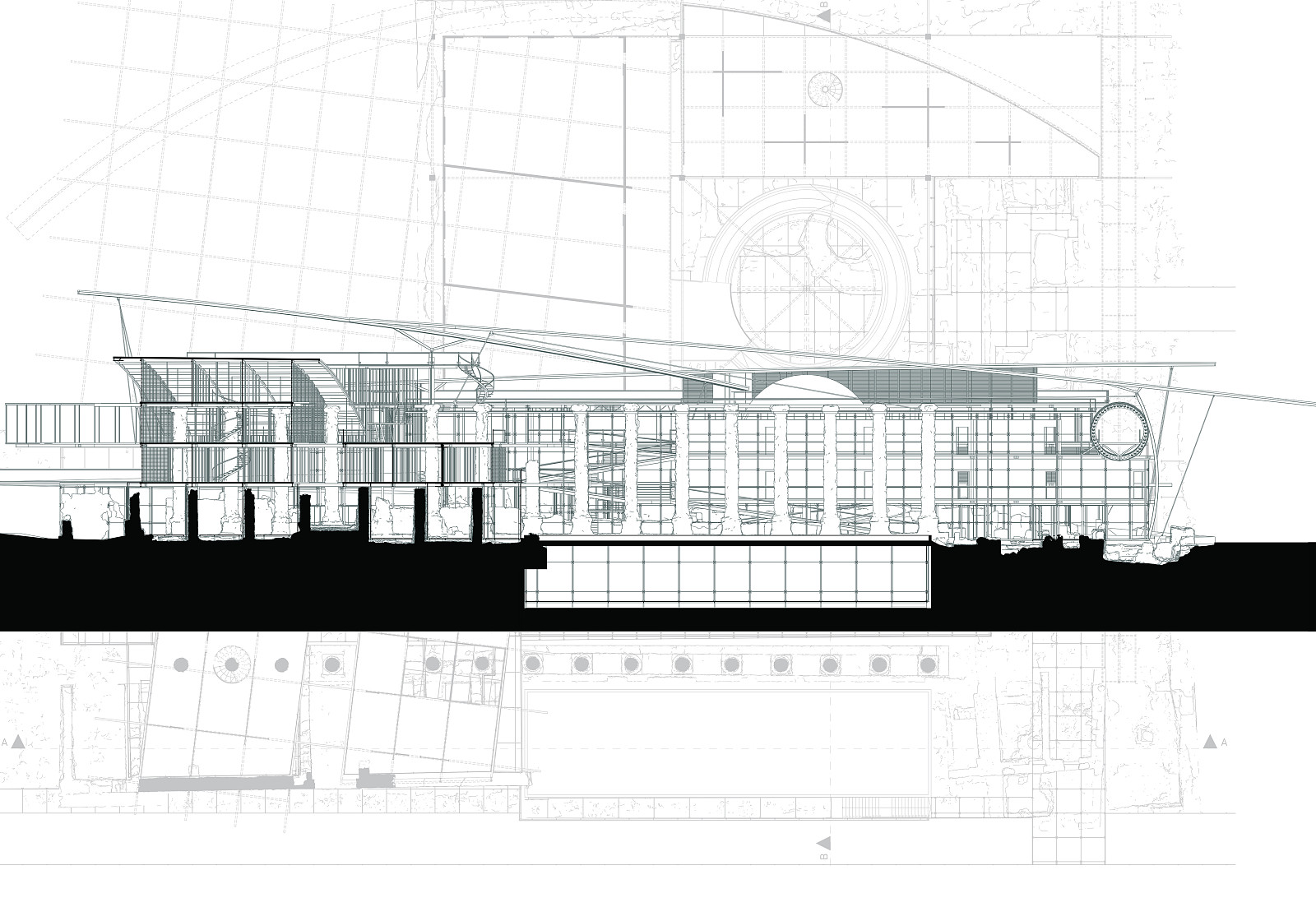
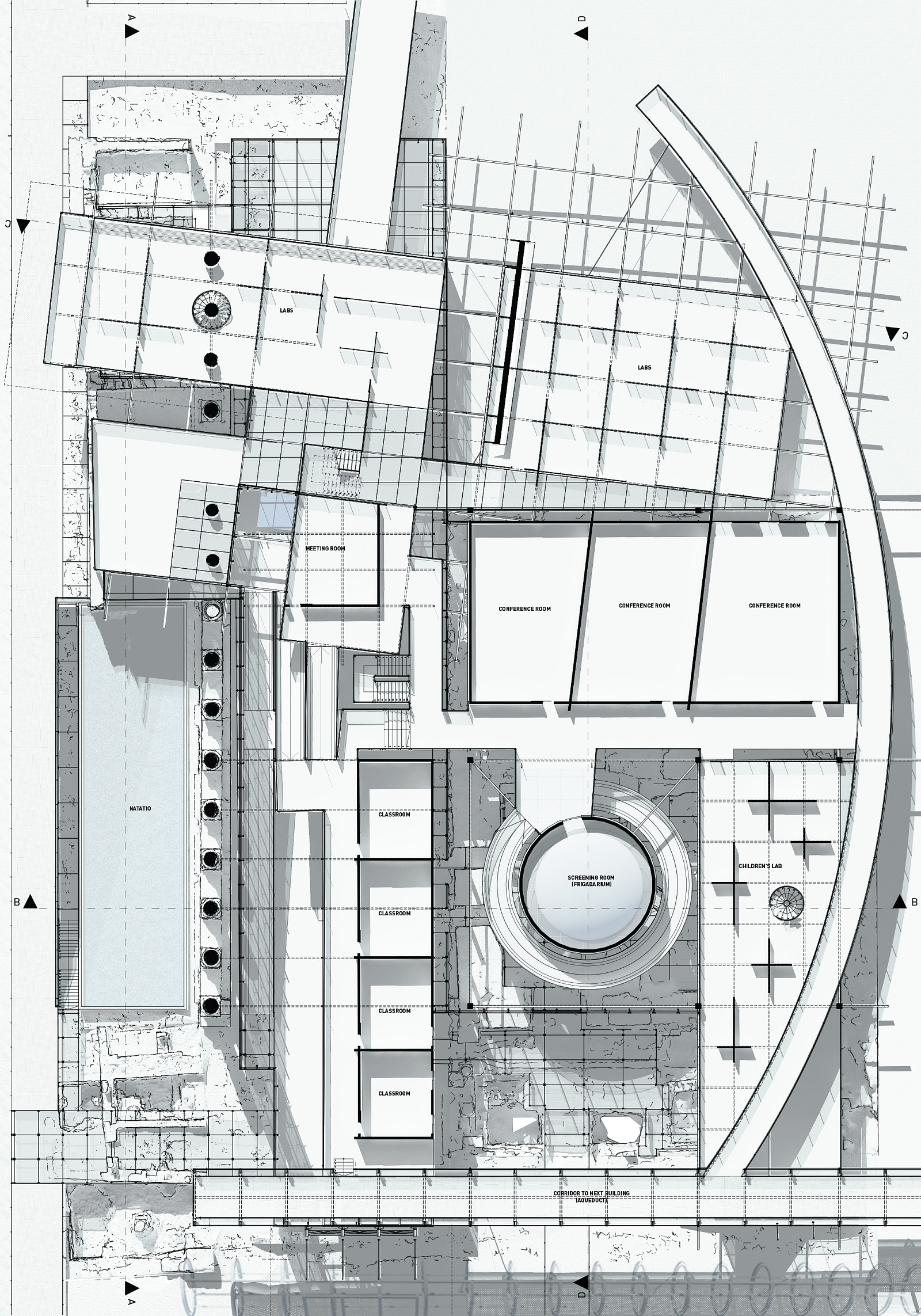
The project, situated within the archaeological site of Beit She'an, where the Roman city of Nysa Scythopolis once stood, represents the fruition of the Sixth Chapter—Equilibrium—in an architectural context. The building define equilibrium through the interaction between System and Liberty. System represents structure, order, and tradition, while liberty embodies freedom, creativity, and innovation. This exploration materializes architecturally through the juxtaposition of historical and contemporary languages. The Roman classical order serves as a symbol of structure, while new interventions introduce the liberated order. Historical elements such as the frigidarium and aqueduct are reimagined: the frigidarium’s dome becomes a contemporary floating structure, while the aqueduct transforms into a suspended glass walkway, bridging historical significance with modern liberated possibilities. Elevated tensile structures minimize physical impact, balancing preservation with innovation to navigate the tension between honoring the past and advancing the future for upcoming excavations. The program further reflects this conceptual framework, creating an educational campus that integrates formal, system-dependent learning with informal, self-directed exploration. This duality fosters both personal and collective growth, positioning the campus as a resource for Beit She’an’s residents. Spaces for research, such as laboratories, coexist with areas for community engagement, including kindergartens and social zones, encouraging interdisciplinary interaction.
Technical information
Throughout the design process, a diverse range of mediums was employed, including handcrafted modeling, manual drawing, digital 3D modeling, scanning, videography, and site mapping. These methods contributed to shaping the Sixth Chapter, particularly in planning the Nysa Scythopolis campus. To address the archaeological site’s complexity and layered history, and to gain a nuanced understanding of its details, I utilized a drone to capture aerial imagery for precise site mapping. This data was processed using photogrammetry technology to create a dense point cloud model, enabling in-depth analysis of the site’s geometric and spatial characteristics. This methodology facilitated the visualization of the site’s architectural layers and organizational structures as they existed in the Roman era, as well as the identification of evidence of destruction over time. The process revealed the architectural treasures preserved on the site and provided critical insights into its historical context. Additionally, photogrammetry technology was employed to digitally scan physical 3D models through image-based techniques, allowing their seamless integration into the digital workflow for refinement.
Created in:


Copyright © 2026 INSPIRELI | All rights reserved. Use of this website signifies your agreement to the Terms of Use, Privacy Policy, and use of cookies.
