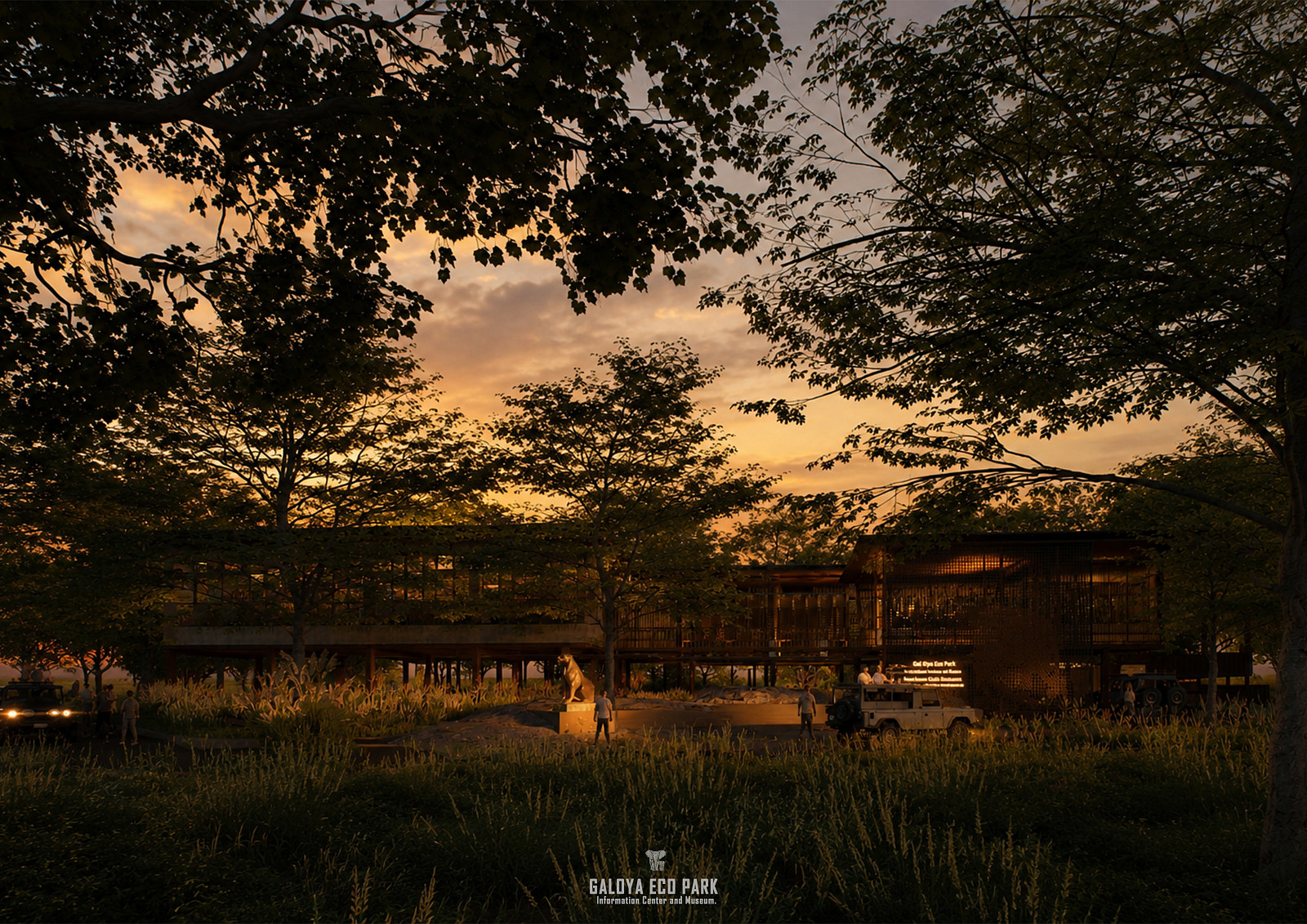
Gal Oya Eco Park Information Center and Museum


 Chandana Shrinath Wijetunga
Project idea
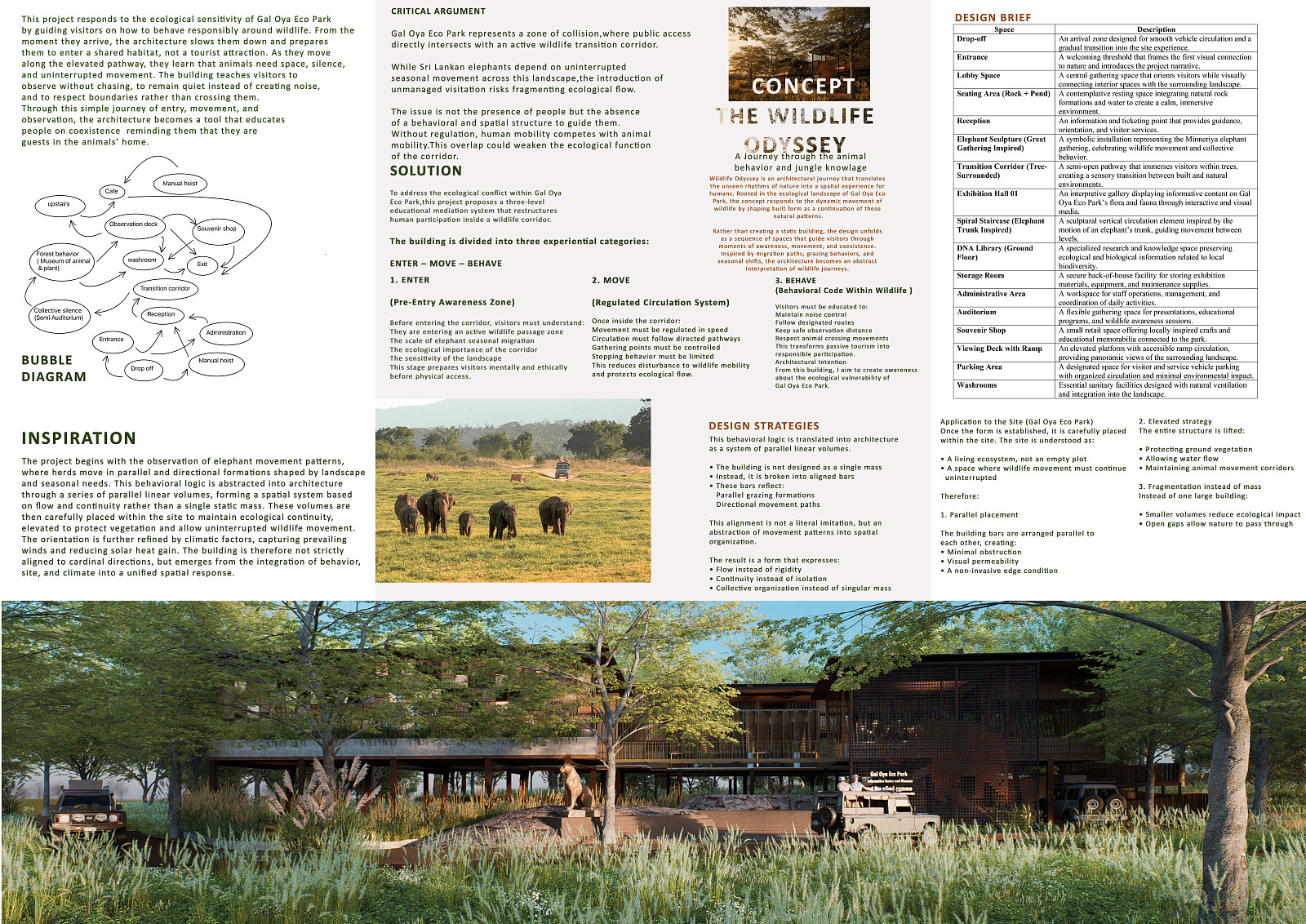
The Wildlife Information Center and Museum is envisioned as a sustainable educational and conservation facility located at the entrance of Gal Oya Eco Park, Habarana. The project responds to the growing interaction between wildlife and visitors by creating a space that informs, educates, and sensitizes people to the ecological significance of the region while minimizing disturbances to natural habitats.
Positioned within an important ecological corridor connecting the surrounding protected landscapes, the center serves as a gateway between humans and nature. Rather than functioning as a conventional museum, the building becomes an immersive learning environment where visitors experience the stories of wildlife, ecosystems, migration patterns, and conservation efforts through interactive exhibitions, interpretive displays, observation spaces, and educational programs.
The design is inspired by the concept of "The Living Corridor", reflecting the continuous movement of elephants and other wildlife through the landscape. Architecture is used as a mediator that makes invisible ecological systems visible to people. Through a series of exhibition galleries, information zones, viewing platforms, and outdoor learning spaces, visitors gain an understanding of the delicate balance between tourism, conservation, and biodiversity.
The museum showcases the unique biodiversity of Gal Oya Eco Park, including endangered flora and fauna, elephant migration routes, bird habitats, native vegetation, and ecological conservation initiatives. Sculptures, interactive displays, digital interpretation systems, and research-based exhibits encourage visitors to develop a deeper appreciation for Sri Lanka's natural heritage.
Beyond its role as a visitor facility, the Wildlife Information Center and Museum acts as a platform for environmental awareness, community engagement, scientific research, and sustainable tourism. By fostering understanding between people and wildlife, the project contributes to the long-term protection of the Gal Oya landscape while creating a meaningful and memorable educational experience for future generations.
Project description
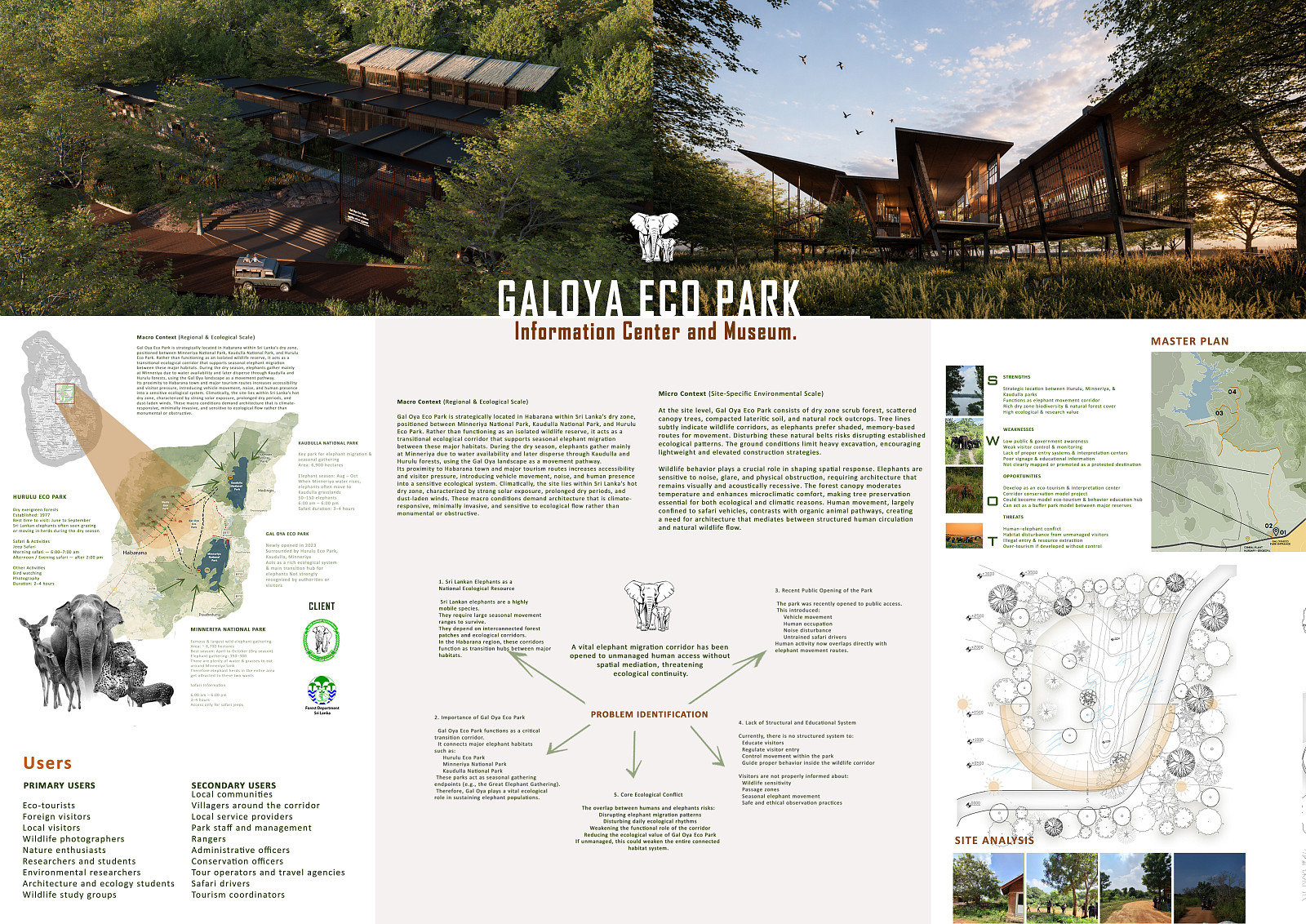
The Wildlife Information Center and Museum is conceived as a sensitive architectural intervention within the landscape of Gal Oya Eco Park, Habarana, where conservation, education, and ecological preservation become the primary drivers of design. The project emerged from a deep understanding of the site's natural characteristics, particularly a significant rock outcrop located at the center of the site and the surrounding wildlife habitats that have existed long before human occupation.
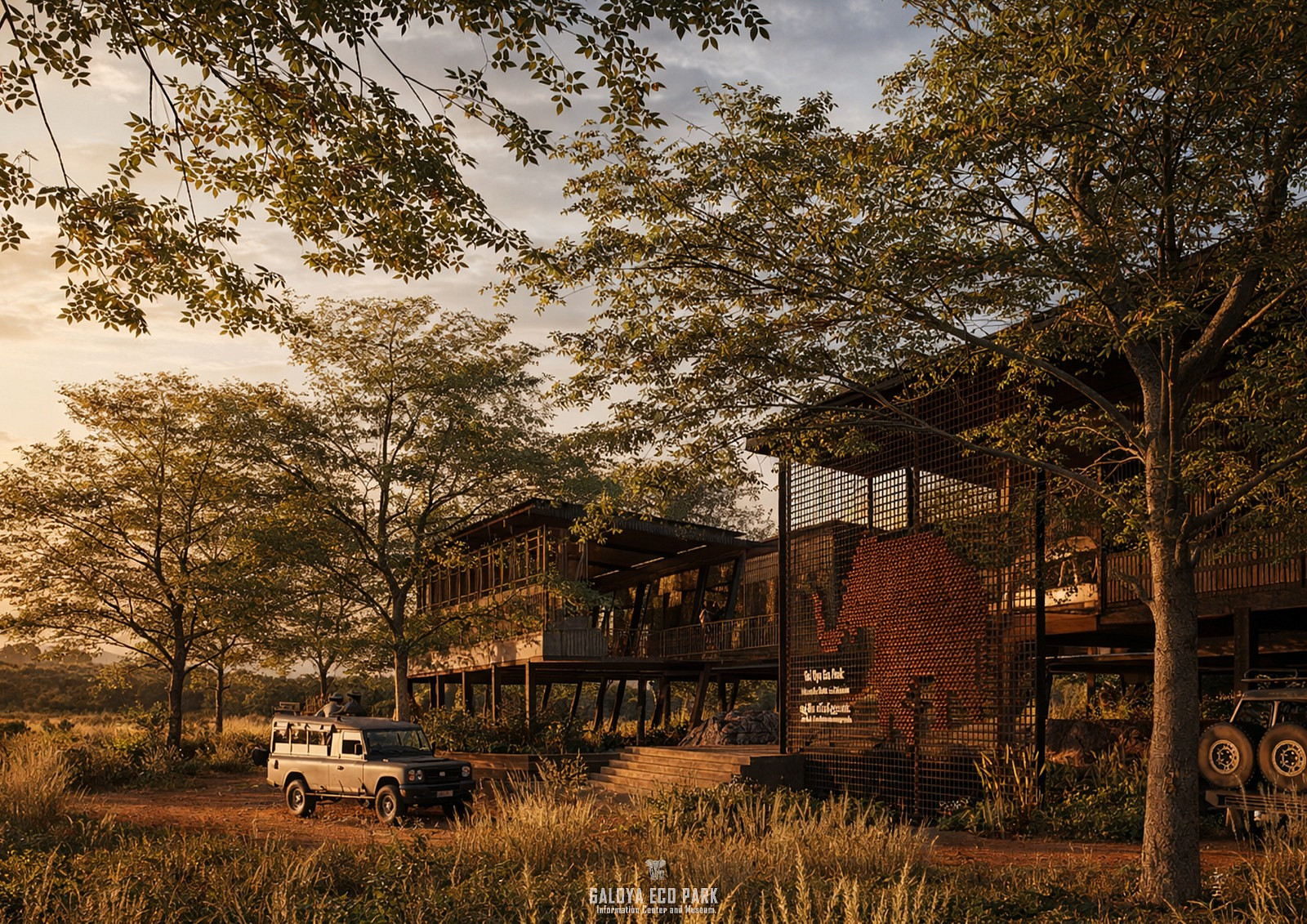
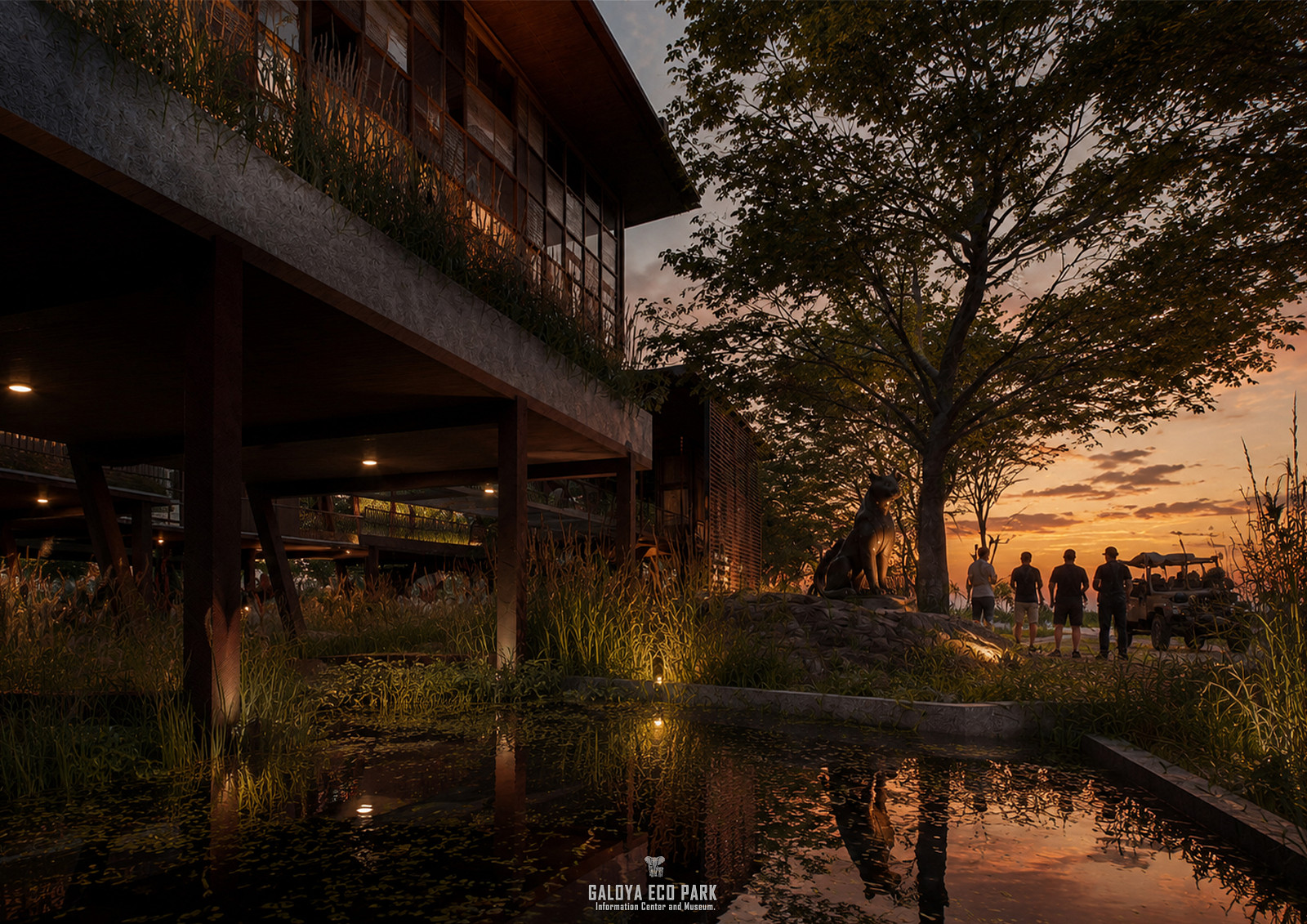
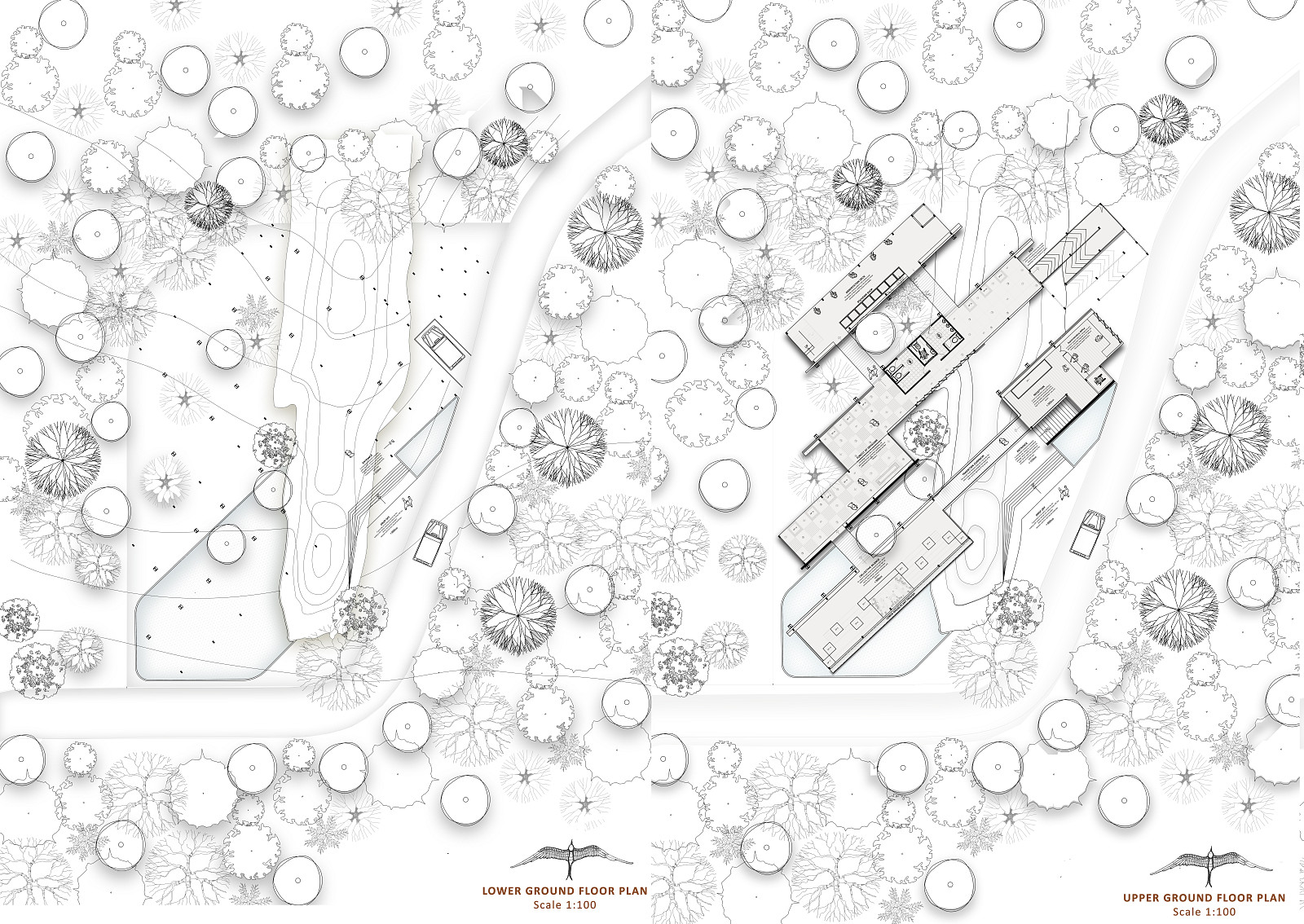
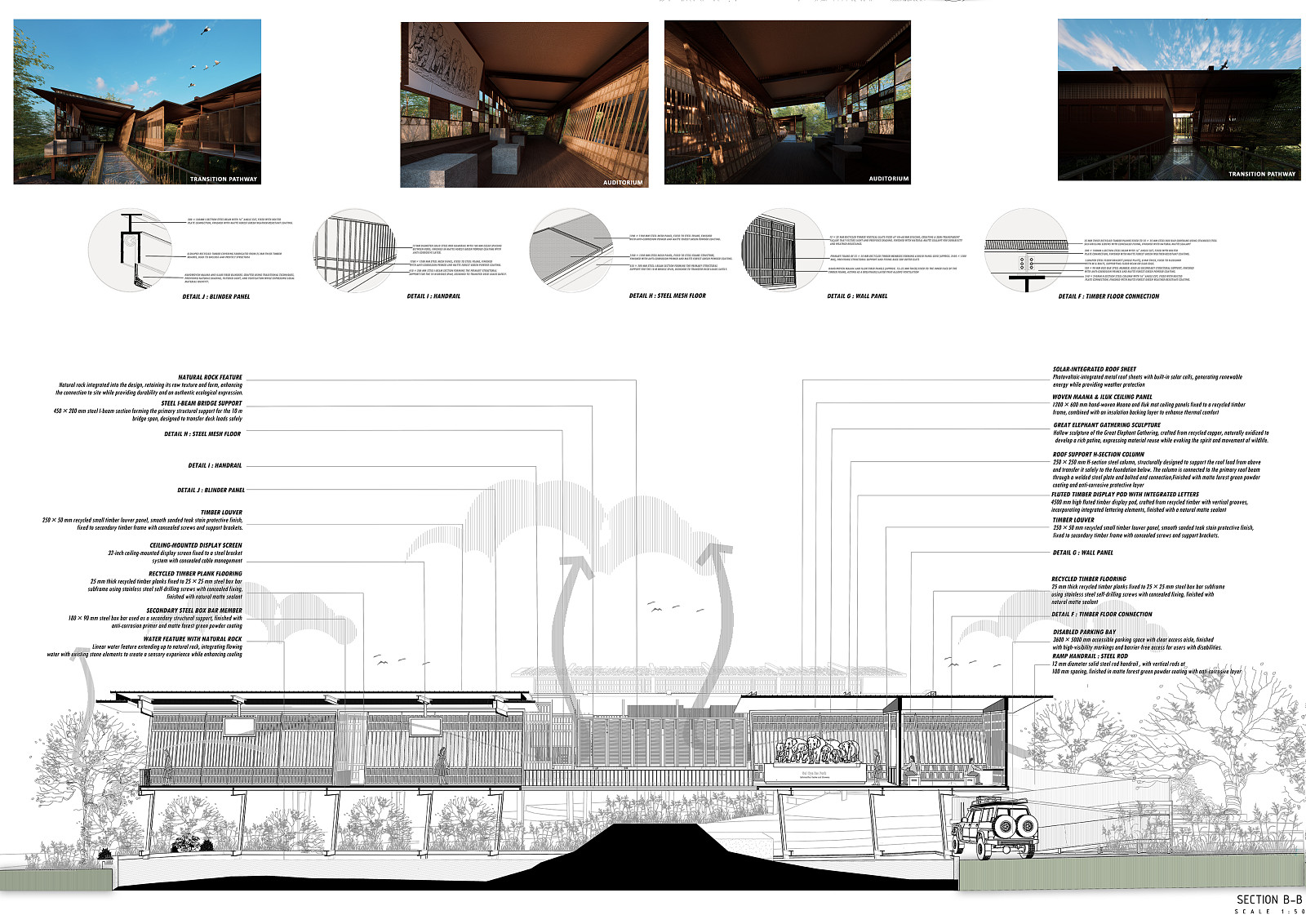
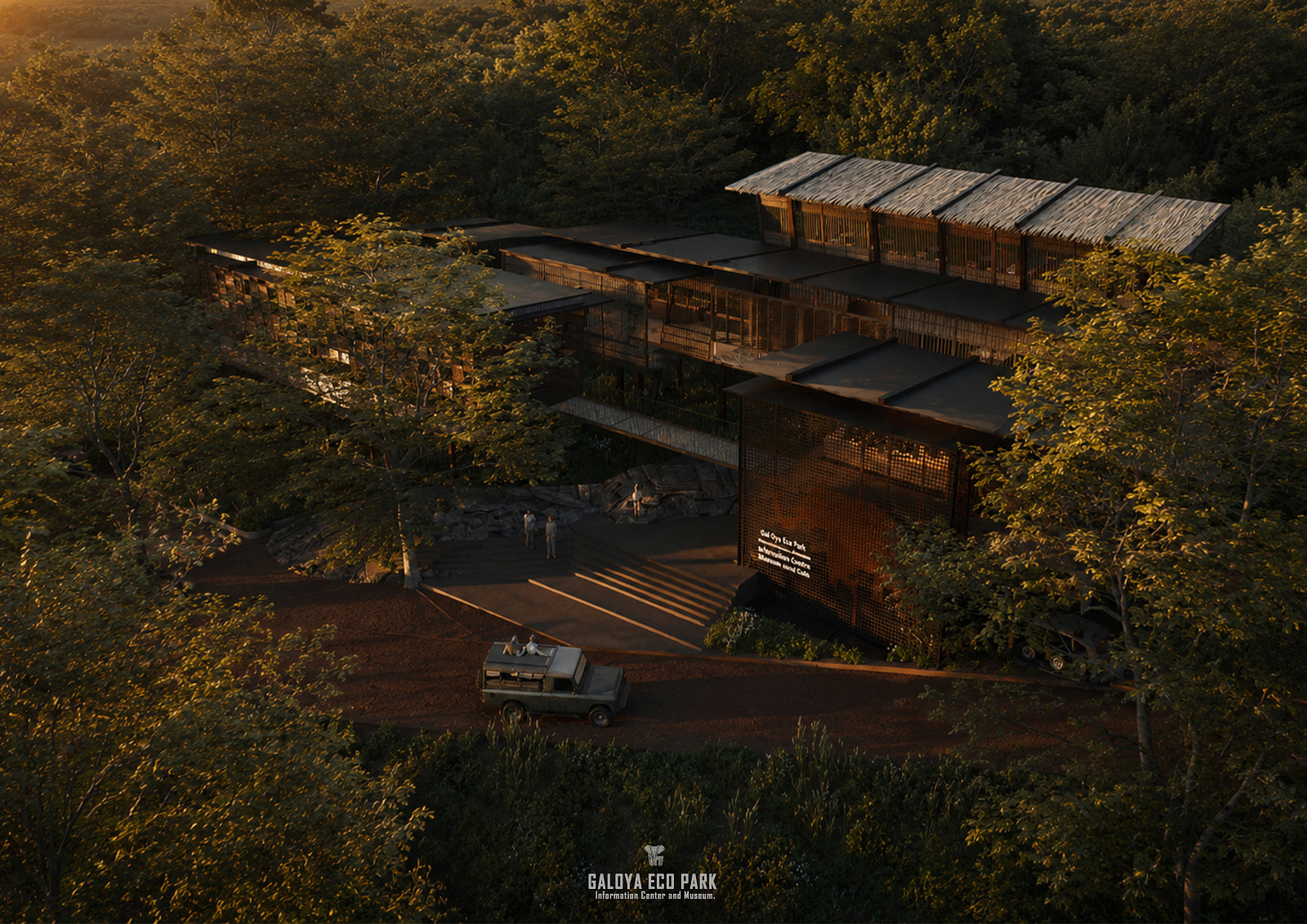
Rather than altering the terrain or removing natural features, the design adopts an elevated architectural strategy that allows the landscape to remain largely untouched. The building is lifted above the ground to protect the existing rock formation, preserve native vegetation, maintain natural water flow patterns, and minimize disruption to wildlife movement. This approach enables the architecture to coexist with nature rather than dominate it, allowing the ecosystem to continue functioning beneath and around the structure.
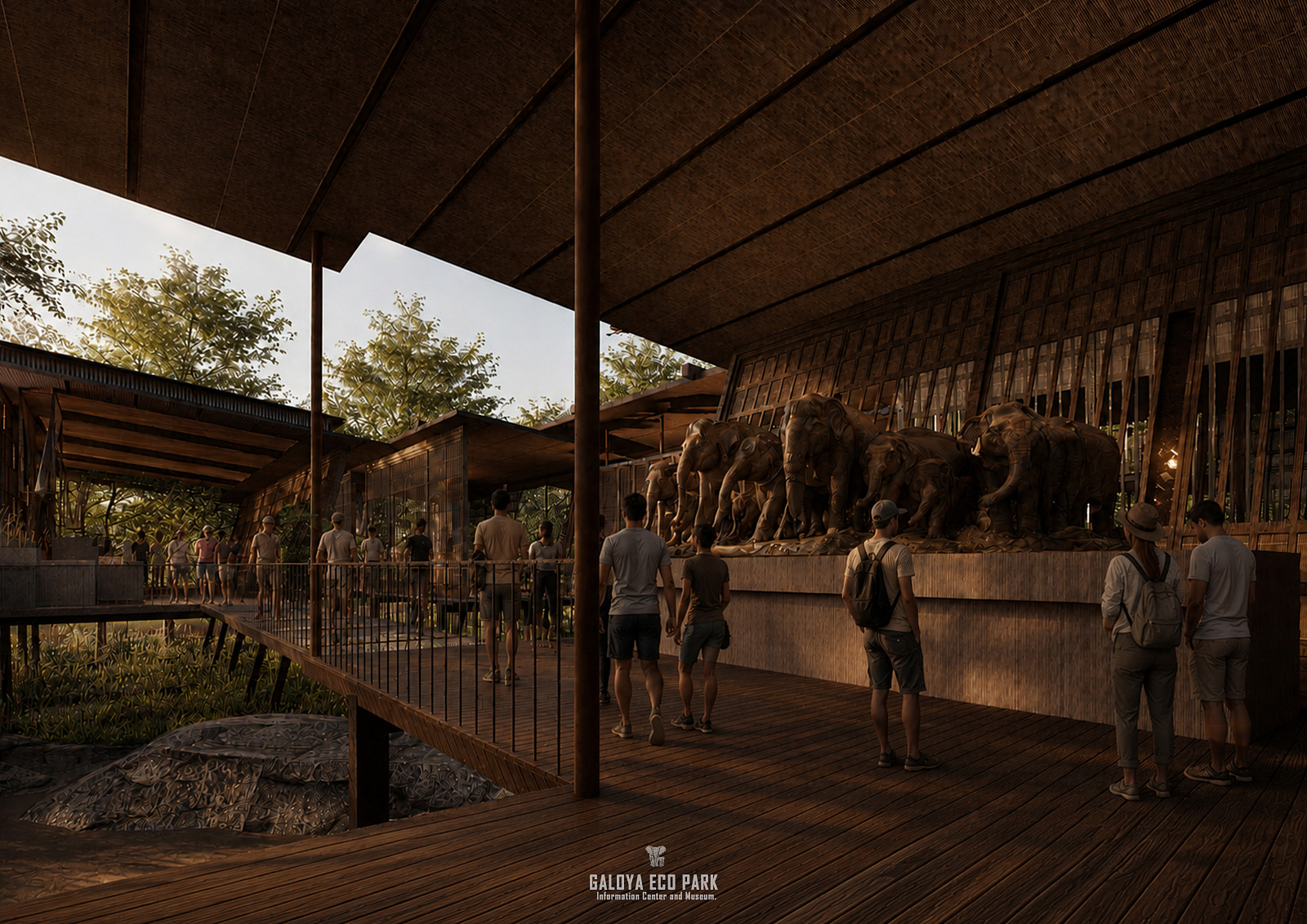
The spatial organization of the project is inspired by one of Sri Lanka’s most remarkable wildlife phenomena the Great Elephant Gathering, recognized as one of the largest seasonal gatherings of Asian elephants in the world. During migration and movement across the landscape, elephant herds often organize themselves in linear and parallel formations, creating a clear hierarchy where experienced matriarchs guide the herd safely through forests, grasslands, and water bodies. This natural behavior became the conceptual generator for the architectural plan.
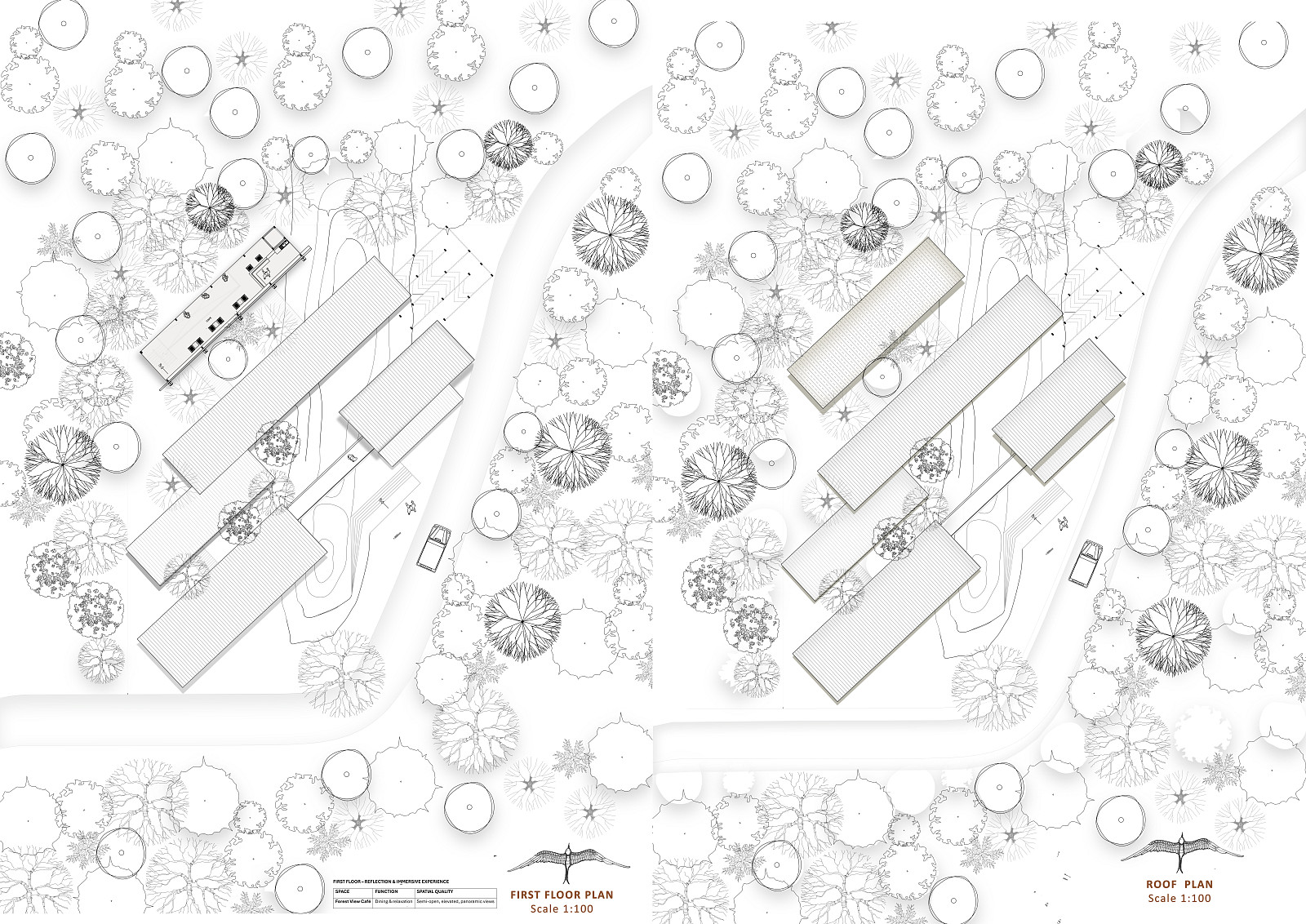
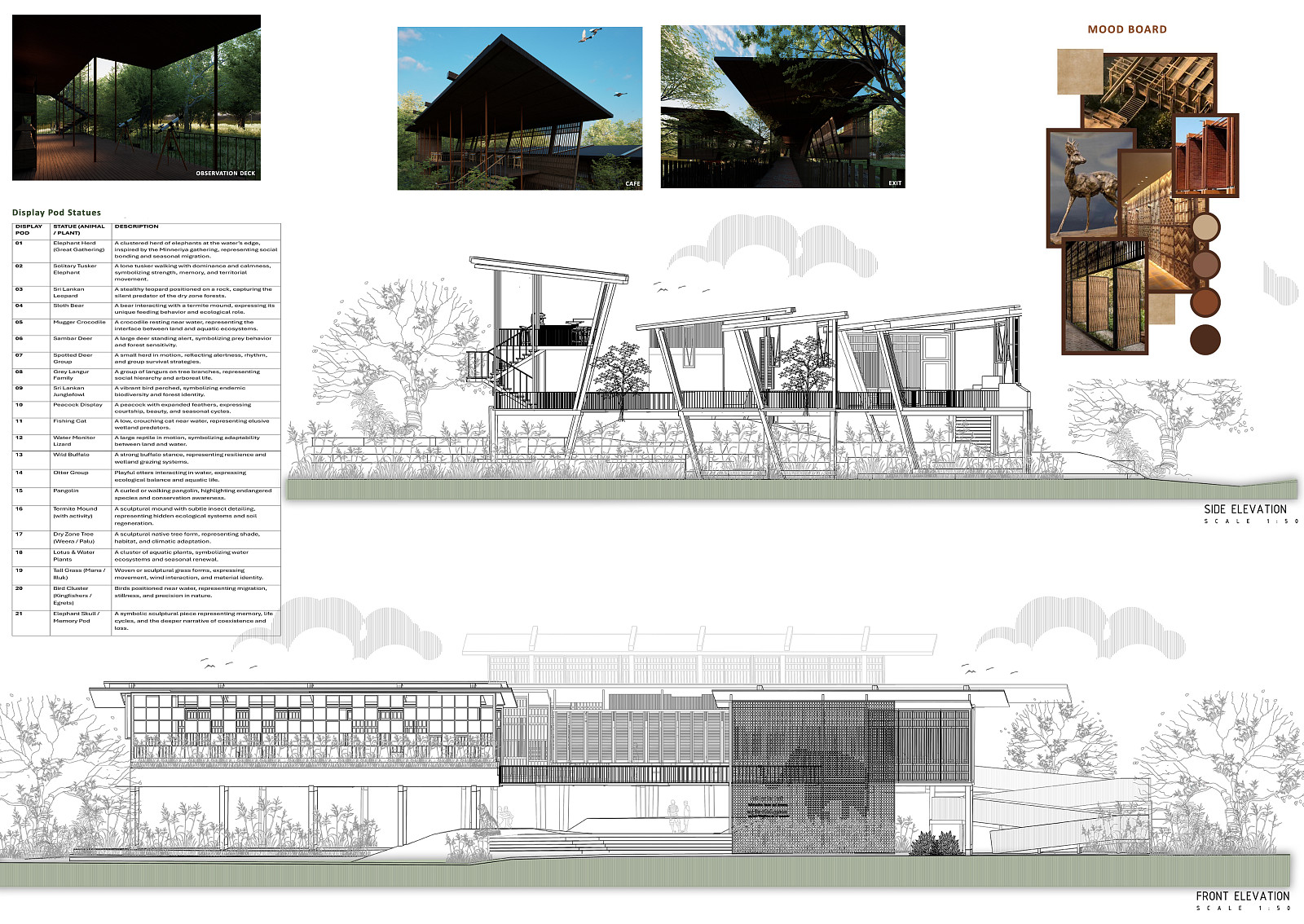
The museum is therefore designed as a series of linear parallel volumes arranged across the site, reflecting the organized movement patterns of elephant herds. These elongated forms create a sense of direction, rhythm, and progression throughout the visitor experience. Just as the leading elephant guides the herd toward resources and safe destinations, the main circulation spine acts as a guiding element that leads visitors through a sequence of educational, interpretive, and experiential spaces. Each gallery becomes part of a larger journey, revealing different layers of knowledge about wildlife, ecosystems, conservation, and the natural history of the region.
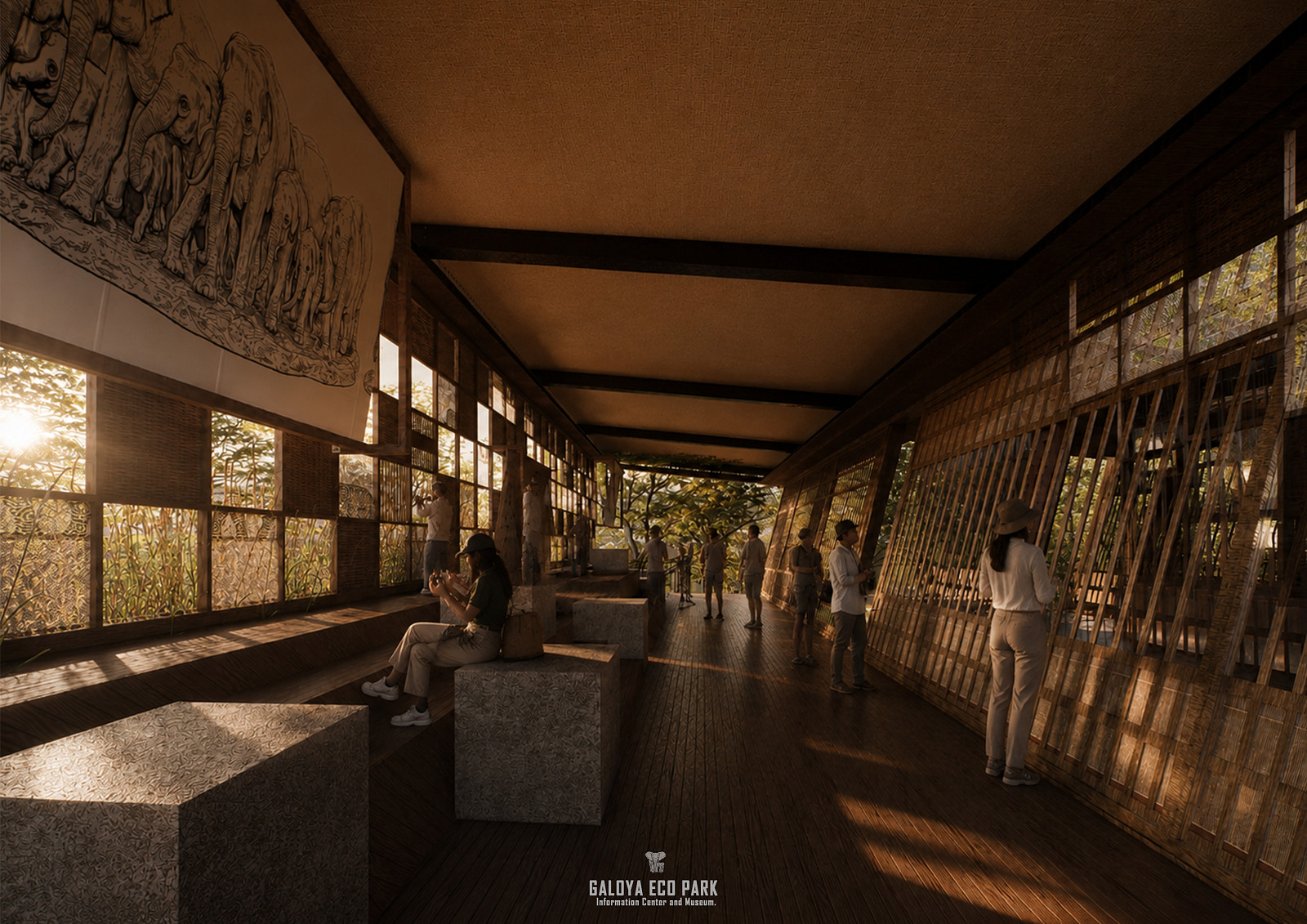
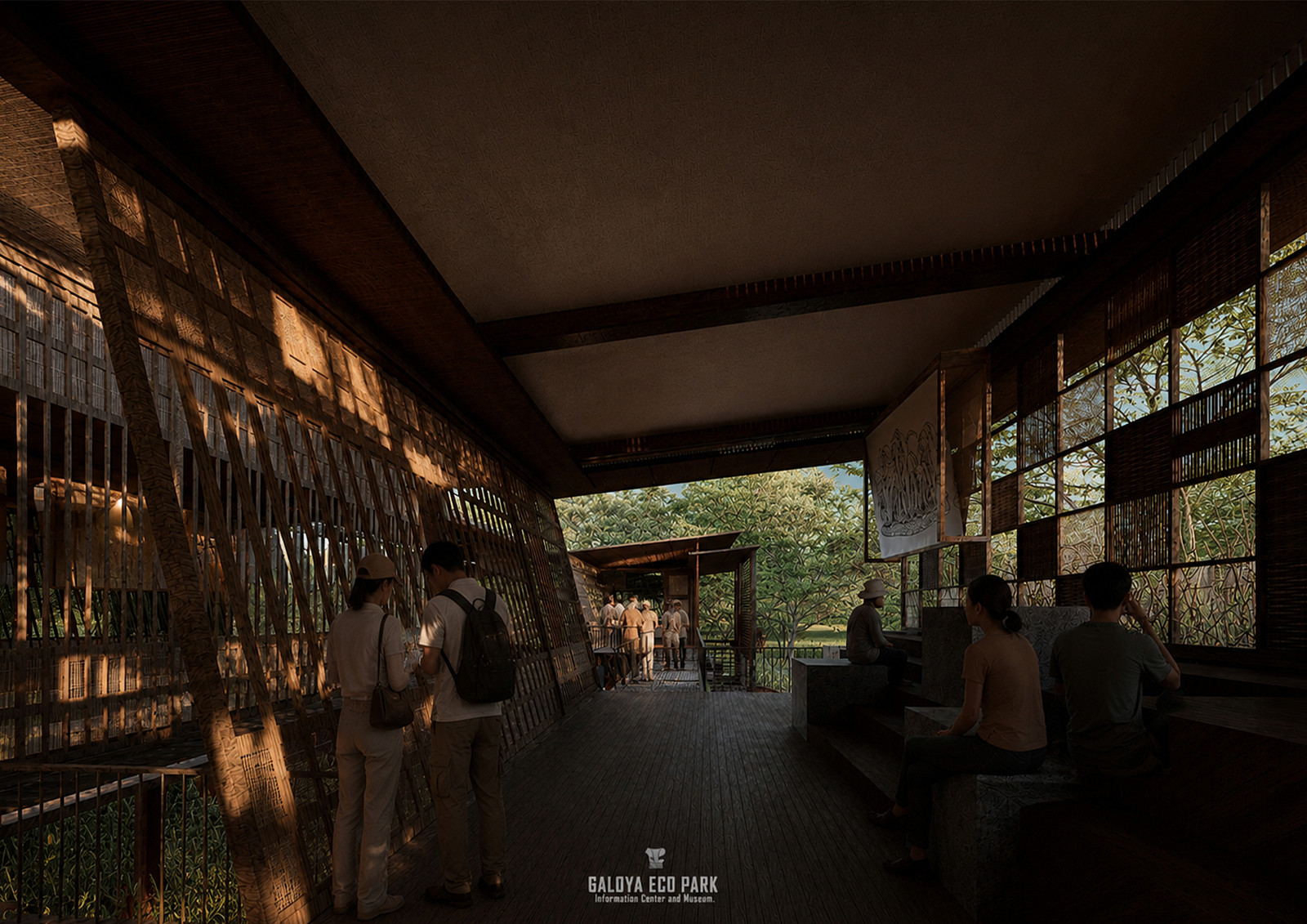
The linear parallel arrangement of the museum volumes is further enhanced through a series of carefully angled walls that shape the visitor's journey through the building. These walls are not positioned orthogonally; instead, they subtly shift, open, and compress the circulation path, creating a dynamic sequence of movement and discovery.
The inspiration for these angular forms originates from the unpredictable nature of wildlife encounters. Unlike a conventional museum where exhibits are revealed immediately, the angled walls create moments of anticipation, partial visibility, and gradual revelation. Visitors are encouraged to move forward, explore, and uncover new perspectives of the landscape, exhibits, and wildlife narratives as they progress through the building.
From an experiential perspective, the walls act as spatial guides, directing views toward significant site elements such as the preserved rock formation, surrounding forest canopy, water bodies, and wildlife observation points. The changing angles continuously frame and reframe the environment, transforming the journey into an immersive storytelling experience rather than a simple circulation route.
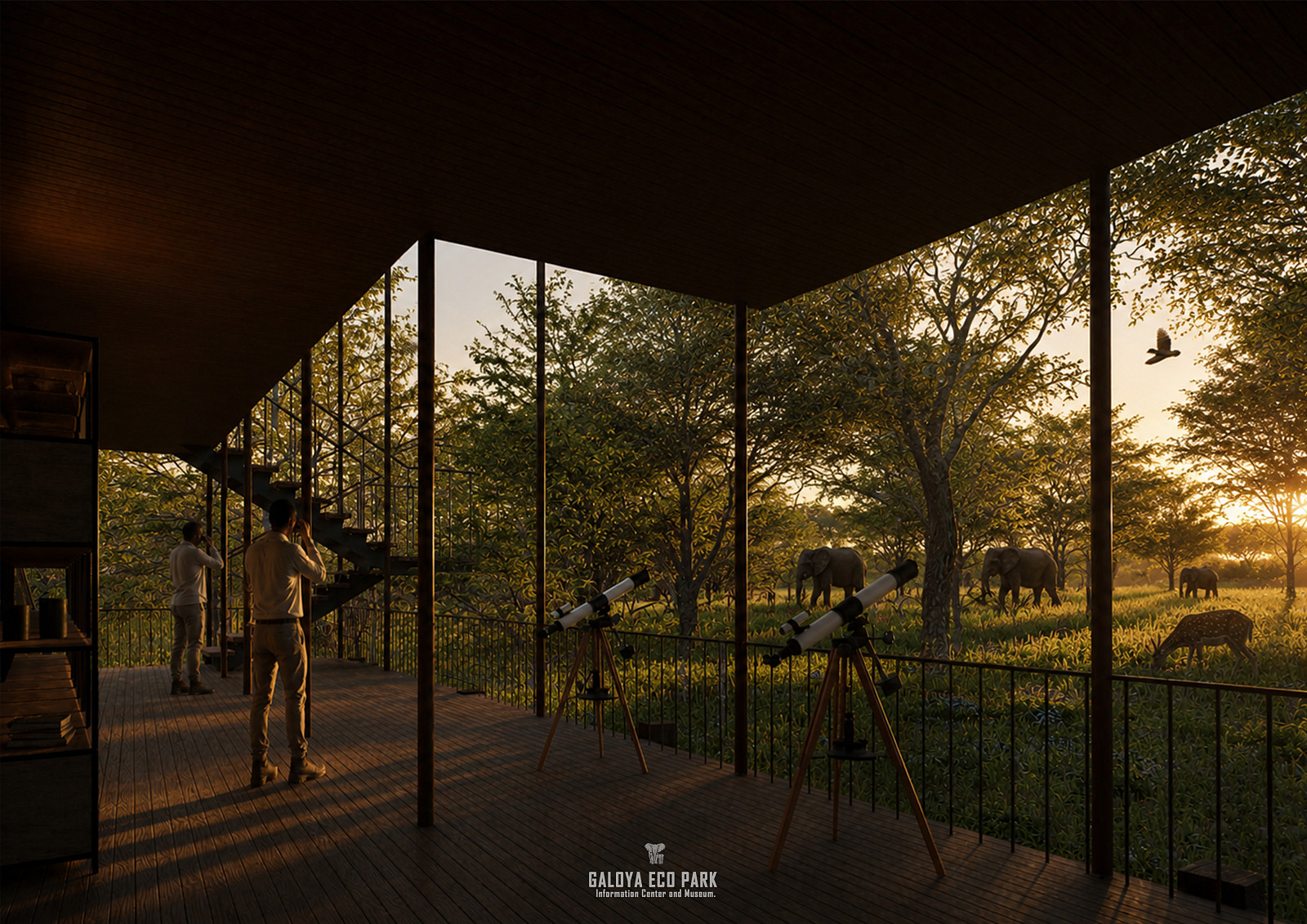
The preserved rock formation becomes a focal point within this journey, acting as a natural landmark around which the architecture respectfully navigates. Elevated walkways, viewing platforms, and exhibition spaces frame views of the surrounding landscape, encouraging visitors to observe and understand nature from a position of respect rather than intrusion.
Ultimately, the Wildlife Information Center and Museum is envisioned as more than a building; it is an educational journey inspired by the wisdom of wildlife itself. Through its elevated presence and linear parallel organization derived from the Great Elephant Gathering, the project celebrates the movement, leadership, and interconnectedness of nature while demonstrating how architecture can protect, interpret, and coexist with the landscapes it inhabits.
Technical information
1. Site Integration and Elevated Design Strategy
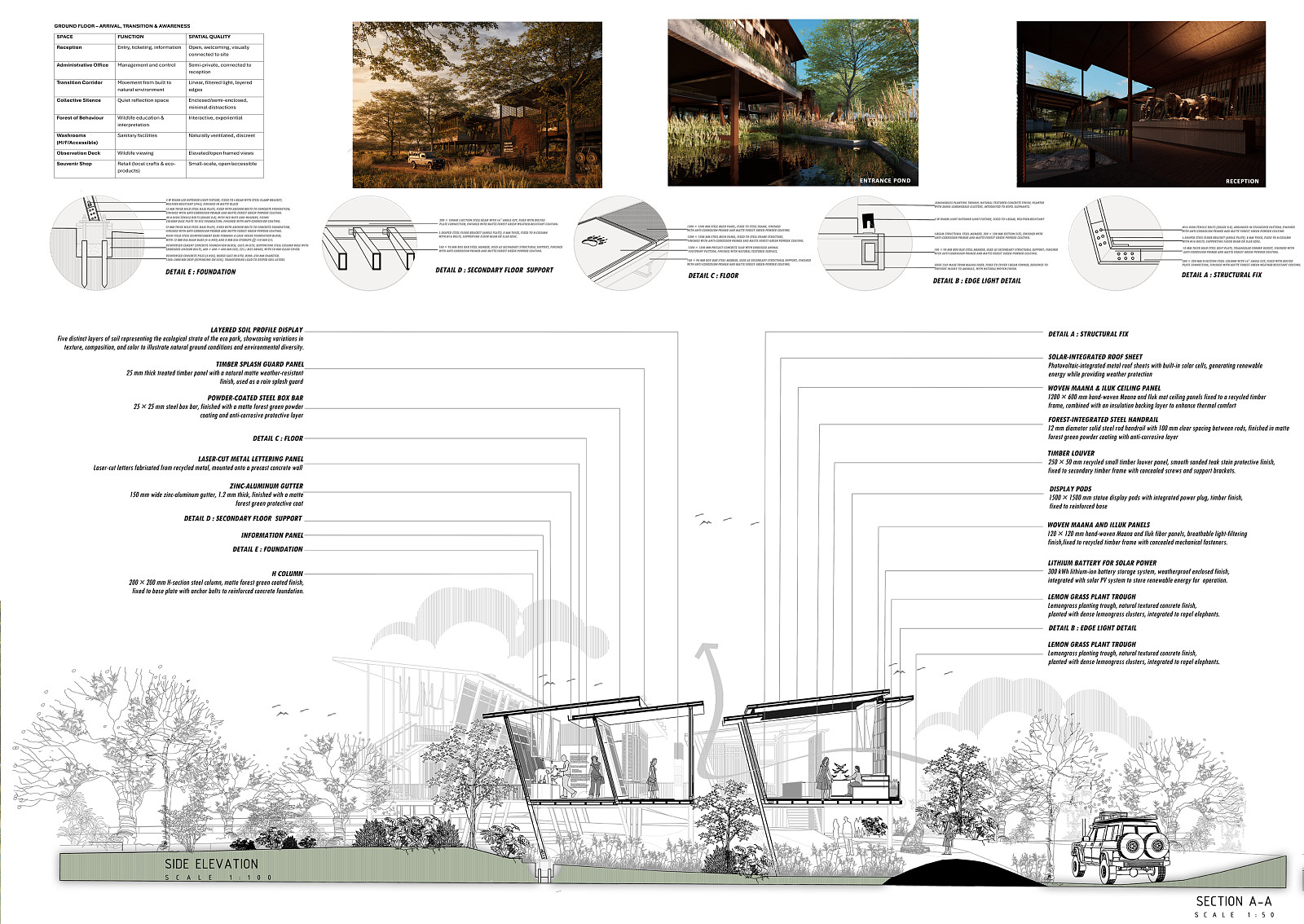
The Wildlife Information Center and Museum at Gal Oya Eco Park, Habarana, is conceived as a low impact conservation and educational facility that integrates architecture with the surrounding ecological landscape. The building is strategically elevated above the natural ground level to minimize disturbance to the site's existing environmental features, particularly a significant rock outcrop located at the center of the site. Rather than modifying the terrain, the design preserves the rock formation, existing vegetation, natural drainage patterns, and wildlife movement corridors, allowing the landscape to remain continuous beneath the structure. This elevated approach reduces the building footprint while creating an immersive visitor experience that enables observation of the surrounding ecosystem from a respectful distance.
2. Structural System and Material Strategy
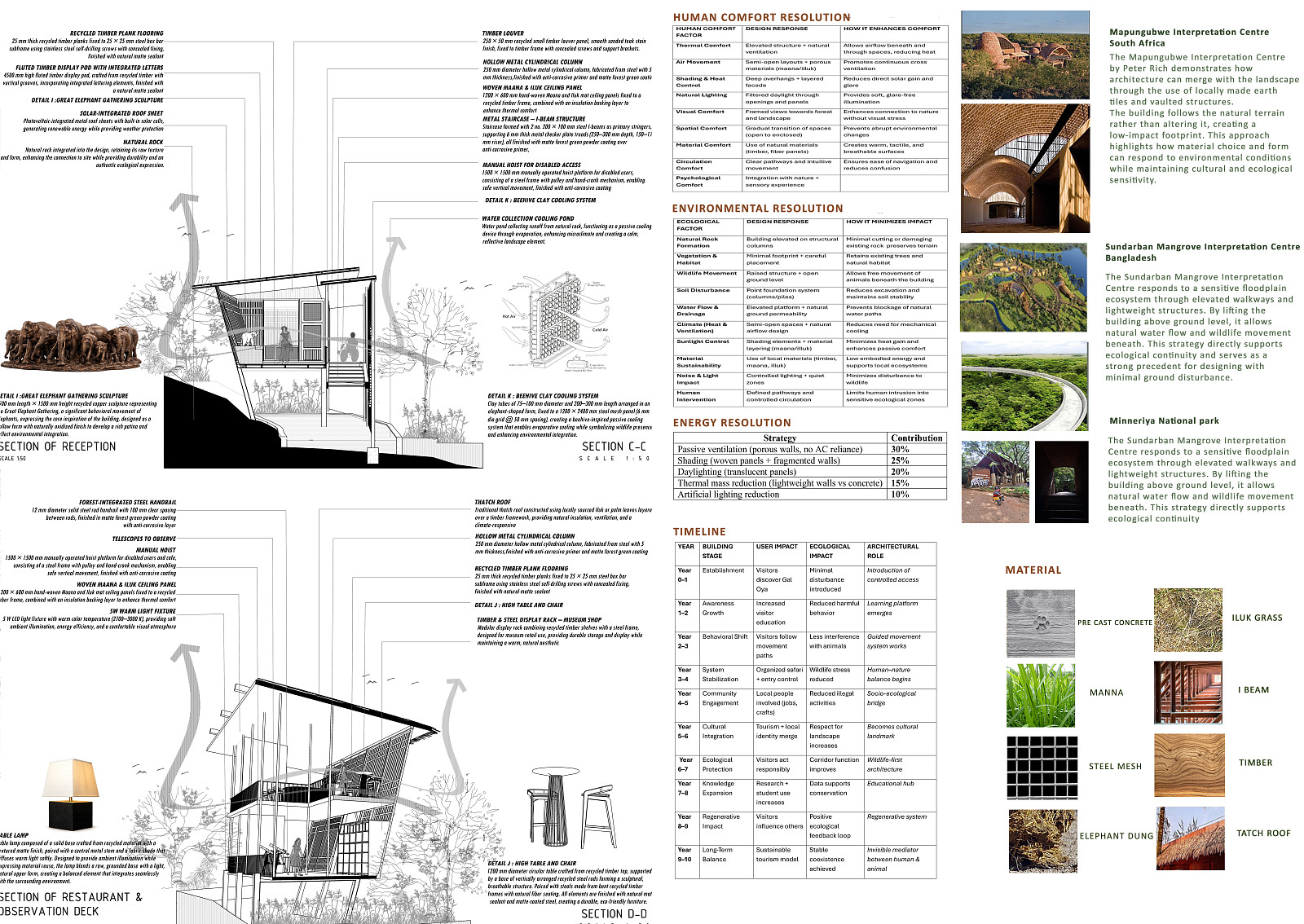
The project utilizes a lightweight structural system consisting primarily of recycled steel columns and beams combined with reclaimed timber framing and decking elements. This construction methodology minimizes excavation requirements and reduces the environmental impact associated with traditional building techniques. The building envelope incorporates sustainable materials sourced from the local region, including reclaimed timber, woven Mana and Illuk grass panels, elephant dung composite boards, natural earth based finishes, and recycled steel components. These materials not only contribute to the project's environmental performance but also reflect the cultural and ecological identity of the Habarana region. The architectural form is organized through a series of linear parallel volumes inspired by the migratory formations of elephant herds, while angled walls create a dynamic sequence of spaces that frame views of the landscape and enhance the visitor's experiential journey.
3. Environmental Sustainability and Climate Response
Environmental sustainability is a fundamental aspect of the design. The building employs passive design strategies such as natural cross ventilation, optimized daylighting, deep roof overhangs for solar protection, and elevated floors that promote air circulation beneath the structure, reducing heat gain and improving thermal comfort. A key environmental feature is the Beehive Clay Cooling System, where clay tubes measuring approximately 75–100 mm in diameter and 200–300 mm in length are arranged within elephant-shaped perforated panels mounted on steel mesh frames. Inspired by traditional evaporative cooling principles and natural beehive formations, the system cools incoming air as it passes through the porous clay elements, reducing indoor temperatures without mechanical intervention. Beyond its climatic function, the elephant-shaped configuration reinforces the project's wildlife narrative while creating a distinctive architectural identity.
Rainwater harvesting systems, permeable landscape surfaces, and natural drainage channels are integrated to manage water responsibly and reduce runoff. Renewable energy technologies, including rooftop photovoltaic panels and energy efficient lighting systems, further reduce operational energy consumption. Together with the Beehive Clay Cooling System, these passive and active environmental strategies create a building that responds effectively to the climatic conditions of Sri Lanka's dry zone while minimizing resource consumption and environmental impact.
4. Functional Planning and Visitor Experience
Functionally, the facility accommodates a range of educational, interpretive, and visitor-oriented activities. The program includes wildlife exhibition galleries, interactive information displays, learning and workshop spaces, observation platforms, research and administrative facilities, and visitor amenities such as a café and retail area. A continuous elevated circulation spine connects these functions, guiding visitors through a curated sequence of experiences inspired by the movement of elephant herds during the Great Elephant Gathering. Through its integration of sustainable technologies, locally sourced materials, ecological preservation strategies, and experiential design principles, the Wildlife Information Center and Museum serves as a model for environmentally responsible architecture that supports conservation, education, and sustainable tourism within the Gal Oya landscape.

Copyright © 2026 INSPIRELI | All rights reserved. Use of this website signifies your agreement to the Terms of Use, Privacy Policy, and use of cookies.