THE UNBROKEN PORTICO Pavlov City House Memorial & Public Hub – Kharkiv


Project idea
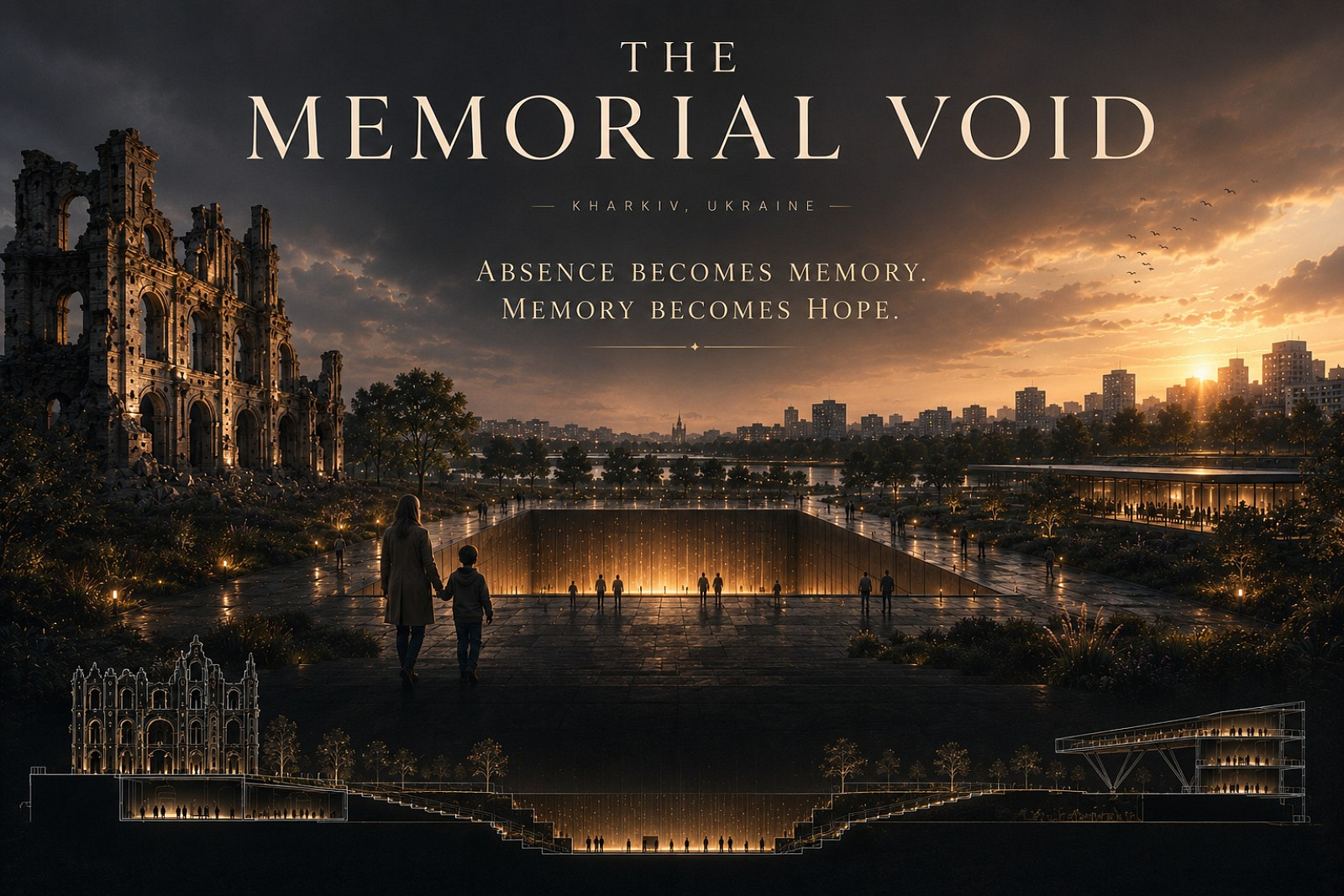
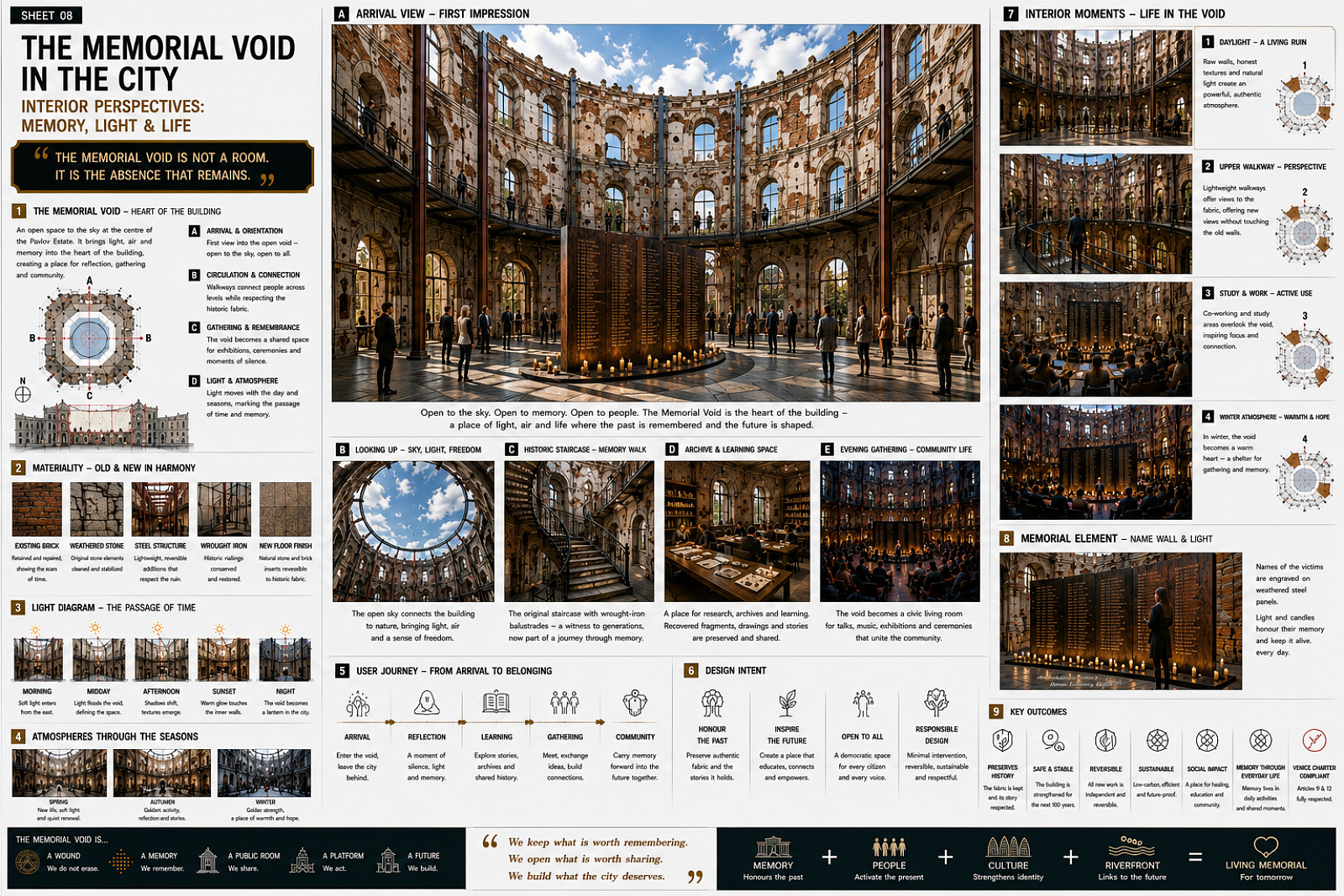
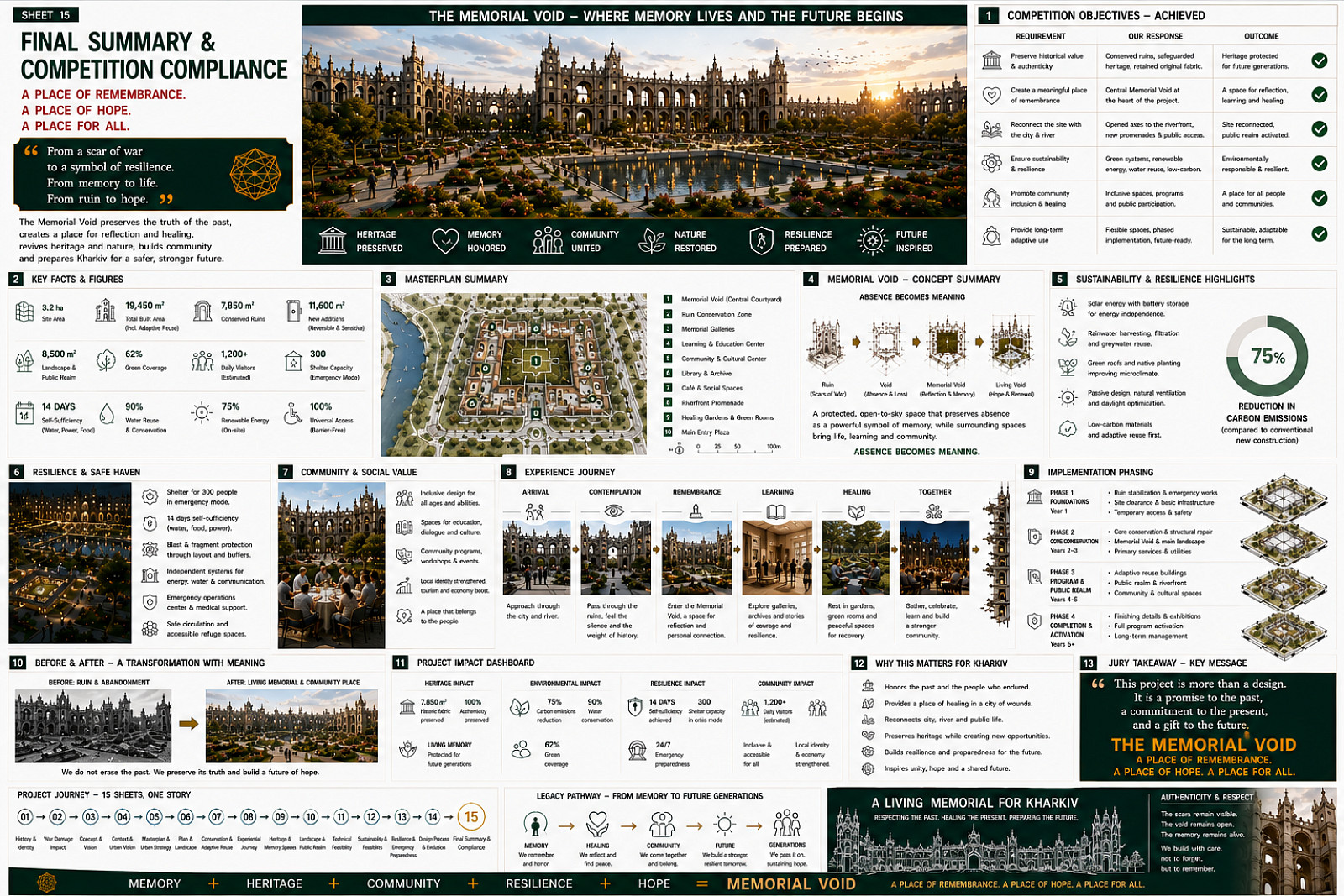
THE MEMORIAL VOID
Project Idea
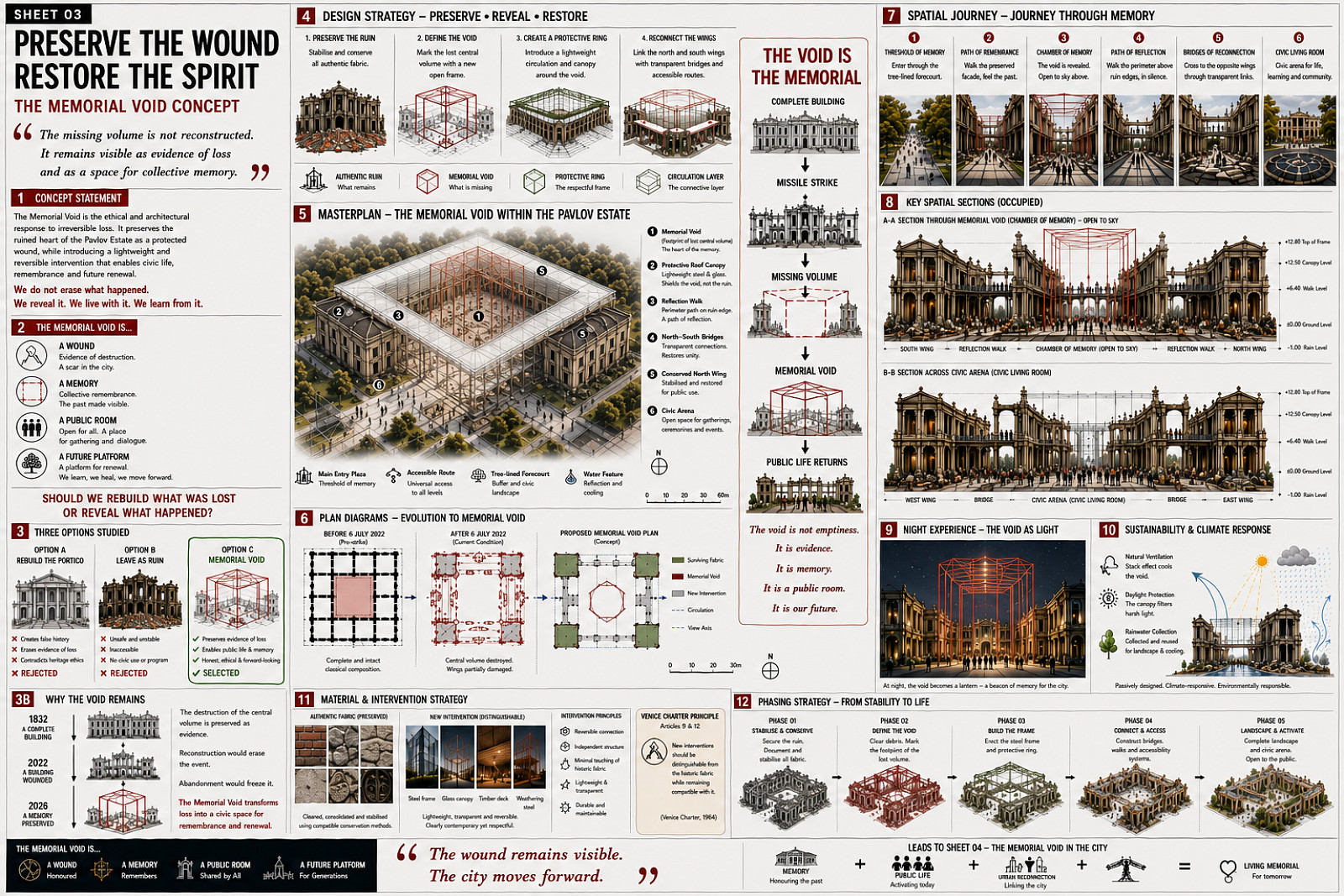
The Memorial Void is a proposal for the adaptive reuse and regeneration of a war-damaged historic monument in Kharkiv, Ukraine. Rather than reconstructing what has been lost or preserving the ruin as a static artifact, the project transforms absence itself into a meaningful civic and cultural space. The intervention recognizes the scars of conflict as part of the site's identity and reinterprets them as a place for remembrance, healing, learning, and future resilience.
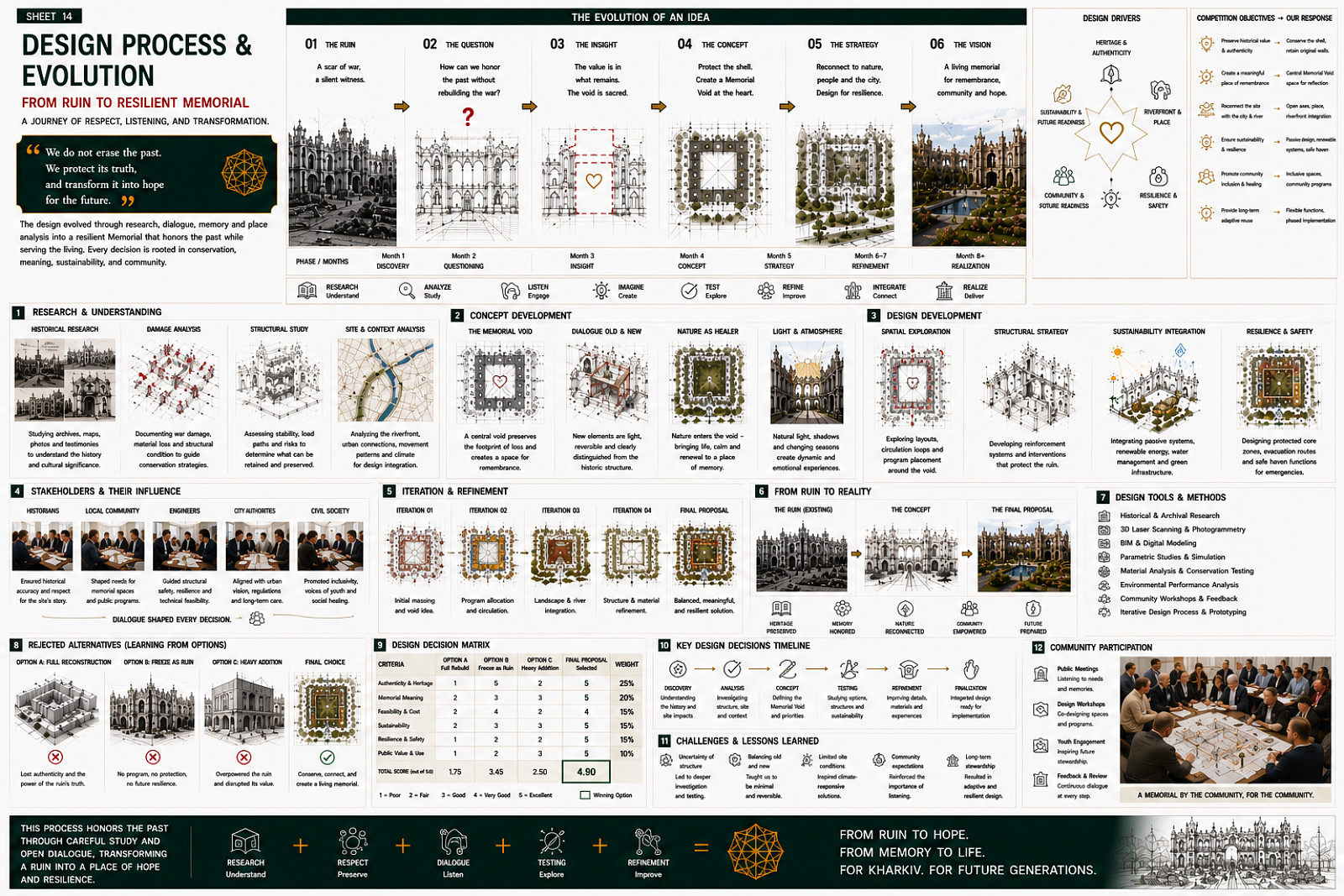
The project is founded on the belief that heritage preservation should not erase history but reveal it. The damaged structure is carefully conserved as an authentic witness to the past, while a new memorial landscape and public program are introduced to reconnect people with place, memory, and community. At the heart of the proposal lies the Memorial Void - a contemplative space carved from absence, where loss becomes visible, memory becomes collective, and reflection becomes a catalyst for renewal.
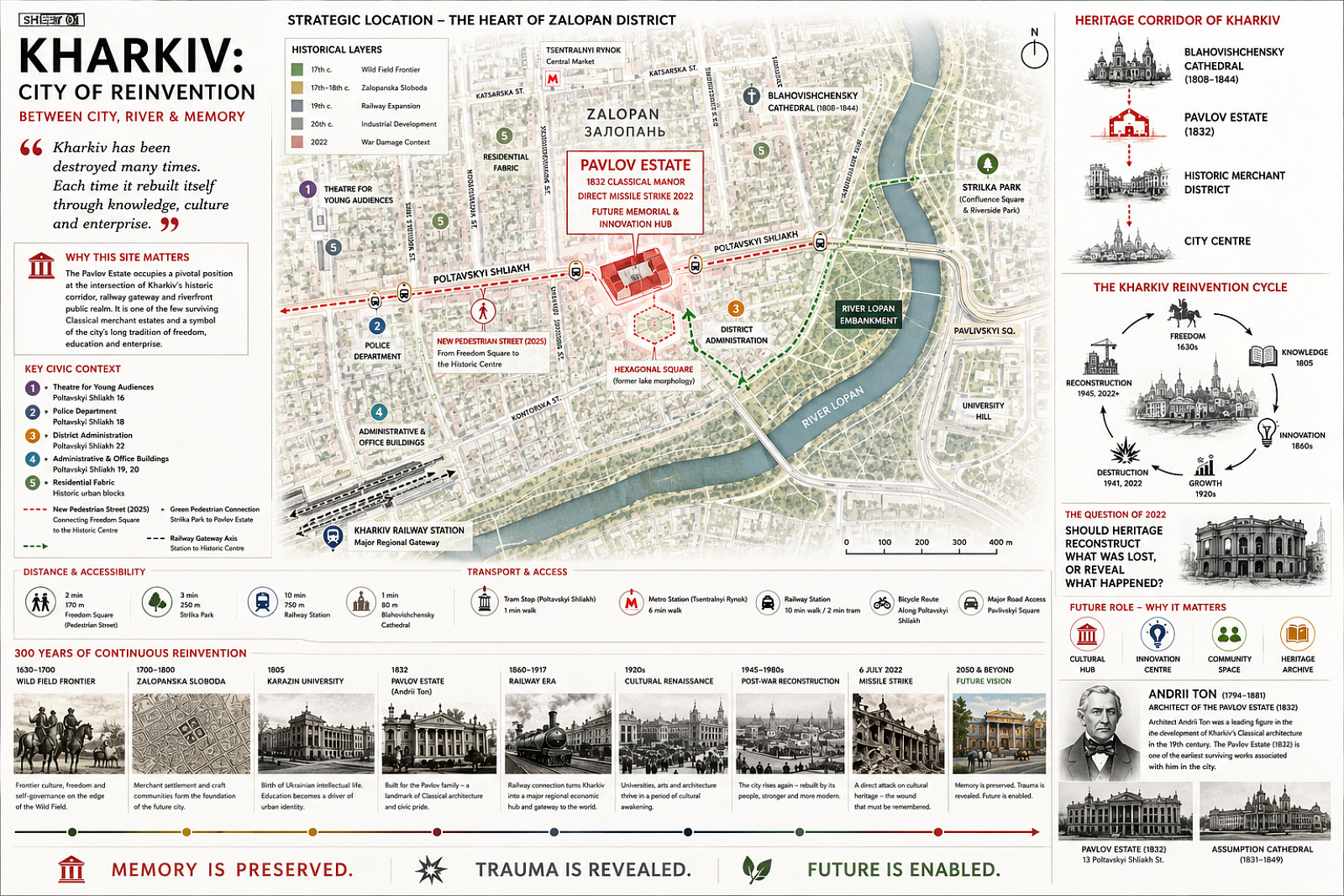
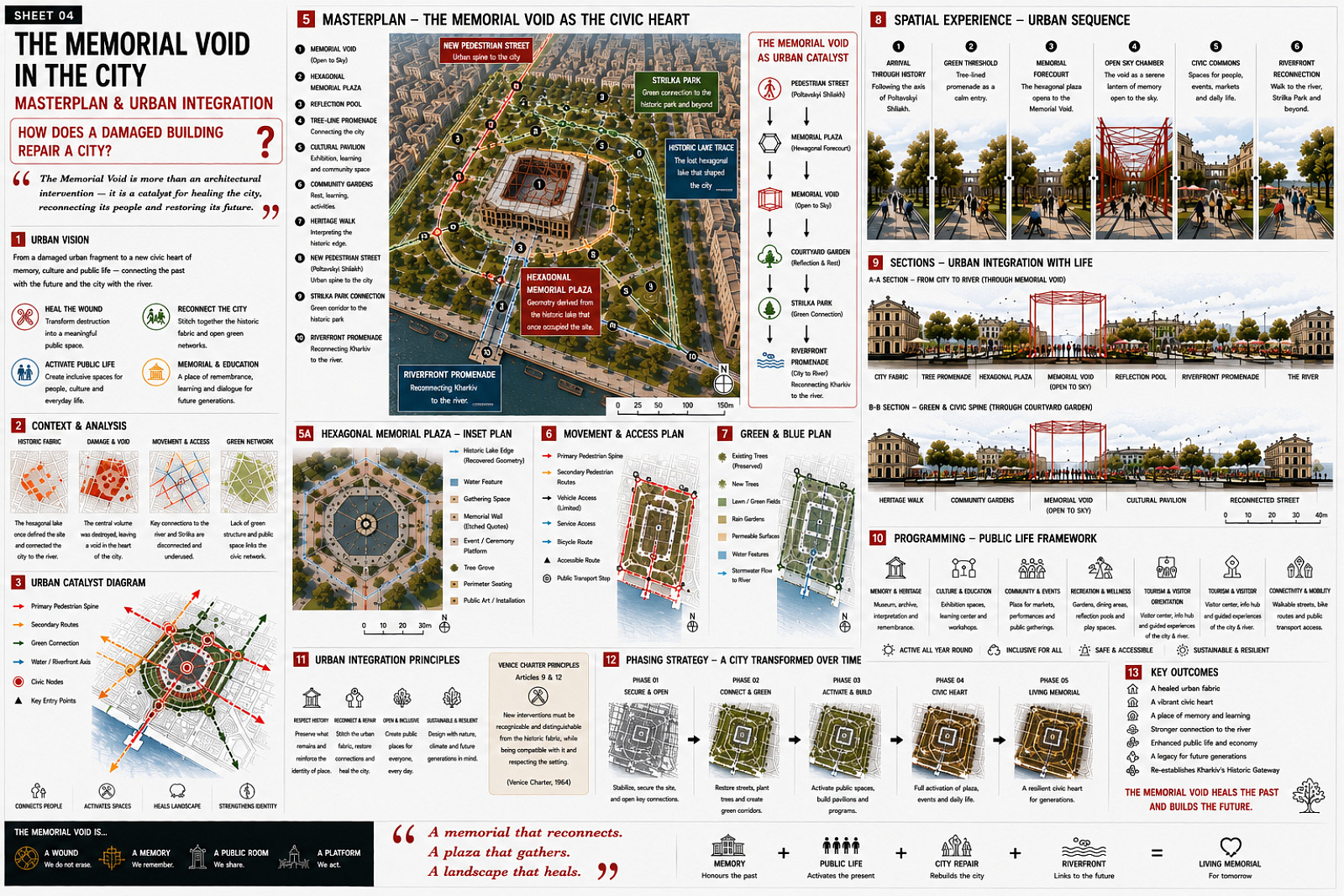
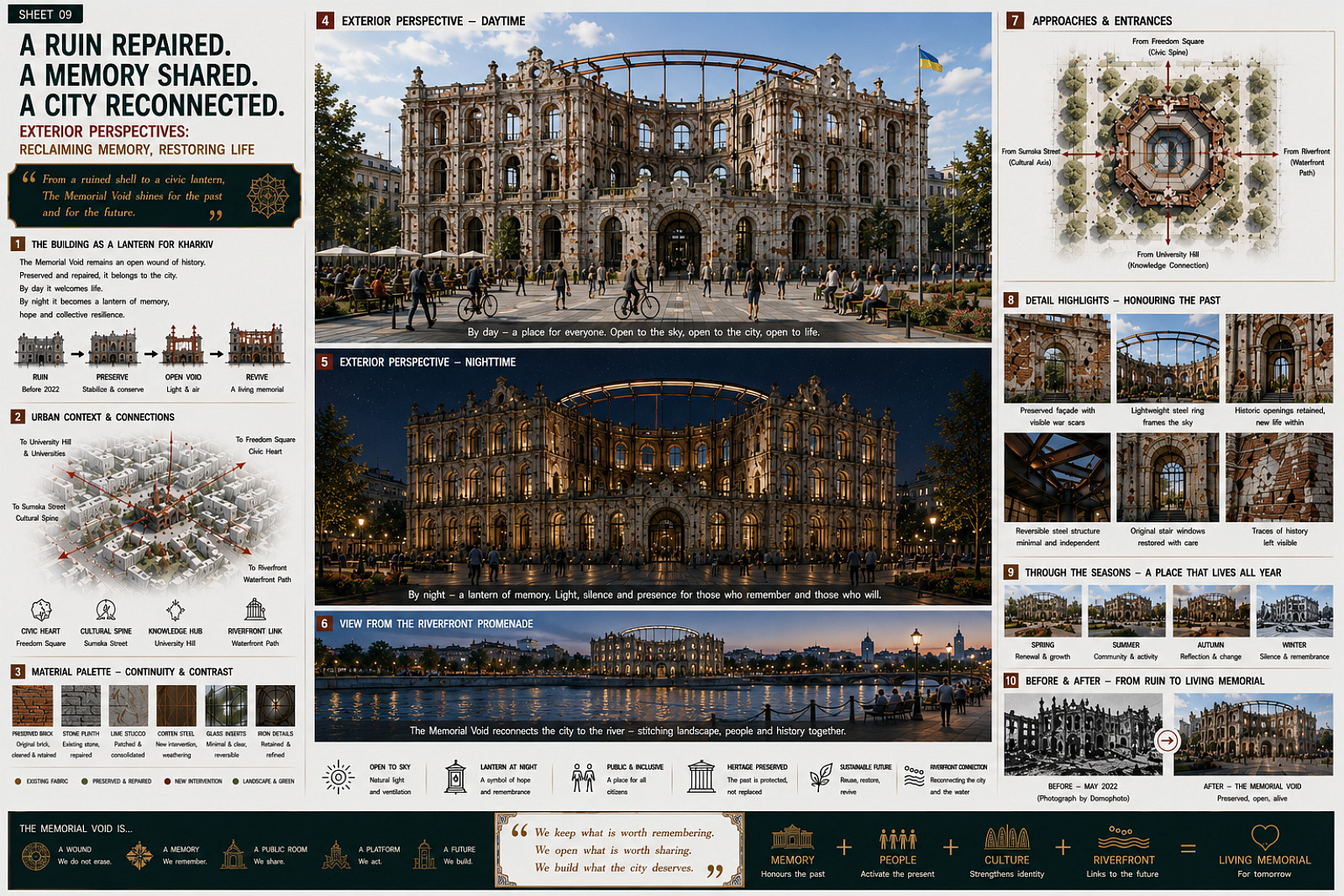
Situated within the wider urban and ecological context of Kharkiv, the project extends beyond conservation. It creates a civic destination that combines remembrance with education, cultural exchange, public gathering, and environmental restoration. The surrounding riverfront landscape restores biodiversity, improves accessibility, and reconnects fragmented urban systems, transforming a site of destruction into a place of life and participation.
The proposal also responds to the realities of post-war recovery. Through sustainable design strategies, adaptive reuse principles, and resilient infrastructure, the project functions not only as a memorial but also as a community resource capable of supporting future generations. Spaces for learning, dialogue, exhibition, and emergency refuge ensure that the site remains active, relevant, and socially valuable over time.
The primary objectives of the project are:
* To preserve and reveal the authentic heritage value of the historic monument.
* To create a meaningful place of remembrance that honors collective memory and loss.
* To reconnect the site with the city, riverfront, and local community.
* To restore ecological systems through landscape-led regeneration.
* To provide inclusive cultural, educational, and public spaces.
* To strengthen long-term resilience through sustainable and adaptable design.
* To transform a symbol of destruction into a symbol of hope, healing, and future renewal.
The Memorial Void demonstrates how architecture can preserve memory while preparing for the future—turning absence into meaning, memory into hope, and heritage into a living legacy for Kharkiv and future generations.
Project description
Scope of the Project Solution
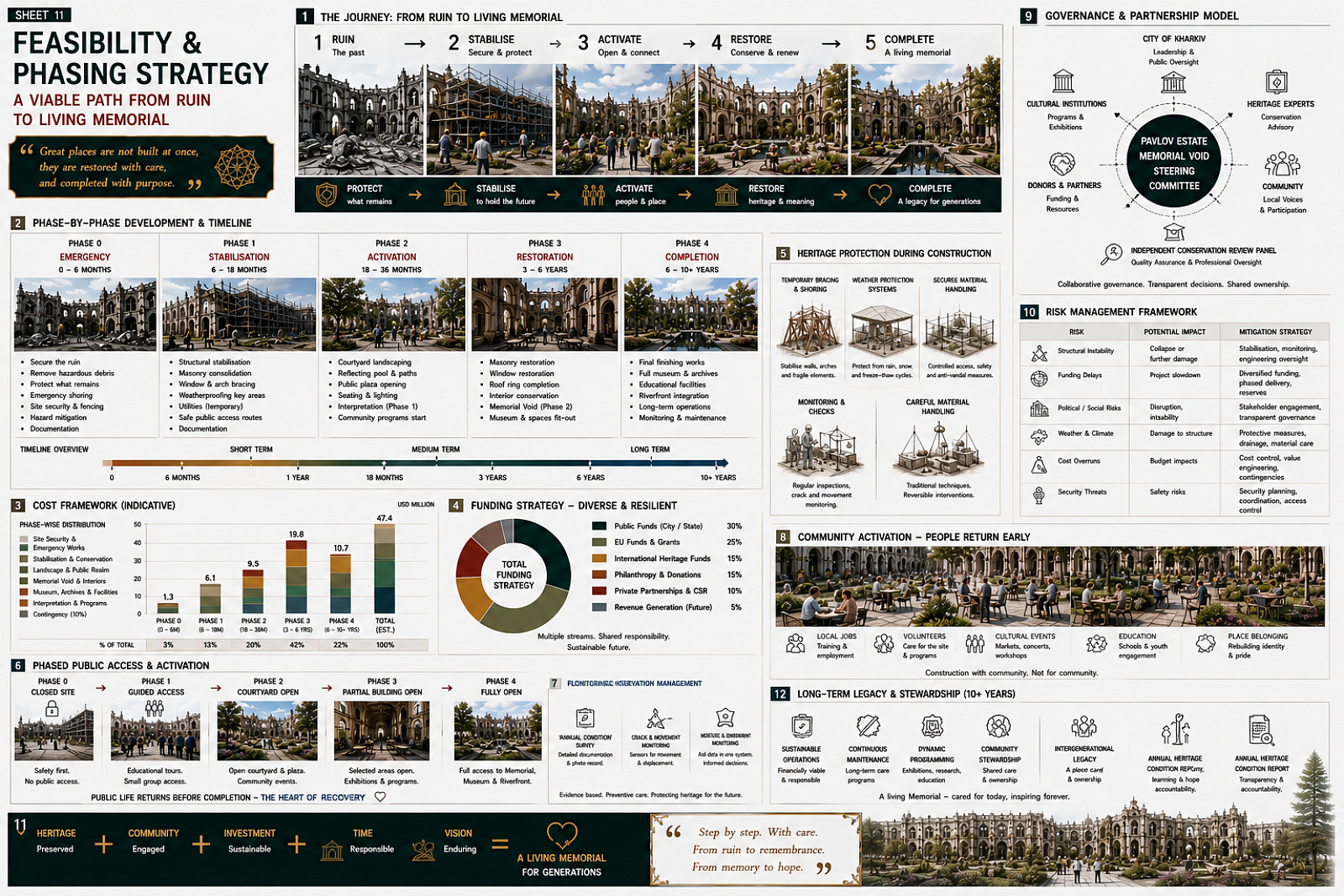
The proposed intervention transforms a war-damaged historic monument in Kharkiv into a resilient memorial, cultural, and community destination. The project combines heritage conservation, adaptive reuse, landscape regeneration, public programming, and sustainable infrastructure within a single integrated framework. Its scope extends beyond the preservation of a historic structure and addresses the broader social, environmental, and urban challenges of post-war recovery.
The design is organized around the concept of the Memorial Void, a central commemorative space created from the physical absence left by destruction. This void serves as the symbolic and spatial heart of the project, providing a place for reflection, remembrance, ceremonies, and collective healing. Rather than reconstructing lost elements, the proposal preserves the existing scars of the monument and interprets them as part of the site's historical narrative.
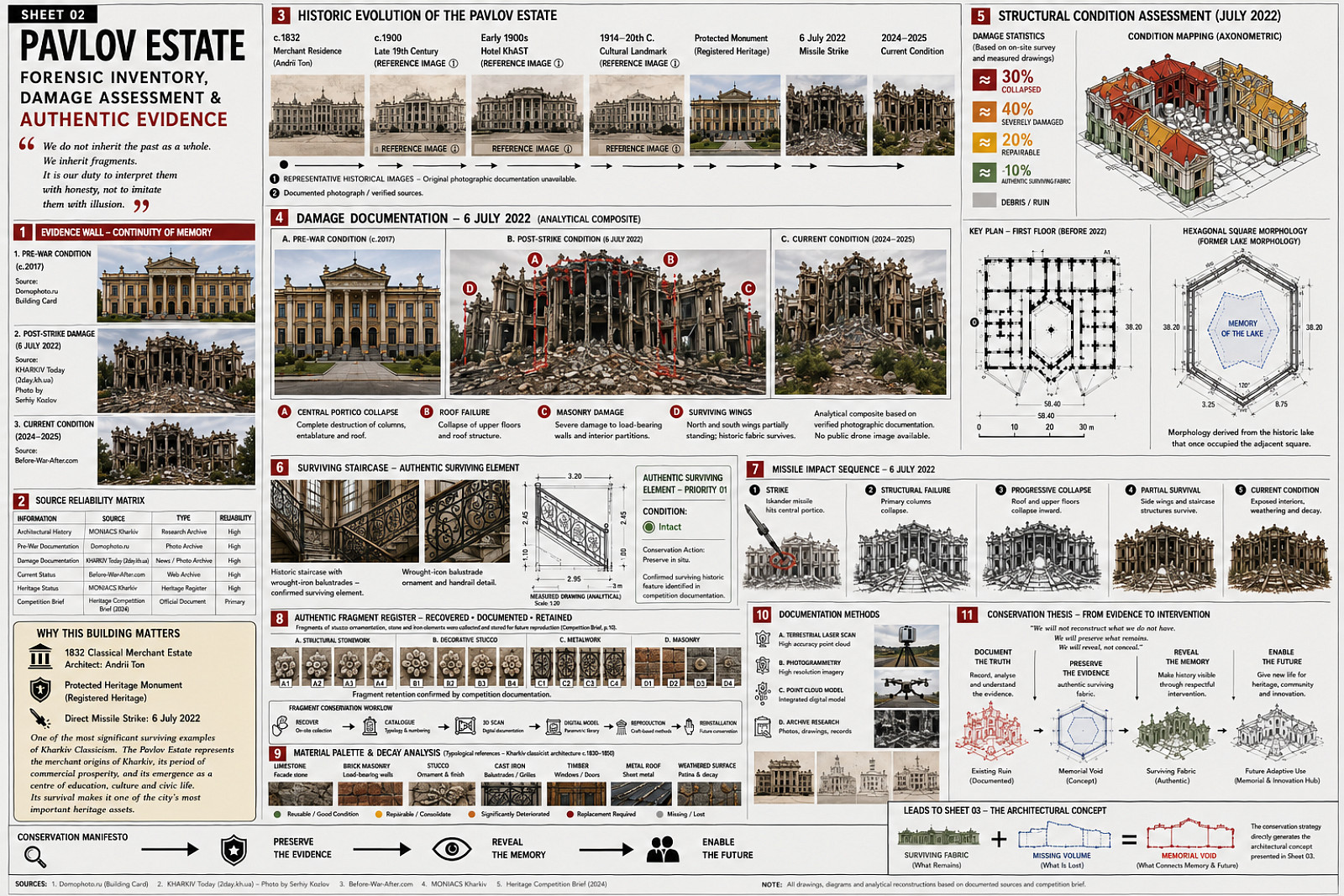
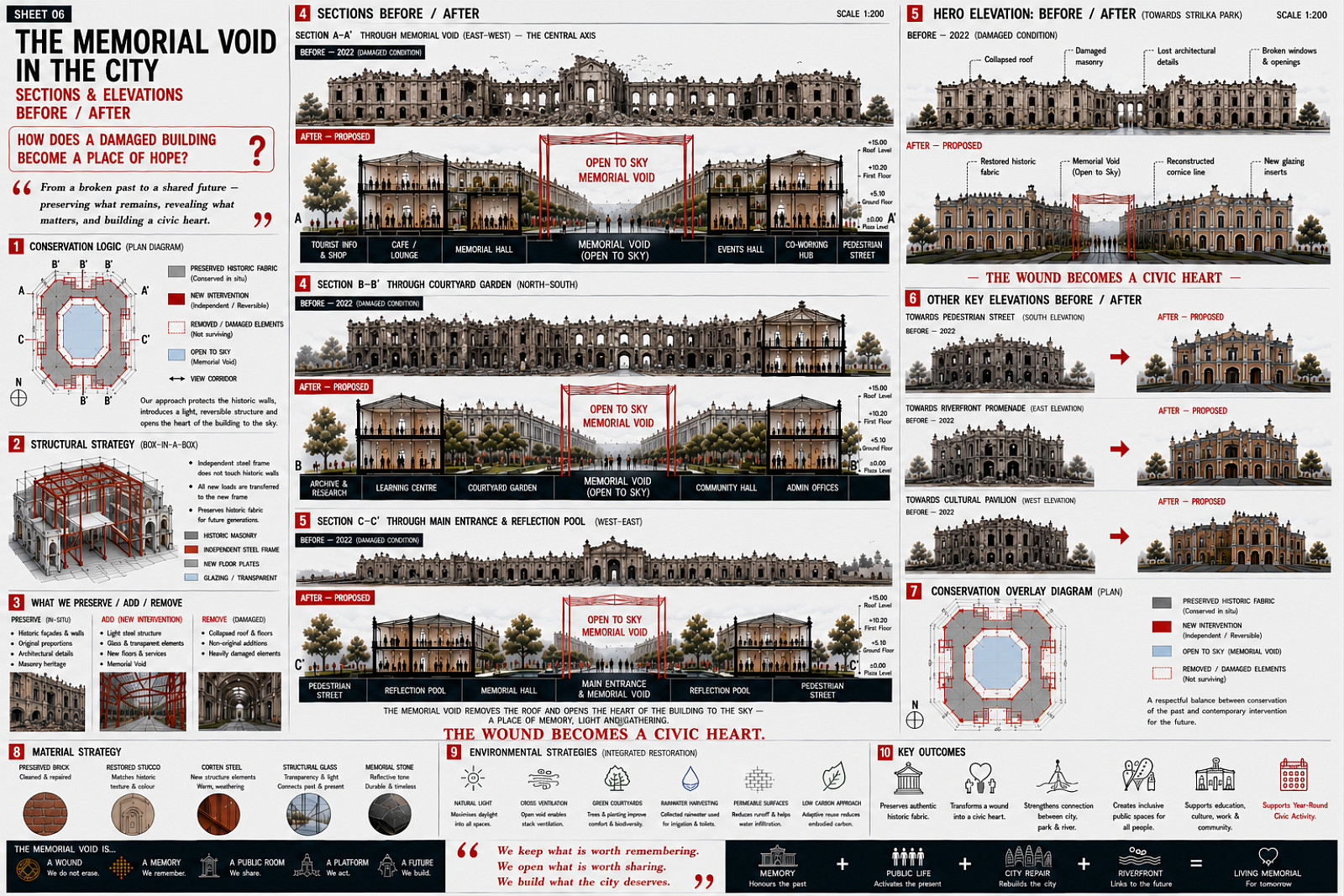
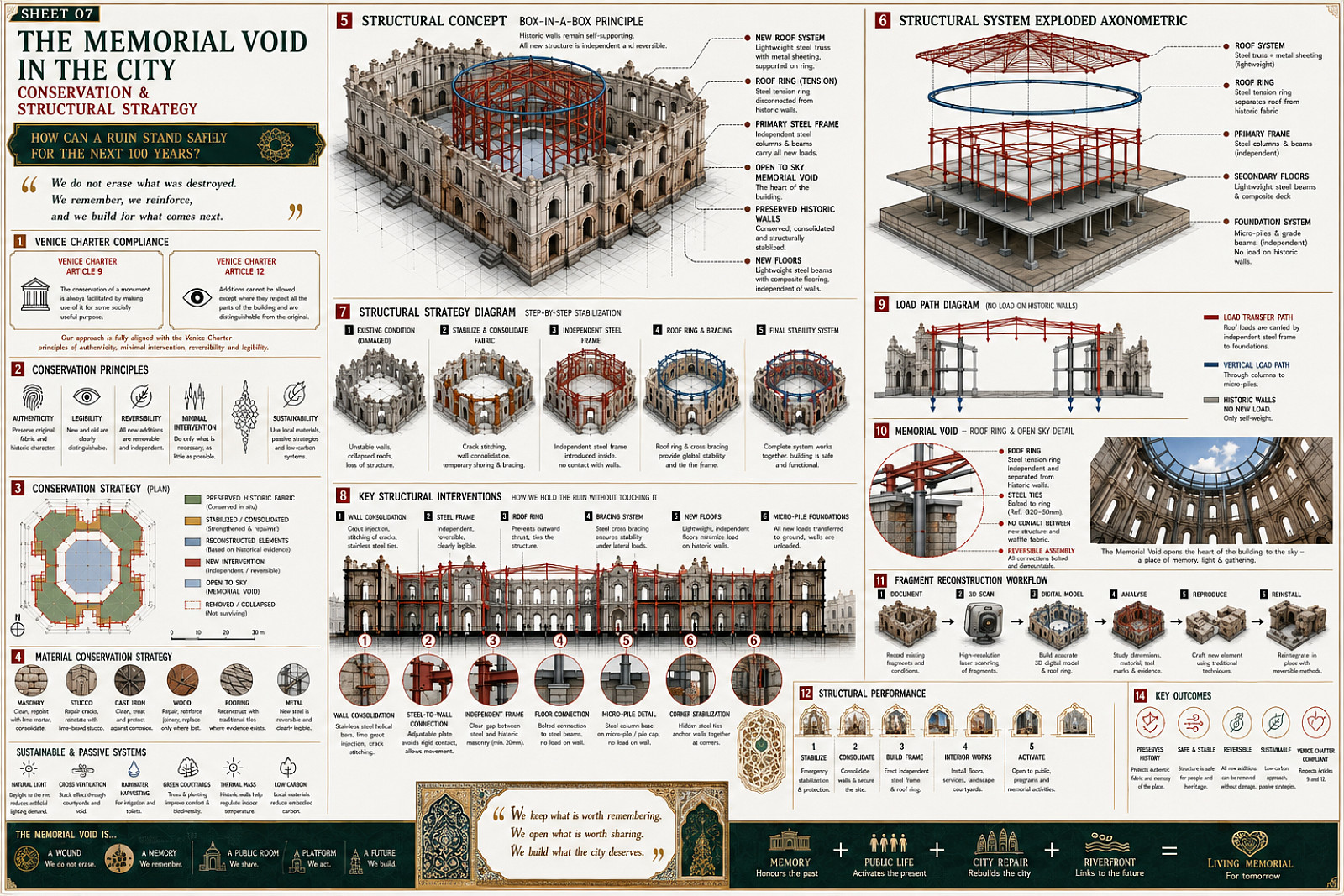
The heritage component includes structural stabilization, conservation of surviving architectural fabric, protection of significant historical elements, and interpretation of the monument's history. New interventions are designed to remain visually distinct from the original structure while respecting its scale, character, and authenticity.
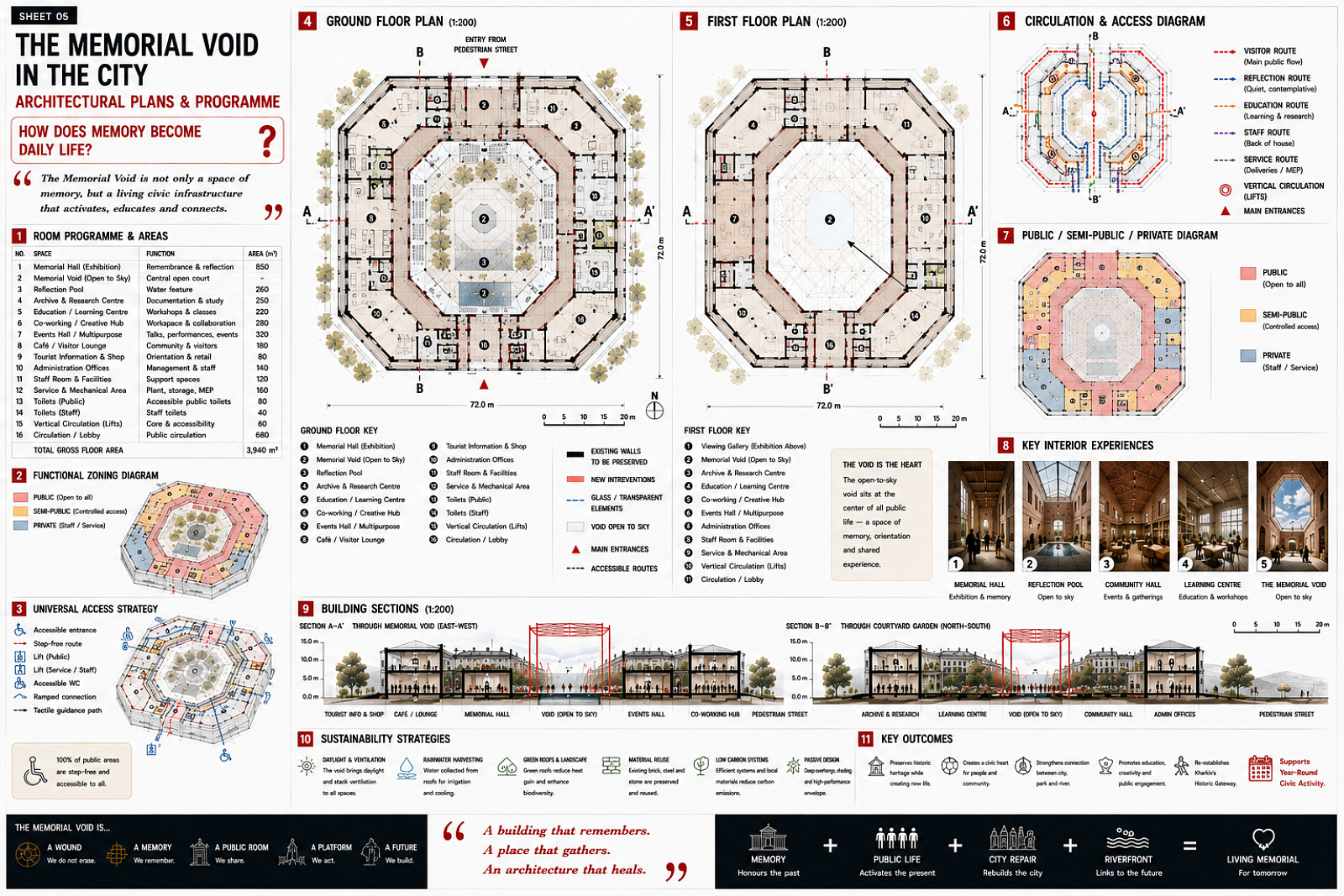
The project introduces a series of complementary public functions to ensure long-term relevance and active use. These include exhibition spaces, archival and research facilities, educational programs, community gathering areas, cultural event spaces, viewing platforms, and contemplative environments integrated within the preserved monument and landscape. Together, these functions create a living memorial that supports both remembrance and everyday civic life.
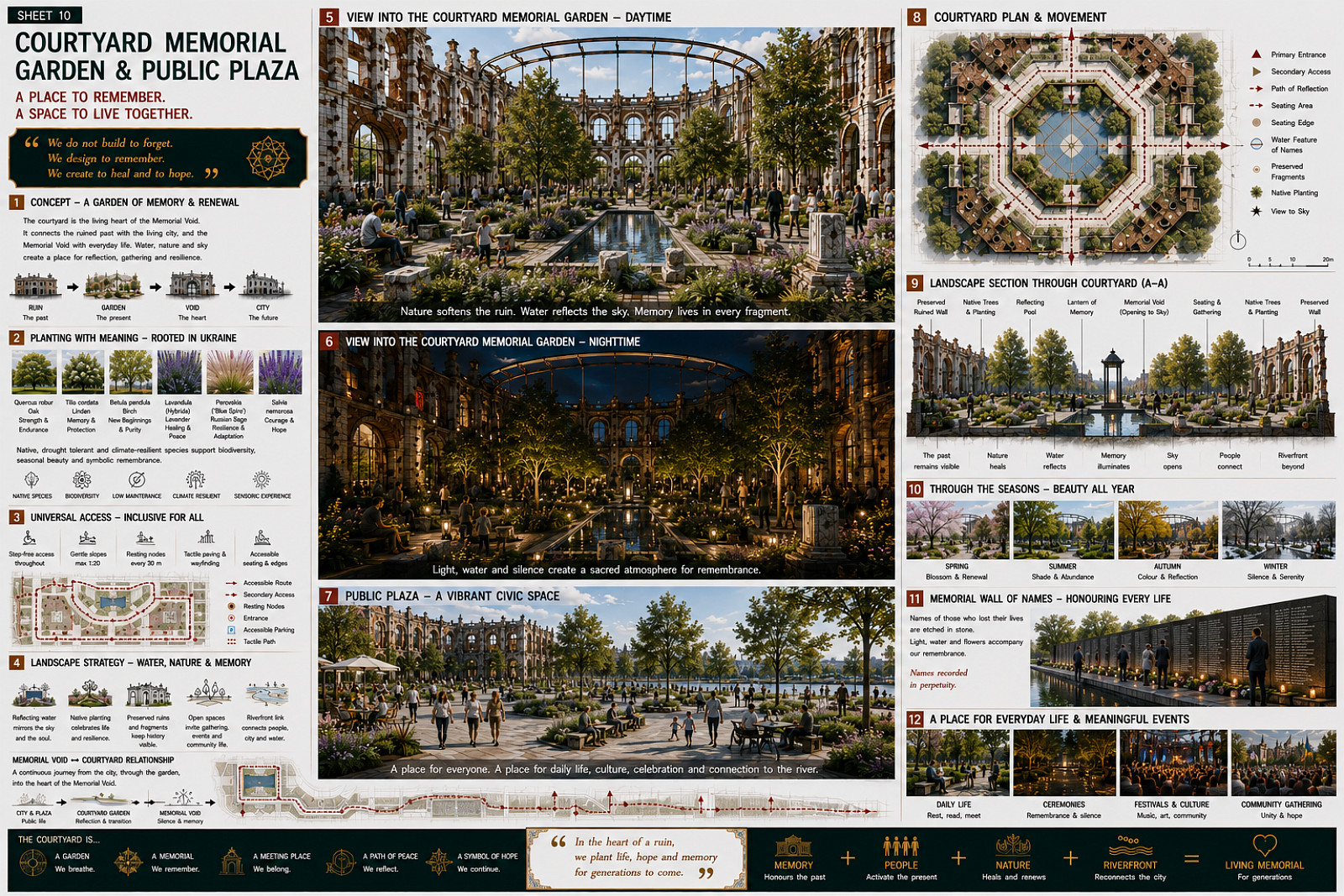
Landscape regeneration forms a major component of the proposal. The surrounding riverfront is transformed into an accessible ecological park that restores biodiversity, improves environmental performance, strengthens pedestrian connectivity, and reconnects the monument with the city. Native planting, water-sensitive design strategies, shaded public spaces, and habitat restoration contribute to a healthier and more resilient urban environment.
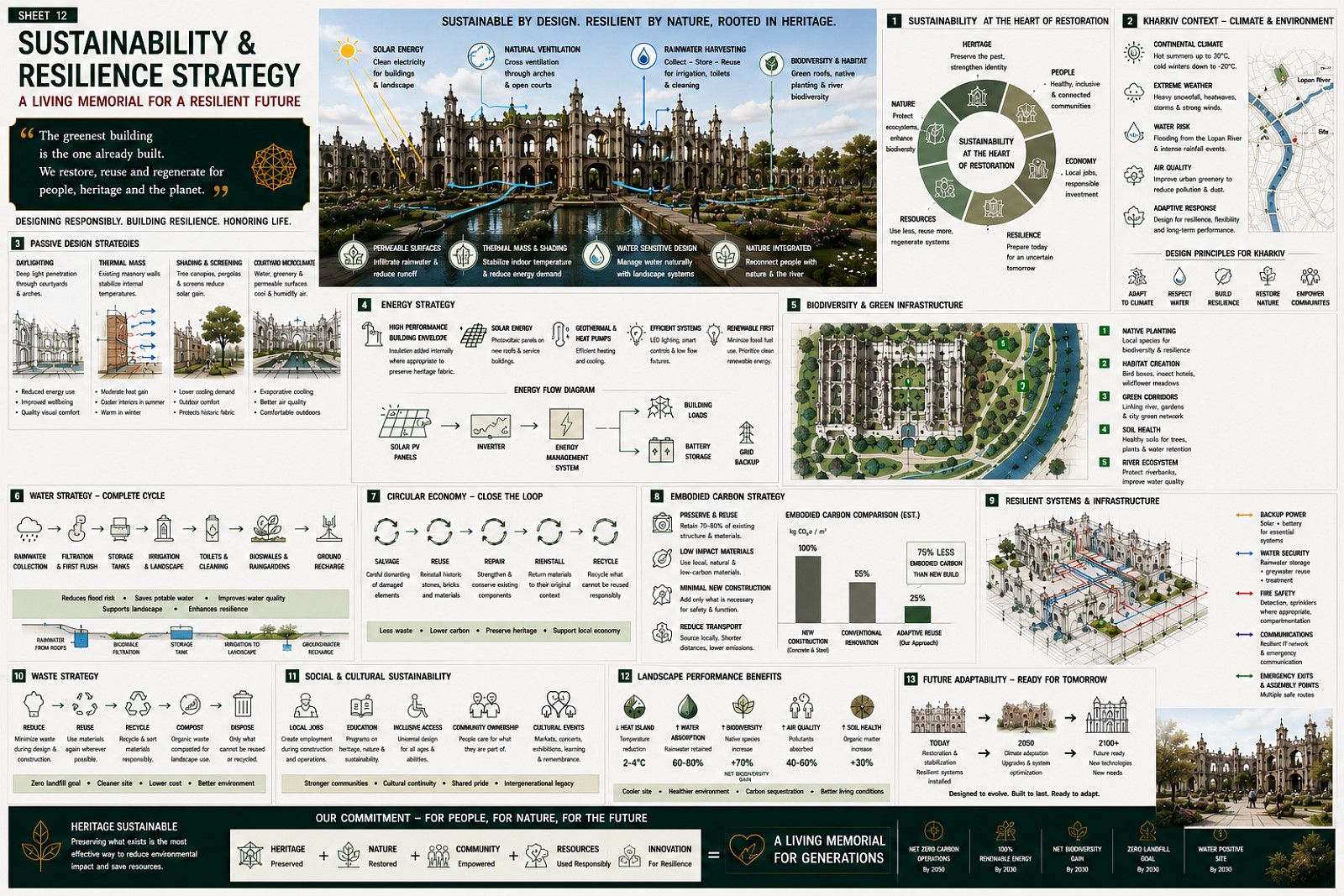
The project incorporates sustainable design measures including adaptive reuse, renewable energy integration, rainwater harvesting, natural ventilation, resource-efficient construction, and low-impact landscape strategies. These interventions reduce environmental impact while supporting long-term operational resilience.
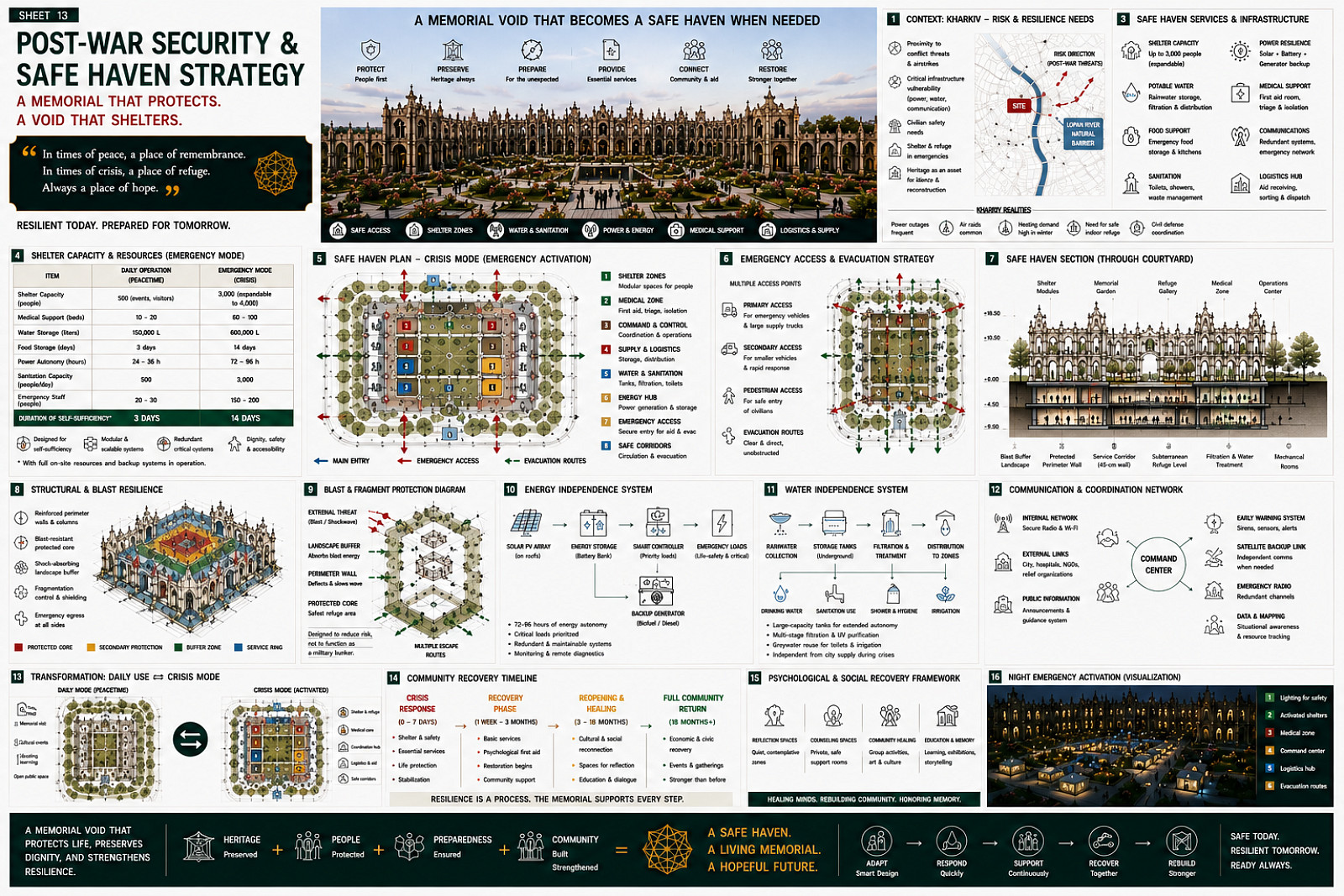
Recognizing the realities of post-war conditions, the proposal also integrates emergency preparedness and community resilience measures. Selected spaces are designed to function as temporary refuge, emergency support, and community coordination facilities during times of crisis, ensuring that the project remains valuable beyond its commemorative role.
The project solution therefore operates simultaneously as:
* A preserved historic monument.
* A place of remembrance and reflection.
* A cultural and educational destination.
* A community gathering space.
* An ecological riverfront landscape.
* A resilient civic resource.
* A symbol of recovery and future renewal.
By integrating conservation, memory, community, sustainability, and resilience within a single coherent vision, the proposal transforms a site of loss into a living public legacy for Kharkiv and future generations.
Technical information
TECHNICAL INFORMATION
Project Type
Adaptive Reuse, Heritage Conservation, Memorial Architecture, Landscape Regeneration, Cultural and Community Facility.
Location
Kharkiv, Ukraine.
Design Approach
The project combines heritage conservation, adaptive reuse, landscape restoration, sustainable design, and resilience planning. The intervention preserves the authentic remains of the historic structure while introducing contemporary architectural elements that remain visually distinguishable and reversible where possible.
Heritage Conservation Strategy
* Preservation of significant historic fabric and architectural elements.
* Structural stabilization of damaged masonry and surviving walls.
* Conservation of visible war scars as part of the site's historical narrative.
* Minimal intervention approach respecting authenticity and integrity.
* Reversible contemporary additions where feasible.
* Documentation and long-term monitoring of historic fabric.
Structural System
Existing Structure
* Preserved masonry walls and historic structural remnants.
* Strengthened foundations where required.
* Localized reconstruction of unstable sections.
New Intervention
* Lightweight steel structural framework.
* Reinforced concrete foundations for new additions.
* Glass and steel architectural insertions designed to remain visually subordinate to the historic monument.
* Seismic and structural reinforcement integrated within conservation requirements.
Architectural Program
The project includes:
* Memorial Void and commemorative spaces.
* Exhibition and interpretation galleries.
* Archive and research facilities.
* Educational and learning spaces.
* Community gathering areas.
* Multipurpose cultural event spaces.
* Viewing platforms and observation points.
* Landscape and riverfront public spaces.
* Visitor amenities and support facilities.
Landscape and Public Realm
* Riverfront ecological restoration.
* Native and climate-adapted planting species.
* Biodiversity enhancement measures.
* Accessible pedestrian and cycling routes.
* Reflecting pools and water-sensitive landscape features.
* Public plazas, memorial gardens, and gathering spaces.
* Universal accessibility throughout the site.
Sustainability Measures
Energy
* Solar photovoltaic integration.
* High-efficiency LED lighting.
* Passive daylighting strategies.
* Natural ventilation where appropriate.
* Energy-efficient building systems.
Water
* Rainwater harvesting and storage.
* Bioswales and stormwater management systems.
* Landscape irrigation using collected rainwater.
* Water-efficient fixtures and infrastructure.
Materials
* Maximum retention and reuse of existing materials.
* Reclaimed masonry and stone where possible.
* Low-carbon construction materials.
* Durable and locally sourced materials.
Climate Resilience
* Flood-resilient landscape design.
* Heat mitigation through planting and shaded public areas.
* Long-term adaptability for changing environmental conditions.
* Sustainable maintenance and lifecycle management strategies.
Community Resilience and Emergency Preparedness
The project incorporates selected facilities capable of operating as community support infrastructure during emergencies, including:
* Temporary refuge areas.
* Emergency communication facilities.
* Backup power systems.
* Water storage and emergency supply provisions.
* Community coordination and support spaces.
Accessibility
The project is designed according to universal design principles and includes:
* Step-free access routes.
* Accessible entrances and circulation.
* Resting areas and seating nodes.
* Inclusive public spaces.
* Accessible sanitary facilities.
Long-Term Management
* Heritage condition monitoring program.
* Planned maintenance framework.
* Community stewardship initiatives.
* Sustainable operational management.
* Educational and cultural programming strategy.
Summary
The project transforms a war-damaged historic monument into a resilient memorial, cultural destination, ecological landscape, and civic resource. Through the integration of conservation, sustainability, accessibility, and community resilience, the proposal ensures the long-term preservation of heritage while creating a meaningful public legacy for future generations.

Copyright © 2026 INSPIRELI | All rights reserved. Use of this website signifies your agreement to the Terms of Use, Privacy Policy, and use of cookies.