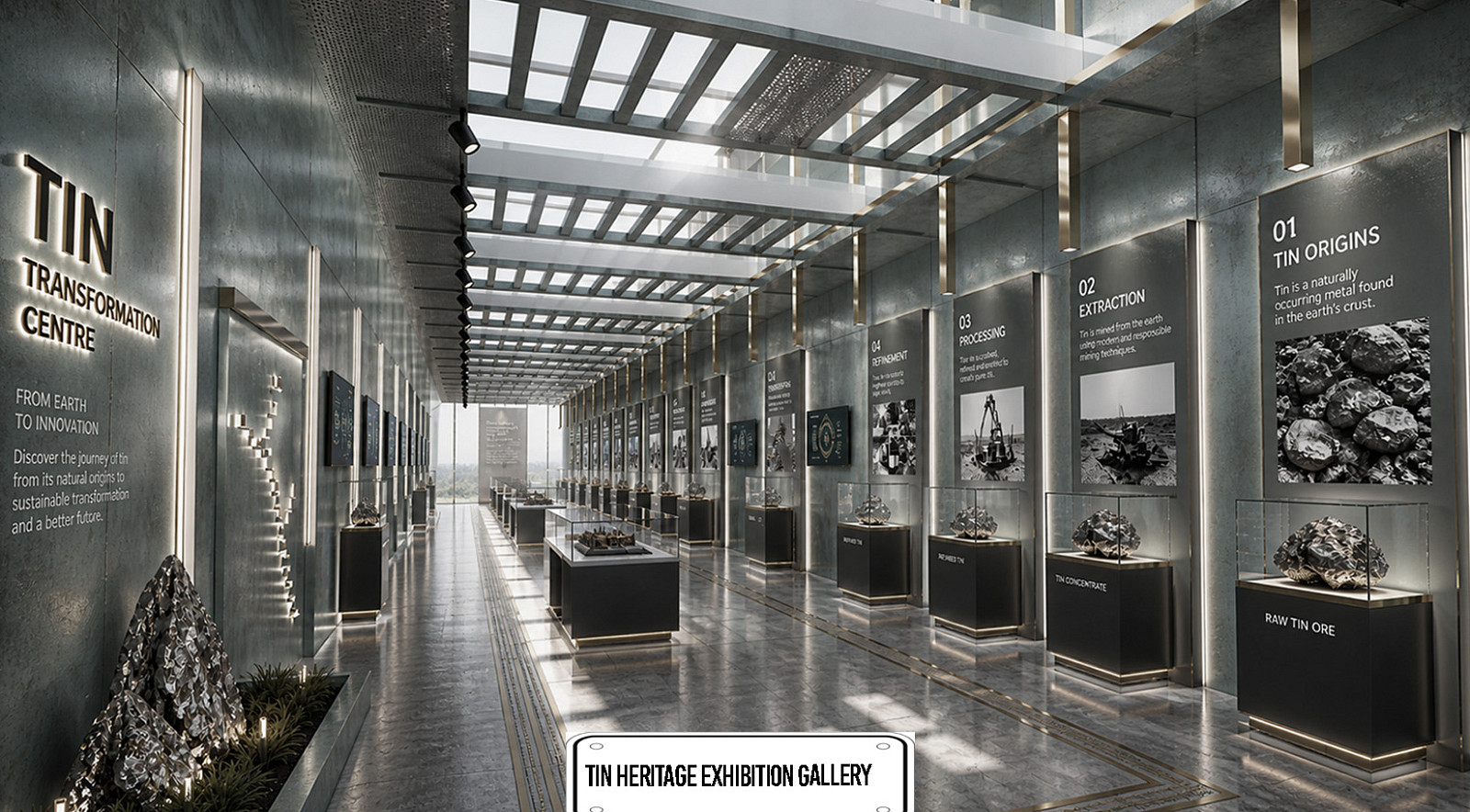
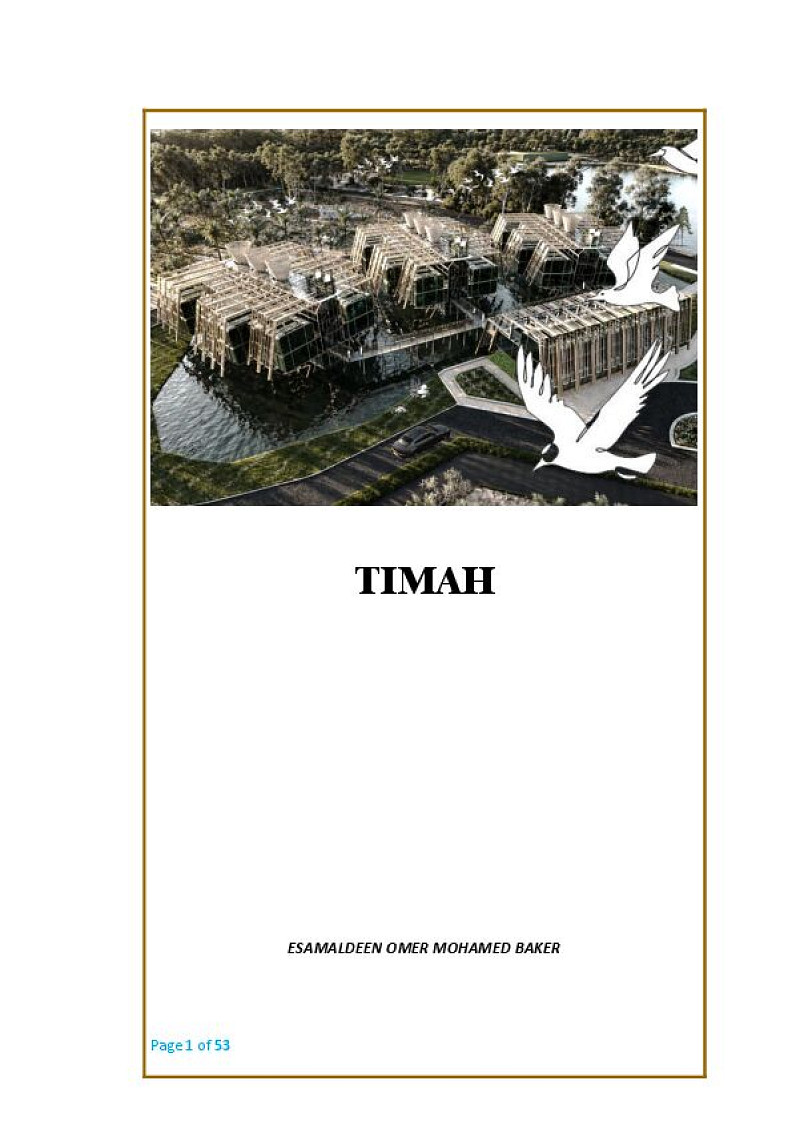
TIMAH - TIN TRANSFORMATION CENTRE


 Amir Shah
Project idea
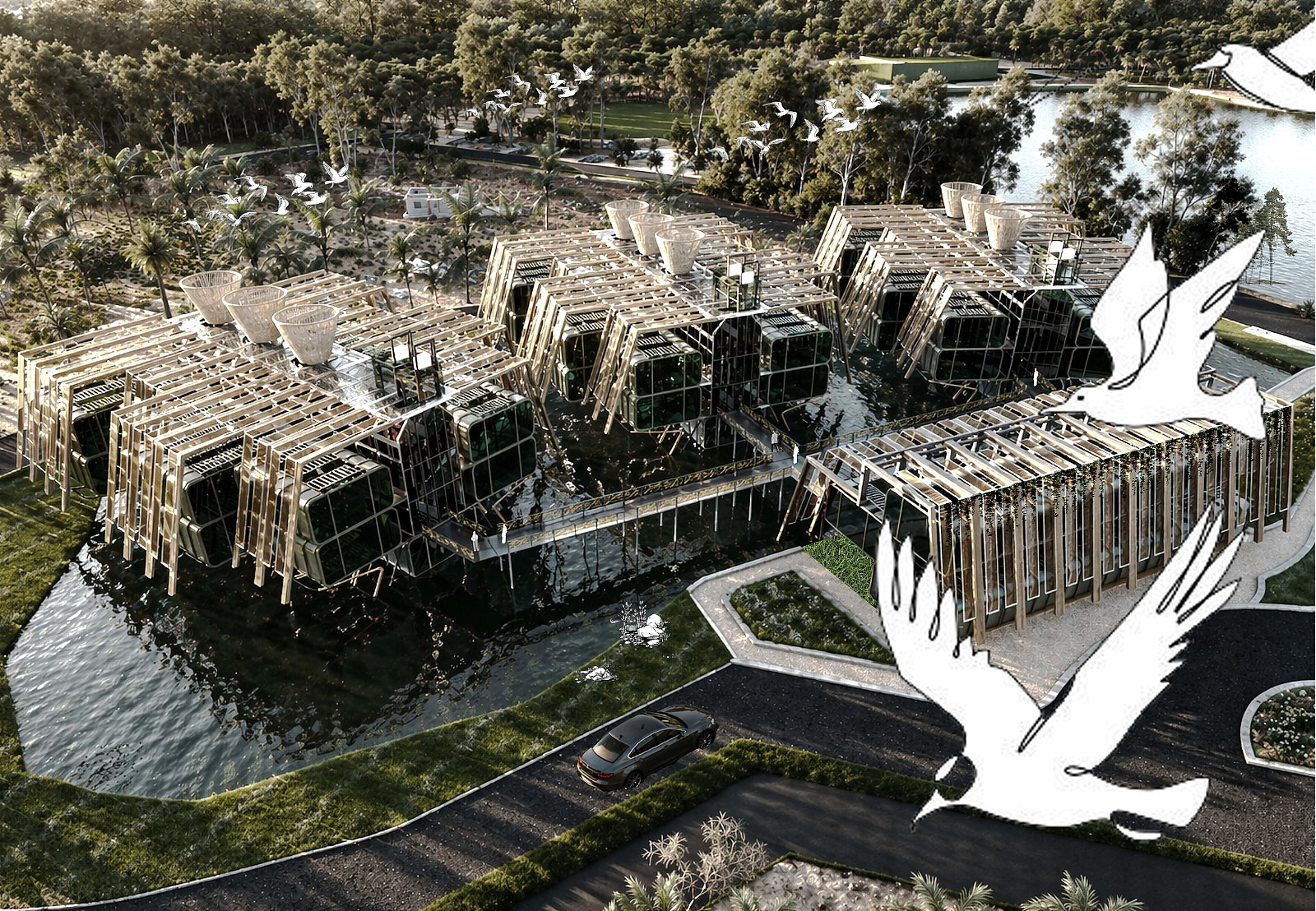
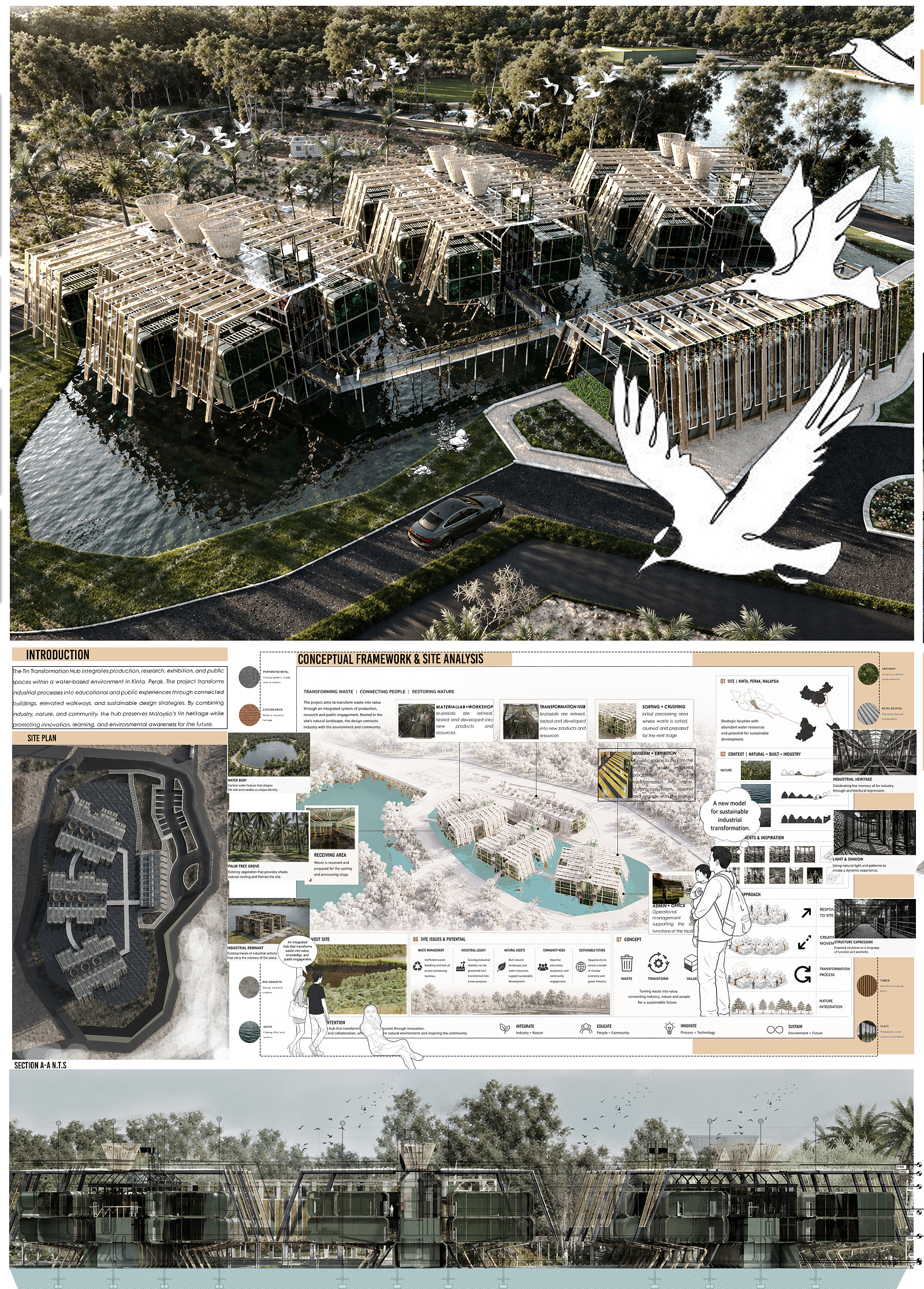
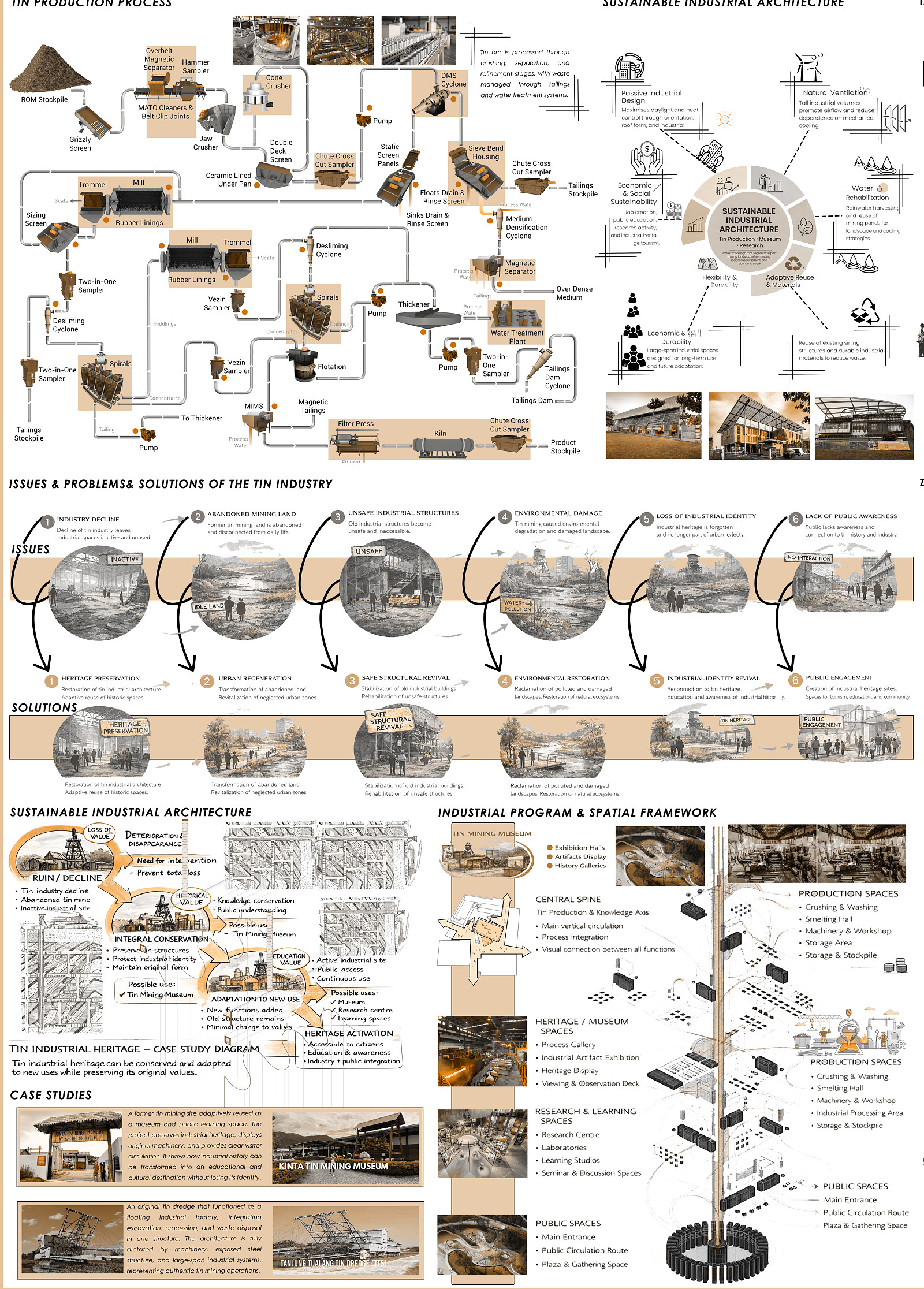
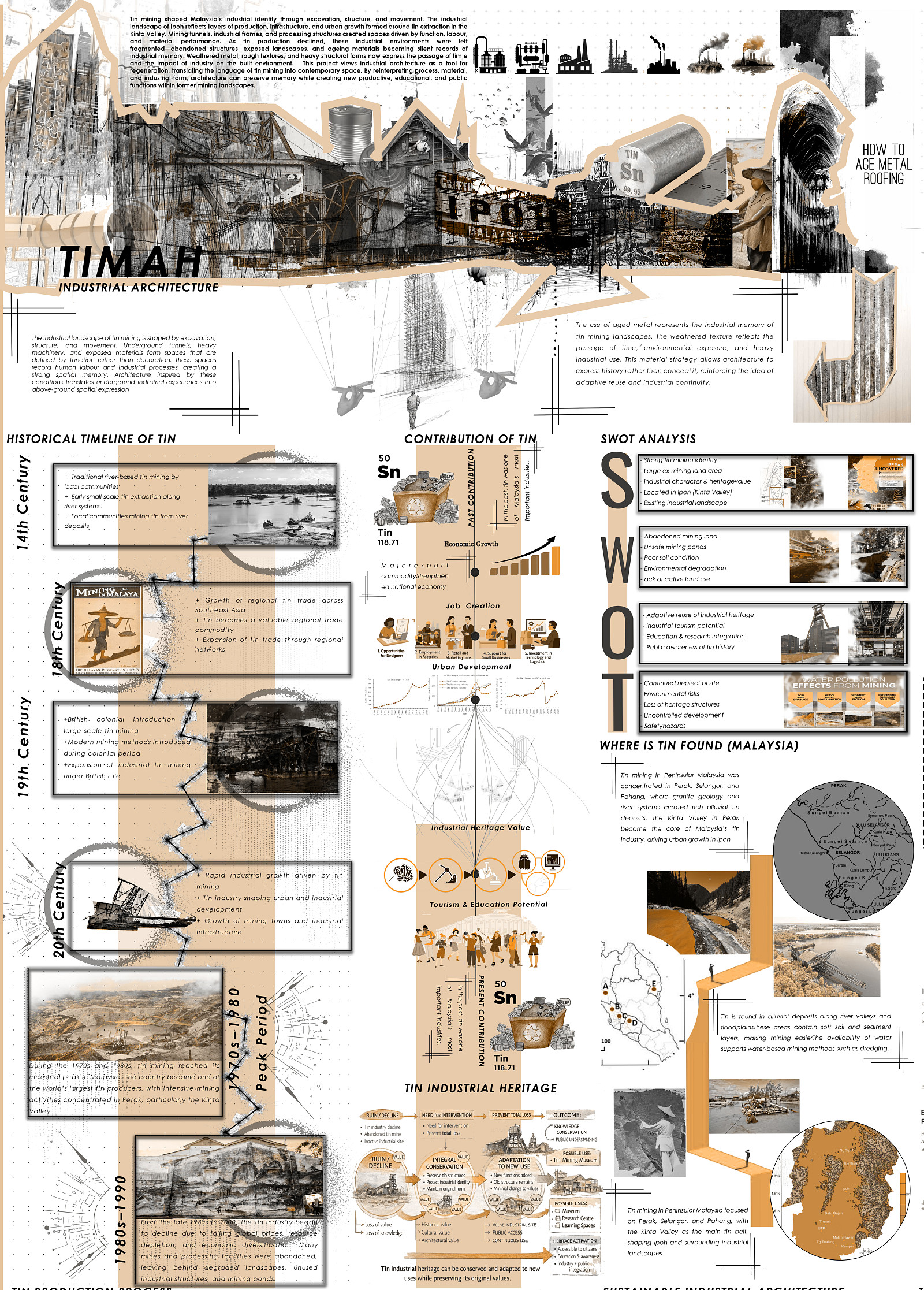
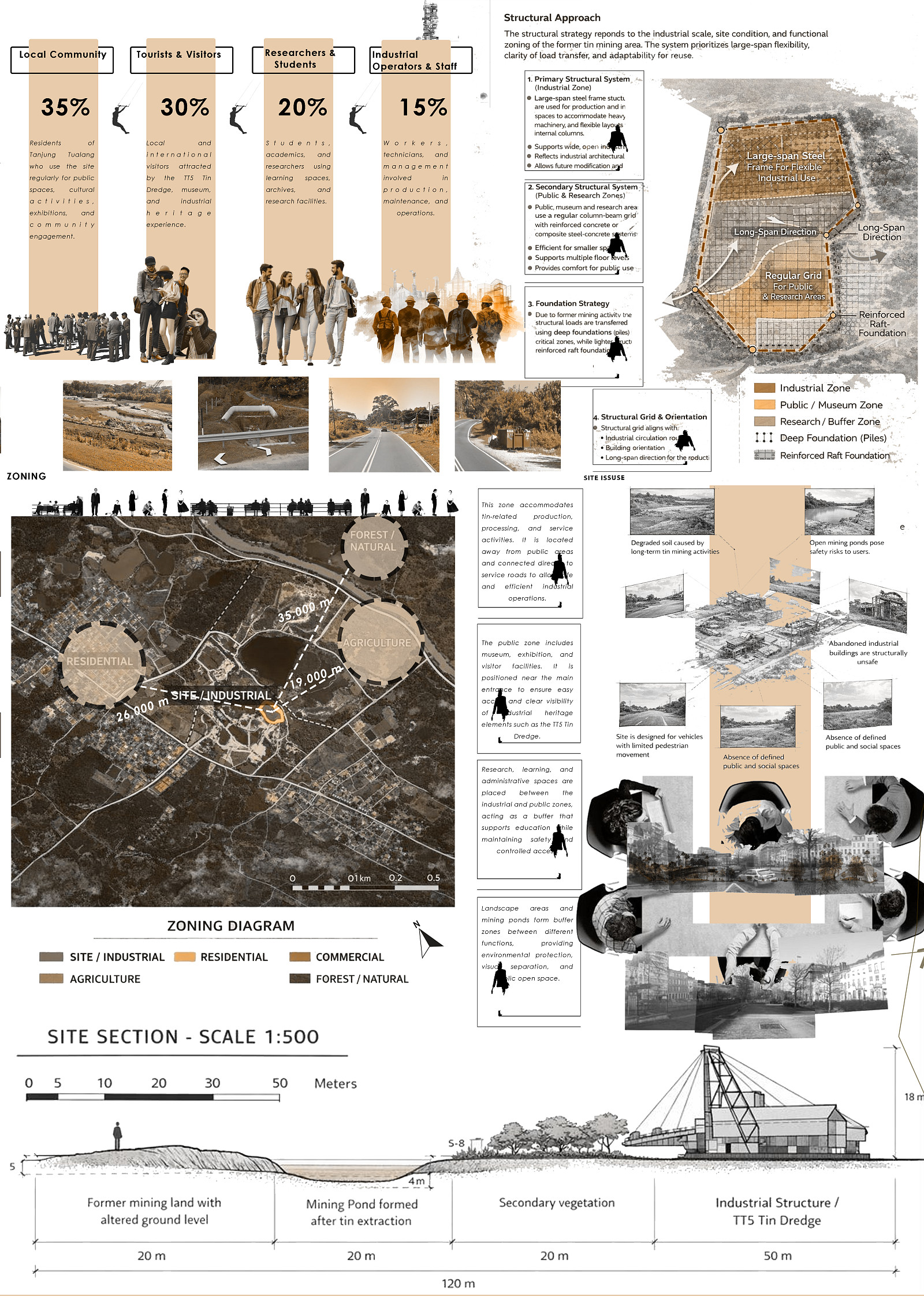
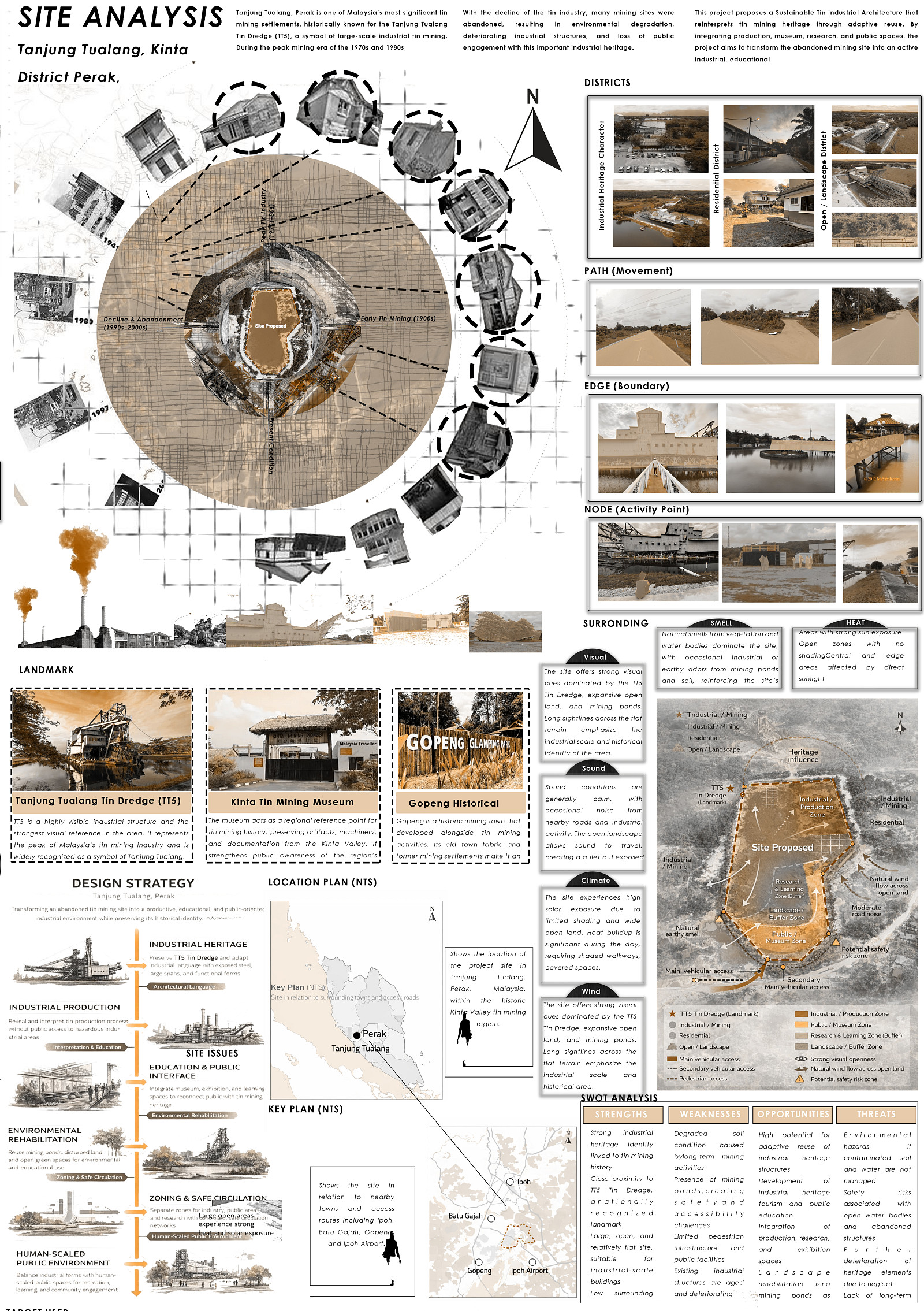
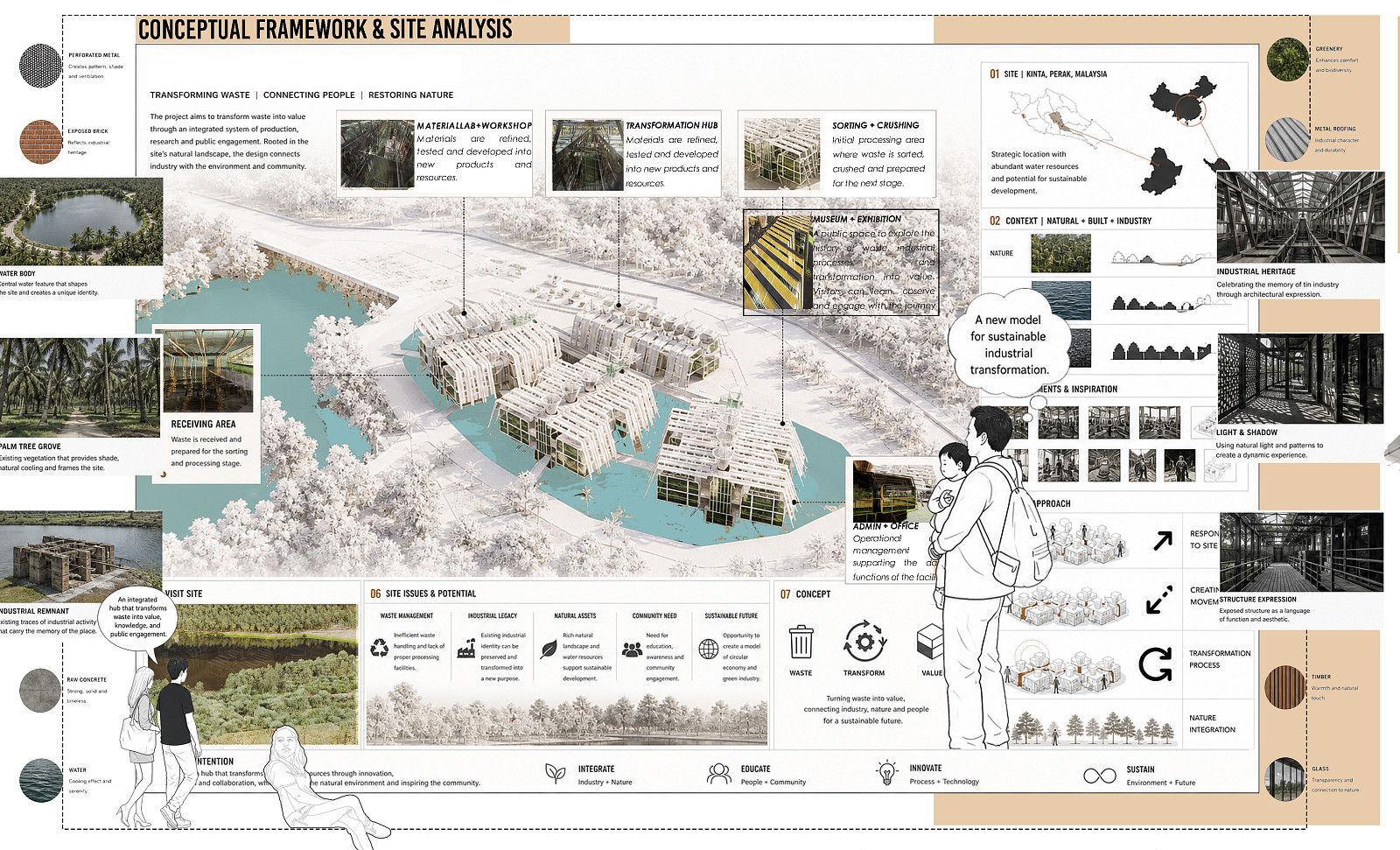
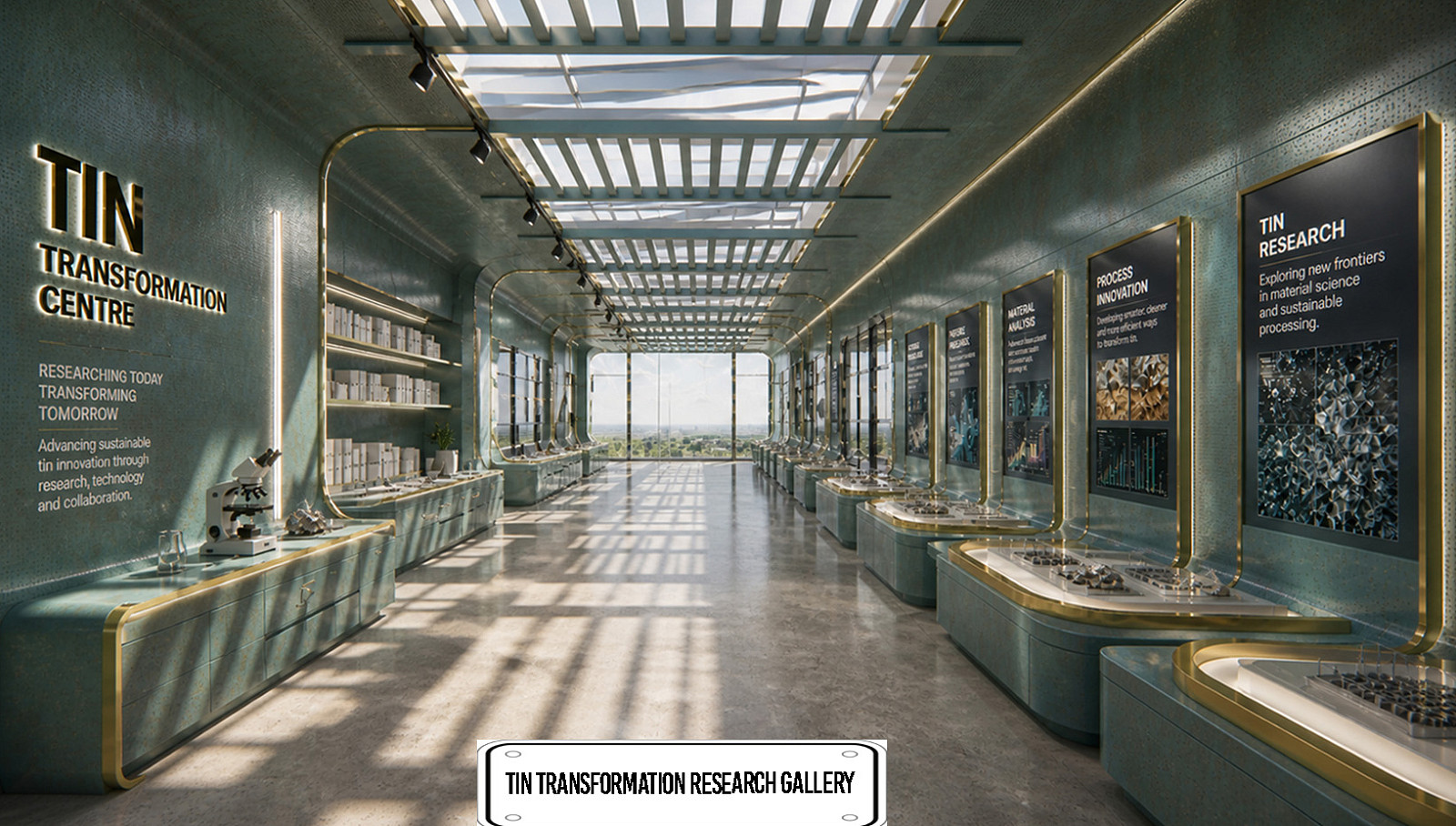
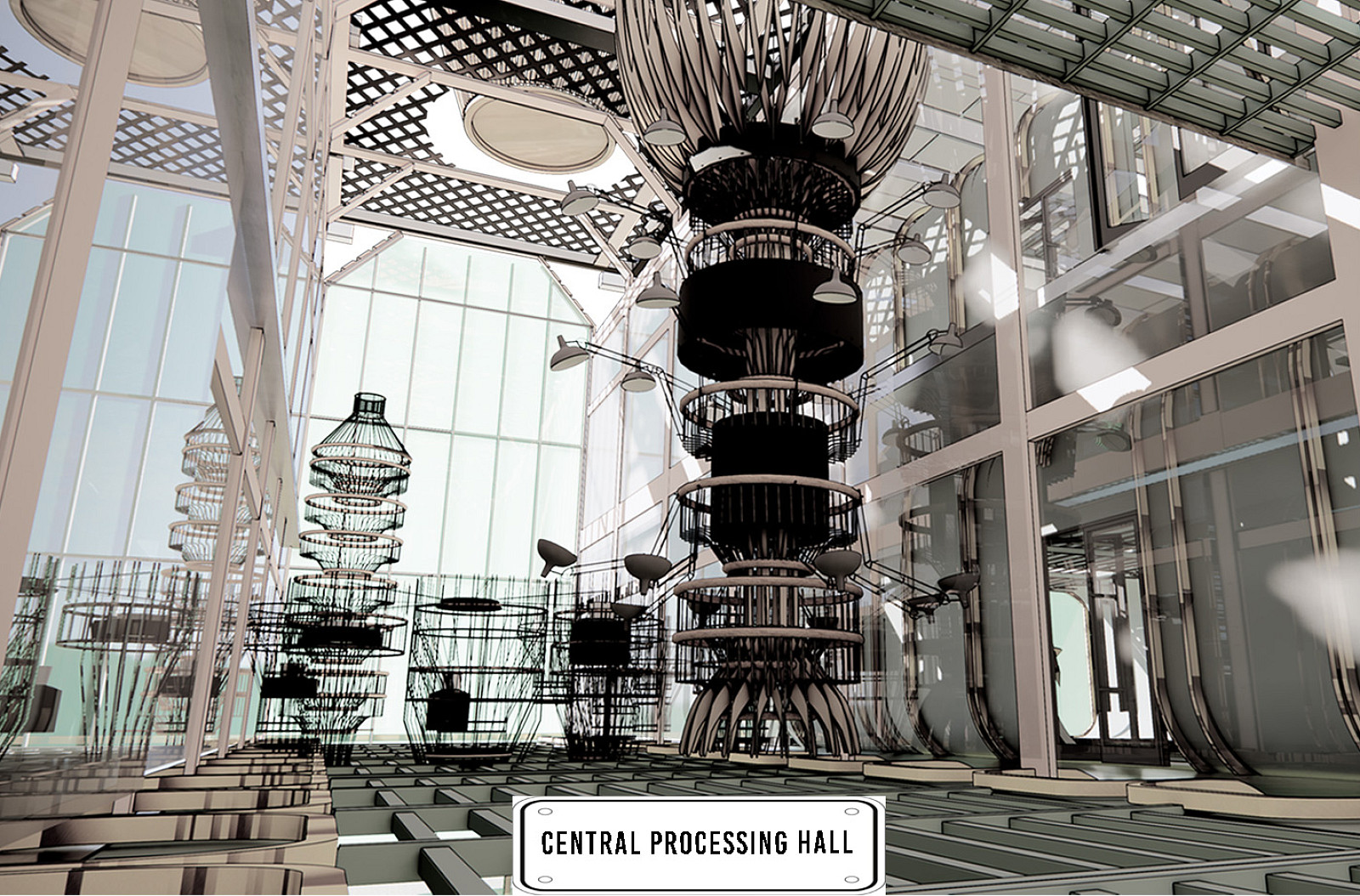
This project explores the architectural potential of tin as both a material and a conceptual driver. Tin, as a resource, represents transformation, industry and economic value, which inspired the development of a design that reflects these qualities through space and form. The motivation behind this project comes from an interest in creating architecture that tells a story. Rather than designing a conventional building, the aim is to develop a spatial experience that translates the process of tin from extraction to refinement into a sequence of architectural moments. This approach allows the project to go beyond functionality and become an educational and experiential environment. Additionally, the project reflects my personal interest in integrating concept driven design with real world conditions, combining industrial inspiration with user experience and spatial clarity.
Project description
Objectives of the Project
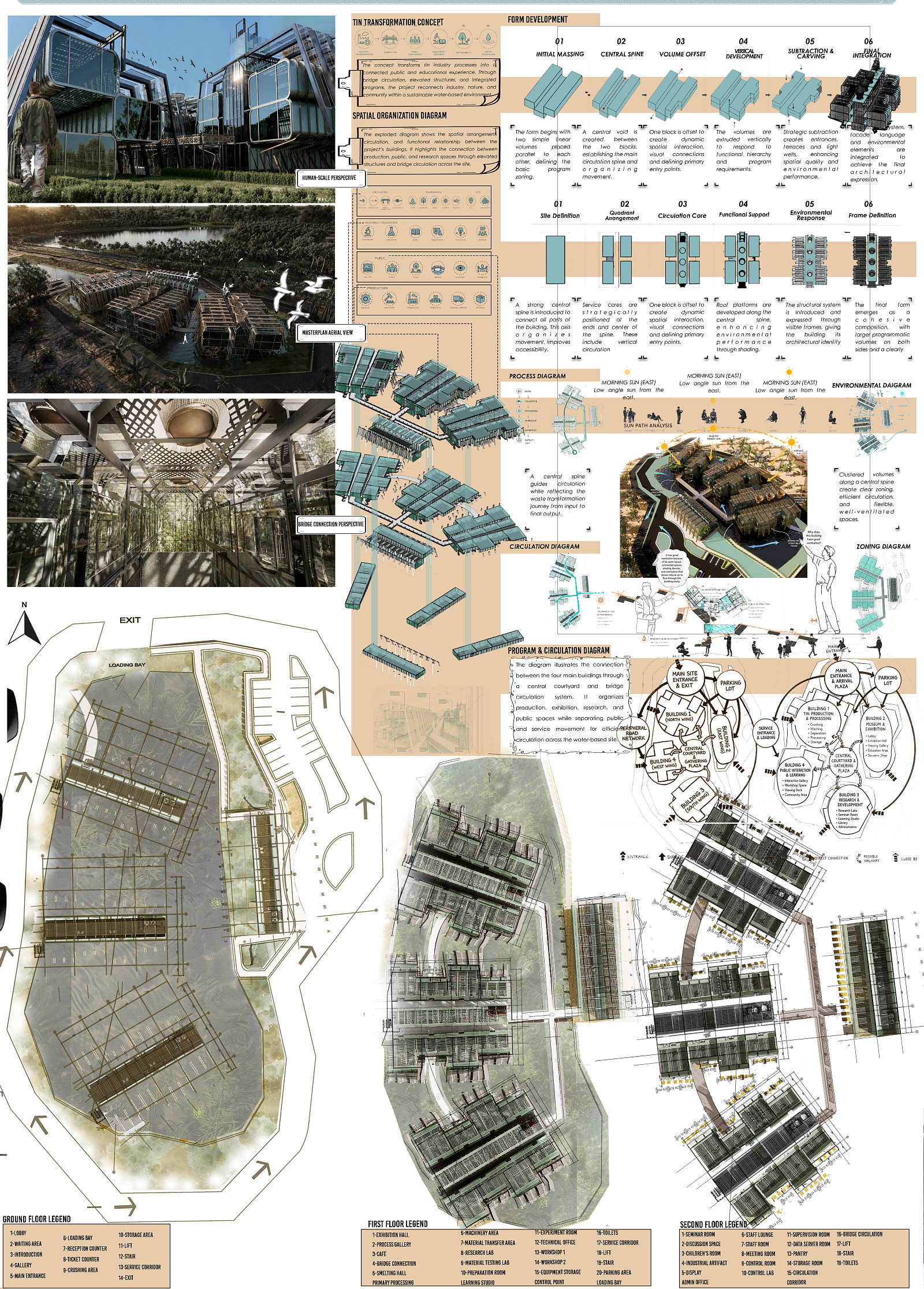
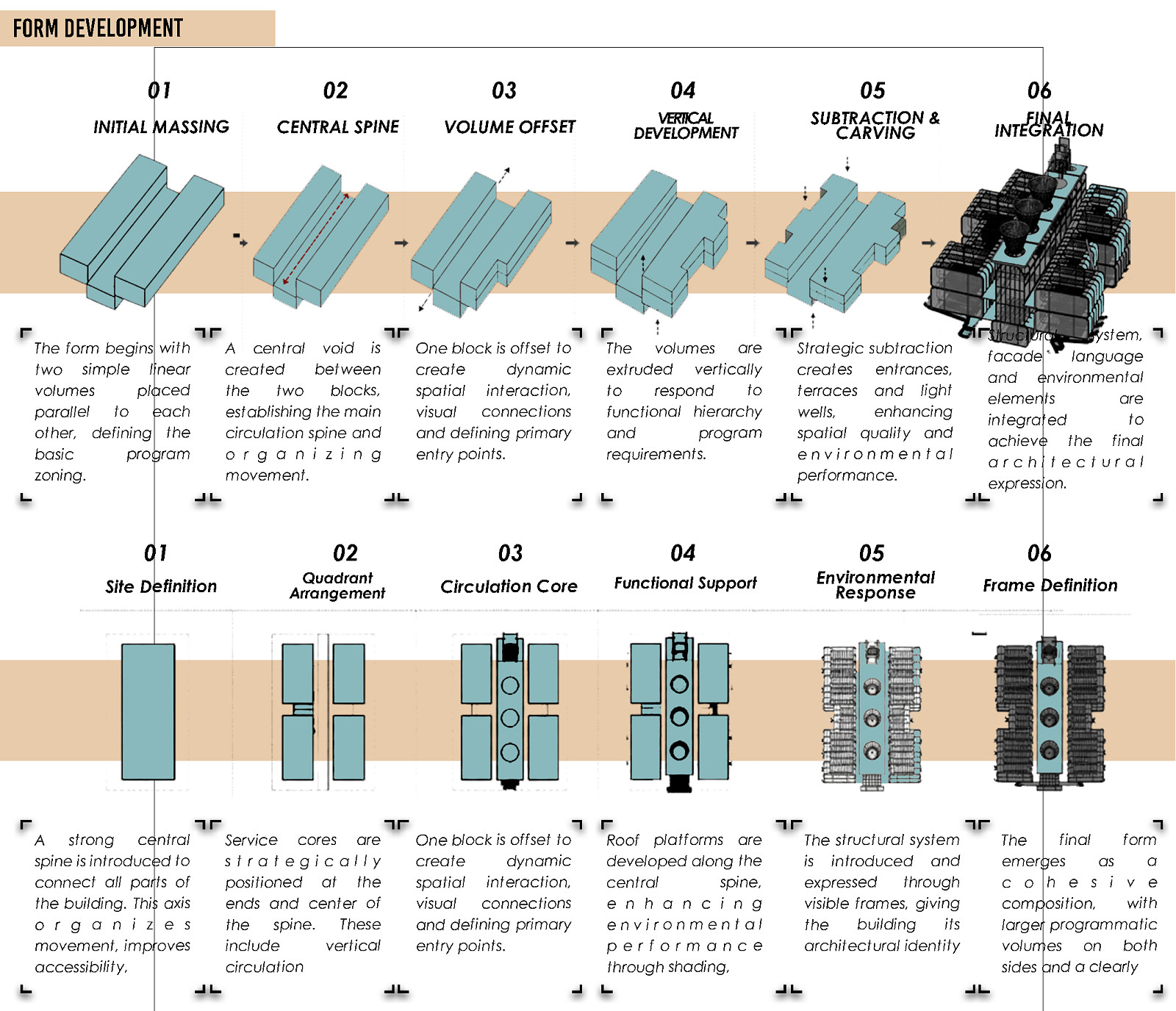
The main objective of this project is to design an architectural space that expresses the transformation of tin through both form and experience. The project aims to :
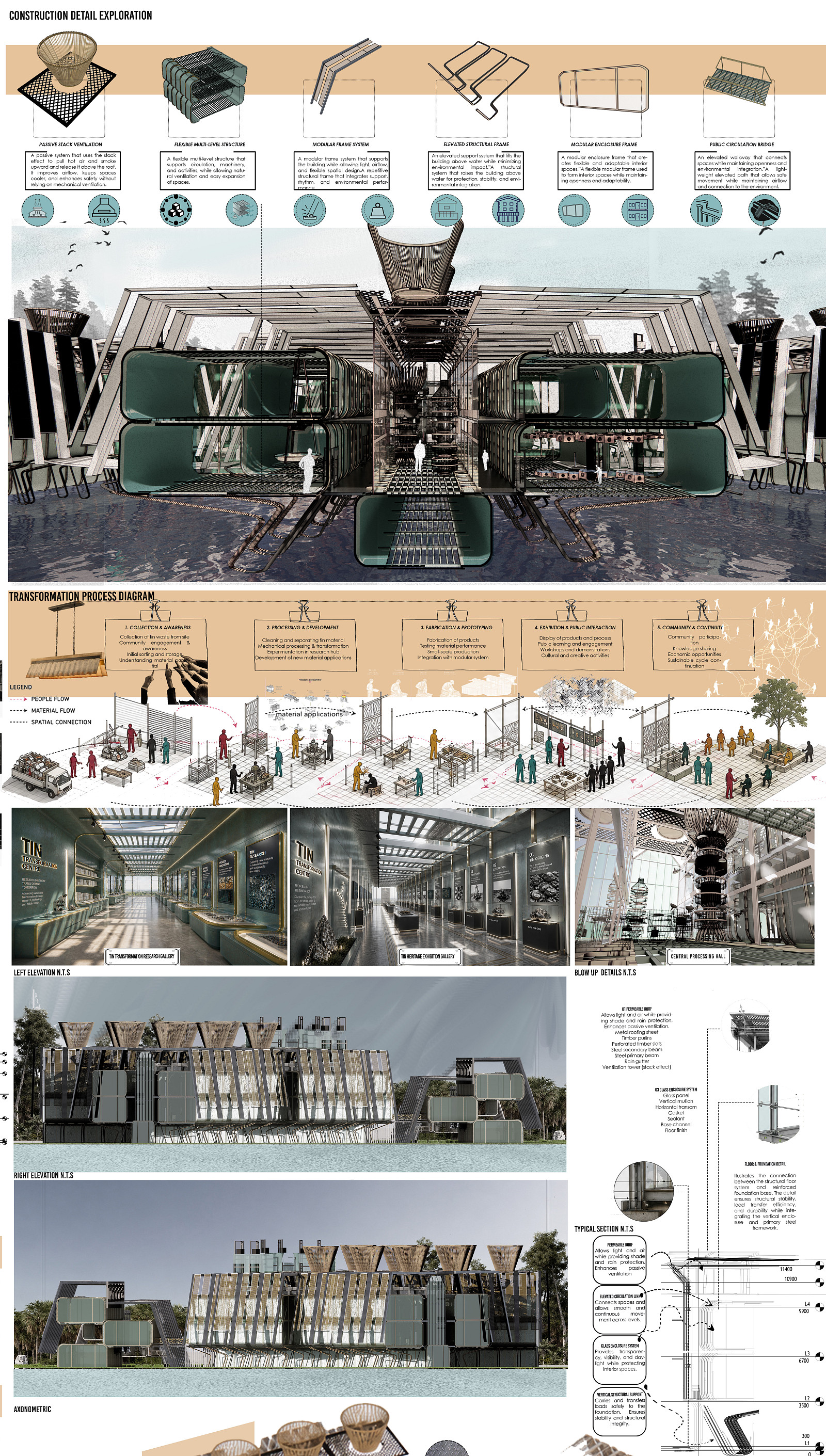
• Create a clear spatial sequence that represents stages of transformation
• Develop an engaging user experience through movement and circulation
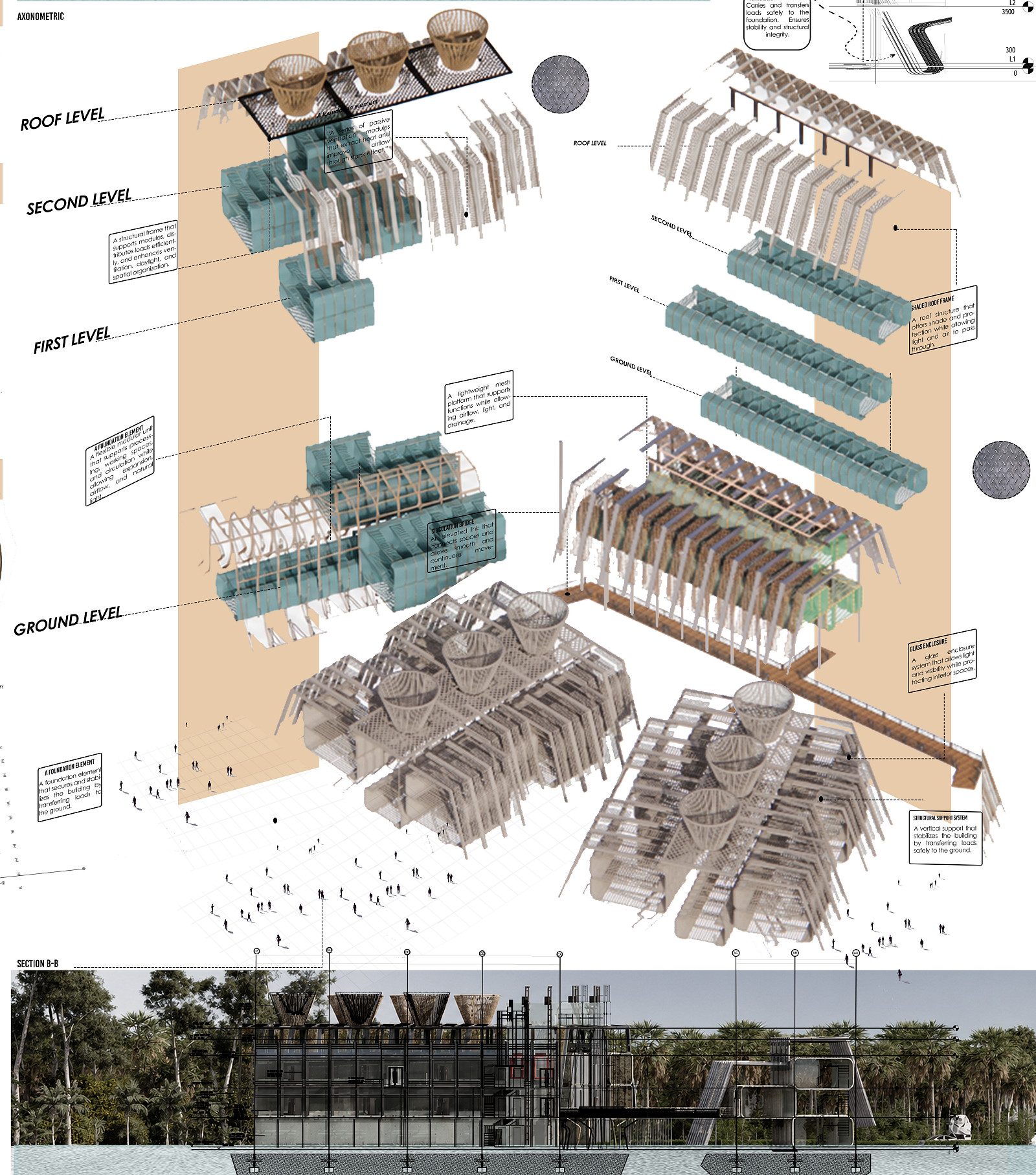
• Integrate structural and architectural elements as part of the design concept
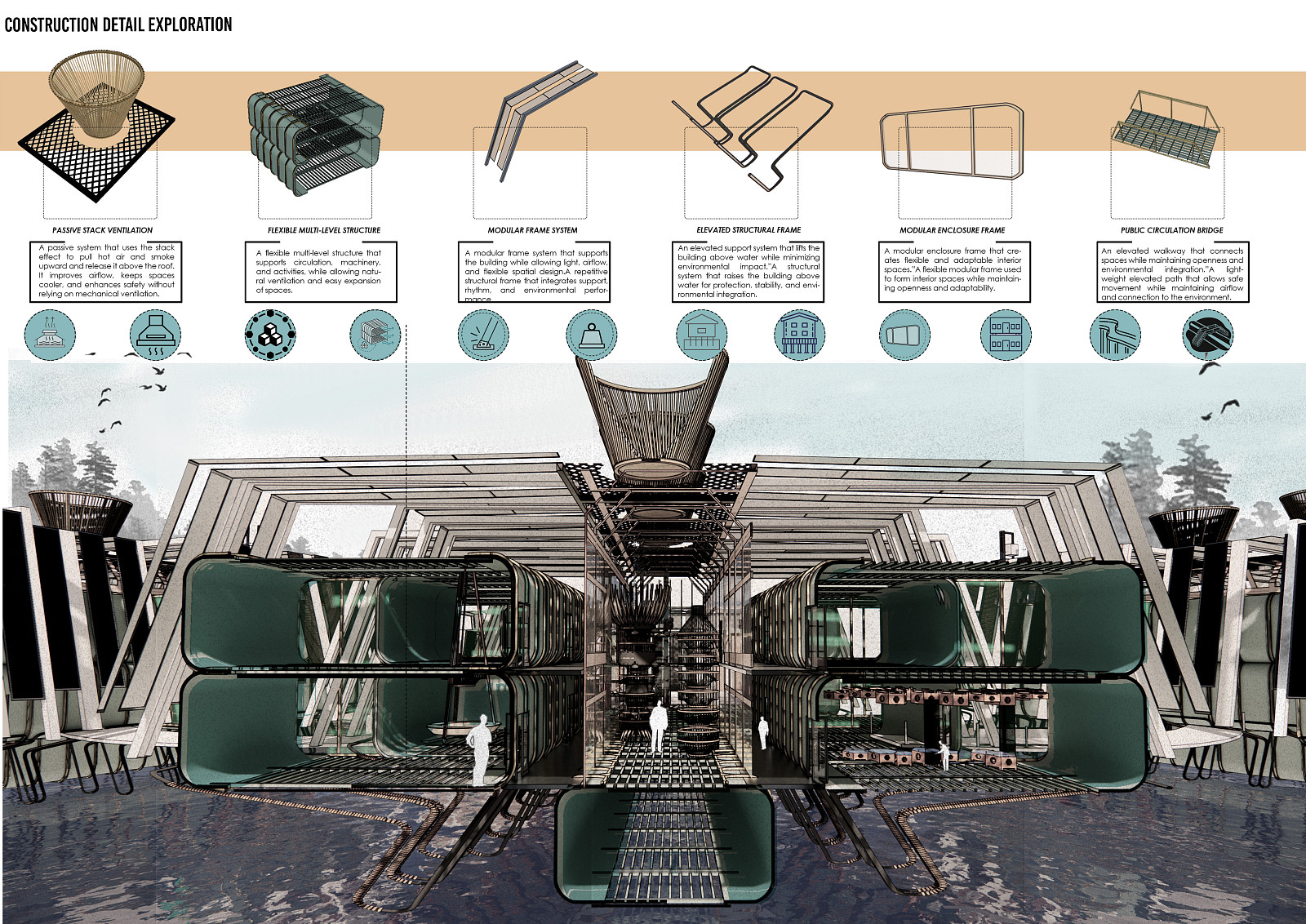
• Respond to environmental conditions through passive design strategies
• Reflect both industrial identity and cultural context within a contemporary design
Technical information
Material Palette and Local Relevance
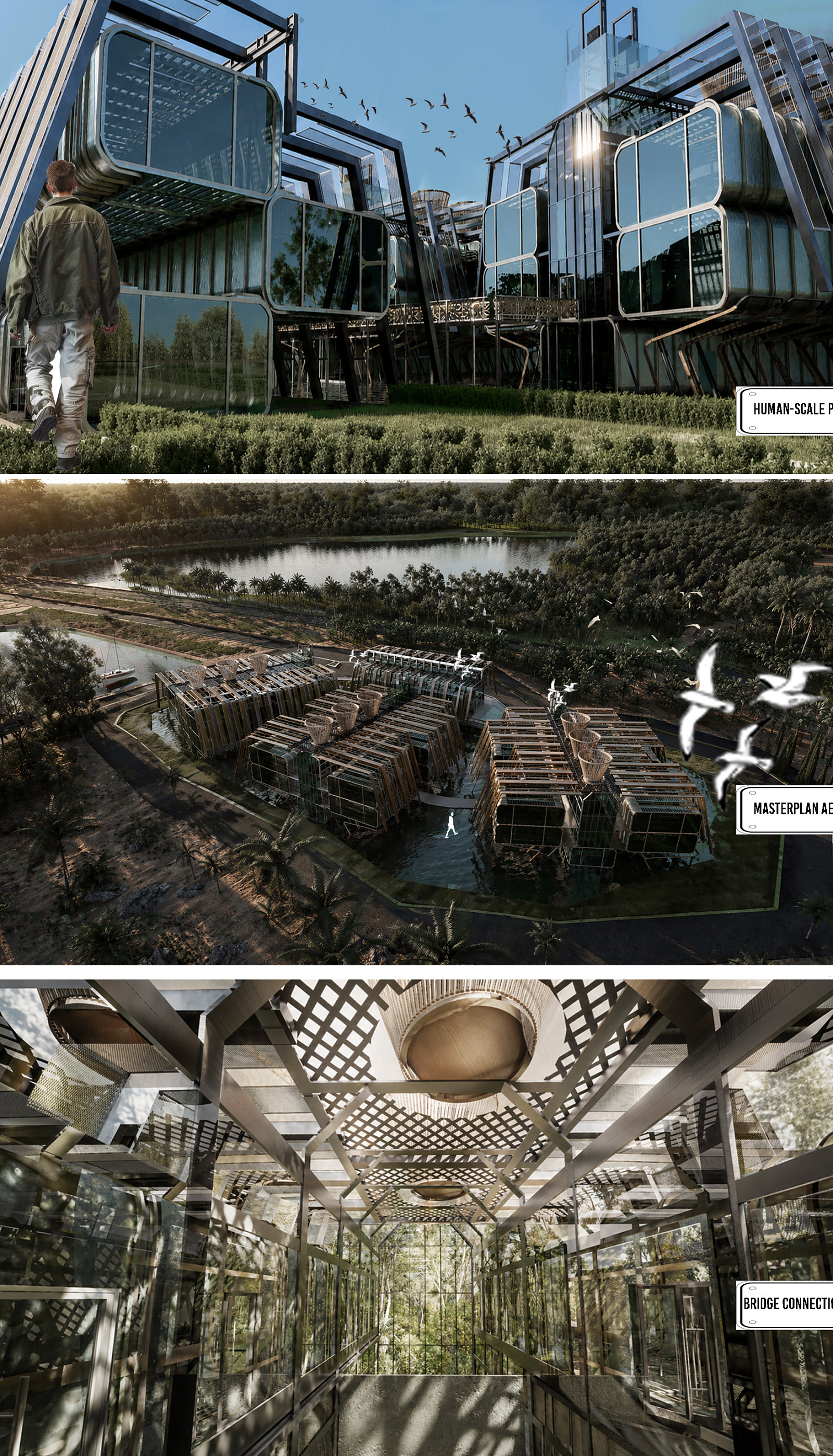
The material selection is inspired by the concept of tin and the industrial identity of the site.
Main materials include :
• Metal surfaces representing tin
• Concrete for structure
• Glass for transparency and visual connection
These materials reflect both durability and conceptual meaning while responding to the local context.
Sustainability and Passive Design Features
The design integrates passive environmental strategies to respond to the tropical climate:
• Shading devices to reduce heat gain
• Natural ventilation through openings and spatial gaps
• Daylighting to reduce artificial lighting
• Reflective materials to minimize heat absorption
These strategies improve thermal comfort and energy efficiency.
Documentation

Copyright © 2026 INSPIRELI | All rights reserved. Use of this website signifies your agreement to the Terms of Use, Privacy Policy, and use of cookies.