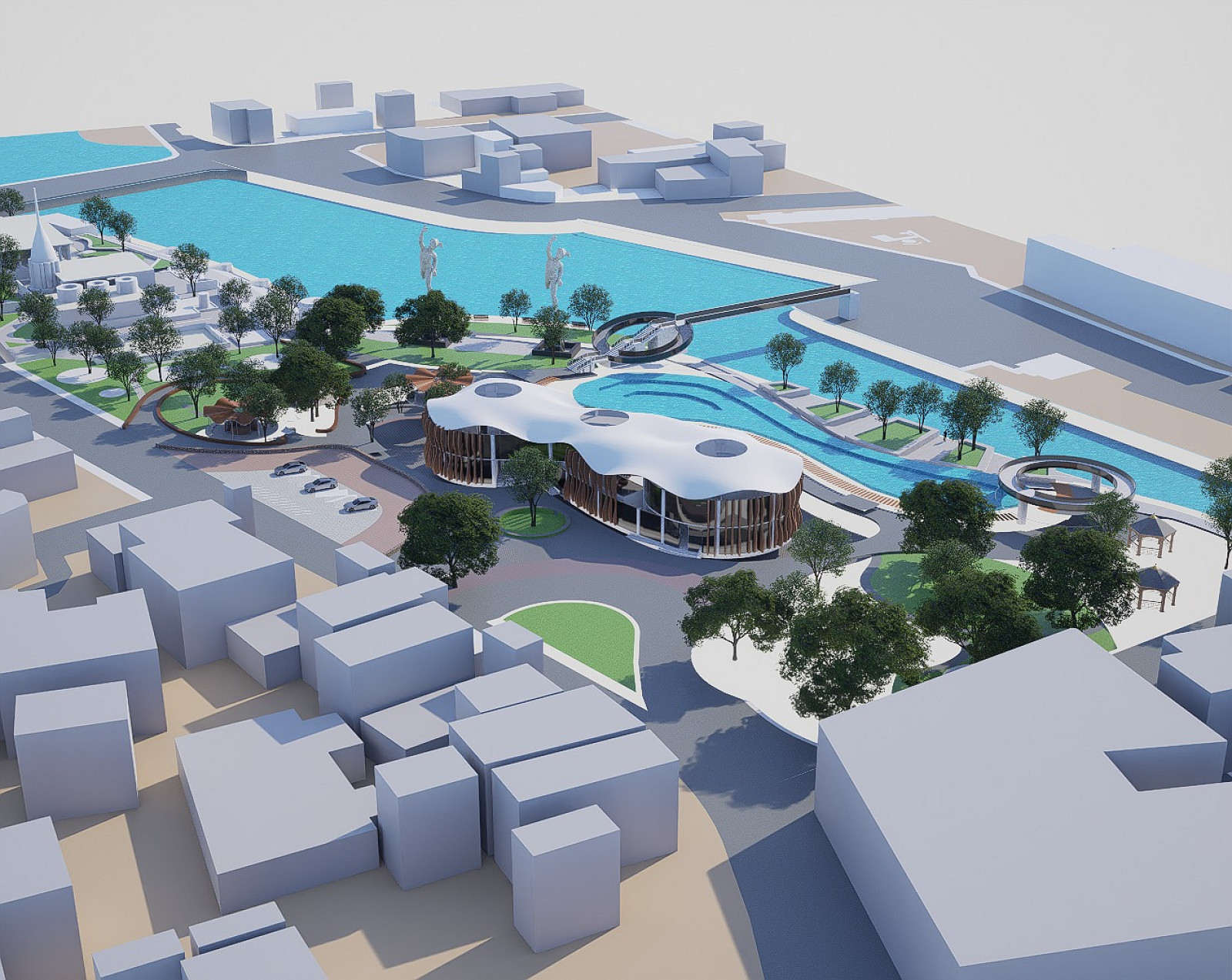
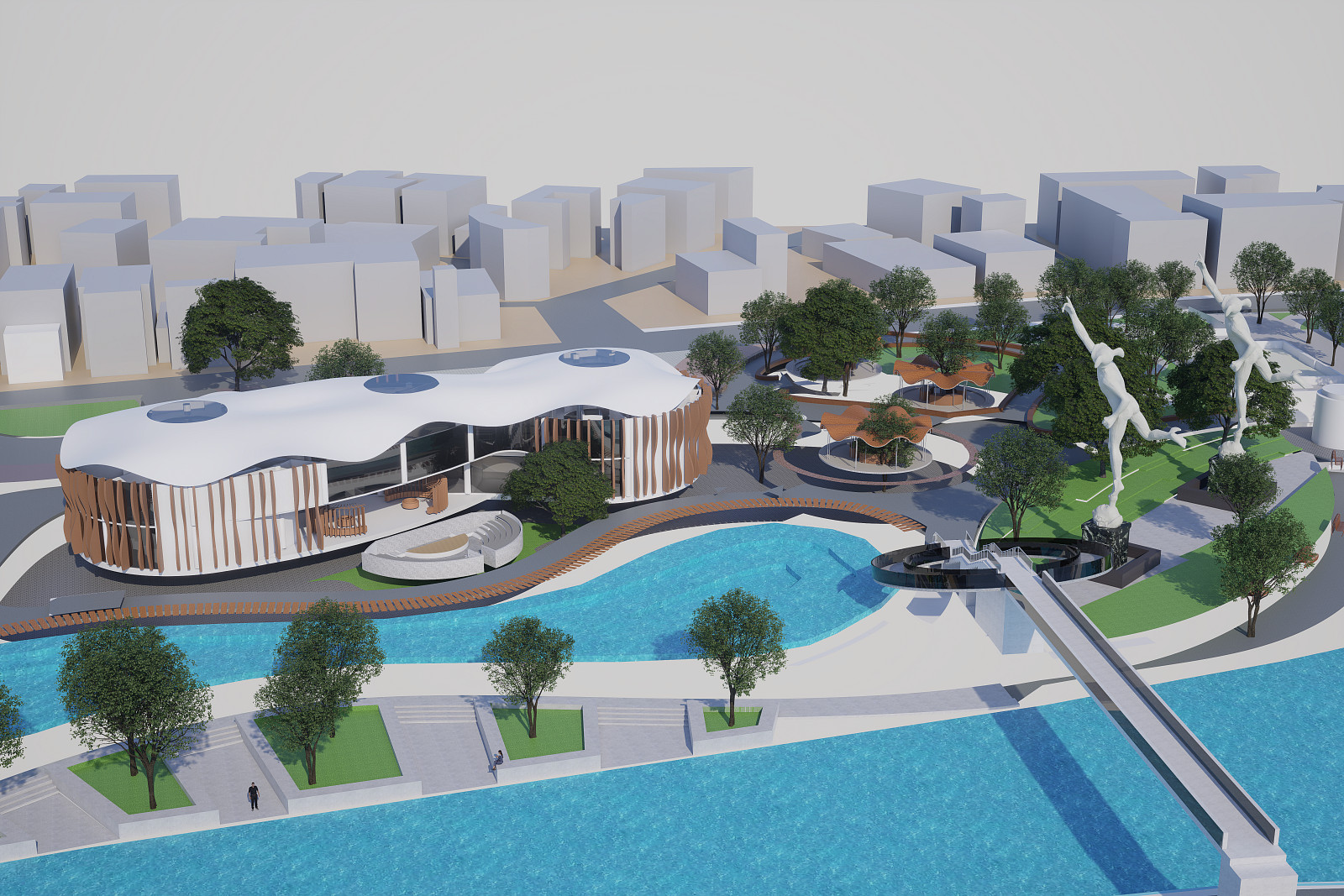
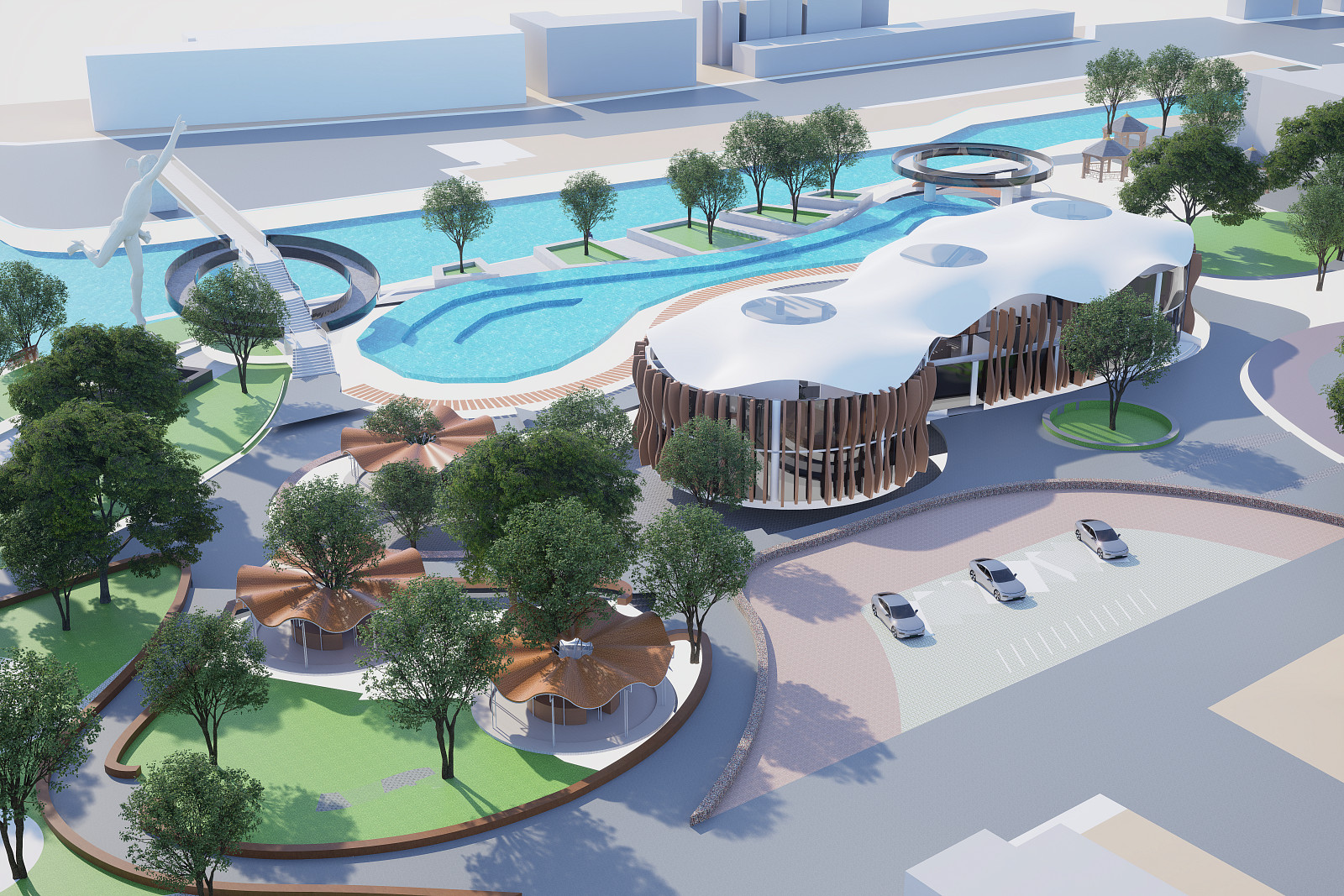
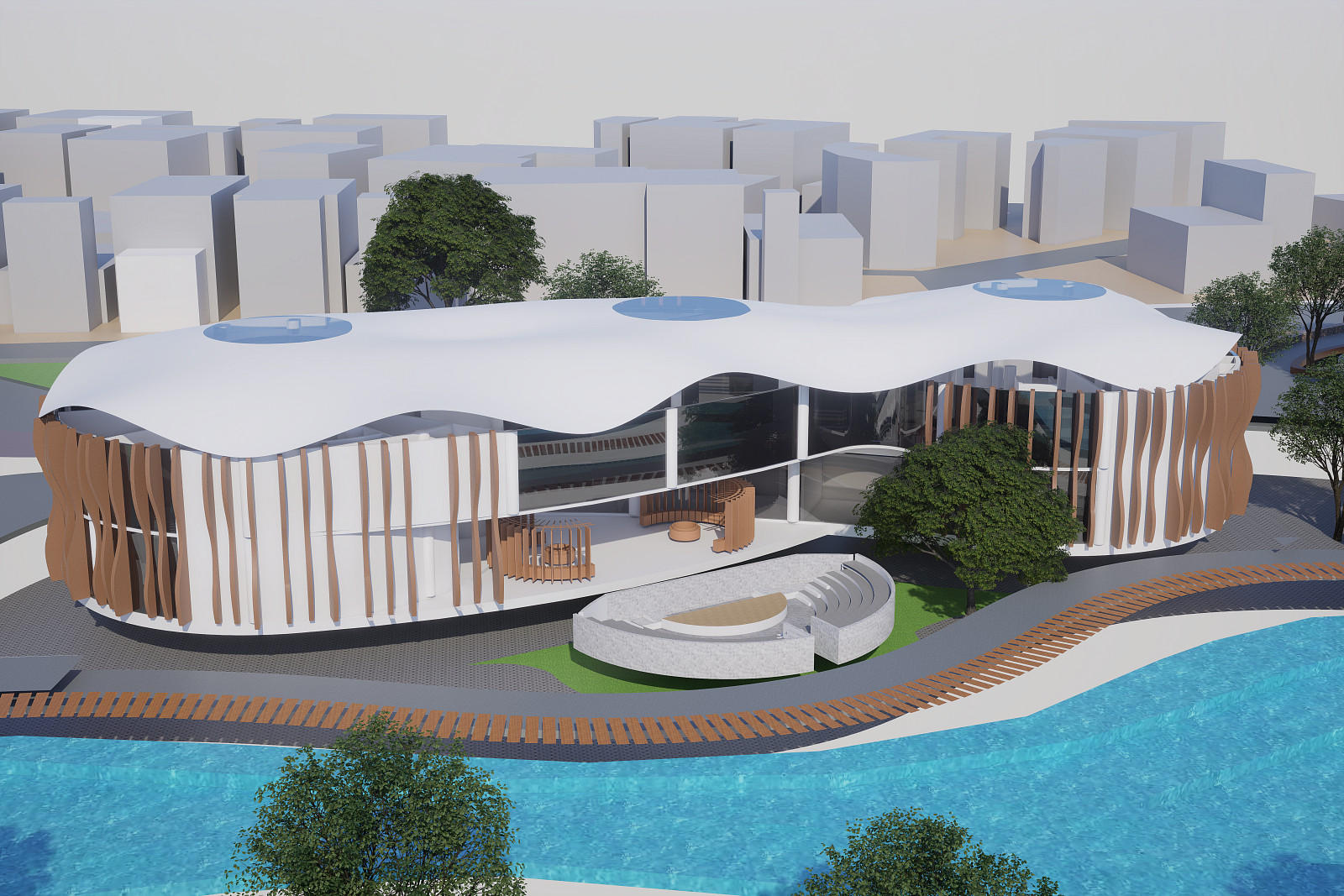
Reviving the Riverfront as an Urban Third Place for the City - Rajwada Precinct - Indore Madhya Pradesh


Project idea
Cities are amongst humanity’s greatest creations and the public realm is arguably their most
significant aspect. The public realm is what makes a city so rich, so complex and full of
potential. The starting point for examining the public realm is the fact that they should
belong to everyone, regardless of race, class, or gender. (Inam, 2023).
The spatial organization of cities is deeply intertwined with the social interactions that shape
urban life. The urban spaces are not merely physical entities but are socially produced,
shaped by everyday practices, power structures and lived experiences. Within this
framework , third places as defined by Ray Oldenburg (1989), serve as social spaces
beyond home (first place) and work (second place), fostering community engagement,
inclusivity and cultural exchange. These spaces include cafes, tea stalls, street corners,
market places, promenades and urban parks which are an integral part of the urban fabric
of the city.
As cities expand and densify, third places become anchors of continuity — sustaining
everyday sociability, supporting informal economies, and fostering intergenerational
belonging. They mediate between private life and the collective domain, allowing citizens
to negotiate identity, culture, and shared memory in space.
This year Semester 6 architecture studio examines the relationship between the city and its
built form, addressing questions of climate responsiveness, spatial efficiency, and
governance. It emphasises the lived character of urban environments, seeking architecture
that not only complies with regulations but actively contributes to civic vibrancy and
everyday life.
Centered on the idea of the “third place” within the historic core of a city, the studio
investigates how buildings can operate as active social interfaces — embedded in, shaped
by, and responsive to their cultural and environmental context.
Indore, the cultural capital of Madhya Pradesh, ruled by the Holkars, was shaped through
an organic pattern of growth radiating outward from the Rajwada Palace and central
Chowk-based bazaar streets, where political power, commerce, and public life intertwined
to produce a fine-grain, pedestrian-oriented urban fabric that still influences its spatial
structure today.”
Project description
The architectural design project for Semester VI is titled "Reviving the Riverfront as an Urban Third Place for the City," focusing on the Rajwada Precinct in Indore, Madhya Pradesh. The core requirement of this 16-week studio project is to investigate and design an architectural intervention that seamlessly integrates "second places" (civic zones) with "third places" (social and cultural commons) along the historically significant but underutilized Krishnapura Chatri riverfront. The project requires students to weave civic nodes, folk-life activities, neighborhood economies, and cultural interfaces into the urban landscape, creating a space that actively contributes to everyday civic vibrancy, spatial efficiency, and climate responsiveness. Converted Programme Area and Design StatementThe programmatic requirements and area statements for the architectural design studio are structured into three distinct zones and overall site parameters.Part 1: Public & Social Zone (Third Place)
This zone is designed to foster community engagement and requires a total area of 1,730 square meters. It features a 400-square-meter Chowk or Forecourt intended for open gatherings, civic events, and shaded seating. Informal interaction is facilitated by a 70-square-meter Adda. Cultural programs, meetings, and film screenings will be hosted in a 250-square-meter Jan-Sabhagruha, which serves as a multipurpose hall complete with administration and services. A 100-square-meter Vachanalaya, or reading room, is planned for community reading, study, and as a resource center. For local art and heritage, a 200-square-meter Kala Kendra will function as an exhibition and art gallery. The zone also includes a 100-square-meter Srijan-Shaala (workshop/maker space) for community skill-building and a digital lab, alongside a 90-square-meter Baal-Manch acting as an indoor learning and play space for children. Youth are accommodated with a 120-square-meter Yuva-Karyashaala featuring start-up desks and study pods. Outdoor cultural programs will utilize a 250-square-meter Lok-Rang Manch amphitheater. Additionally, a 150-square-meter Arogya-Angan is dedicated to senior citizens and wellness, offering relaxation, yoga, games, and shaded seating. Landscape courts and a green spine with gardens, water bodies, and shaded pathways round out this social zone. Part 1A: Temporary and Semi-Permanent Structures
Designed as 30% of the site development, this sub-zone totals 750 square meters. It comprises a 250-square-meter Dastakar Haat dedicated to retail and kiosk spaces, including bookshops, flower stalls, and local crafts. Furthermore, a 500-square-meter Mandi is required to accommodate a 20-stall local vegetable, fruit, and farmer's market. Part 2: Civic Zone (Second Place)
The civic zone accounts for a total of 850 square meters. Its primary interface is a 250-square-meter Seva Suvidha Kendra (Common Service Center), which handles citizen service counters for bill payments, applications, licenses, and grievances. A 200-square-meter Sahayata Kendra serves as a public reception, enquiry hall, and waiting area. Staff operations are supported by a 200-square-meter area for workstations, break zones, and a pantry, along with an 80-square-meter IT infrastructure room. Finally, 120 square meters are allocated for gender-inclusive and accessible public toilets. Part 3: Support & Service Zone
Totaling 340 square meters, the support and service zone ensures the facility's smooth daily operation. It includes a 50-square-meter security and control room for surveillance, access control, and equipment racks, plus a 30-square-meter space for maintenance and janitor rooms storing cleaning supplies and repair tools. An 80-square-meter pantry and canteen caters to staff and visitors with light cooking and dining niches. Another 80 square meters is dedicated to an electrical, pump room, and utility block. The zone also mandates a 100-square-meter service yard and loading area for waste collection and goods handling. On-grade parking is required to accommodate approximately six four-wheelers and twelve two-wheelers. Overall Site Area and Development Parameters
The total built-up area for the project, excluding Part 1A, is calculated at 2,920 square meters. The total site area, including the Krishnapura Chatri, spans 22,335.7 square meters, while the specific total site area for the design, which encompasses both built and landscape elements, is 14,285 square meters. The 30% site area designated for intervention (Part 1, Part 1A, Part 2, and Part 3) is 4,285 square meters, whereas a 10% intervention area (Part 1, Part 2, and Part 3) is marked at 1,428.5 square meters. Development restrictions state that the maximum permissible building height is 18 meters, and there is a mandatory front setback of 6 meters.
Technical information
1. Roof System
The roof is a complex, organic form employing a multi-layered, composite construction method. From the exterior in, the specifications are:
Roof Cladding: The outermost weather-resistant surface is specified as TERRACOTTA INFILL TILES, which sit within a grid structure.
Primary Structural System: The curved form is primarily supported by a series of BAMBOO RAFTERS, which have a specific dimension of 125MM DIA. (Diameter).
Lateral Bracing: To provide rigidity and structural stability between the bamboo rafters, STEEL CROSS-BRACINGS are integrated throughout the system.
Interior Finish/Sub-roof: Beneath the structural bamboo and steel layers, forming the interior ceiling profile, is a CONCRETE COVERING.
2. Intermediate Floor Structure
The primary horizontal separation between the first (ground) and second levels is constructed using an R.C.C SLAB (Reinforced Cement Concrete).
3. Building Envelope and Facade System
The vertical exterior wall systems depicted utilize two primary components:
Transparency: The main facade uses a comprehensive GLAZING SYSTEM for large areas of windows/curtain walls.
Solar Control: To manage heat gain and glare (visible on the upper floor behind the glazing and at the balcony edge), external FIBRE BOARD LOUVERS are integrated into the facade system.
Documentation

Copyright © 2026 INSPIRELI | All rights reserved. Use of this website signifies your agreement to the Terms of Use, Privacy Policy, and use of cookies.
