The Ascent- KARA KORE Rehabilitation Center


Project idea
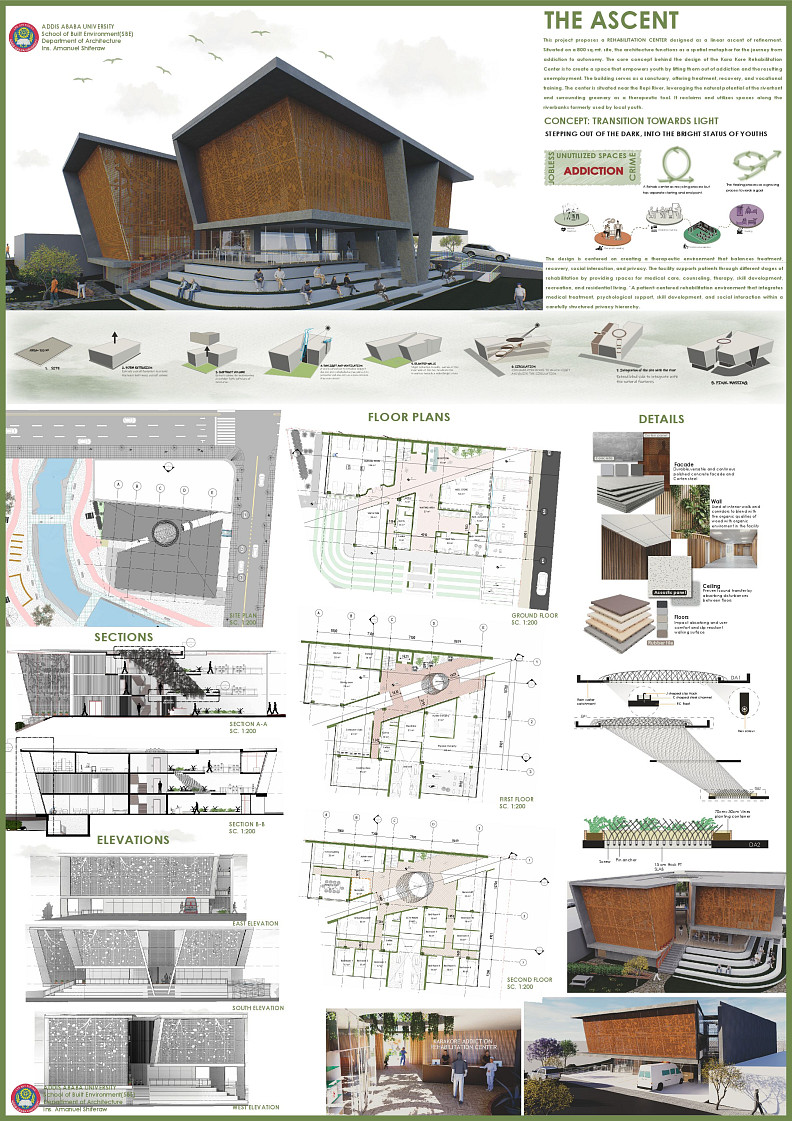
The primary concept behind the design of the Kara Kore Rehabilitation Center is to
create a supportive environment that empowers youth affected by addiction and
unemployment resulting from substance abuse. The facility serves as a place of
recovery and transformation by providing both rehabilitation services and
vocational training opportunities. The center accommodates both inpatient and
outpatient treatment programs simultaneously.
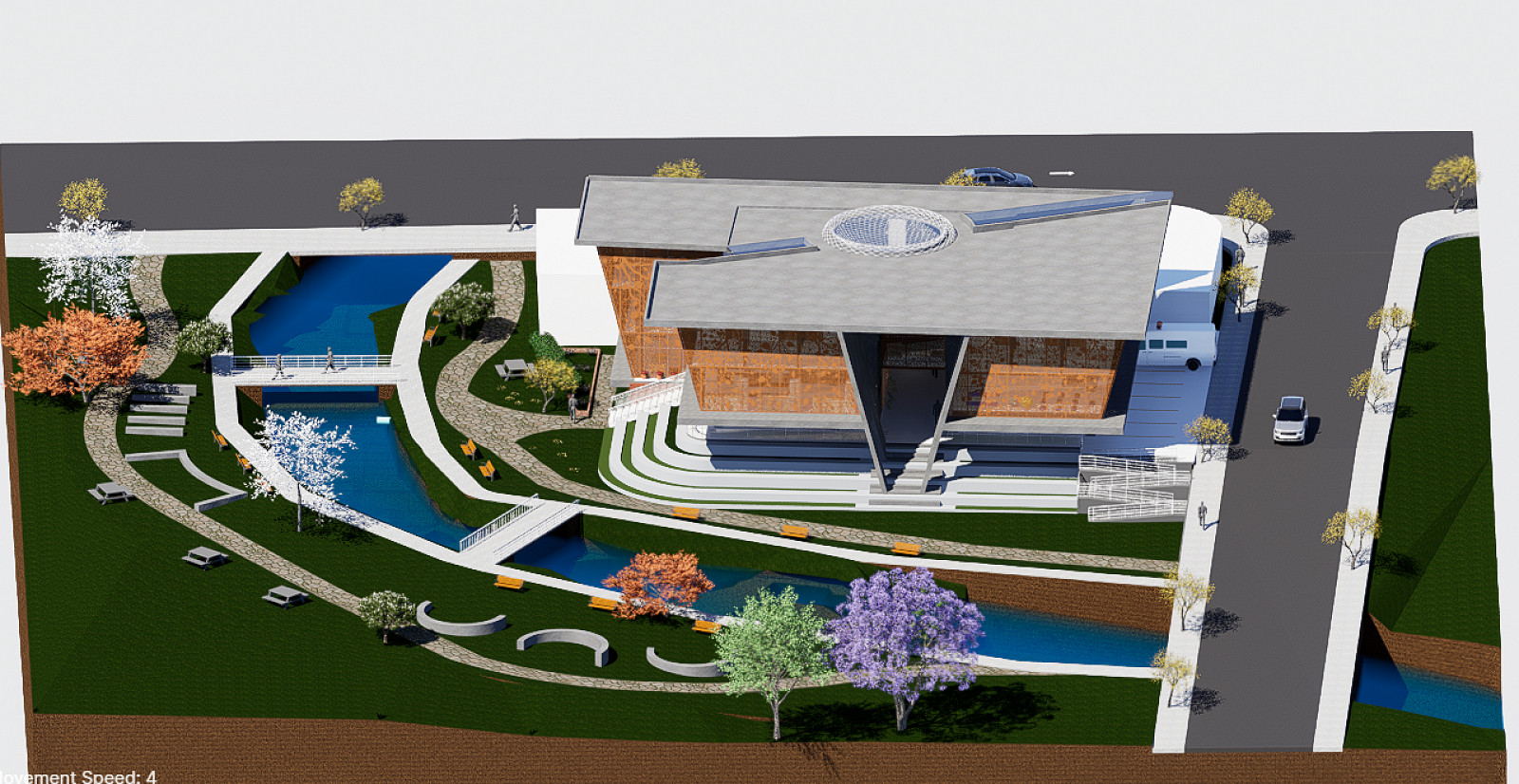
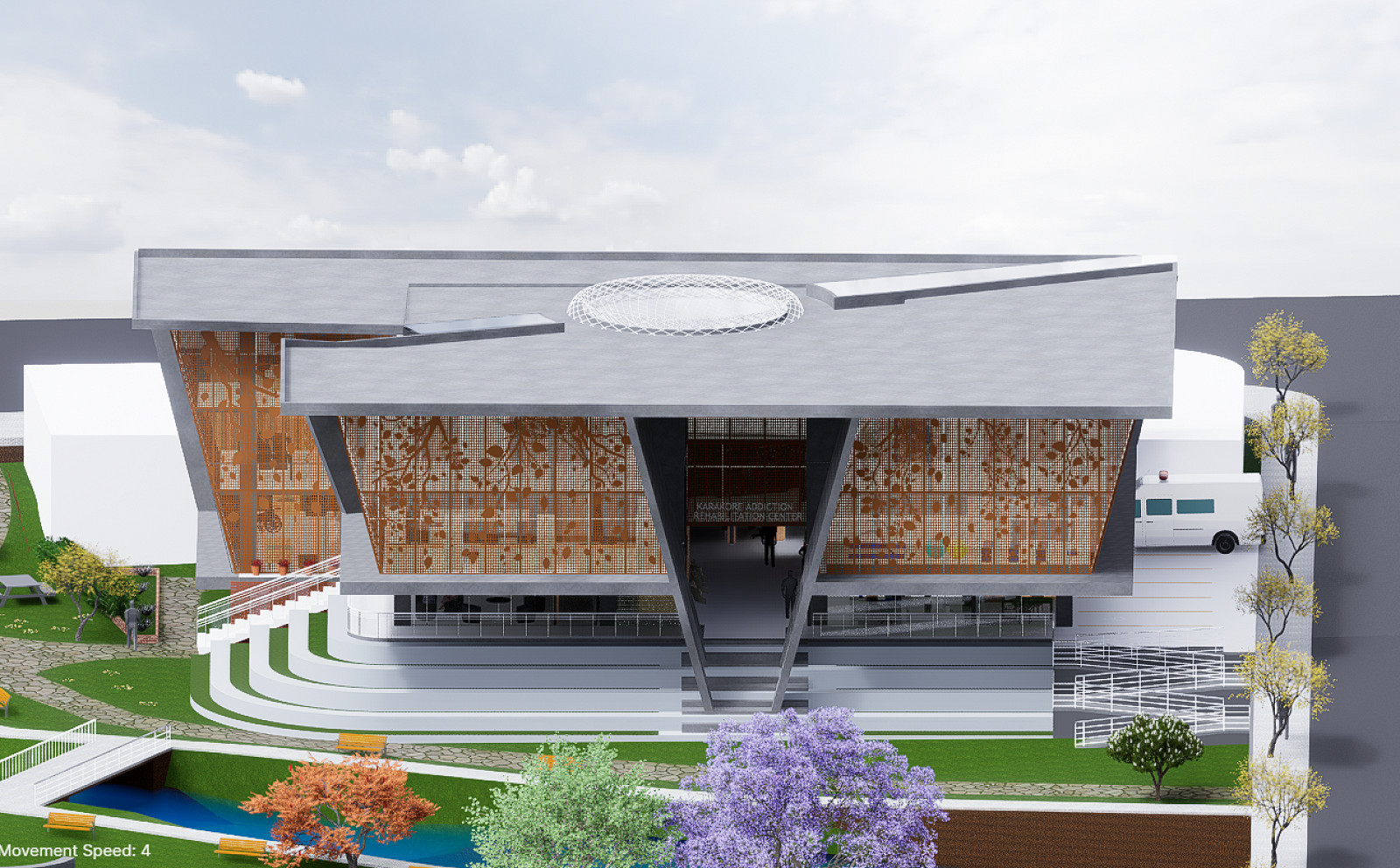
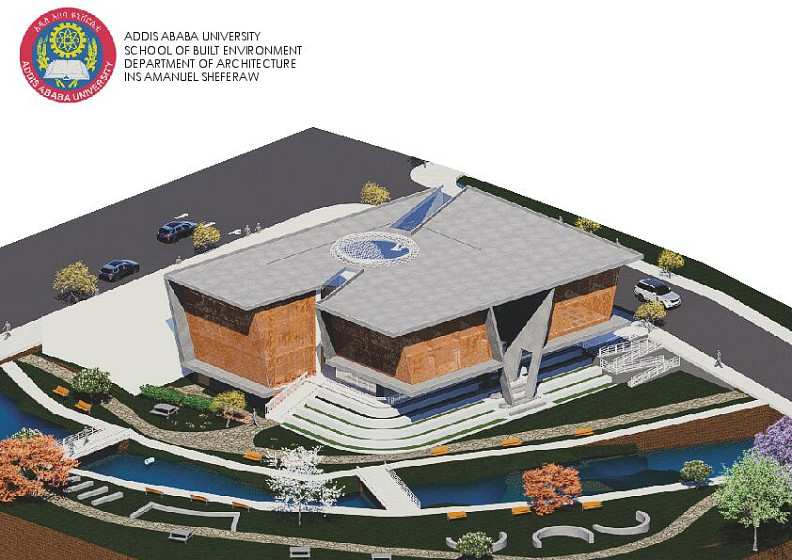
The rehabilitation center is located adjacent to the Repi River, allowing the design
to use the site's natural landscape and greenery as therapeutic healing elements.
The project also reclaims and revitalizes spaces previously occupied by youth
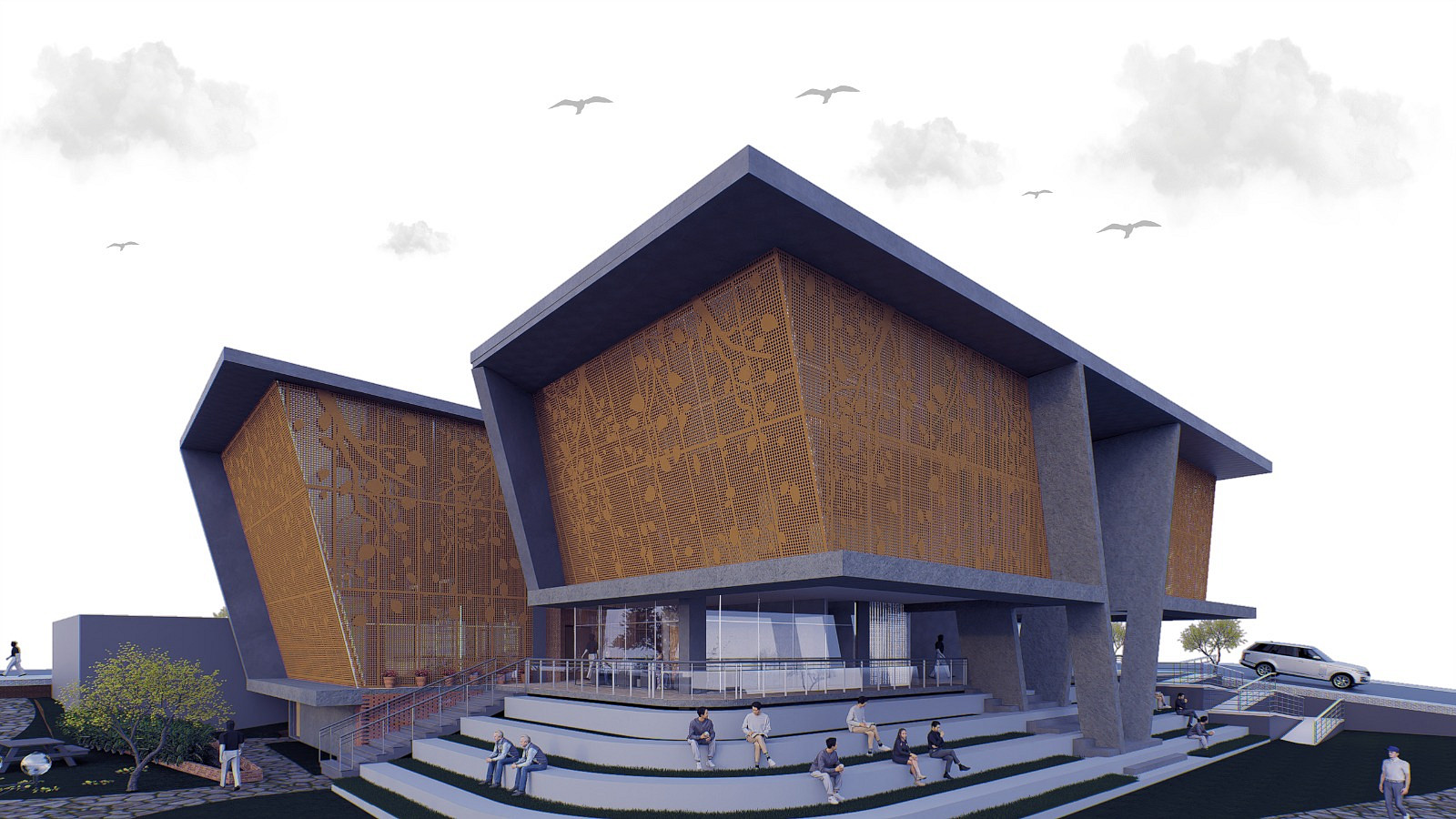
along the riverside. The architectural form is inspired by the rocky character of the
riverbank, with the building predominantly constructed from exposed concrete to
create the impression of a structure emerging naturally from the site.
The massing strategy responds directly to the site's environmental conditions and
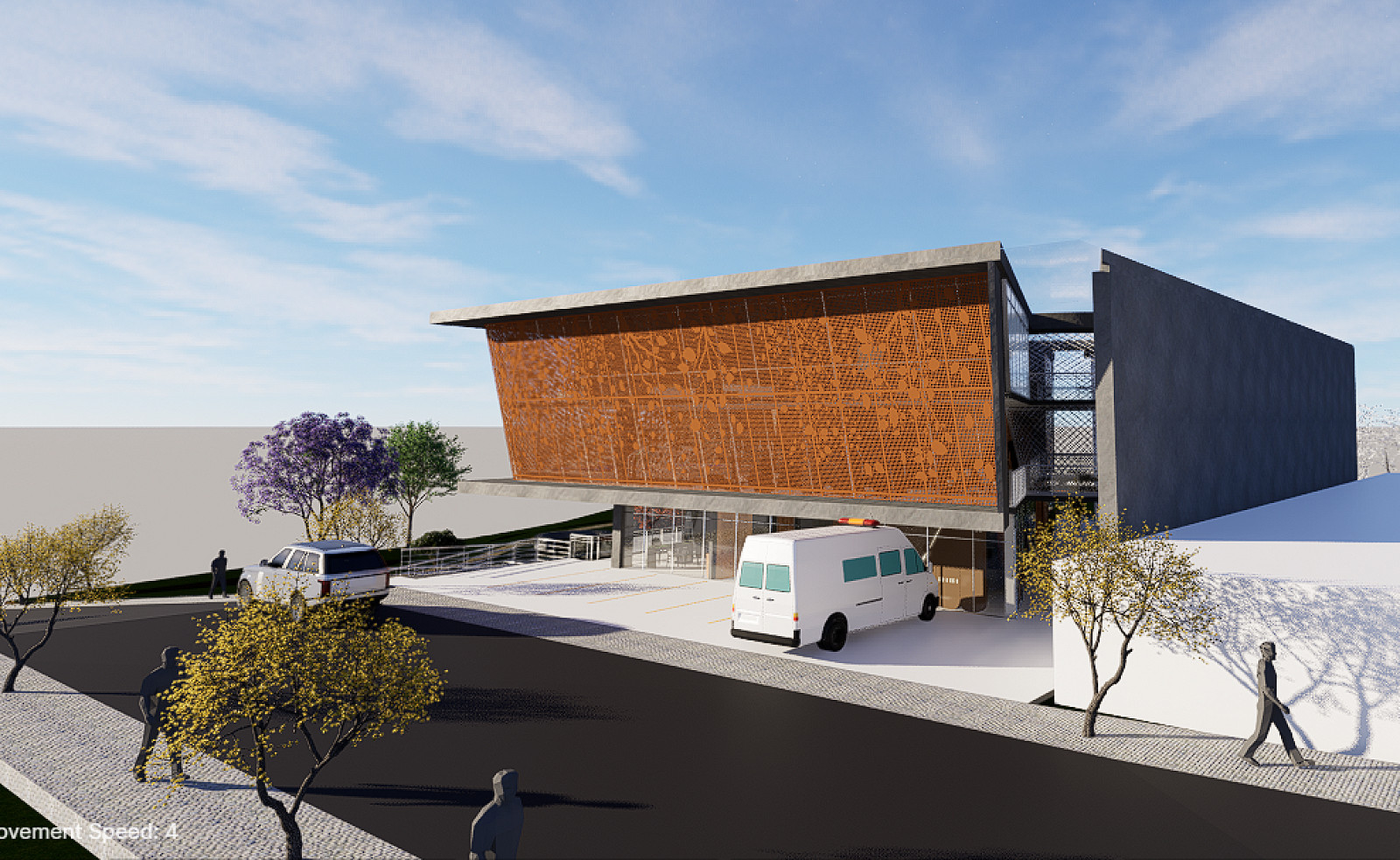
contextual factors. The northern perimeter remains relatively solid to provide
privacy from neighboring developments, while the other three façades are
inclined toward the river, creating a visual and spatial feeling that increase the
connection to the waterfront.
Project description
The Rehab center functions are divided into to 3 zones:
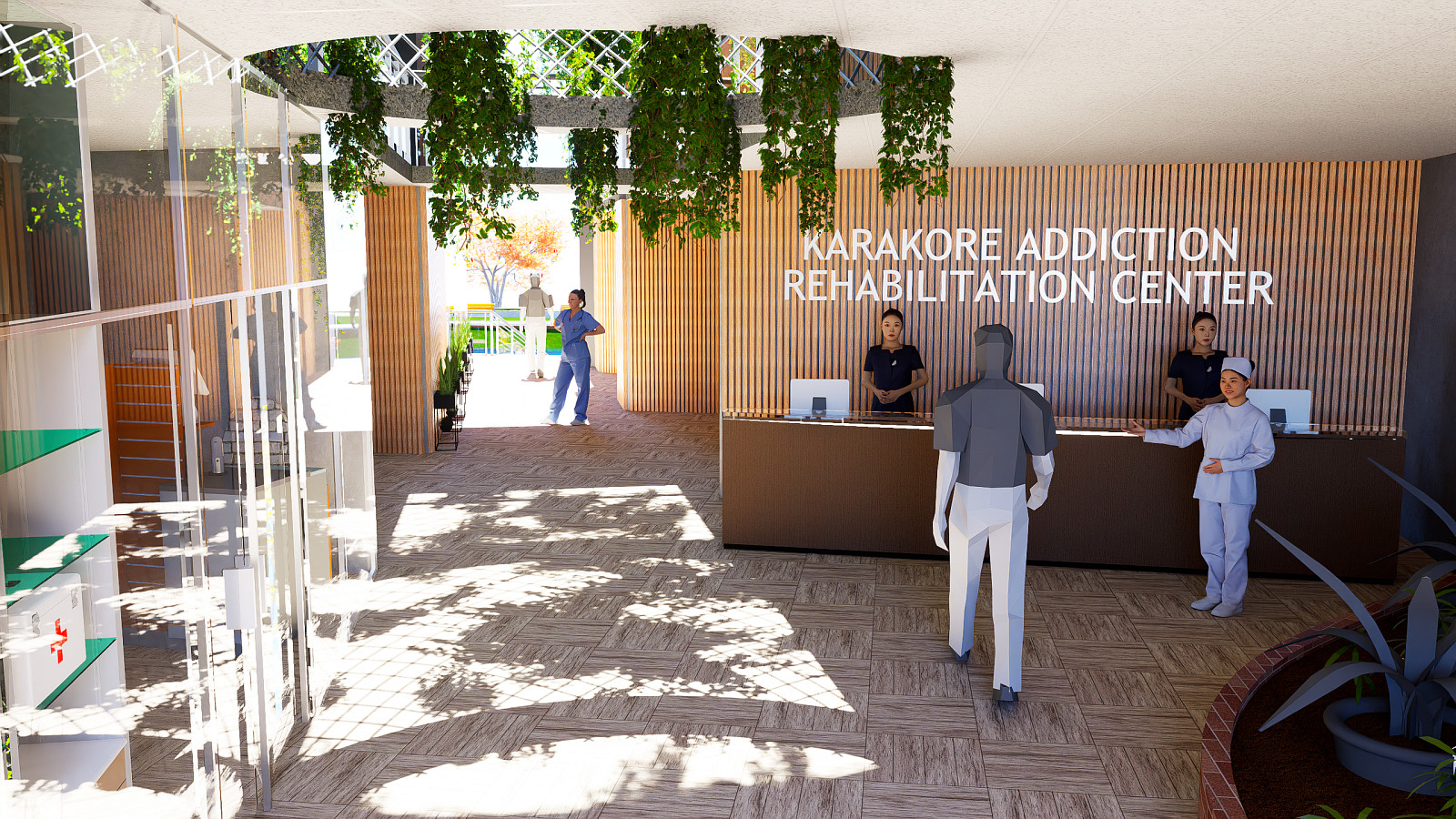
Public zones- the entry phase of the treatment process where Reception, medical
consultation and checkups, nursing room, visitation room for inpatients and a med
store which also acts as a pharmacy for the outpatients are located.
semi public- the transformation phase Composed of the vocational training rooms,
theraphy room and dining room for the inpatients.
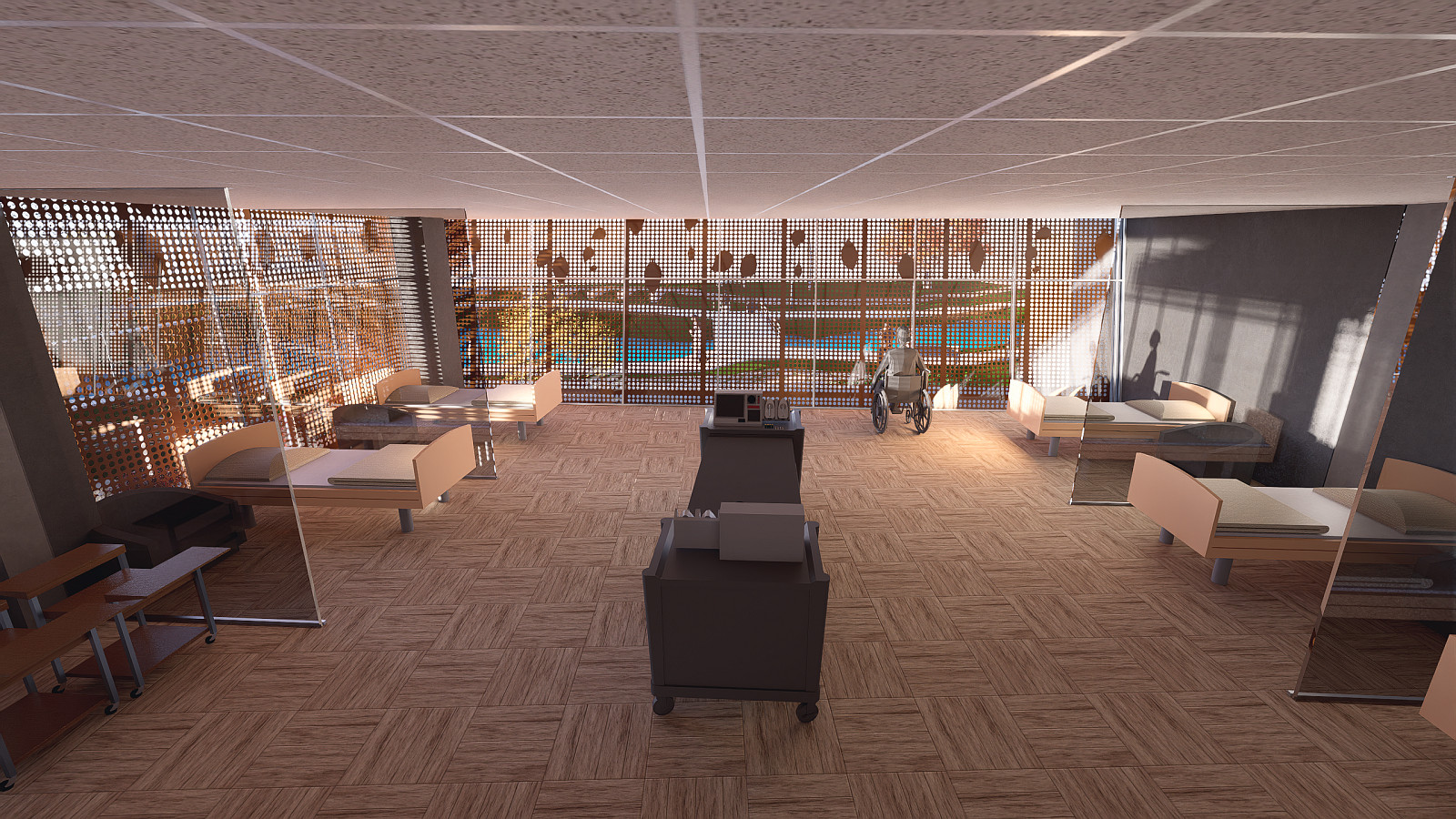
private- Located on the top floor comprising the residence for the inpatients, 1v1
councling, group discussion, and administrative zones.
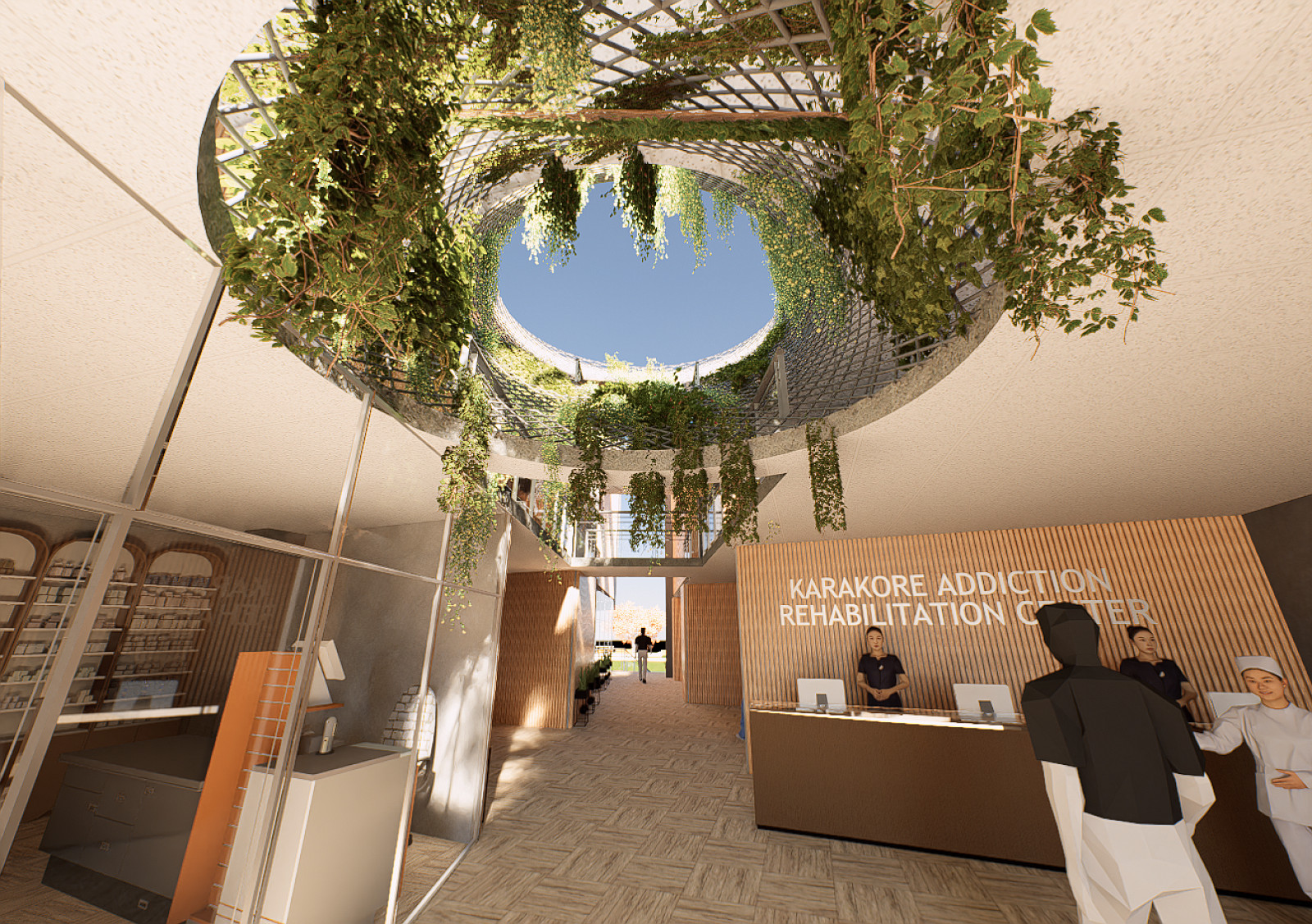
The building is accessed through one primary entrance from the main road and two
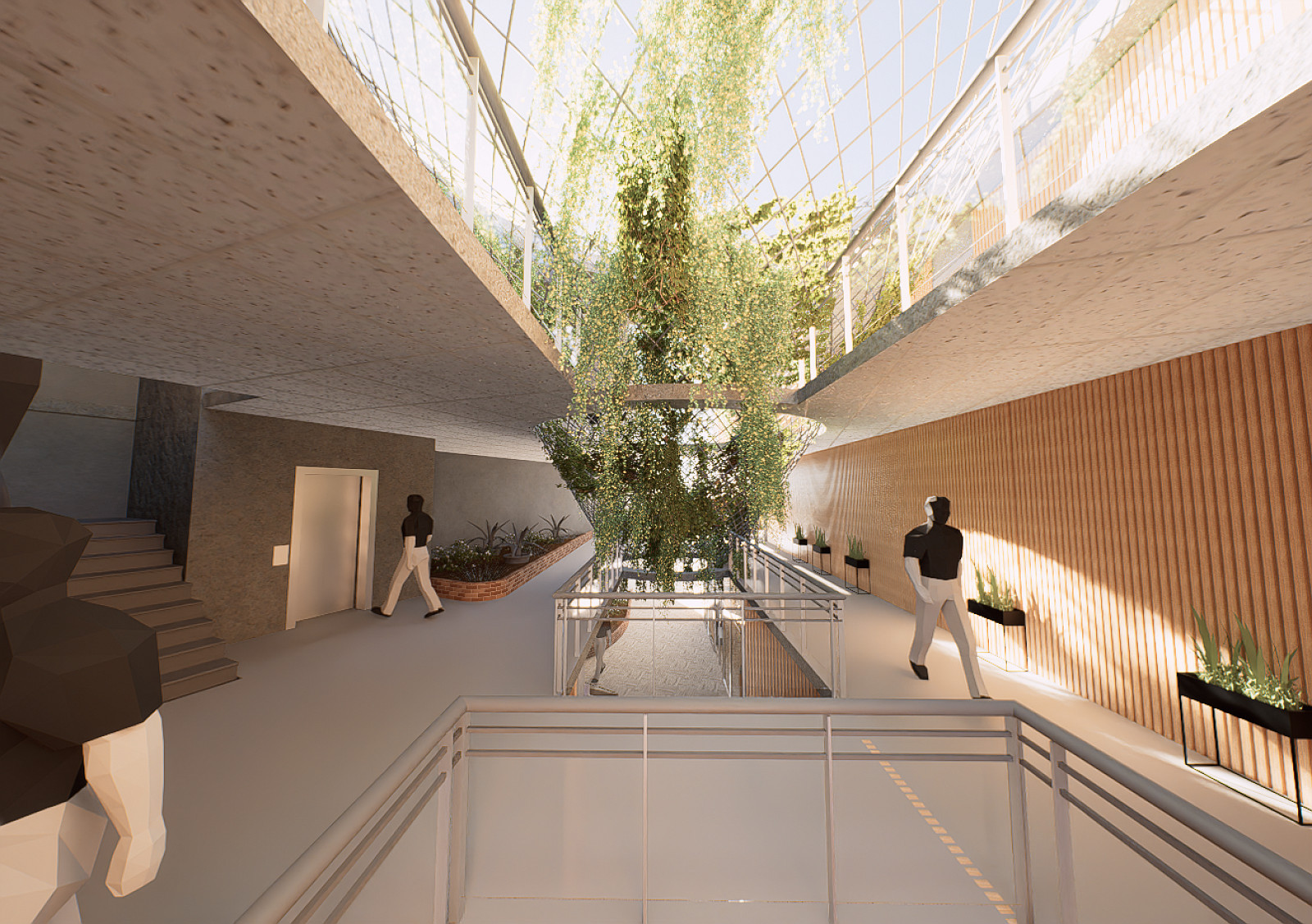
secondary entrances from the riverside. At the center of the building, a circular light
well arranged diagonally that gradually increases in diameter toward the upper
floors, allowing natural daylight to penetrate deep into the interior spaces. A
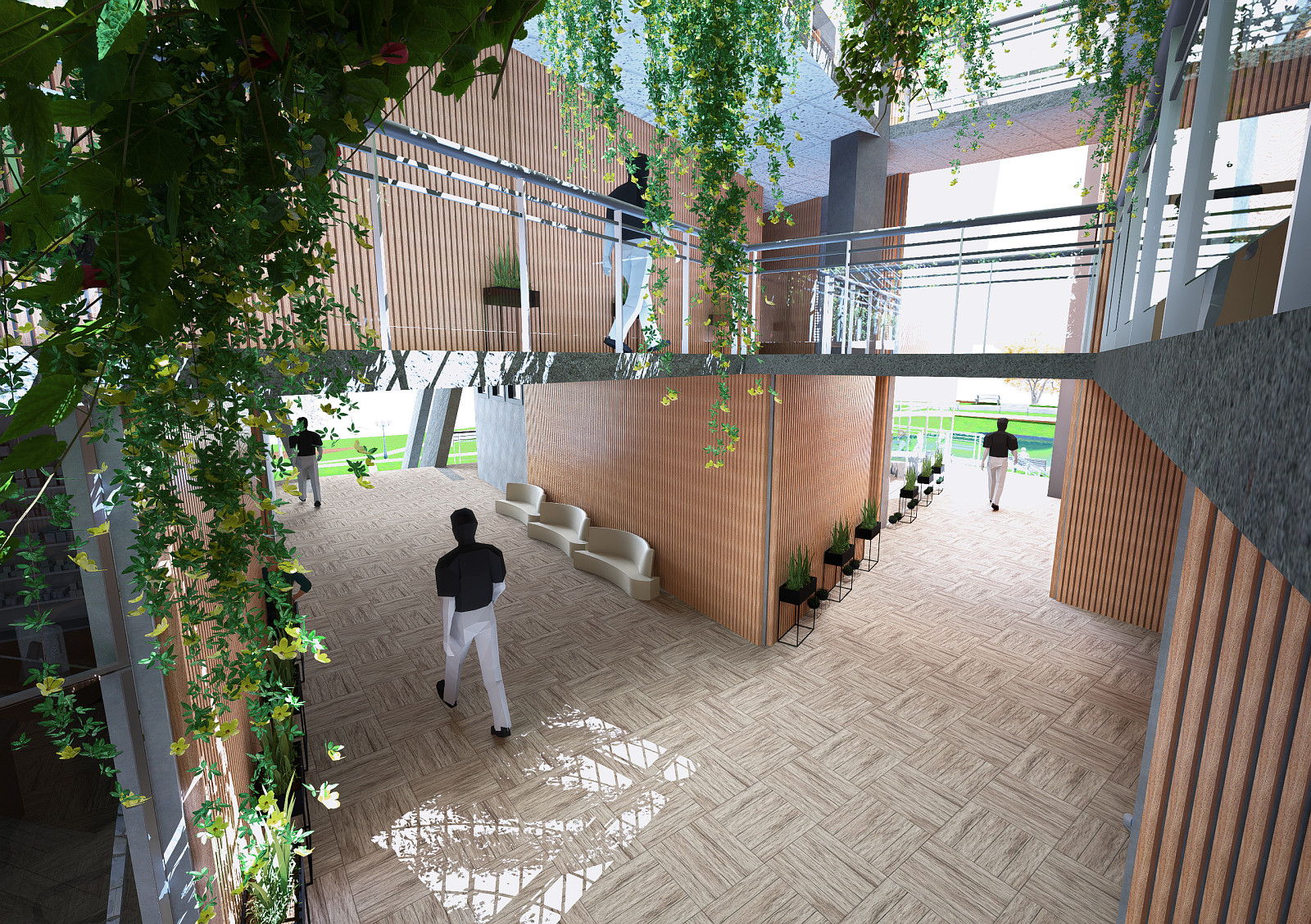
wire-mesh trellis suspended within the atrium supports climbing vines and vegetation.
These planting elements contribute to a biophilic design strategy, enhancing the
interior environment and promoting psychological well-being. Additionally, timber
slat wall treatments are incorporated throughout the interior to strengthen the
connection between the built environment and nature.
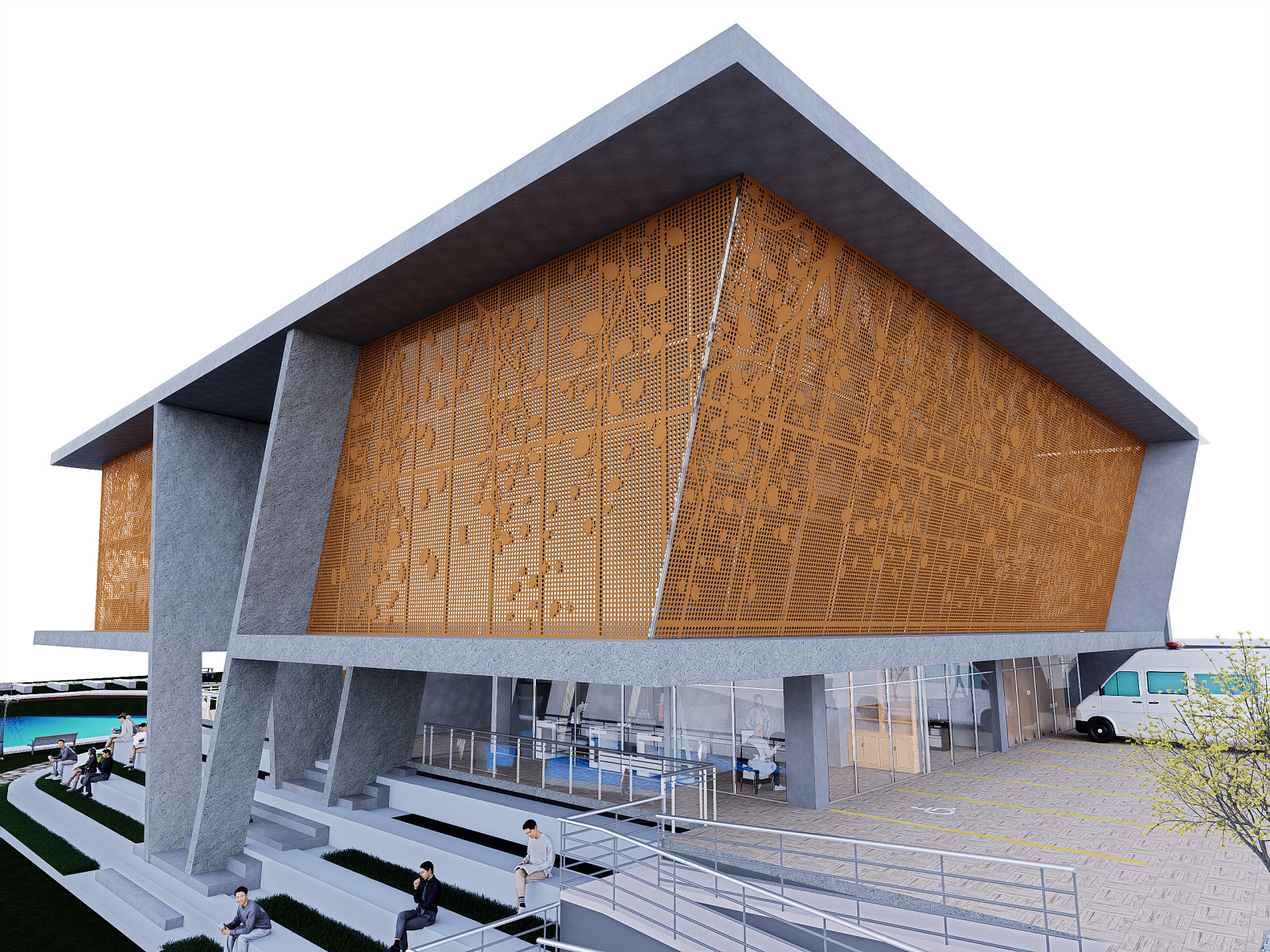
The perforated steel façade filters direct sunlight, reducing solar heat gain while
casting a falling leaves patterns of light and shadow across the interior spaces. At the
same time, it maintains visual connectivity with the surrounding landscape.
Cantilevered concrete roof elements and structural frames define and emphasize
the building's primary facades.
V-shaped reinforced concrete bearing walls support the cantilevered floors while
also marking the entrance from the river side. Beneath the cantilevered floor, a
shaded seating plaza provides an outdoor seating space where patients can
interact and engage with the riverside environment. This architectural approach
integrates therapeutic healing, vocational empowerment, and biophilic design
principles to create a holistic rehabilitation environment that supports recovery,
personal growth, and social reintegration.
Technical information
The building structure is based on post tension(PT) concrete technology, method of
reinforcing concrete with high-strength steel strands (tendons) that are tensioned
after the concrete has been poured and achieved sufficient compressive strength.
It is a form of prestressing that actively induces compressive stresses into the
concrete structure to counteract the tensile stresses caused by applied loads
PT is characterized by a beam free, thin slabs, few colmuns and longer spans
between columns. The building structure comprizes shear walls along the blind side
of the perimeter and inclined columns supporting cantelivered floors. The less
column number enable free interior layout which is important to achieve the
gradually widening of the circular light well. A cable suspended floor system is aslo
applied to support the canteliver floor over the plaza.
The materials used in the building are aimed to acheive the acoustic comfort and
biophilic environment inside the spaces. Rubber flooring throughout the floors are
used to absorb the sounds created from movement of peoples. Acoustic ceiling
tile is used for the ceiling to block the transfer of sound from upper floors.
Documentation

Copyright © 2026 INSPIRELI | All rights reserved. Use of this website signifies your agreement to the Terms of Use, Privacy Policy, and use of cookies.
