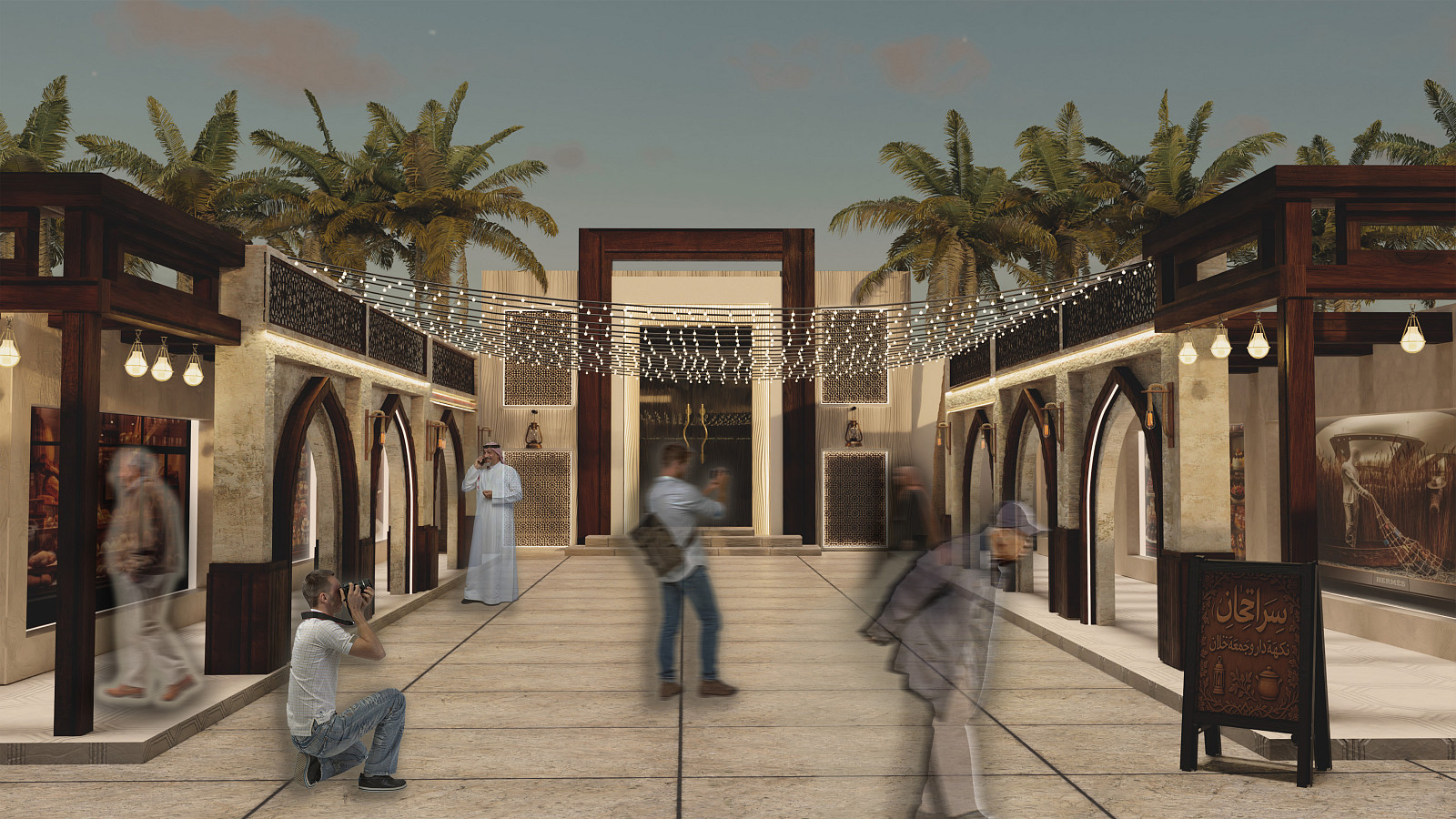
The Eternal Courtyard


Project idea
Revitalizing the heritage of Khan Bani Saad through a courtyard-centered architectural complex that celebrates traditional Middle Eastern building typologies.
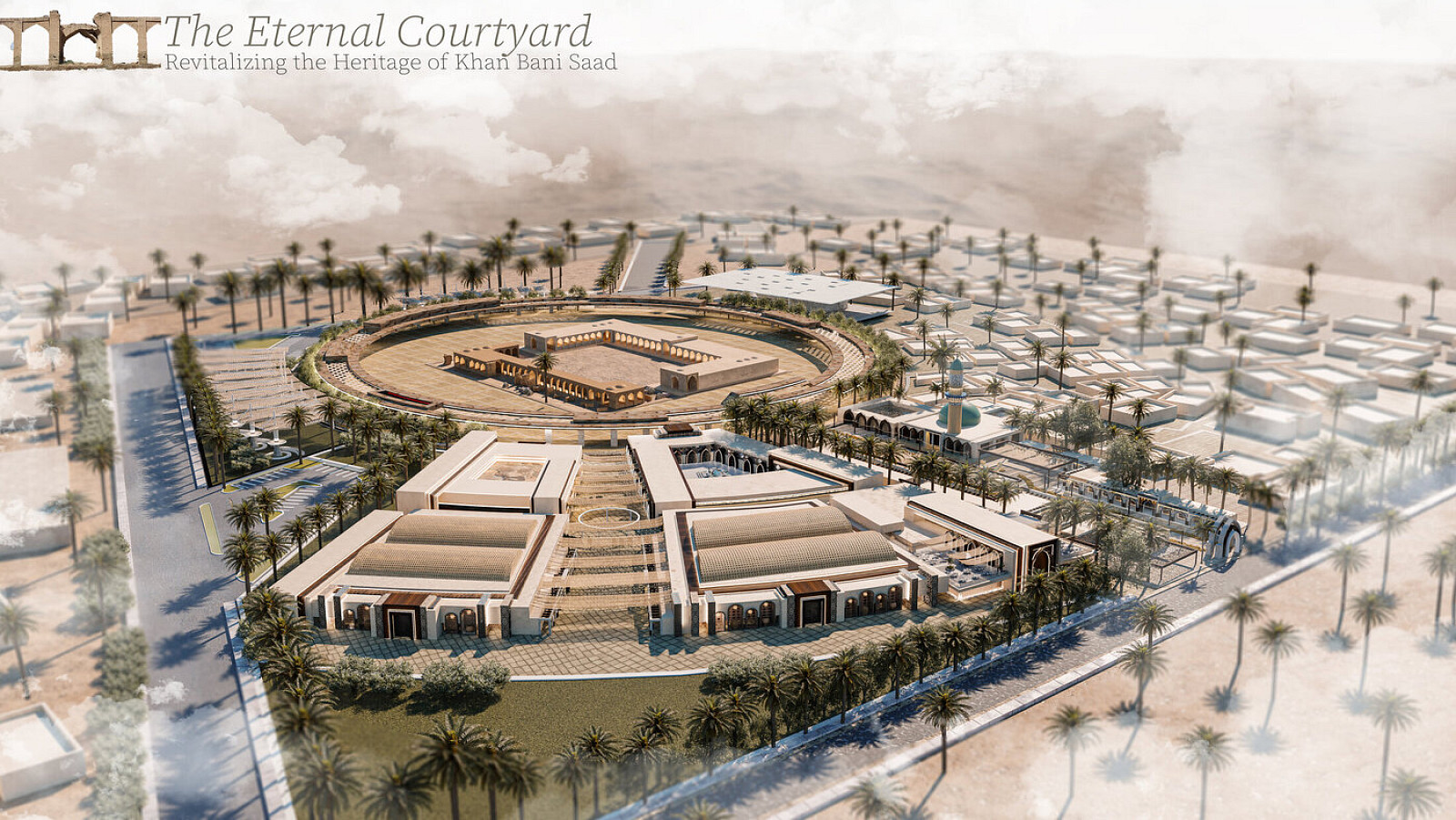
The Eternal Courtyard is a heritage-led urban revitalization project that reimagines the archaeological site of Khan Bani Saad as a vibrant cultural and social destination. Inspired by the traditional spatial organization of Iraqi and Abbasid architecture, the proposal places the historic Khan at the heart of a contemporary urban framework centered around a symbolic courtyard. The project seeks to preserve the site's identity, restore its historical significance, and reconnect the local community with its cultural heritage through a balanced dialogue between preservation, reconstruction, and new development.
Project description
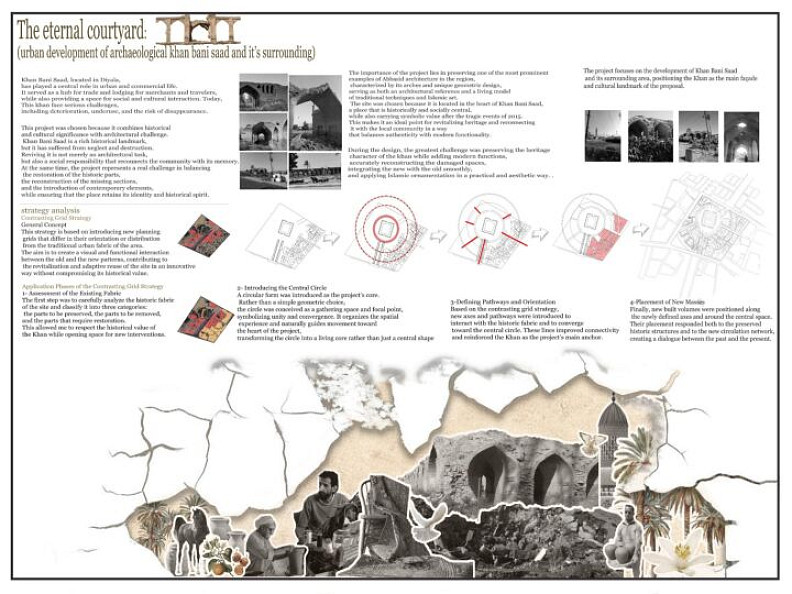
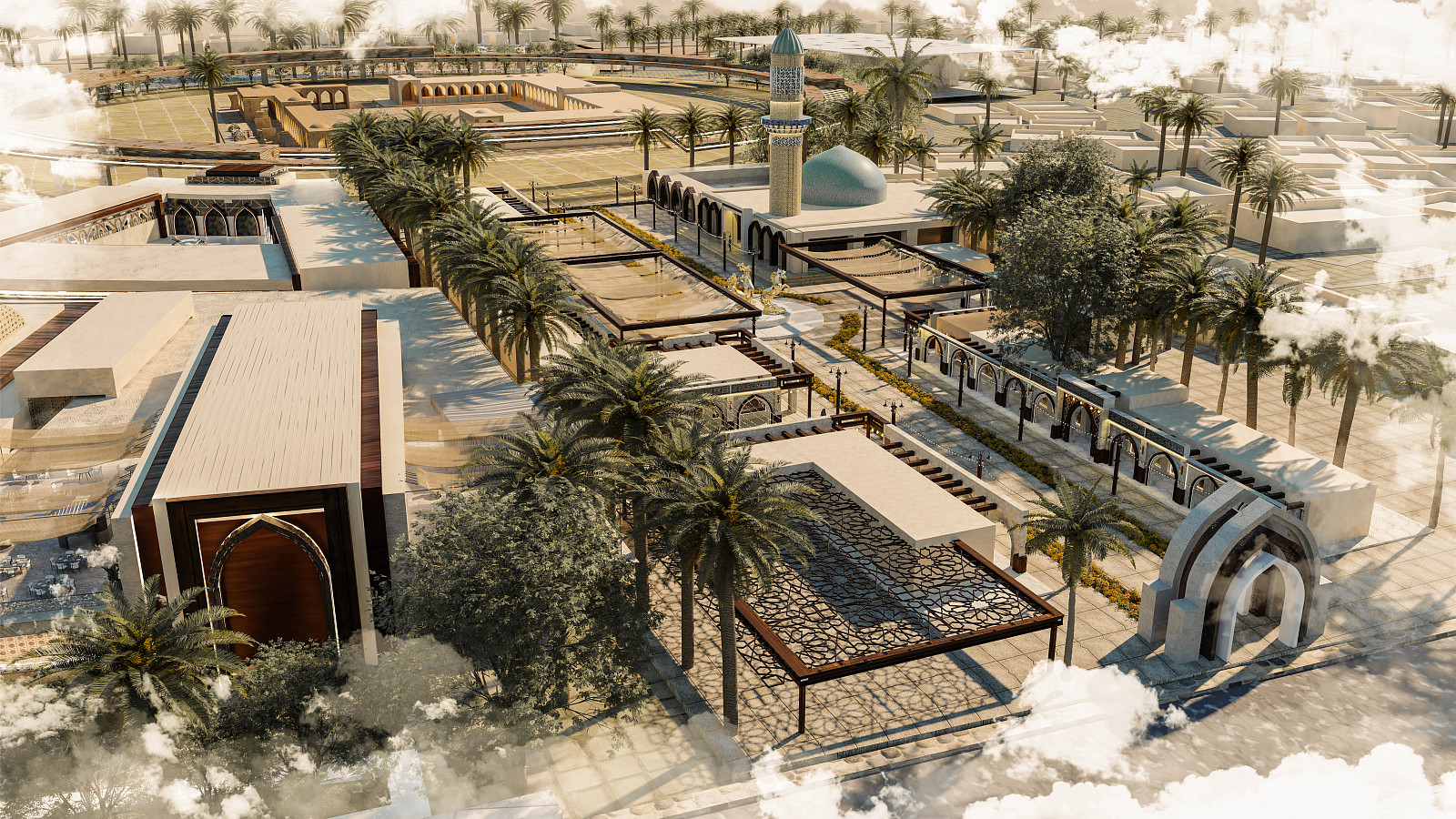
The project addresses the deterioration and underutilization of the historic Khan Bani Saad by transforming the site and its surroundings into an integrated cultural, commercial, and public realm. The design strategy originates from a detailed analysis of the existing urban fabric and heritage remains, leading to the development of a contrasting grid system that respects the historical context while introducing contemporary interventions.
A central circular courtyard acts as the organizational core of the masterplan, symbolizing continuity, gathering, and collective memory. From this focal point, a network of pathways and public spaces connects the restored Khan with newly developed functions, creating a cohesive urban experience.
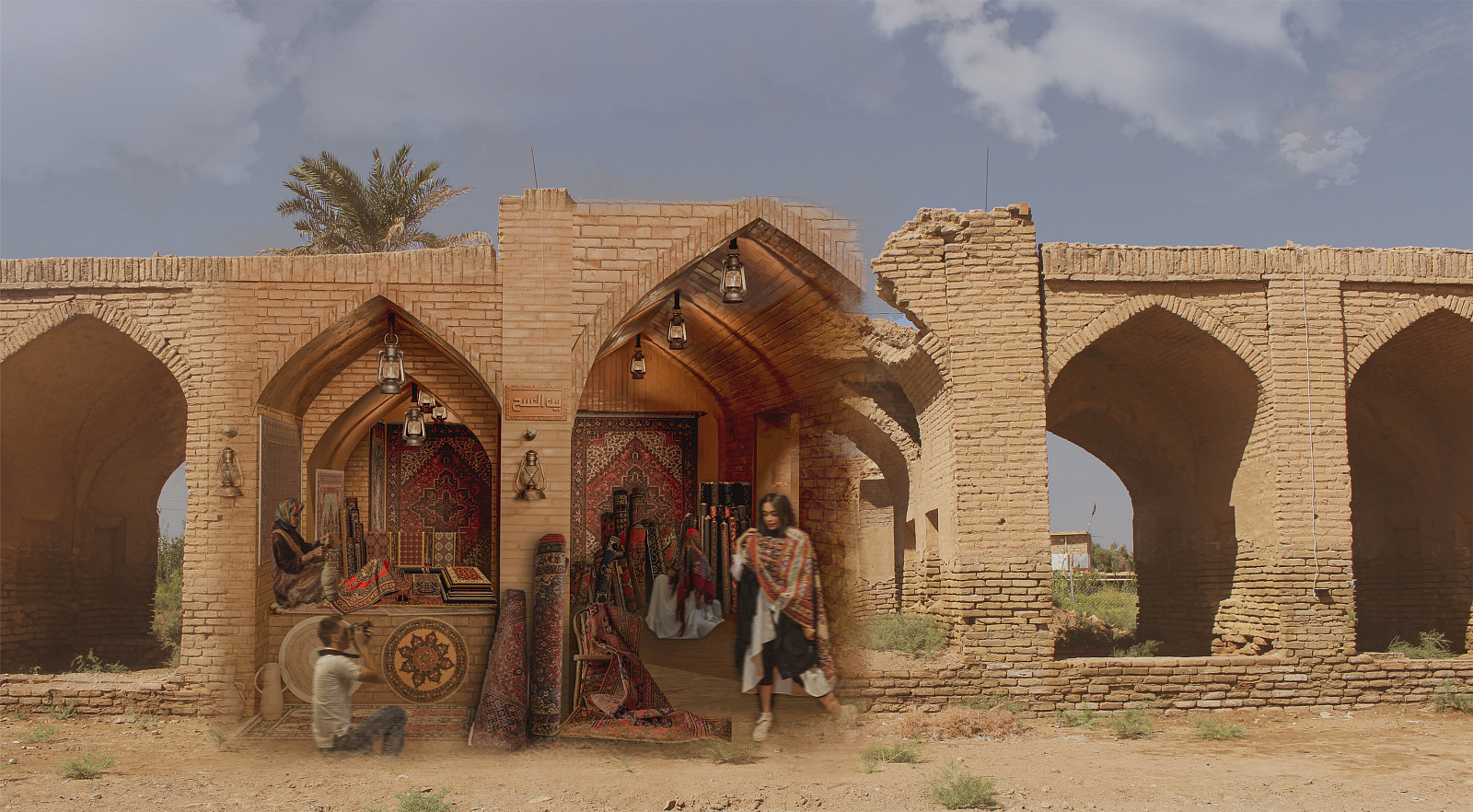
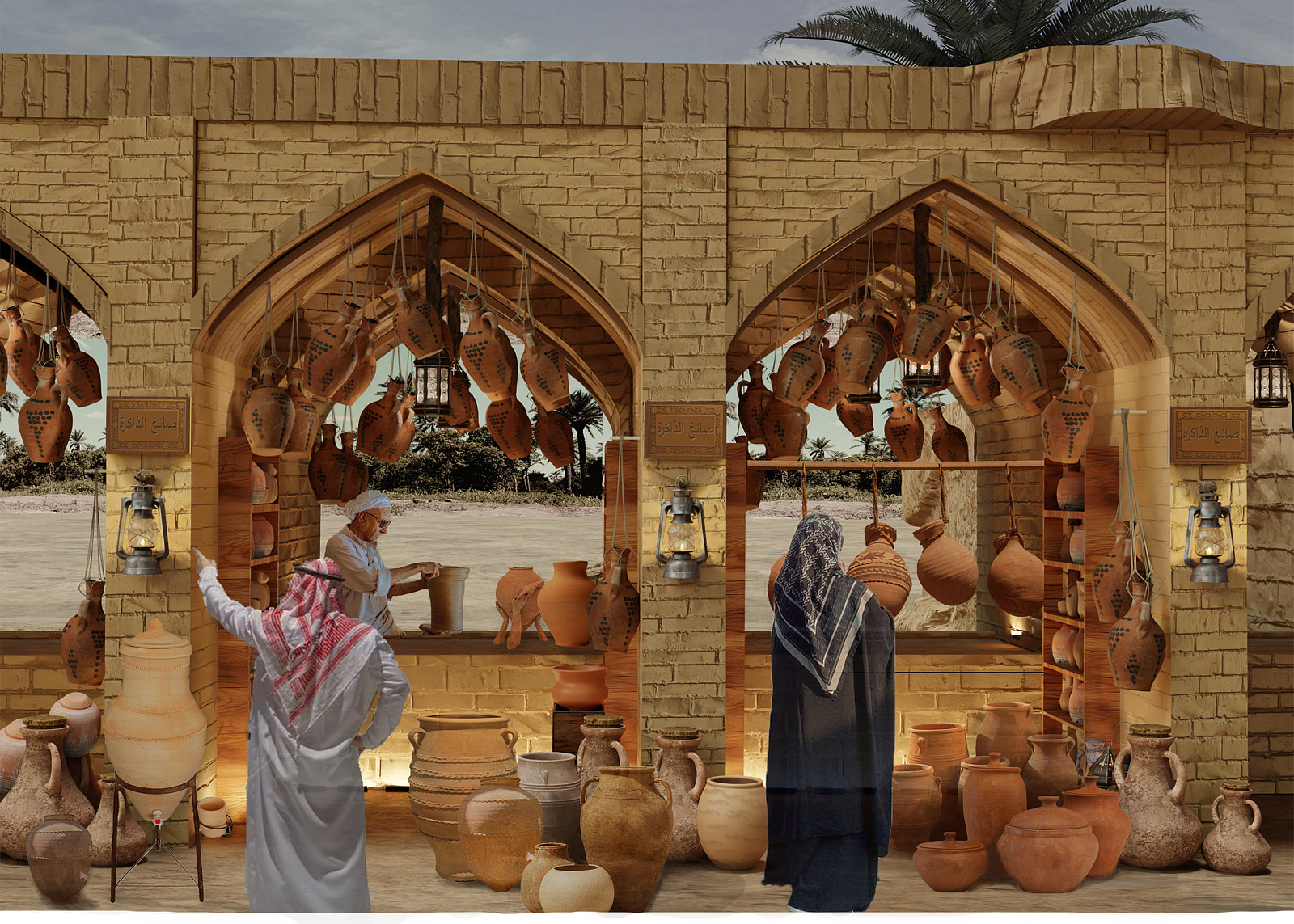
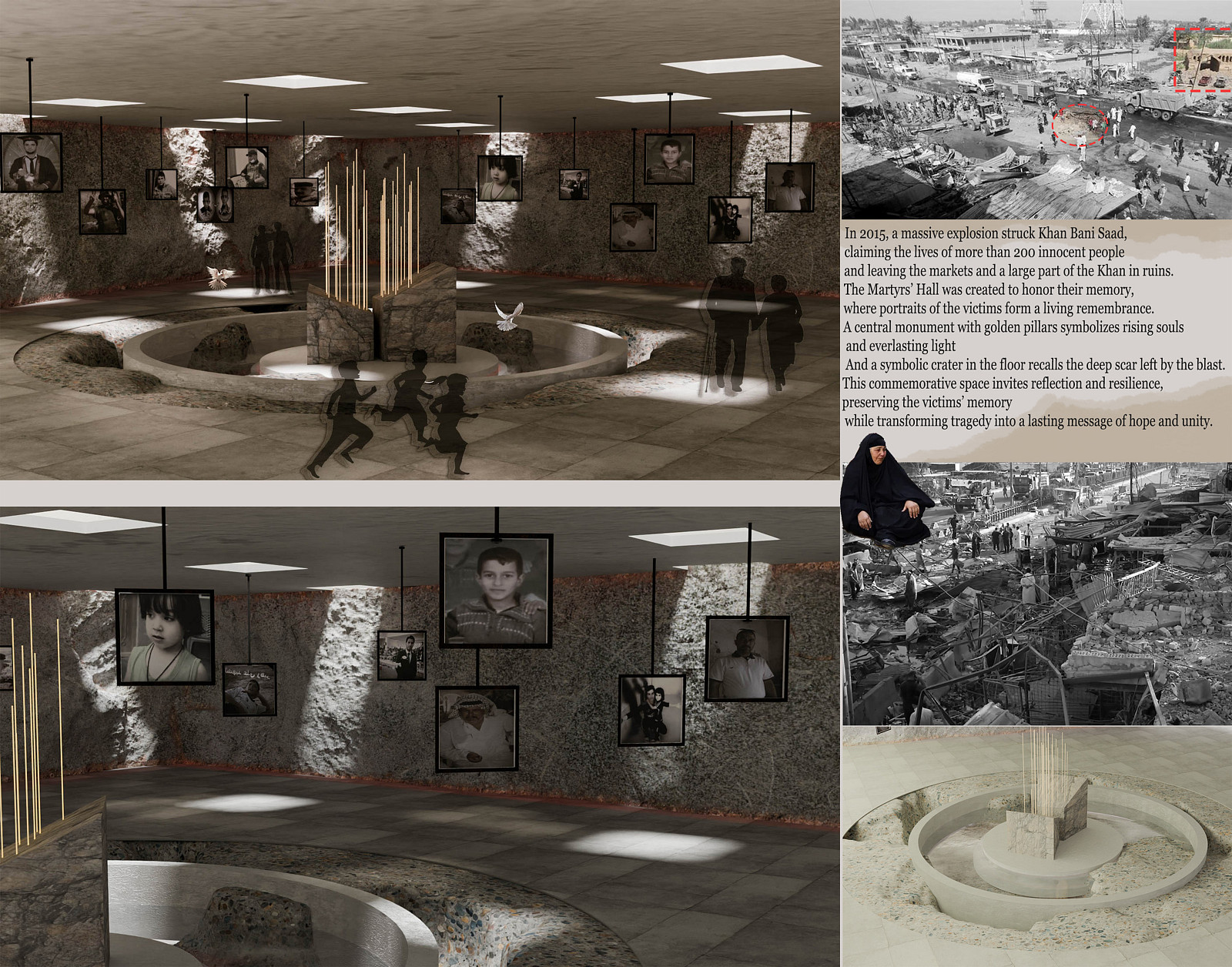
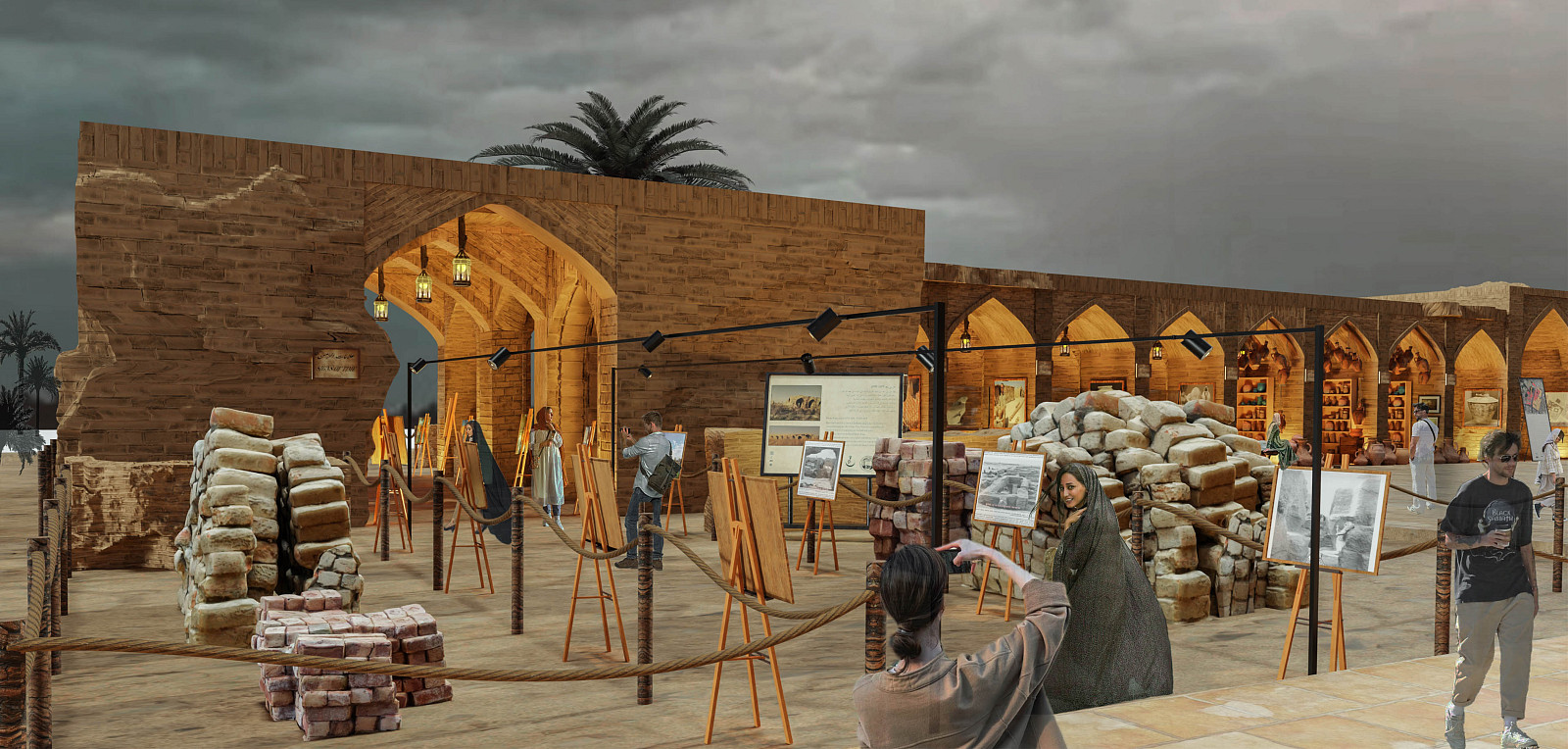
The proposal includes the restoration of surviving heritage structures, reconstruction of missing architectural elements based on historical evidence, traditional craft workshops, exhibition spaces, cultural markets, restaurants, public plazas, landscaped palm groves, and educational facilities. A memorial hall dedicated to the victims of the 2015 Khan Bani Saad tragedy reinforces the project's social and emotional significance, transforming memory into a permanent element of the urban experience.
By integrating heritage conservation with contemporary public life, the project establishes a sustainable destination that celebrates local identity, supports economic activity, and strengthens cultural tourism while preserving the historical character of the site.
Technical information
The project is based on a dual intervention approach combining heritage conservation and contemporary urban development. Existing historic structures are preserved and restored using compatible materials and traditional construction techniques whenever possible, while reconstructed elements follow documented architectural references to maintain authenticity.
New buildings are designed using reinforced concrete structural systems clad with locally sourced brick, stone, and traditional finishes that harmonize with the historic context. Architectural features such as arcades, vaulted spaces, courtyards, and shaded walkways enhance environmental performance and reinforce the regional architectural language.
Sustainable design strategies include passive cooling through courtyard planning, natural cross-ventilation, extensive palm tree landscaping, shaded public spaces, and optimized daylight utilization. The masterplan prioritizes pedestrian movement, accessibility, and clear visual connections between heritage landmarks and contemporary functions, creating a resilient and culturally responsive urban environment.
Documentation

Copyright © 2026 INSPIRELI | All rights reserved. Use of this website signifies your agreement to the Terms of Use, Privacy Policy, and use of cookies.