ECOSPHERE- Ecological Civic Hub


Project idea
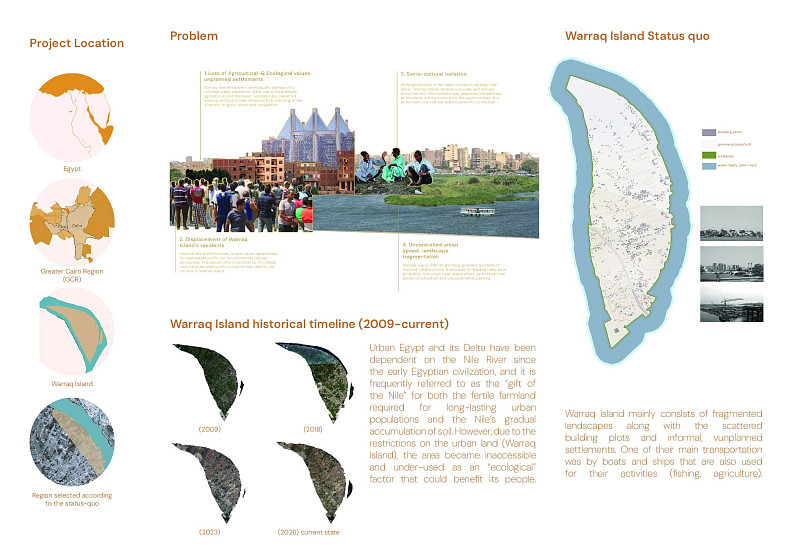
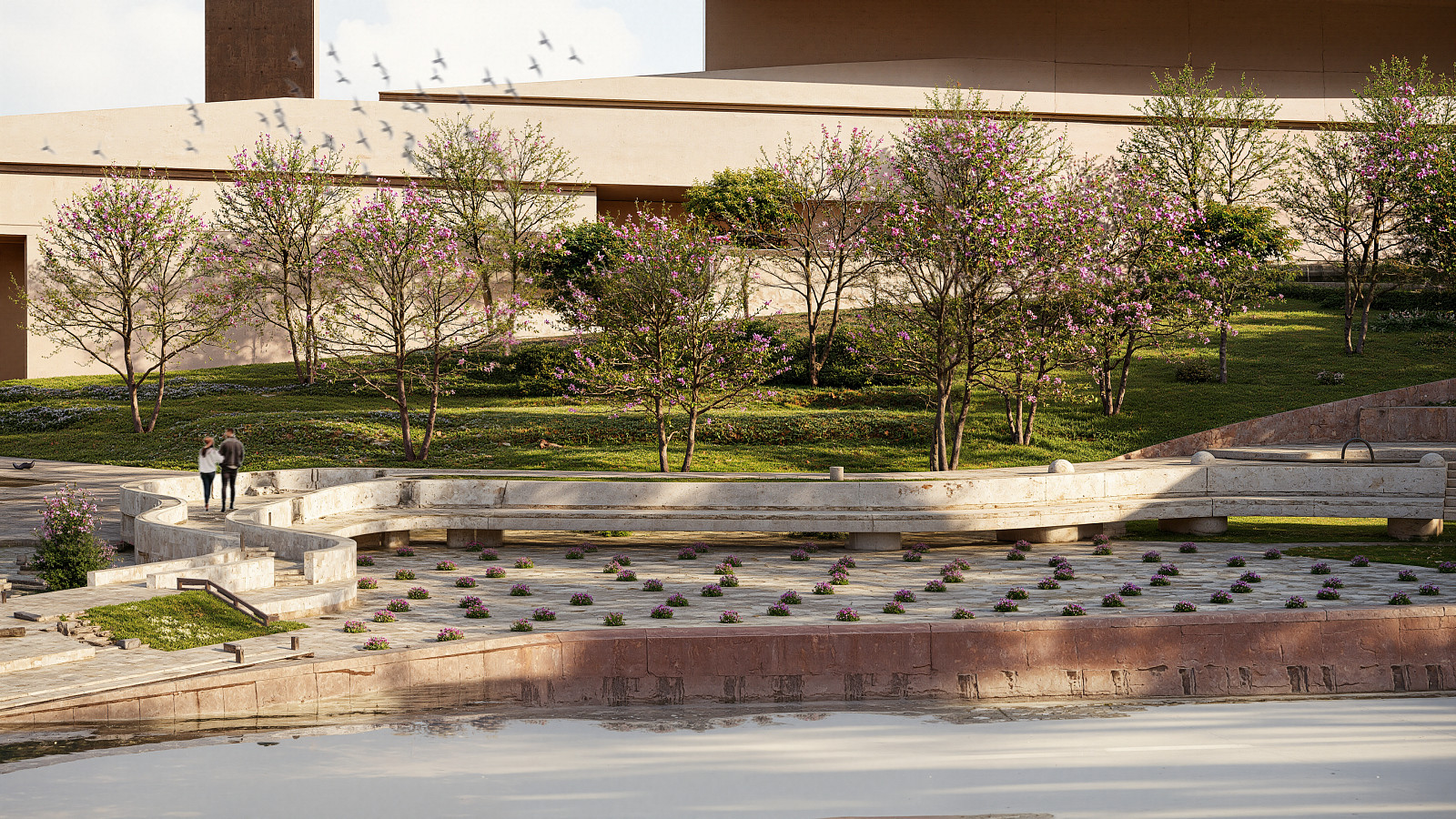
The Ecological Civic Hub is a culturally driven environmental and civic center designed as a contemporary landmark for community engagement, education, and ecological awareness. Developed around the themes of cultural architecture with technological integration and parametric environmental design, the project explores how architecture can reconnect people with nature while responding to the climatic and social context of Warraq Island. The concept combines civic functions, environmental research, public gathering spaces, and educational facilities within a sustainable architectural language inspired by passive design strategies and local identity.
Project description
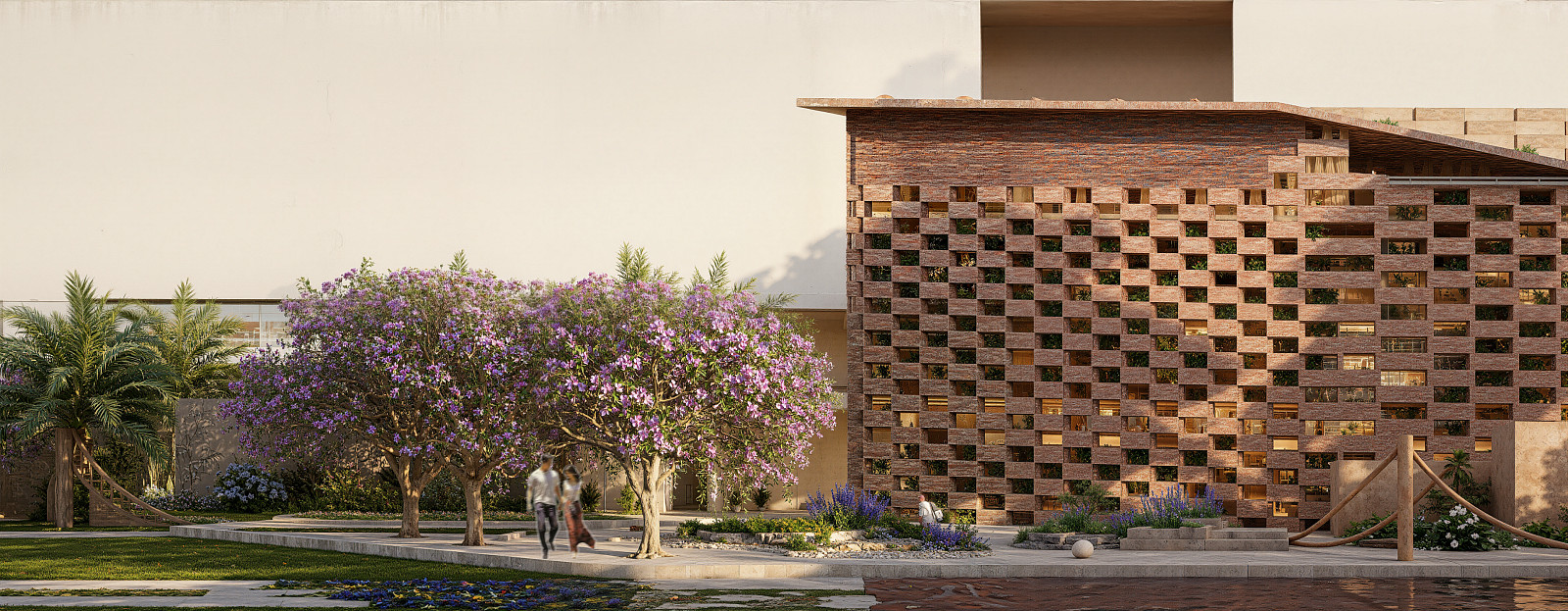
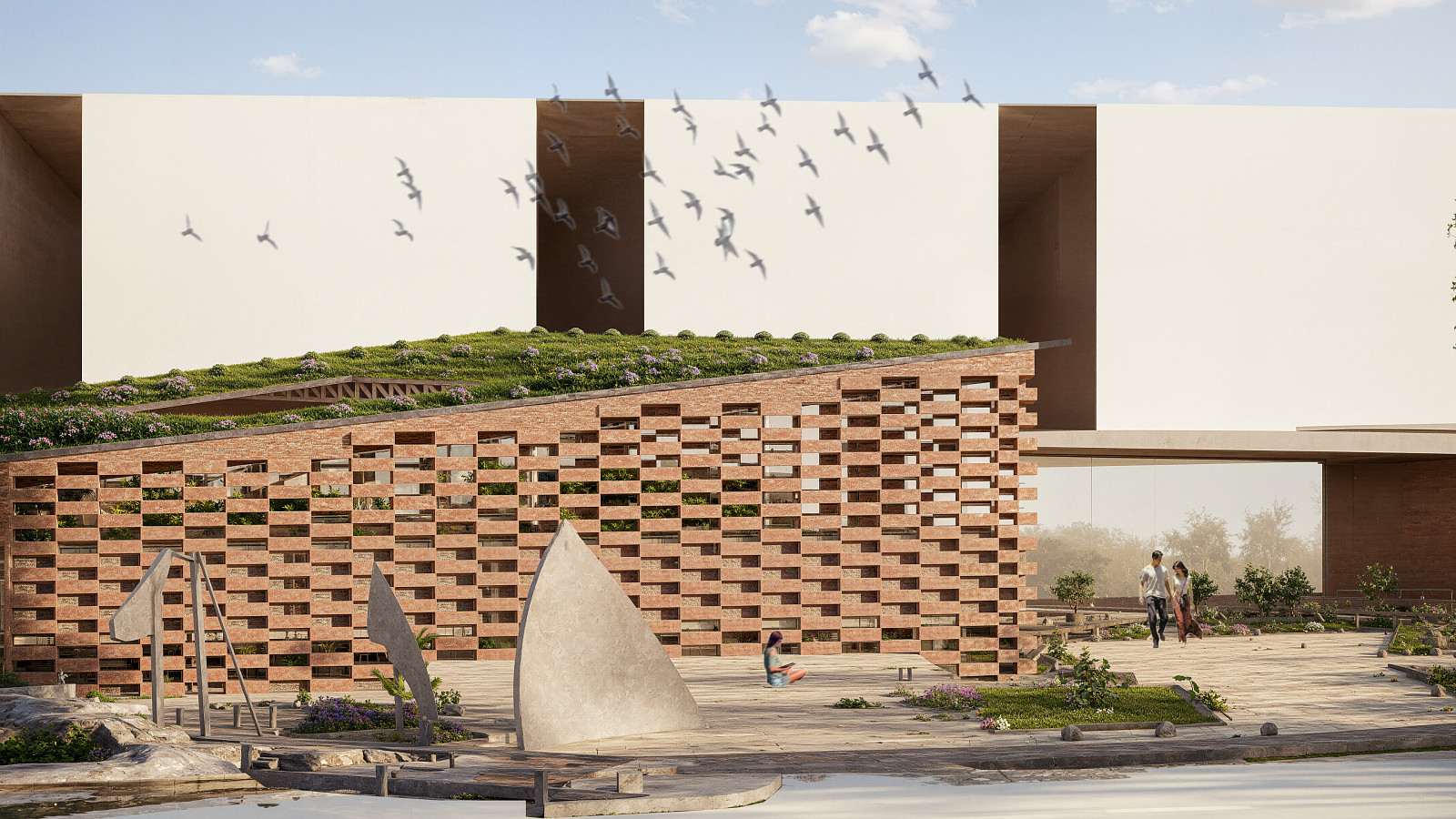
The project is envisioned as a multi-functional civic hub that merges environmental education, public participation, research, and cultural interaction into one integrated destination. The design prioritizes openness, community accessibility, and environmental responsiveness through shaded public plazas, interconnected indoor-outdoor spaces, and climate-sensitive circulation. At the center of the building, a funnel-shaped atrium functions as a spatial organizer and environmental moderator, enhancing vertical connectivity, encouraging social interaction, and distributing daylight throughout the interior. A key architectural feature is the brick jali wall system, which enhances passive cooling by filtering sunlight, reducing heat gain, and promoting natural ventilation while maintaining visual permeability and cultural expression.
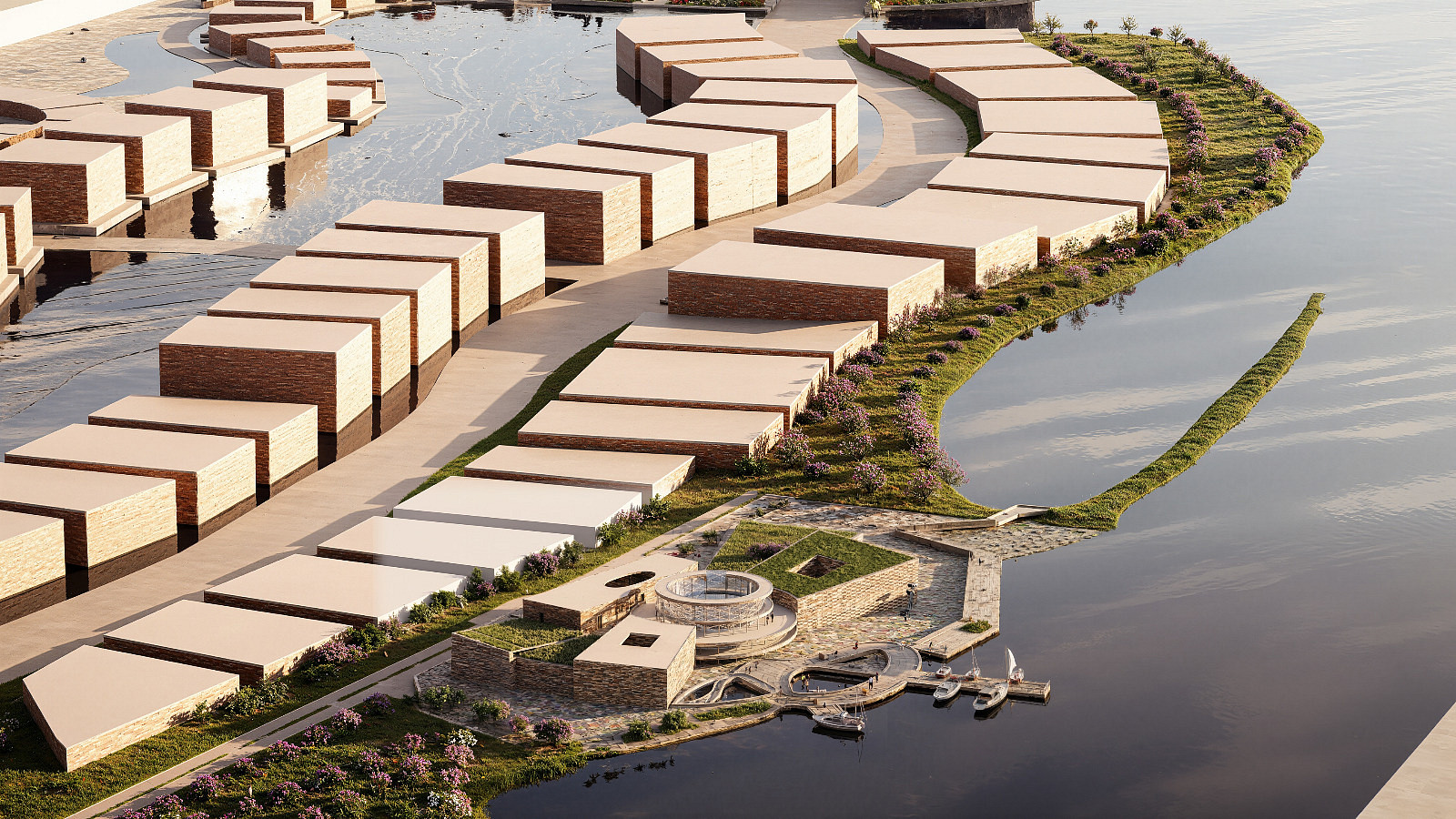
The hub includes spaces such as reading lounges, environmental laboratories, collaborative learning areas, exhibition zones, civic gathering spaces, and public interaction areas that encourage awareness of ecology and sustainability. The architectural language blends contemporary parametric forms with locally grounded materials and environmental logic, creating a building that is both technologically progressive and contextually rooted. Responding directly to the local climate and urban conditions of Warraq Island, the project serves as both an ecological catalyst and a civic destination for the community.
Technical information
Project Name: ECOSPHERE- Ecological Civic Hub
Location: Warraq Island, Giza Governorate, Greater Cairo Region
Site Area: 34,500 sqm
Built-up area: 19,000 sqm (approximate site coverage: 55.1%)
Building Typology: Community-related design, civic, ecological, environmental, cultural building hub.
"ECOSPHERE" is designed as a climate-responsive civic and environmental hub that integrates passive environmental strategies with sustainable structural systems. The building's spatial organization is centered around a funnel atrium that serves as both the social and environmental core of the project. Acting as a vertical ventilation shaft, the atrium enhances the stack effect by drawing warm air upward and facilitating natural airflow throughout the building, while simultaneously distributing daylight deep into interior spaces and strengthening visual connectivity between functions.
The architectural envelope incorporates brick jali walls that filter solar radiation, reduce heat gain, and promote cross-ventilation, contributing to thermal comfort and lowering cooling demands. The roofscape is composed of slanted roofs strategically oriented to improve environmental performance, facilitate rainwater drainage, and reinforce the dynamic architectural identity of the project.
The structural system combines long-span Pratt trusses with two-way glulam waffle slabs. The Pratt trusses efficiently transfer roof loads while enabling large column-free spaces suitable for civic, educational, and exhibition functions. The two-way glulam waffle slab system provides structural efficiency, reduces material consumption, and expresses the project's commitment to sustainable construction through the use of engineered timber.
Green roofs are integrated across selected roof surfaces to improve thermal insulation, mitigate urban heat island effects, enhance biodiversity, and contribute to stormwater management. Together with natural ventilation, daylight optimization, climate-responsive façade systems, and environmentally conscious material selection, these strategies create a high-performance ecological building that balances civic functionality, environmental responsibility, and contemporary architectural innovation.
Documentation

Copyright © 2026 INSPIRELI | All rights reserved. Use of this website signifies your agreement to the Terms of Use, Privacy Policy, and use of cookies.