ASS-AF


Project idea
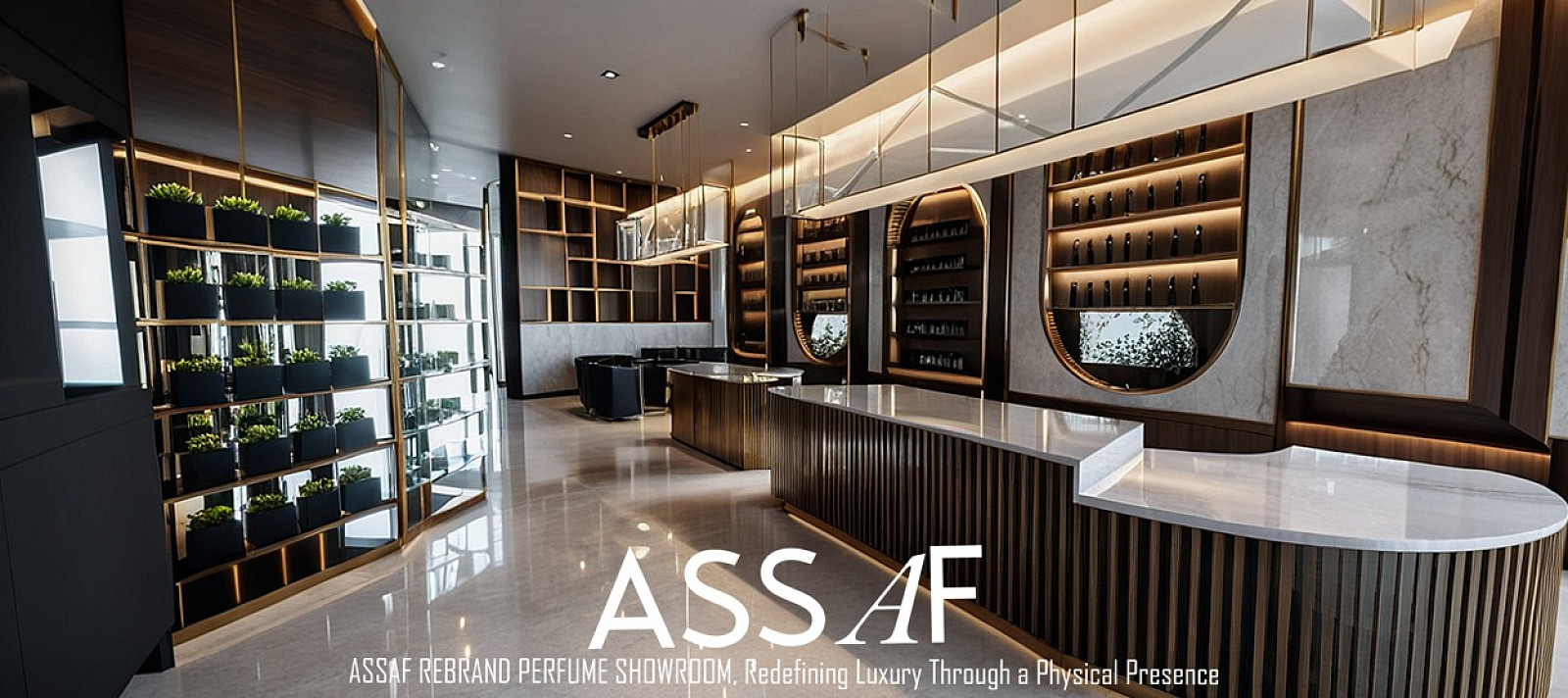
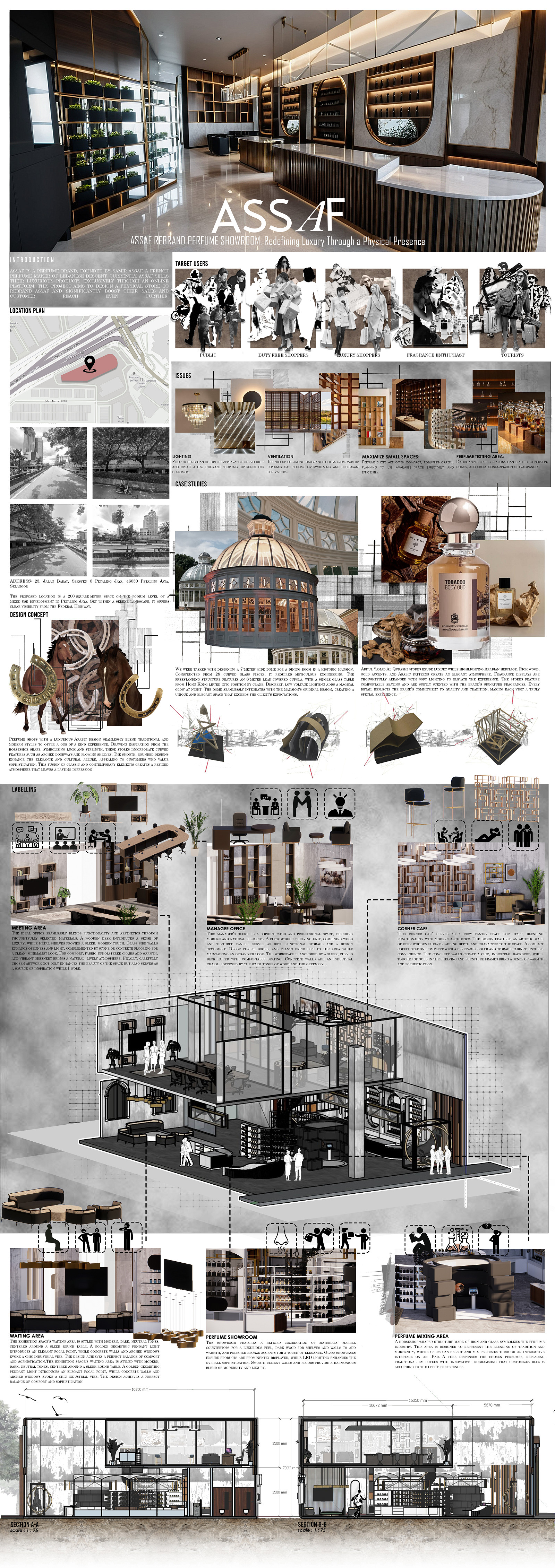
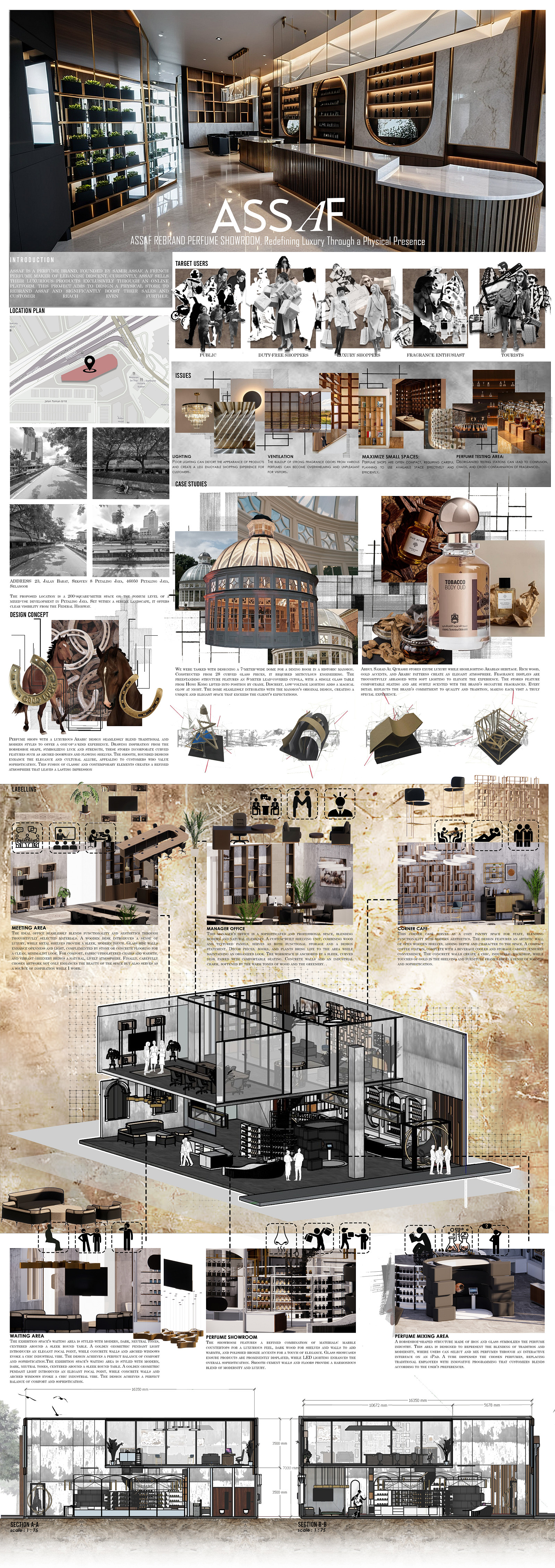
ASSAF Perfume Showroom is designed as a luxury retail experience where perfume is not only displayed, but physically felt through space, material, lighting, and movement. The idea is to translate the elegance of Arabian perfume culture into a modern showroom environment, using dark timber, marble, glass, gold accents, and soft lighting to create a sense of exclusivity. The design takes inspiration from traditional luxury, horse saddle forms, and perfume rituals, turning the showroom into a journey where users can discover, test, mix, and understand scents in a calm and premium atmosphere.
Project description
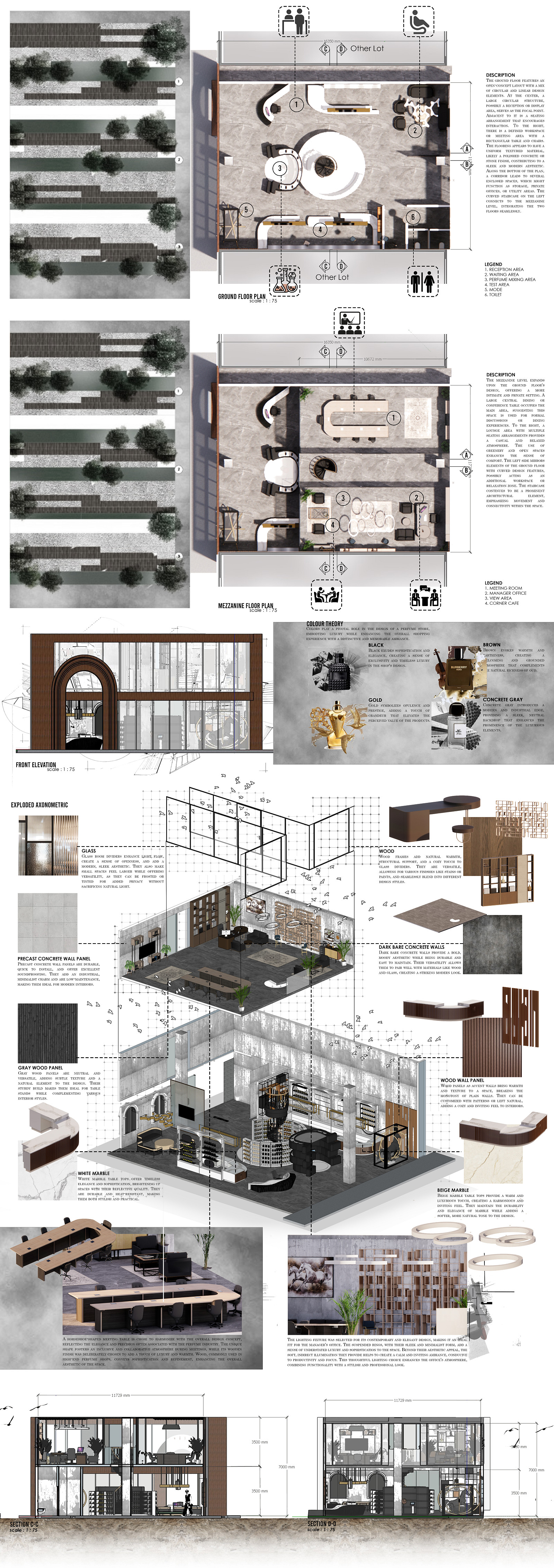
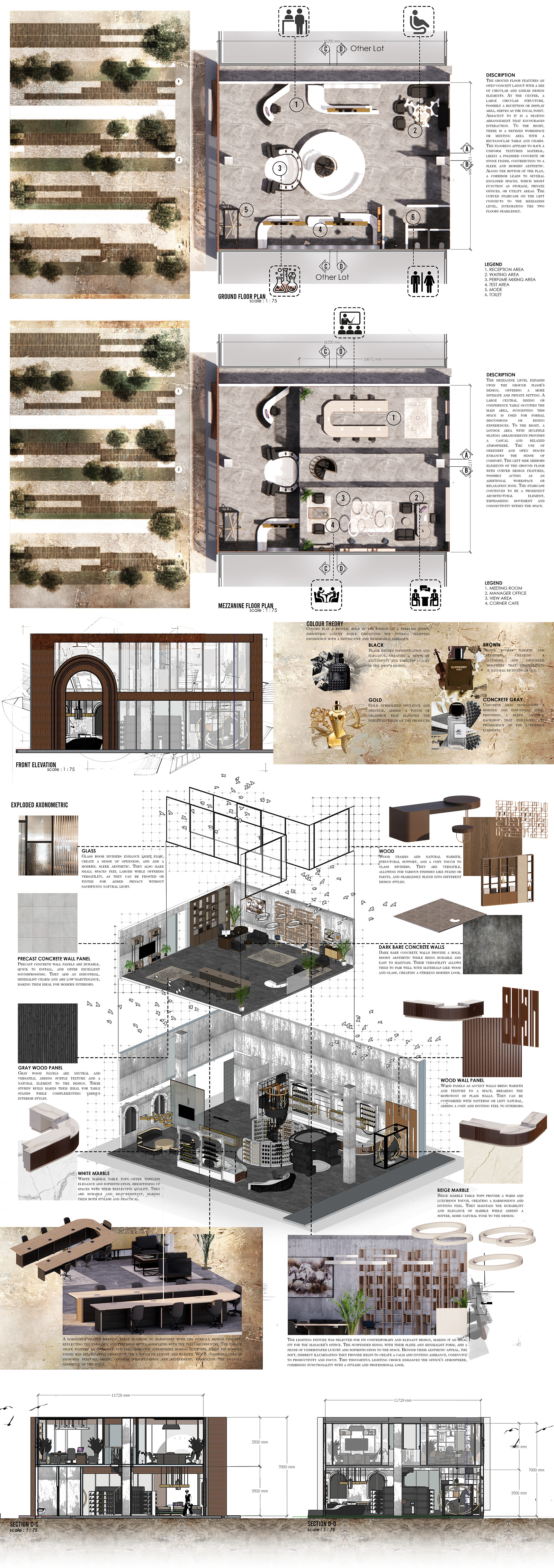
This project proposes a high-end perfume showroom that combines retail, hospitality, and sensory experience within one interior space. The showroom is planned with several functional areas such as the main perfume display zone, waiting area, perfume testing area, perfume mixing area, corner café, manager office, and mezzanine level. The spatial layout encourages customers to move gradually from display to testing, then into a more personal perfume experience. Curved counters, arched display niches, warm lighting, and layered material textures help create a strong brand presence. The design aims to make the brand feel luxurious, memorable, and intimate, rather than functioning as a normal retail shop.
Technical information
Technically, the project uses a two-level spatial arrangement with a mezzanine floor to maximise the limited showroom area while maintaining visual openness. The main structure combines glass partitions, dark wood wall panels, precast concrete wall finishes, marble counters, grey wood panels, and gold detailing to create a balanced luxury atmosphere. Lighting is designed through recessed ceiling lights, display lighting, and warm accent lighting to highlight perfume bottles and create a refined mood. Ventilation is important due to perfume testing and mixing activities, so the layout separates stronger scent areas from waiting and office zones. The use of glass walls allows visibility across the showroom, while built-in shelves and modular display units support product arrangement, storage, and customer circulation. The overall technical approach focuses on material contrast, controlled lighting, efficient zoning, and a sensory retail experience.

Copyright © 2026 INSPIRELI | All rights reserved. Use of this website signifies your agreement to the Terms of Use, Privacy Policy, and use of cookies.