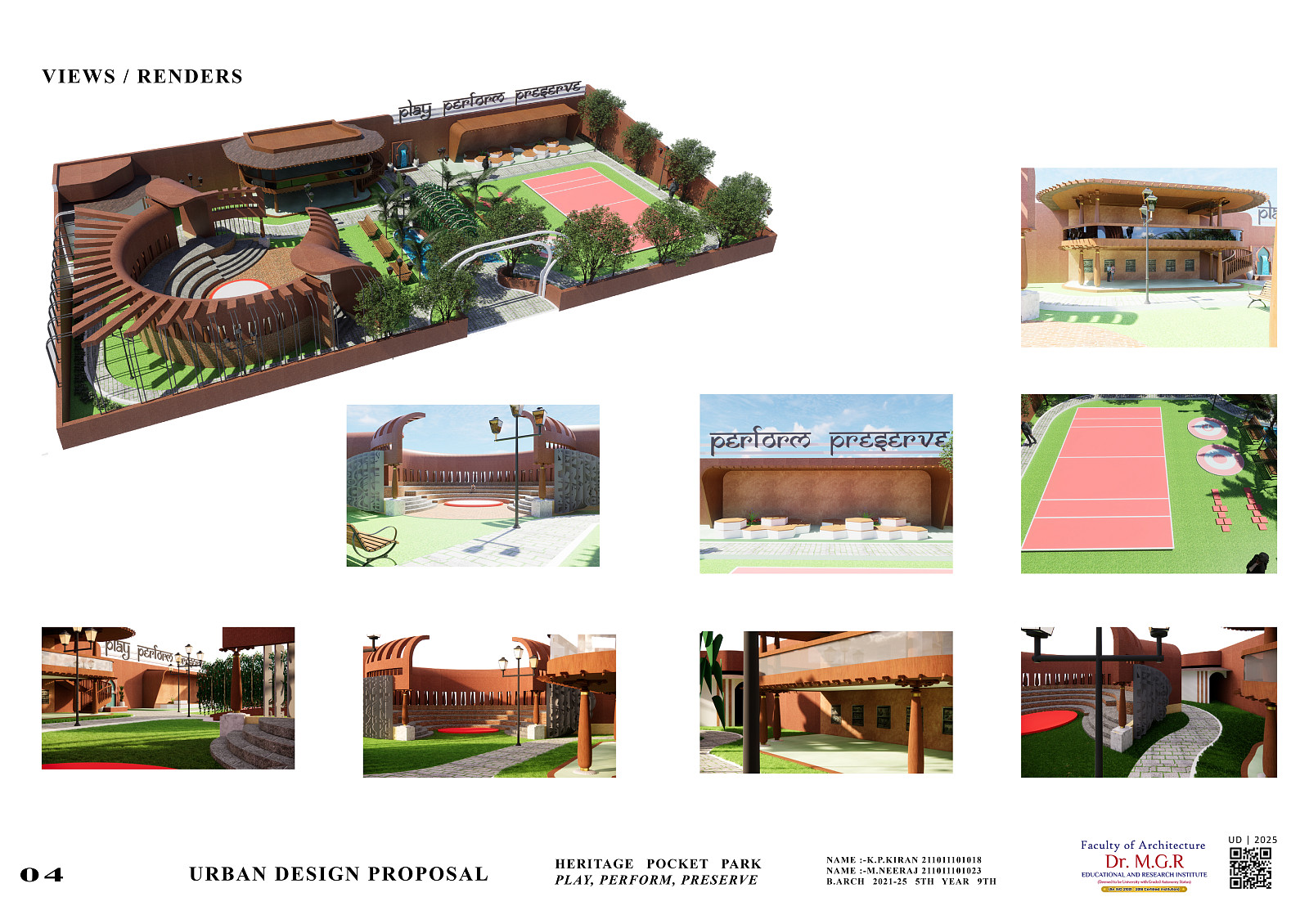
HERITAGE POCKET PARK -PLAY PERFORM PRESERVE


Project idea
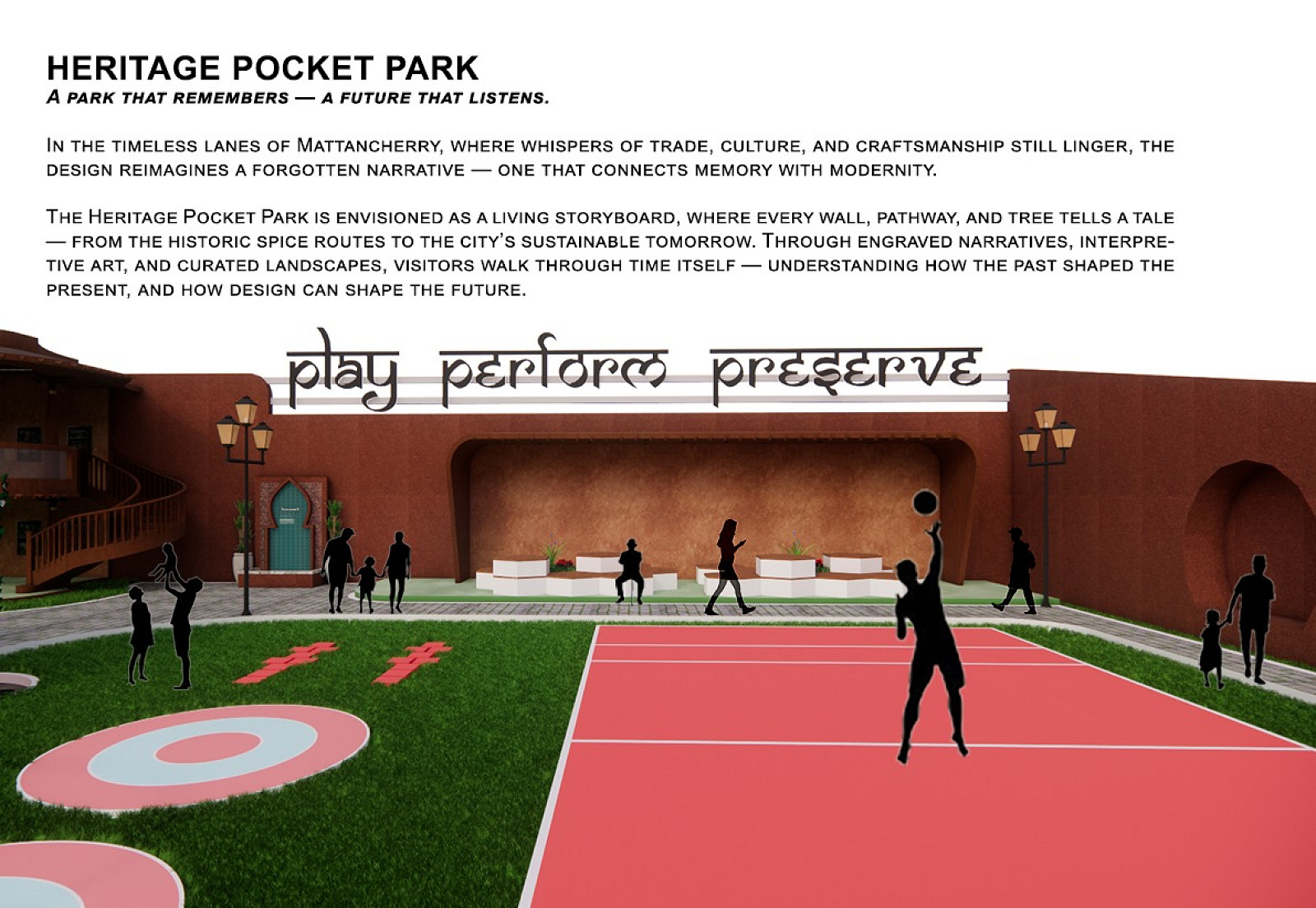
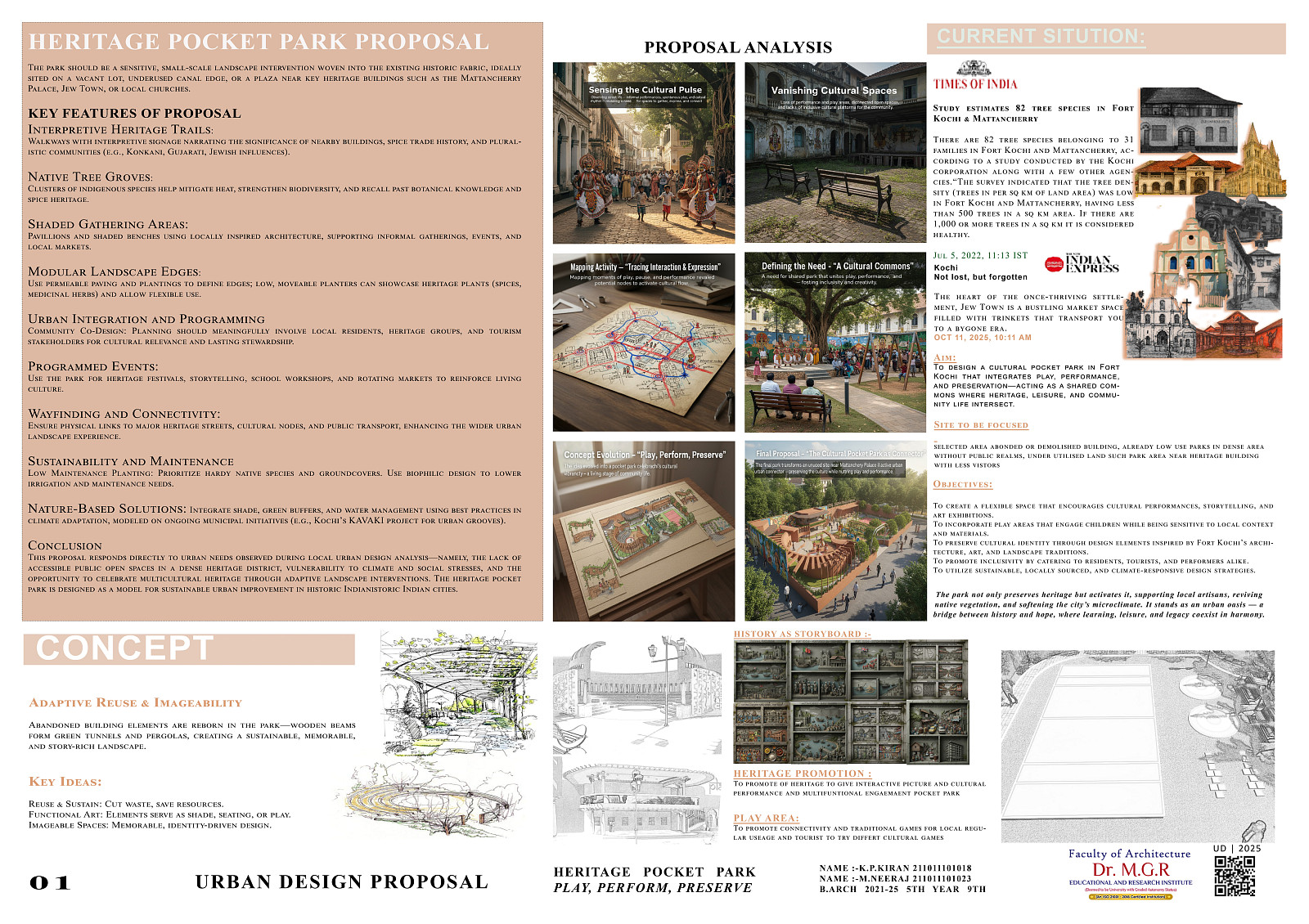
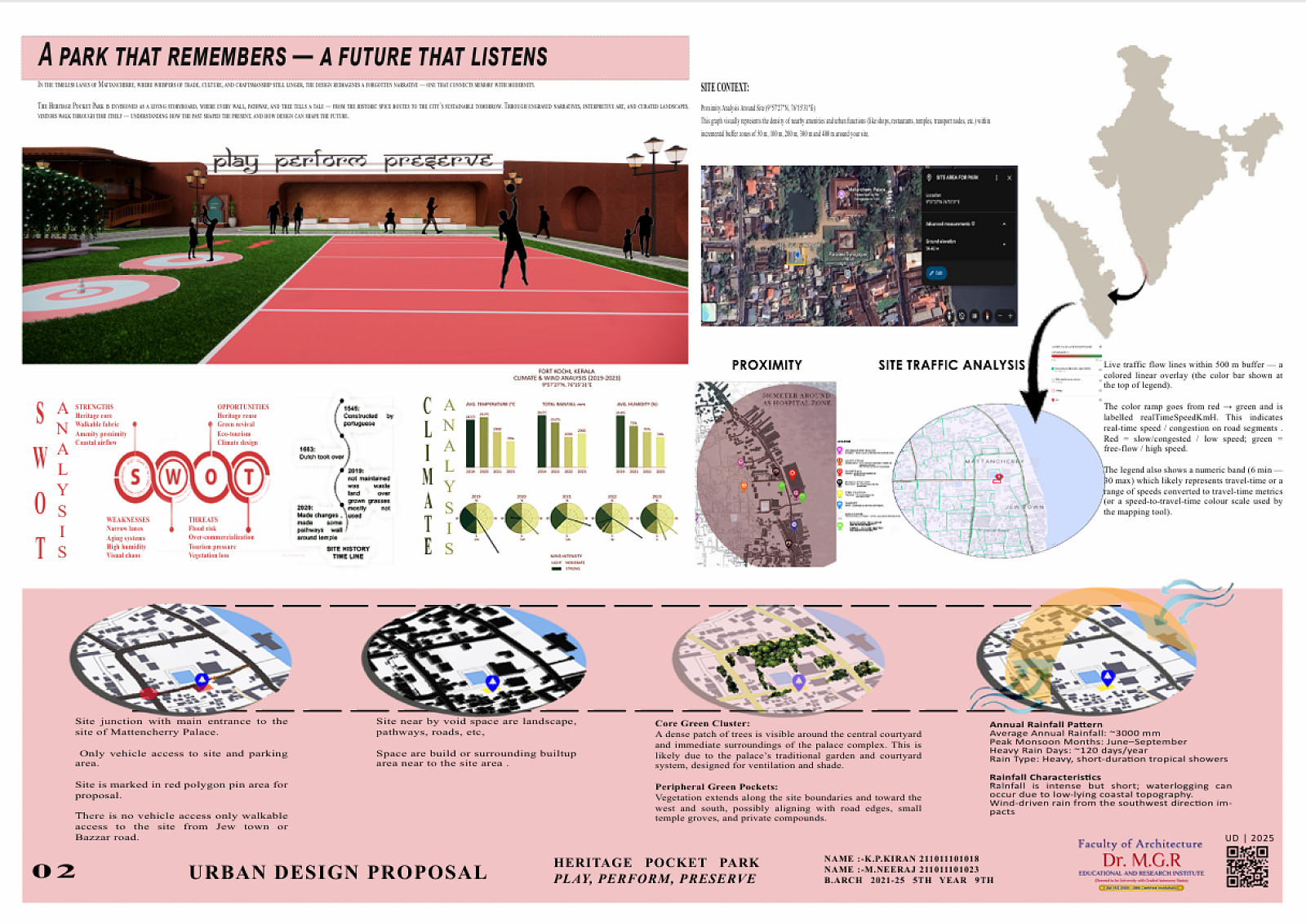
A Heritage Pocket Park is a small-scale urban open space that integrates the historic, cultural, and social layers of its neighborhood. In Fort Kochi–Mattancherry, such parks act as breathing spaces within the dense heritage fabric, showcasing the essence of multicultural coexistence, colonial architecture, and local life.
It merges heritage conservation and urban design, creating spaces for:
Rest, gathering, and storytelling
Showcasing local crafts, materials, and art
Enhancing pedestrian connectivity between key heritage nodes
Project description
To revitalize underutilized urban pockets into meaningful cultural spaces.
To strengthen the heritage experience through landscape and interpretive design.
To improve walkability and comfort in heritage precincts.
To encourage community participation and local ownership.
To create climate-responsive microenvironments for social and ecological benefit.
Technical information
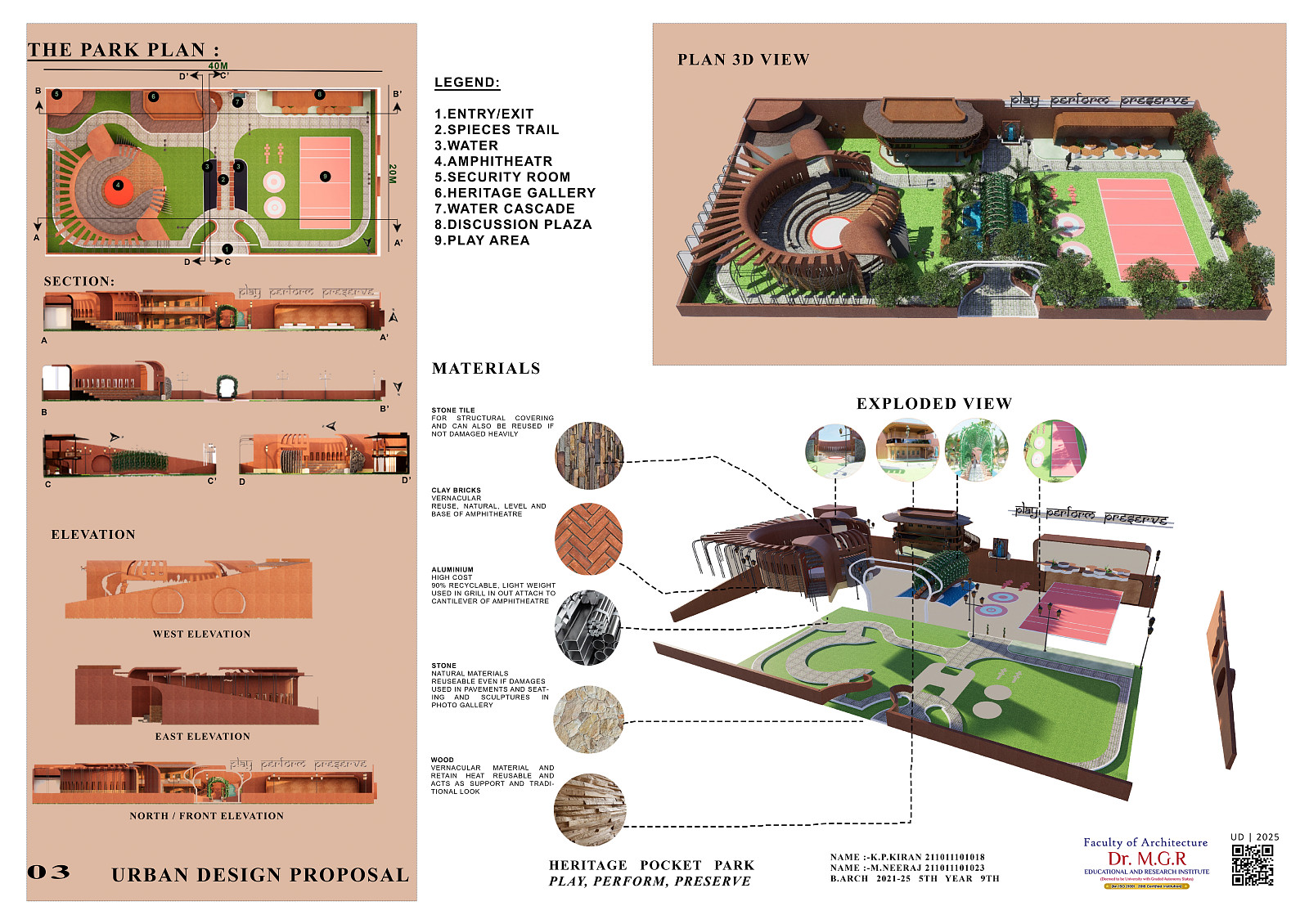
1. The Heritage Pocket Park is designed using locally available materials such as laterite stone, terracotta tiles, lime plaster, exposed concrete, and treated wood to maintain the heritage character of Fort Kochi and Mattancherry.
2. The project includes spaces such as shaded seating areas, pedestrian pathways, heritage interpretation zones, open gathering plazas, rain gardens, and small activity courts for public interaction.
3. Pathways are constructed using permeable terracotta and stone paving to improve walkability and allow rainwater infiltration during monsoon seasons.
4. Seating elements are built using laterite block masonry with wooden or granite finishes integrated around existing trees and landscape features.
5. The landscape design incorporates native coastal vegetation including rain trees, frangipani, bamboo, and local shrubs to create shaded microclimatic conditions.
6. The pavilion and shelter structures are constructed using mild steel or timber framing systems with clay-tiled or polycarbonate roofing inspired by vernacular architecture.
7. Rainwater management is achieved through bioswales, permeable paving, and rain gardens that collect and filter stormwater runoff naturally.
8. Heritage walls, signage panels, and art installations are developed using lime-plastered masonry and powder-coated metal frames for durability and contextual aesthetics.
9. Low-energy LED lighting, bollard lights, and solar-powered fixtures are installed to ensure safety, visibility, and sustainable nighttime usability.
10. Construction follows a low-impact and community-based approach using modular methods, locally sourced materials, and phased execution to minimize disturbance to the heritage precinct.

Copyright © 2026 INSPIRELI | All rights reserved. Use of this website signifies your agreement to the Terms of Use, Privacy Policy, and use of cookies.
