RUMAH CHANGKAT -Tourism Cultural Food Hub


Project idea
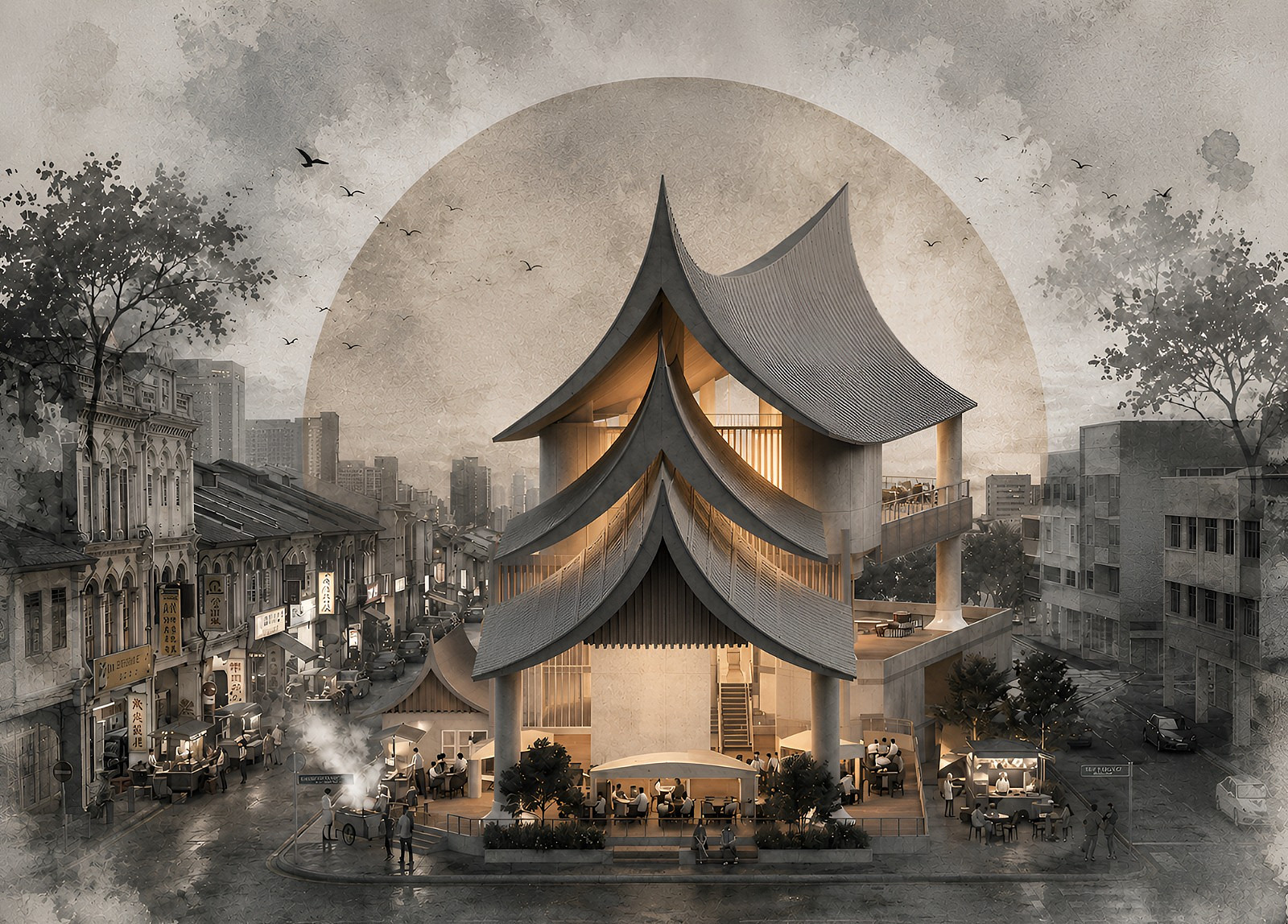
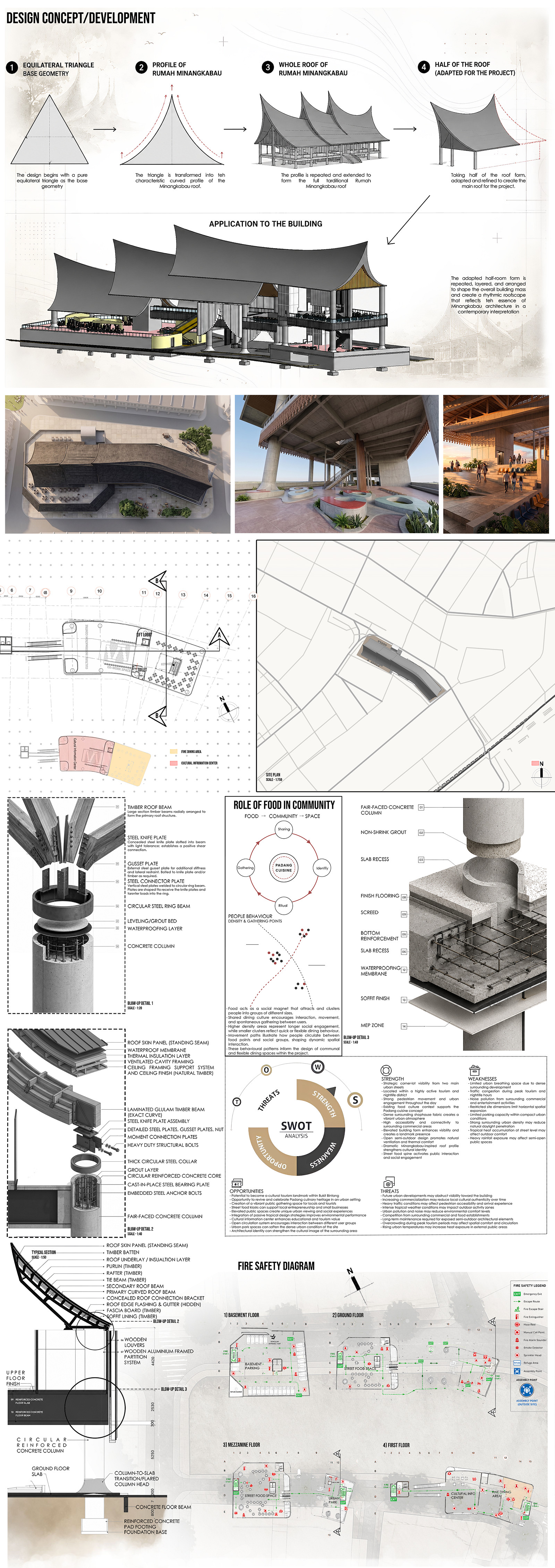
Rumah Changkat is a Tourism Cultural Food Hub inspired by the communal dining culture and architectural identity of Padang, West Sumatra. The project reinterprets the iconic Rumah Minangkabau roof form and the social traditions surrounding Padang cuisine into a contemporary urban destination. Rather than functioning as a conventional food court, the proposal transforms food into a cultural experience where architecture, social interaction, and local heritage are integrated into a single spatial journey. The design aims to celebrate the role of food as a catalyst for community gathering, cultural exchange, and tourism within the urban fabric of Bukit Bintang. The concept is rooted in the idea that food is not only consumed but experienced through shared spaces, collective dining, and cultural interaction.
Project description
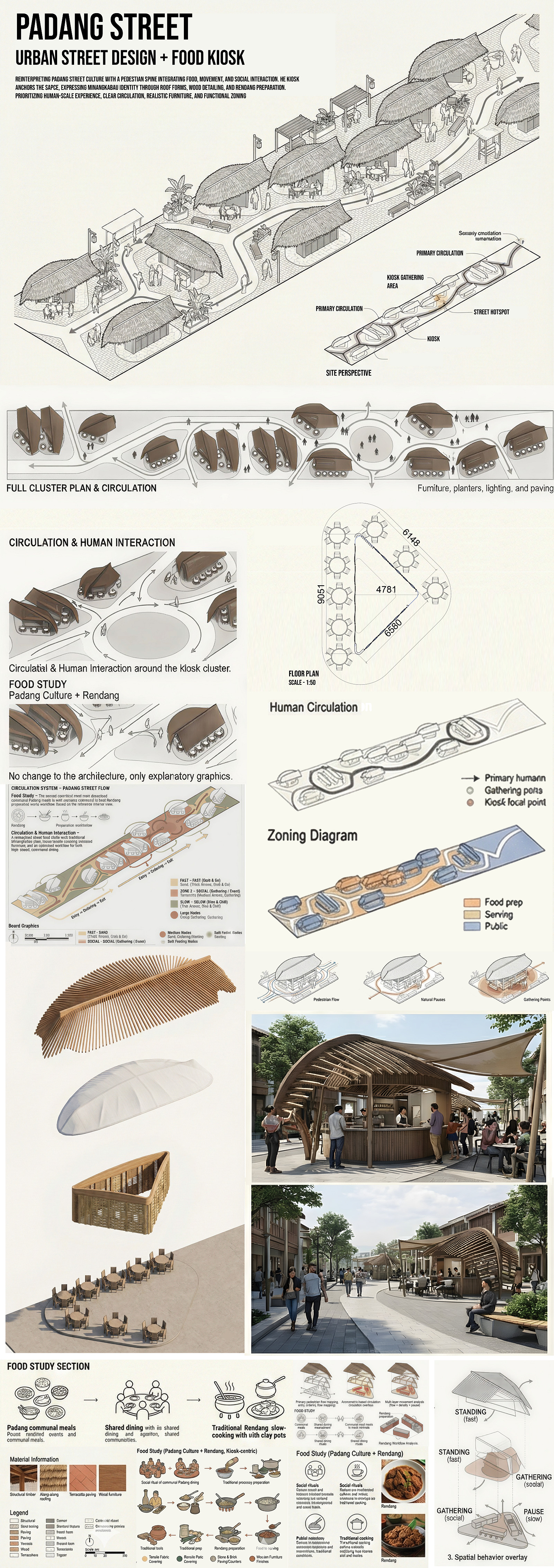
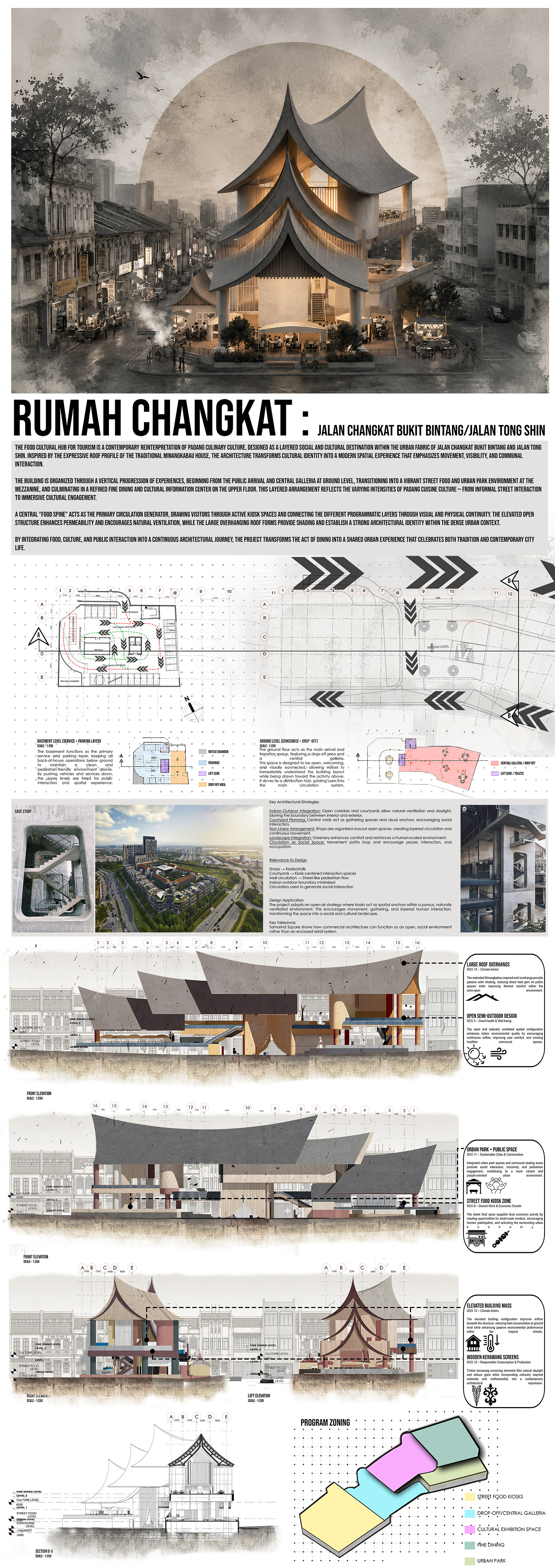
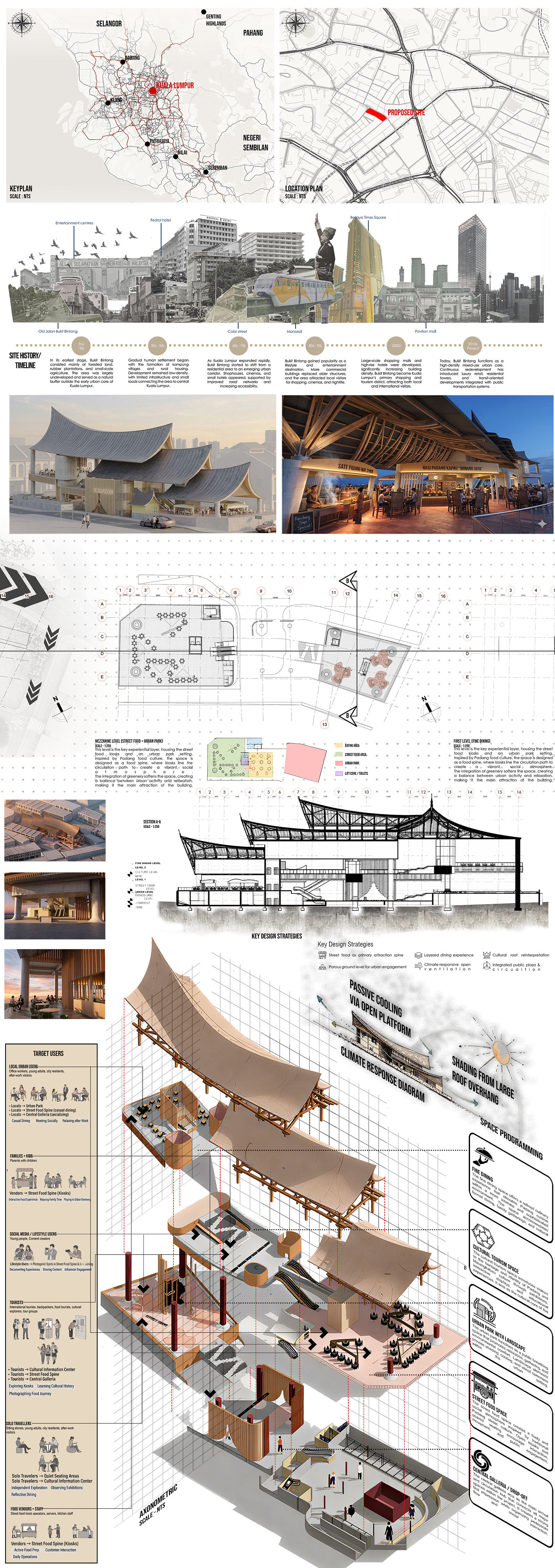
Located at the intersection of Jalan Changkat Bukit Bintang and Jalan Tong Shin, Rumah Changkat is designed as a layered cultural destination that combines food, community, and public space. The development organizes its programme vertically, beginning with an active street food environment at the lower levels, followed by a cultural gallery and exhibition spaces at the intermediate floors, and culminating in fine dining and cultural information facilities at the upper levels. The project extends beyond the building itself through the introduction of Padang Street, a pedestrian-oriented urban food street consisting of kiosks inspired by traditional Minangkabau forms. Together, the building and street create a continuous cultural experience where visitors can explore local cuisine, participate in community activities, learn about Padang culture, and enjoy a variety of social spaces. The project transforms an underutilized urban site into a vibrant tourism destination that strengthens cultural identity while encouraging public engagement and social interaction.
Technical information
The architectural form is derived from the Rumah Minangkabau roof profile, which is abstracted, layered, and repeated to create a contemporary interpretation of traditional Indonesian architecture. The building adopts a vertical zoning strategy consisting of street food kiosks, community gathering areas, cultural galleries, exhibition spaces, fine dining facilities, and urban park components. Structurally, the project utilizes reinforced concrete columns, steel roof framing systems, laminated timber roof beams, standing-seam metal roofing, and large-span roof structures to achieve expansive column-free spaces. Environmental strategies include passive cooling through open platforms, cross ventilation, large roof overhangs for solar shading, semi-outdoor circulation spaces, elevated building masses for improved airflow, and integrated landscape areas that enhance thermal comfort. The accompanying Padang Street kiosk system is designed around pedestrian movement, gathering behaviour, and food preparation visibility, creating a human-centred public environment that supports both daily users and tourists. Together, these strategies create a climate-responsive, culturally expressive, and socially engaging architectural destination.

Copyright © 2026 INSPIRELI | All rights reserved. Use of this website signifies your agreement to the Terms of Use, Privacy Policy, and use of cookies.
