Relocating Opportunity Adaptive Infrastructure for Displaced Communities


Project idea
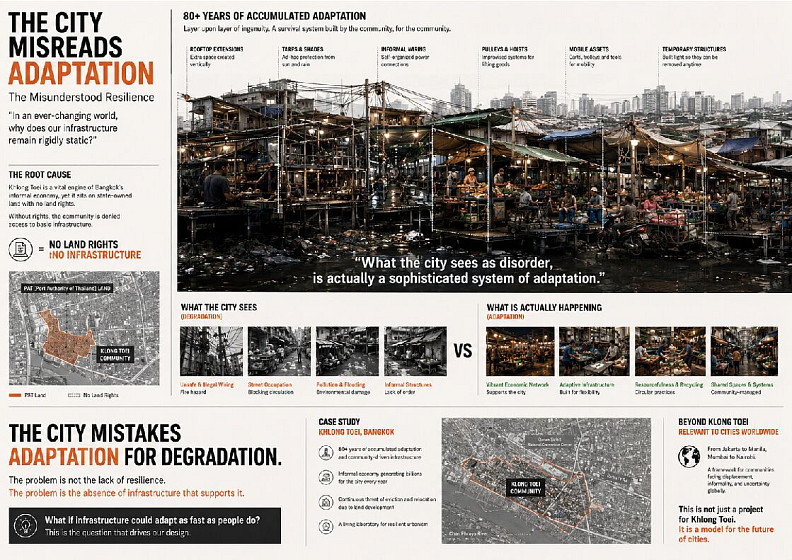
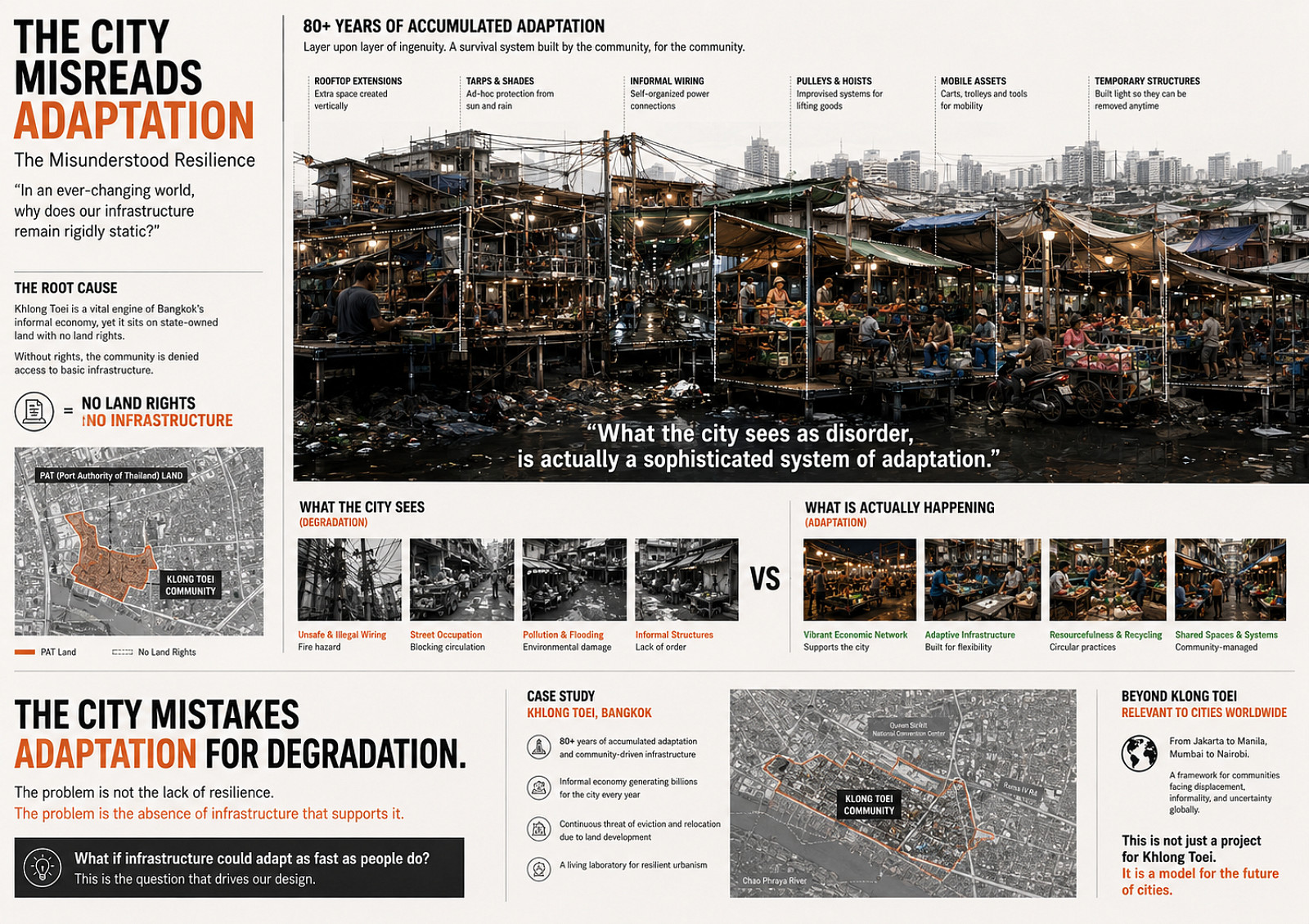
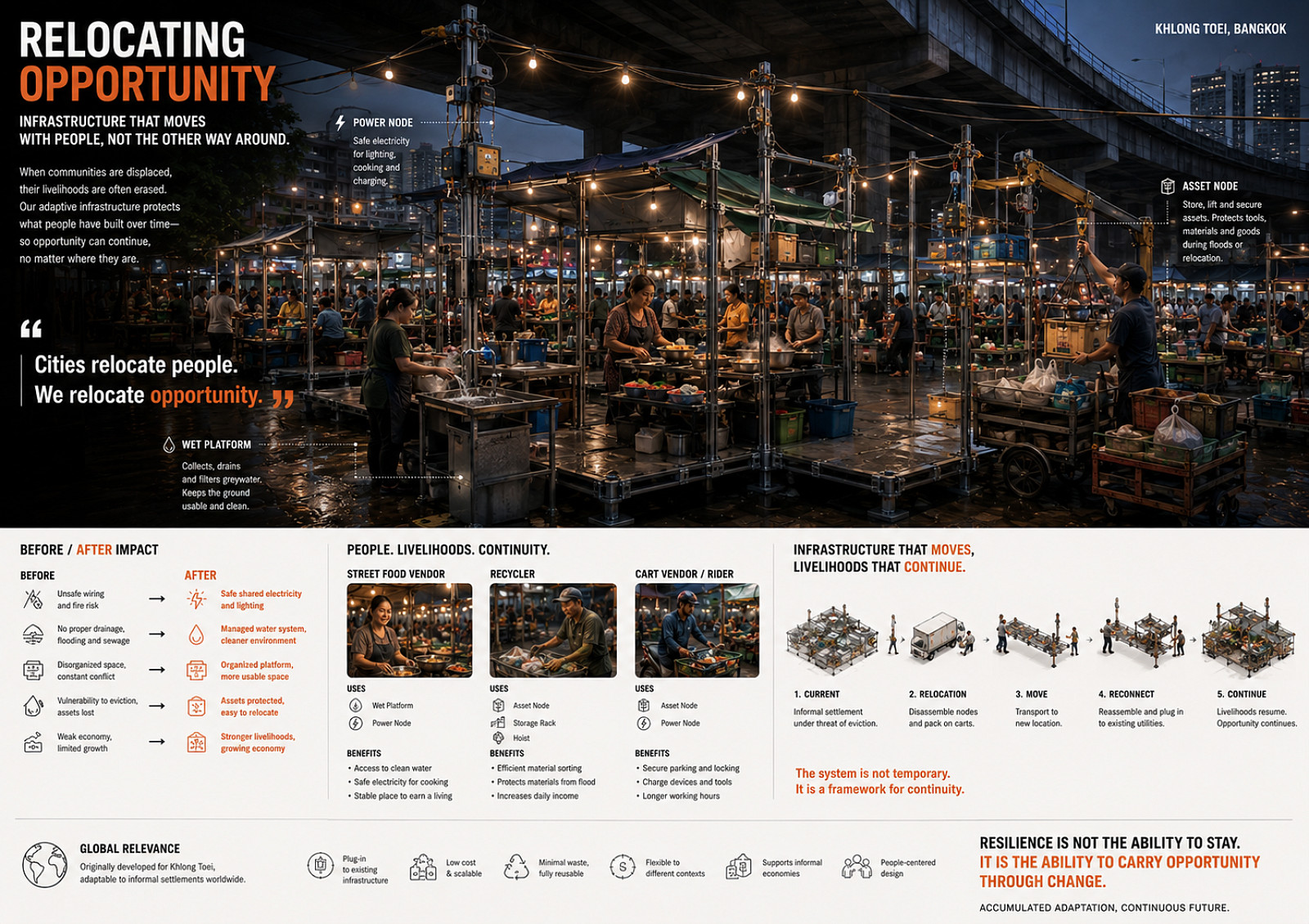
The project challenges conventional approaches to informal settlement redevelopment, where communities are often relocated while their social and economic networks are lost.
Using Khlong Toei, Bangkok, as a case study, the proposal explores how adaptive infrastructure can support continuity of livelihoods during urban transformation.
Rather than treating resilience as the ability to remain in place, the project redefines resilience as the ability to carry opportunity through change.
Project description
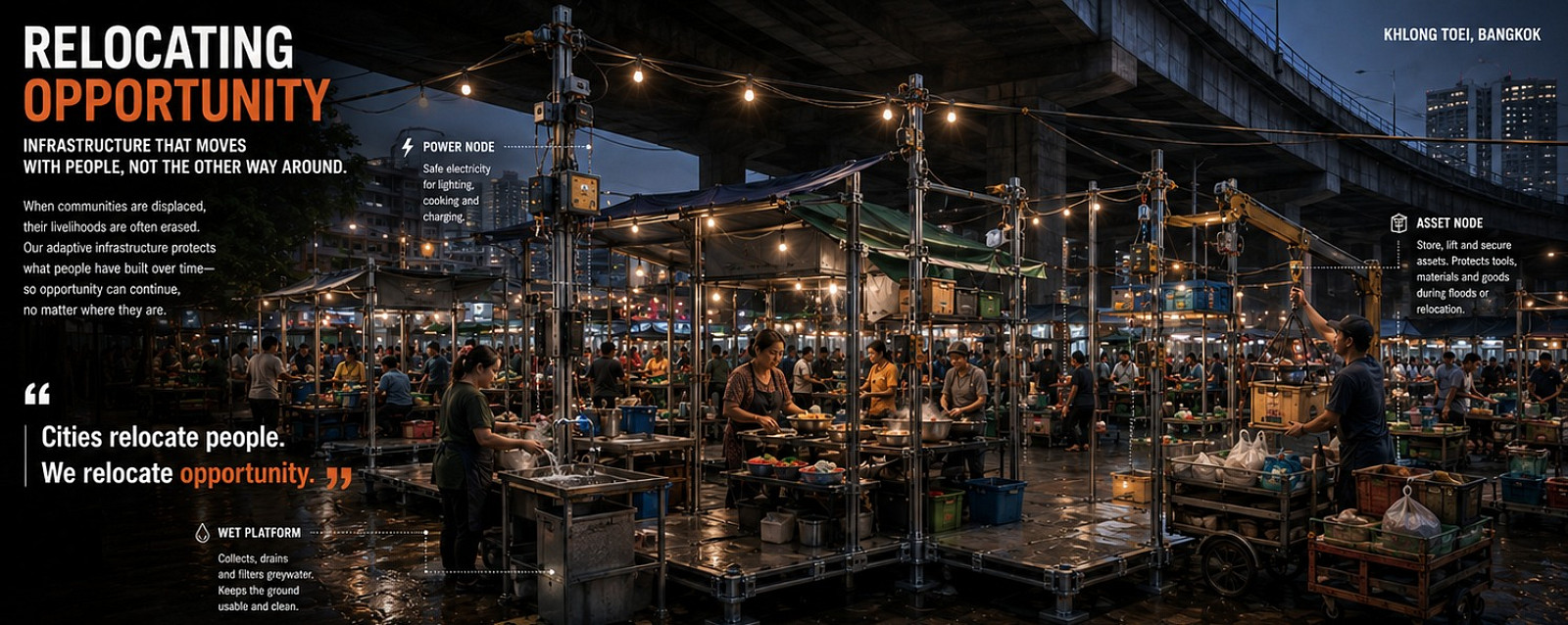
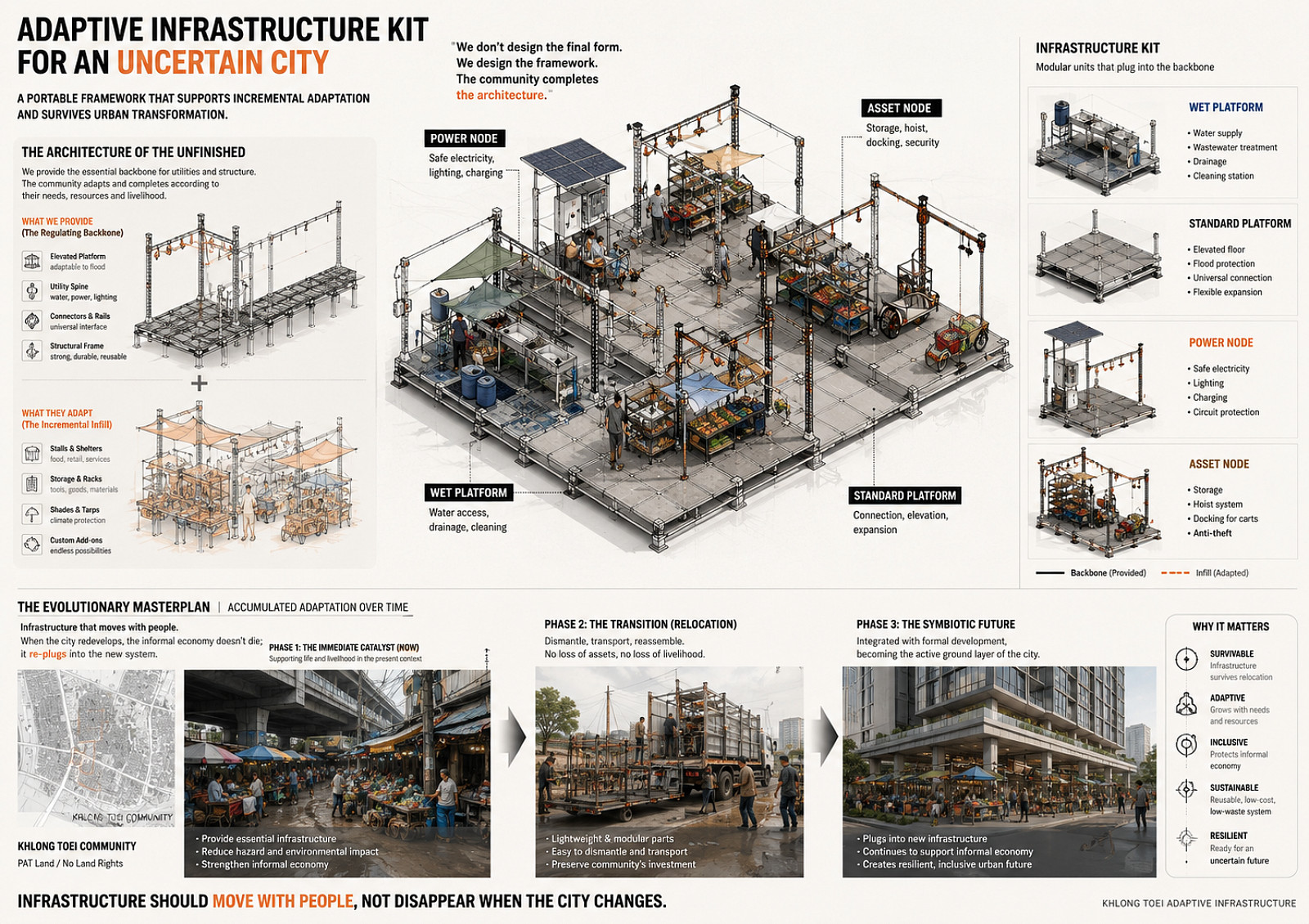
The proposal consists of a modular infrastructure system designed to support informal economies facing displacement. The system includes adaptable platforms, utility networks, service nodes, and community-led extensions that can be assembled, dismantled, relocated, and reconnected.
Through this framework, infrastructure becomes a transferable asset rather than a fixed investment tied to a single location.
This project is currently under development as part of an ongoing architectural thesis. The concept, research, and design framework were developed by the author, while AI-assisted visualization tools were used to communicate the proposal during its early conceptual stage. The primary purpose of this submission is to seek professional feedback regarding the project's concept, narrative structure, and architectural direction. Any comments or suggestions from the jury would be greatly appreciated and will help guide the next stage of development.
Technical information
The project proposes a modular and relocatable infrastructure framework consisting of structural platforms, utility spines, service nodes, and plug-in attachment systems.
The backbone infrastructure provides power distribution, water management, storage, and elevated circulation, while allowing communities to adapt and expand the system according to changing needs.
Components are designed to be dismantled, transported, and reinstalled during relocation processes, supporting long-term adaptability and resilience.
Documentation

Copyright © 2026 INSPIRELI | All rights reserved. Use of this website signifies your agreement to the Terms of Use, Privacy Policy, and use of cookies.