TRATTORIA REALE-tuorism caltural food hub


Project idea
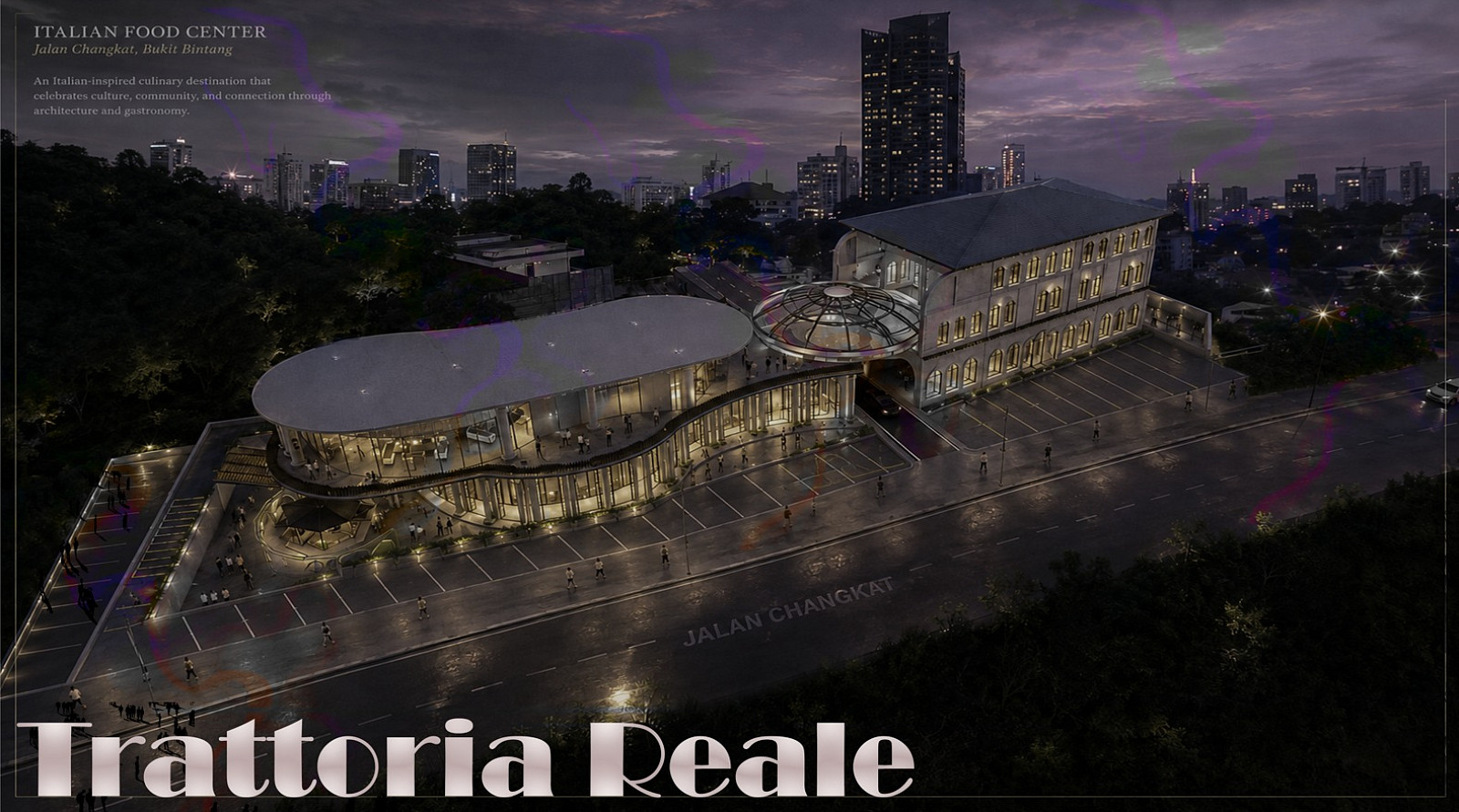
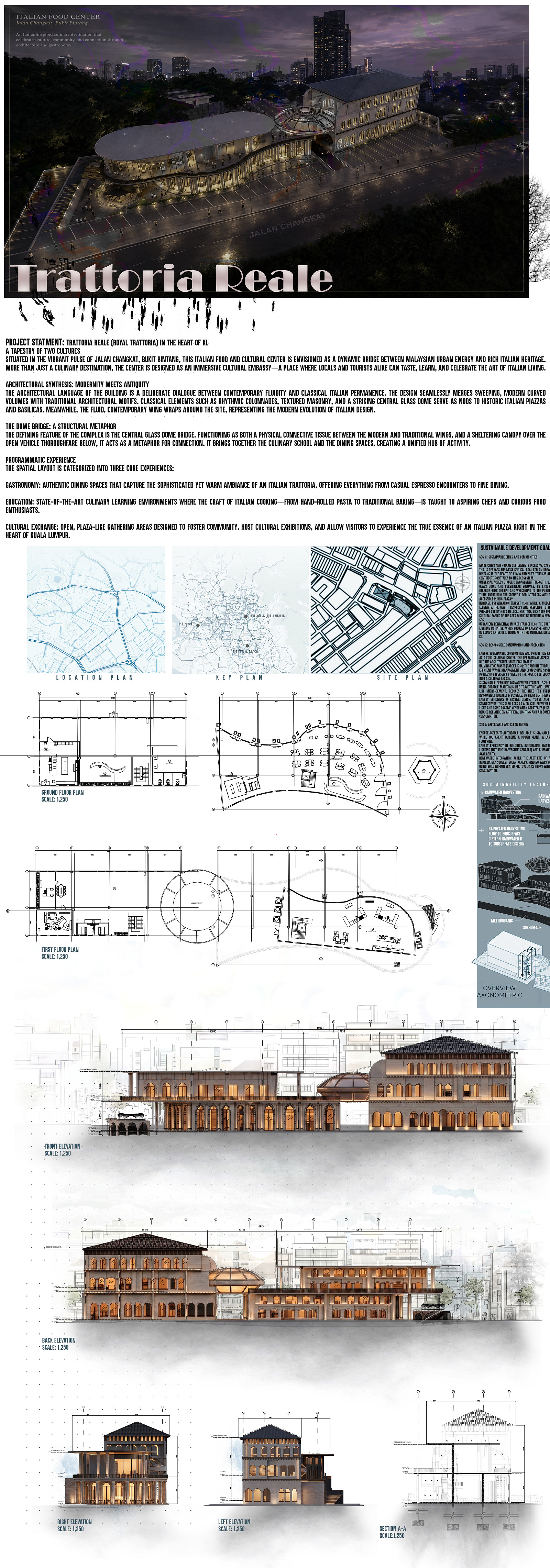
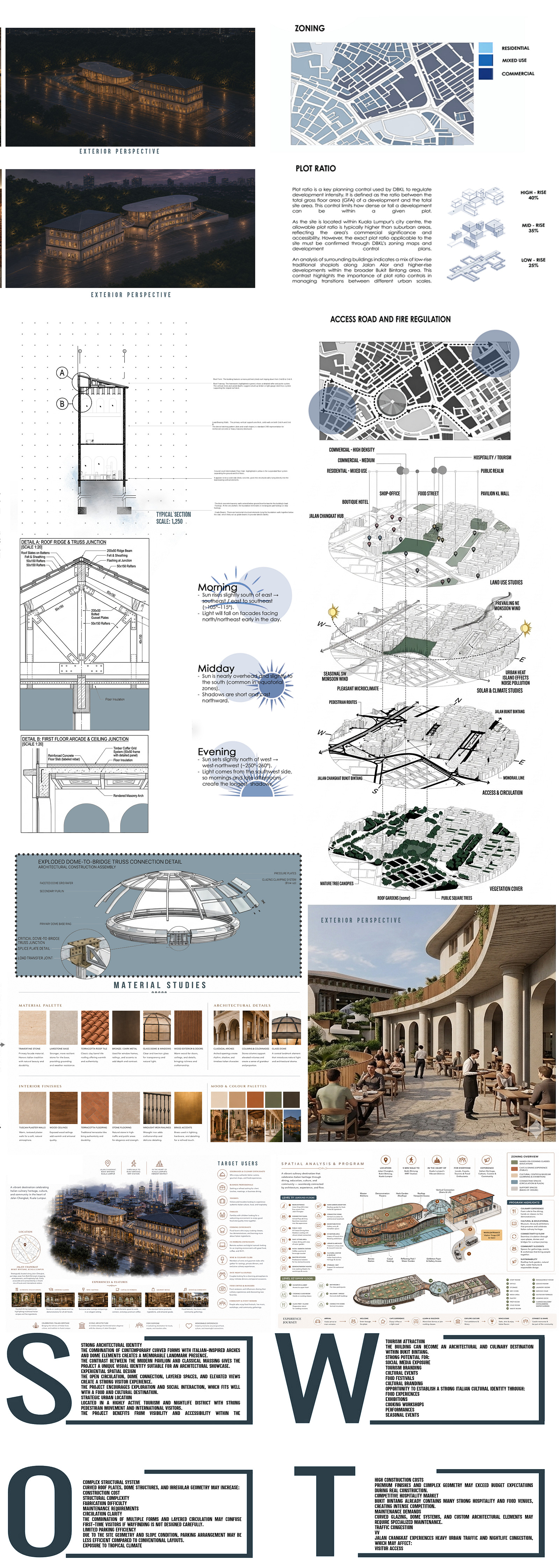
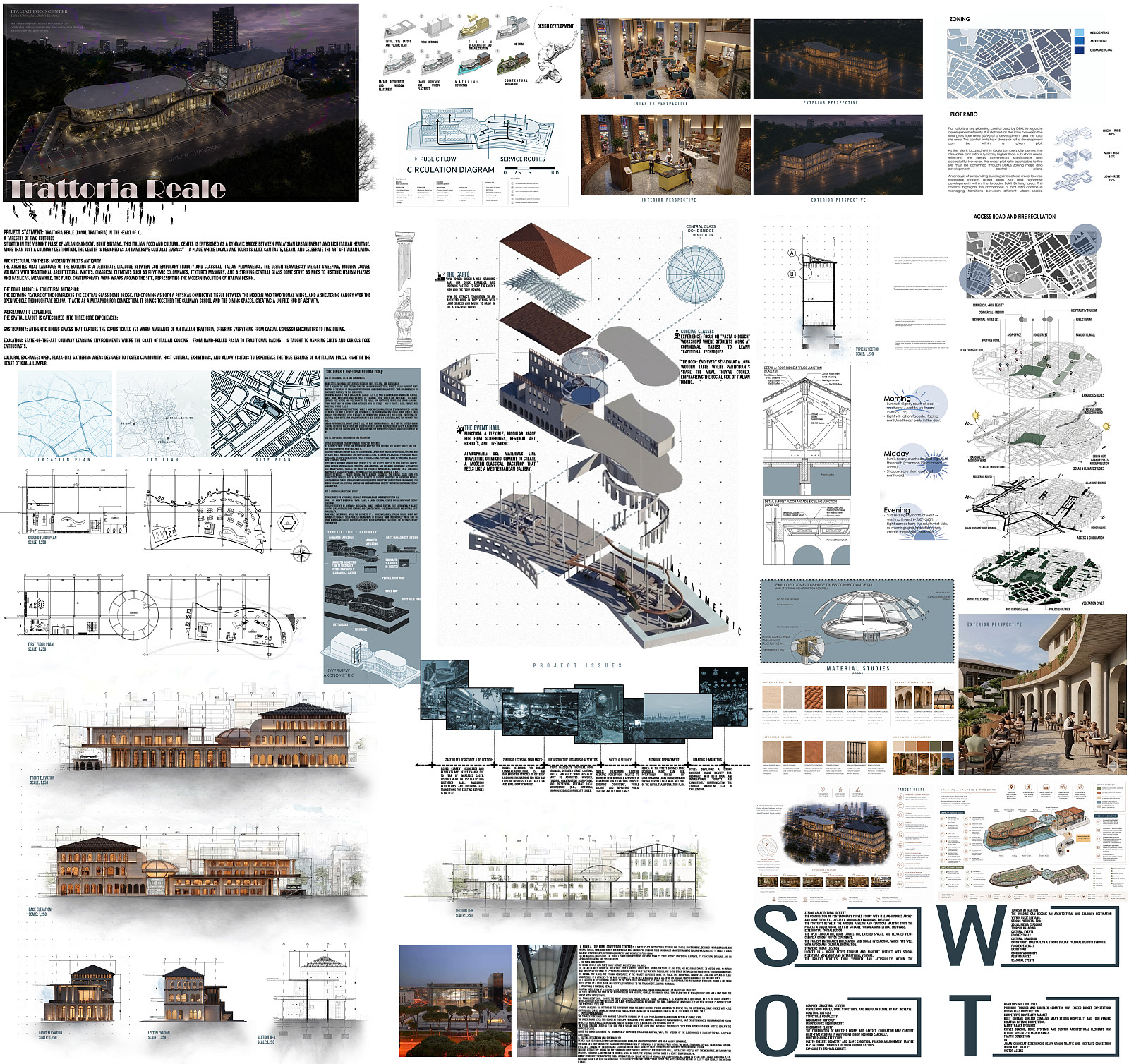
Trattoria Reale is an Italian Food Culture Centre that celebrates the richness of Italian gastronomy, architecture, and community life within the urban context of Jalan Changkat, Kuala Lumpur. The project explores the relationship between heritage and innovation by combining two contrasting architectural languages: a contemporary curved form representing modern Italy and a Roman classical form representing Italy’s historical legacy. The concept positions architecture as a cultural bridge, creating a destination where food, education, art, and social interaction come together to offer visitors an immersive Italian cultural experience.
Project description
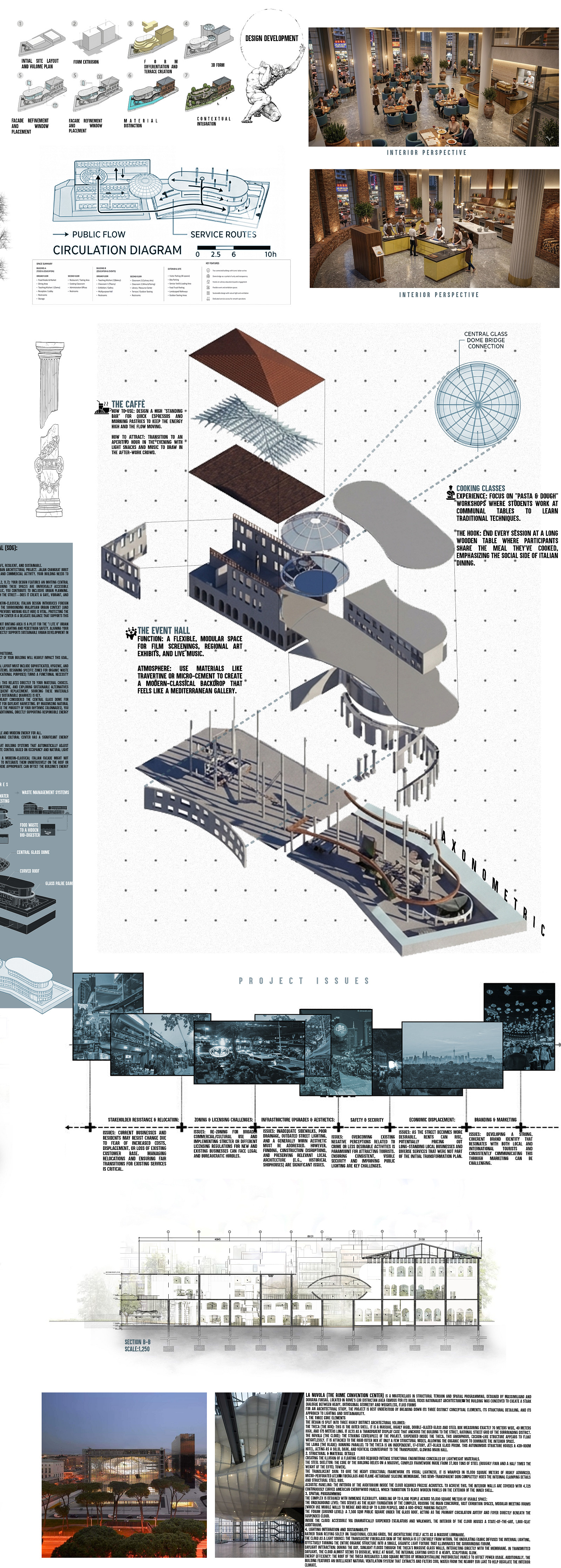
Located in Bukit Bintang, Trattoria Reale is designed as a multi-functional cultural hub that extends beyond a conventional dining destination. The project integrates cafés, cooking studios, cultural galleries, event spaces, educational facilities, and public gathering areas into a single architectural experience. Visitors are guided through a curated spatial journey that begins at the street-level café and outdoor terraces, progresses through culinary learning spaces, crosses a transparent glass dome bridge, and culminates in cultural exhibition and event spaces. By combining food culture, education, community activities, and architectural storytelling, the project aims to become a landmark destination that introduces Italian heritage and lifestyle to both local and international visitors.
Technical information
The development consists of two primary building components: Zone A (Curved Modern Wing) and Zone B (Roman Classical Wing), connected by a glass dome bridge at Level 2. The project occupies approximately 2,625 m² gross floor area on a sloping urban site and utilizes the existing topography to create terraced outdoor dining spaces and public gathering areas. Zone A accommodates cafés, culinary demonstration kitchens, teaching studios, and social spaces, while Zone B houses reception facilities, cultural galleries, event halls, and multipurpose rooms. The architectural language combines curved glazing, contemporary open-plan spaces, Roman arch windows, travertine cladding, terracotta roofing, and stone colonnades. Environmental strategies include passive cooling, natural daylighting, biophilic landscaping, shaded terraces, natural ventilation, and climate-responsive building orientation. Structurally, the project incorporates reinforced concrete construction, steel and timber roof framing systems, masonry walls, and a steel-and-glass dome bridge that serves as both a circulation spine and symbolic connection between Italy’s historical and contemporary architectural identities.

Copyright © 2026 INSPIRELI | All rights reserved. Use of this website signifies your agreement to the Terms of Use, Privacy Policy, and use of cookies.