AI-Integrated Self-Help Rural Housing & Livelihood Resilience System: A Bottom-Up Approach for Climate-Vulnerable Communities in


Project idea
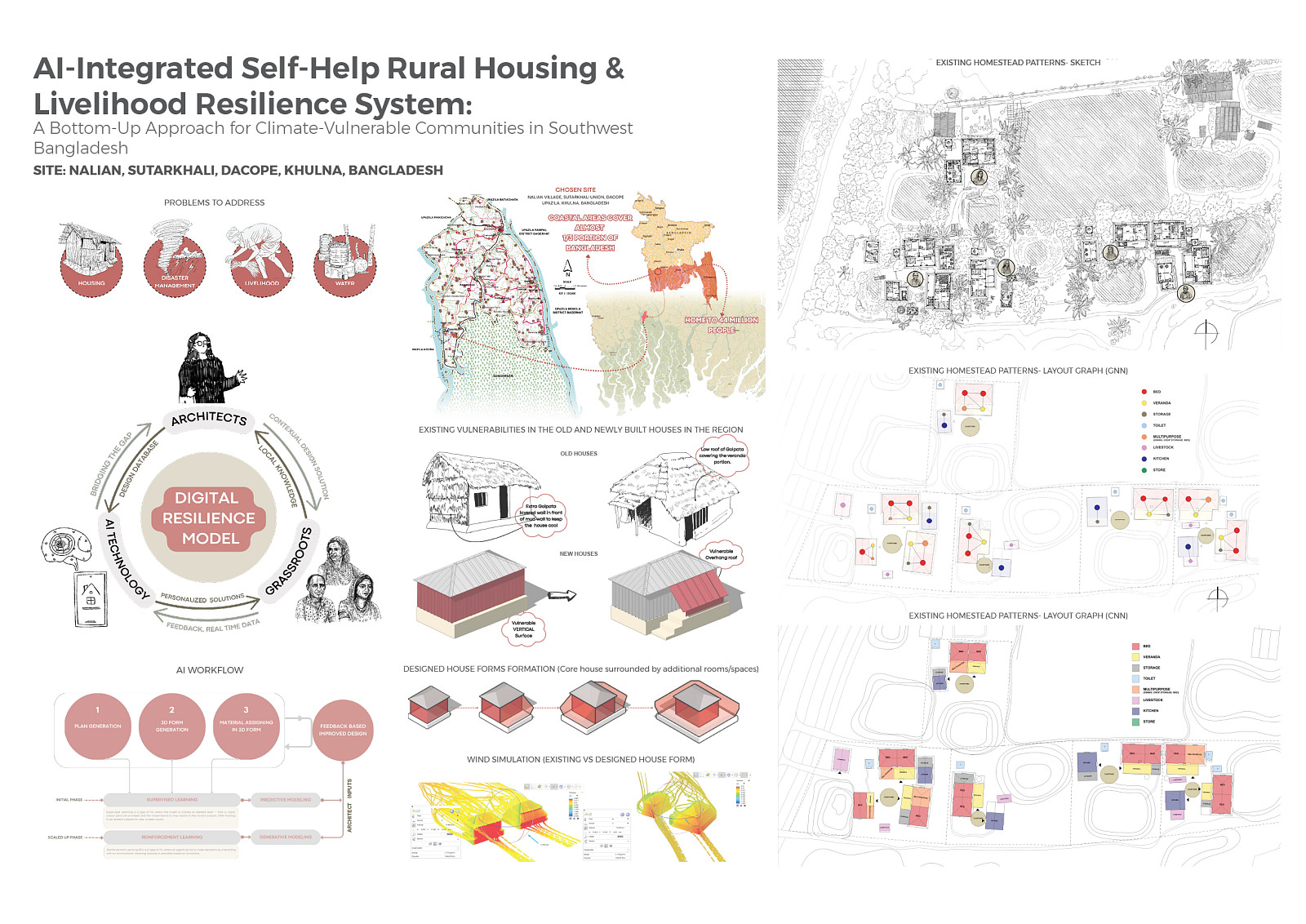
Rural communities in Southwest Bangladesh face cyclones, floods, and saline intrusion, threatening homes, livelihoods, and essential services. This project proposes a resilient system combining vernacular design, innovative materials, and AI tools to improve housing, livelihoods, disaster preparedness, and water management. The research focuses on Nalian village in Sutarkhali Union, Dacope, Khulna, starting with analysis of existing housing and livelihoods to ensure new designs are practical, culturally relevant, and resilient. Vernacular features such as elevated plinths, sloped roofs, and wide overhangs are paired with local materials such as- bamboo, wood, Golpata, and improved methods guided by architects. A mobile app is the main platform; residents receive training through workshops and smartphones for AI-assisted guidance. Users enter house orientation, area, functions, and budget; the system generates optimized plans, suggests 3D forms, and recommends resilient materials. Later a step-by-step 3D guidelines in the local language support self-help or community building. Beyond housing, the system offers AI-generated livelihood suggestions, rewards tasks with points for water, healthcare, and education, and includes a disaster management module with risk visualization and actionable advice. Though conceptual, this scalable and participatory model shows potential for climate-resilient rural development in Bangladesh and Asia with the help of Ai-assisted computational design, while preserving local culture and architecture.
Project description
Rural communities in Southwest Bangladesh face increasing vulnerability to cyclones, flooding, and saline intrusion, which undermine housing stability, livelihoods, and access to essential services. The central design challenge is to develop an integrated, resilient, and context-sensitive solution that simultaneously addresses housing, livelihoods, disaster preparedness, and water management. This project investigates the potential of digital tools and vernacular-informed design to empower communities in maintaining and enhancing their quality of life amid these challenges.
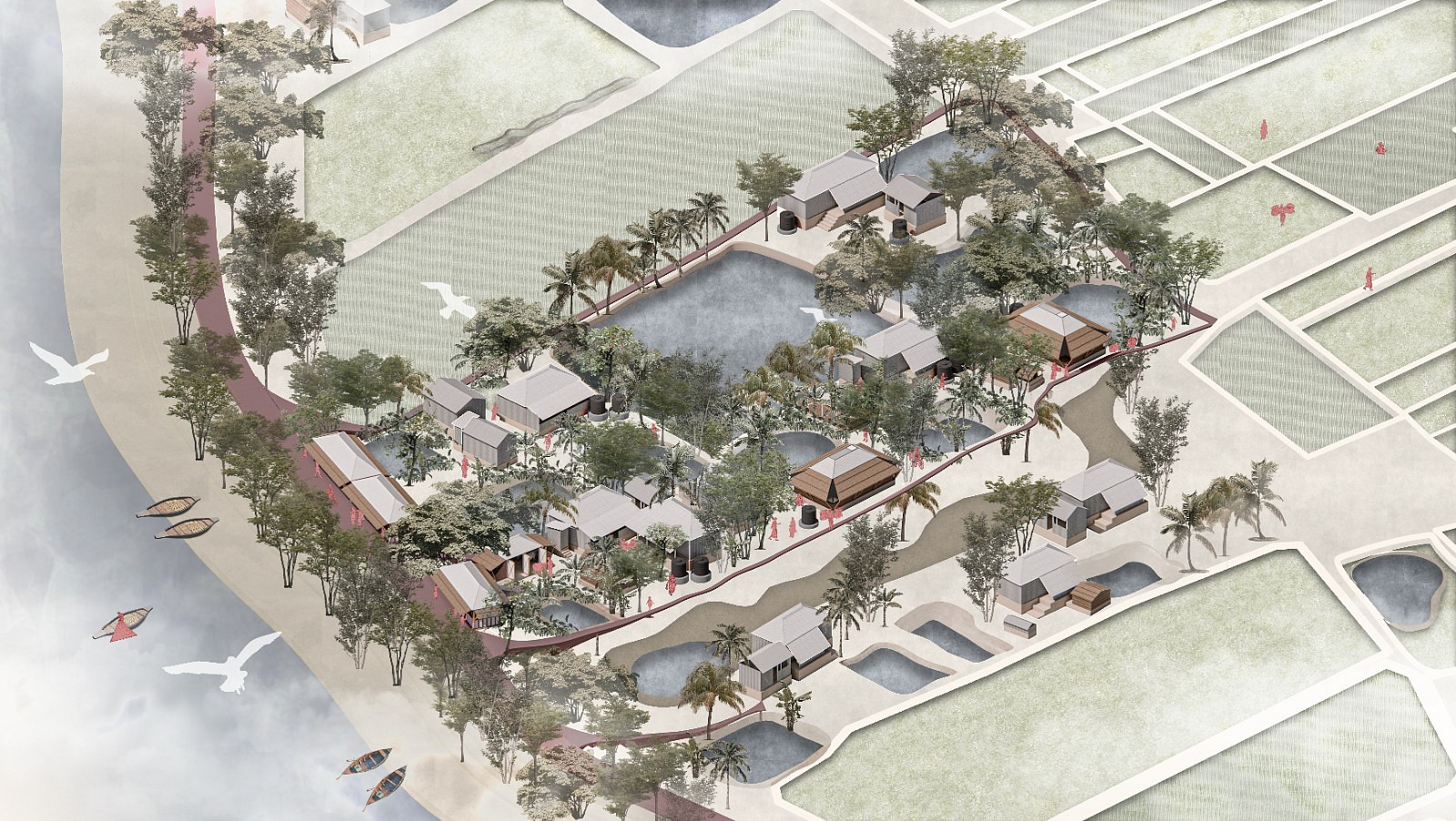
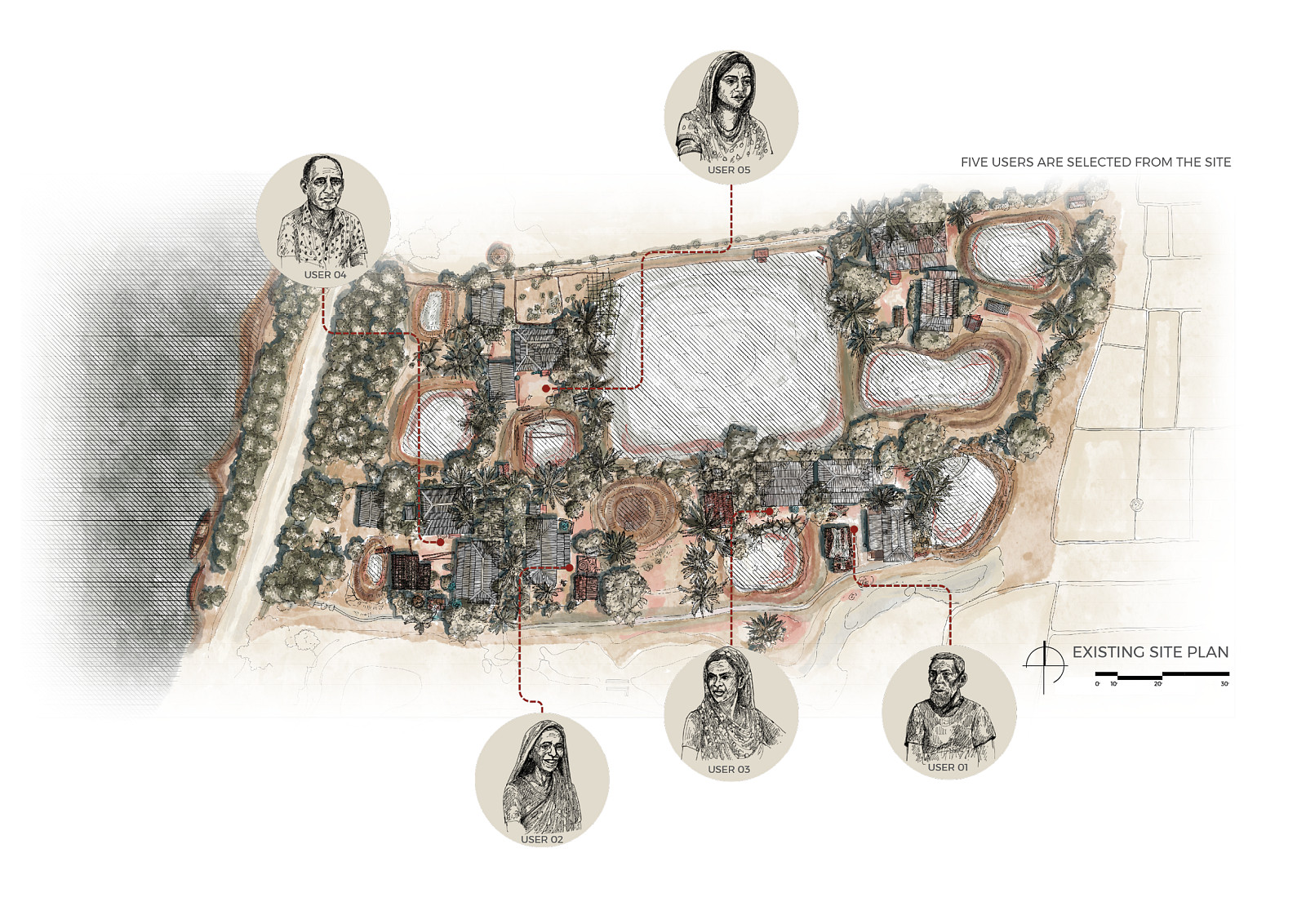
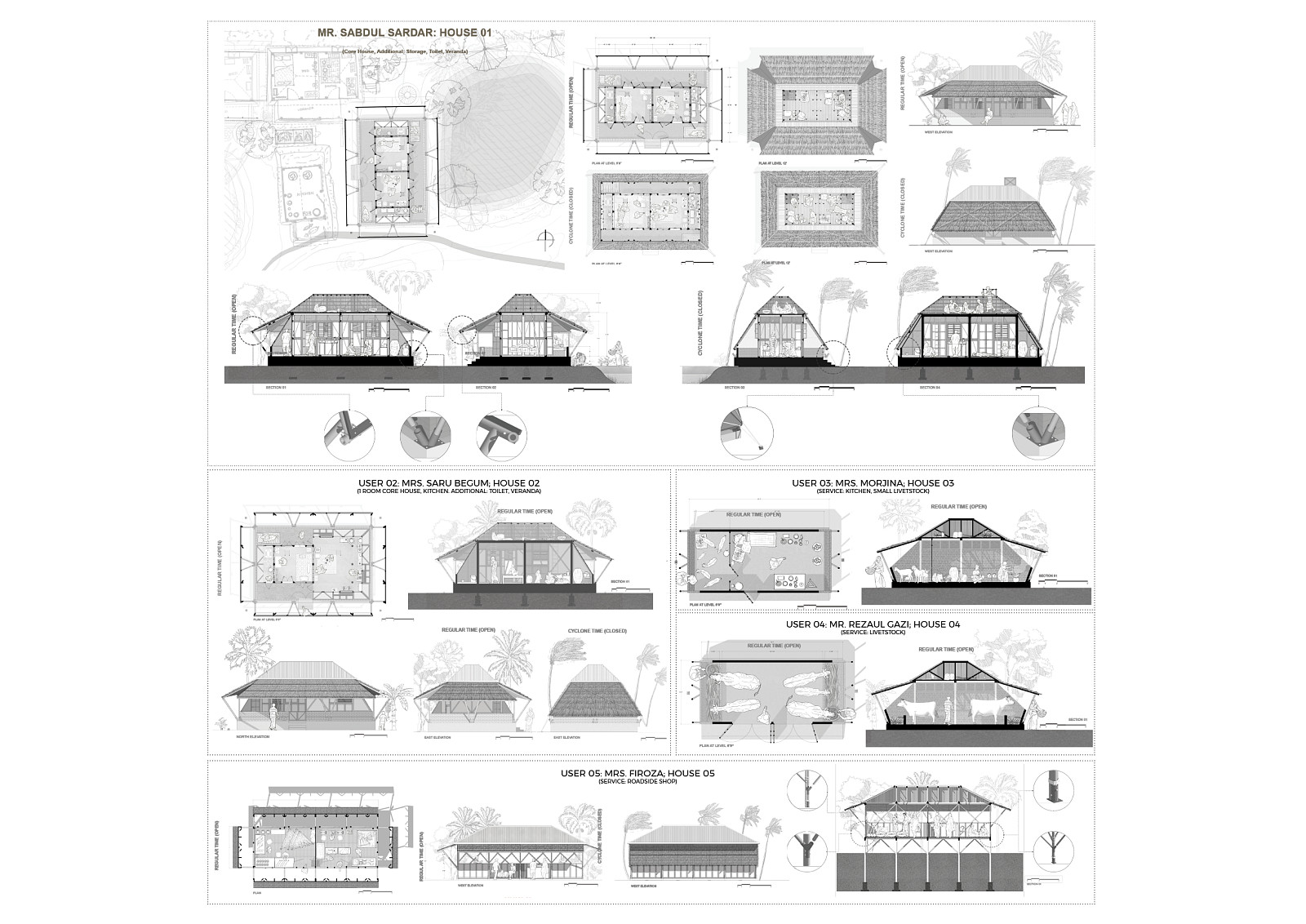
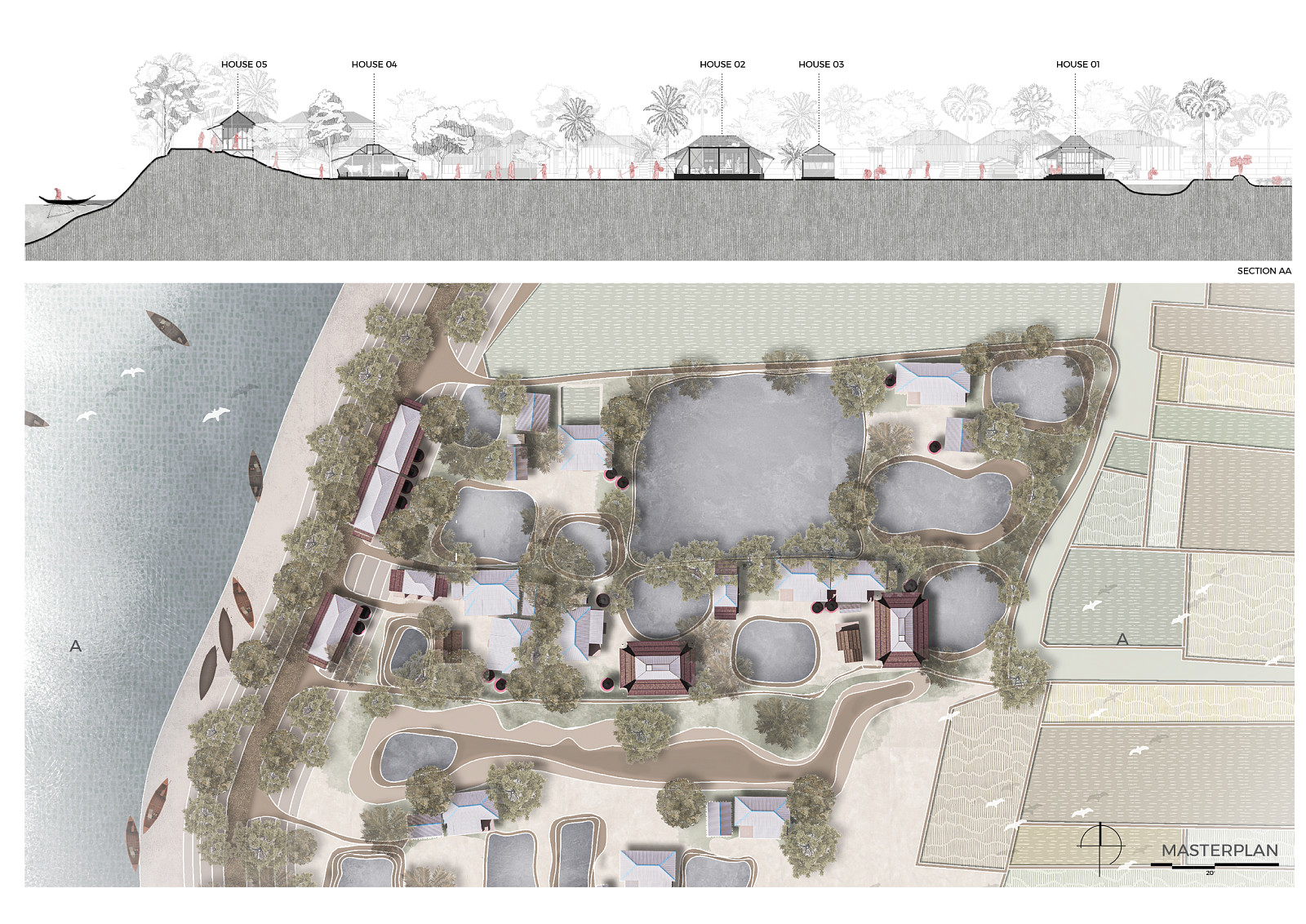
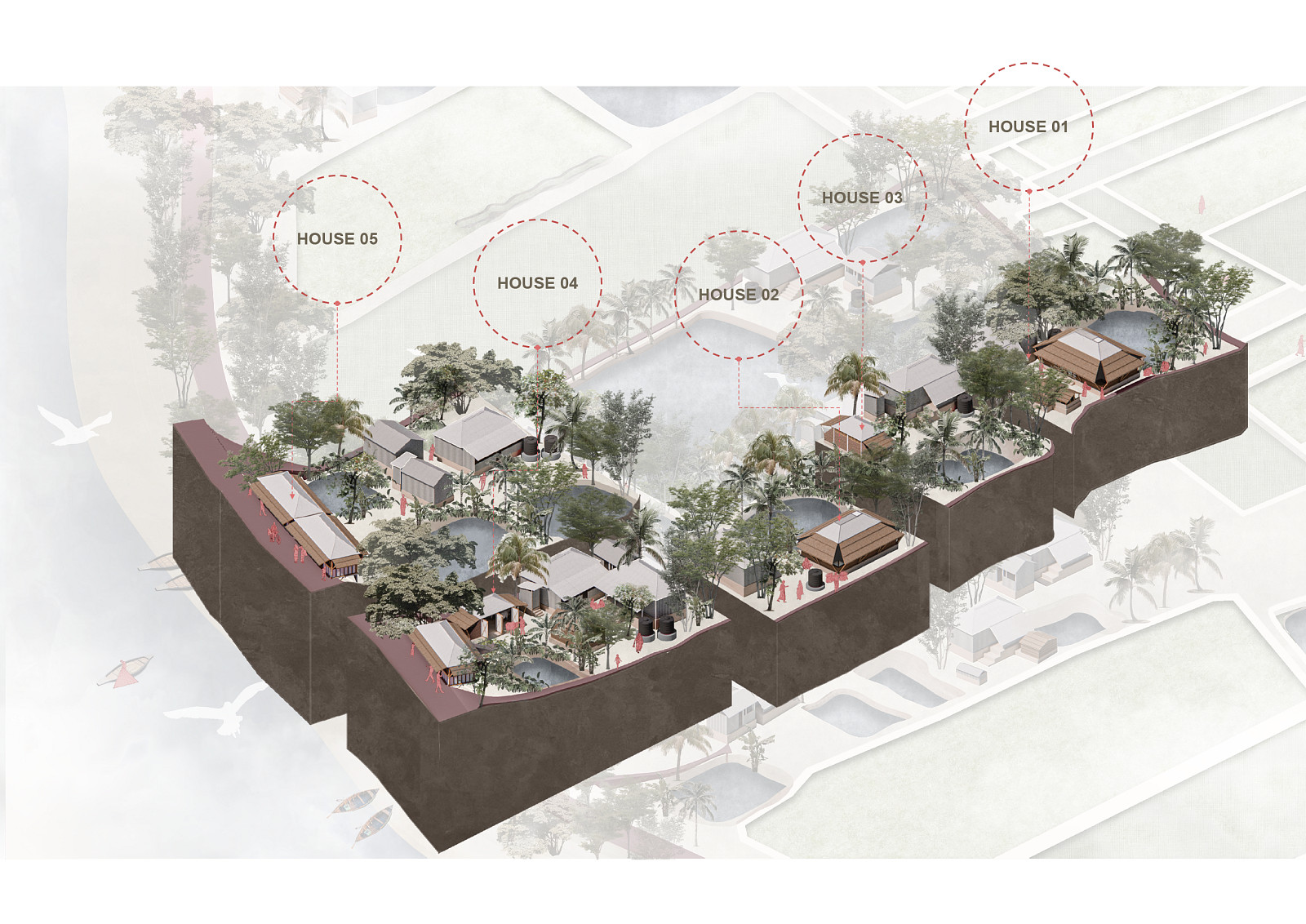
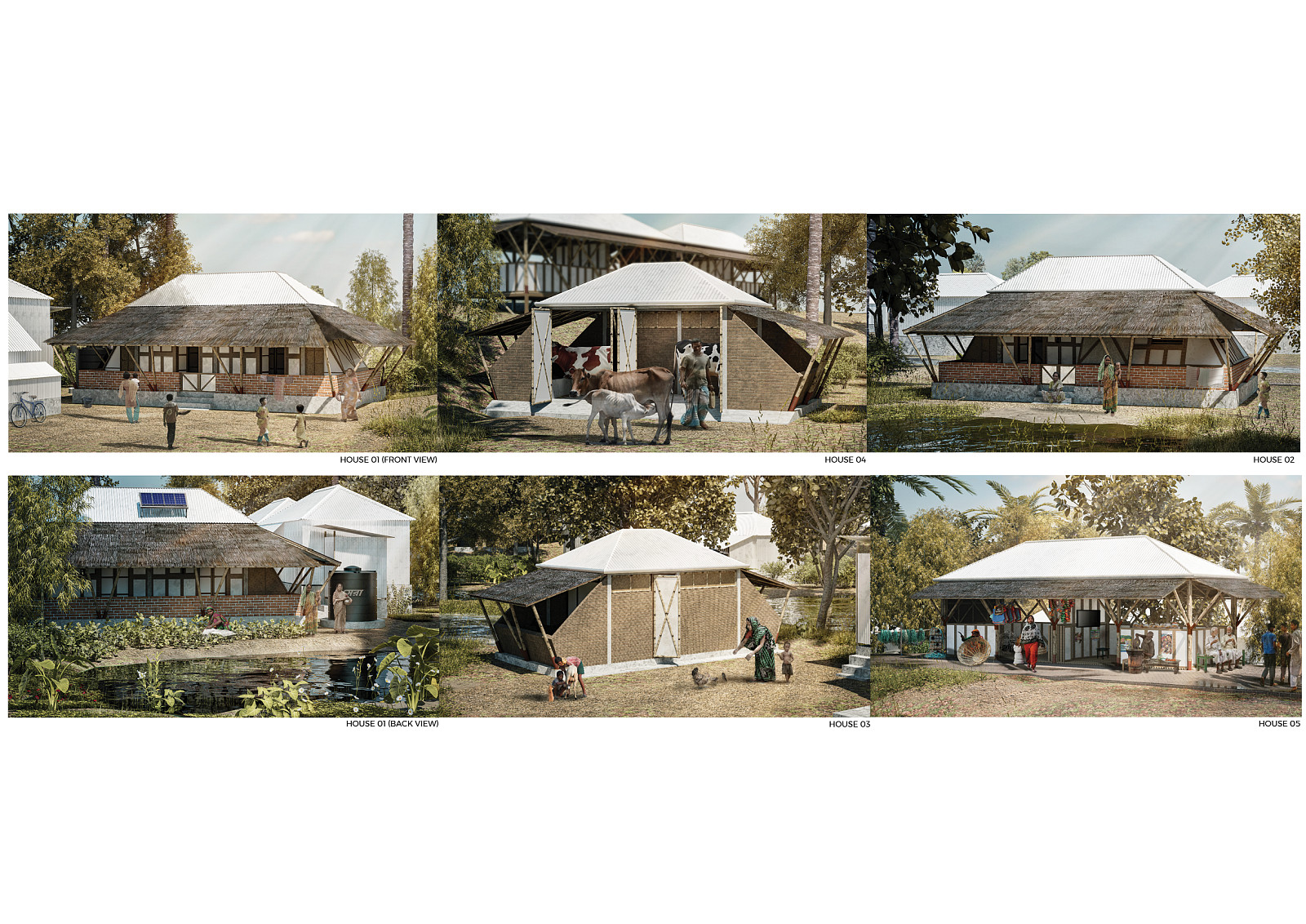
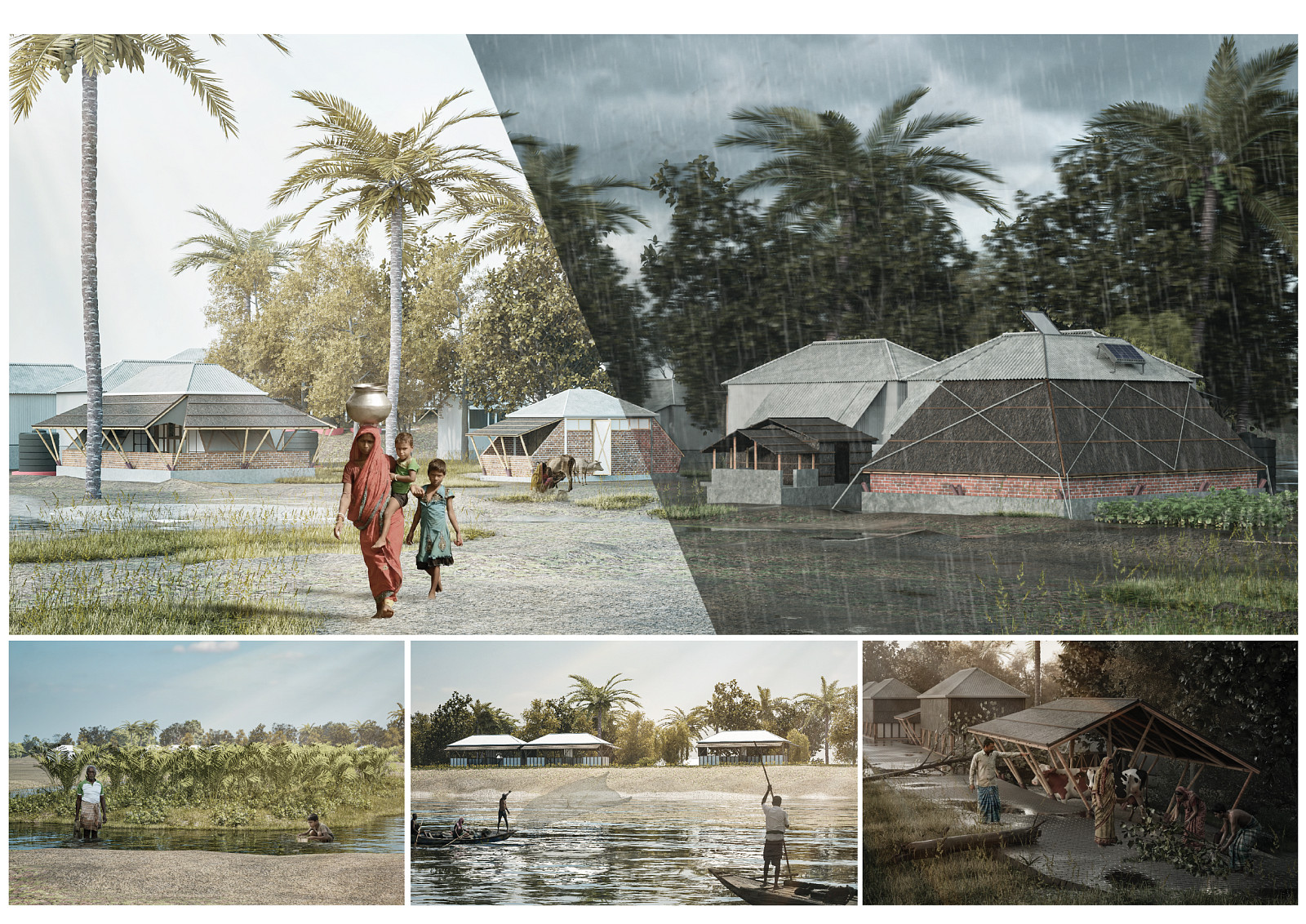
Nalian village in Sutarkhali Union, Dacope, Khulna, serves as a representative site for these challenges. The study commenced with an analysis of existing housing practices, functional layouts, and livelihood strategies to ensure that proposed designs are realistic, context-sensitive, and culturally appropriate. Vernacular strategies, including elevated plinths, sloped roofs, and wide overhangs, inform the design to mitigate cyclone and flood risks. Locally available materials such as bamboo, wood, and Golpata are combined with innovative materials and construction methods under architectural guidance to enhance resilience and durability. Spatial layouts are based on traditional homestead clustering, which promotes social cohesion and community resilience.
Technical information
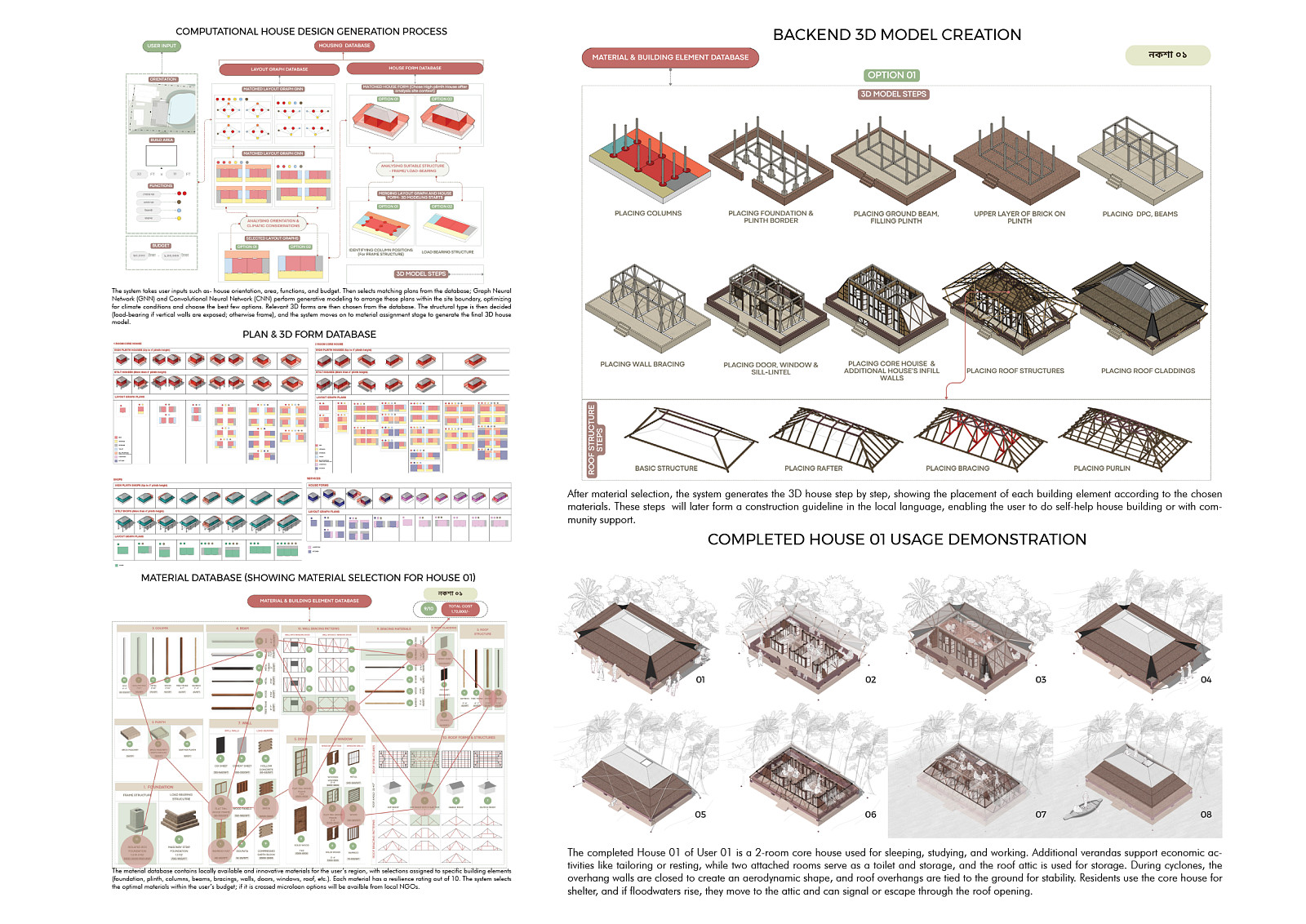
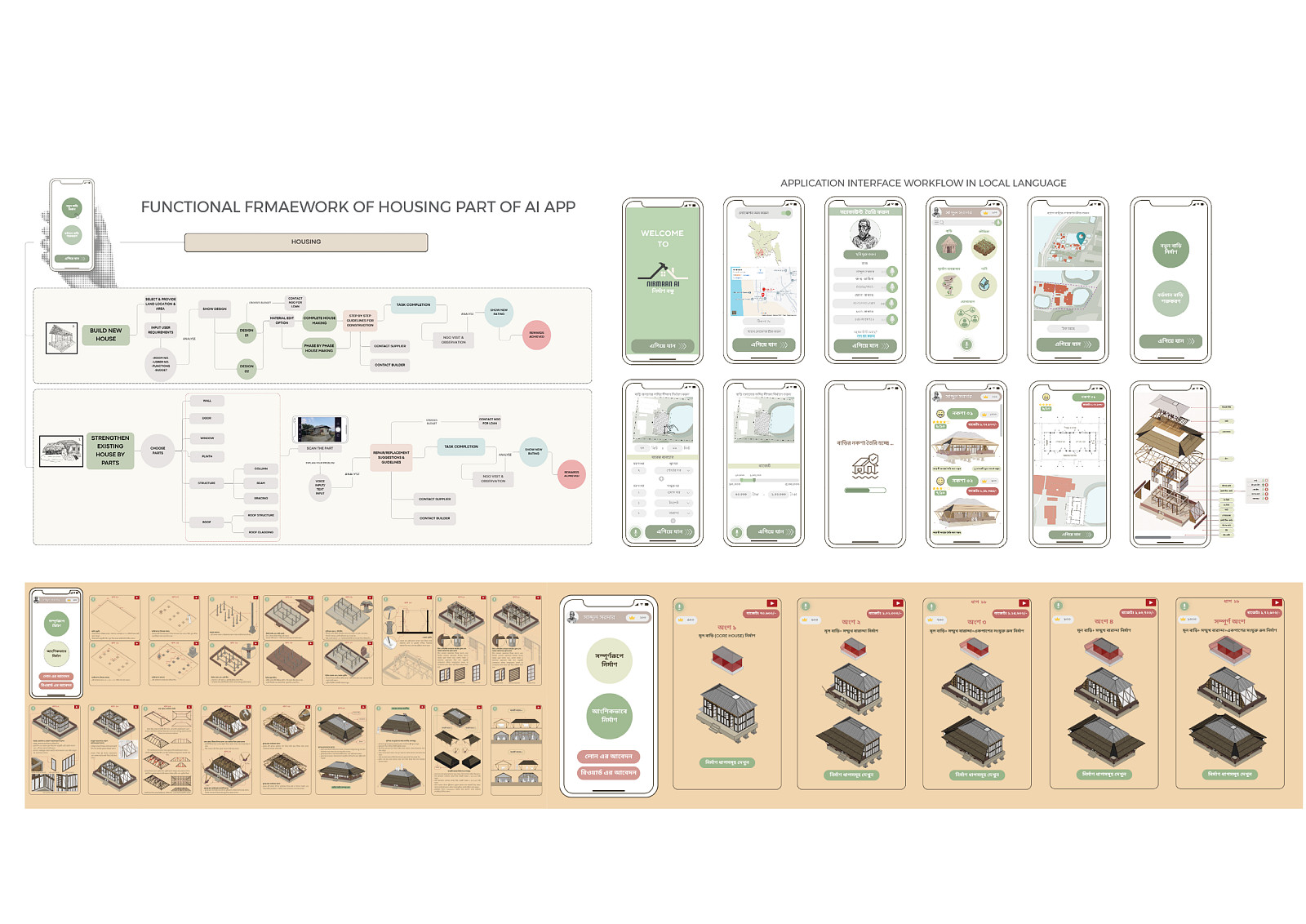
A mobile application is proposed as the primary operational interface for the system. Residents receive training through workshops and are provided with smartphones to access AI-assisted guidance. Users input parameters such as house orientation, area, functional requirements, and budget. The system employs Graph Neural Networks (GNN) and Convolutional Neural Networks (CNN) for generative modeling to produce optimized plans, arrange layouts within site boundaries, select appropriate three-dimensional forms, determine structural types, and assign resilient materials from a database evaluated for local performance. The application also generates construction sequences, offering step-by-step three-dimensional guidance in the local language to facilitate self-help or community-assisted construction. In addition to housing, the system supports livelihoods by providing AI-generated recommendations to optimize income-generating opportunities in the region. Completion of housing and livelihood tasks earns users points that can be exchanged for essential services, including water facilities, healthcare, and education. A disaster management module visualizes vulnerability levels before hazards occur and provides actionable guidance.
Although the AI system remains conceptual at this stage, the demonstration underscores its potential to integrate vernacular knowledge, innovative design, and technology for climate-resilient rural development. The modular design, digital interface, and participatory methodology render the model scalable and suitable for replication in other coastal and flood-prone communities in Bangladesh and across Asia. Future development may involve expanded community participation and establishing a sustainable, technology-driven framework that strengthens resilience in housing, livelihoods, disaster management, and water security while preserving local culture and architectural identity.


Copyright © 2026 INSPIRELI | All rights reserved. Use of this website signifies your agreement to the Terms of Use, Privacy Policy, and use of cookies.