InBetween Gate


 Mohamed Noeman
Project idea
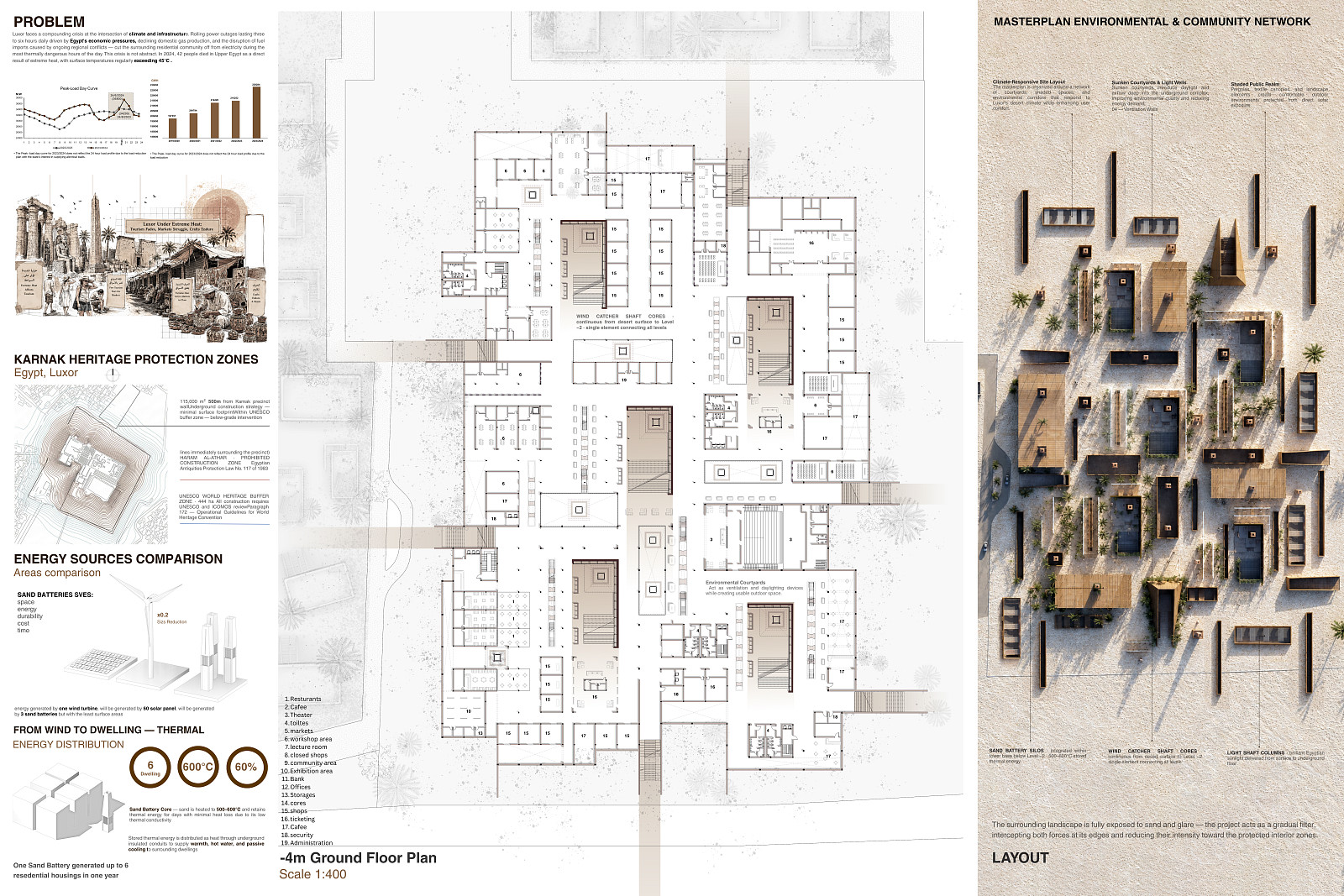
Luxor faces a compounding crisis at the intersection of climate and infrastructure. Rolling power outages lasting three to six hours daily driven by Egypt's economic pressures, declining domestic gas production, and the disruption of fuel imports caused by ongoing regional conflicts — cut the surrounding residential community off from electricity during the most thermally dangerous hours of the day. This crisis is not abstract. In 2024, 42 people died in Upper Egypt as a direct result of extreme heat, with surface temperatures regularly exceeding 45°C .
Project description
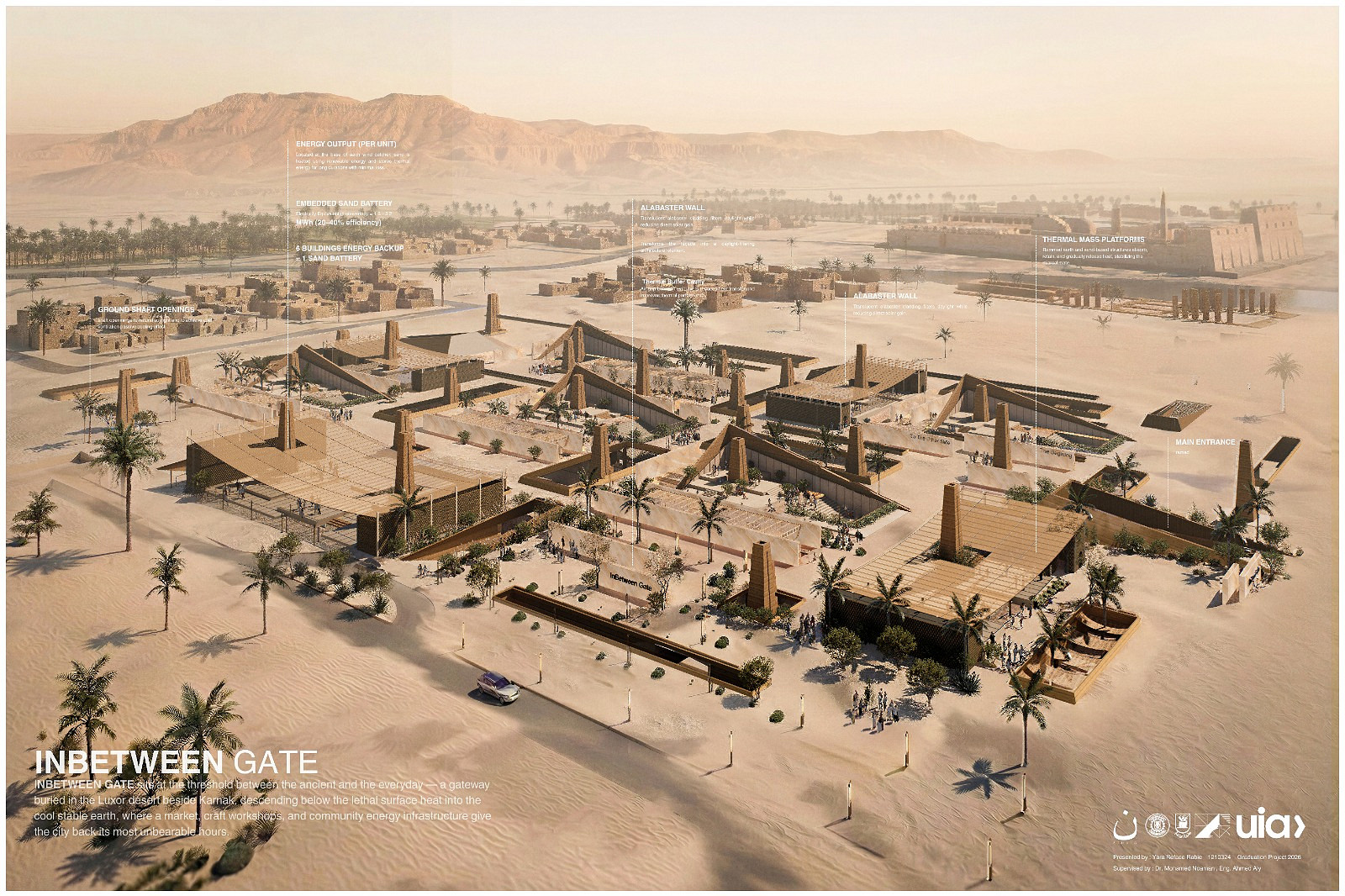
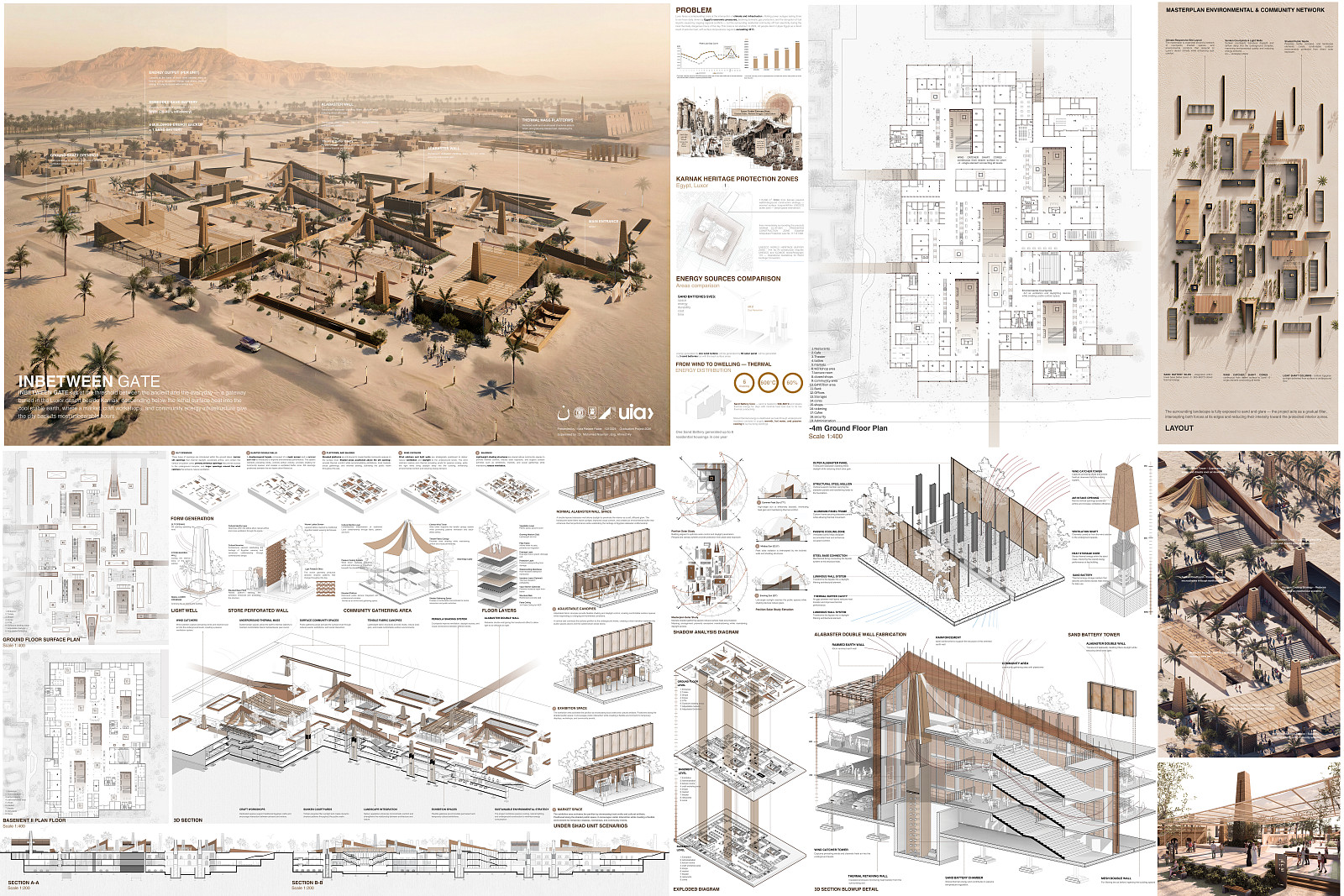
INBETWEEN GATE is a tourist craft center built underground, with a public park above acting as an urban magnet that activates the five hours of the day during which the Karnak precinct is currently unusable due to extreme heat. The surface intervention is minimal — a botanical landscape punctuated by abstracted wind catcher towers, their forms referencing the obelisks of Karnak while performing as passive cooling and energy infrastructure. Below ground, a complete craft and market environment gives Luxor's artisans a thermally stable space to produce, exhibit, and sell their work directly to the international tourist audience surrounding them — transforming the project into both a cultural gateway and a community resource that promotes tourism during hours the city currently loses entirely.
Technical information
Total site area: approximately 10,000 m² (150m × 65m), located 500 meters from the Karnak Temple Complex boundary wall and 1 kilometer from the Nile River, within the UNESCO World Heritage buffer zone of Ancient Thebes.
Levels and Depths
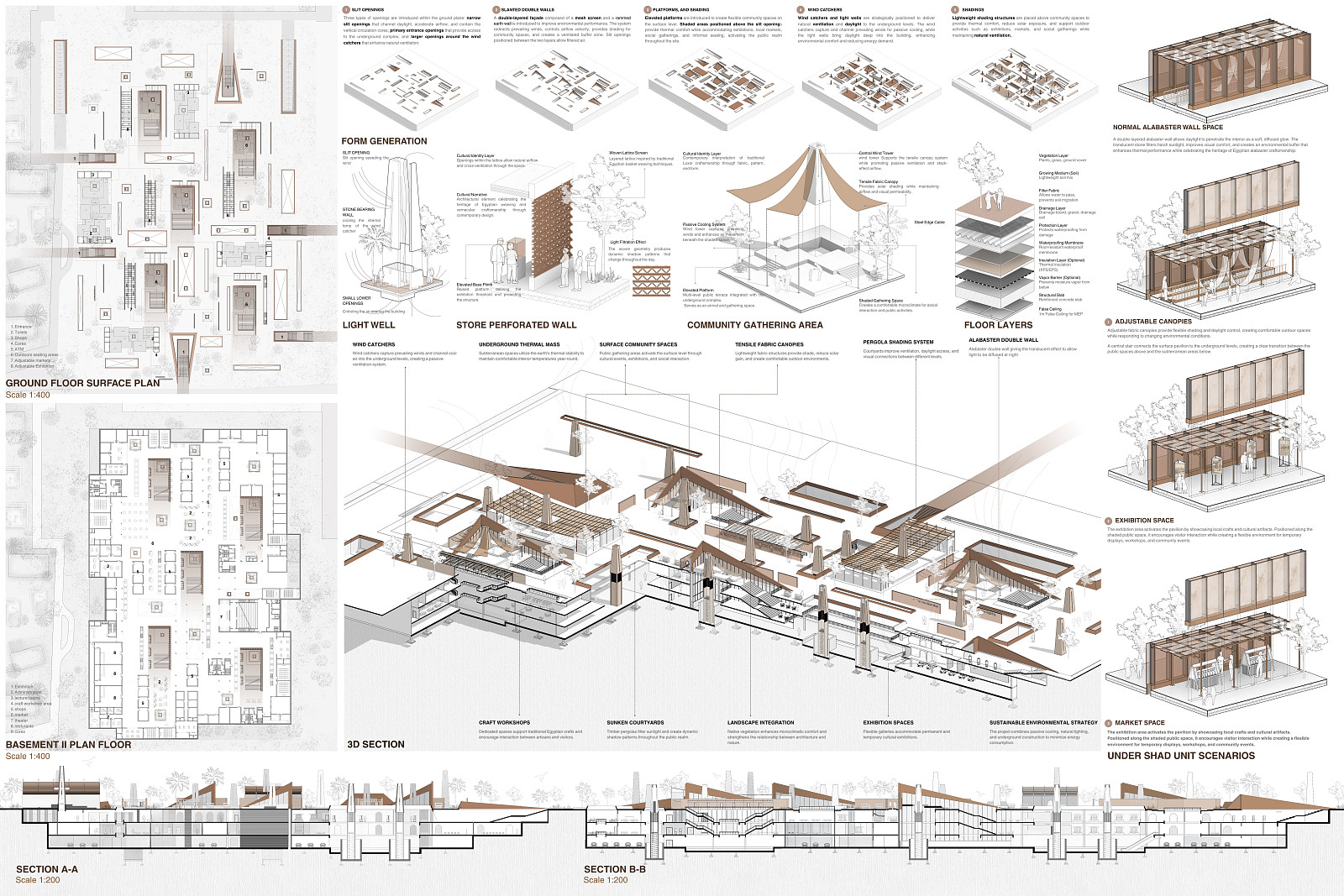
Surface Level 0 — Park and botanical garden, wind catcher tower field, ground shaft openings, slanted shade walls, entrance ramps.
Level −1 — Market and Arrival, 3 to 4 meters below grade, stable temperature 26 to 28°C.
Level −2 — Knowledge, Production and Craft, 5 to 6 meters below grade, stable temperature 22 to 24°C.
Level −3 — Energy and Ceremony, 7 to 8 meters below grade, stable temperature 20 to 22°C.
Structure
Continuous reinforced concrete perimeter retaining walls acting as structure and waterproofing barrier. Post-tensioned concrete floor slabs for the large-span market and exhibition spaces. Wind catcher tower shafts as reinforced concrete cores providing lateral stability and continuous vertical environmental function from surface to deepest level.
Materials
Locally quarried Luxor sandstone applied across all surfaces — wind catcher tower facades, slanted shade walls, court walls, market floors, underground walls and ceilings. Translucent alabaster panels in selected descent corridors. Oxidized steel and timber for the vertical farming grid structures integrated within the wind catcher shafts. Natural linen fabric for surface shade canopy elements.
Environmental Systems
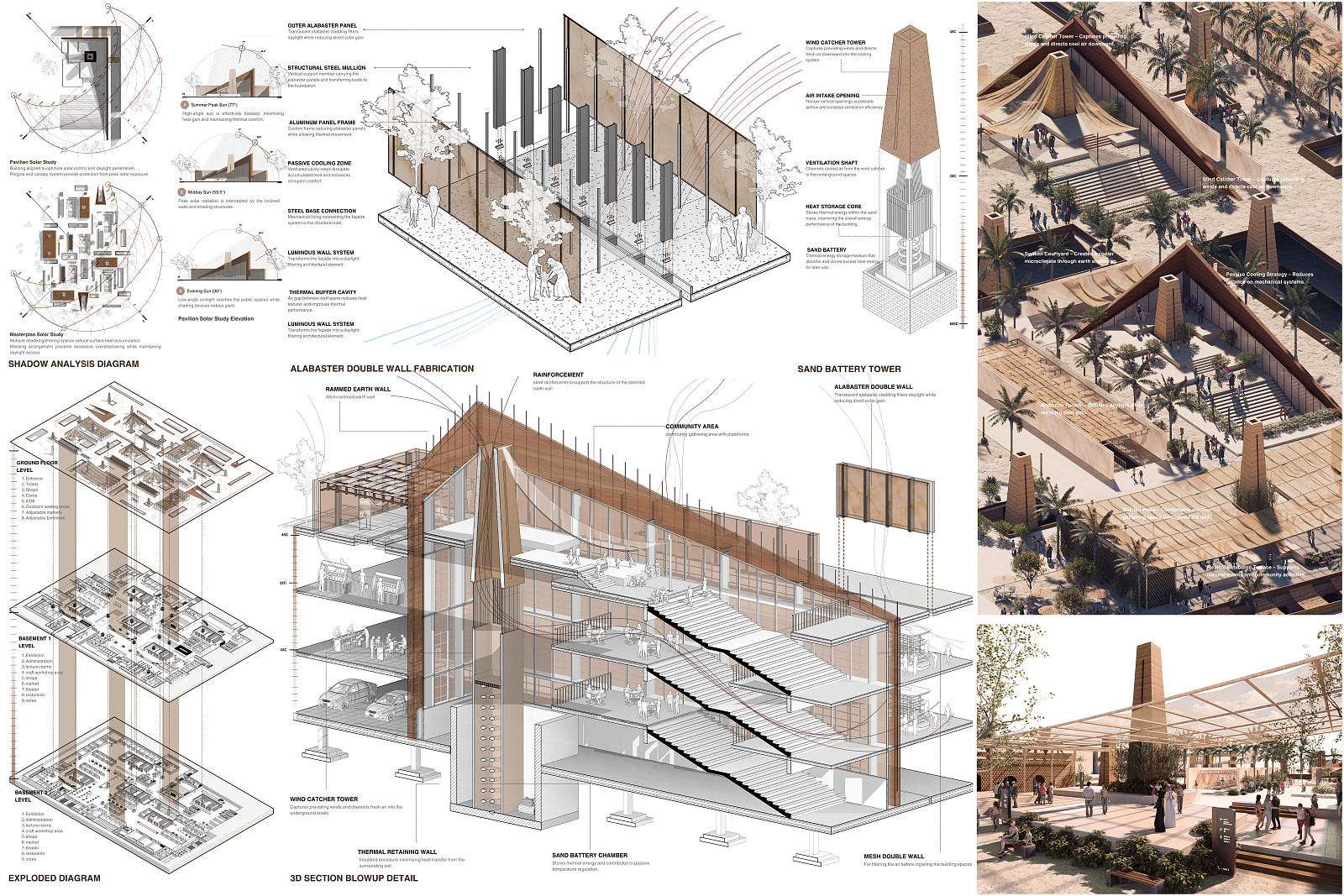
Passive ventilation: wind catcher towers oriented to the prevailing north-northeast wind, driving cool air downward through continuous shafts to all underground levels via wind capture and stack effect, with no mechanical input required.
Passive cooling: stable earth temperature of 20 to 22°C at 5 to 6 meters depth, a passive reduction of 23 to 25°C relative to peak surface conditions.
Lighting: rectangular lightwells cut through the full building section, delivering vertical columns of natural sunlight from the surface to the deepest underground floor.

Copyright © 2026 INSPIRELI | All rights reserved. Use of this website signifies your agreement to the Terms of Use, Privacy Policy, and use of cookies.