Boutique Hotel


 Eman Mounir
Project idea
Project Declaration
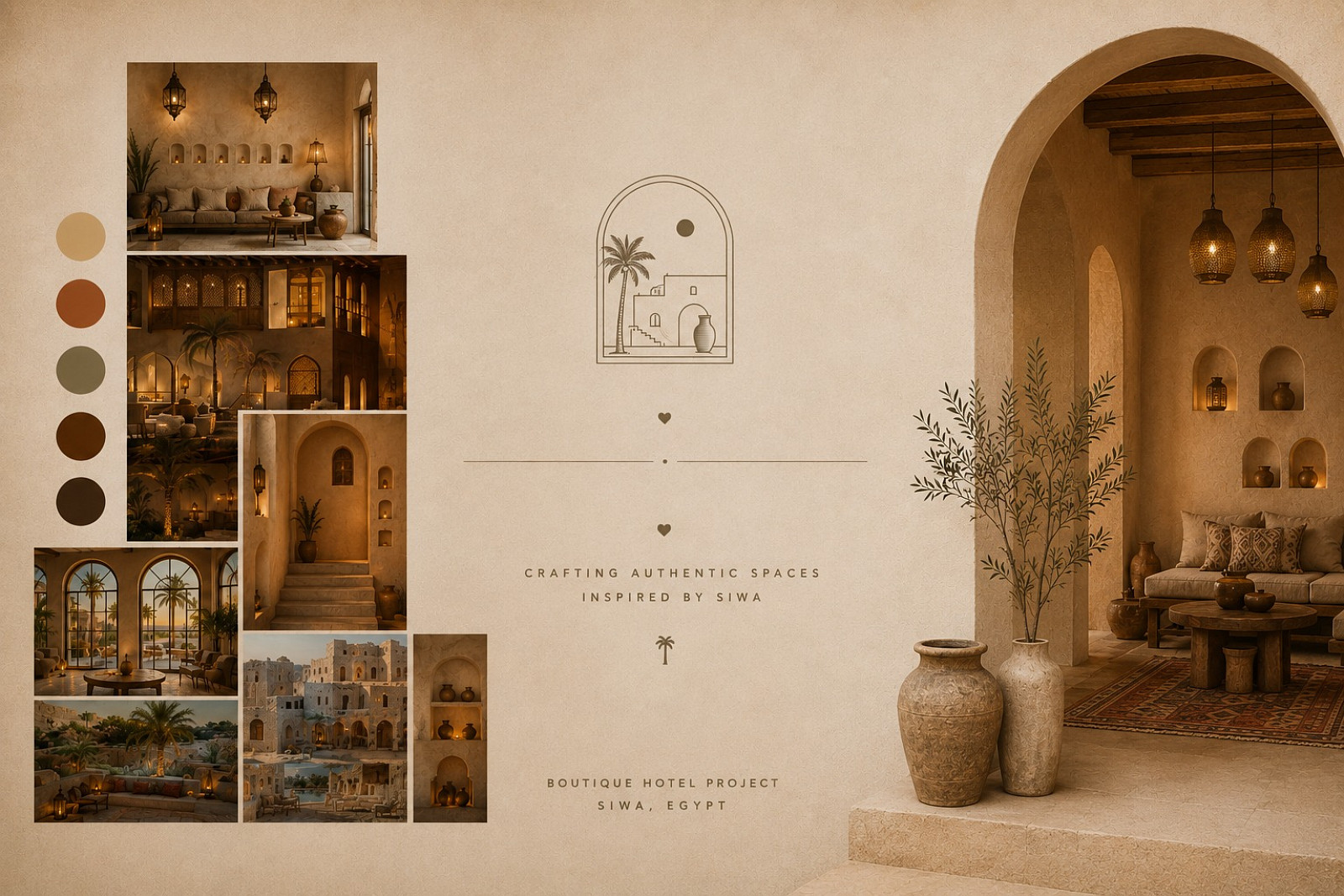
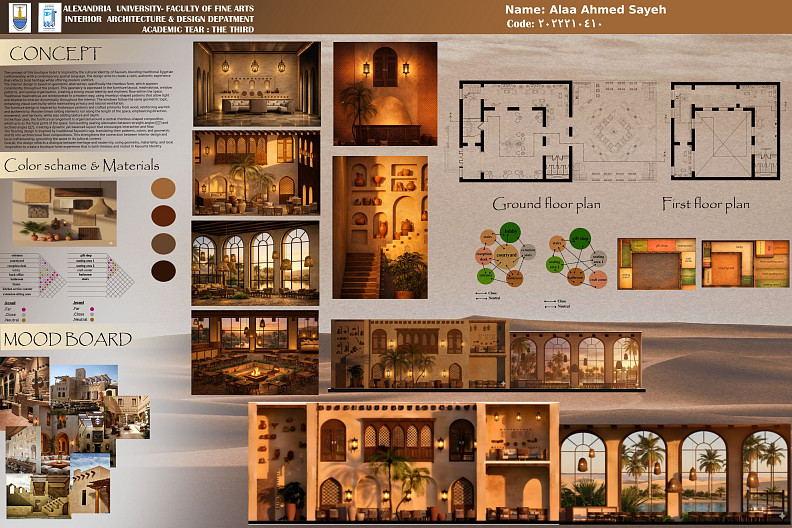
This project is a boutique hotel located in Siwa Oasis, designed to celebrate the unique cultural, historical, and natural characteristics of the region. The concept is inspired by Siwa’s traditional architecture, local materials, and serene desert landscape, creating a destination that offers authenticity, comfort, and a strong sense of place.
The project aims to provide guests with a distinctive hospitality experience while promoting cultural appreciation and sustainable design practices. The design objectives include creating harmonious indoor and outdoor spaces, maximizing visual connections to the surrounding environment, and incorporating local craftsmanship to preserve and showcase Siwa’s architectural heritage.
Project description
Scope of the Project Solution
The project scope includes the architectural and interior design of a boutique hotel inspired by the cultural and environmental context of Siwa Oasis. The design covers guest rooms, reception areas, dining spaces, outdoor gathering zones, landscape integration, lighting design, furniture selection, and material specifications. The solution focuses on creating a comfortable hospitality experience while reflecting local identity and promoting sustainable design principles.
Technical information
Technical Specifications
Project Type: Boutique Hospitality Hotel
Location: Siwa Oasis, Egypt
Design Style: Contemporary design inspired by traditional Siwan architecture
Total Area: (Insert project area)
Main Functions: Guest accommodations, reception, restaurant, lounge areas, outdoor courtyards, and recreational spaces
Materials: Local stone, kershef-inspired finishes, natural wood, textured plaster, and handcrafted elements
Flooring: Natural stone and locally inspired finishes
Ceiling: Traditional-inspired ceiling treatments with modern construction methods
Lighting: Energy-efficient LED lighting with ambient, task, and accent lighting strategies
Furniture: Custom and locally crafted furniture reflecting Siwan culture
Building Services: HVAC systems, plumbing, electrical systems, fire protection, and water management systems
Sustainability Features: Use of local materials, passive cooling strategies, natural ventilation, and energy-efficient systems
Documentation


Copyright © 2026 INSPIRELI | All rights reserved. Use of this website signifies your agreement to the Terms of Use, Privacy Policy, and use of cookies.