Off the Clock: Revitalizing Office Districts Beyond Business Hours


Project idea
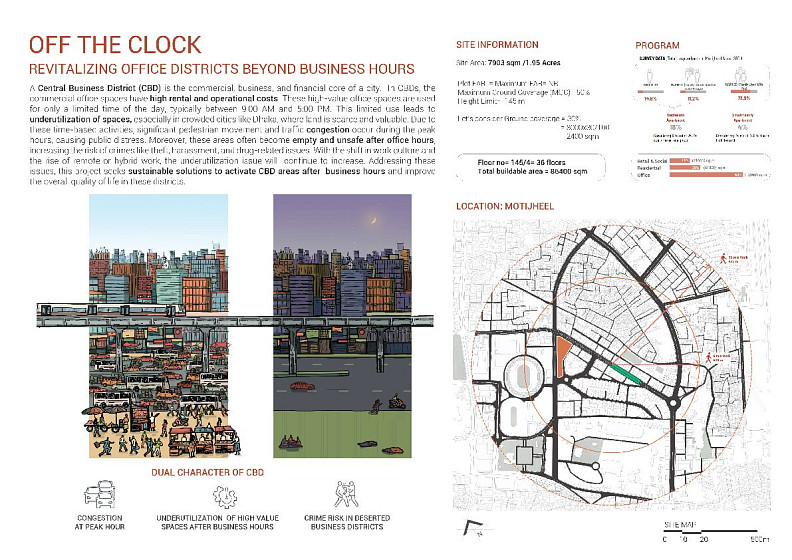
A Central Business District (CBD) is the commercial, business, and financial heart of a city. These areas contain some of the most valuable office spaces due to their strategic location and high accessibility. However, despite their high rental and operational costs, most office buildings remain active only during standard working hours, typically from 9:00 AM to 5:00 PM. As a result, these expensive urban spaces remain underutilized for a large portion of the day.
In cities like Dhaka, where land is limited and highly valuable, this pattern creates several challenges. During office hours, CBDs experience intense traffic congestion and overcrowding due to the concentration of workers and visitors. After business hours, the same areas often become empty, inactive, and unsafe, increasing the risk of theft, harassment, and other social problems. With the growing adoption of remote and hybrid work models, the dependence on physical office spaces is gradually decreasing, making the issue of underutilization even more significant.
The project proposes an architectural strategy to transform office districts into vibrant mixed-use environments that remain active throughout the day. Focusing on Motijheel, the oldest commercial district of Dhaka, the design takes advantage of MRT Line 6 and Transit-Oriented Development (TOD) principles to improve accessibility, land use efficiency, and urban vitality. The goal is to create a safer, more sustainable, and economically resilient CBD by integrating work, living, leisure, and public activities within a single development.
Project description
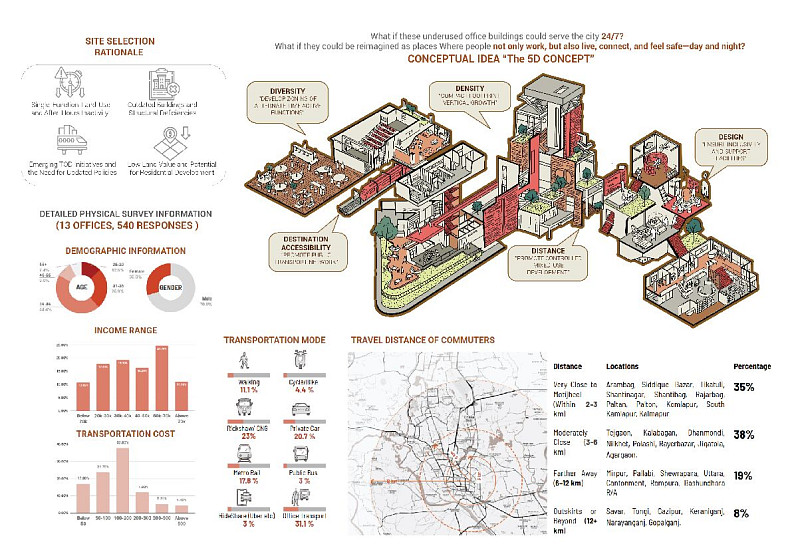
This thesis explores architectural strategies to activate CBDs beyond office hours and create a more vibrant, safe, and sustainable urban environment. The project focuses on Motijheel, the oldest commercial district of Dhaka. The recent introduction of MRT Line 6 presents a unique opportunity to transform and revitalize this aging business center through transit-oriented development (TOD). The design proposal is based on findings from a detailed physical survey of 540 people from 13 offices, supported by field observations and the study of relevant policies, building codes, and local and international standards. The conceptual framework follows the principles of the “5D Theory”, consisting of Density, Diversity, Design, Distance, and Destination Accessibility, to encourage activity throughout the day and night.
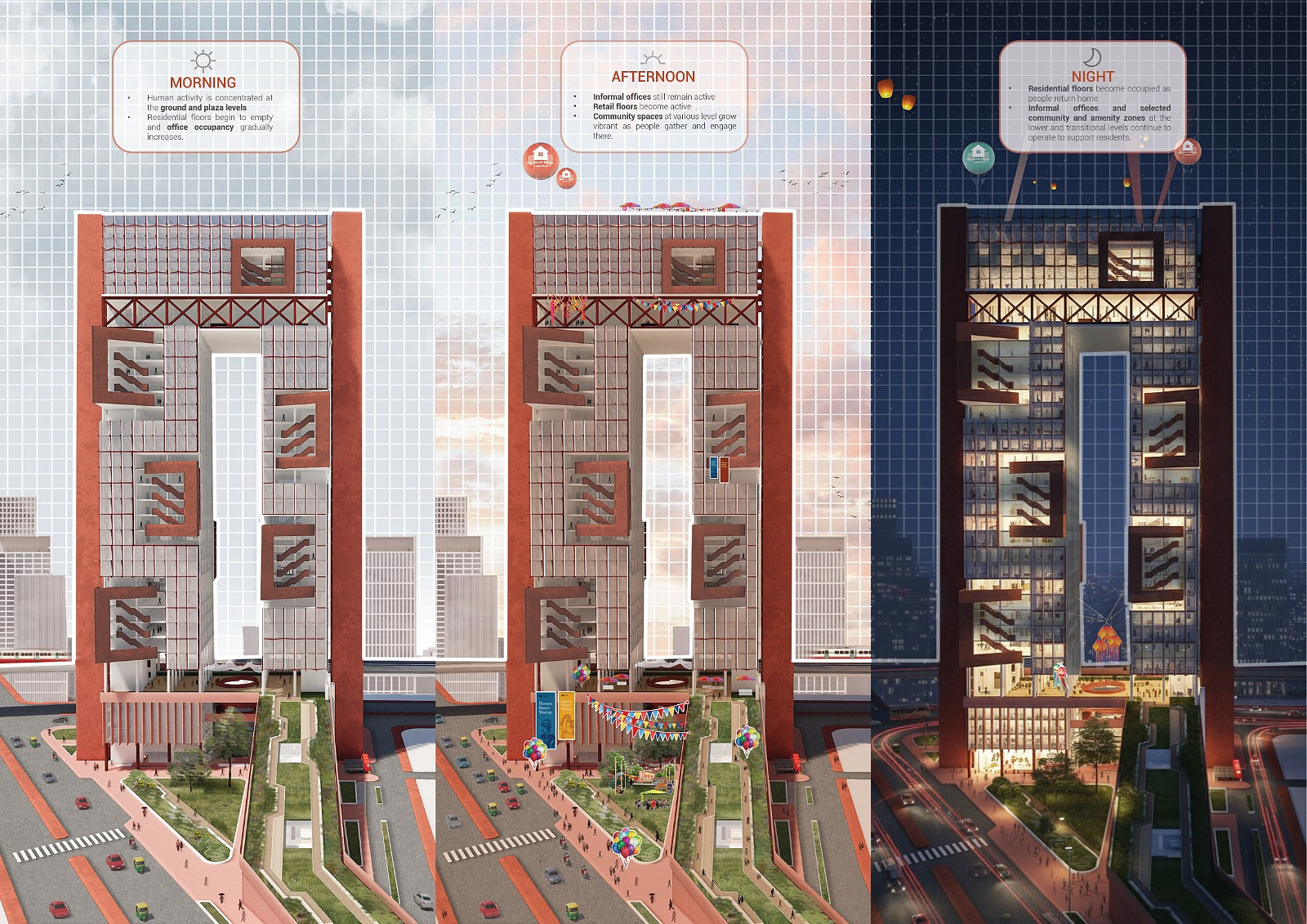
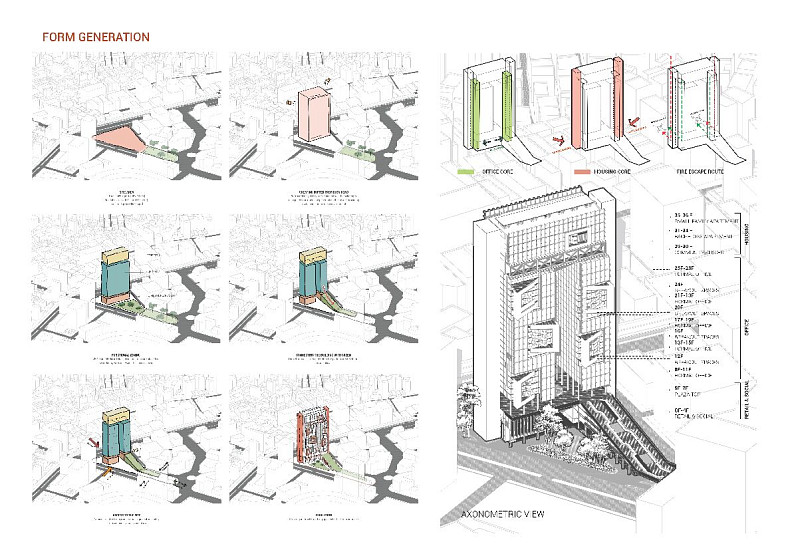
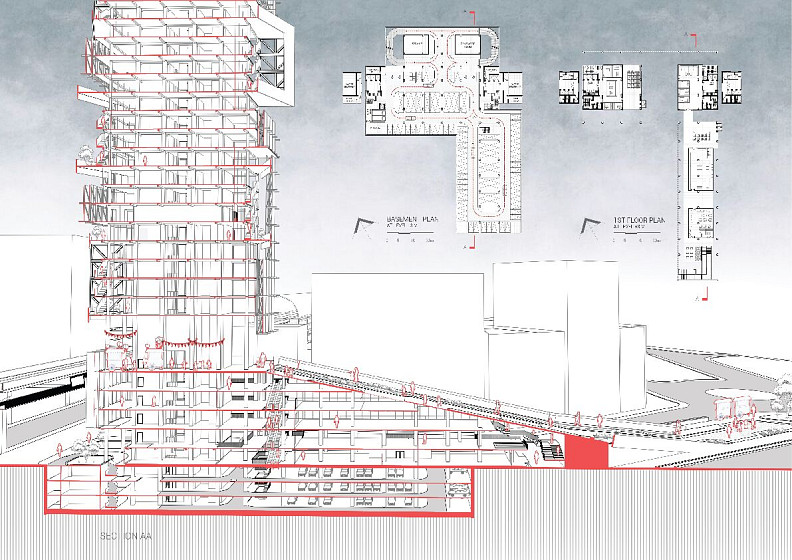
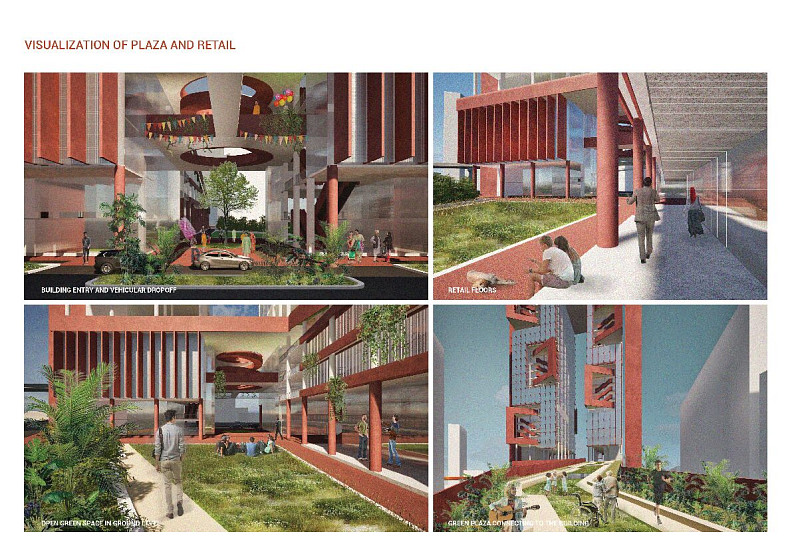
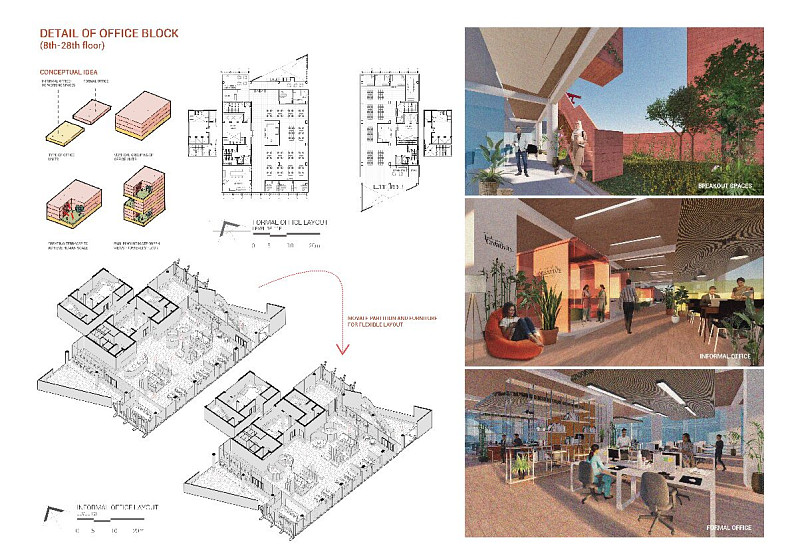
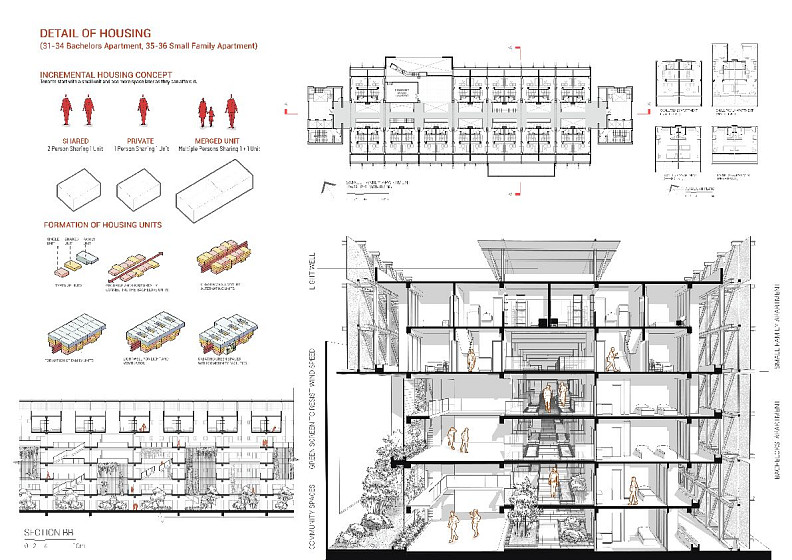
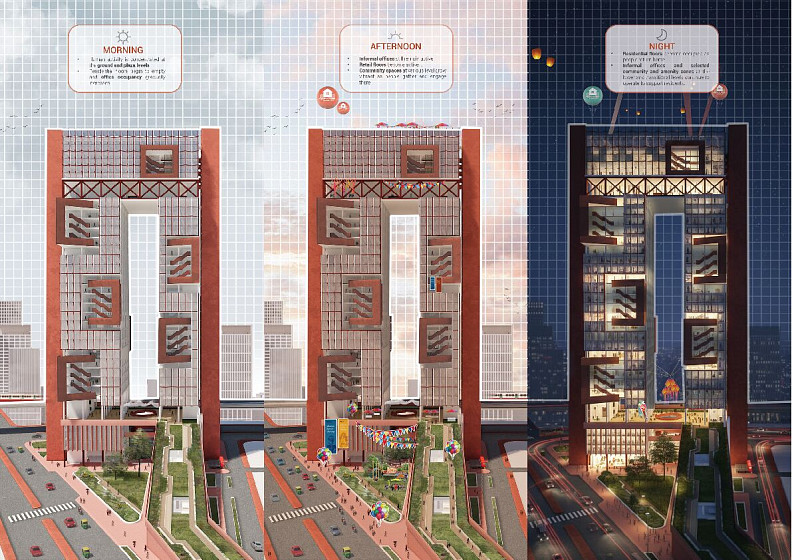
To promote efficient land use, the project proposes a compact building footprint with vertical growth. The building incorporates a controlled mixed-use program that introduces different activities at different times of the day. The lower levels contain retail, public amenities, and entertainment functions that activate the street and plaza. The middle levels accommodate office spaces, maintaining the primary commercial function of the district. The upper levels provide affordable micro-housing for bachelor professionals. The housing component is supported by shared facilities such as community kitchens, reading rooms, laundry spaces, and multipurpose areas, creating an affordable and socially engaging living environment. Inspired by the social culture of Old Dhaka, the residential corridors are designed as interactive spaces that encourage informal meetings and community building among residents. The project also strengthens pedestrian connectivity through direct links to the MRT station, skywalks, and an active public plaza. Accessibility, safety, security, and energy efficiency are integrated throughout the design to accommodate diverse user groups.
Overall, the project demonstrates how underutilized office buildings can evolve into vibrant mixed-use environments. By combining work, leisure, and living functions within a single development, the proposal aims to transform Motijheel into a safer, more active, and economically resilient district that remains alive beyond office hours while responding to the changing nature of work and urban life.
Technical information
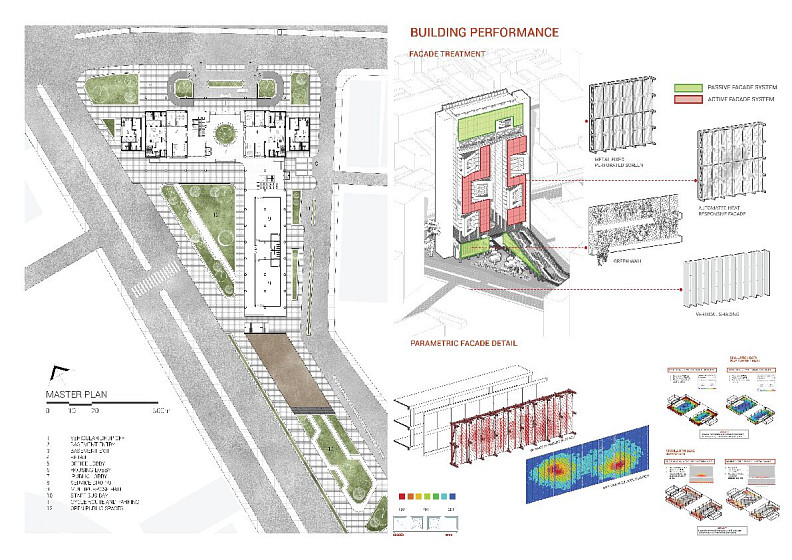
The project is designed as a high-rise mixed-use development with a compact building footprint and vertical zoning to reduce land consumption while increasing functional diversity. The structural system consists of reinforced concrete with steel roof elements where required. The building incorporates passive environmental strategies, including optimized daylighting, natural ventilation, shading devices, reflective surfaces, glass louvers, and energy-efficient building systems. Accessibility is ensured through universal design, barrier-free circulation, elevators, ramps, and direct pedestrian links to MRT Line 6 and surrounding skywalks. Safety and security are enhanced through active public spaces, mixed-use programming, surveillance, and continuous occupancy throughout the day and night. Sustainable features include rainwater management, energy-efficient lighting, solar panels, and green open spaces, creating a resilient and environmentally responsive urban development.Overall, the project has been developed in great detail, considering planning policies, building codes, safety requirements, structural systems, and, most importantly, human behavior and ergonomics to create a comprehensive architectural solution.
Documentation
Show PDF 1Show PDF 2Show PDF 3Show PDF 4Show PDF 5Show PDF 6Show PDF 7Show PDF 8Show PDF 9
Created in:



Copyright © 2026 INSPIRELI | All rights reserved. Use of this website signifies your agreement to the Terms of Use, Privacy Policy, and use of cookies.