

El globo argentino


Project idea
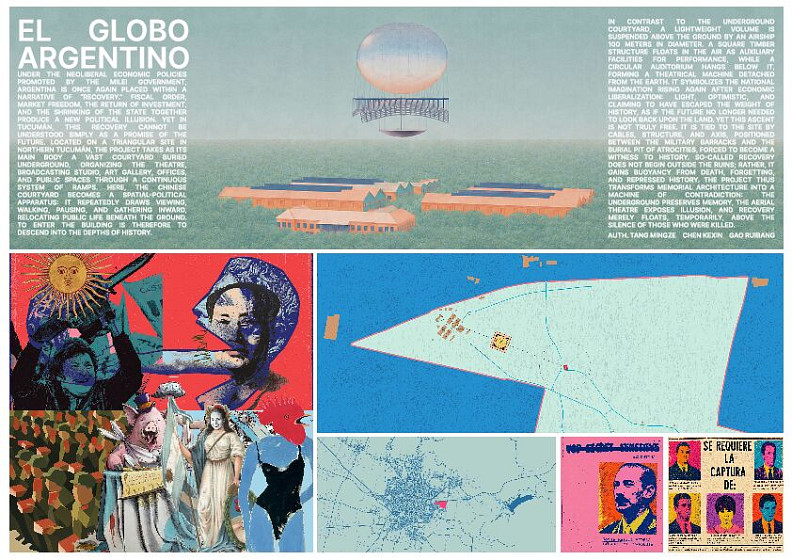
Under the neoliberal economic policies promoted by the Milei government, Argentina is once again placed within a narrative of “recovery”: fiscal order, market freedom, the return of investment, and the shrinking of the state together construct a new political illusion. Yet in Tucumán, this recovery cannot be understood simply as a promise of the future. It must return to a land marked by military violence, secret detention, and memories of death, and confront once again the silence once produced by the state apparatus.
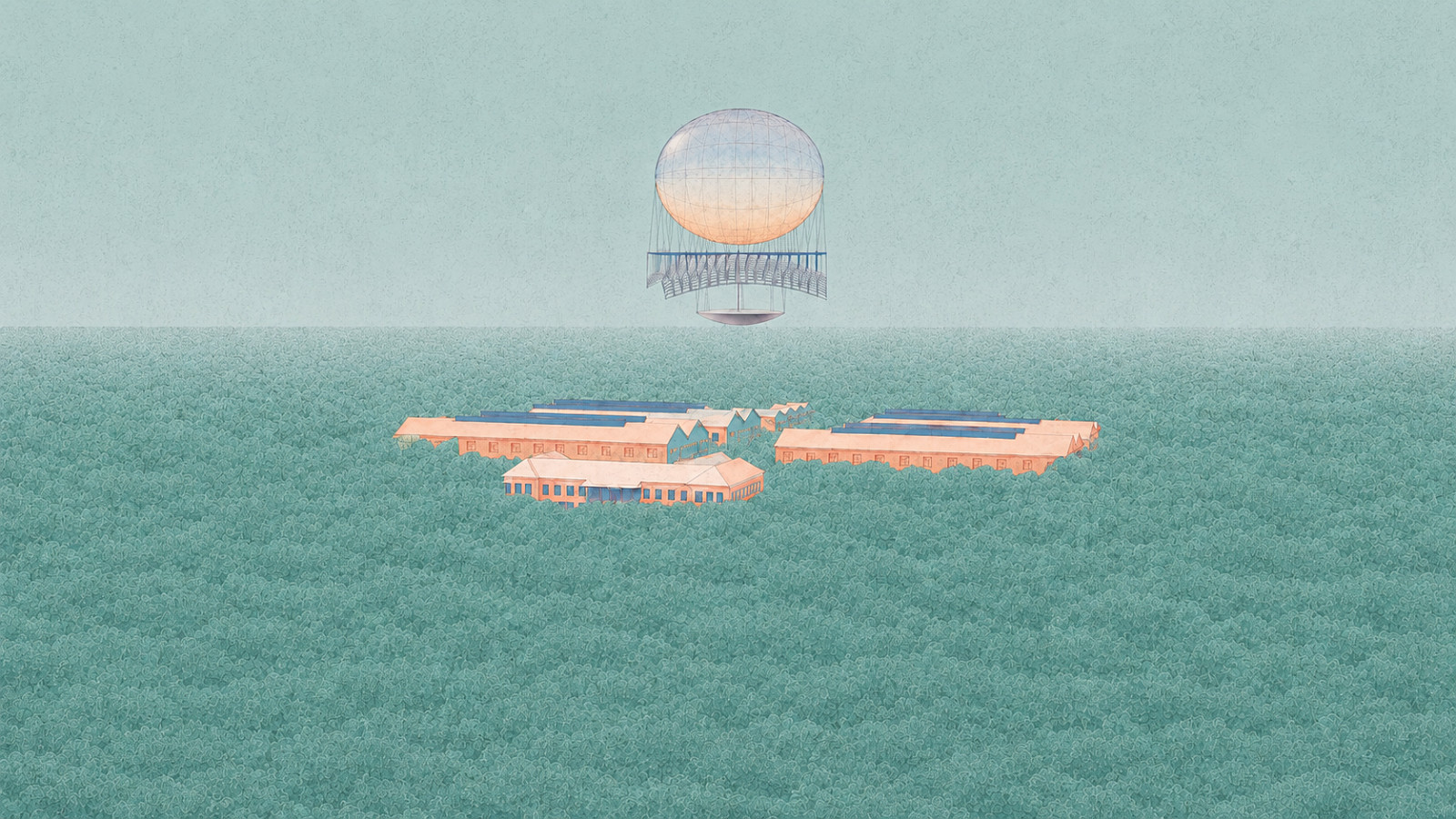
This project attempts to transform memorial architecture from a static object of mourning into a spatial machine of contradiction. The underground courtyard preserves memory, organizes public life, and forces the body to repeatedly return to the interior of history. The aerial theatre, meanwhile, exposes the illusion of lightness within contemporary political-economic narratives. Together, they construct a suspended monumentality: so-called recovery has not truly reached the ground; it merely floats, temporarily, above the silence of those who were killed.
Project description
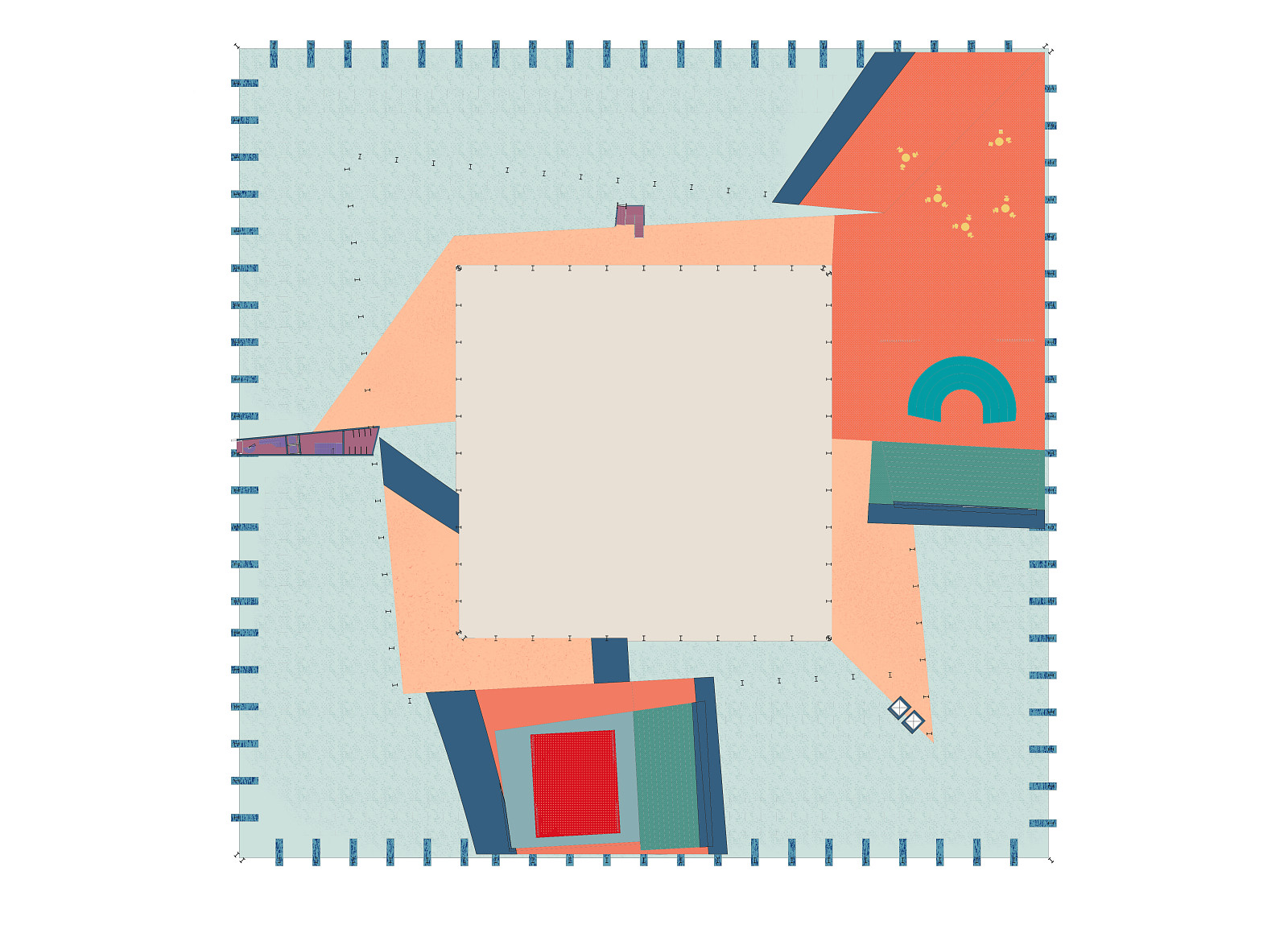
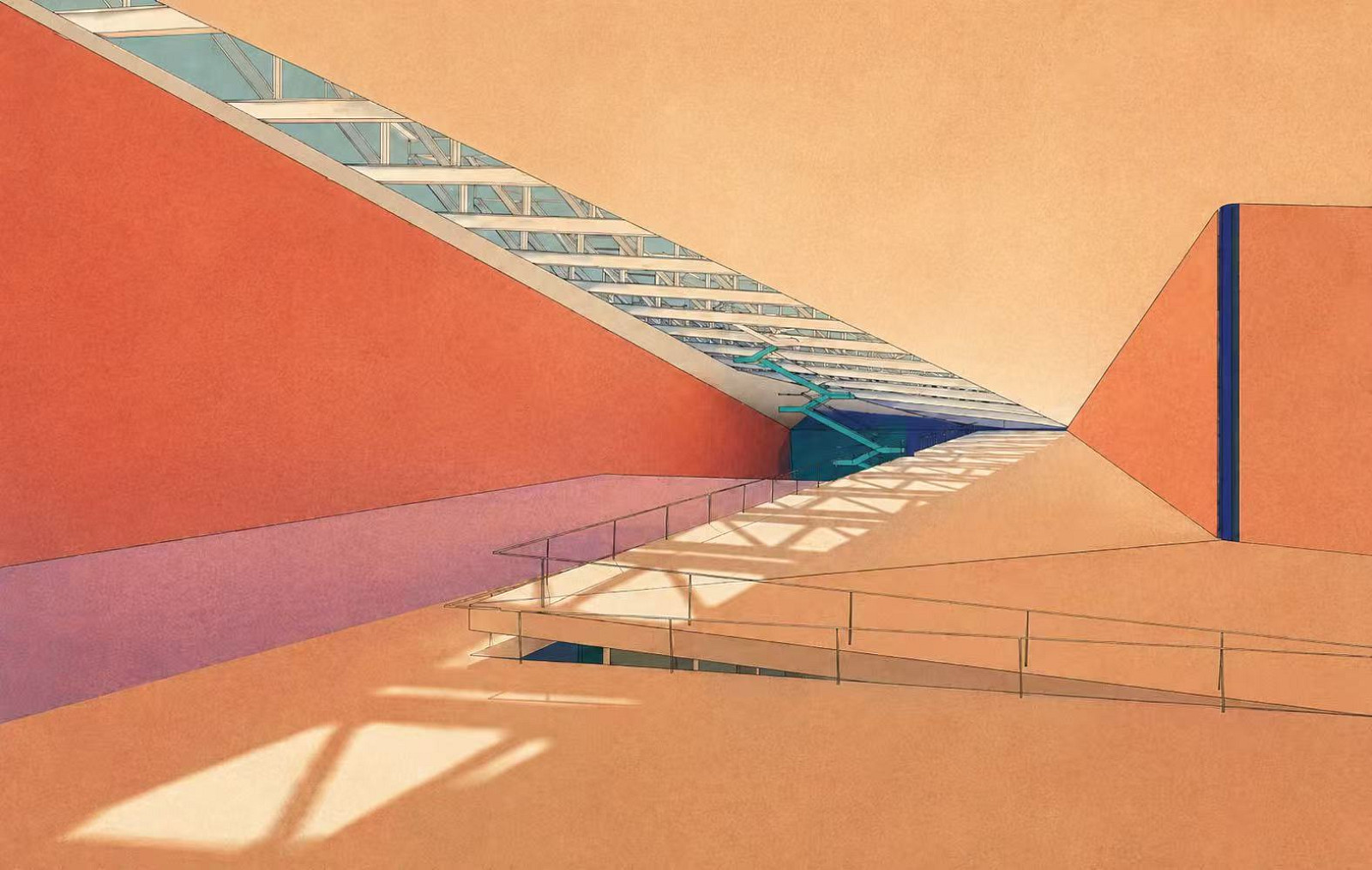
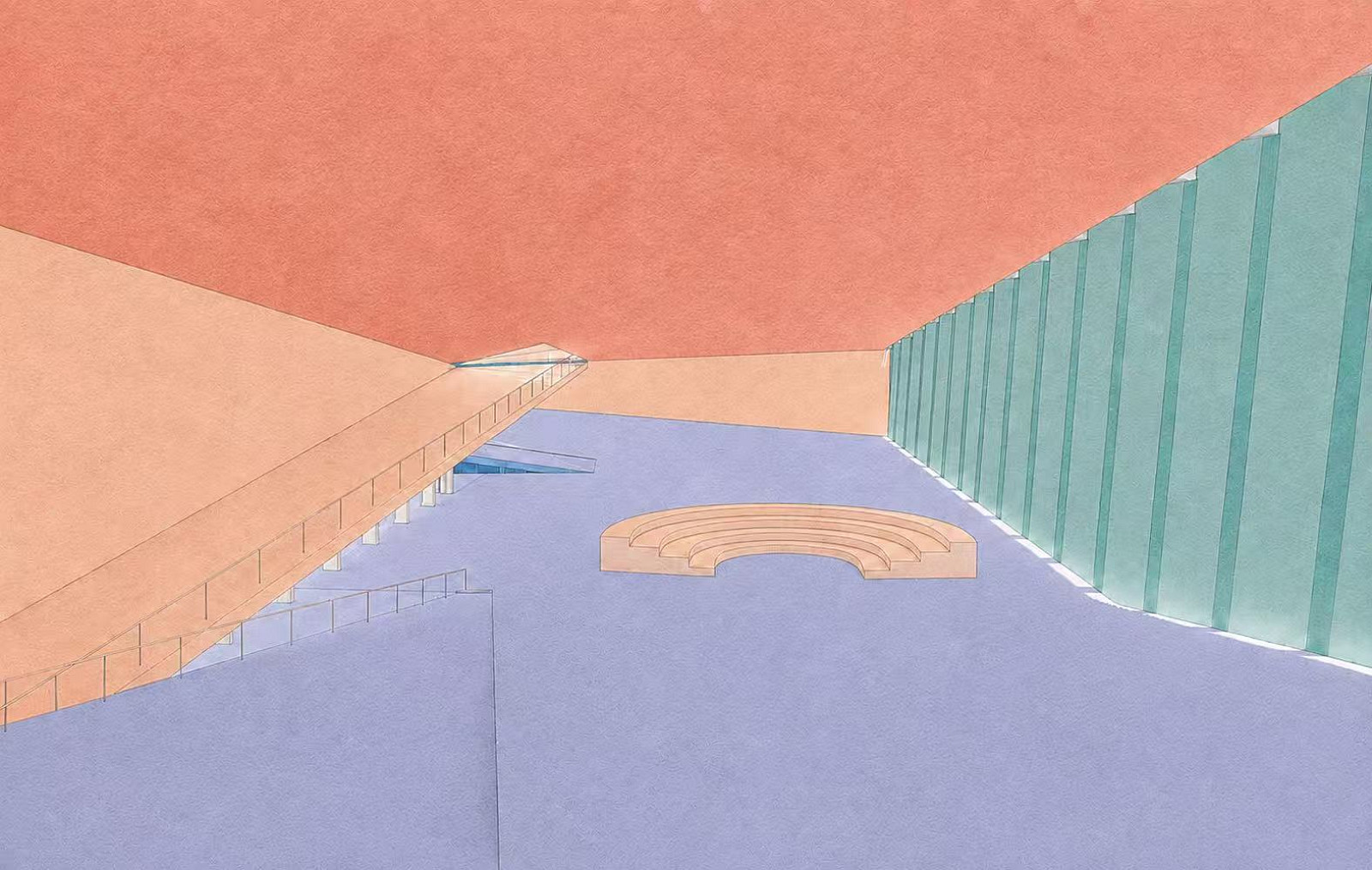
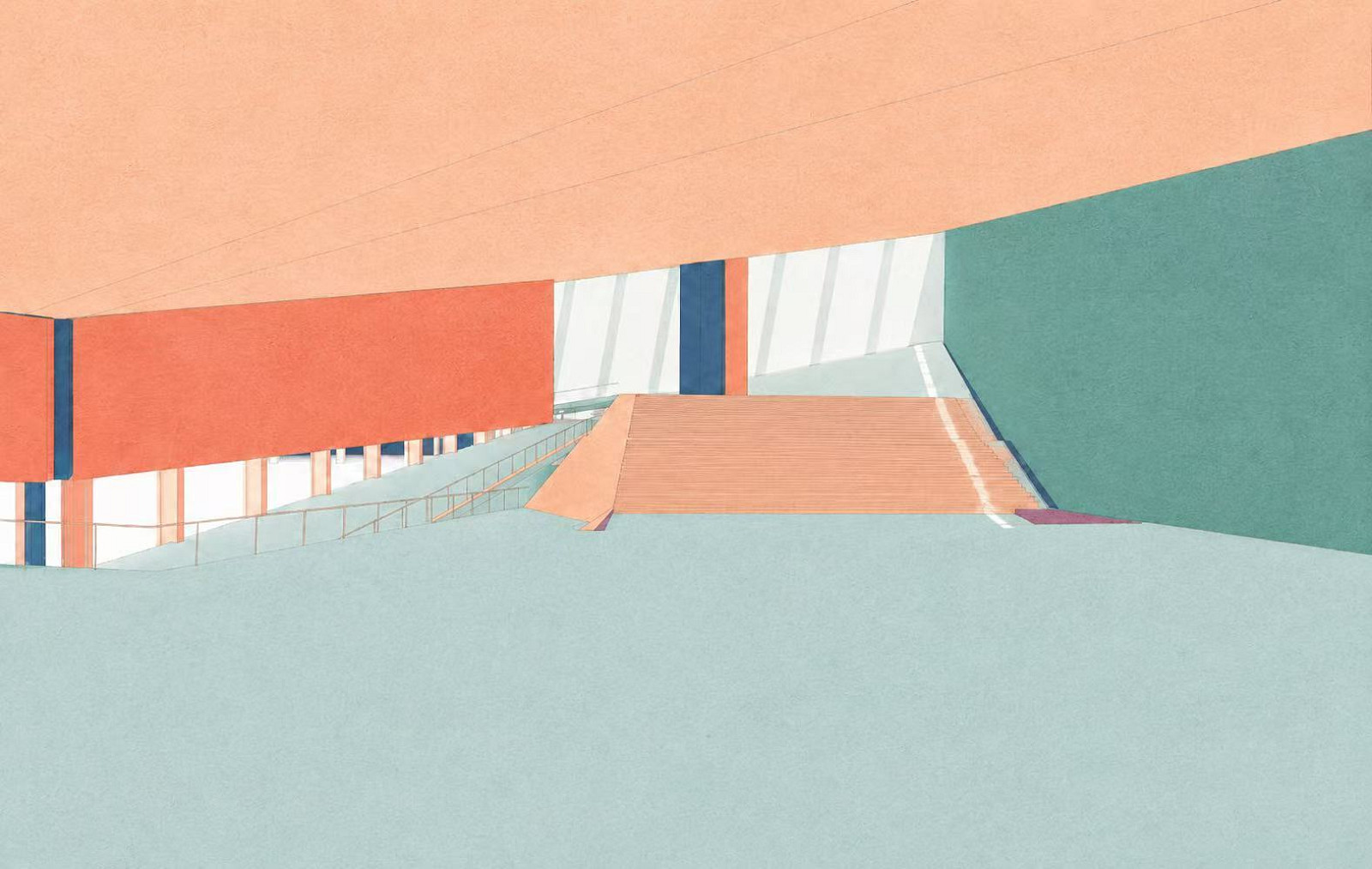
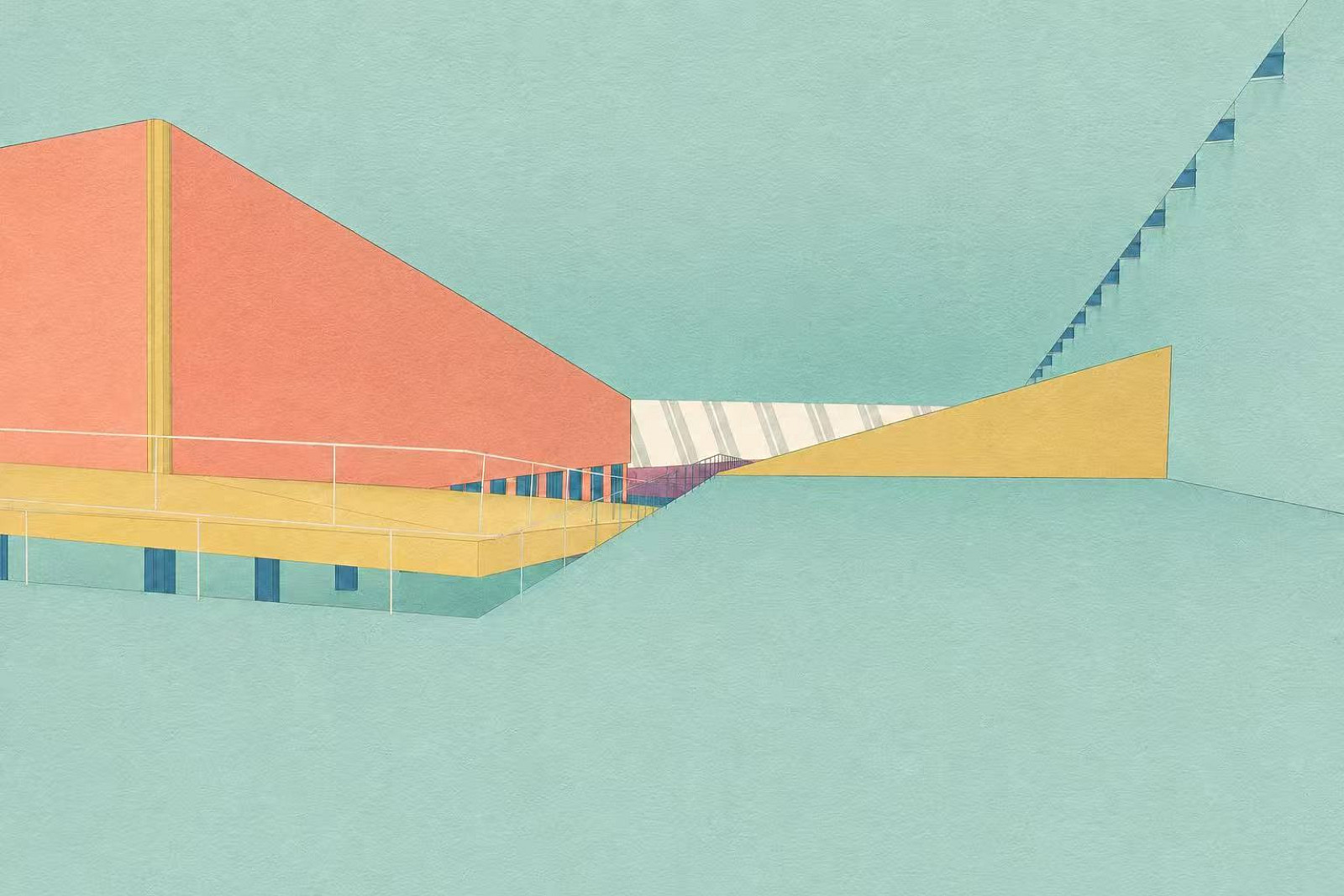
The project is located on a triangular site in northern Tucumán. Its main body is a vast courtyard complex buried underground. The theatre, broadcasting studio, art gallery, office areas, and public activity spaces are organized through a continuous system of ramps, forming a sunken structure that recalls the Chinese courtyard. Here, the courtyard becomes a spatial-political apparatus: it continually draws viewing, walking, pausing, and gathering inward, reorganizing publicness beneath the ground. The act of entering the building thus becomes a descent into the depths of history.
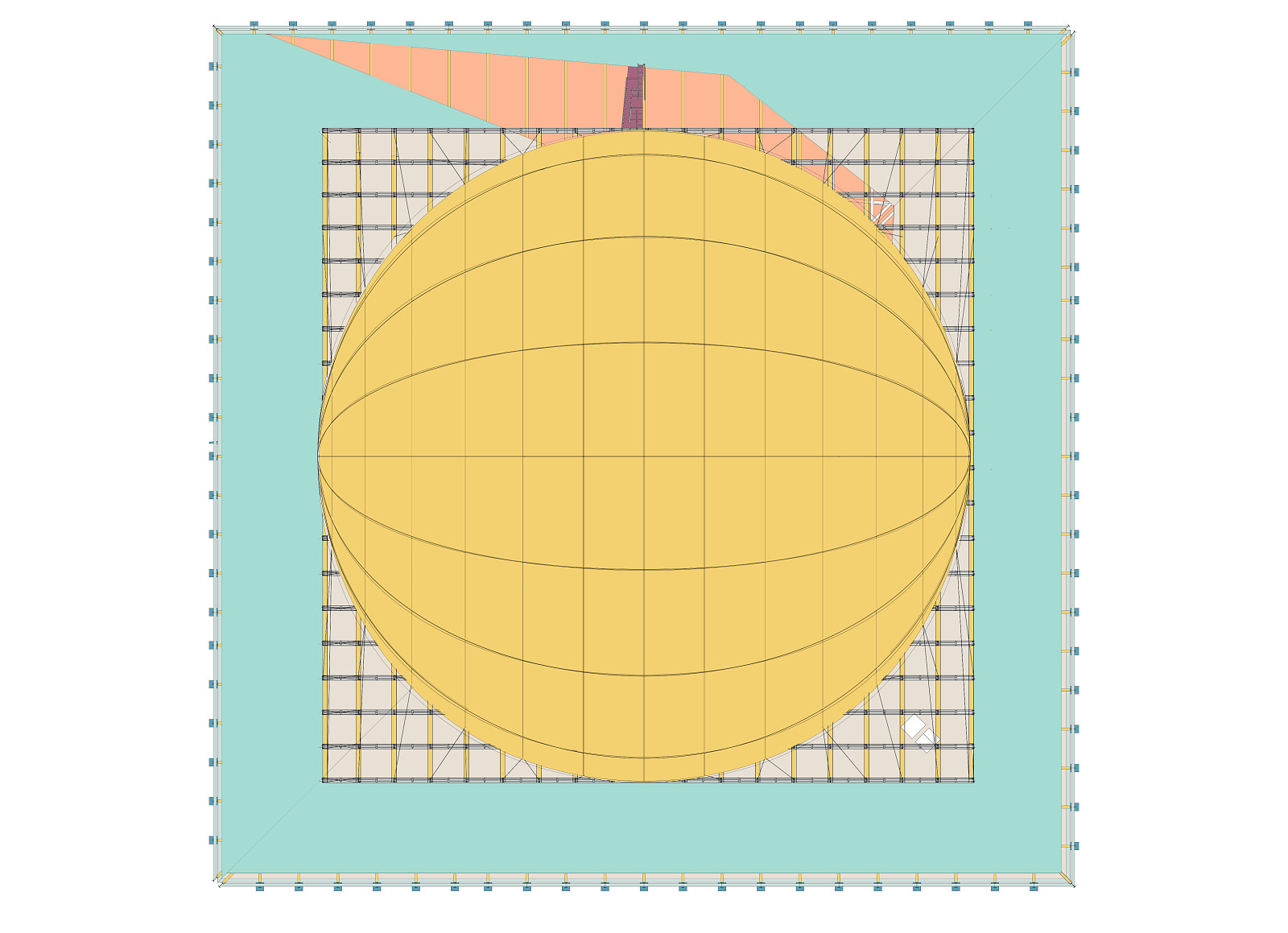
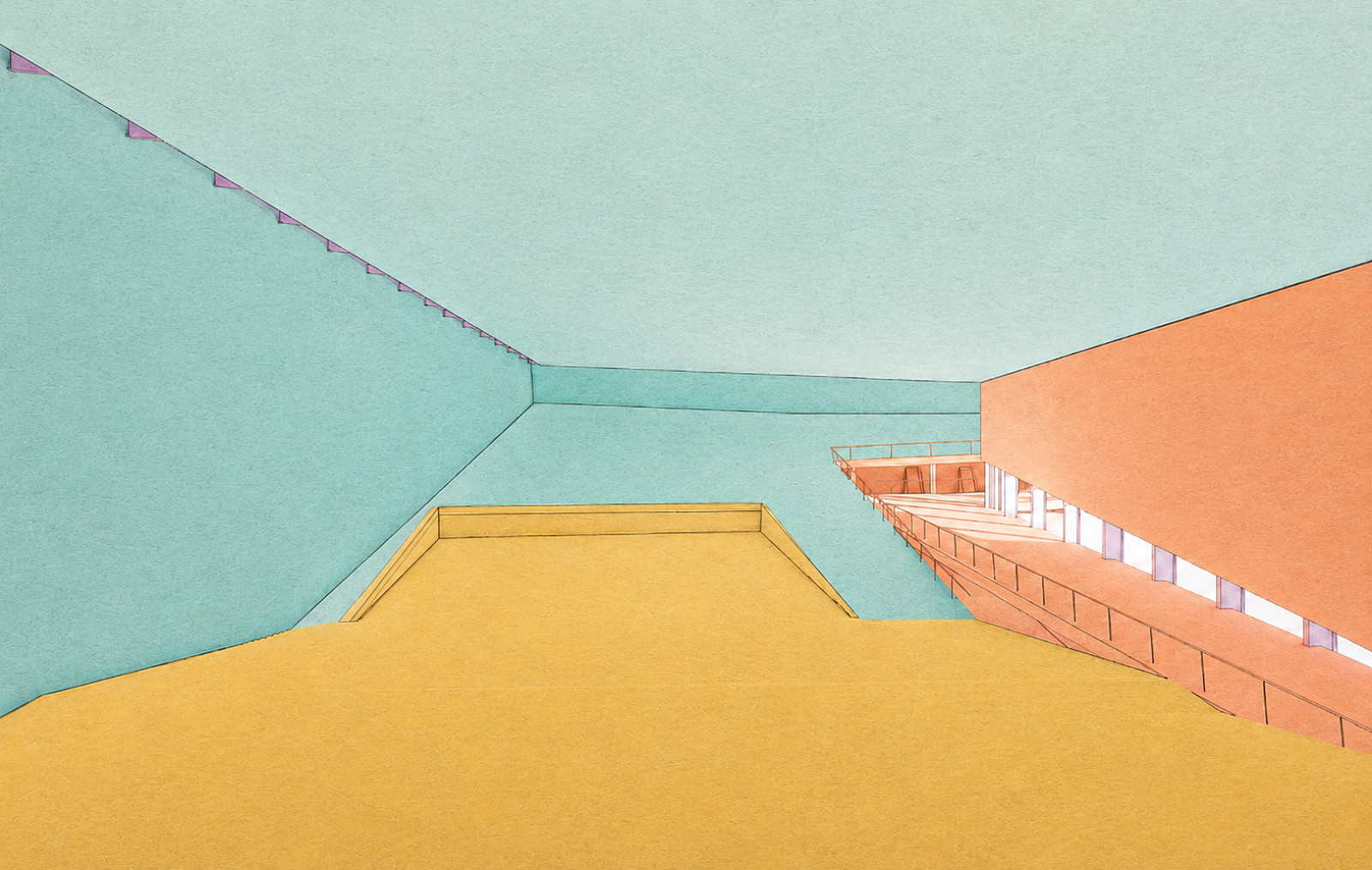
In contrast to the underground courtyard, a lightweight volume is suspended above the ground by an airship 100 meters in diameter. A square timber structure floats in the air as auxiliary facilities for performance, while a circular auditorium hangs below it, forming a theatrical machine detached from the earth. It symbolizes the national imagination rising again after economic liberalization: light, floating, filled with technological optimism, and claiming to have escaped the weight of history. Yet this ascent is not truly free. It is tied to the site by cables, structure, and axis, positioned between the military barracks and the burial pit of atrocities. So-called economic recovery does not begin outside the ruins; rather, it gains new buoyancy from death, forgetting, and repressed history.
Technical information
The structural system of the project is composed of two parts: the underground load-bearing system and the upper floating system. The underground courtyard uses I-beams and steel columns as its primary structural elements, with the column grid controlled at 6-meter intervals to establish a stable and clearly defined spatial module. At the roof level, a steel truss system with a height of 3.6 meters and an approximate structural depth of 80 centimeters is introduced to support a 30-centimeter layer of soil, the rooftop landscape, and pedestrian loads. In this way, the sunken courtyard can function both as a memorial space and as a platform for public activities on the ground surface.
The upper floating structure is primarily composed of lightweight timber, forming a square suspended volume approximately 100 meters wide, with a total weight of around 180 tons. Above it is a helium airship, approximately 100 meters in diameter and 60 meters in height. Based on an ellipsoidal volume calculation, it can theoretically provide around 329 tons of buoyant lift. Through a system of cables, the airship is connected to the timber structure below, the circular auditorium, and the ground anchoring points, allowing the aerial theatre to gain lift while remaining structurally constrained along the axis of the site.
Documentation

Copyright © 2026 INSPIRELI | All rights reserved. Use of this website signifies your agreement to the Terms of Use, Privacy Policy, and use of cookies.