The National Fyasko Public Library


 Kamiar Yazdani
Project idea
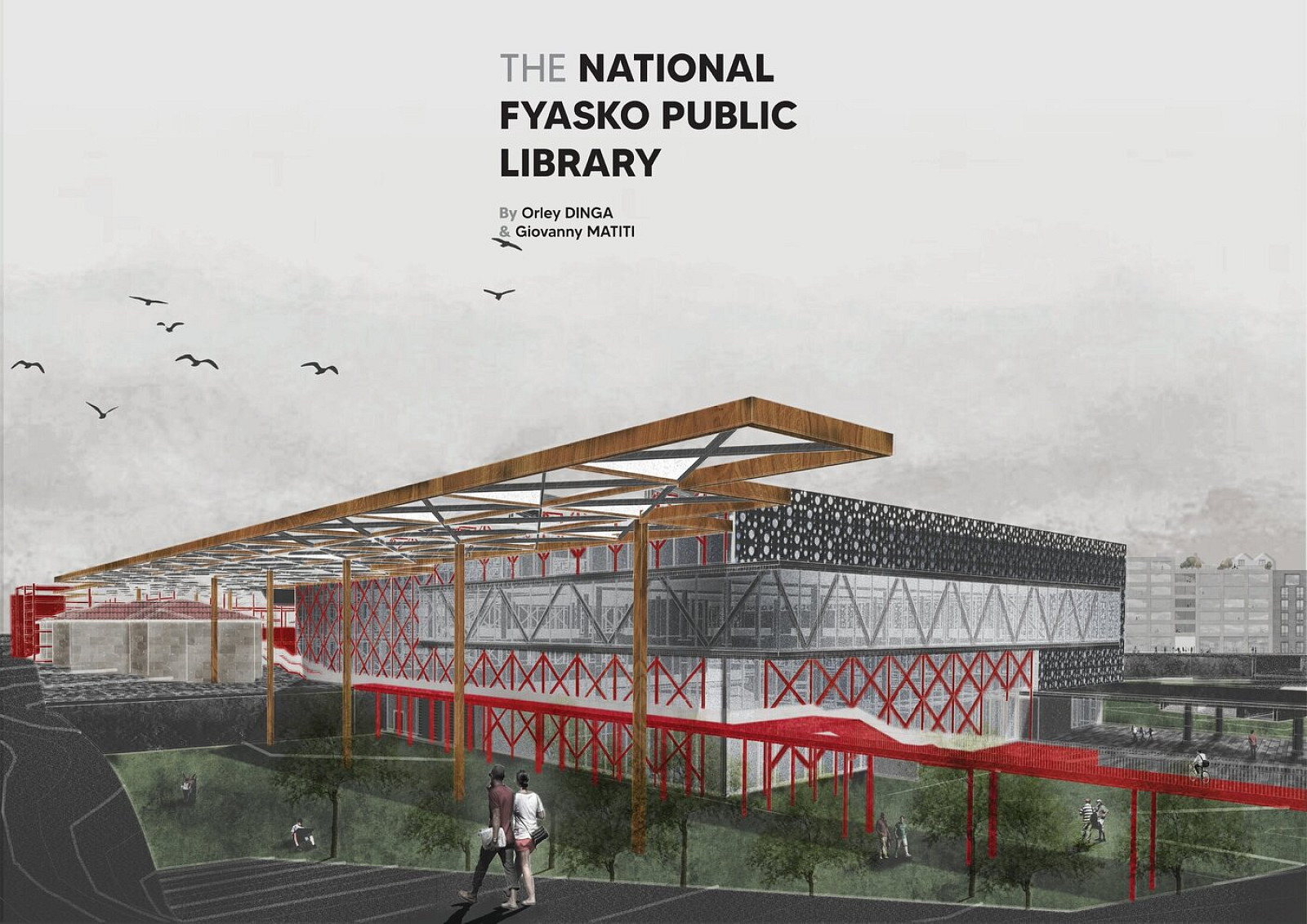
The National Library project is conceived as a cultural landmark that redefines how knowledge, heritage, and public life intersect. Guided by the concept of FYASKO, the design rejects the idea of a single monumental block and instead disperses the program into distinct architectural fragments. Each block — reading commons, administration, and amphitheatre — becomes a specialized node within a larger civic landscape. Together, they form a constellation of spaces that invite discovery, dialogue, and community engagement.
Project description
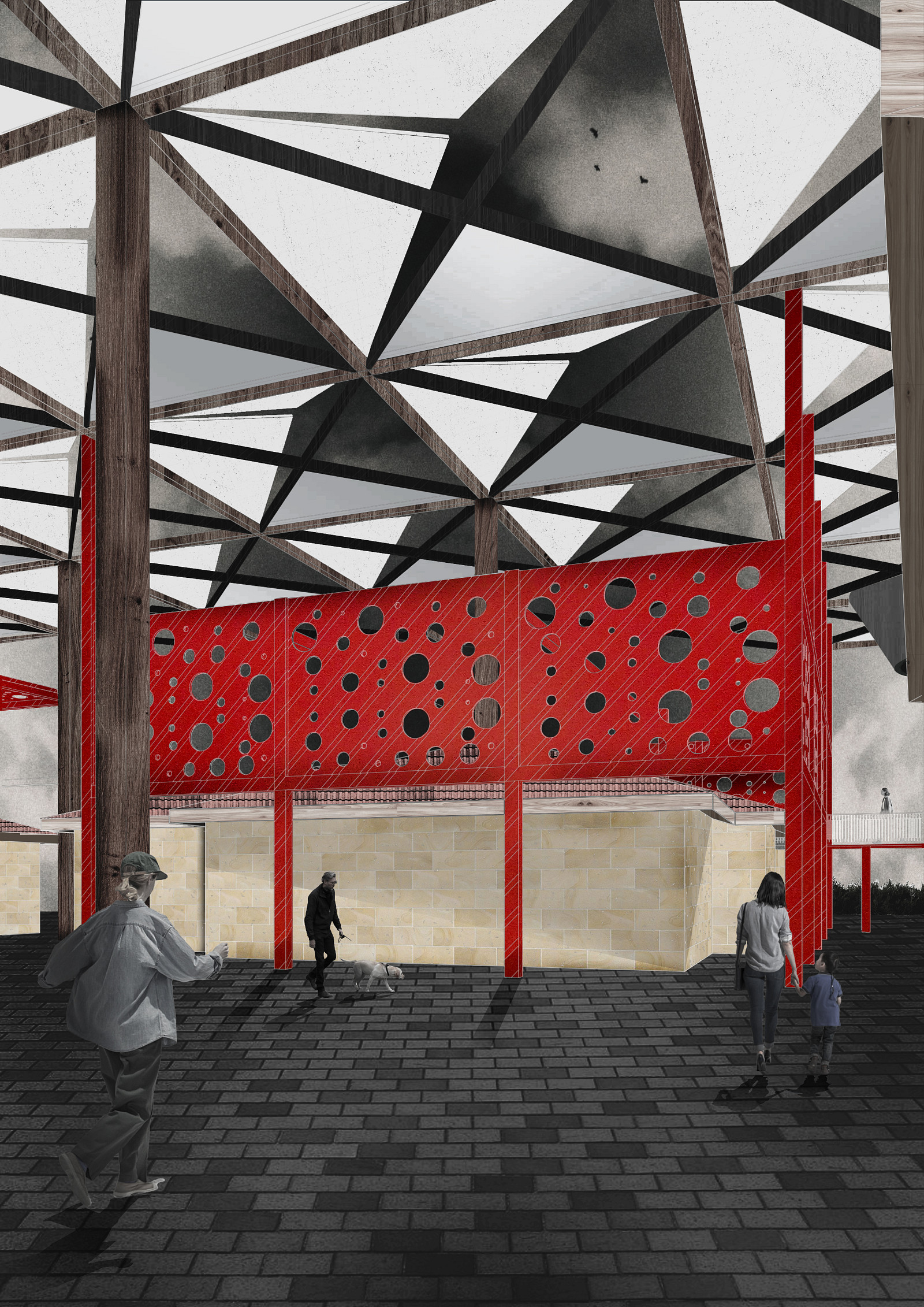
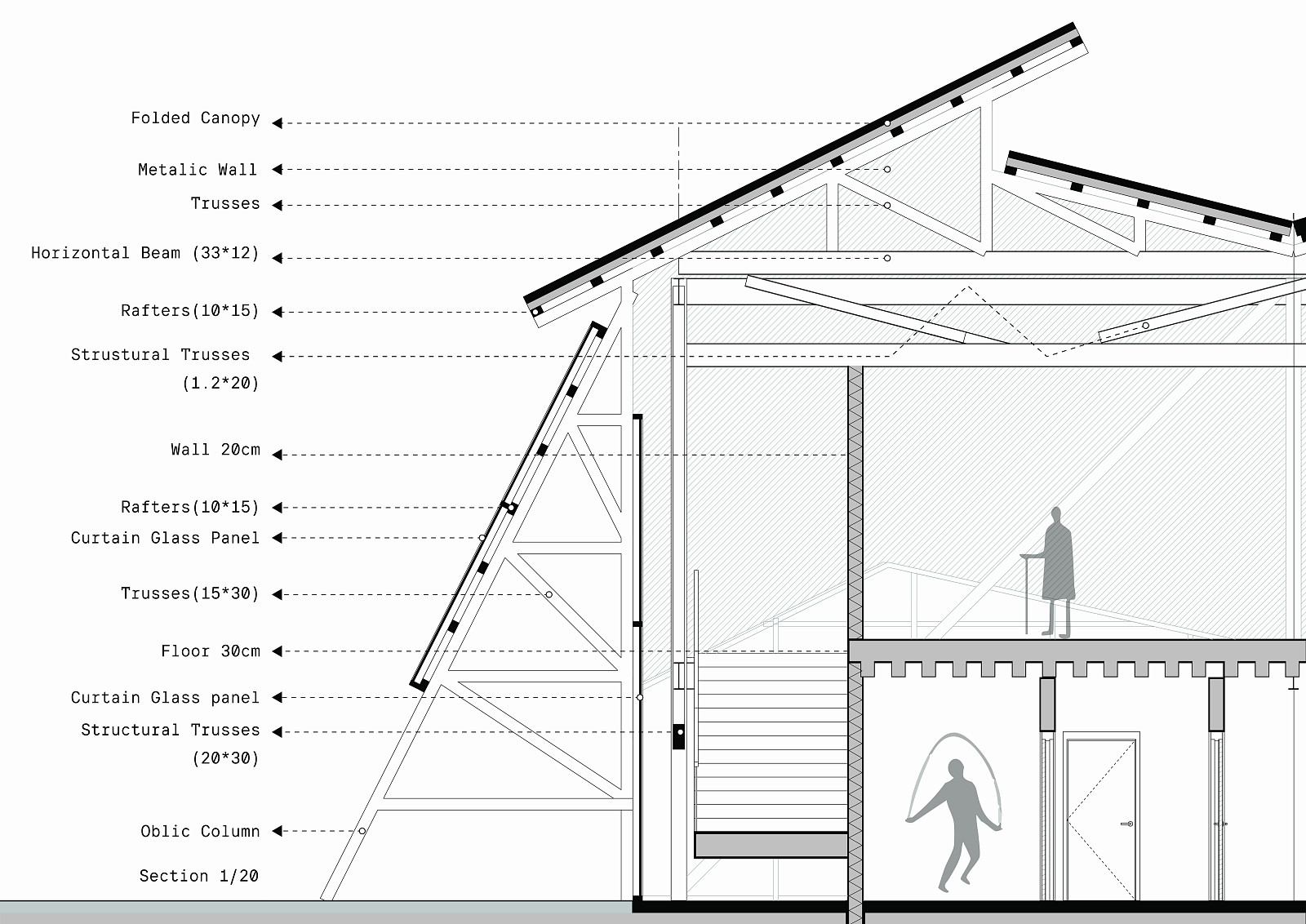
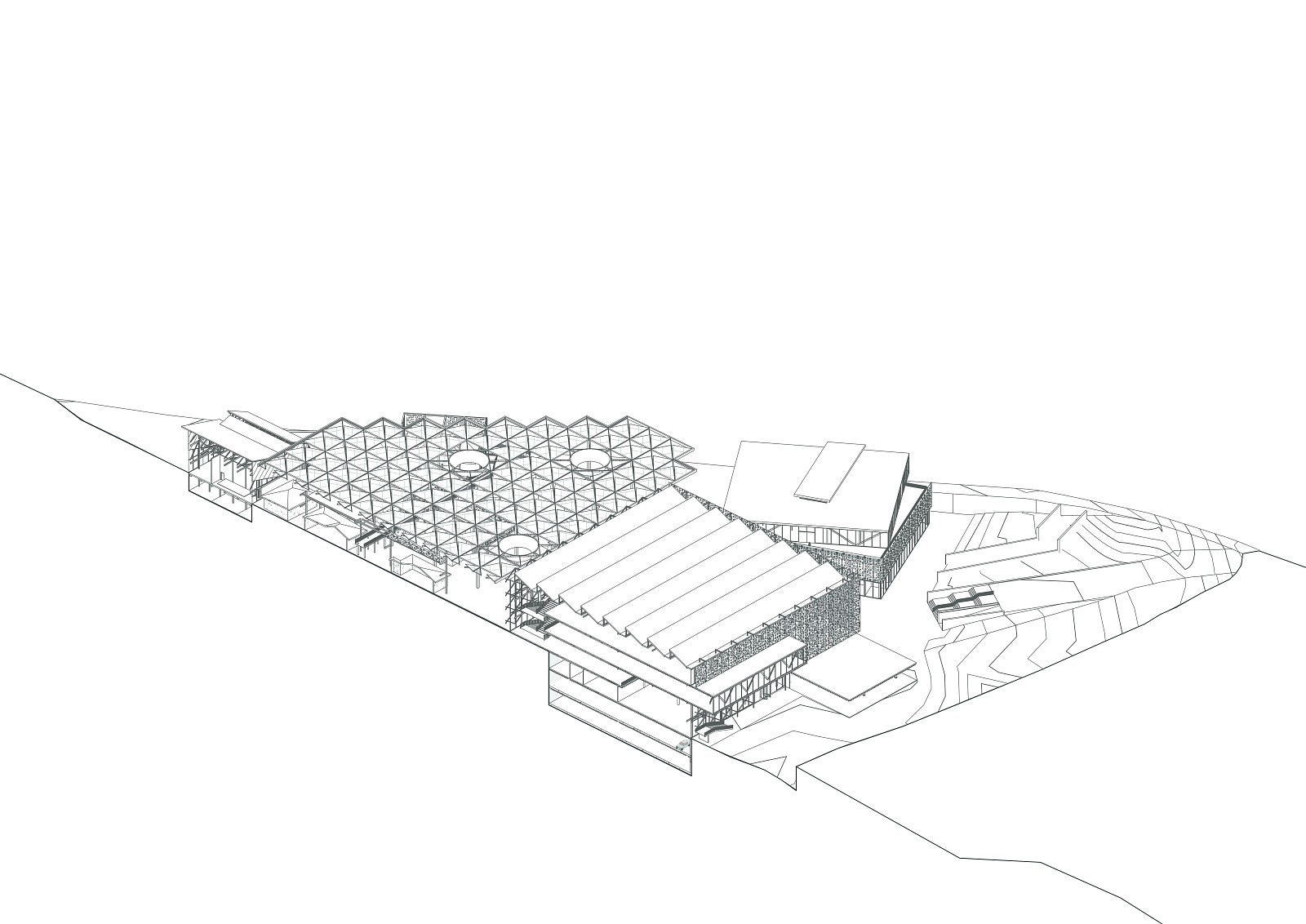
At the heart of the design lies the decision to preserve the existing stone masonry buildings. Rather than leaving them as static relics, they are re‑framed within steel cubic structures that highlight their presence and give them new functions as book museums, exhibition halls, and cafés. This gesture creates a dialogue between past and present, where heritage is celebrated but also re‑activated. The site is stitched together by bridges, plazas, and gardens, encouraging fluid movement and public gathering. Above it all, a timber canopy spans the ensemble, acting as a unifying gesture and embodying the metaphor of the book: the roof as the cover page, the buildings as the contents, and the ground as the back cover.
Technical information
The National Fyasko Public Library is conceived as a contemporary cultural landmark that merges heritage preservation with innovative architectural intervention. The project is structured around the adaptive reuse of historic stone buildings, complemented by a lightweight timber canopy and modern steel framing systems that establish a dialogue between past and present.
The primary structural strategy combines existing load-bearing masonry walls with prefabricated steel frames and engineered timber elements. This hybrid system ensures structural stability while minimizing intervention on the historic fabric. The steel components allow for large, column-free interior spaces, accommodating the evolving needs of a modern public library and cultural center. Prefabrication enhances construction efficiency, precision, and adaptability while reducing on-site waste and construction time. A defining feature of the project is the expansive timber canopy that extends across the site, creating a unifying architectural gesture. Supported by a network of slender columns and beams, the canopy provides solar protection, diffused natural lighting, and sheltered outdoor spaces suitable for public gathering, reading, and cultural activities. Beyond its environmental function, the canopy serves as a symbolic element representing knowledge, connection, and community.
The program is distributed into three principal components:
Reading Commons : flexible and open learning environments designed for individual study, collaborative work, digital research, and community engagement.
Administrative Block : offices, archives, technical rooms, and support facilities ensuring the efficient operation of the institution.
Amphitheatre and Performing Arts Center : a multifunctional venue dedicated to lectures, exhibitions, performances, conferences, and cultural events.
Circulation is organized through a network of elevated bridges, covered walkways, and public pathways that connect the different building volumes while preserving visual continuity across the site. These connections create an intuitive visitor experience and reinforce the concept of the library as an interconnected knowledge landscape.
Environmental performance is integrated throughout the design. The reuse of existing structures significantly reduces embodied carbon and construction waste, while the timber canopy provides a renewable and low-carbon architectural solution. Passive design strategies, including natural ventilation, controlled daylight penetration, shaded outdoor spaces, and double-skin façade systems, improve thermal comfort and reduce operational energy demand. Rainwater collection and landscape integration further contribute to the project's long-term sustainability objectives.
Documentation

Copyright © 2026 INSPIRELI | All rights reserved. Use of this website signifies your agreement to the Terms of Use, Privacy Policy, and use of cookies.