Phytocultural Sanctuary


Project idea
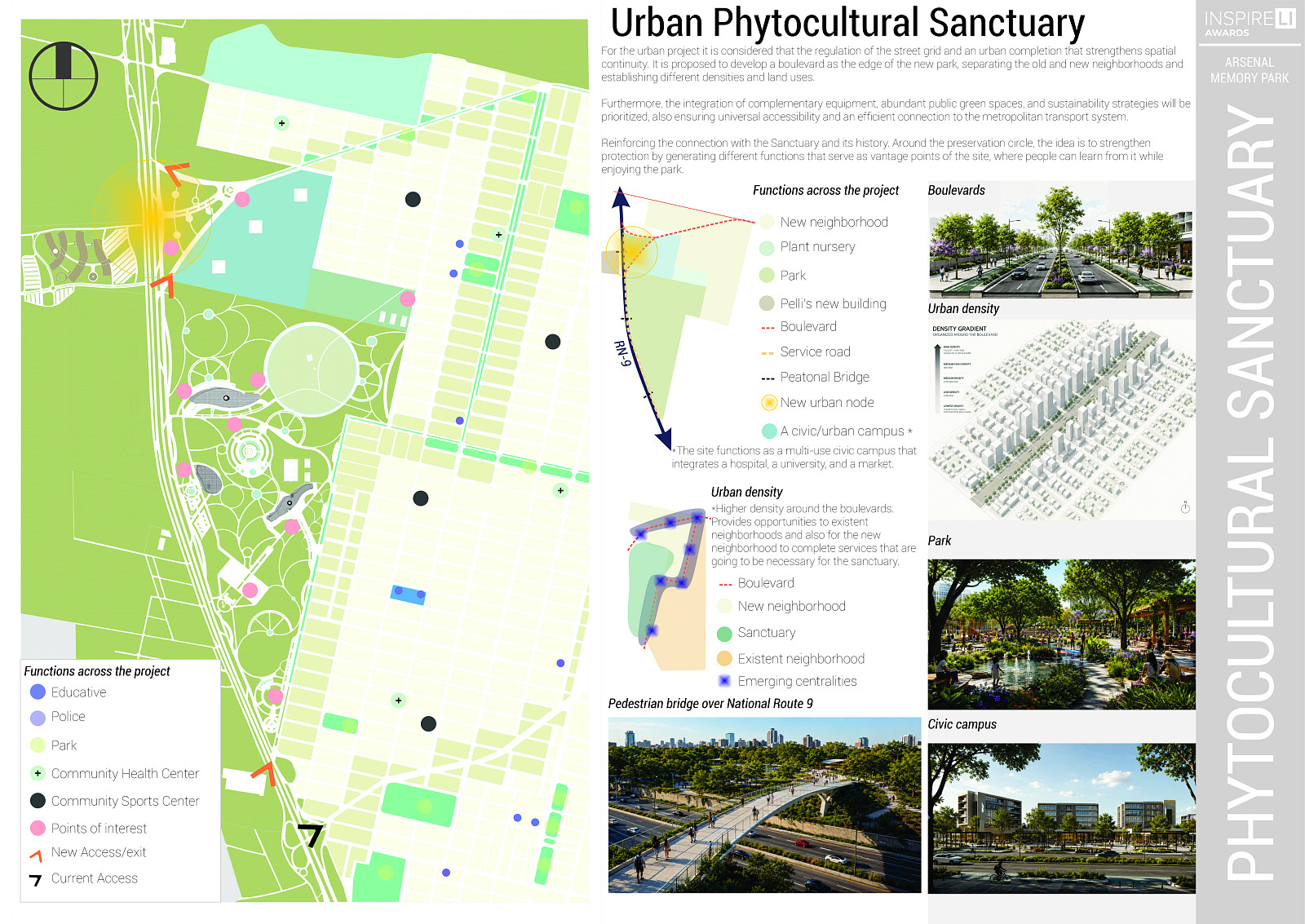
The core concept of my proposal for the Arsenal competition is to address the entire program requirements while approaching the site with a sense of humility, focused on learning, recognition, and public engagement. The spatial organization is structured by zones and categories: as one approaches the 'preservation circle' (or circle of containment), the journey becomes increasingly harmonious and solemn, fostering a deeper, more respectful connection with the site’s historical significance.
Project description
When approaching the project, the fundamental premise is respectful intervention. There is a deliberate intention to express architecture and landscape design with gentleness, where every element seeks to integrate delicately into the site. The goal is for the space to be more than just a backdrop; it should be a facilitator of experiences where users can explore, learn, and engage with the site. The design strategy proposes to "rest" upon the land in a subtle manner, acting as a container that embraces both the site’s history and its visitors, allowing memory and contemporary activity to coexist within an environment that invites reflection and discovery.
Technical information
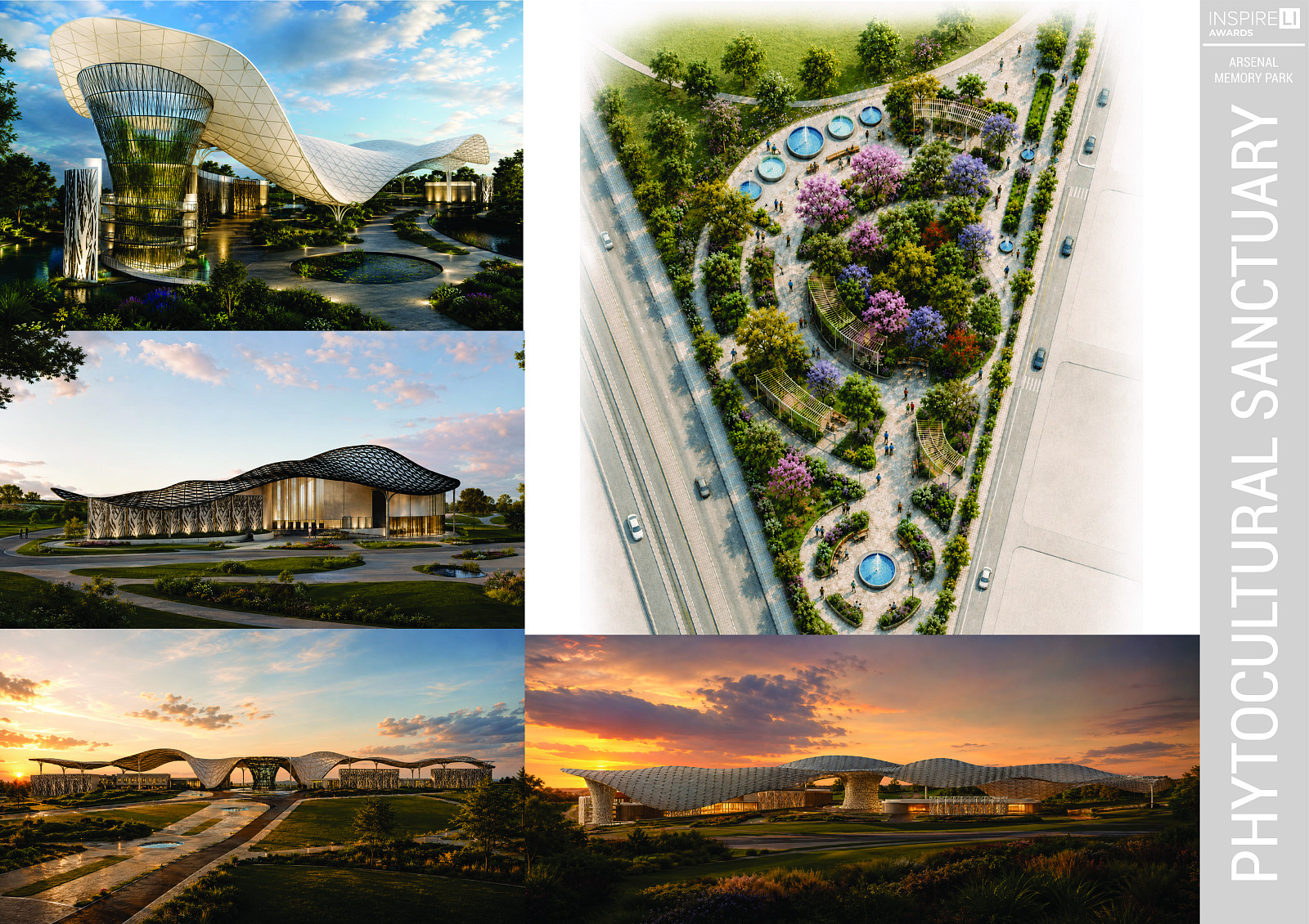
The project's implementation follows an organic system that responds to the site's topography, adapting every space to the natural curves of the land. In terms of water management, the landscape design integrates stormwater overflow through retention basins that function as natural containers; these areas, beyond solving drainage challenges, are transformed into beautiful circulation and contemplative spaces for the user.
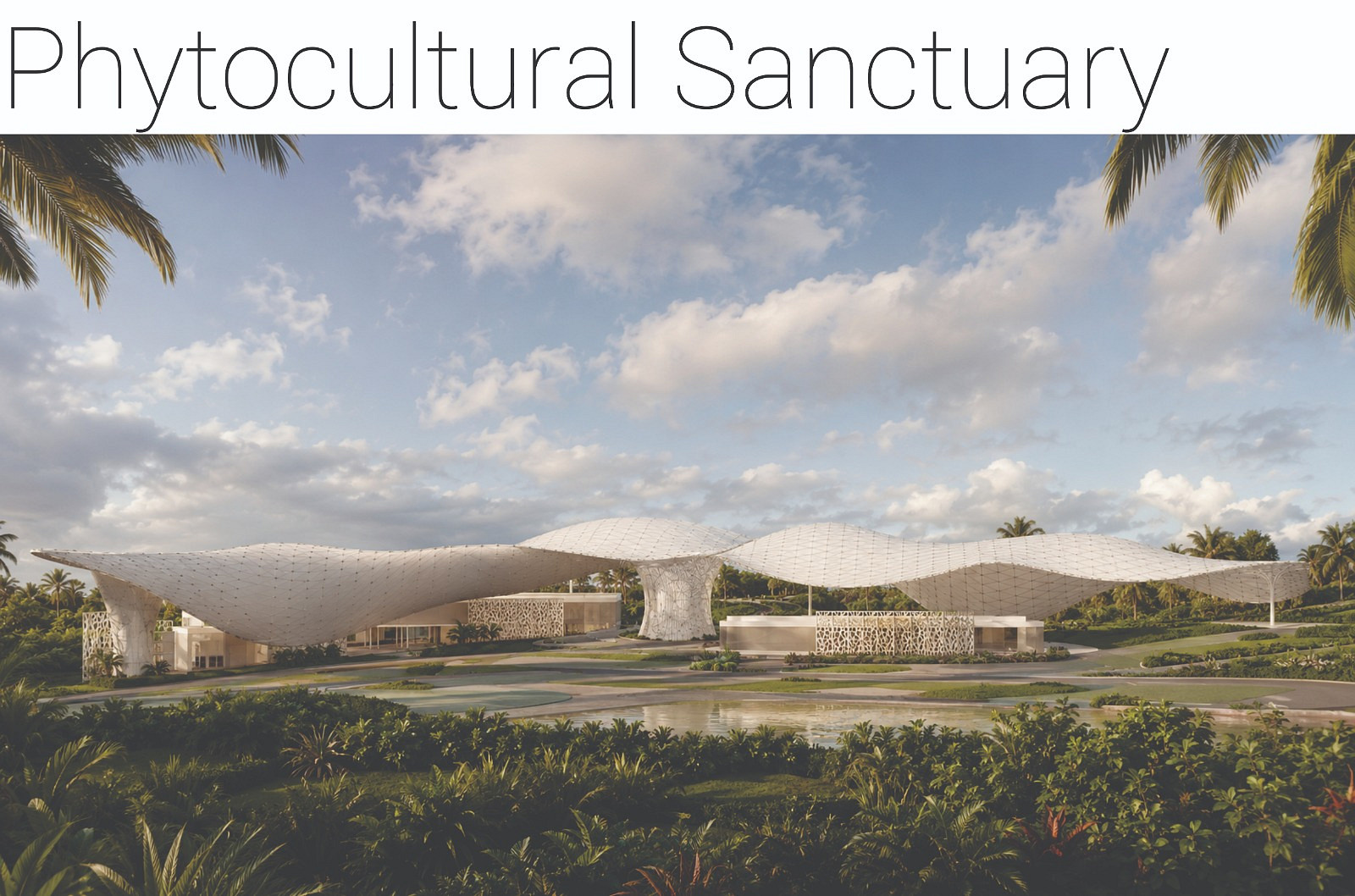
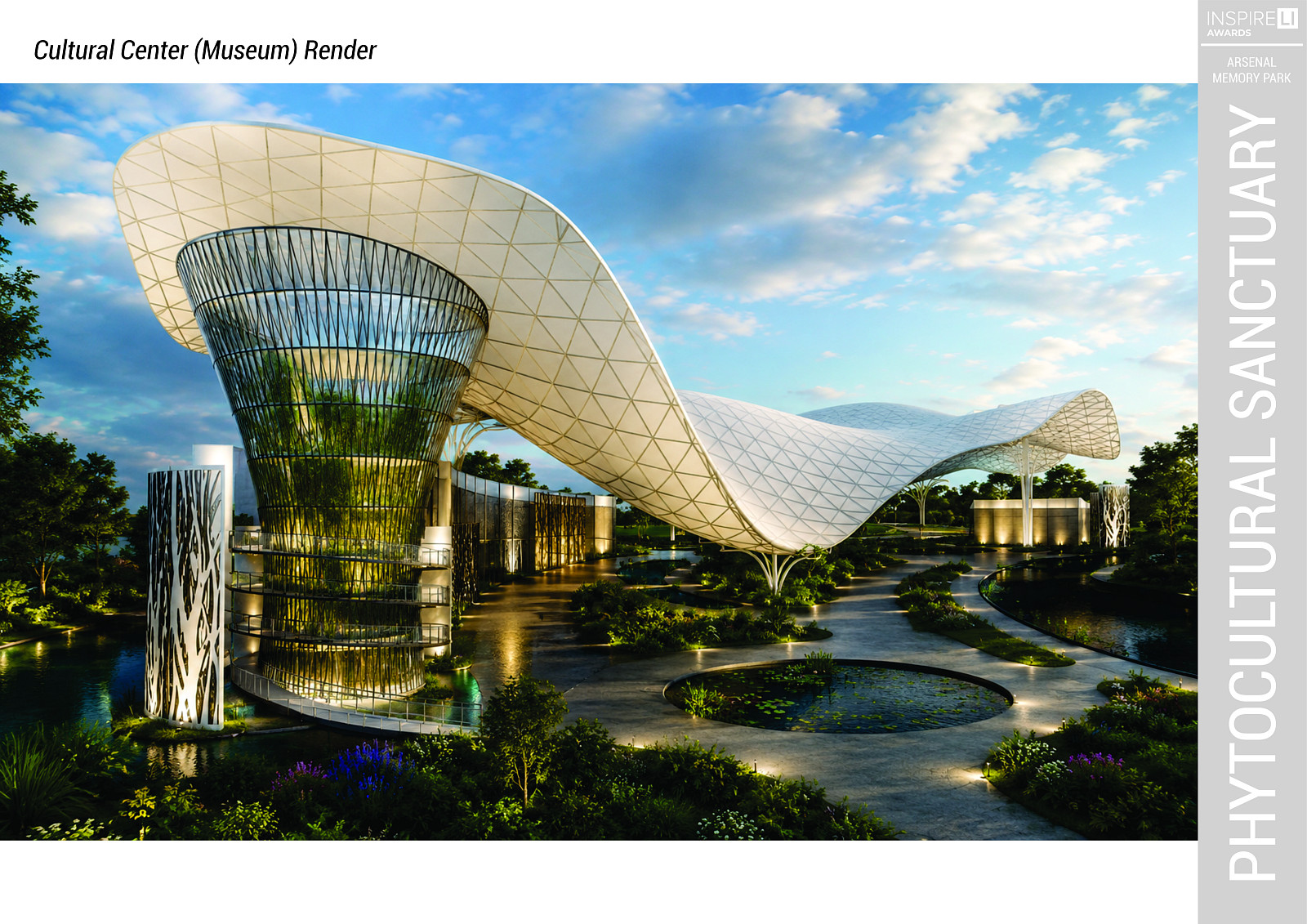
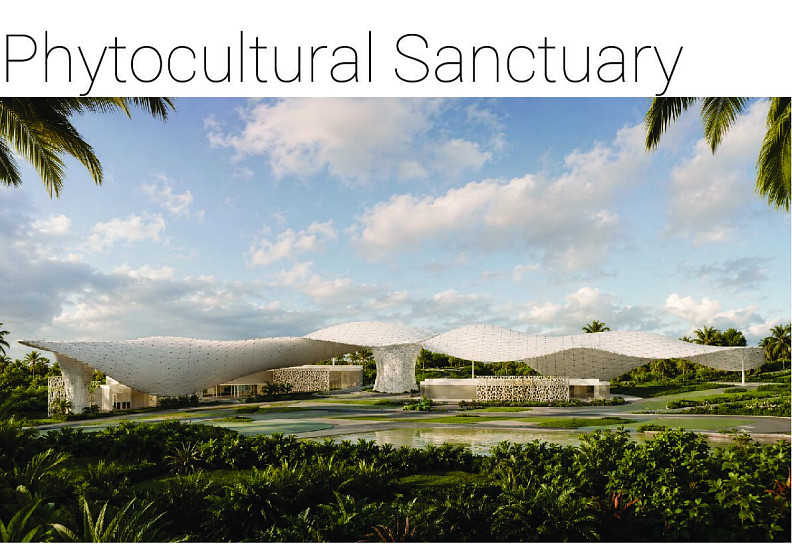
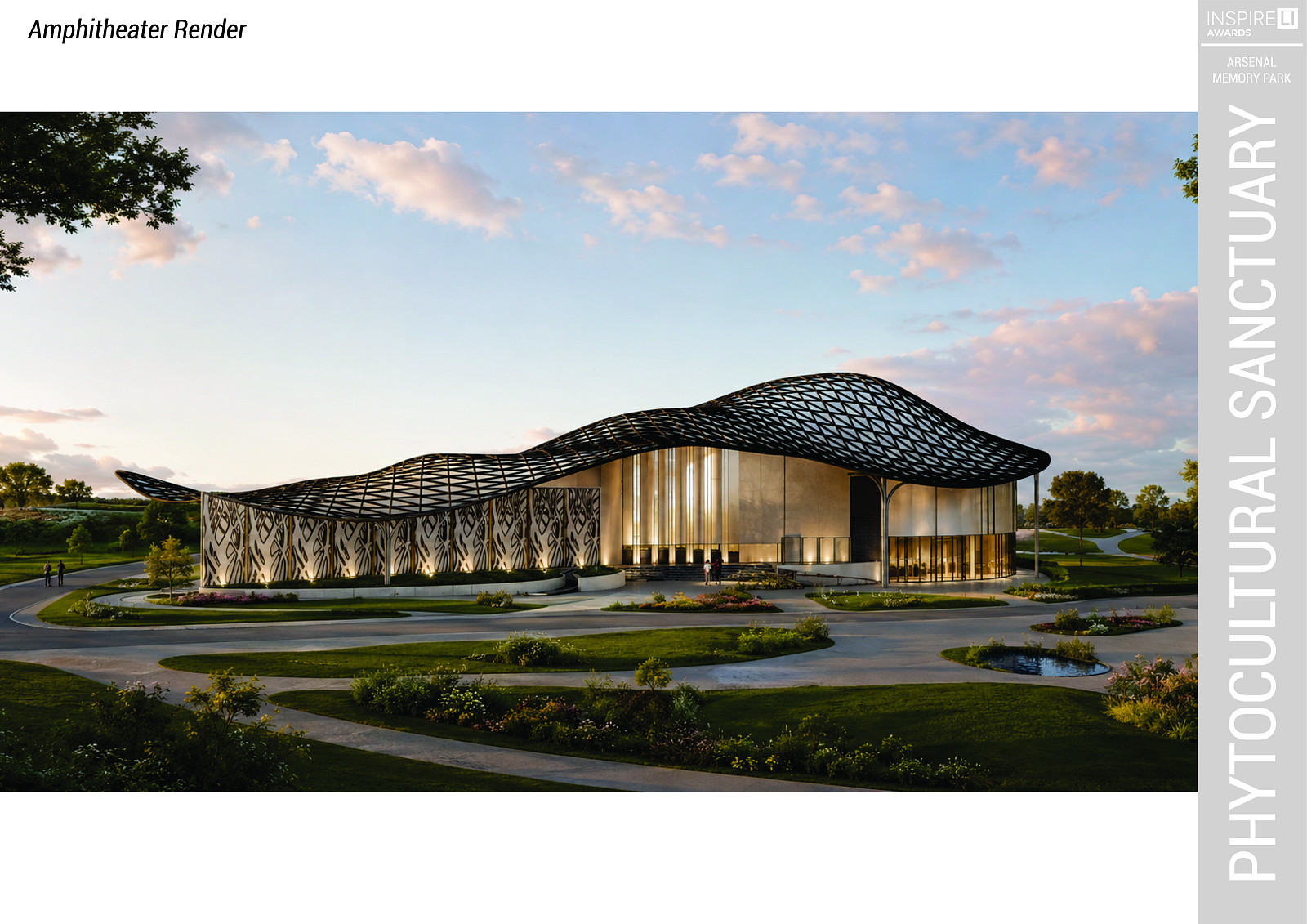
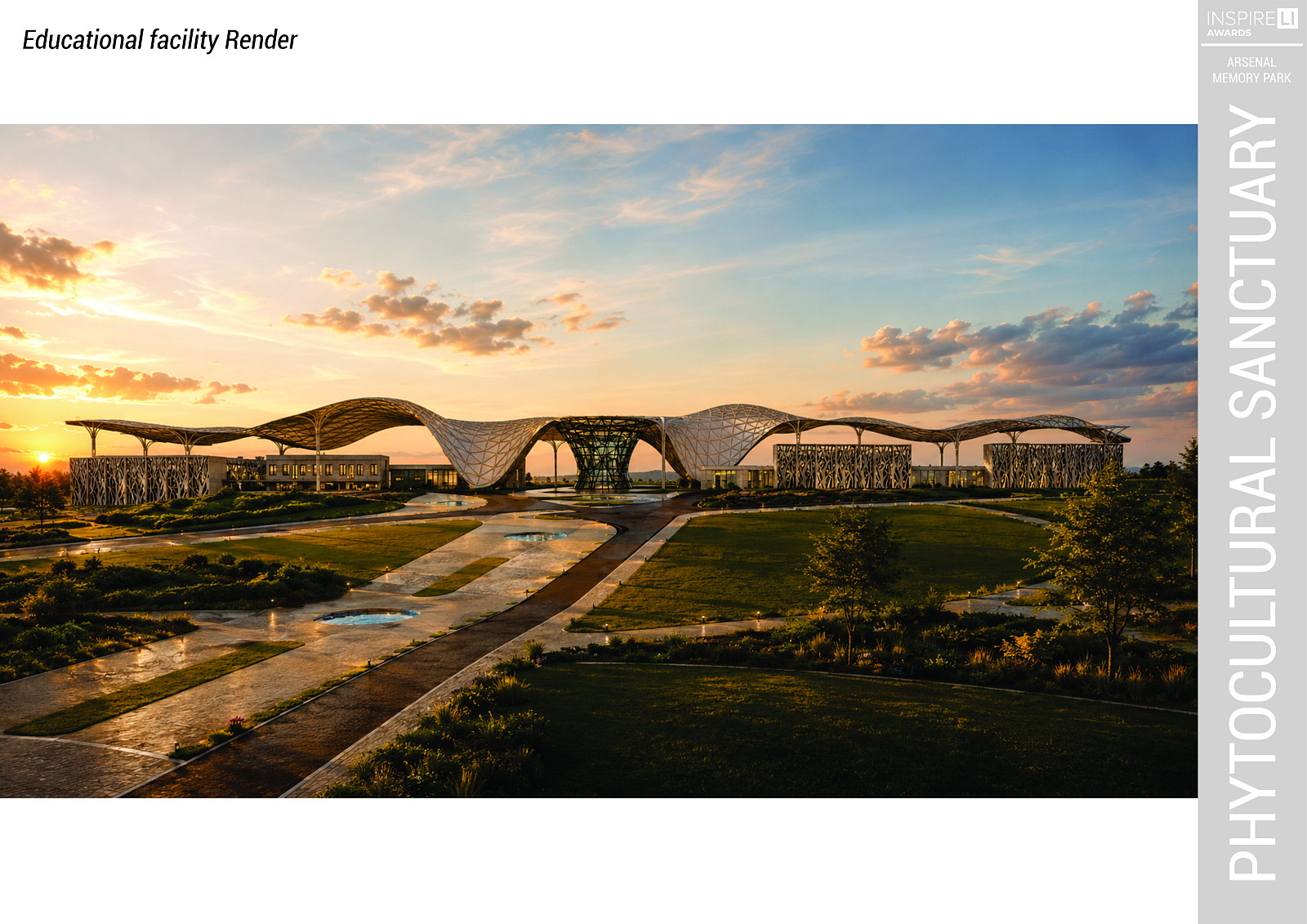
The roof is realized through a grid shell structure. This technological solution allows for the creation of complex, curved geometries that unify the ensemble, providing an envelope that protects the space from various angles. Visually, this roof evokes the figure of a bird in flight or protective wings that, as they unfold, embrace the architectural program, giving the building a symbolic identity of shelter and protection.
Documentation


Copyright © 2026 INSPIRELI | All rights reserved. Use of this website signifies your agreement to the Terms of Use, Privacy Policy, and use of cookies.