The Urban Seedbed


Project idea
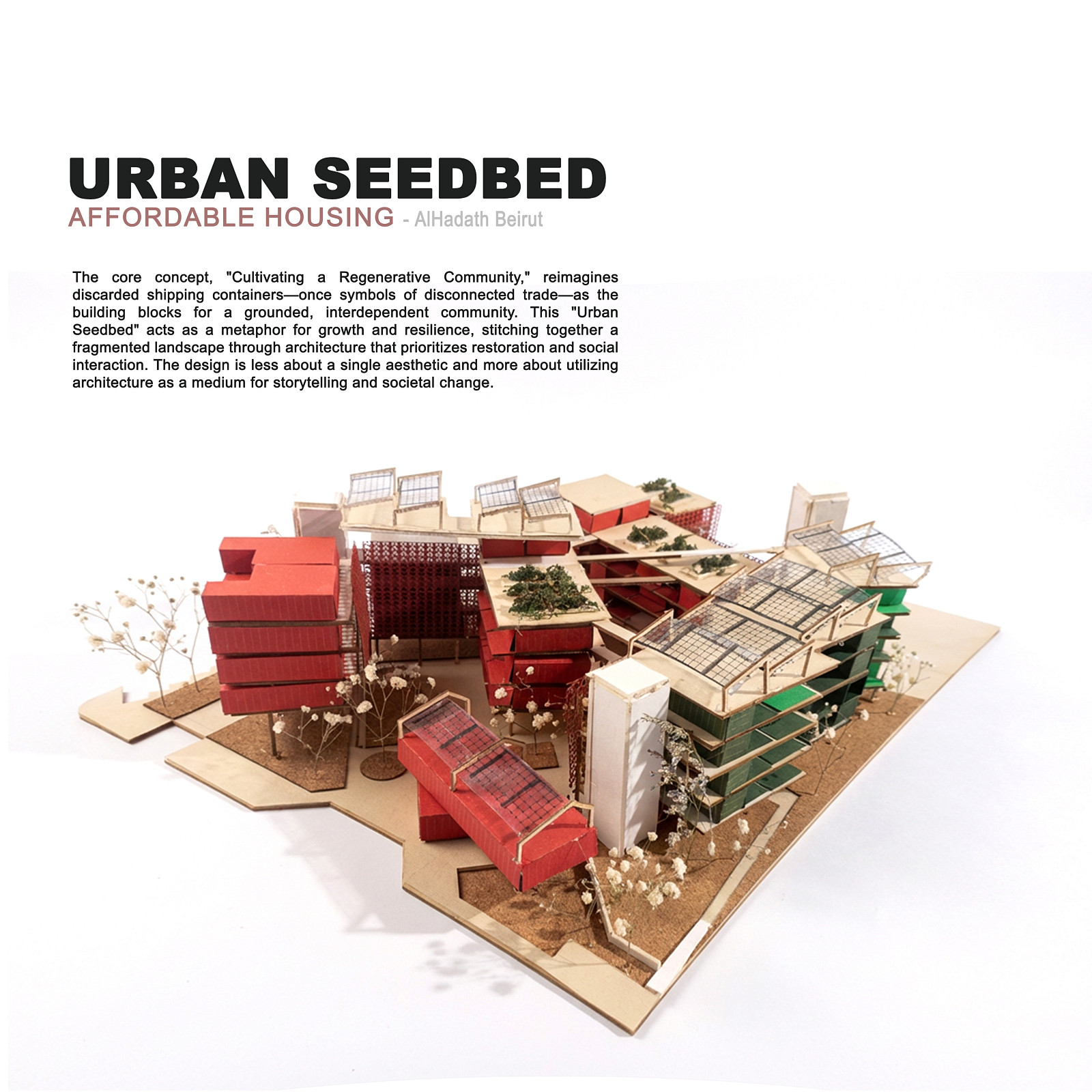
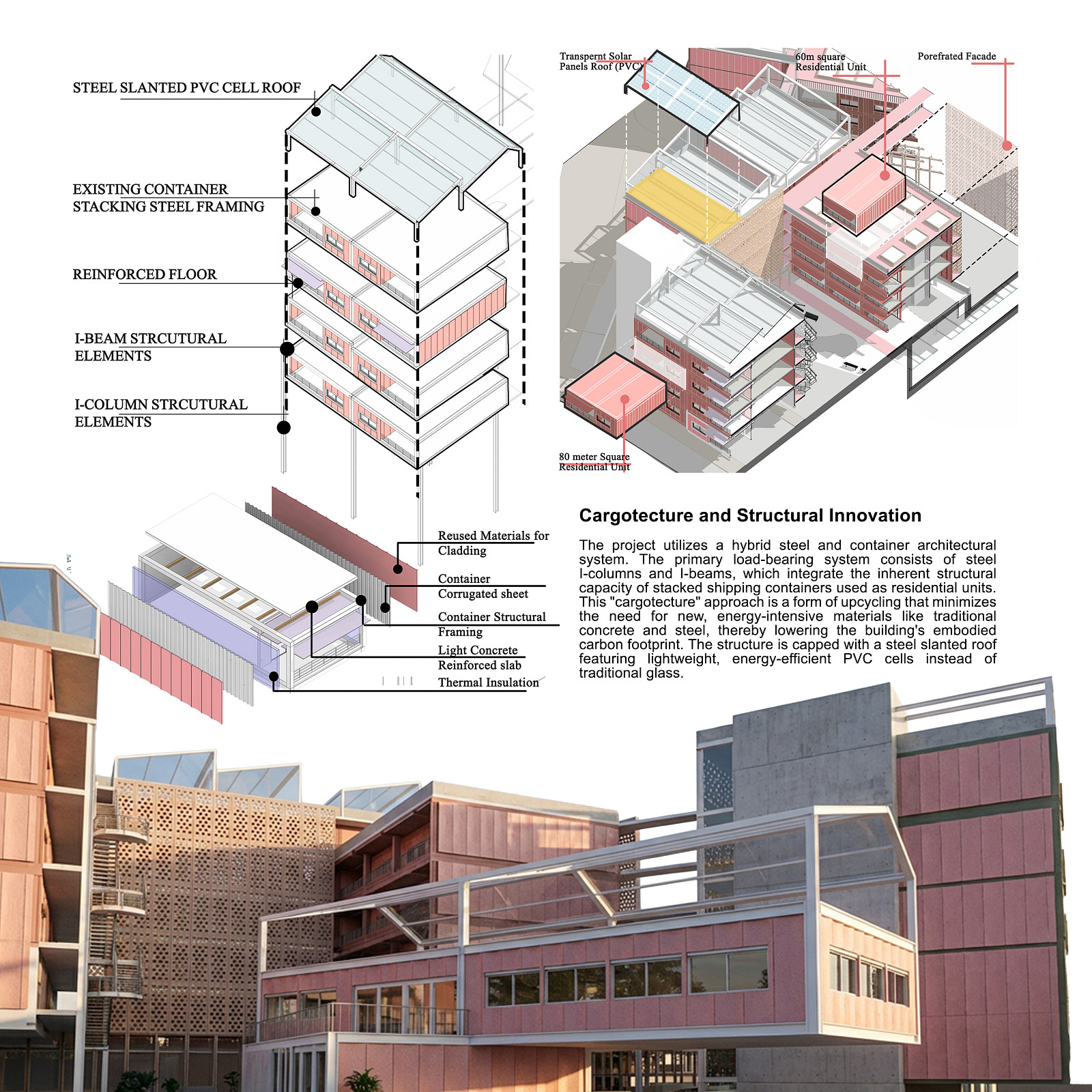
Cultivating a regenerative community through affordable low-carbon housing in Al-Hadath, Beirut, using upcycled shipping containers transformed into a self-contained, interdependent community that acts as a metaphor for growth and resilience.
Project description
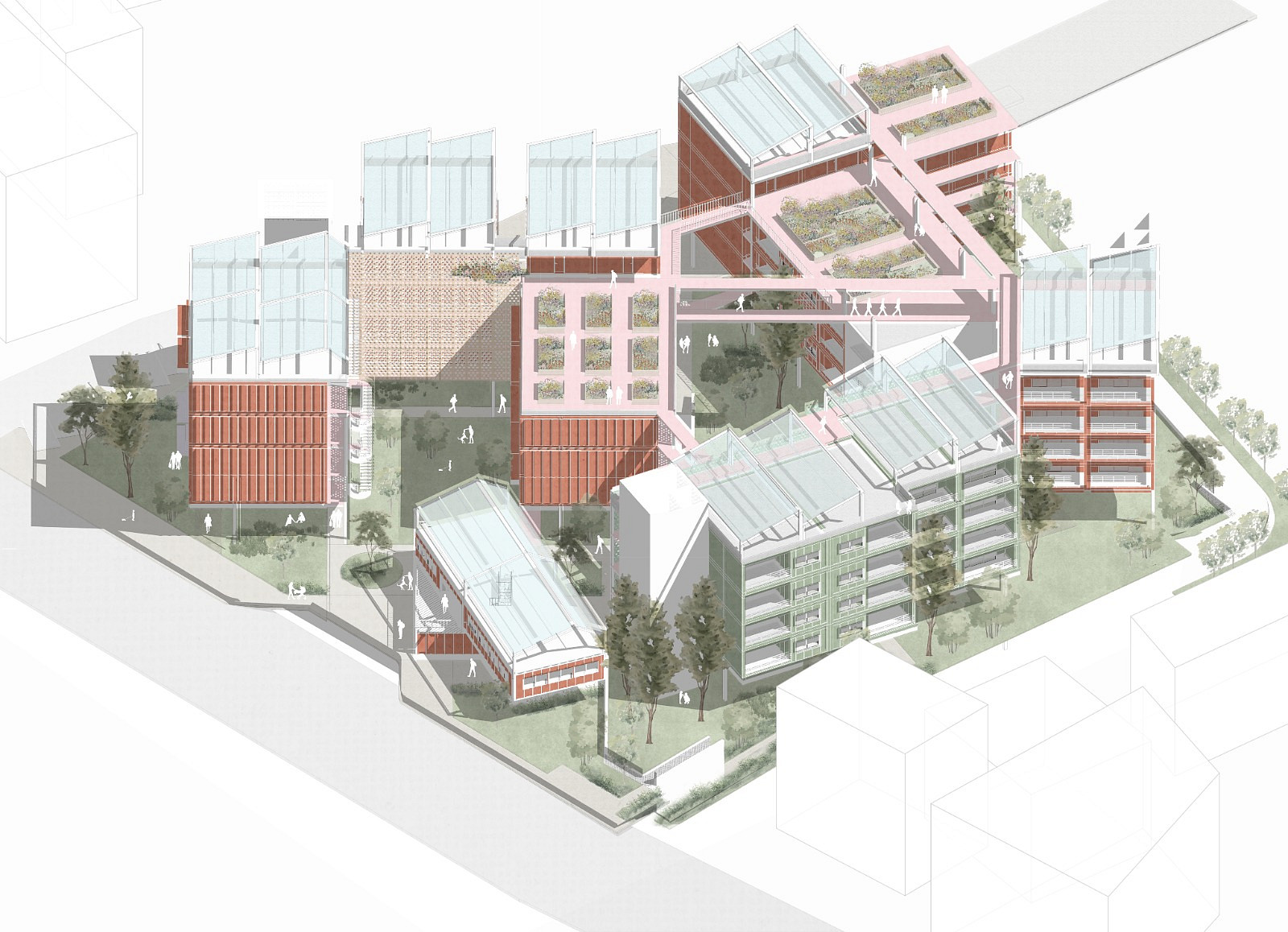
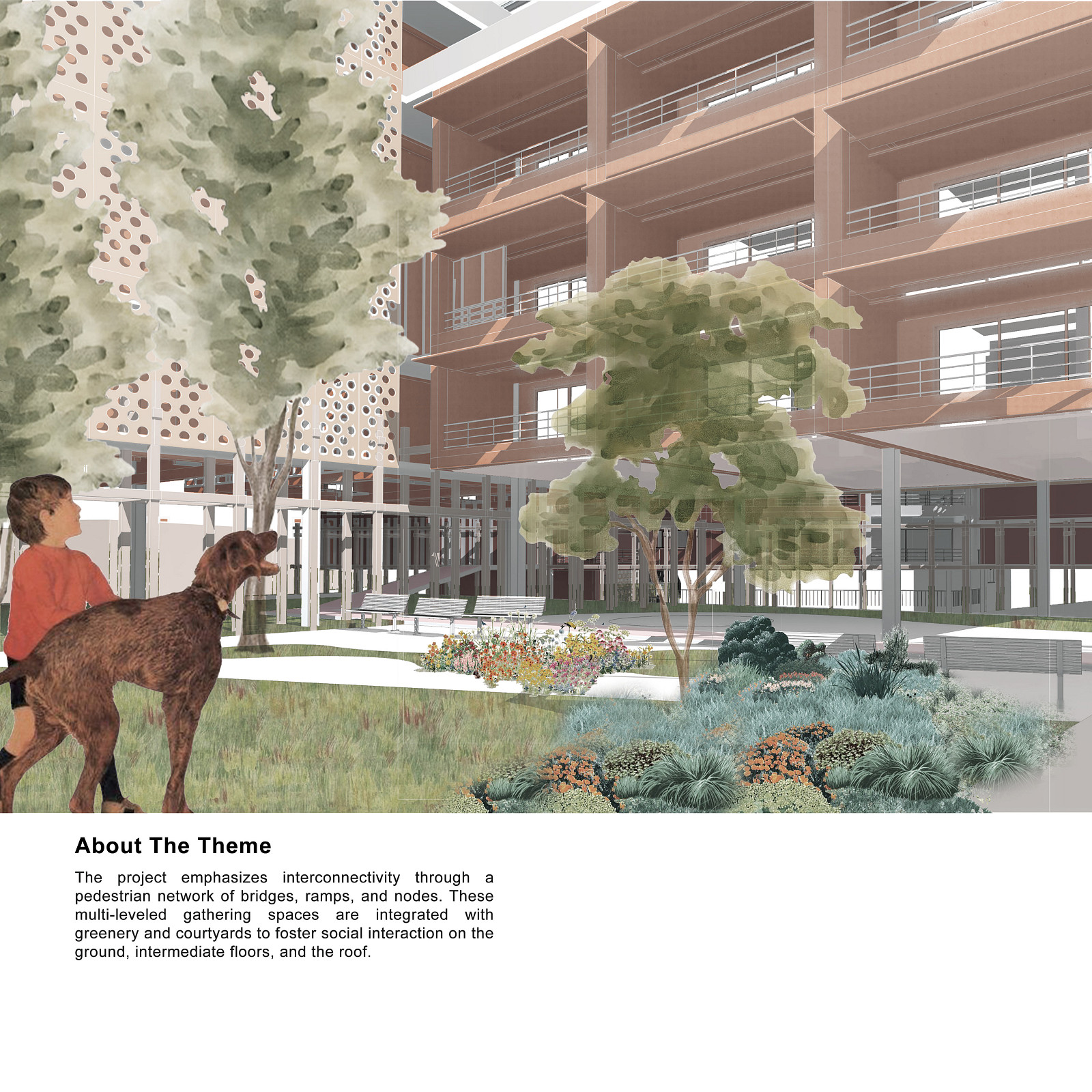
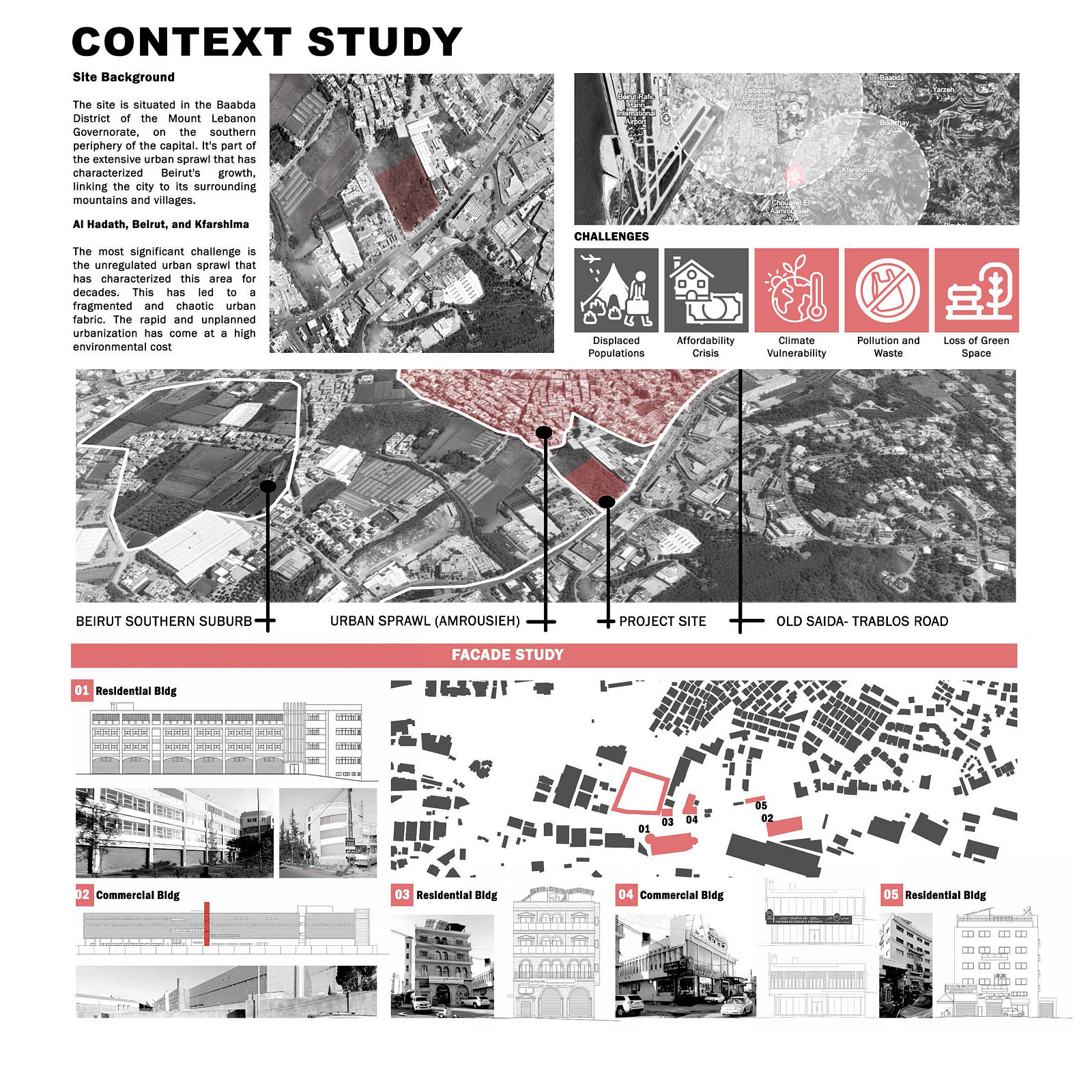
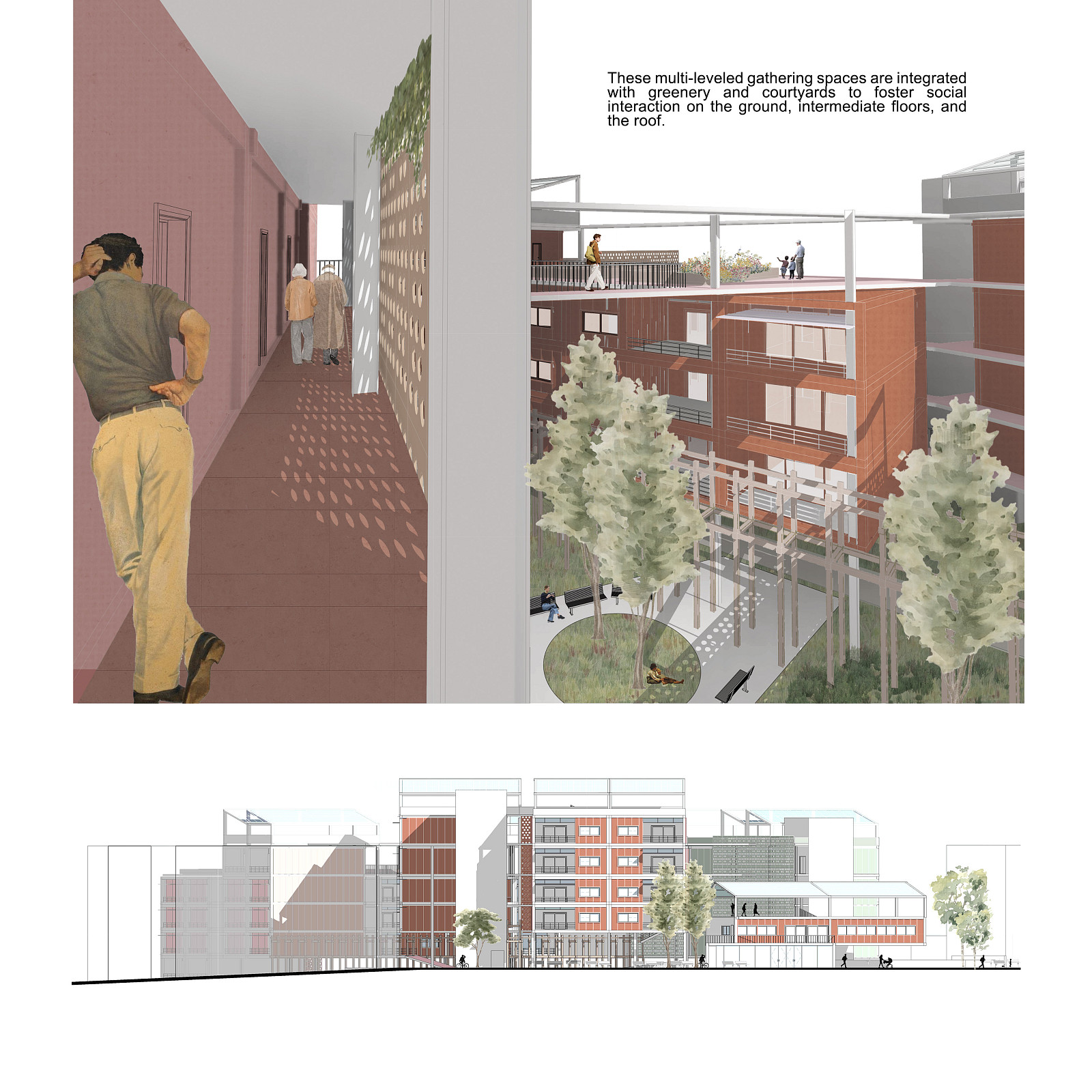
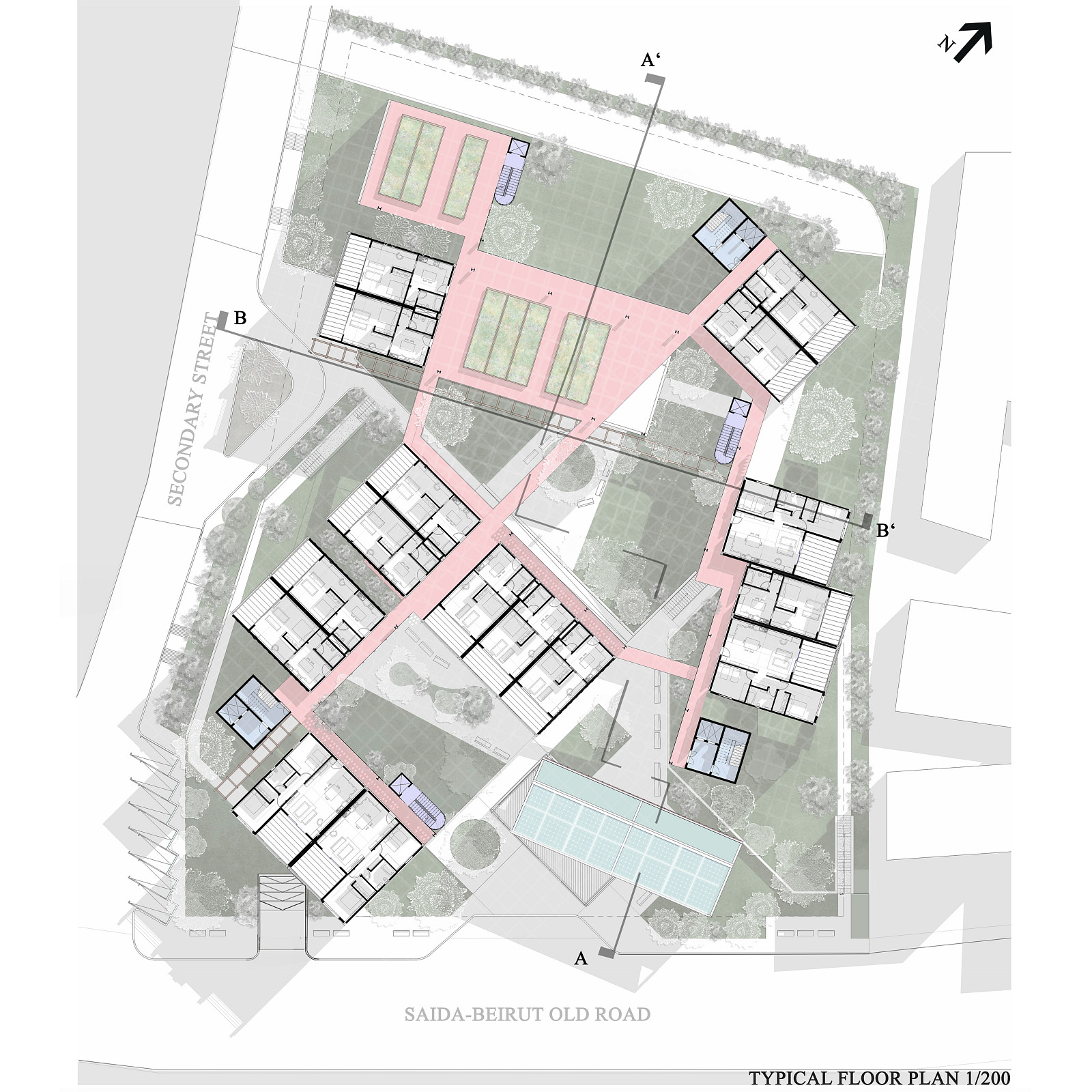
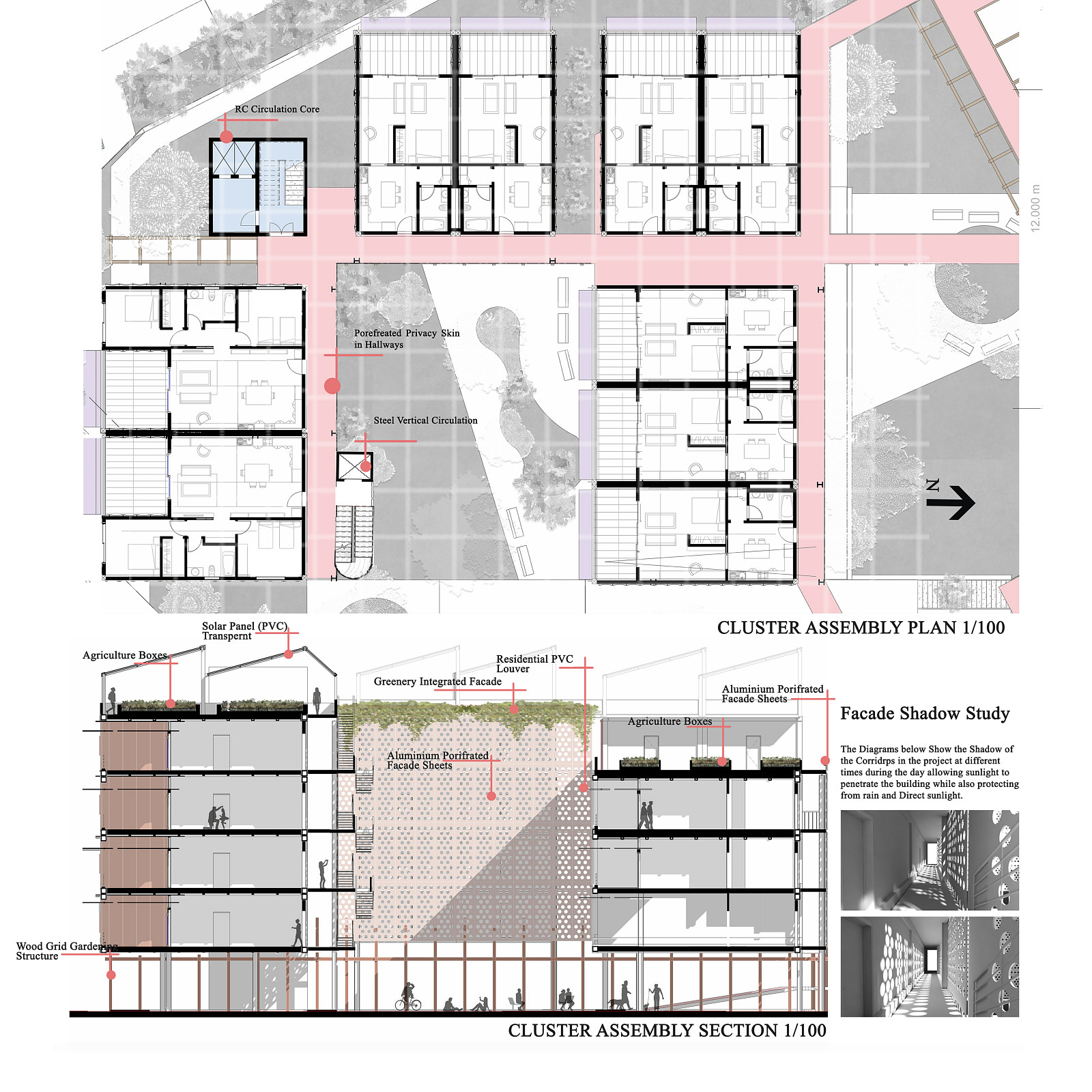
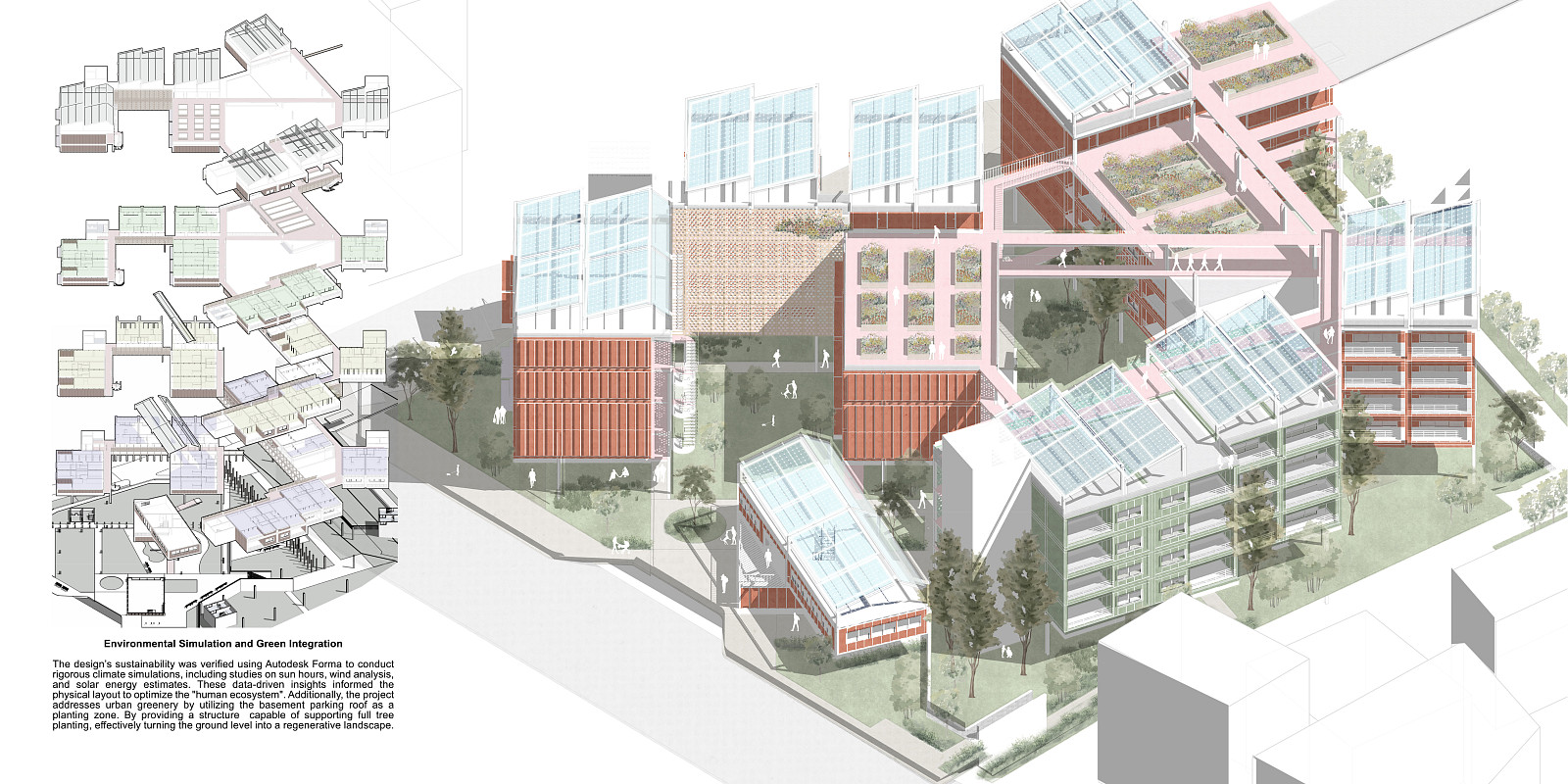
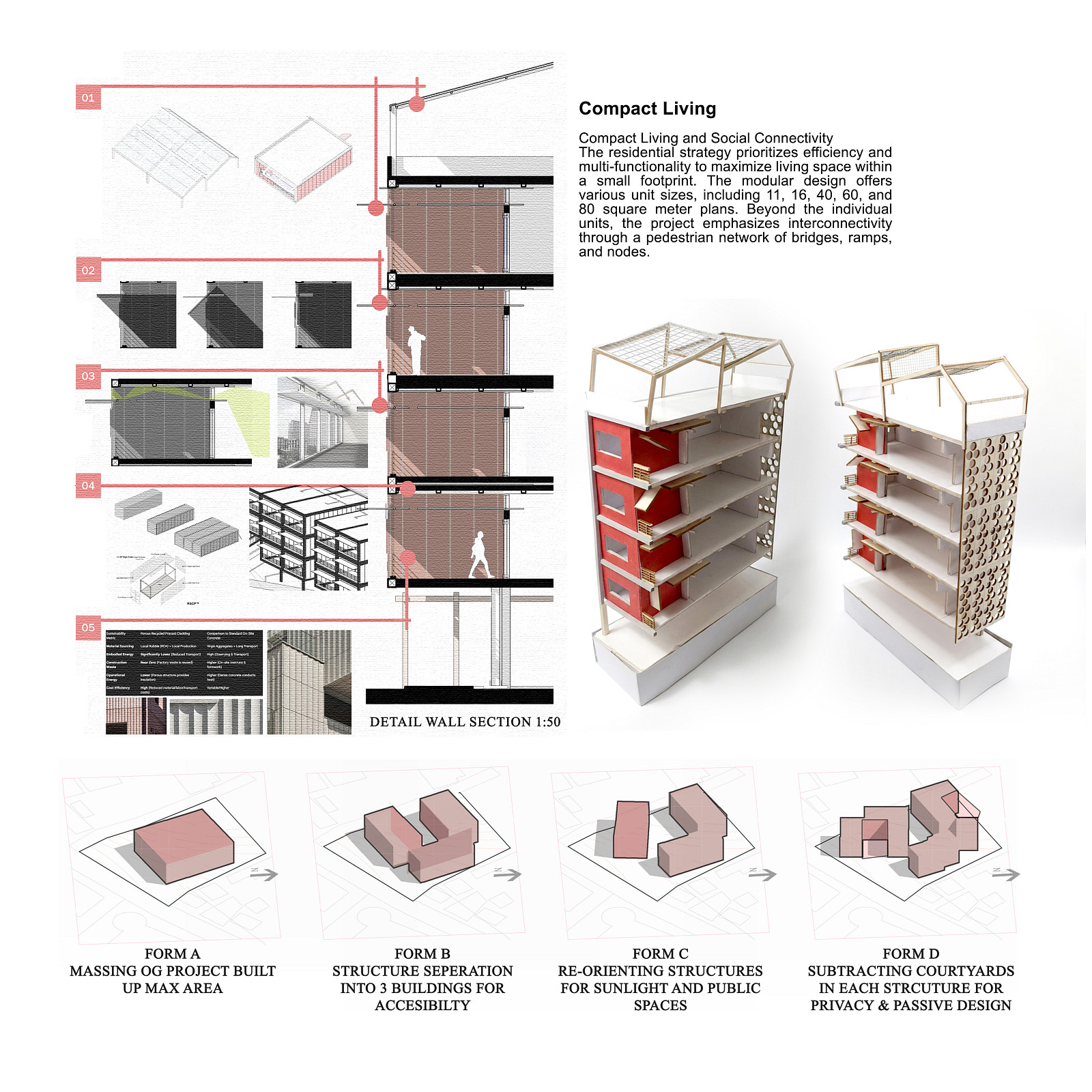
The project addresses the affordable housing crisis in Beirut through an integrated, multi-scalar urban and architectural response. Discarded shipping containers are upcycled into modular, multi-functional living spaces following a motel-style layout with extroverted and enclosed courtyards to foster social interaction. The design methodology prioritizes efficiency and multi-functionality to maximize living space within a small footprint through clever design including multi-functional spaces, cost efficiency, built-in storage, modularity, passive design strategies, and pre-fabricated construction. The communal courtyards serve as productive spaces featuring vertical farms and raised garden beds for community cultivation. The project transforms a place of urban sprawl and neglect into a productive and thriving urban ecosystem.
Technical information
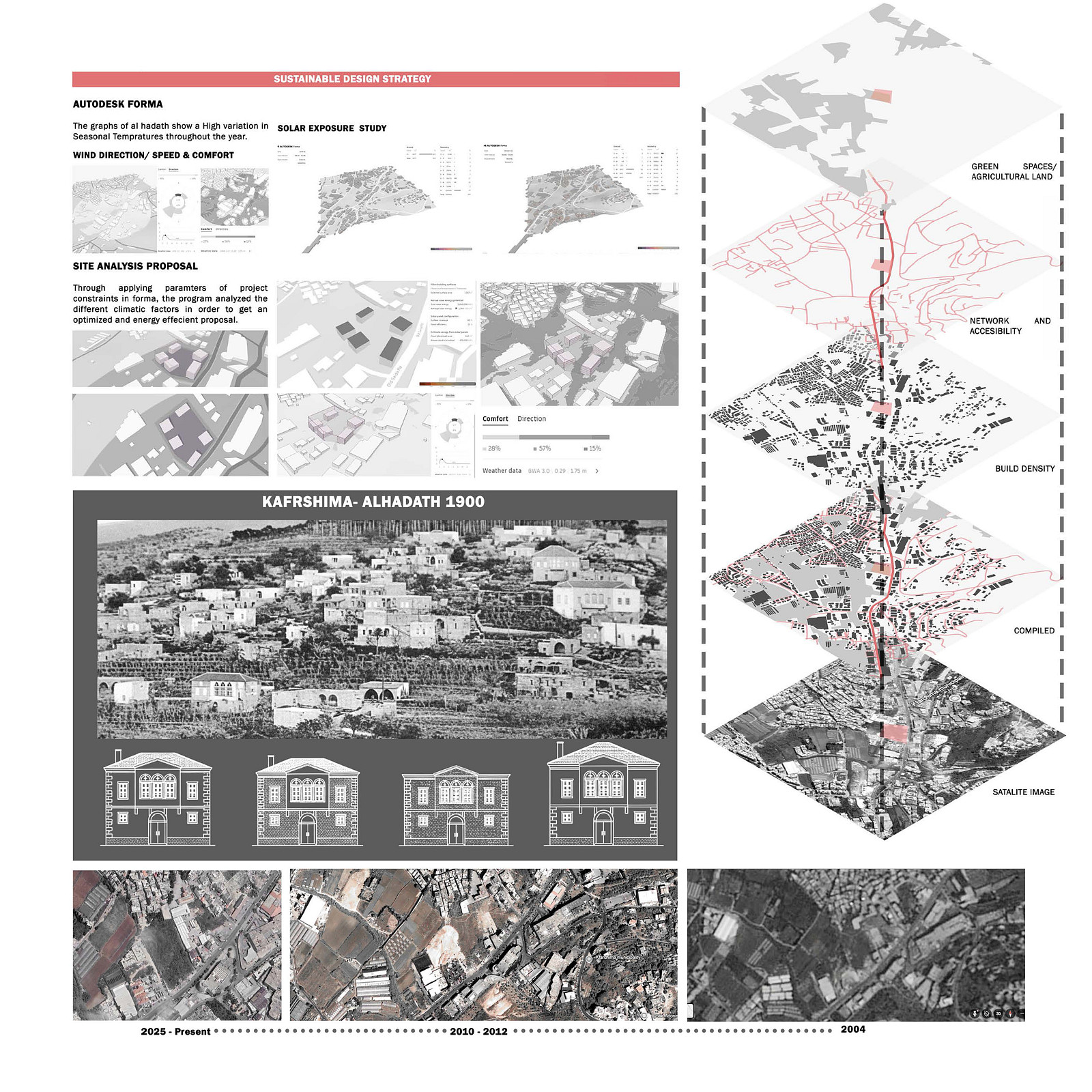
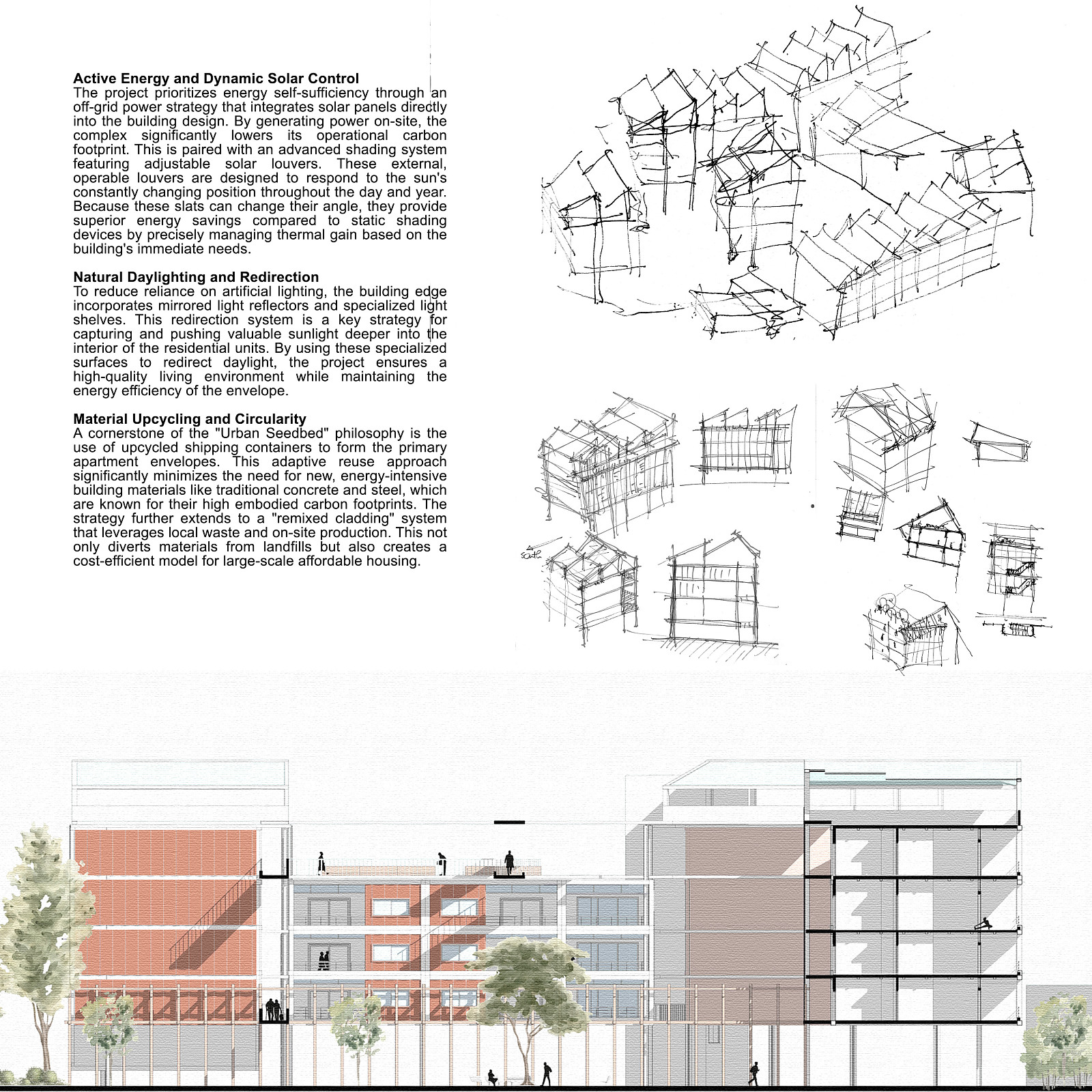
Low carbon design strategies include high levels of insulation, airtight construction to prevent heat loss, passive solar design with optimized window placement and shading, and integration of renewable energy sources like rooftop solar panels. The design uses low-embodied carbon materials such as locally-sourced timber, recycled content concrete, and natural insulation. Wind direction, speed, comfort analysis, and solar exposure studies informed the site analysis proposal. The modular contemporary architectural trend emphasizes flexibility, efficiency, and modernity with scalability, relocatability, cost-effectiveness, reduced environmental impact, lower carbon footprint, and adaptive reuse capabilities.

Copyright © 2026 INSPIRELI | All rights reserved. Use of this website signifies your agreement to the Terms of Use, Privacy Policy, and use of cookies.