Synergy of New Forms and Historic Fabric: adaptive re-use of Drzewica Castle


Project idea
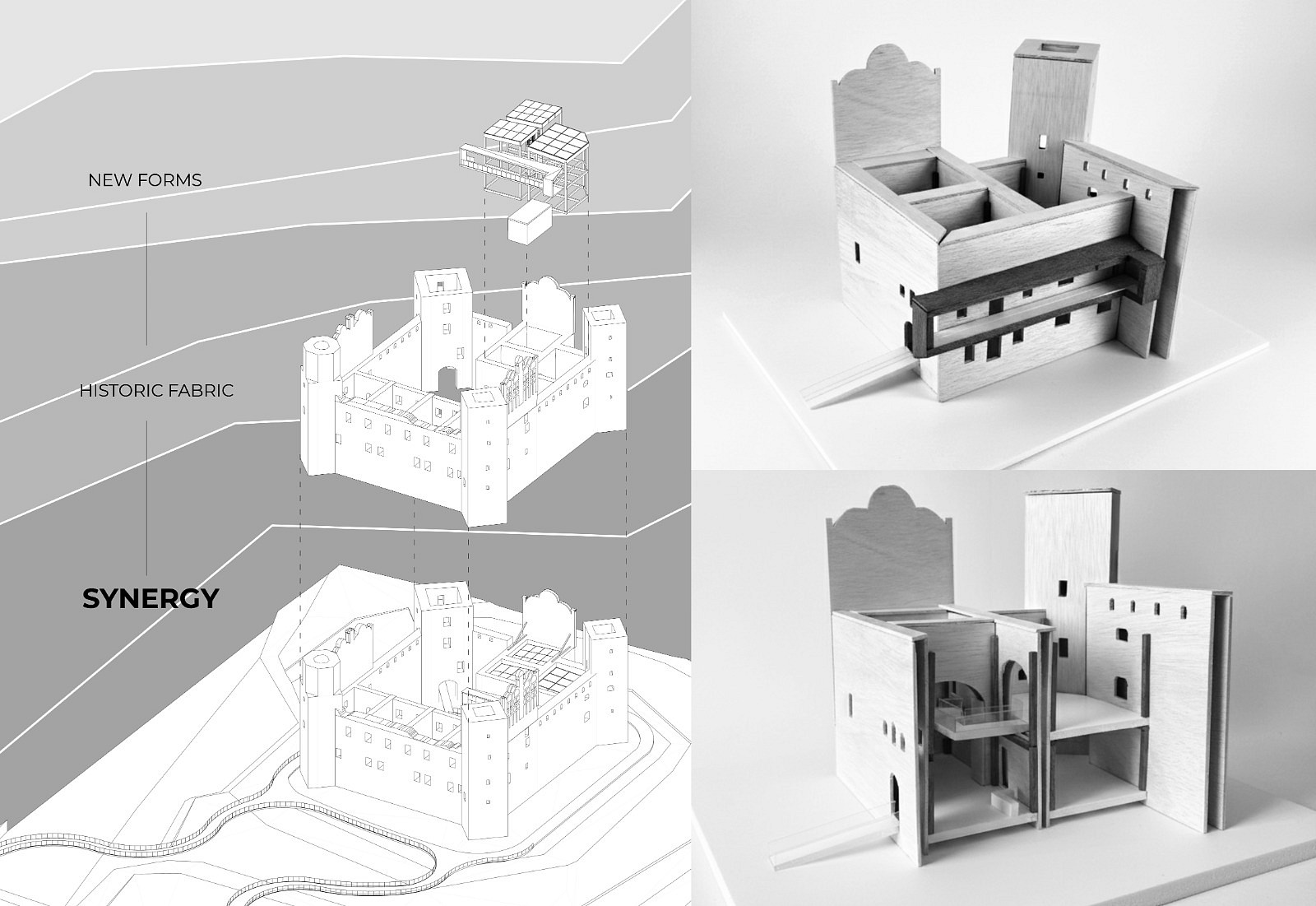
Synergy is the interaction of several factors that achieve a better result together than
individually. Similarly in architecture, introducing new, contemporary forms into historic fabric
increases both functionality and perception of the object. Today, many approaches exist in
designing within a historic context, yet they can be reduced to three main groups:
reconstruction, introducing strongly contrasting new elements, and applying stylistically
related, though not historicizing, forms. Drzewica Castle is unique due to the high degree of
preserved authentic structure, but because of its poor technical condition, it is not fully open
to visitors. Based on analyses, conclusions, and resulting design guidelines, a concept project
was developed to adapt it for tourist services. By introducing new forms into the service house
part, in the form of a roof and an additional floor using glulam structure, a new volume was
created housing a tourist information point, museum shop, small gastronomy with
multifunctional hall, and exhibition space. Bold contemporary elements were also introduced
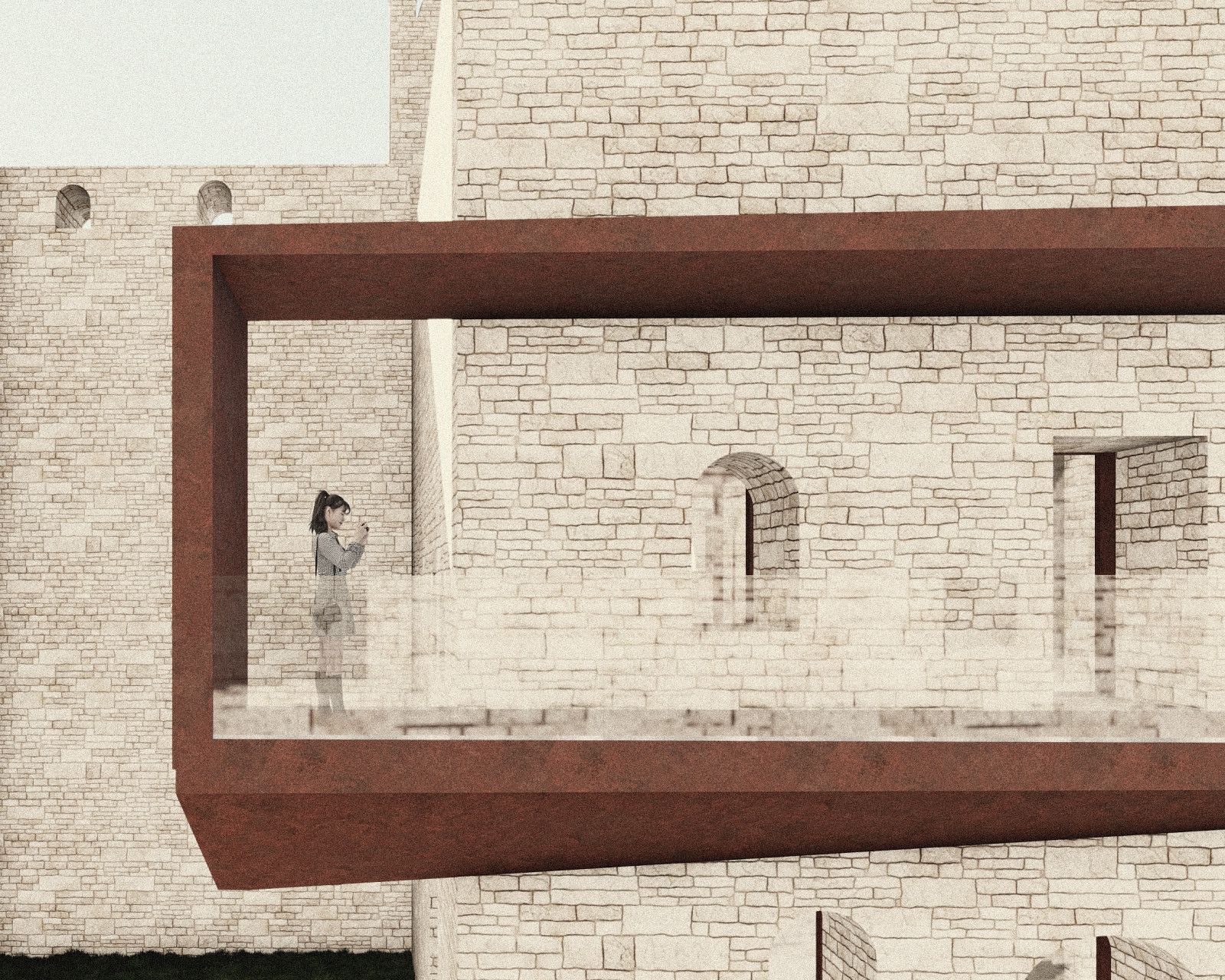
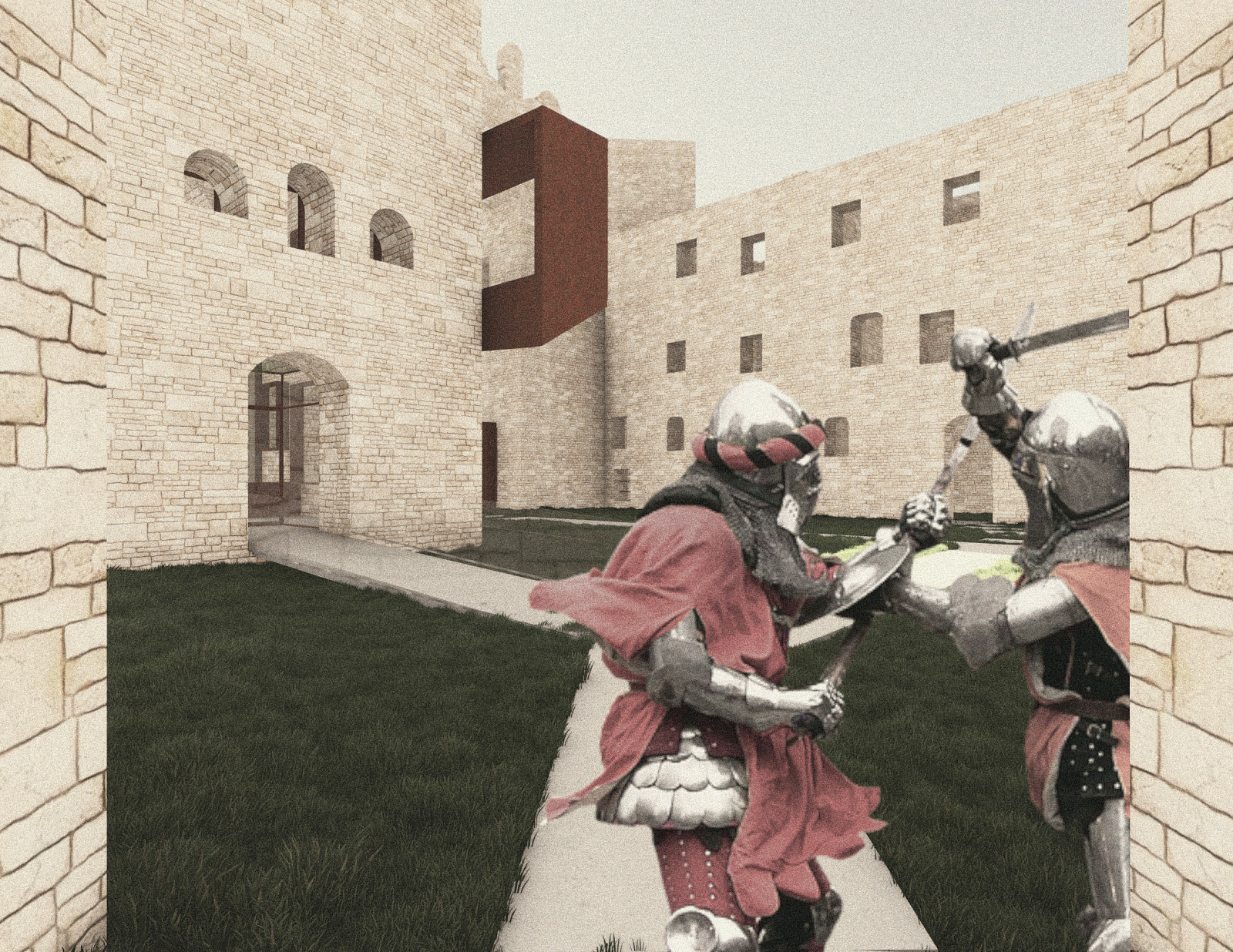
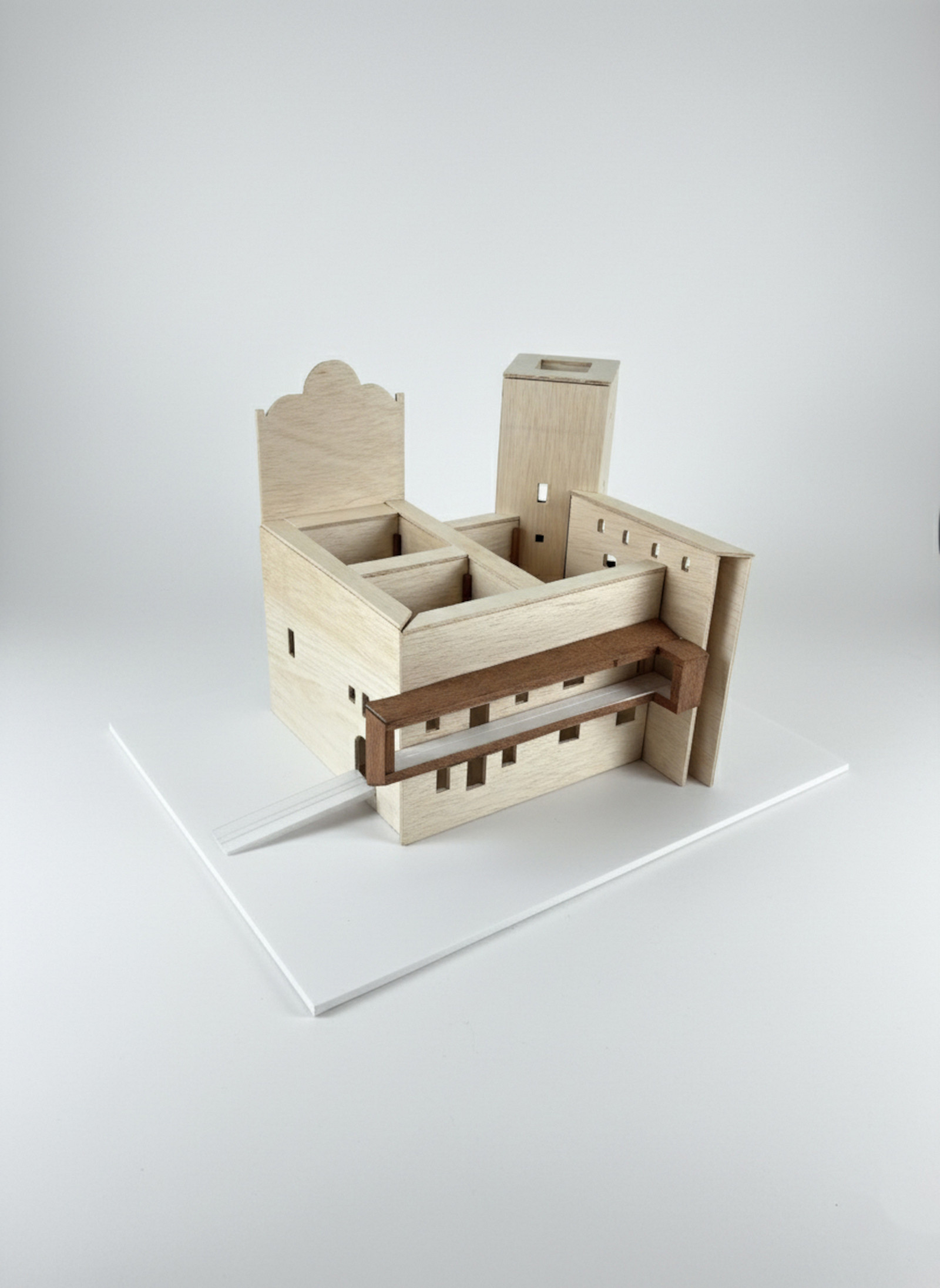
to enhance the site’s attractiveness, such as a suspended viewing balcony and a summer stage
with a pressed detail of one of the castle gables on its wall. All windows of the newly created
rooms were framed in showcase-like structures, allowing maximum authenticity of the historic
openings while serving as a striking decorative element. Despite differences in terrain and floor
levels, thanks to reinforcements, ramps, and an elevator, the castle was made accessible to
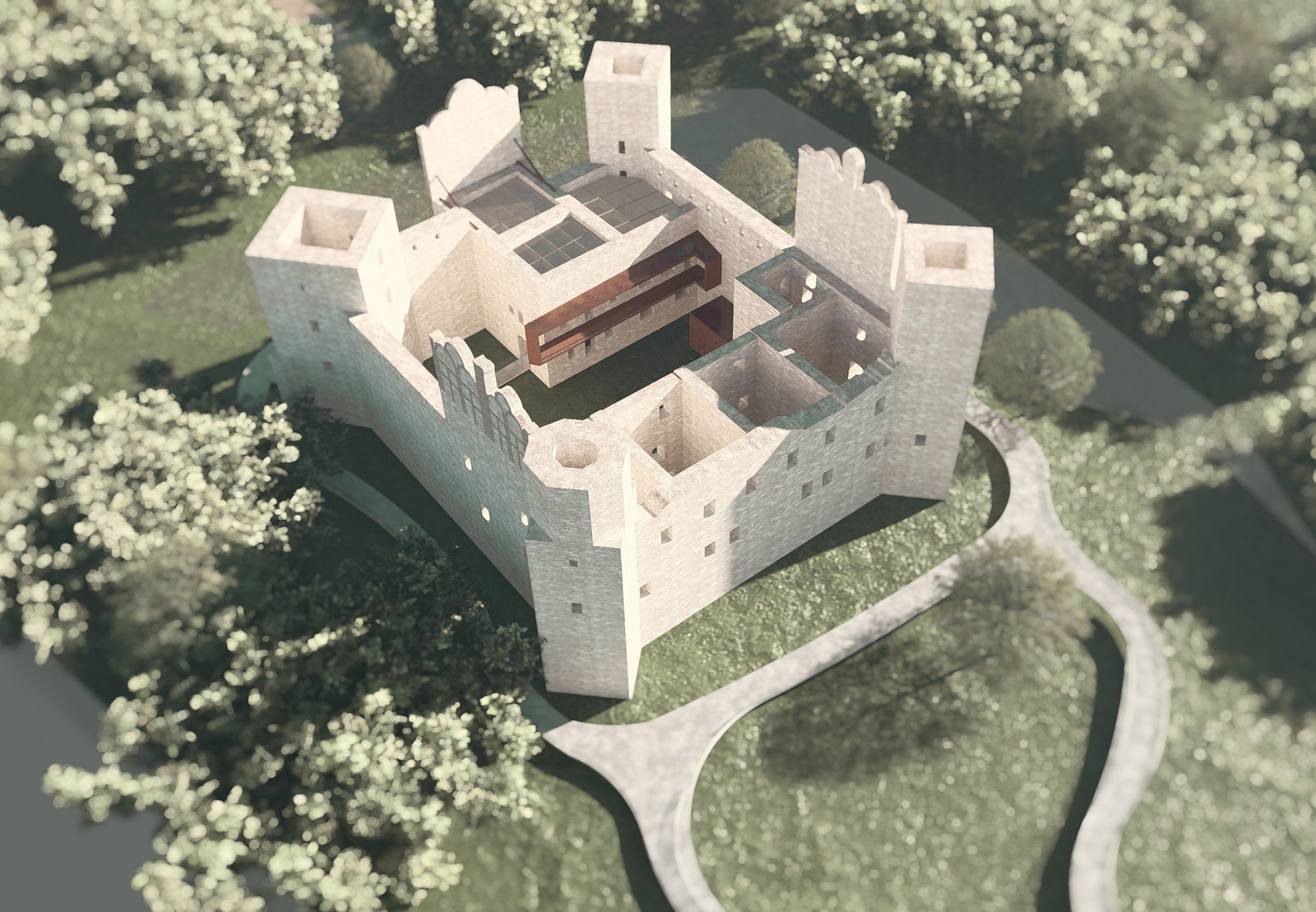
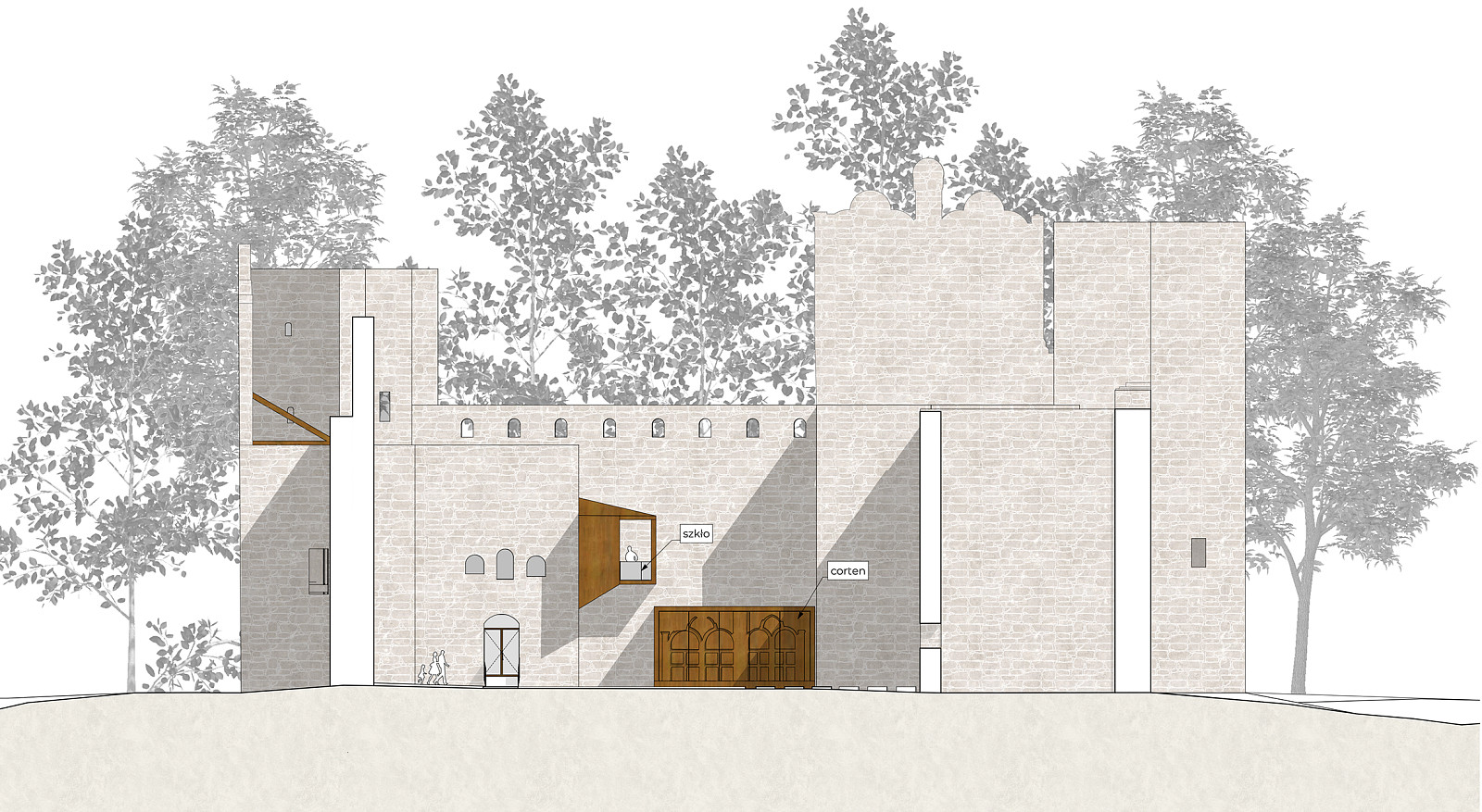
people with special needs. At the same time, these interventions remain invisible from outside
the castle, preserving its authentic character and iconic panorama.
Project description
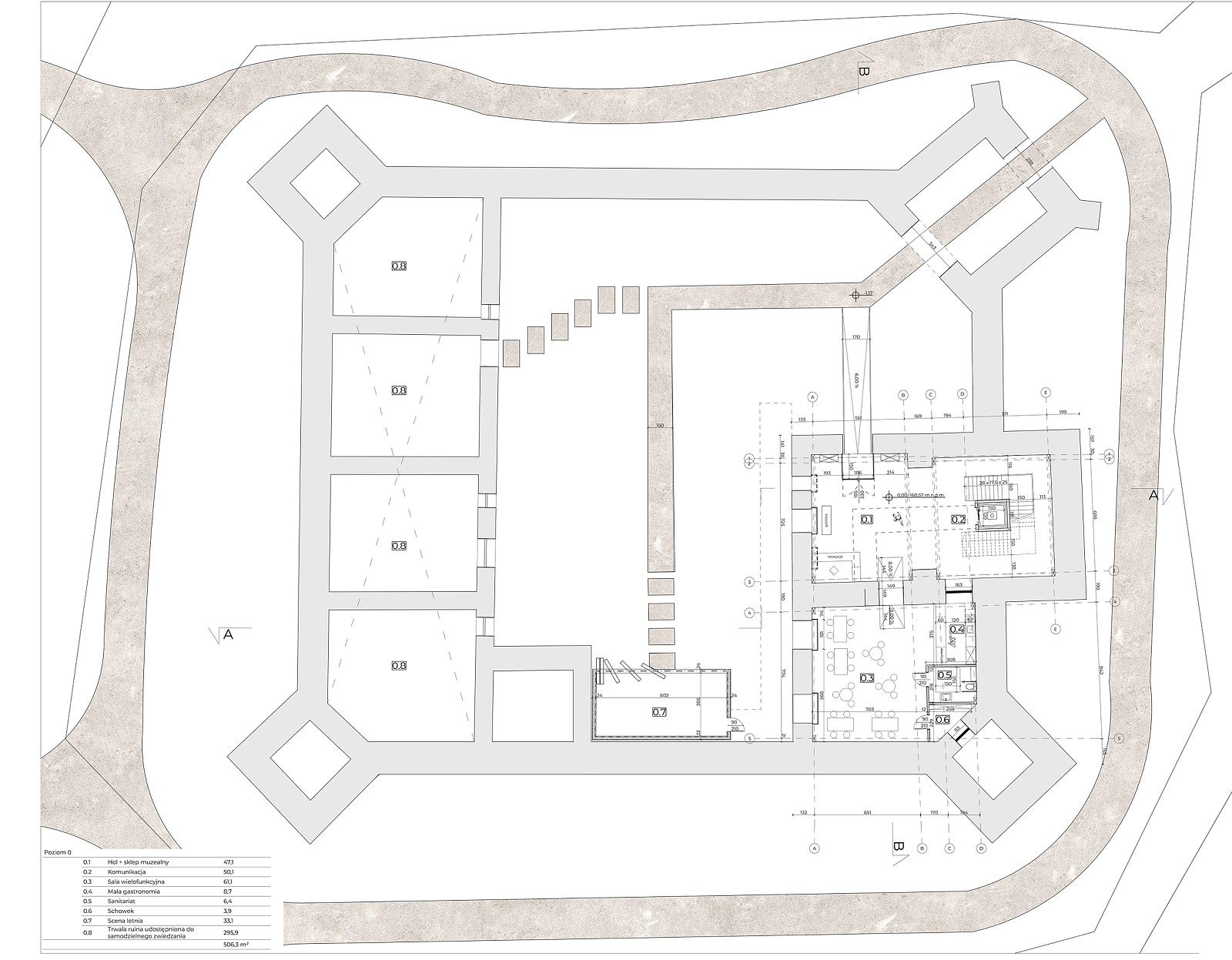
The main design idea behind the adaptation of the Drzewica Castle was the synergy of new forms and historical fabric, as well as ensuring accessibility for people with special needs. The concept assumes a conscious combination of two distinct conservation approaches: preserving a significant part of the castle as a permanent ruin, accessible to visitors in its authentic form, and introducing a new contemporary architectural volume on the site of the former service building.
The resulting space has been designated for primary tourist and exhibition services. The designed spaces are multifunctional, ensuring both a comfortable daily sightseeing experience and the flexibility to host special cultural events. An integral part of the concept is the development of the courtyard and the green areas around the castle, aimed at enhancing the site's landscape character and ensuring efficient circulation. This is facilitated by a pedestrian footbridge surrounding the property and a visitor parking lot.
To accommodate the annual knights' picnic and other cultural events, an outdoor summer stage was designed, complete with facilities for storing infrastructure (e.g., audience benches). The residential part of the castle, left unreconstructed, has been preserved as a permanent ruin and opened for self-guided tours. This concept aligns with contemporary trends in architectural heritage protection, according to which a monument should not merely be a material relic of the past, but an active element of the cultural and social space.
Technical information
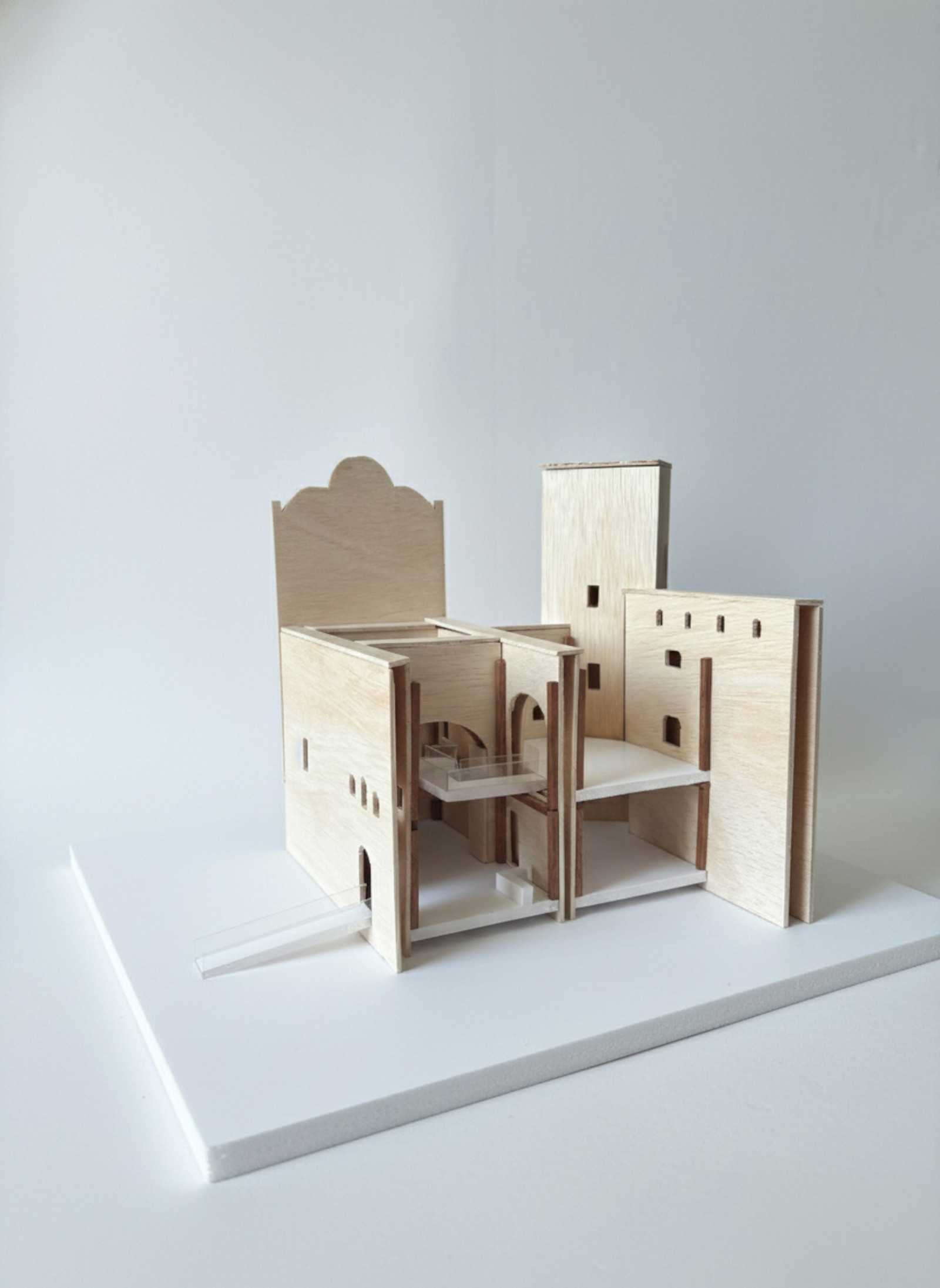
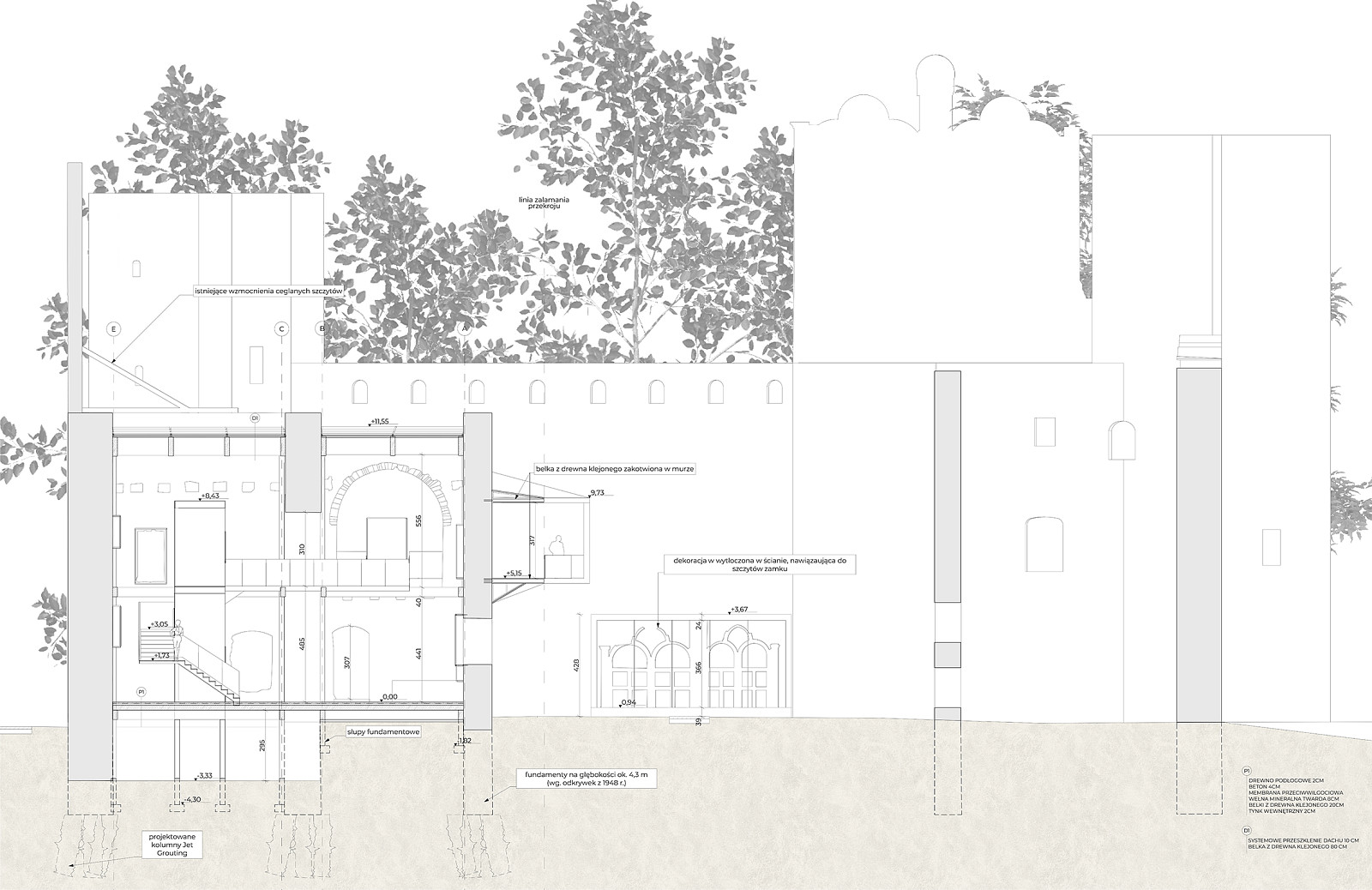
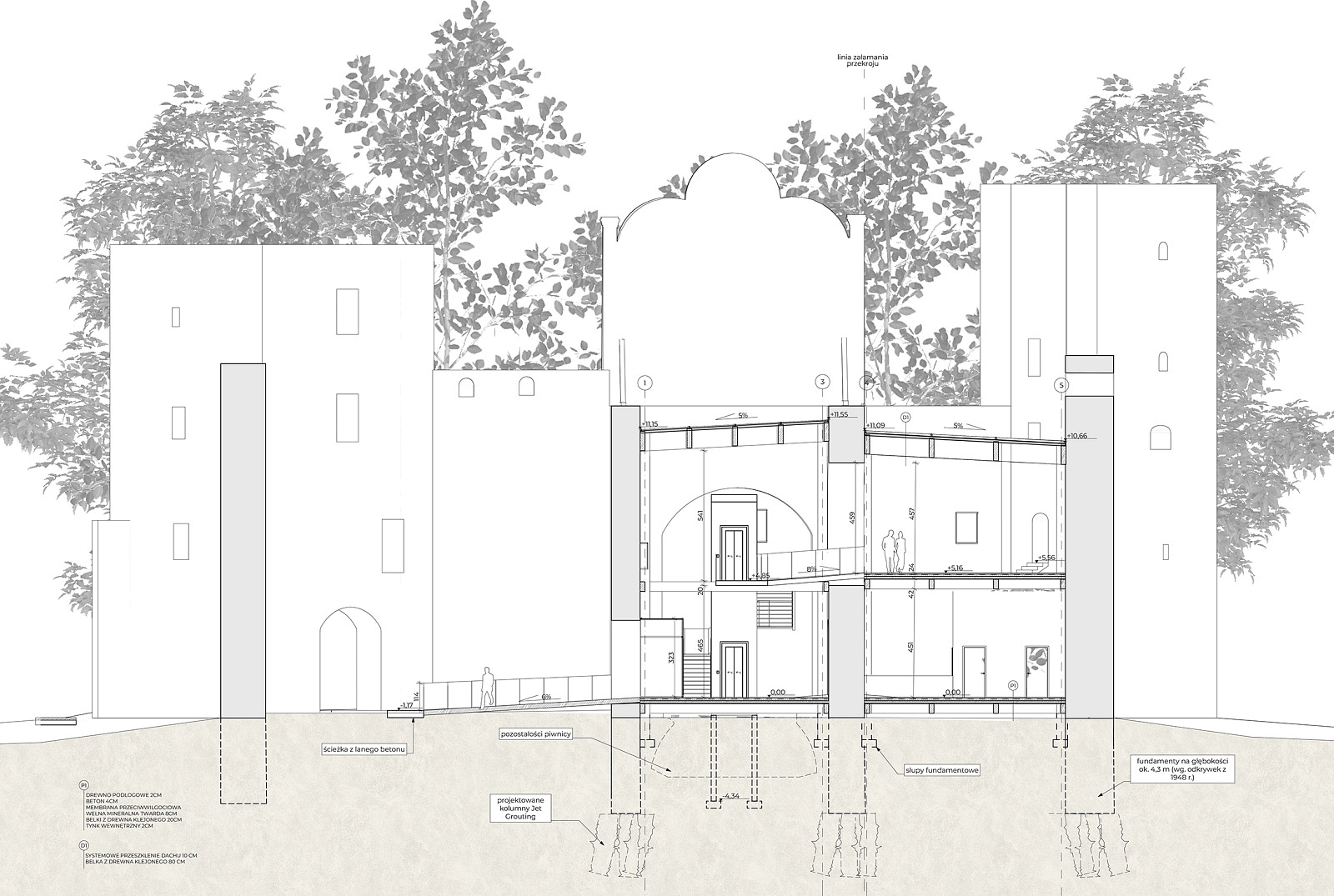
The service building has been fully roofed using three roofs supported by independent glued laminated timber (glulam) structures. This roof is recessed below the top of the crown walls, making it completely invisible from the outside of the walls, which was one of the core principles of this design. To achieve airtight partitions, the empty window openings in the historical wall were framed into glazed vitrines, which allow for their full display and constitute a reversible intervention.
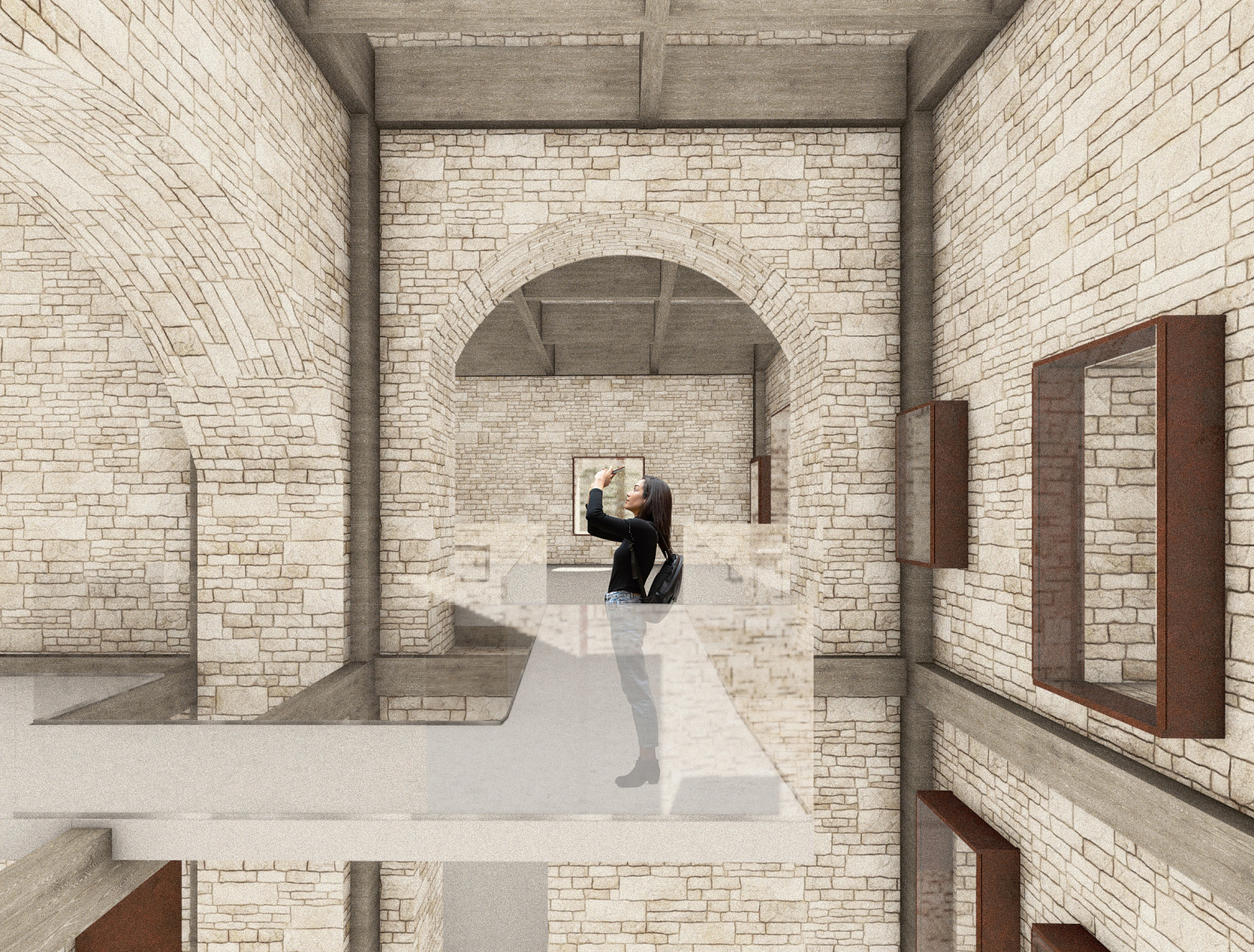
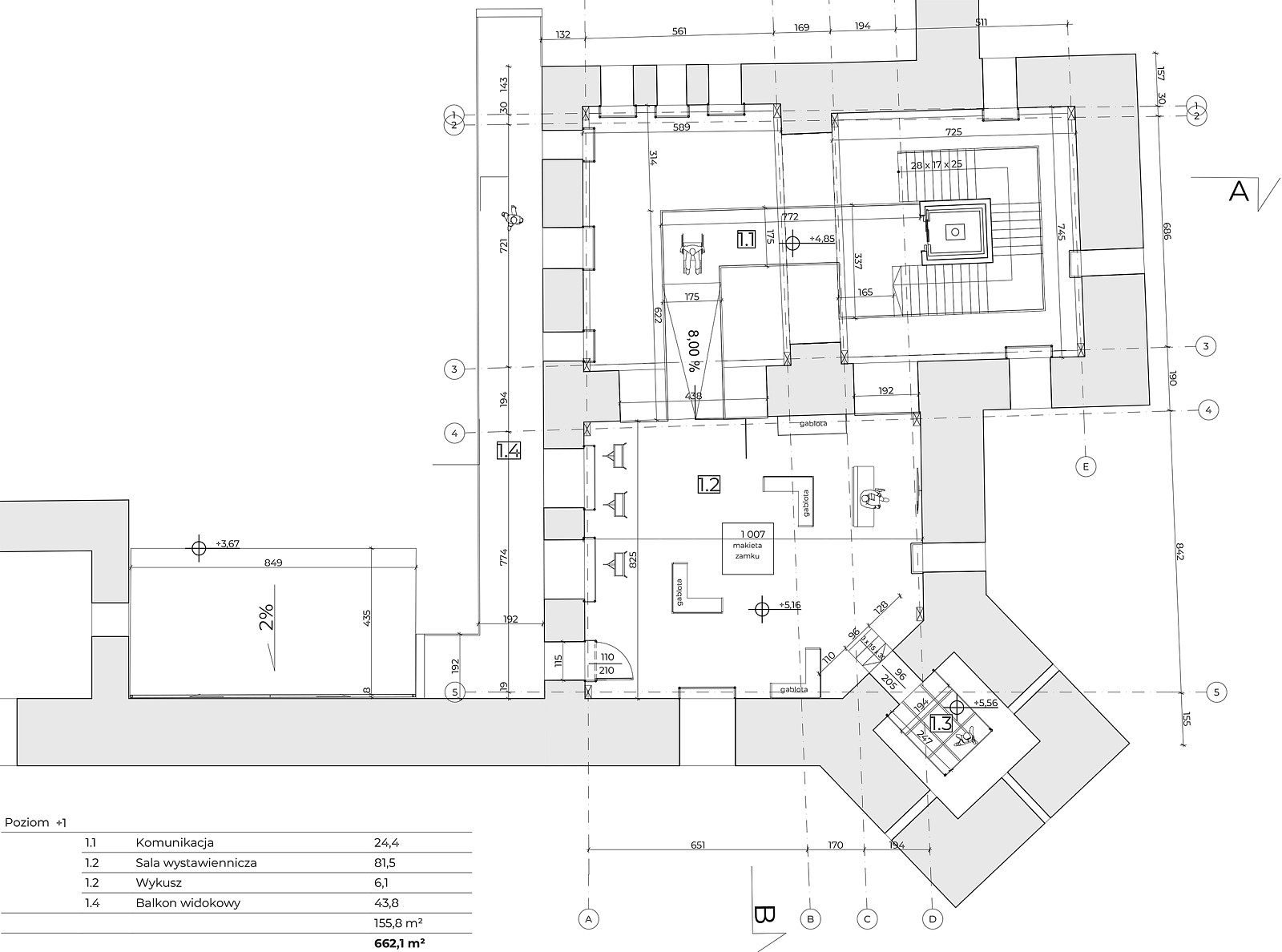
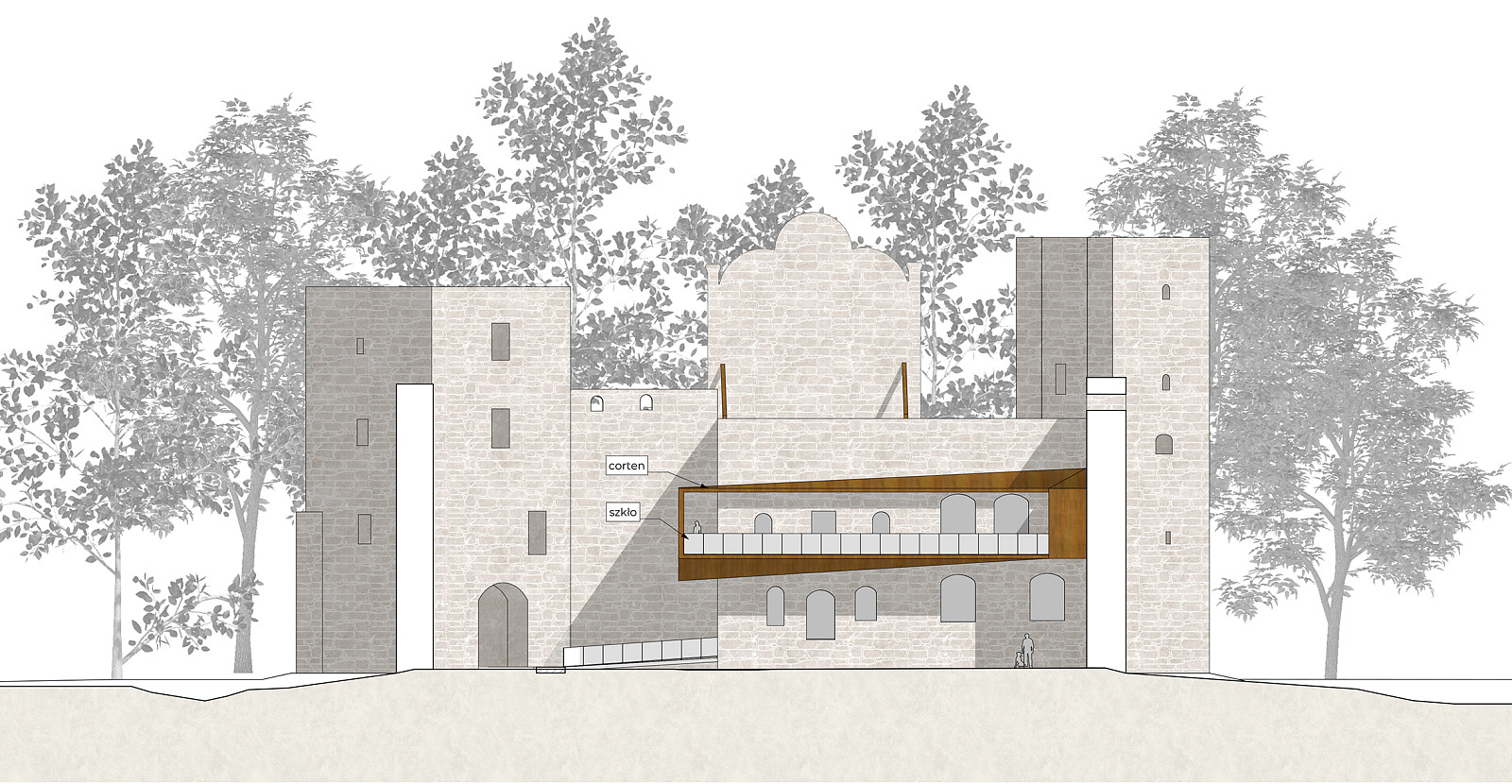
Inside, a floor slab was designed in one part of the house. To connect these two levels, stairs and an elevator—essential for accessibility purposes—were implemented. The elevator's glazing lends it a sense of lightness, while the surrounding wooden stringer stairs correspond well with the stone walls. To make the space more attractive and to avoid obscuring the display of the tall arch located in the service building, only a portion of it was covered by the floor slab. An overhanging bridge, suspended on beams, leads to it from the elevator.
Another element utilizing the same architectural language is a glazed bay window placed inside the tower. It allows for an even closer engagement with the historical fabric of the tower. Interventions visible from the outside—or rather, from the courtyard—include a suspended viewing balcony covered in Corten steel. This is a bold form that marks the presence of contemporary interventions while also enhancing the site's appeal. The final visible element is the summer stage, which simultaneously serves as a storage space for the audience benches when not in use. It features a cuboid volume sculpted with a motif drawn from the castle's brick gables.
Created in:


Copyright © 2026 INSPIRELI | All rights reserved. Use of this website signifies your agreement to the Terms of Use, Privacy Policy, and use of cookies.