Reclaiming The Void


 Mohamed Noeman
Project idea
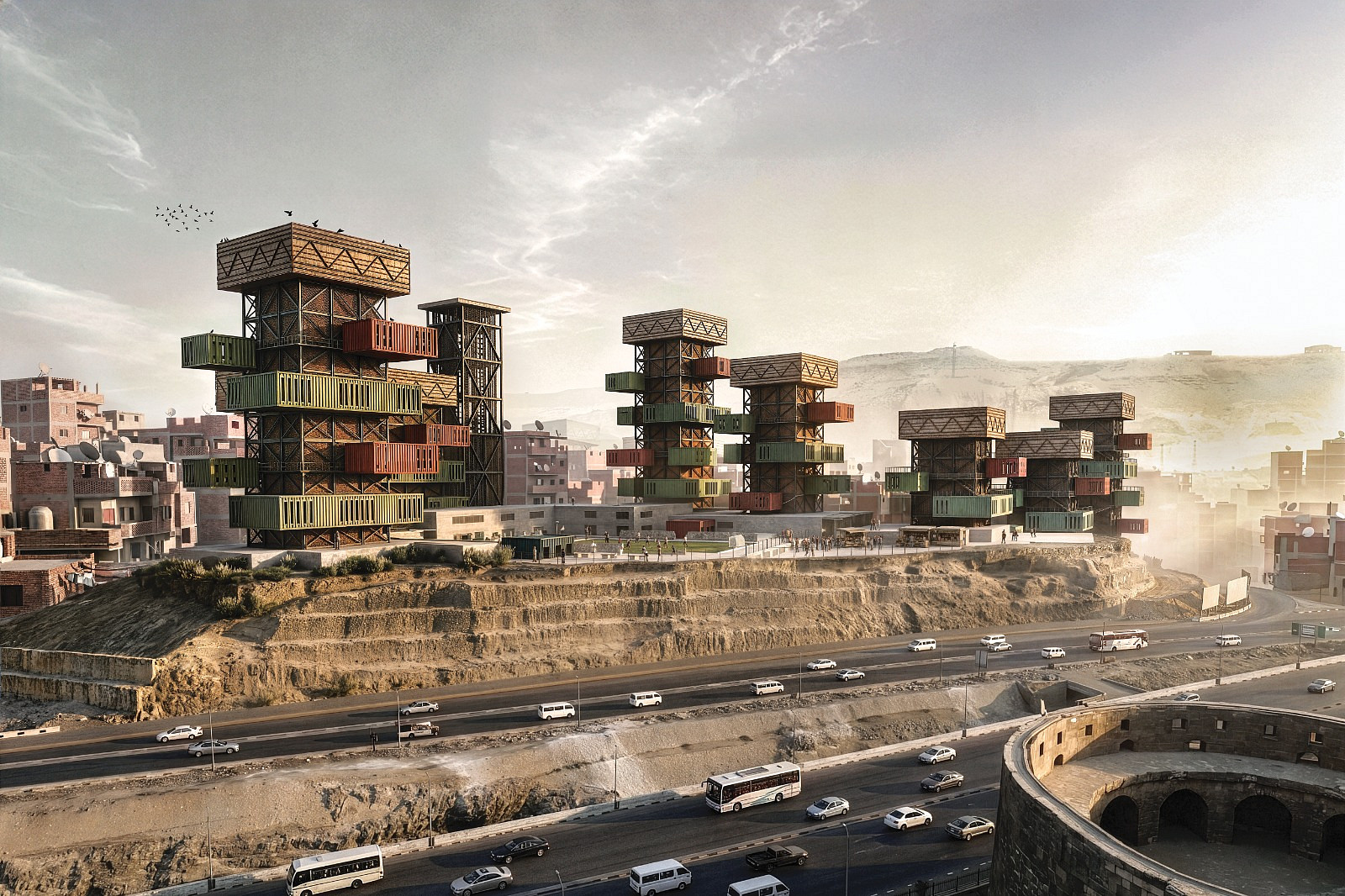
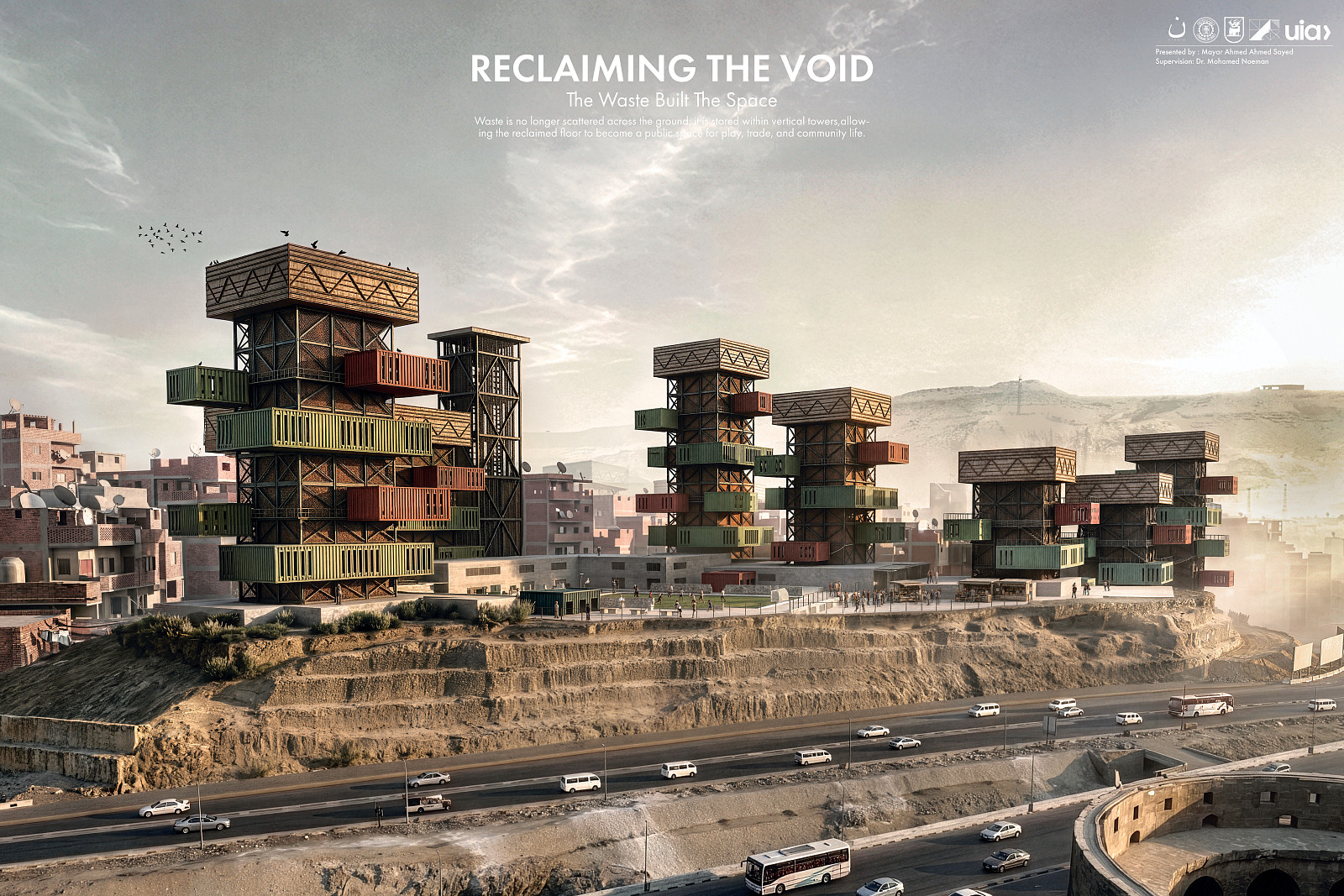
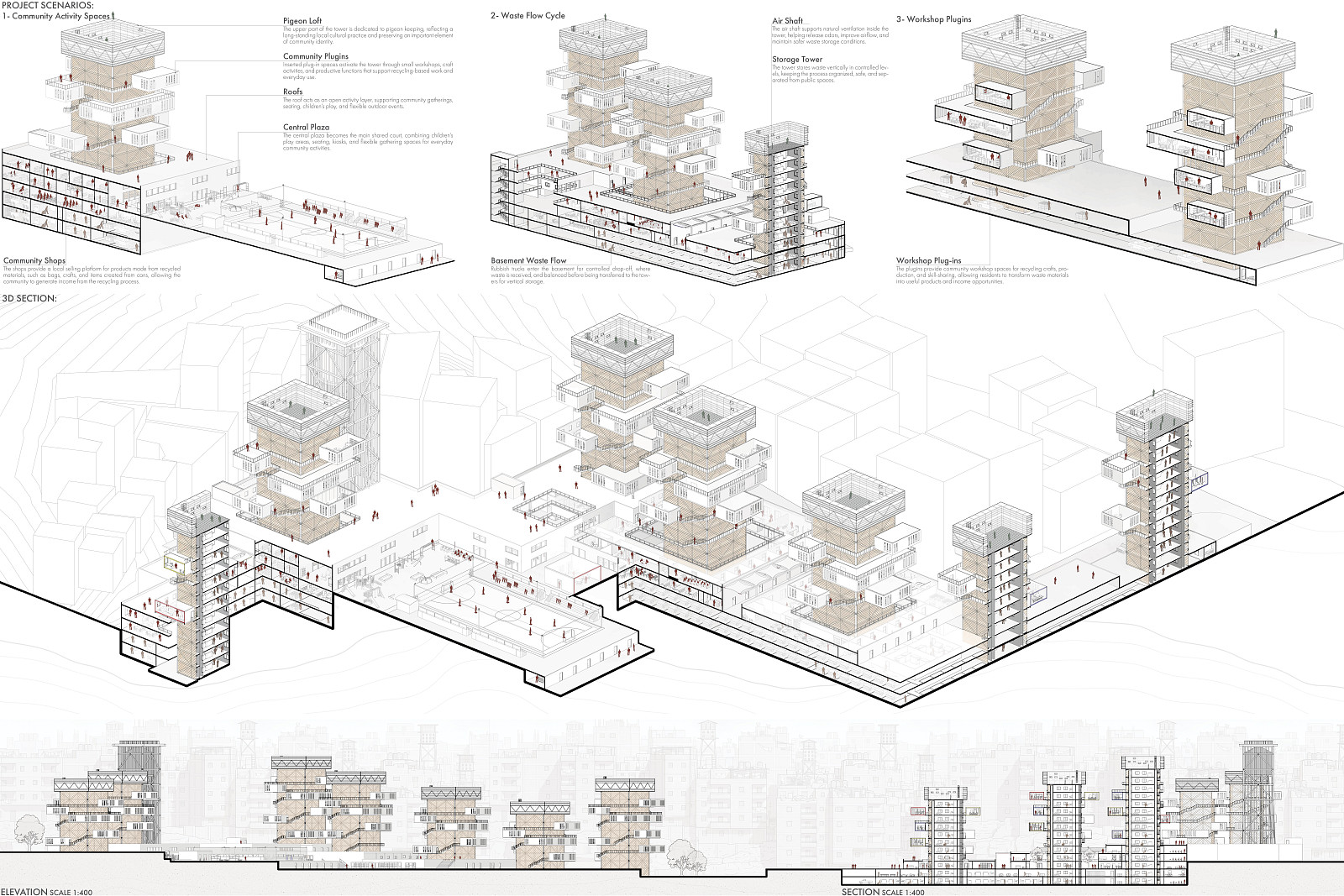
Reclaiming the Void is an architectural intervention in Manshiyet Nasser that responds to the lack of public space caused by the spread of waste storage, sorting activities, and informal occupation of rooftops, streets, and vacant lands. The project aims to reorganize the existing waste cycle vertically within structural towers, freeing the ground level to become a shared public space for the community. By transforming waste from a spatial burden into an organized urban system, the project creates new opportunities for play, gathering, work, trade, and social interaction. It seeks to reclaim the unused and occupied voids of the area and turn them into active spaces that serve both the Zabbaleen community and the wider urban context.
Project description
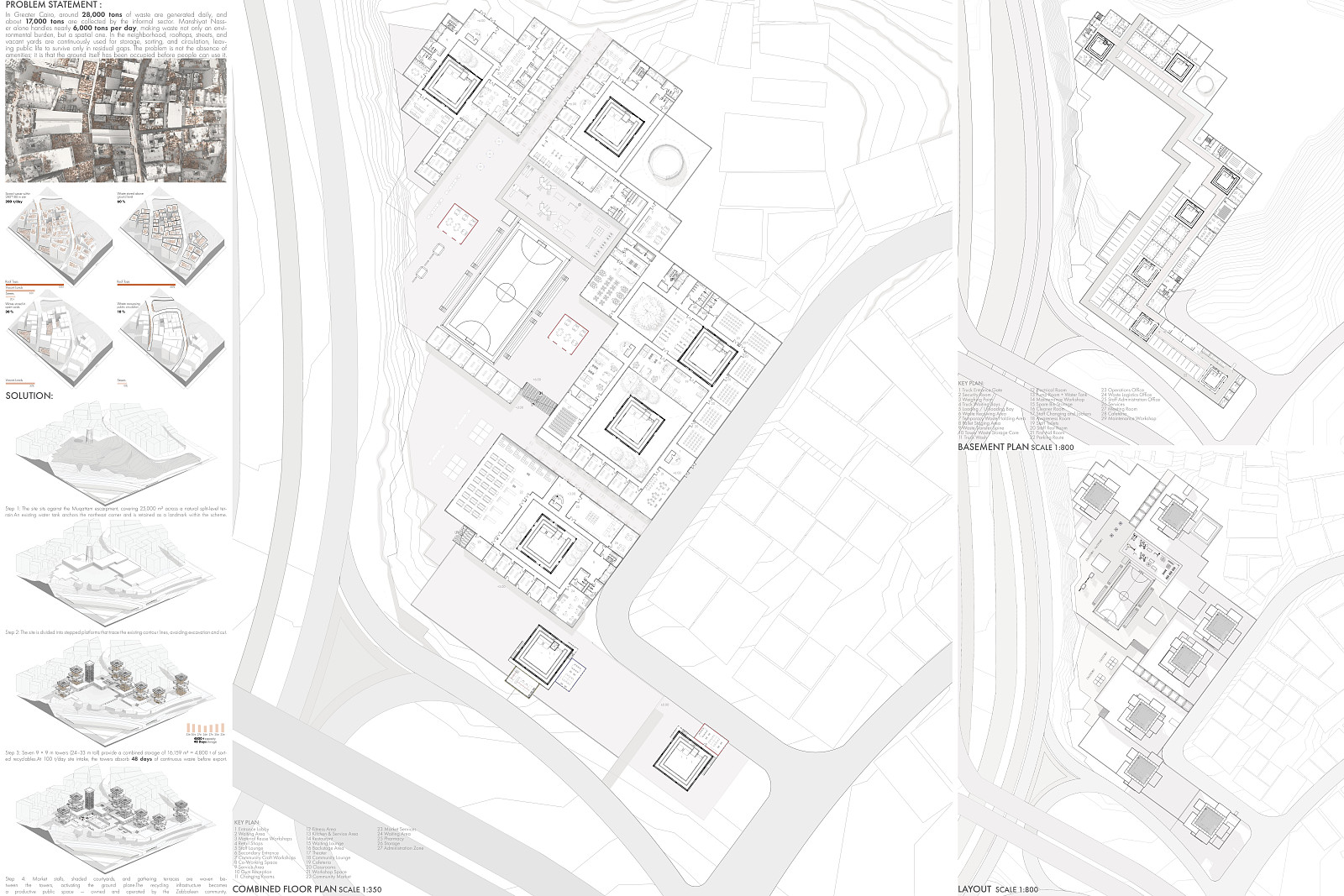
The project consists of a vertical waste management and community hub located in Manshiyet Nasser. It includes a series of structural towers that contain spaces for waste storage, sorting, workshops, and community production. The ground level is reclaimed as a public zone that includes a football court, children’s play areas, kiosks, seating spaces, shaded gathering areas, and a market for products made from recycled materials. The project separates waste circulation from public circulation, allowing the operational waste process to function efficiently without disturbing community activities. The main area of the project is the reclaimed ground plane, where the former waste-occupied space becomes a social and productive public environment.
Technical information
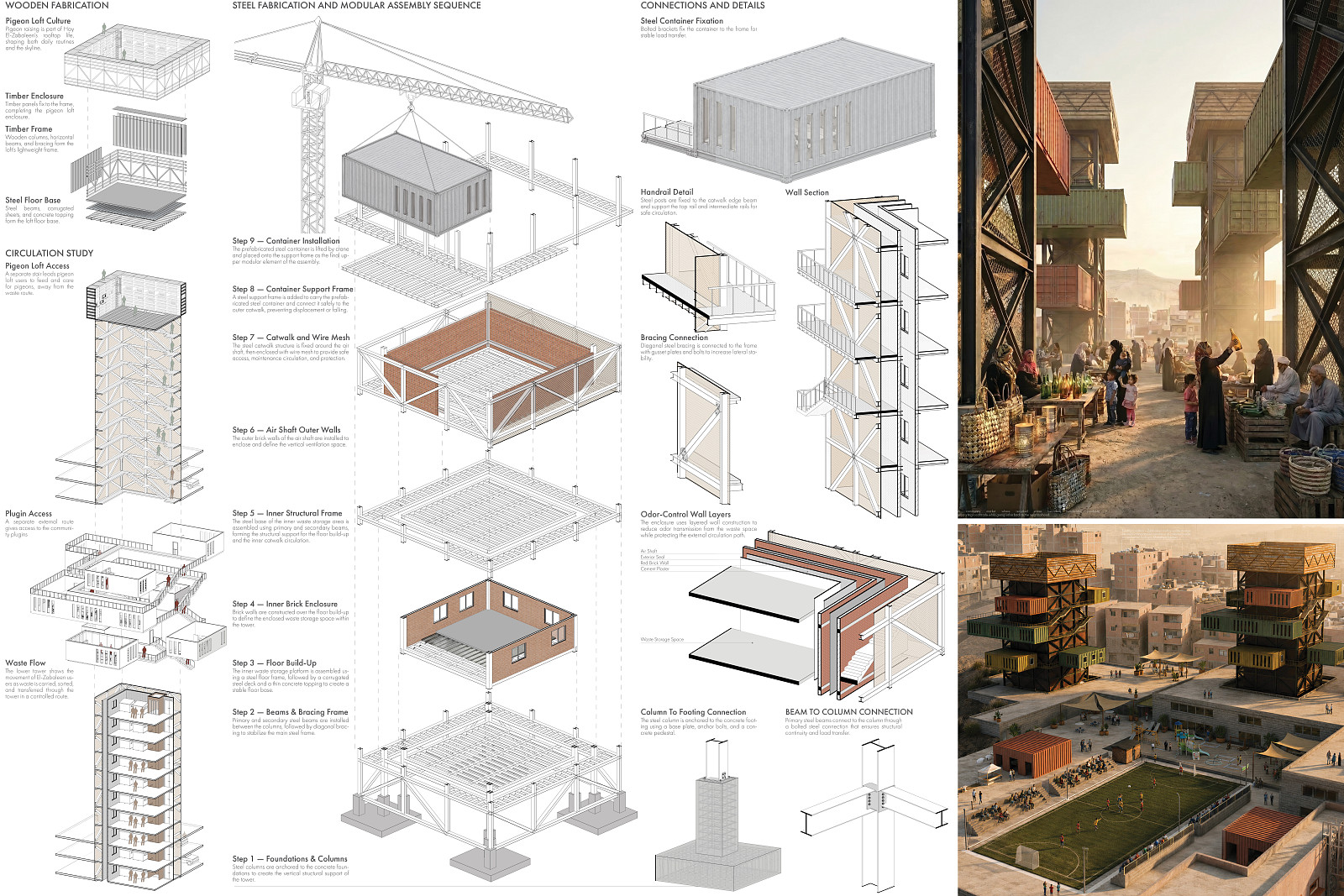
The project is constructed using a steel mega frame system with vertical columns, horizontal beams, and diagonal cross-bracing to support the towers and plug-in modules. Recycled steel containers are used as modular units for workshops and community spaces, while inner brick walls are used for waste storage areas. Catwalks, external stairs, and steel mesh enclosures provide access, safety, and ventilation. The flooring system consists of steel beams, corrugated metal sheets, and a thin concrete layer. Air shafts and separated wall layers are integrated to control odor and improve ventilation. The timber upper structures reference the pigeon lofts commonly found in the rooftops of Manshiyet Nasser, connecting the project technically and culturally to its local context.

Copyright © 2026 INSPIRELI | All rights reserved. Use of this website signifies your agreement to the Terms of Use, Privacy Policy, and use of cookies.