Theseus: A New Housing Typology


Project idea
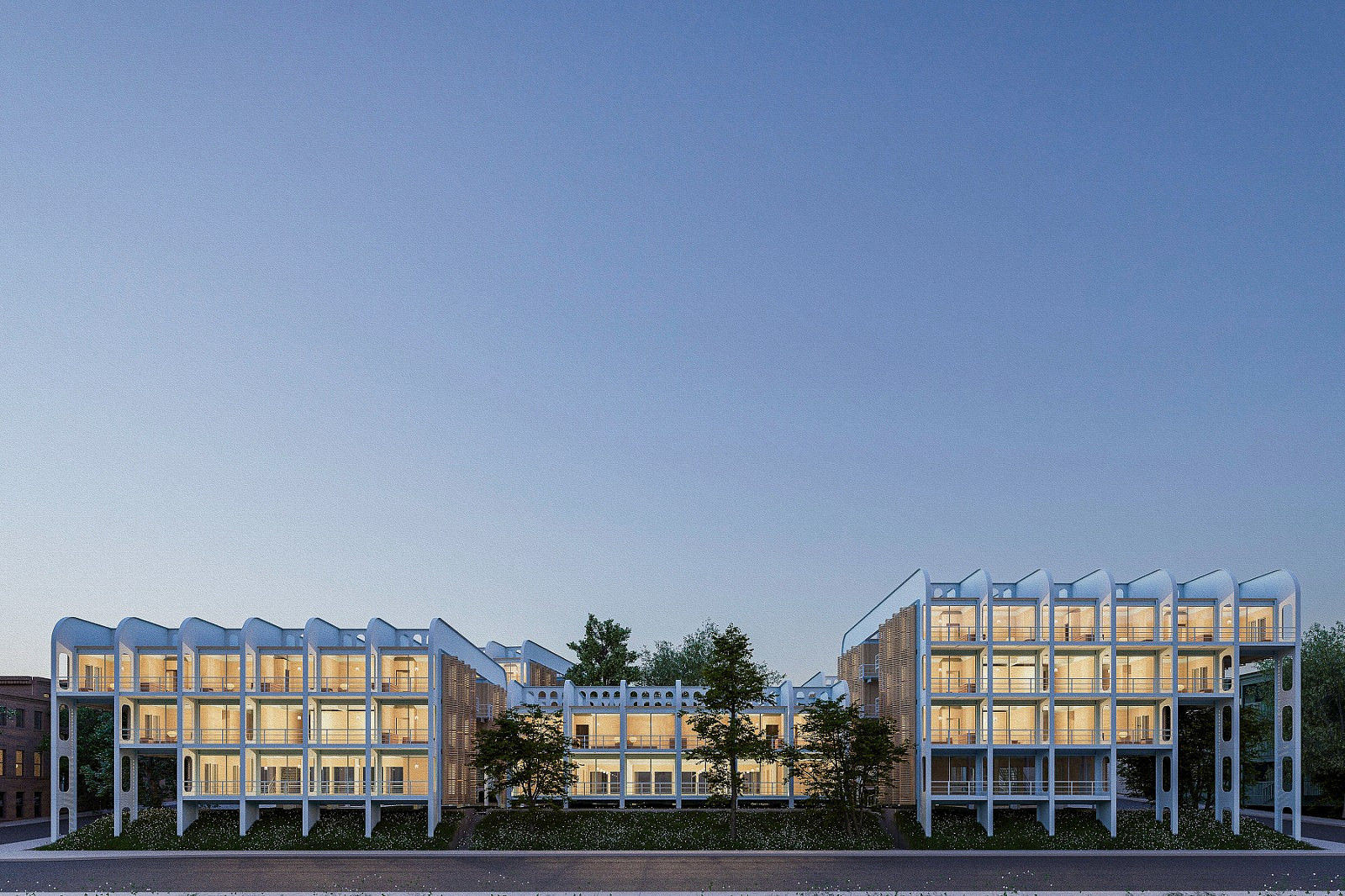
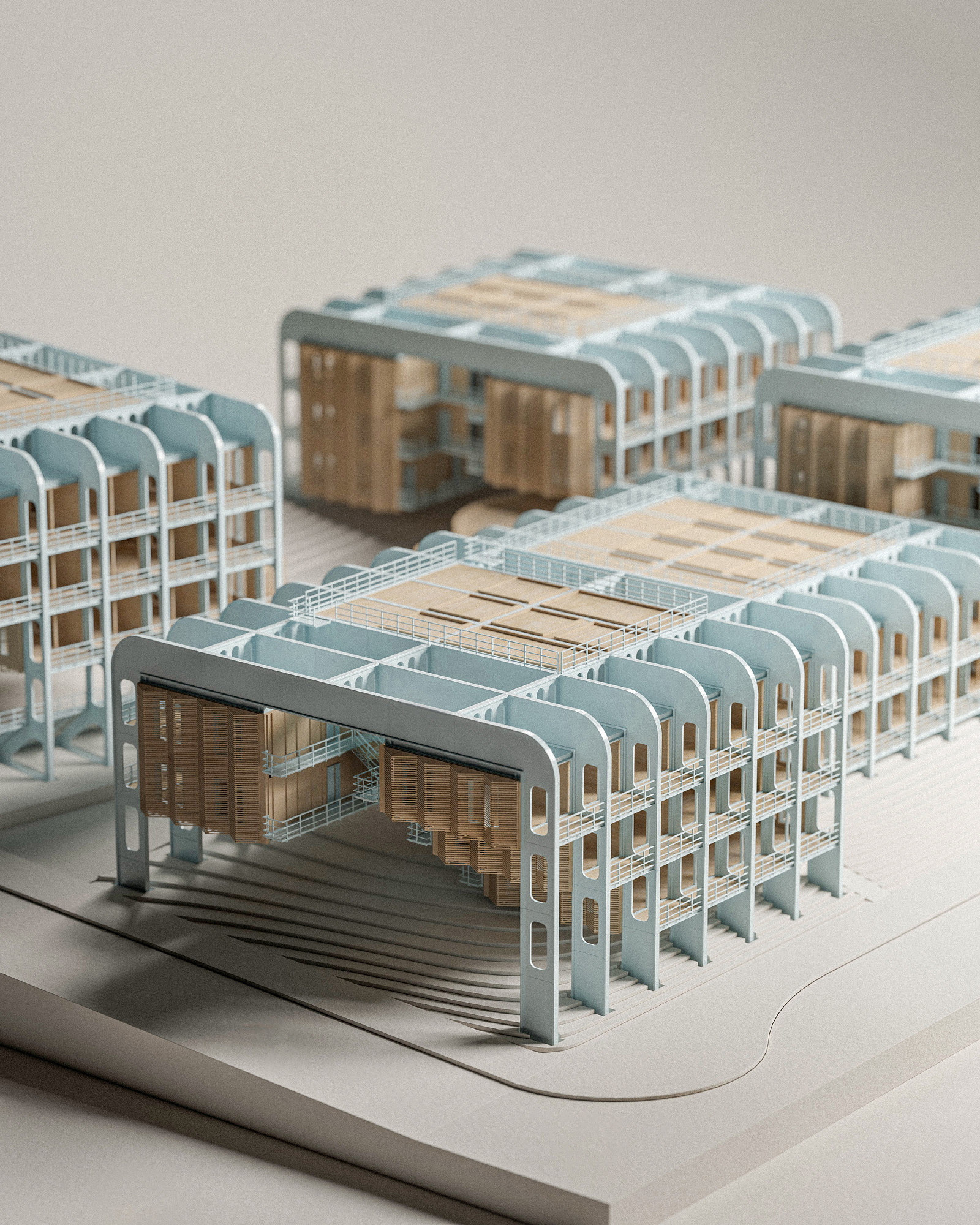
Theseus reuses decommissioned steel cargo holds from dry bulk carriers into superstructures that support a durable 150-bed housing complex. The project reuses the existing structural capacity of a vessel’s steel to create stable housing adjacent to the Port of Chelsea in Chelsea, Massachusetts. Floor plates, walls, and circulation are suspended from a grid of steel tension members. The design produces an elevated living space and an open ground plane that addresses rising flood risk, material scarcity, and changing domestic needs.
Dry bulk carriers are typically decommissioned after only 25 years due to continually evolving shipping technologies and rising insurance premiums, despite remaining structurally sound. Most vessels are exported to shipbreaking yards in Pakistan, Bangladesh, and India, where they are dismantled through dangerous and environmentally hazardous processes. This approach wastes the structural value already engineered into the vessel and discards the labor, energy, and carbon embedded in its original manufacture. Theseus treats marine steel as a valuable stock of reusable structural material.
Project description
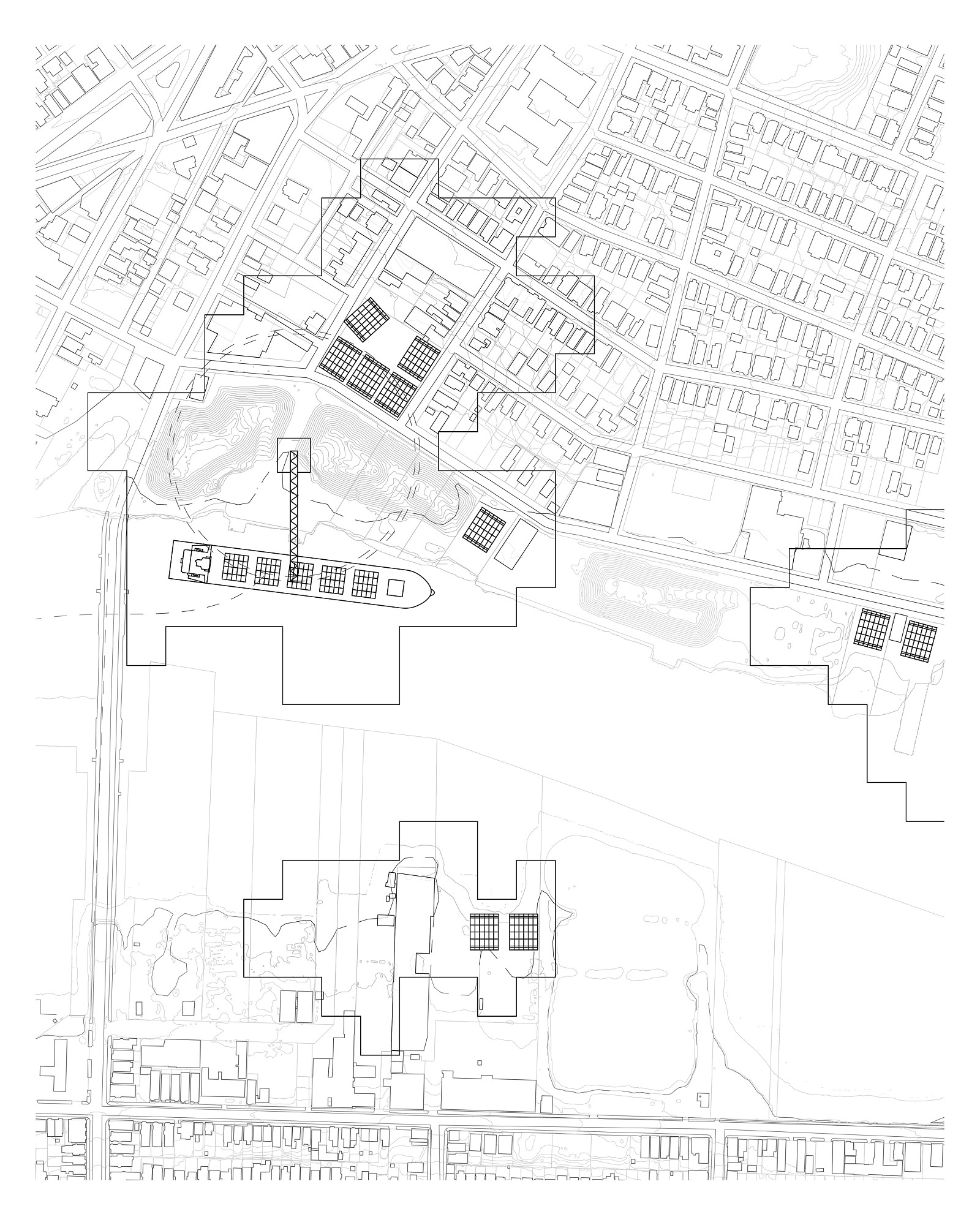
Theseus is organized as a five-building housing complex, with each building supported by an individual cargo hold. The re-purposed and retrofitted structures are not decorative wrappers but the primary organizers of the architectural system. The largely open site accommodates neighborhood-serving and mixed-use functions at grade, positioning the project as both residential housing and public infrastructure.
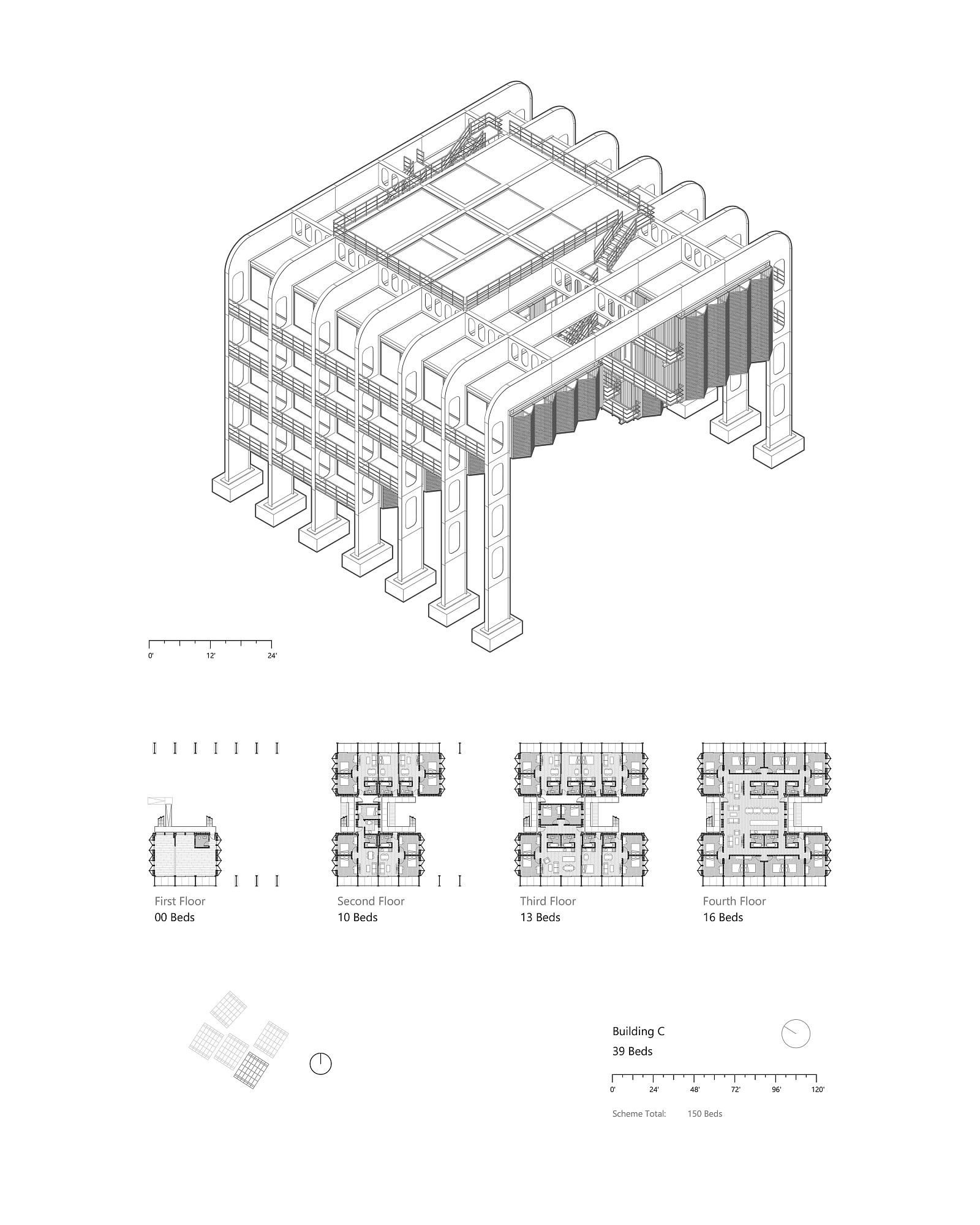
The scheme accommodates 148 beds across 41 residential units. These units occupy approximately 45,000 square feet. There are an additional 8,700 square feet of interior community space. Including circulation and balconies, this totals approximately 70,000 square feet on a 47,000-square-foot site. The project also includes 9,300 square feet of roof gardens. Due to the inverse density afforded by the hanging structure, 37,000 square feet of public park space is available along the ground plane.
The housing model combines three living types: floor-wide co-living units, compact private studios, and family apartments ranging from two to four bedrooms. No interior walls are load-bearing. This allows units separated by operable party walls to temporarily or permanently combine adjacent spaces. Residents can expand, contract, or reorganize their homes as their needs change over time. Together, these unit types create a hybrid housing model that brings the flexibility and longevity associated with single-family homes into apartment living.
Technical information
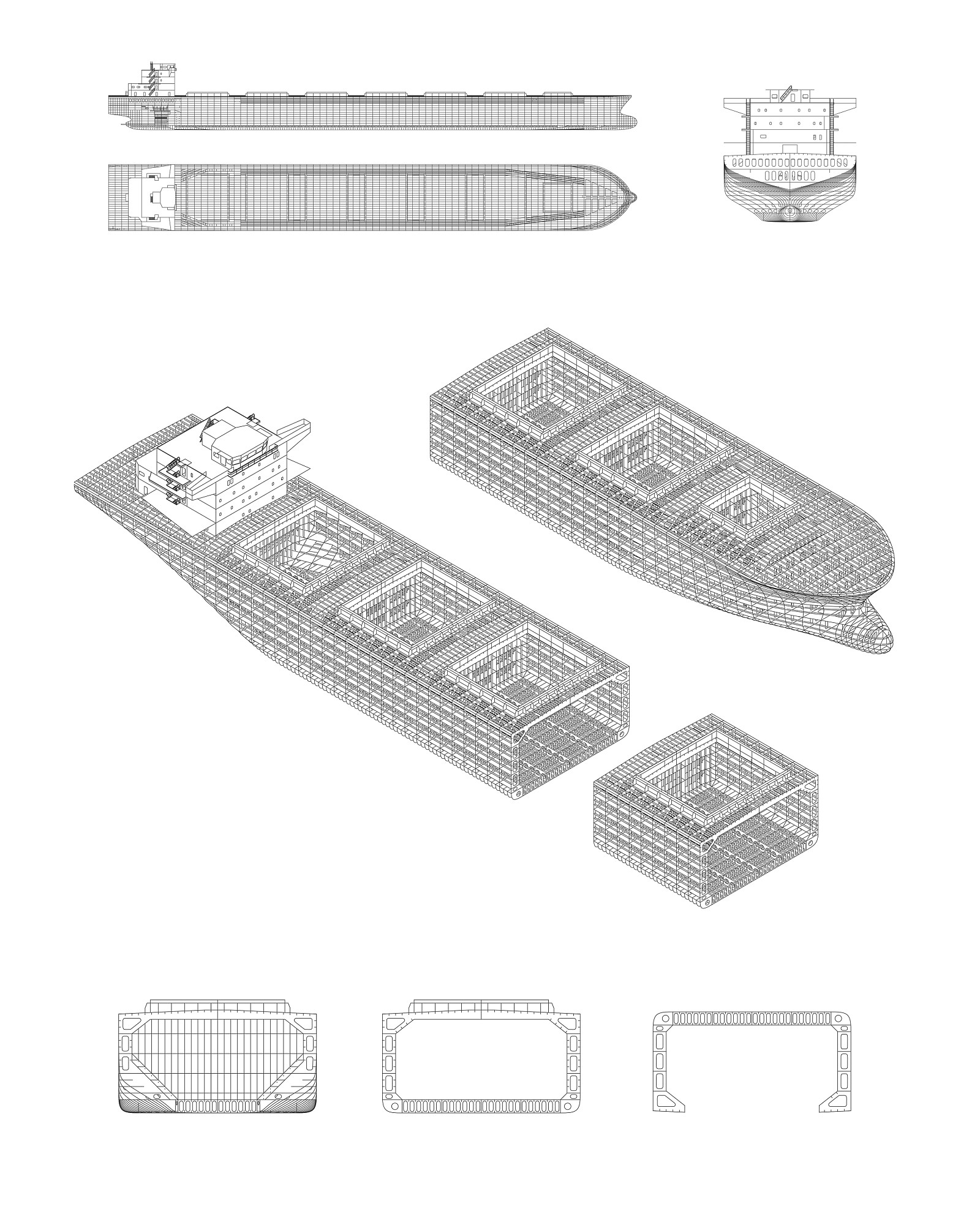
The architectural value of reuse in Theseus depends on pre-existing, structural surplus. The hull-as-superstructure allows for longer spans, fewer interruptions, and a greater buffer between the housing and the ground. After separating and stripping each cargo hold to its structural members, the 72’x84’ structures are turned upside down and placed on site. These superstructures, capable of safely holding literal tons of valuable cargo across the world’s most extreme ocean environments, support the housing project by carrying the load in tension above ground.
Each structure onsite subdivides to form a 12’x24’ structural grid that supports cross-laminated timber floor plates in tension with high-tensile steel members. All interior and exterior walls, fixtures, and live loads are transferred to the floor plates, then through the tension members to the frame above. The load is then carried to the ground through the continuous, rounded exterior frame. This load path allows non-load-bearing walls to serve as the interior organization and the exterior envelope of the structure.
Plumbing, service zones, and accessible circulation are concentrated within the steel's structural depth. Elevator cores are located within the wide occupiable frame that extends to the ground. Structural sections are separated from the original ship through stripping, testing, cleaning, trimming, and repair.


Copyright © 2026 INSPIRELI | All rights reserved. Use of this website signifies your agreement to the Terms of Use, Privacy Policy, and use of cookies.