Museum of Sound and Auditory Arts


Project idea
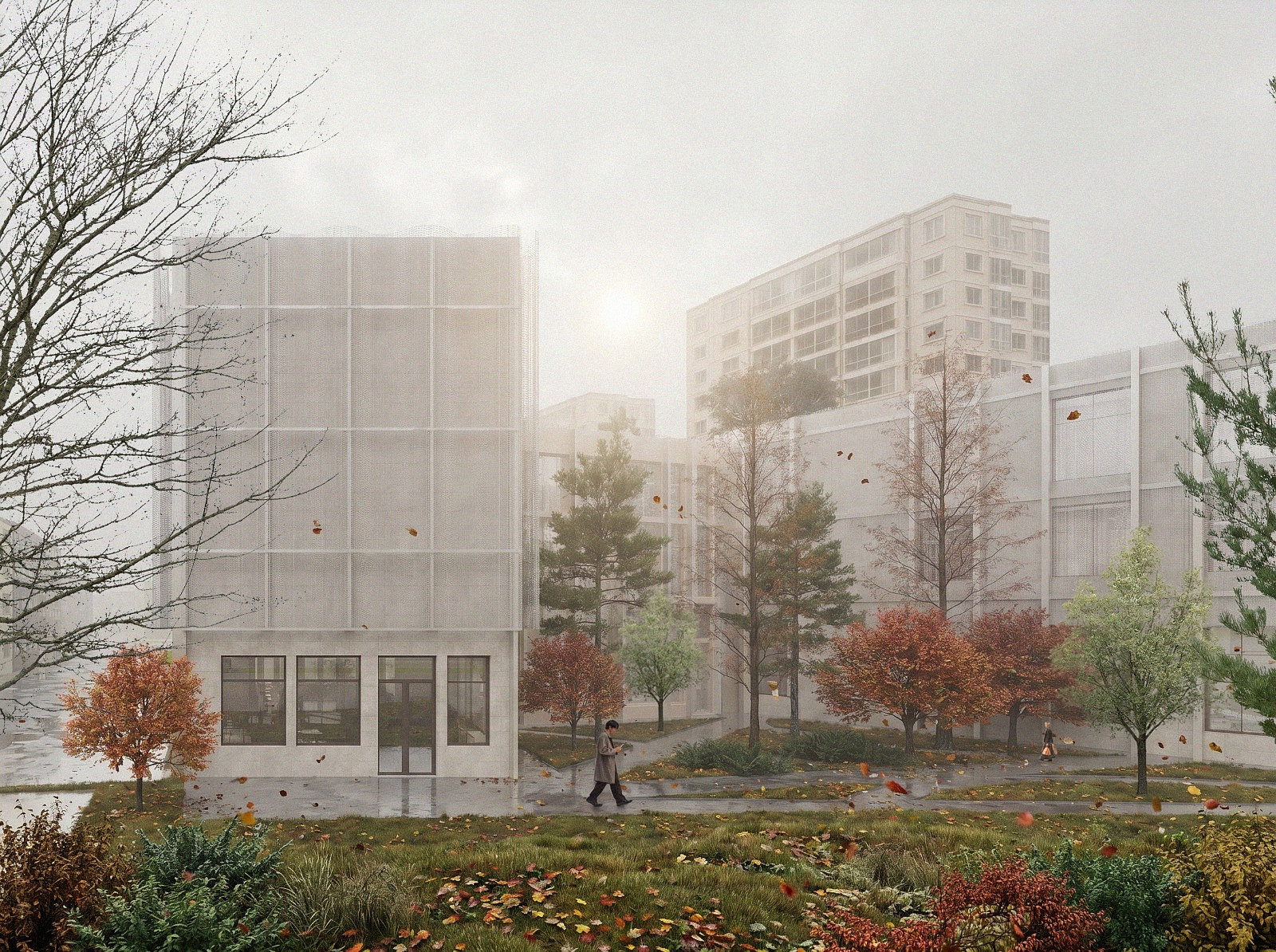
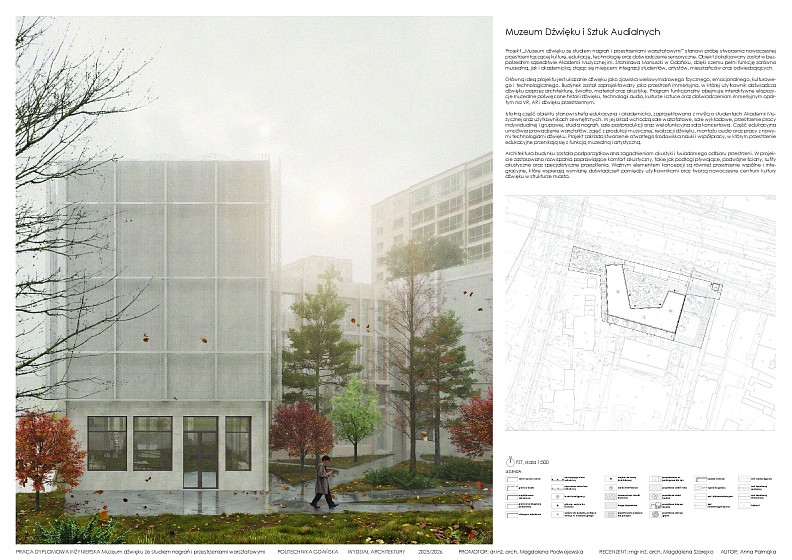
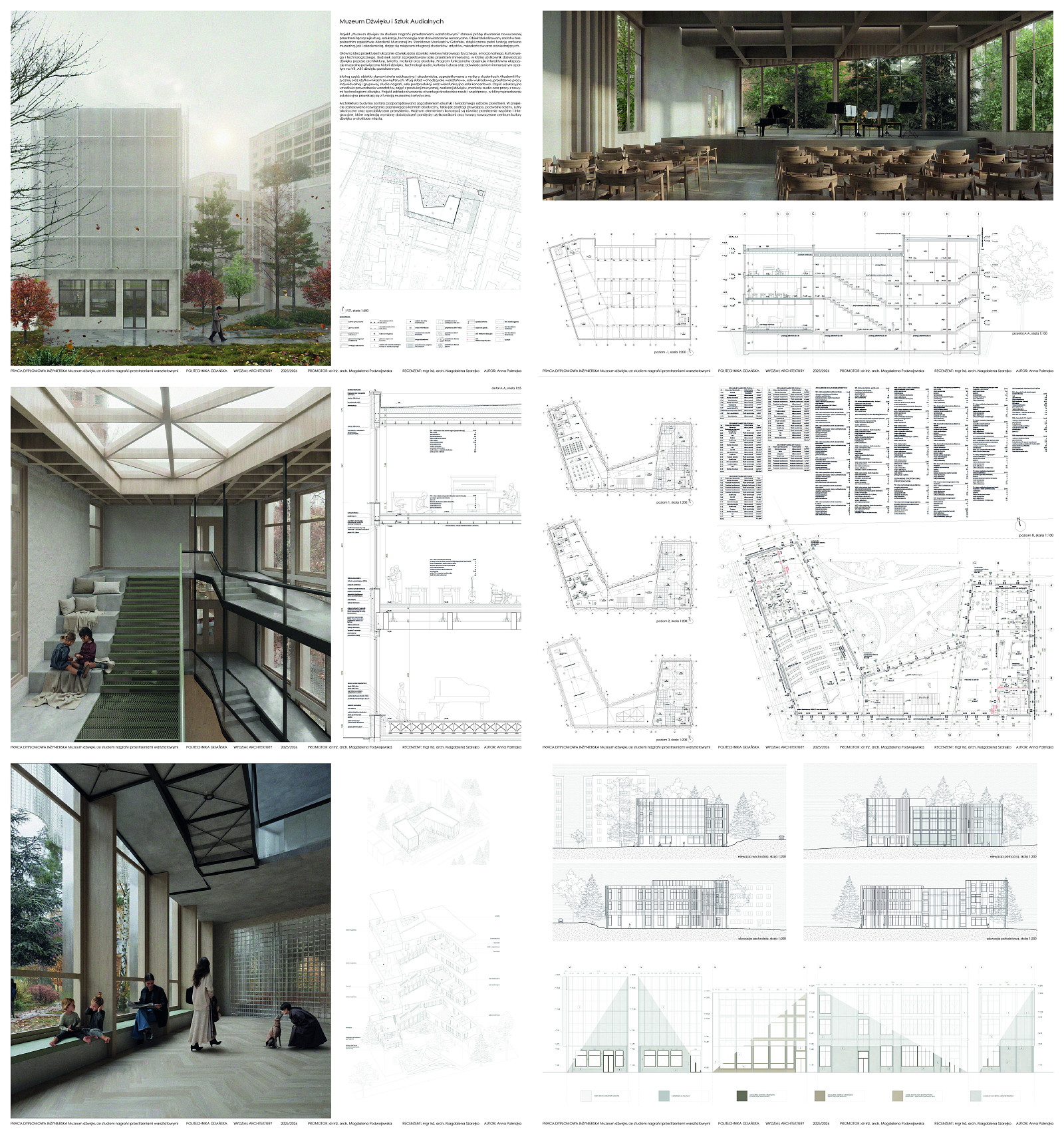
The “Museum of Sound and Auditory Arts” was conceived in response to the need for a space dedicated to sound, a phenomenon that constantly accompanies human life yet rarely becomes the primary subject of architectural design. Contemporary cities are saturated with visual stimuli, while the acoustic dimension and conscious auditory perception often remain overlooked. The inspiration behind this project was the desire to present sound as an element of culture, technology, and everyday experience, while creating a place where it can be explored, analyzed, and created. The location of the building in close proximity to the Music Academy in Gdańsk enables the integration of museum and educational functions, creating a space open to students, local residents, and visitors alike.
Project description
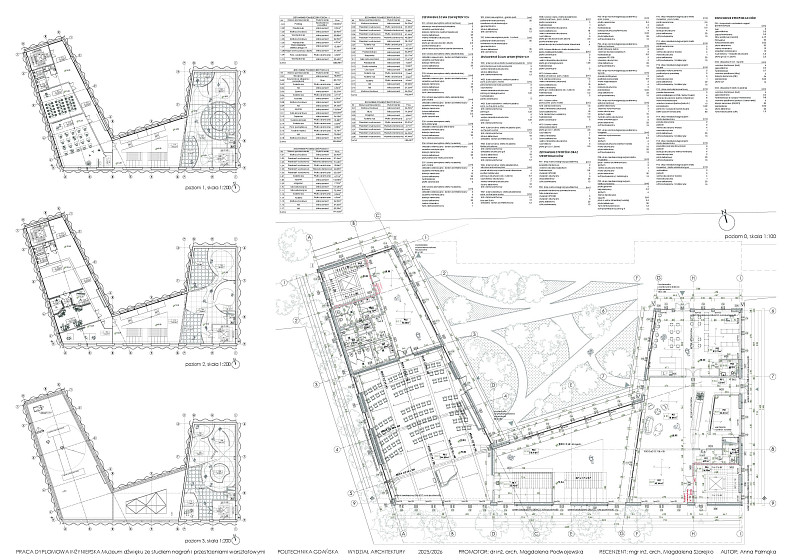
The project consists of two main functional zones connected by a shared circulation link.
The first zone is the museum area, where the exhibition guides visitors through successive stages related to the history of sound, its role in culture, the development of audio technology, and contemporary immersive experiences. The exhibitions are designed to be interactive, engaging visitors through spatial sound, multimedia installations, and hands-on experiments.
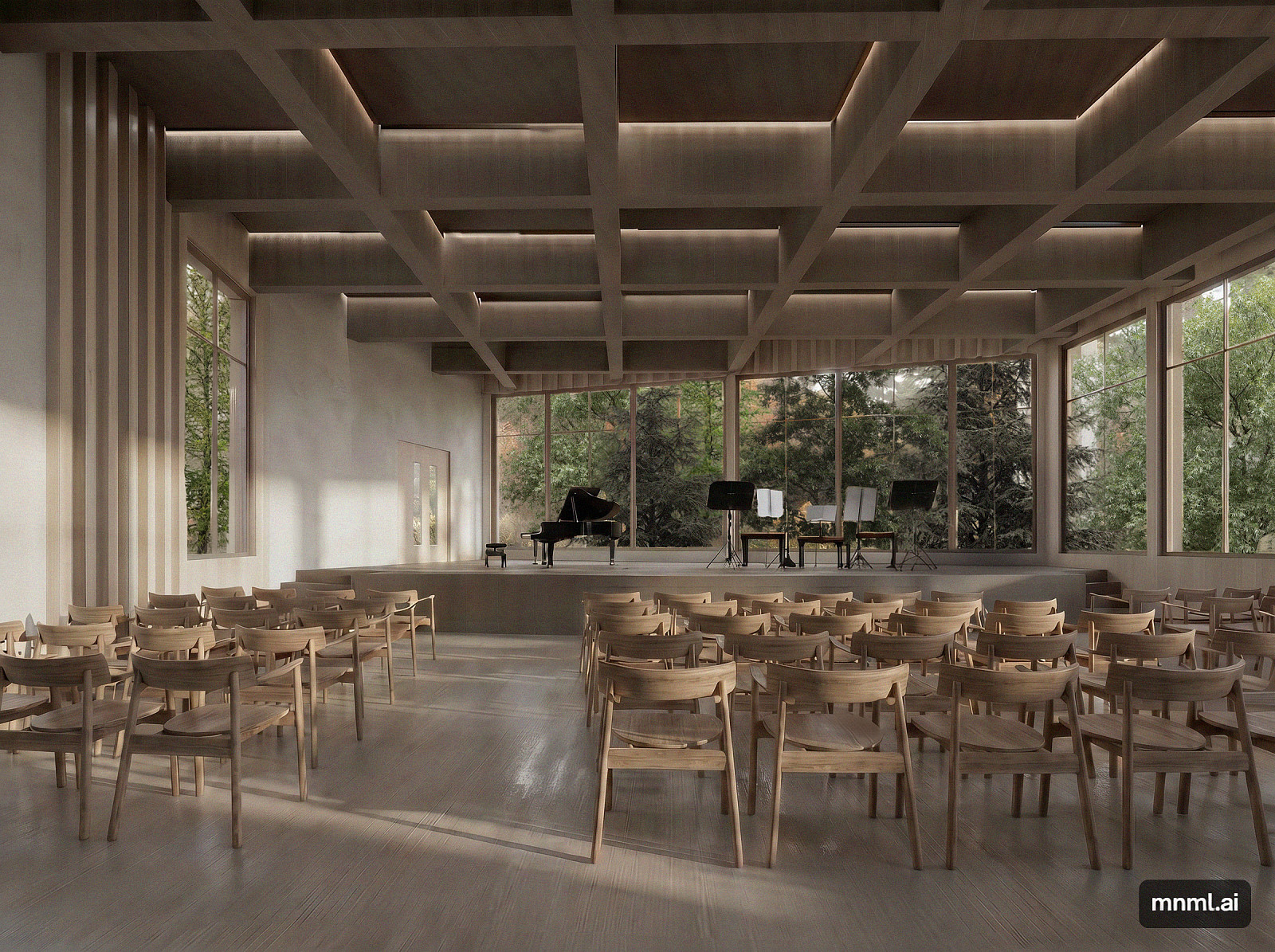
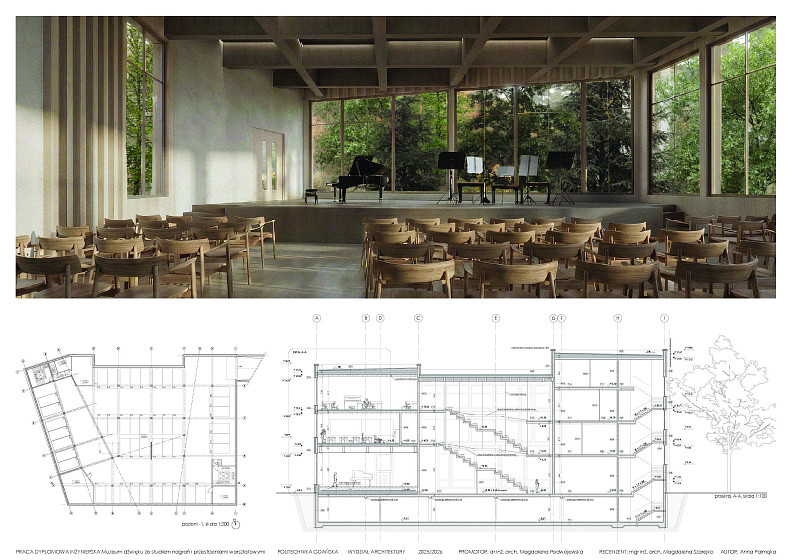
The second zone is the educational and academic area, comprising lecture halls, workshop spaces, professional recording studios, post-production facilities, and a concert hall. The functional program enables courses and activities in sound engineering, music production, audio technology, and new media. The building has been designed as a place that integrates culture, education, and creativity, providing opportunities both for acquiring knowledge and for developing practical skills related to sound.
Technical information
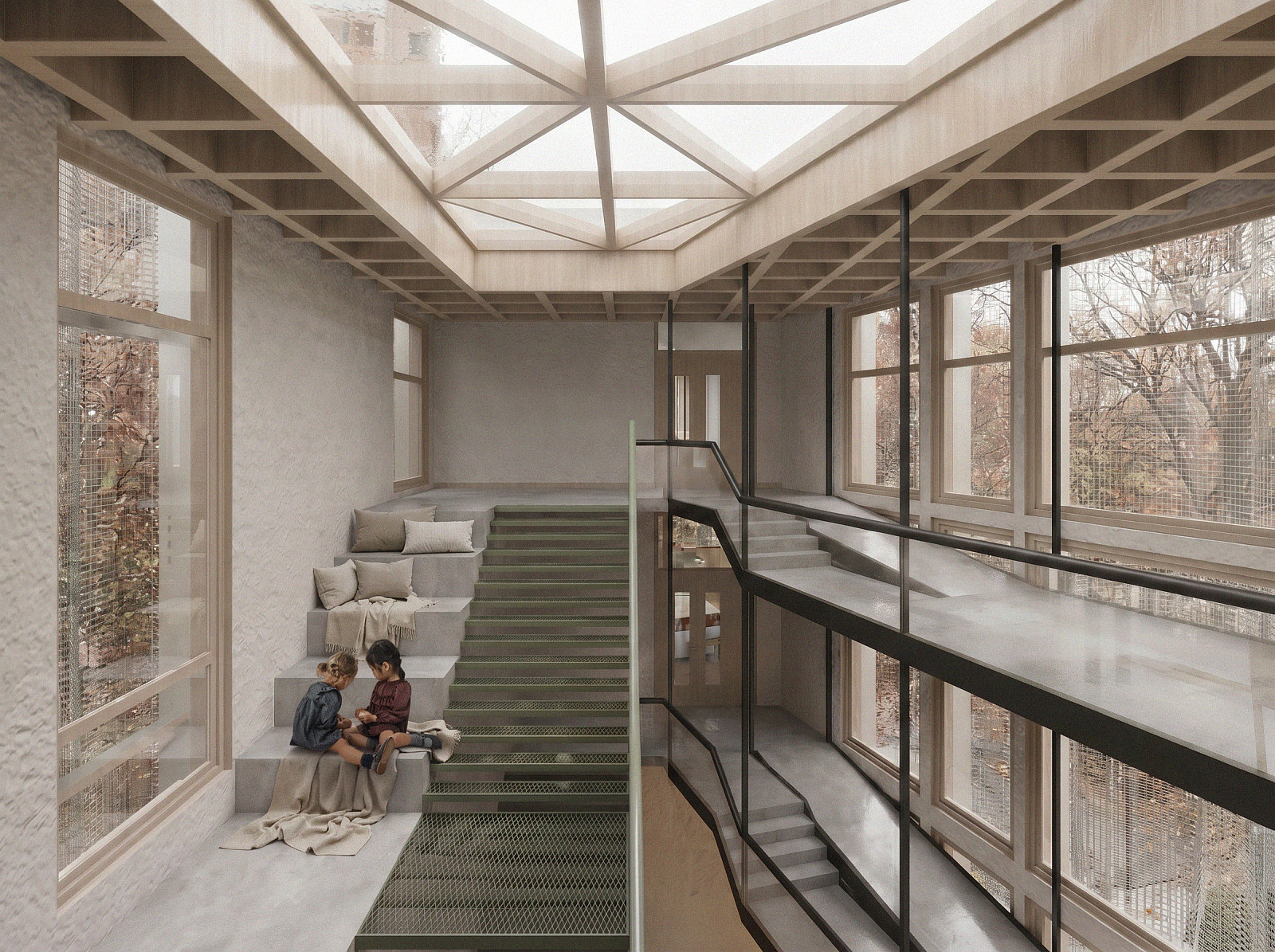
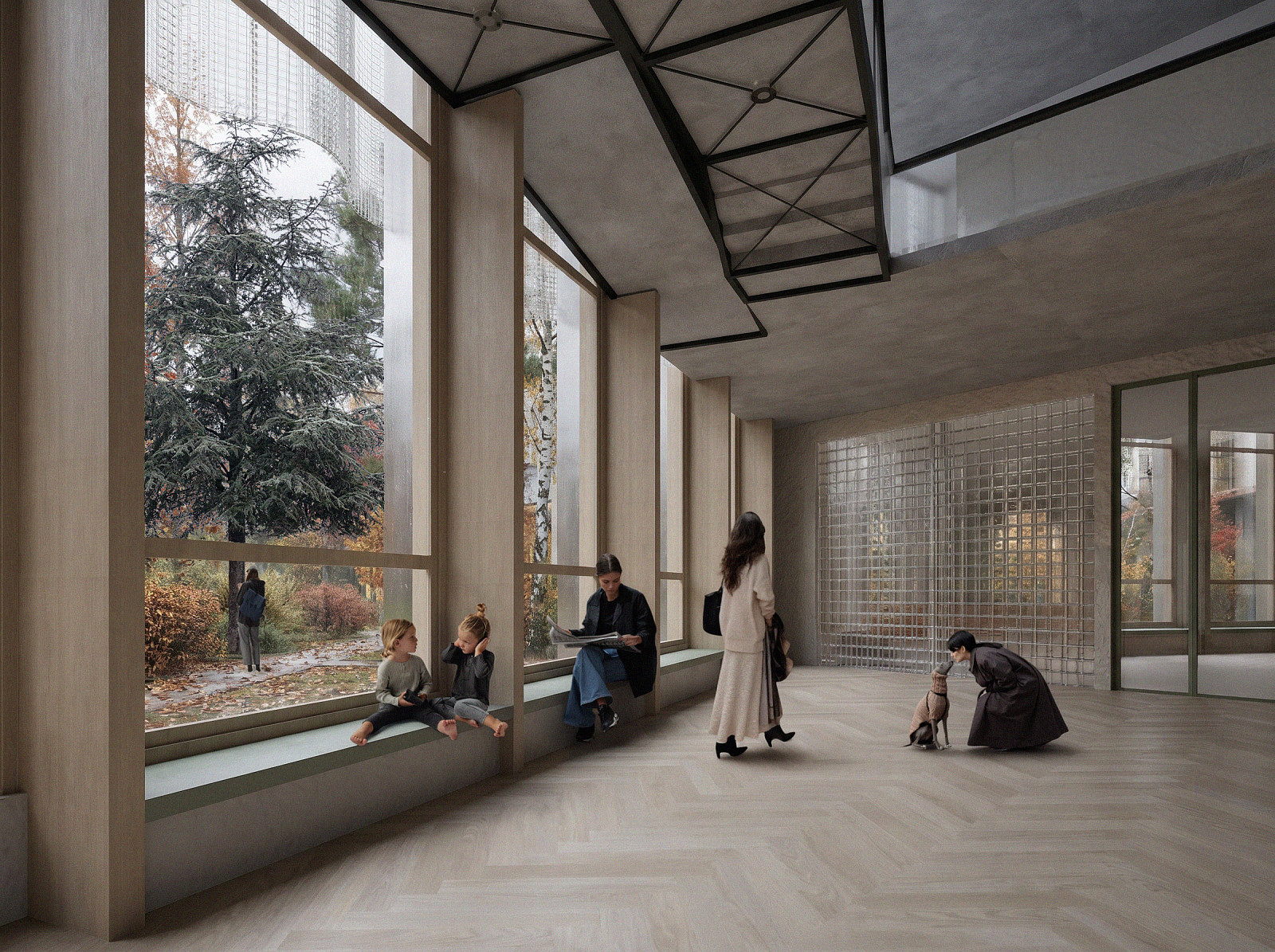
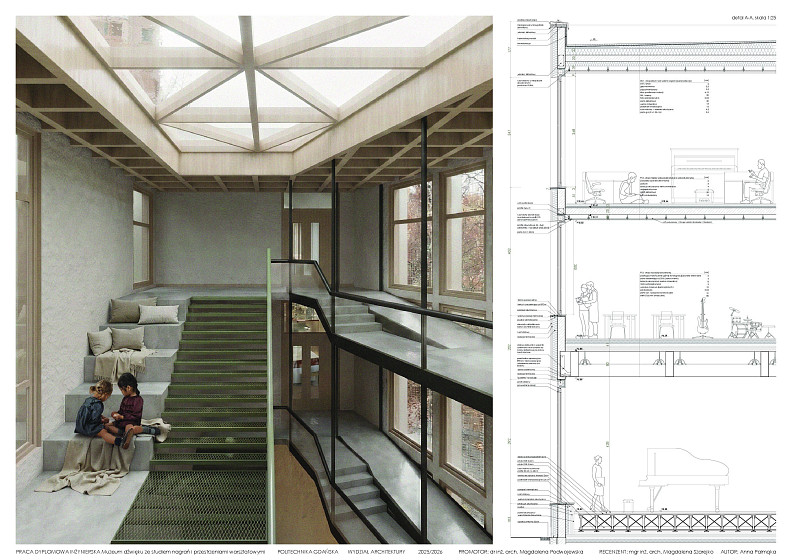
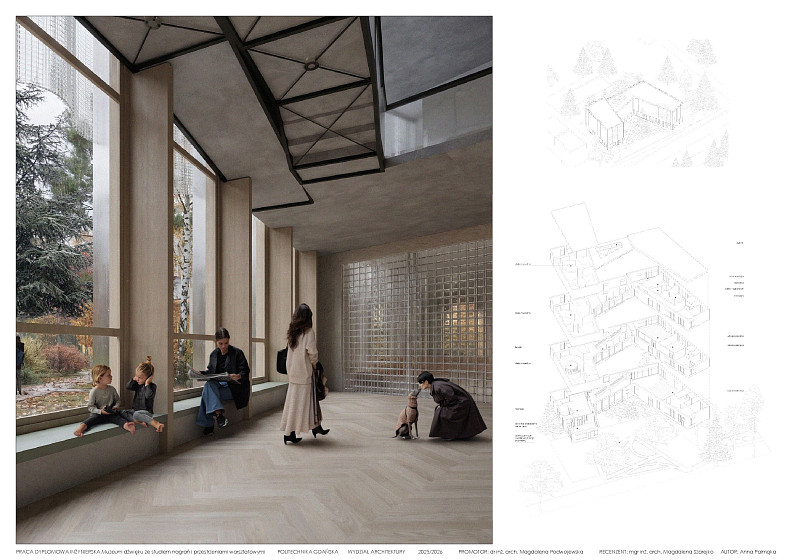
The building was designed as a multifunctional facility requiring advanced acoustic performance throughout its various spaces. The primary structural system consists of reinforced concrete elements, while selected areas incorporate timber structures made of glued laminated timber (glulam), which remain exposed within the concert hall and connecting circulation space.
Recording studios and post-production rooms are equipped with floating floors, double acoustic walls, and specialized high-performance acoustic glazing to ensure superior sound insulation. The building program includes museum, educational, concert, and technical facilities, with all design solutions guided by the concept of consciously shaping space through sound, acoustics, and user experience.
Documentation
Show PDF 1Show PDF 2Show PDF 3Show PDF 4Show PDF 5Show PDF 6

Copyright © 2026 INSPIRELI | All rights reserved. Use of this website signifies your agreement to the Terms of Use, Privacy Policy, and use of cookies.