NiCo_Zážitkové centrum


Project idea
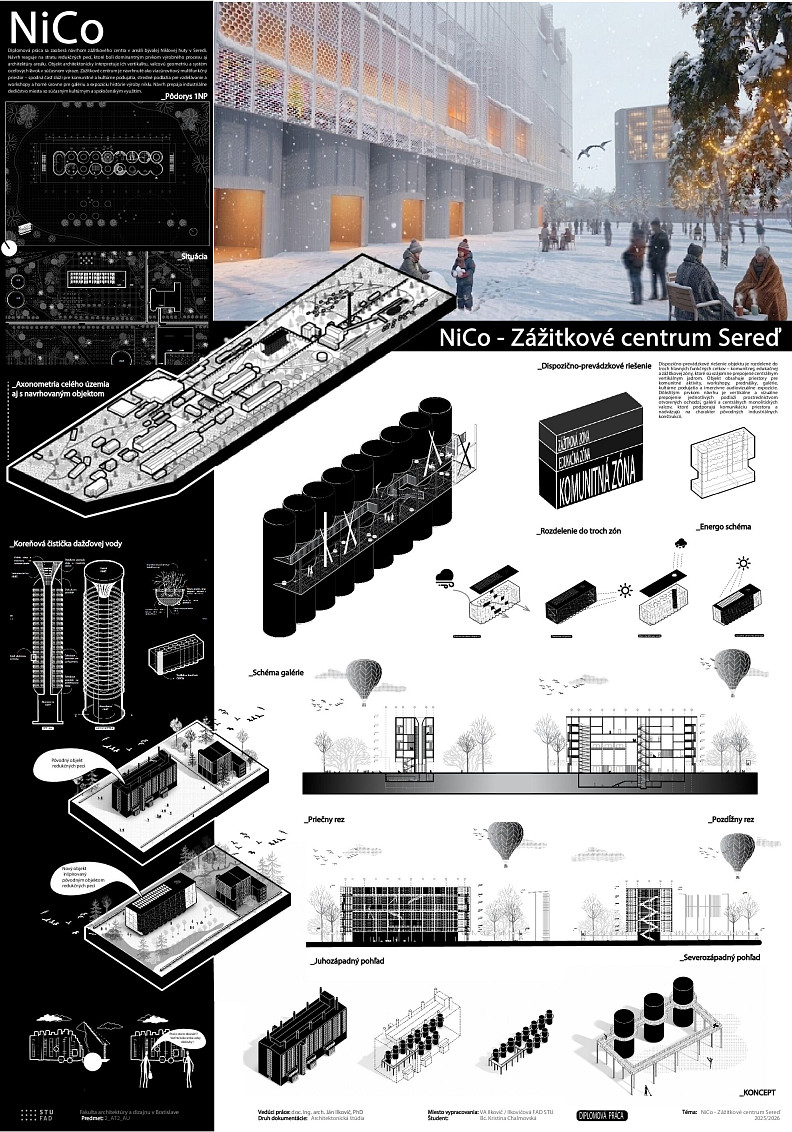
This project focuses on the transformation of the former nickel smelter site in Sereď, Slovakia, through the design of an experiential cultural center that reconnects the area with its industrial past. The site was historically defined by its reduction furnaces, which served as the technological core of production and formed one of the most significant landmarks of the complex. Their removal left both a physical and symbolic void within the site.The architectural concept reinterprets the original furnaces through contemporary design inspired by their verticality, cylindrical form, and steel structural elements. Rather than replicating the original structure, the project transforms its industrial character into a new architectural language.The building is designed as a multifunctional center combining public, educational, and exhibition spaces. Its main goal is to preserve the historical identity of the site while creating a new cultural landmark that activates the abandoned industrial area and connects its past with future community use.
Project description
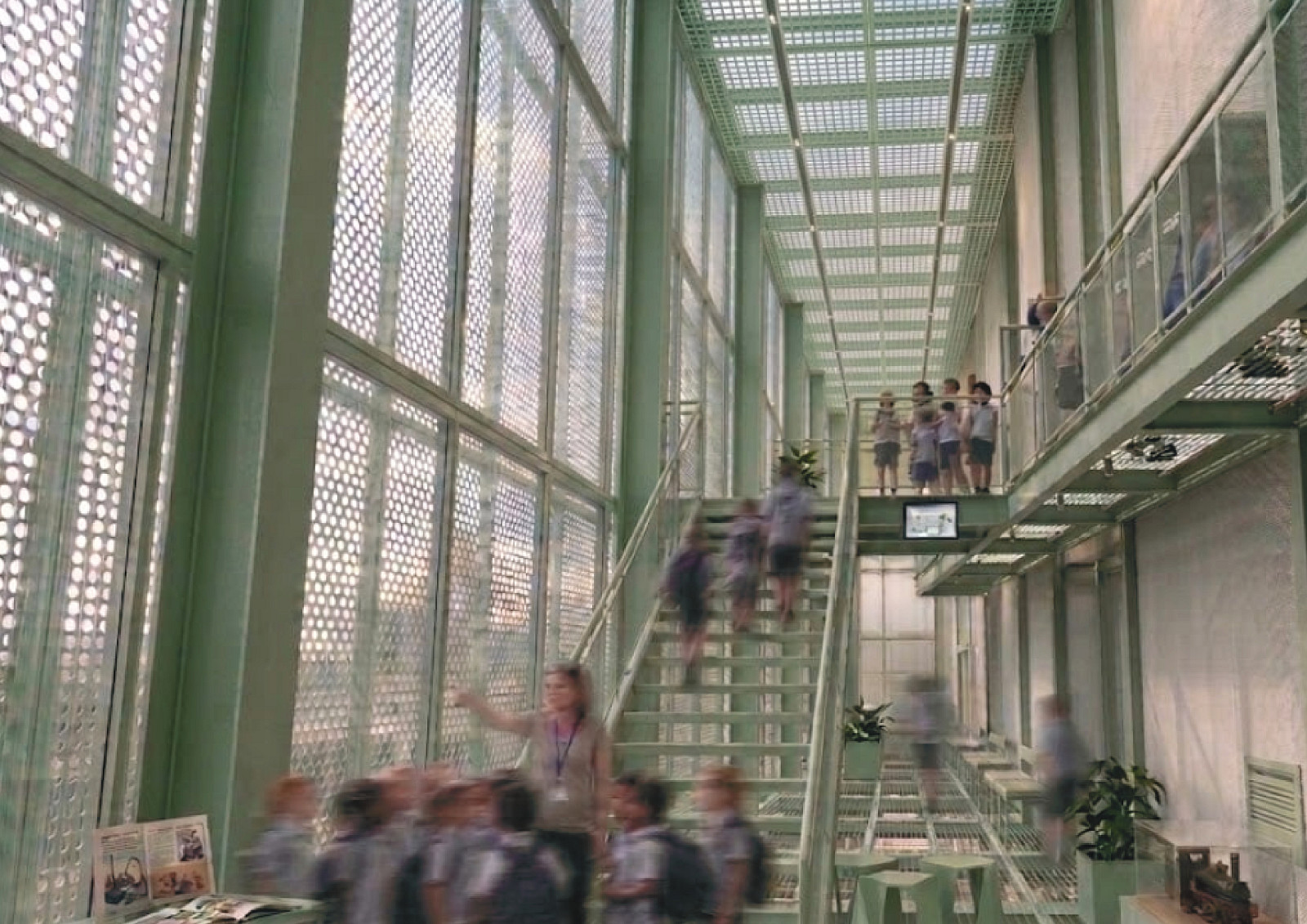
The project is based on the idea of creating an architectural structure that works as a vertical sequence of spatial experiences, where the movement of visitors through the building is an important part of the concept. The design explores the relationship between heavy and light elements, combining solid concrete volumes with an external steel circulation system. This system shapes both the appearance and the internal organization of the building.The concept uses dominant cylindrical forms as the main structural and spatial elements. These central forms create the core of the building, while steel walkways and hanging platforms create dynamic movement around them. They offer changing views and encourage interaction between visitors and the space.The building is organized as a gradual vertical journey through its levels. The lower floors are open and flexible public spaces for community activities, social meetings, and cultural events. The middle floors are used for workshops, education, and creative work. The upper floors are designed as interactive exhibition spaces, where visitors can explore content through audiovisual elements and direct experience of the space.The project connects architecture, movement, and experience into one whole, where the structure itself becomes part of the visitor’s journey. The goal is to create a multifunctional space that supports interaction, learning, and shared experiences, while also creating a strong and memorable architectural identity.
Technical information
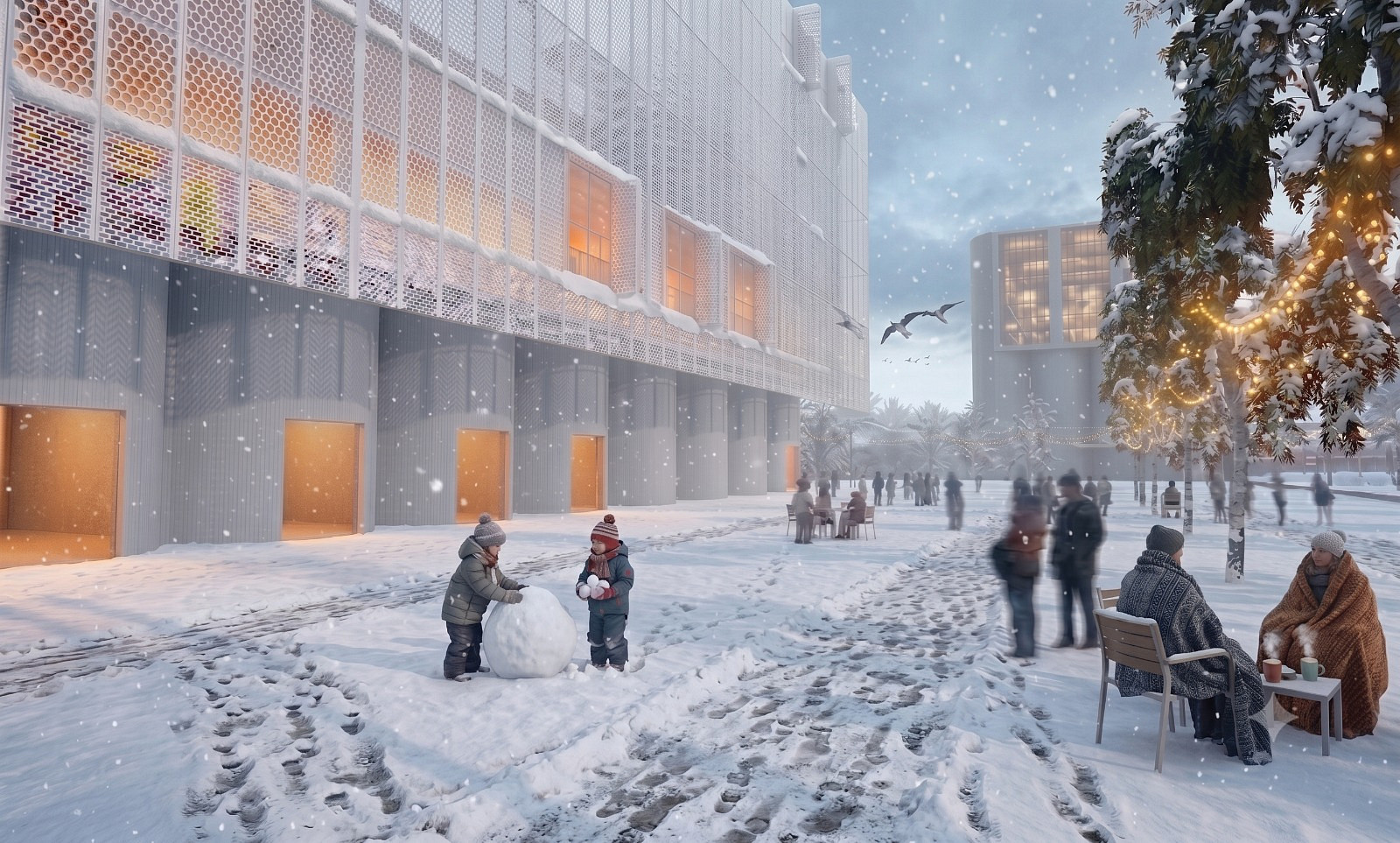
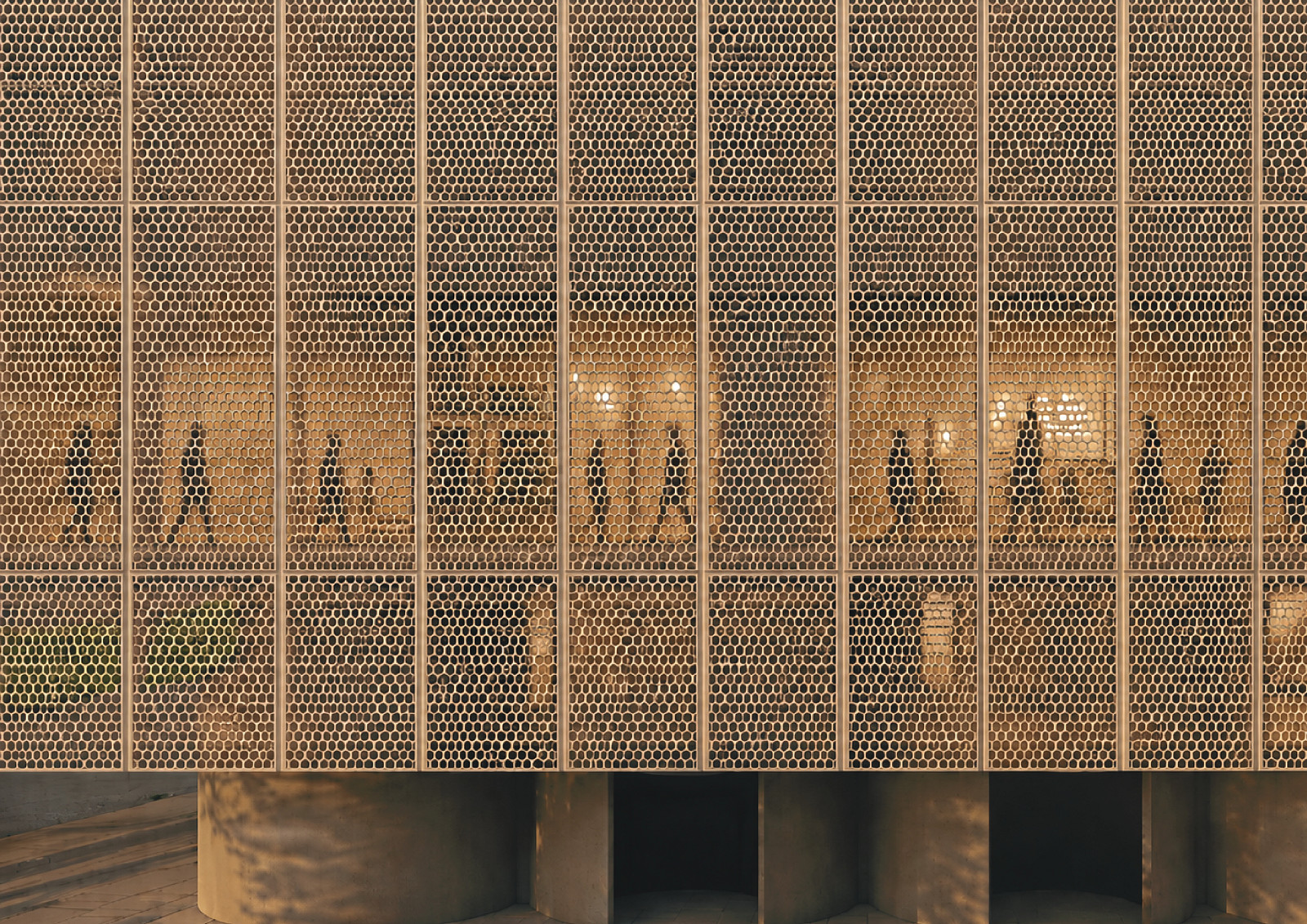
The building is designed on a modular grid of 7.5 × 7.5 m, which is based on the diameter of the original reduction furnaces on the site. The module defines the basic structural and spatial logic of the building.The main load-bearing system consists of monolithic reinforced concrete cylinders, which ensure the stability of the structure and also refer to the original industrial equipment.The secondary structure is a steel structure, starting from the 4th above-ground floor at a height of approximately 10 m. It is suspended from the steel ceiling structure and creates walkways, circulation paths, and gallery spaces around the cylinders.The floor structures in the steel part are designed as open grating floors, which allow visual connection between all levels of the building. This creates a strong spatial continuity inside the building, where visitors perceive vertical and horizontal connections across the entire structure.The façade combines a glazed outer envelope with perforated steel elements, which allow direct visual connection between the interior and the exterior. The building appears open, lets in natural light, and allows views both into and out of the building, enhancing its transparent and industrial character.
Documentation

Copyright © 2026 INSPIRELI | All rights reserved. Use of this website signifies your agreement to the Terms of Use, Privacy Policy, and use of cookies.