ARSENAL MEMORY PARK


Project idea
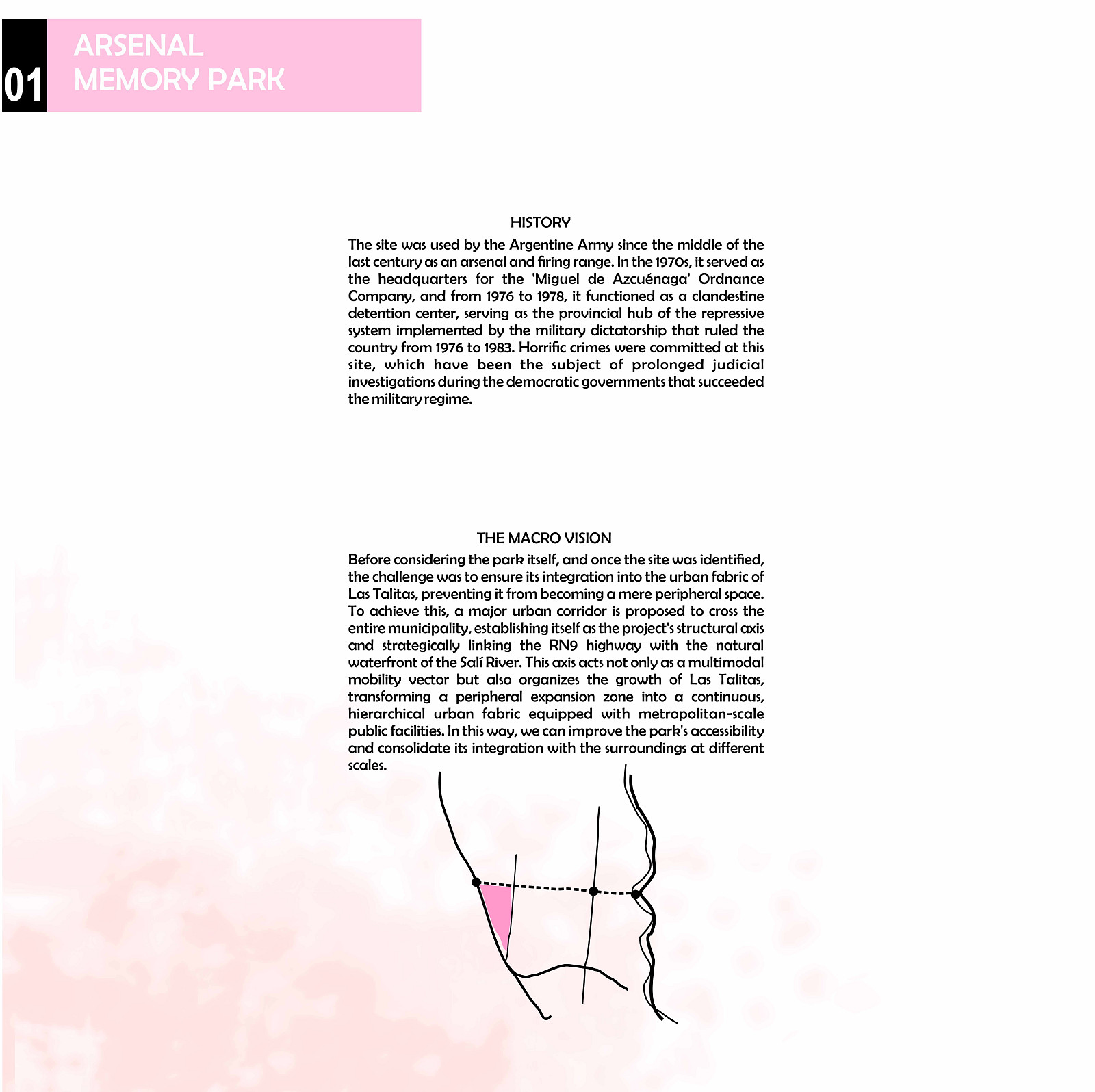
When asked what is most relevant, the answer is clear:
concealment and oblivion were the deliberate tools used to erase
the traces of crimes, shielded by secrecy and impunity. For this
reason, we focus on the sector designated as a protected area,
where Warehouse No. 9 and the mass graves are located. These
were premeditatedly situated far from the former Arsenal
buildings, at a point reachable only through clandestine paths
whose very existence they attempted to deny.
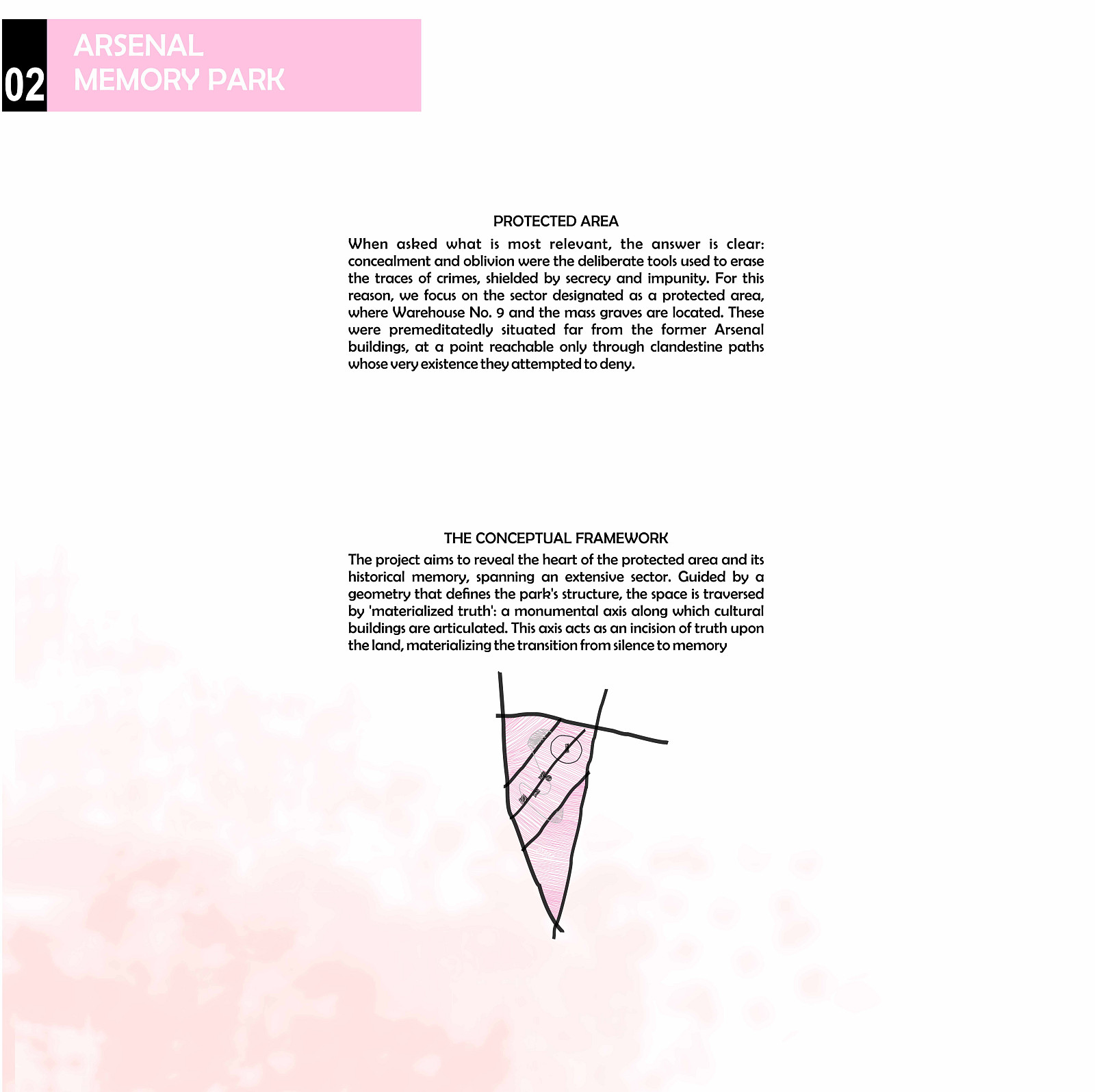
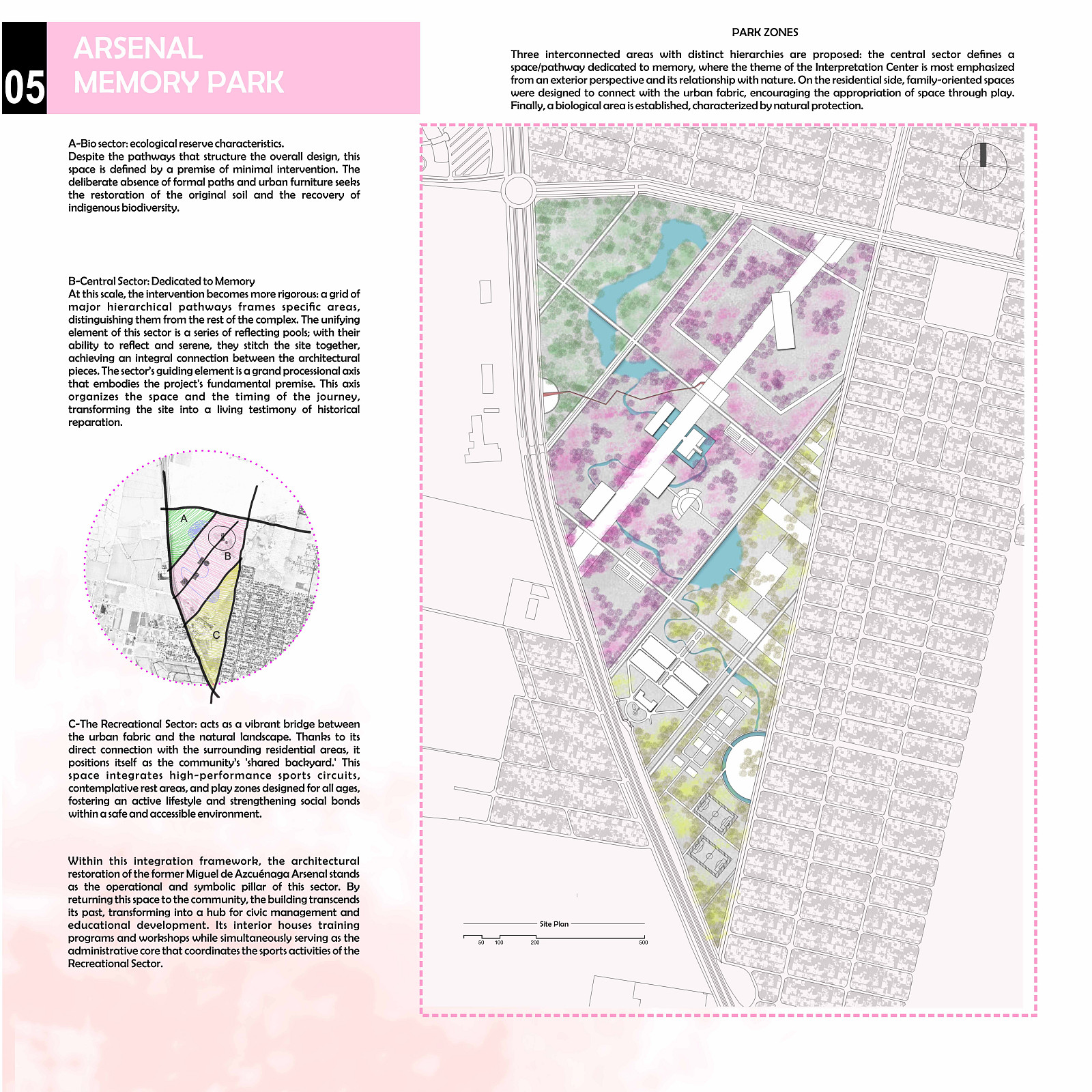
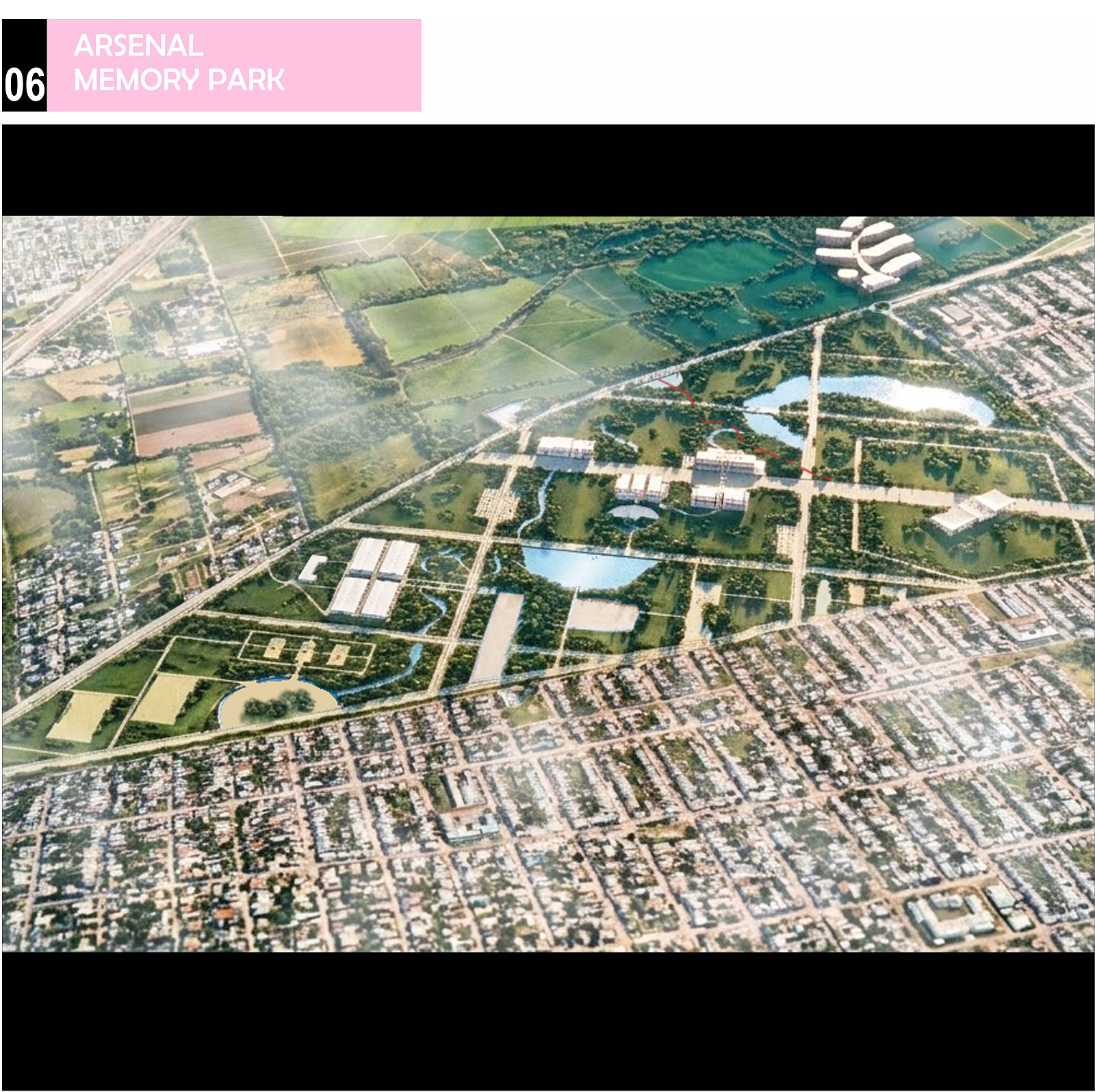
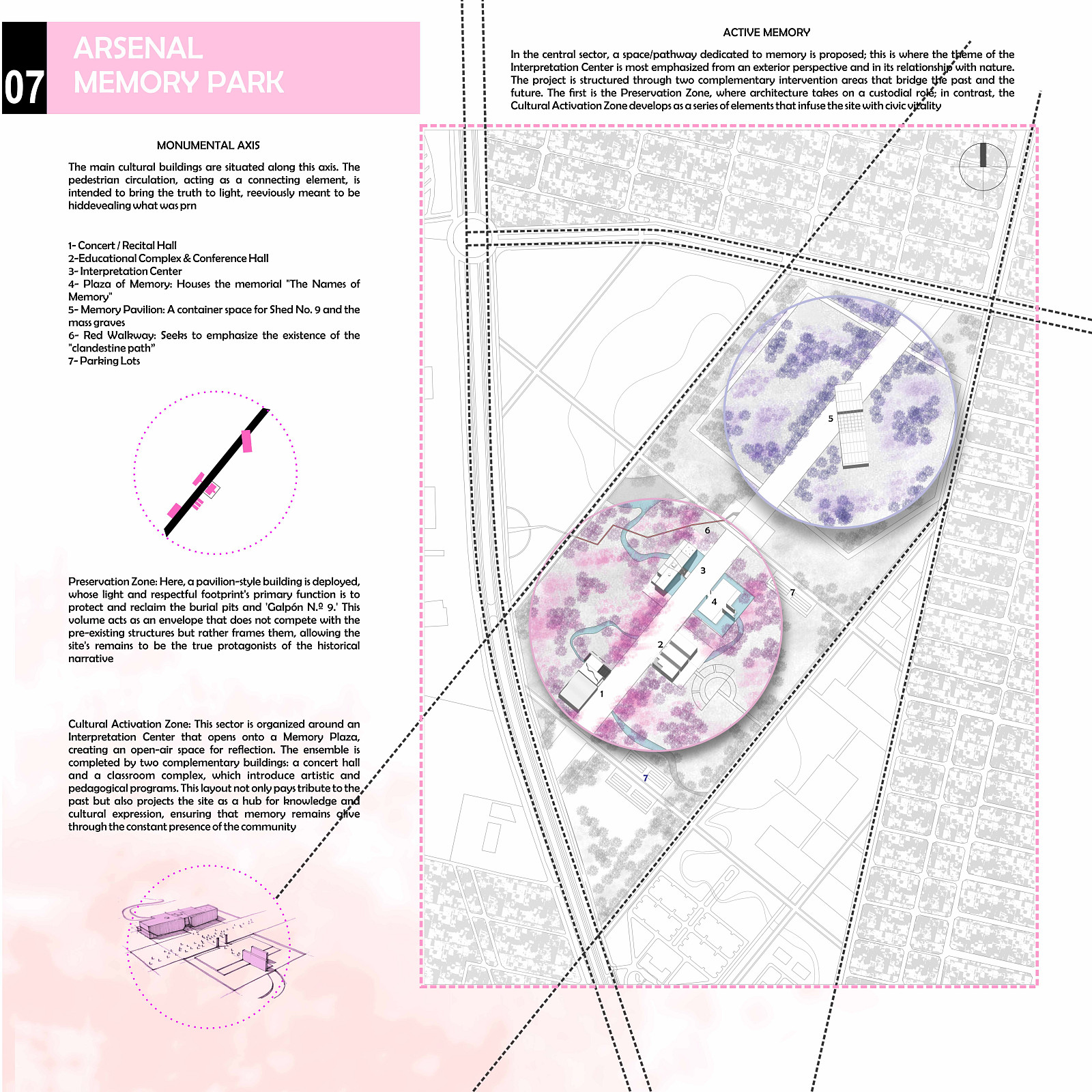
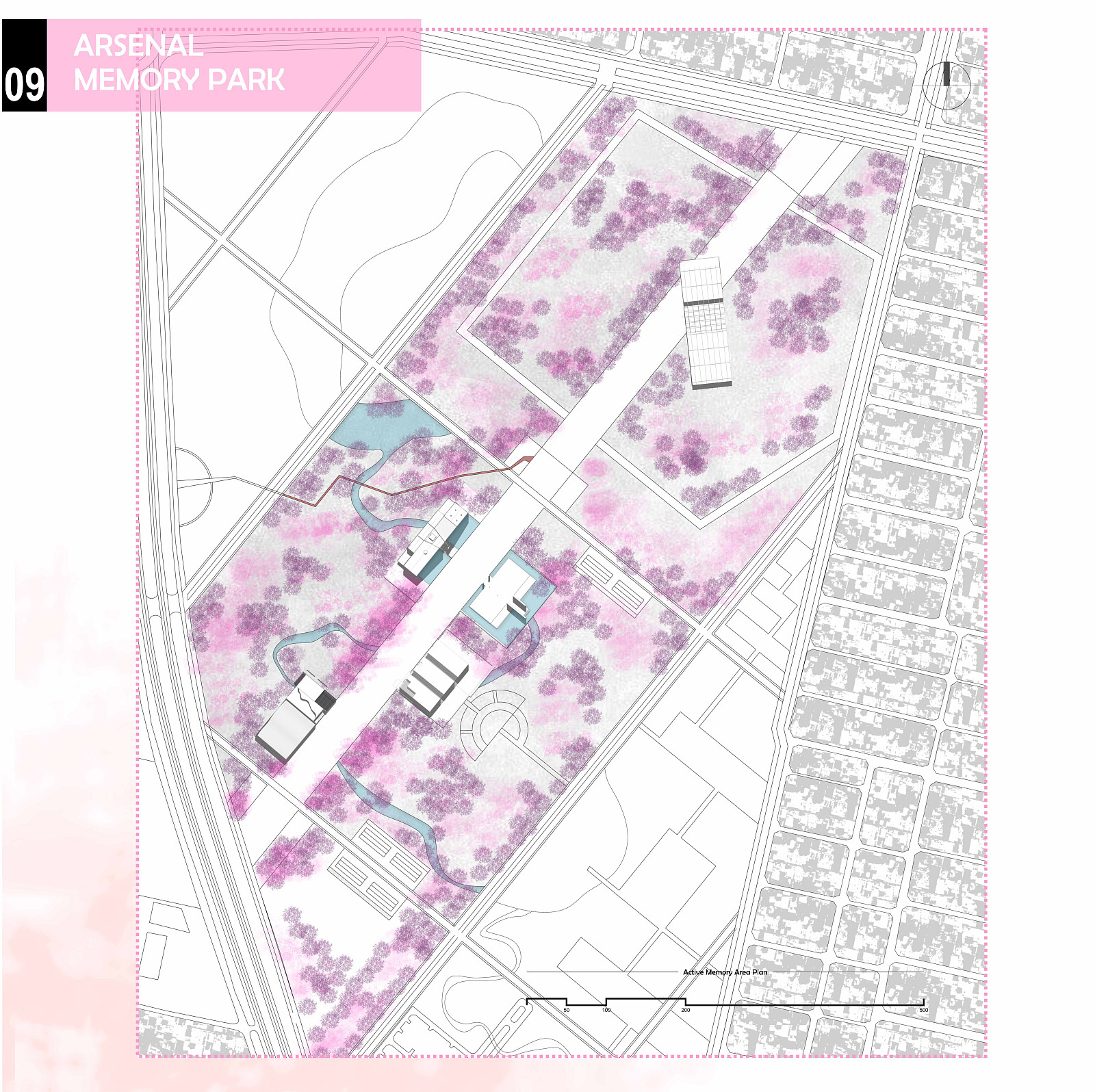
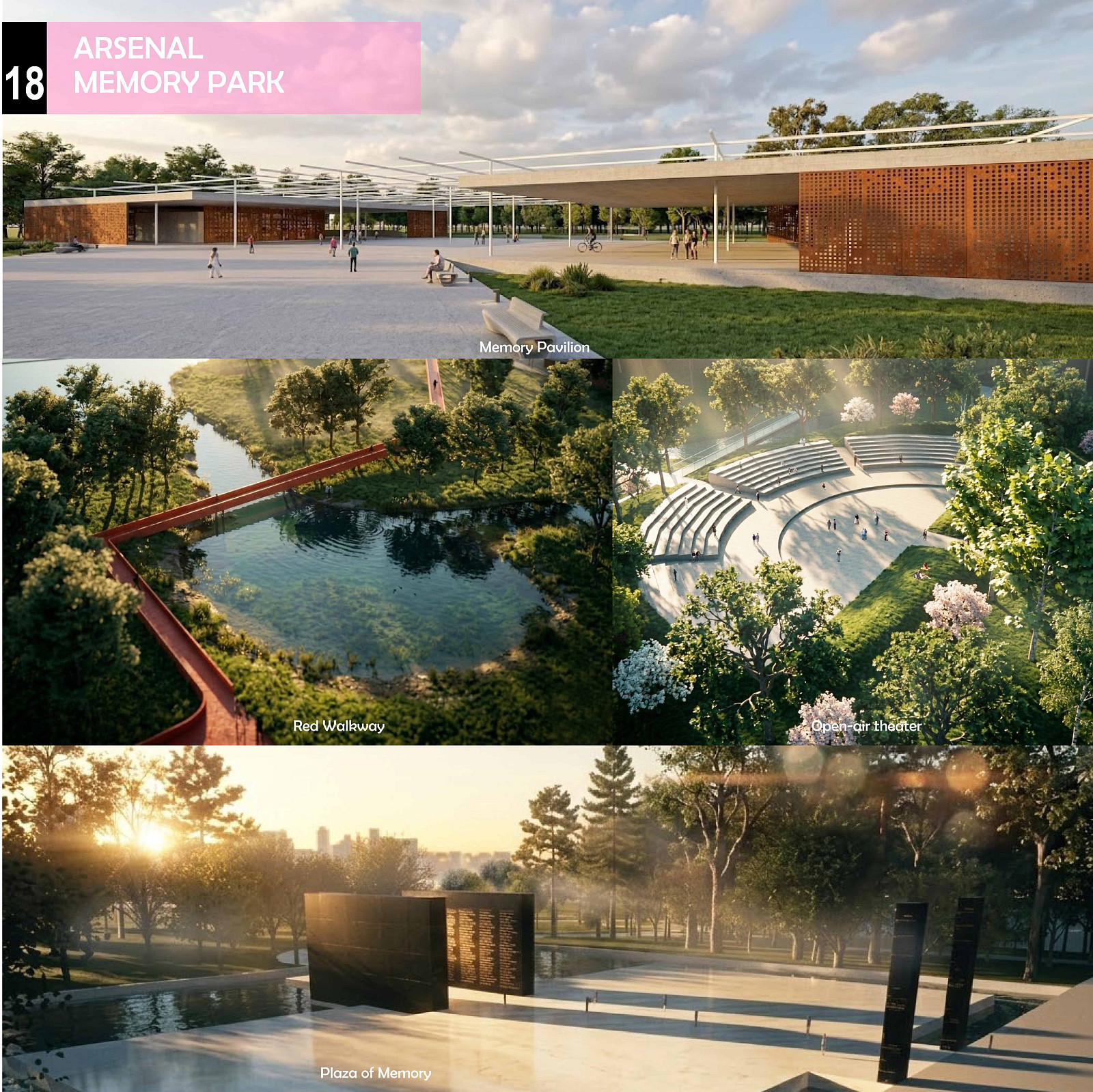
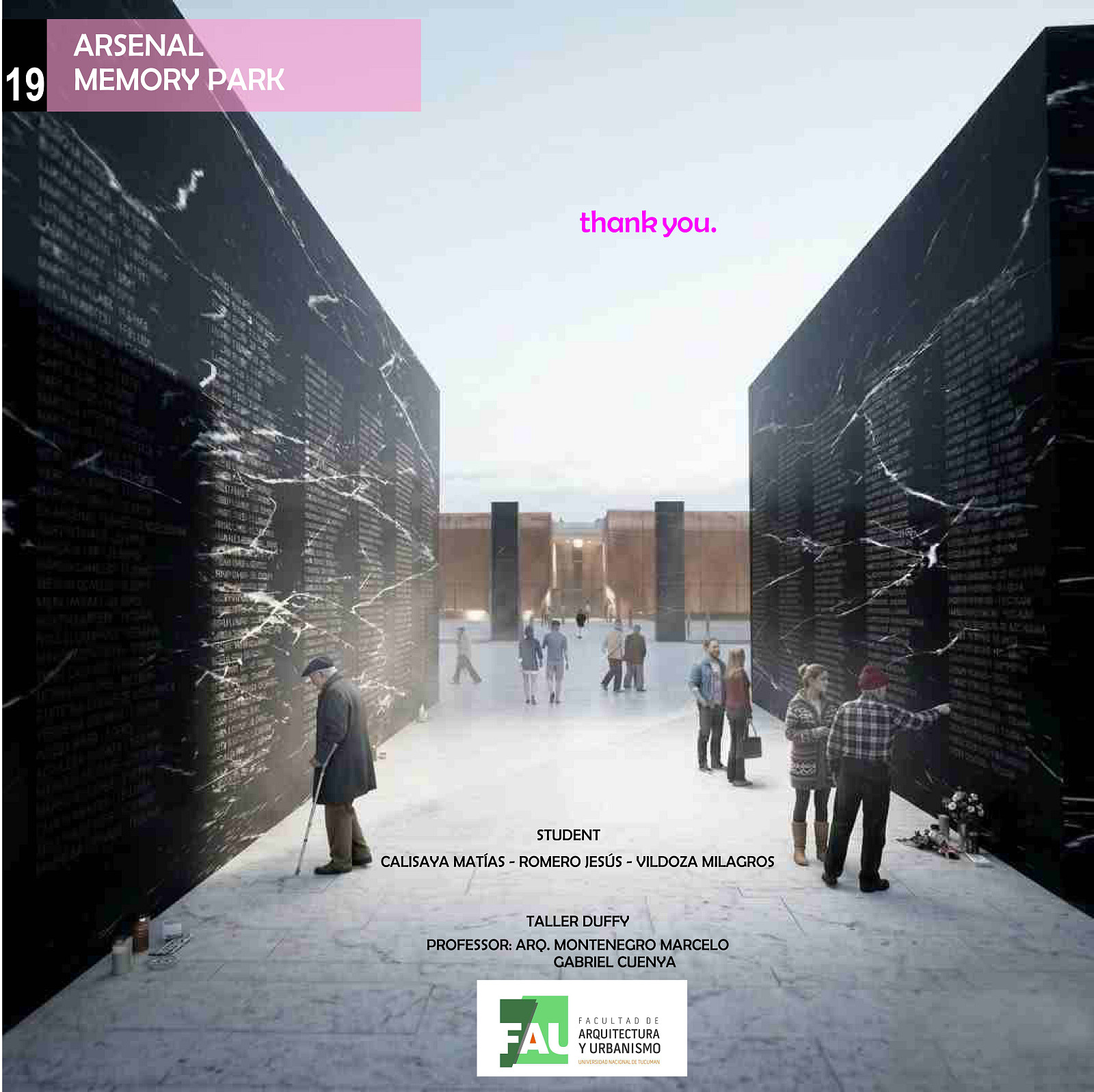
The project aims to reveal the heart of the protected area and its
historical memory, spanning an extensive sector. Guided by a
geometry that denes the park's structure, the space is traversed
by 'materialized truth': a monumental axis along which cultural
buildings are articulated. This axis acts as an incision of truth upon
the land, materializing the transition from silence to memory
Project description
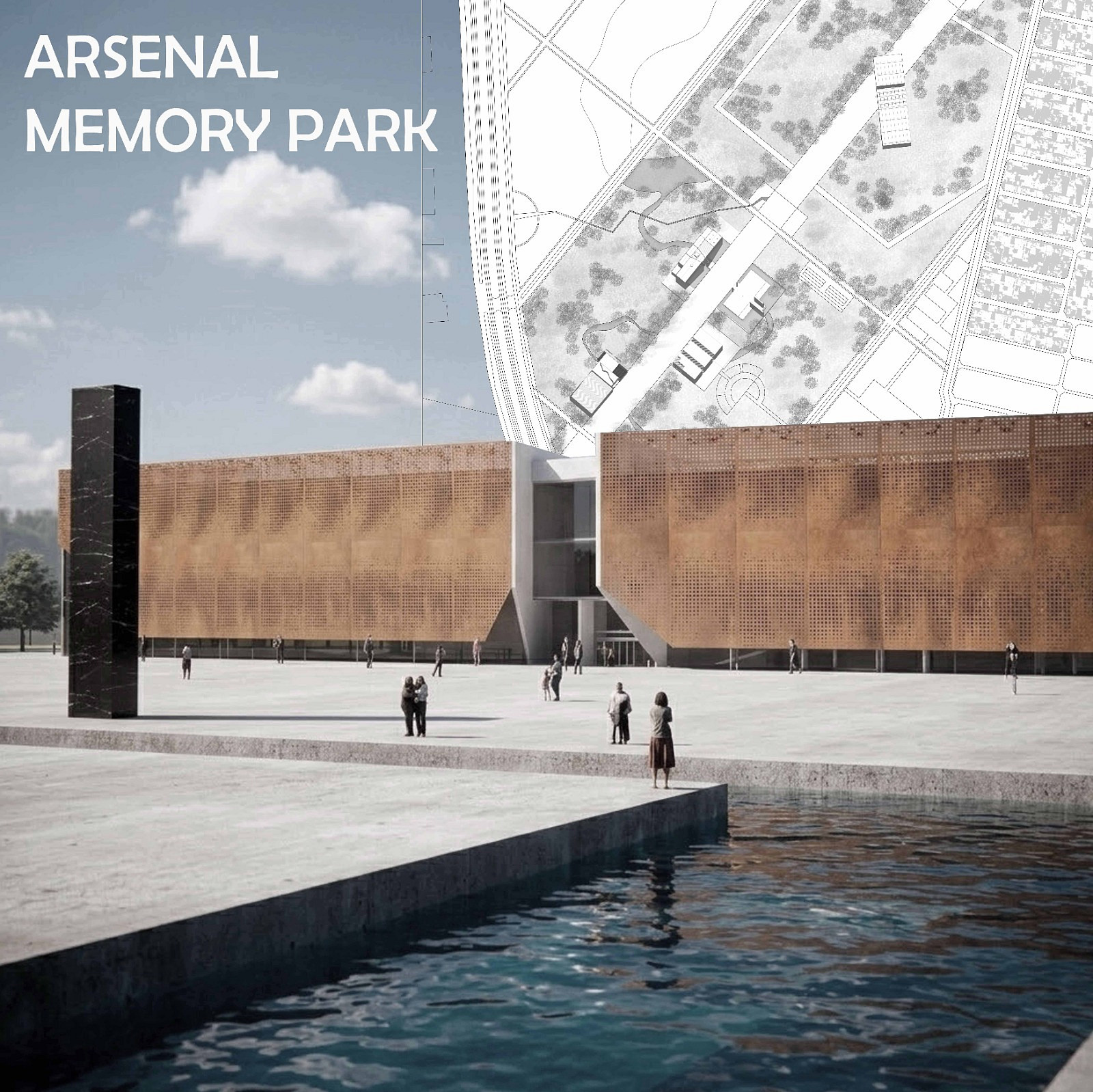
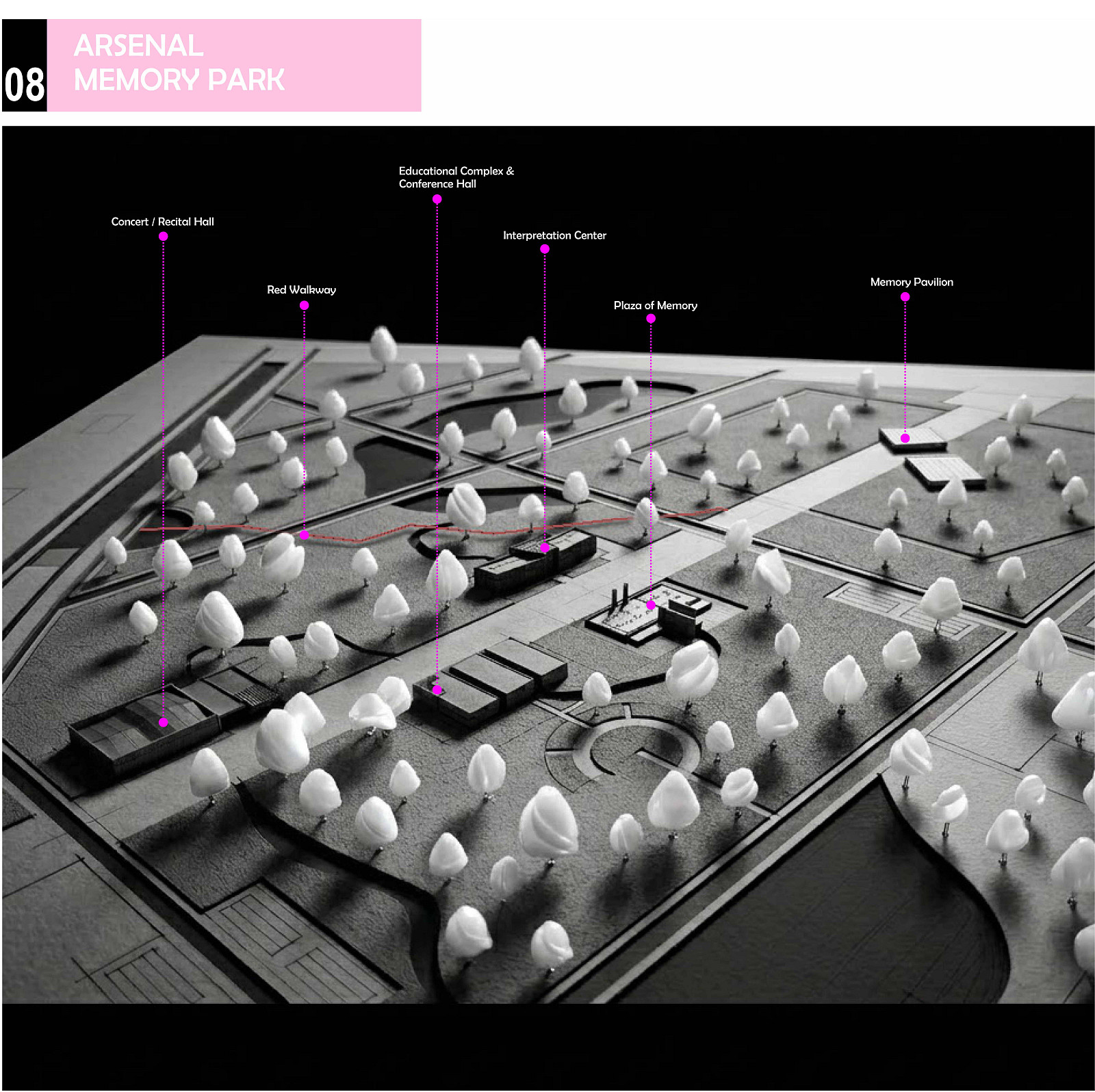
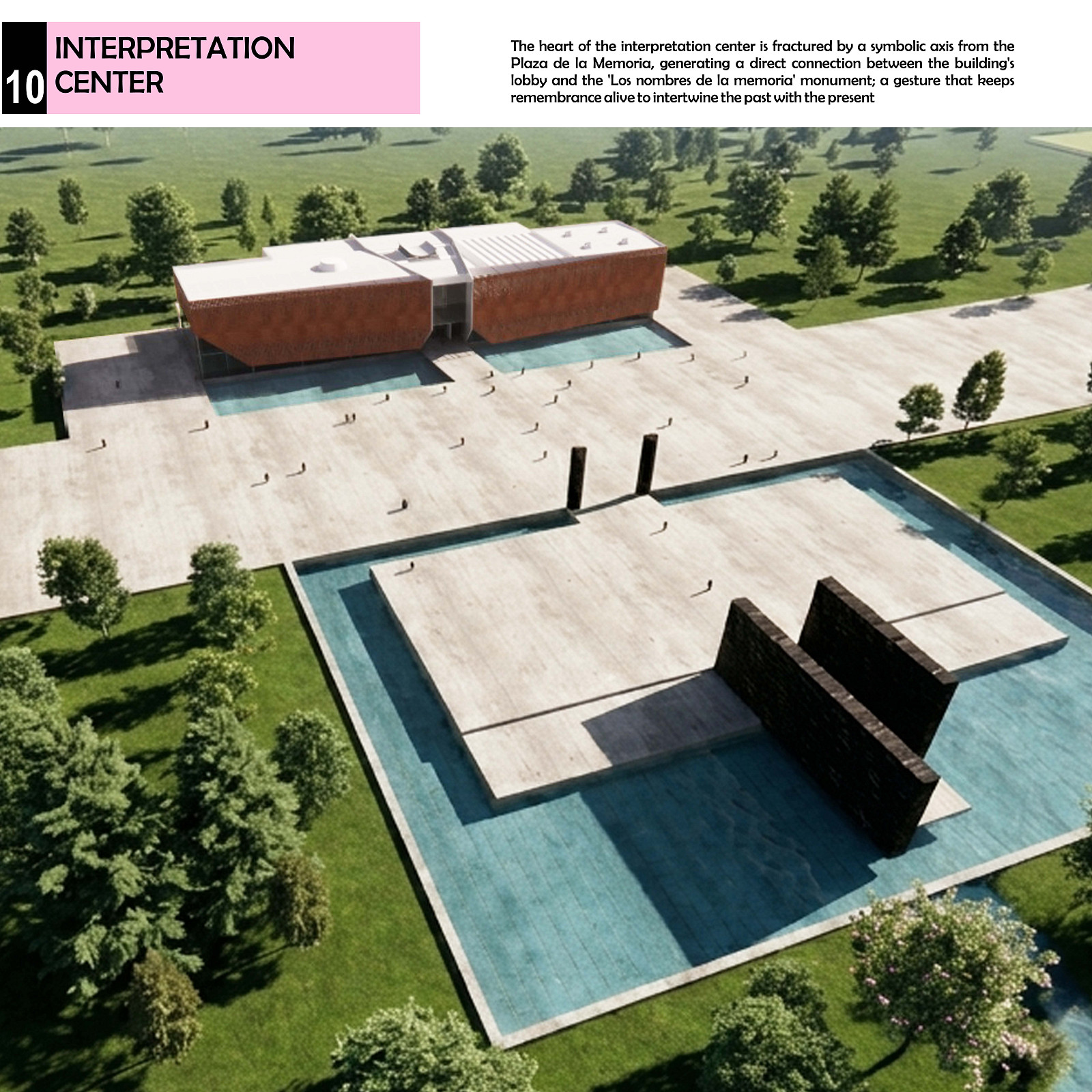
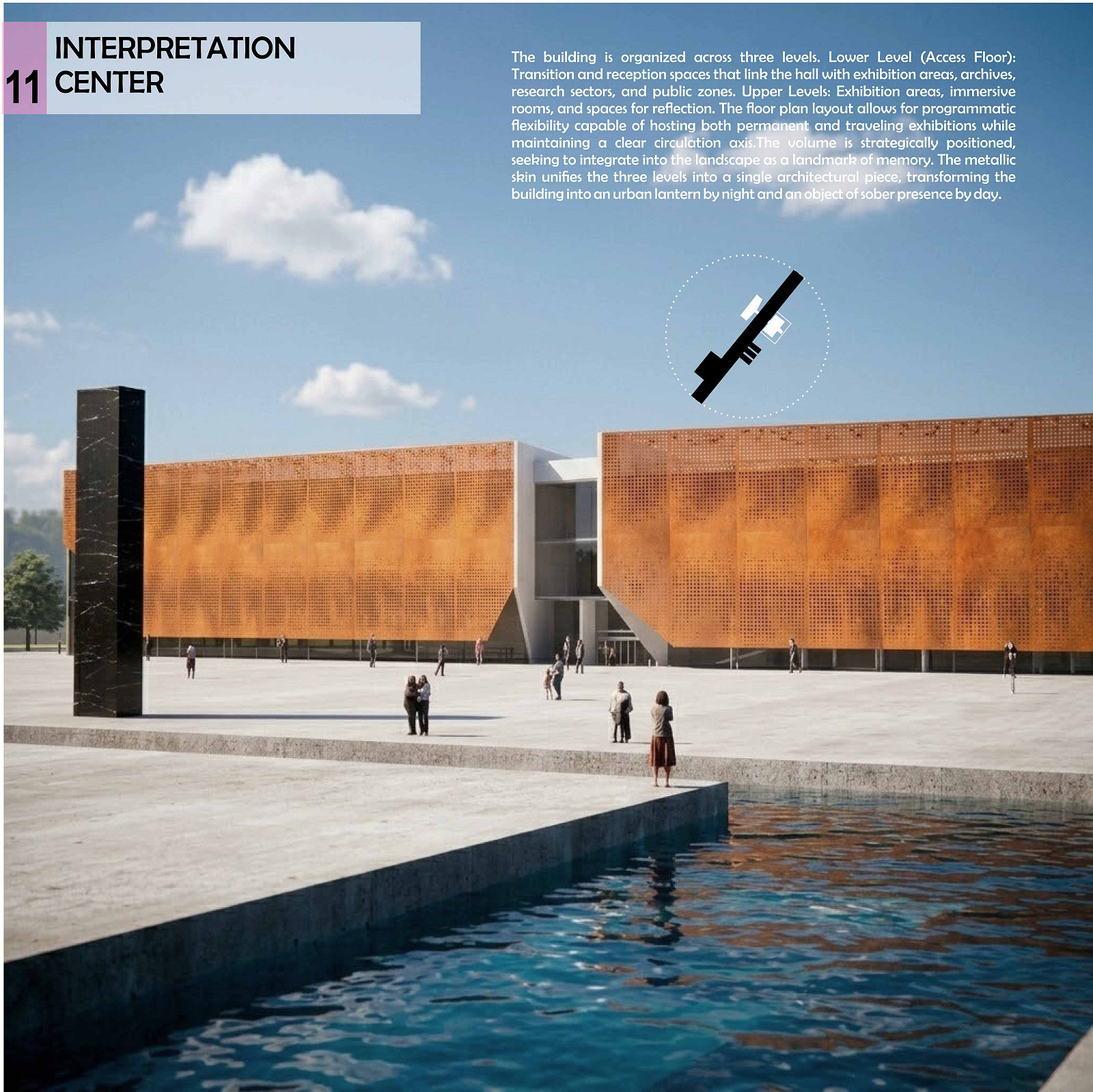
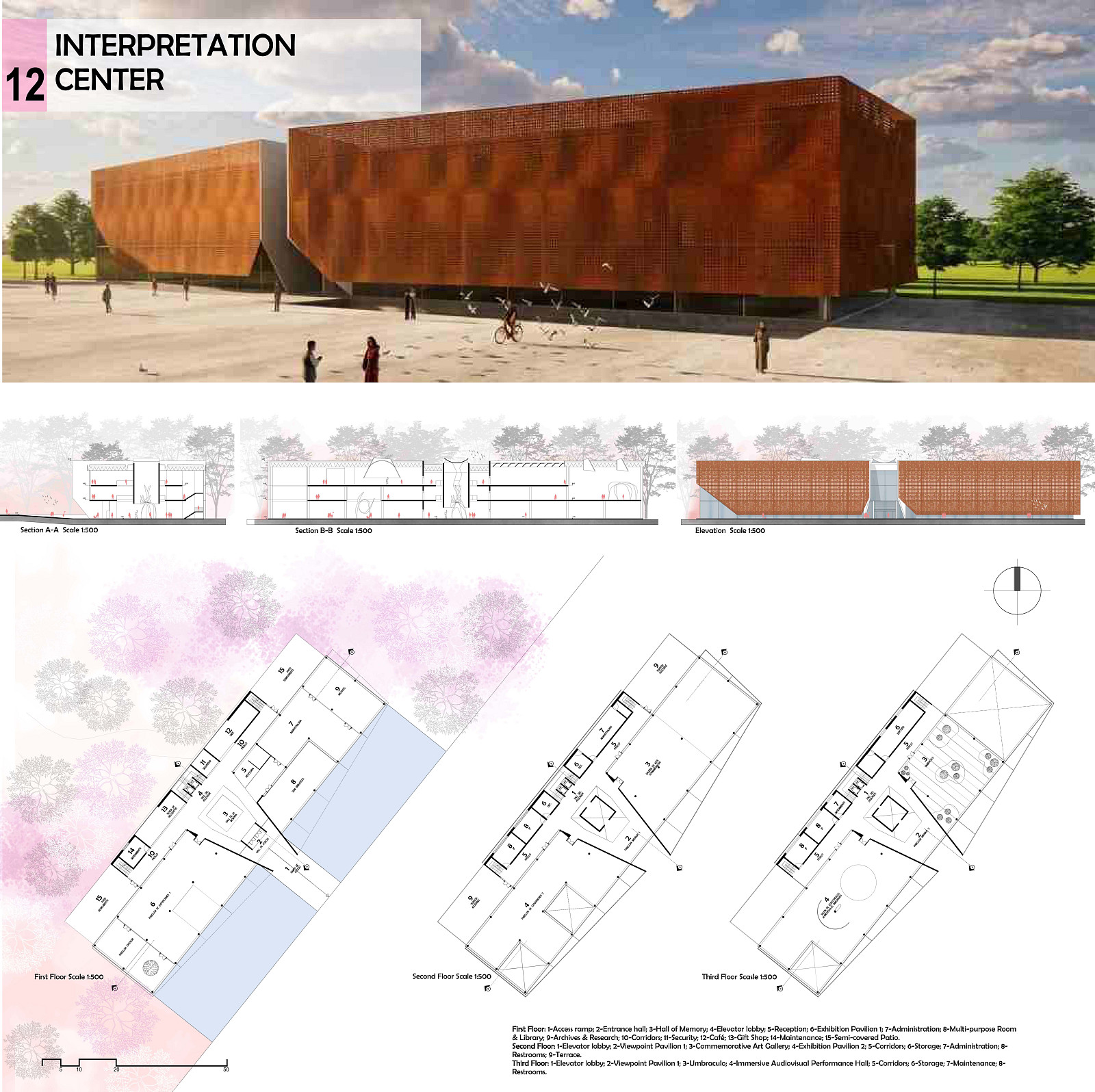
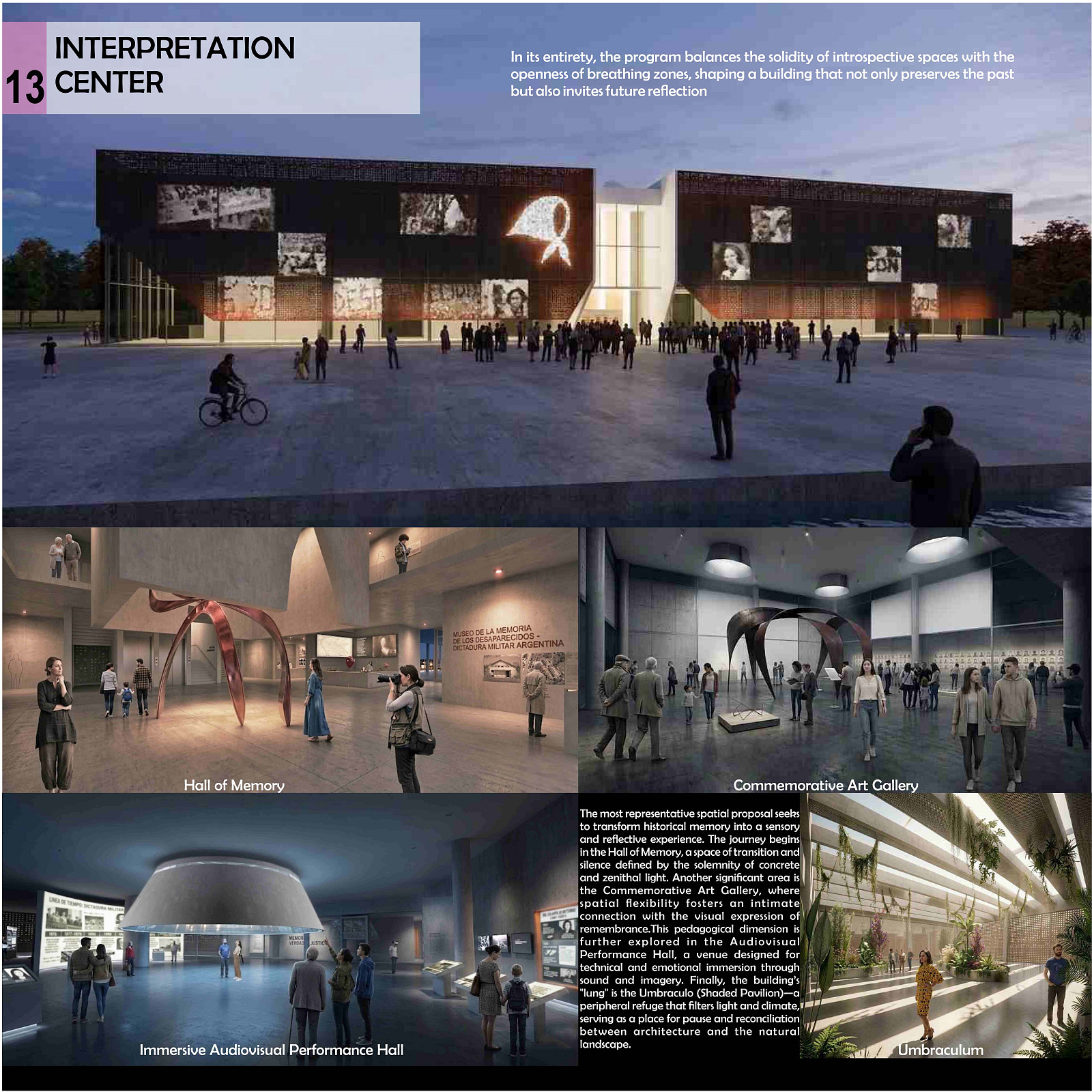
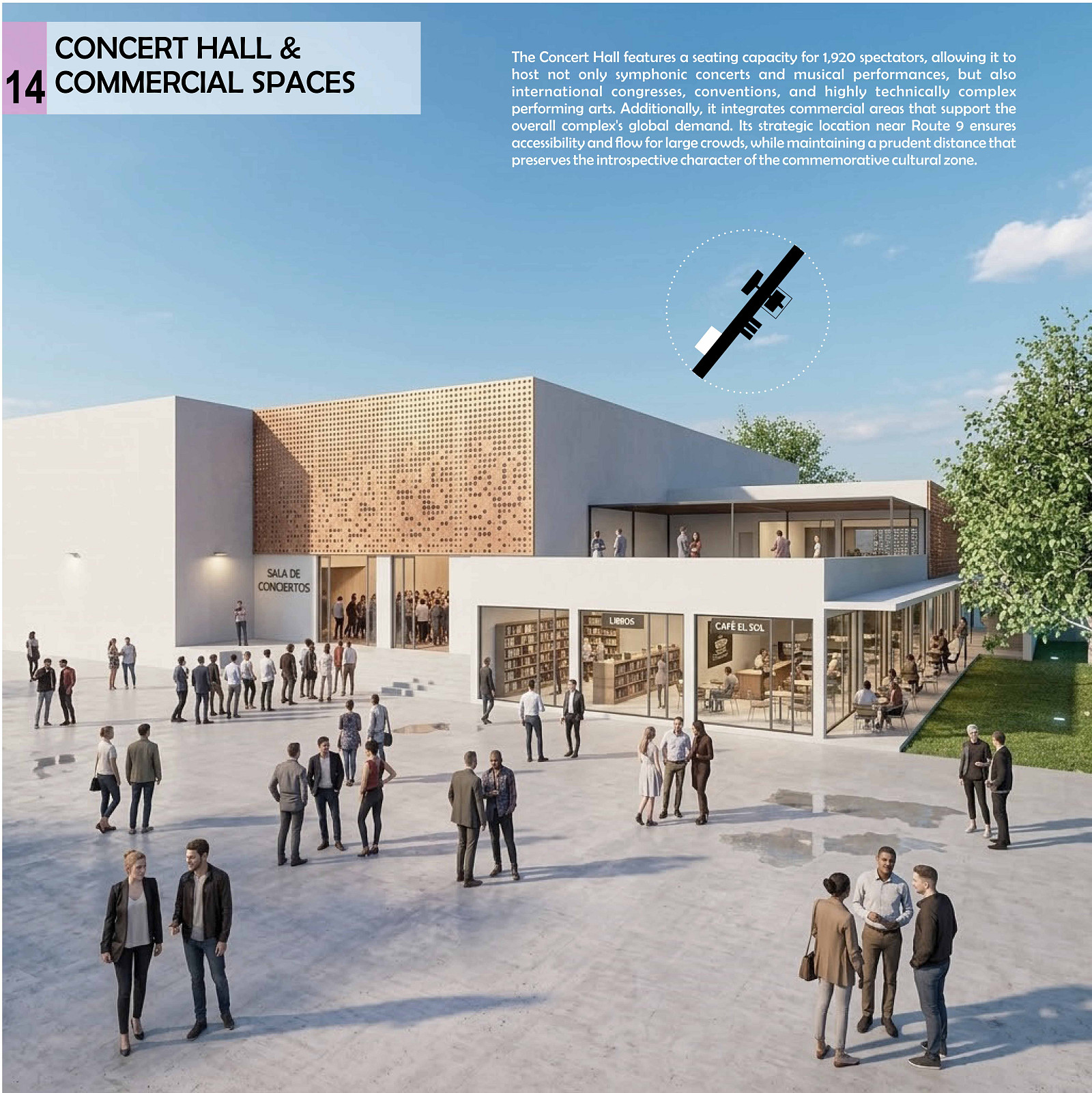
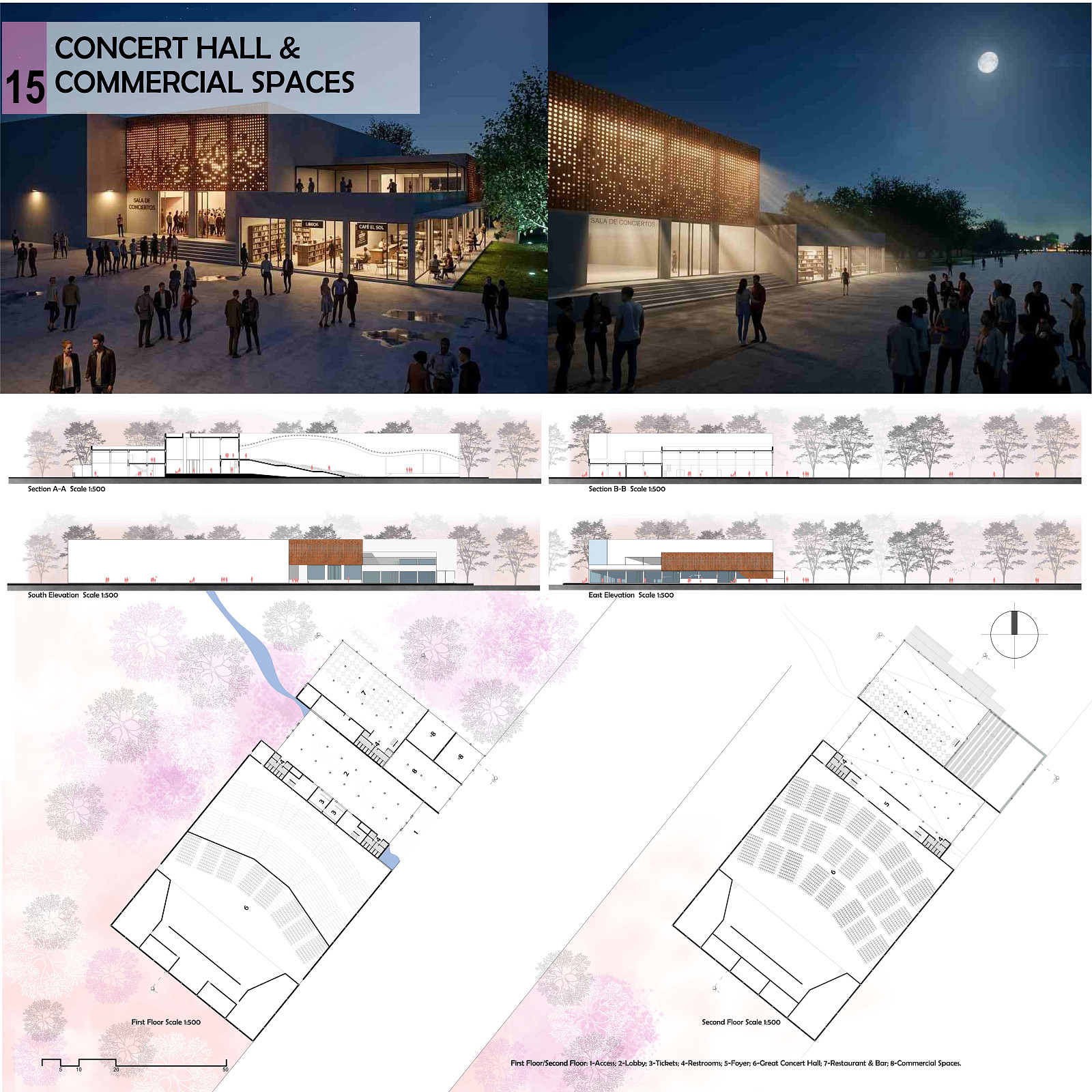
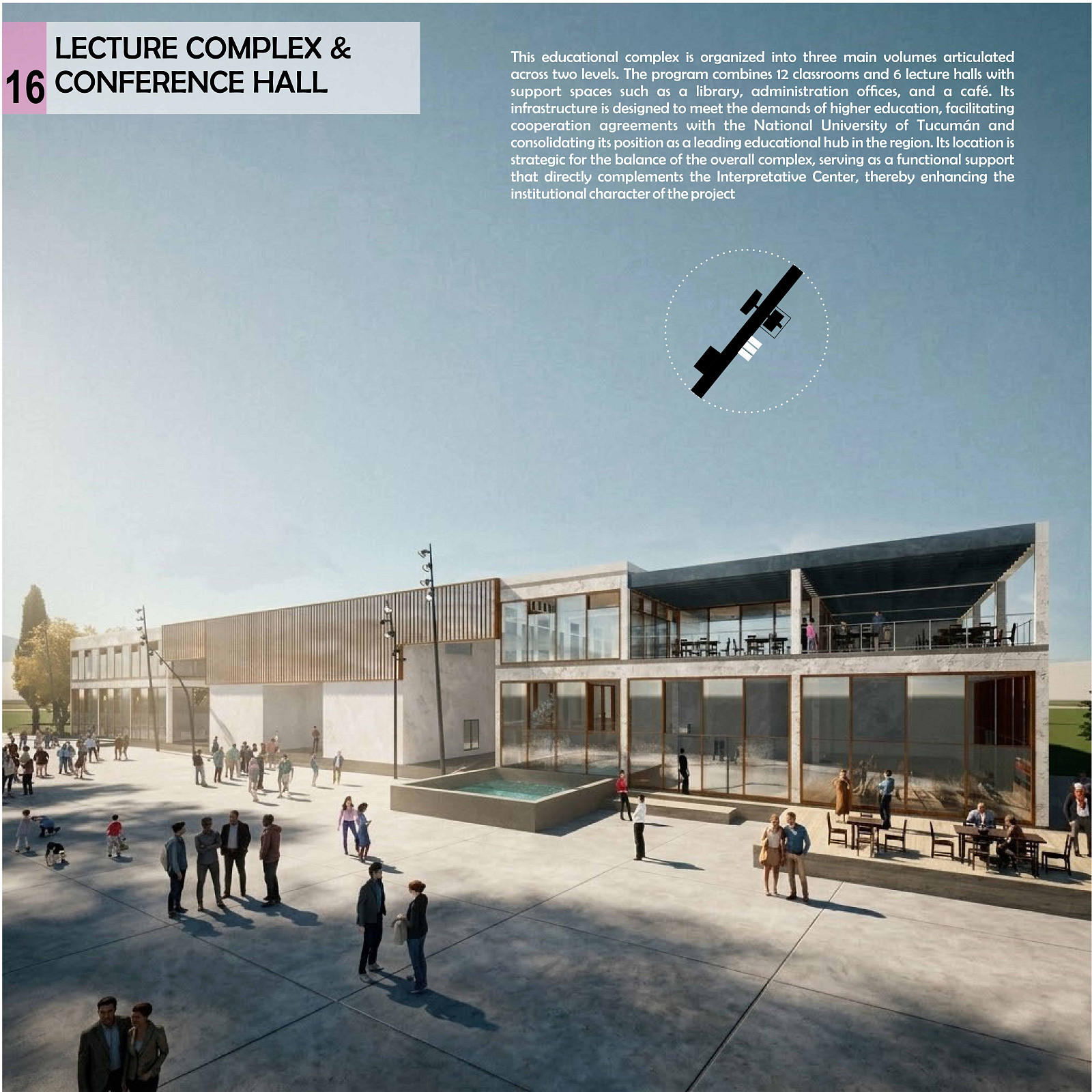
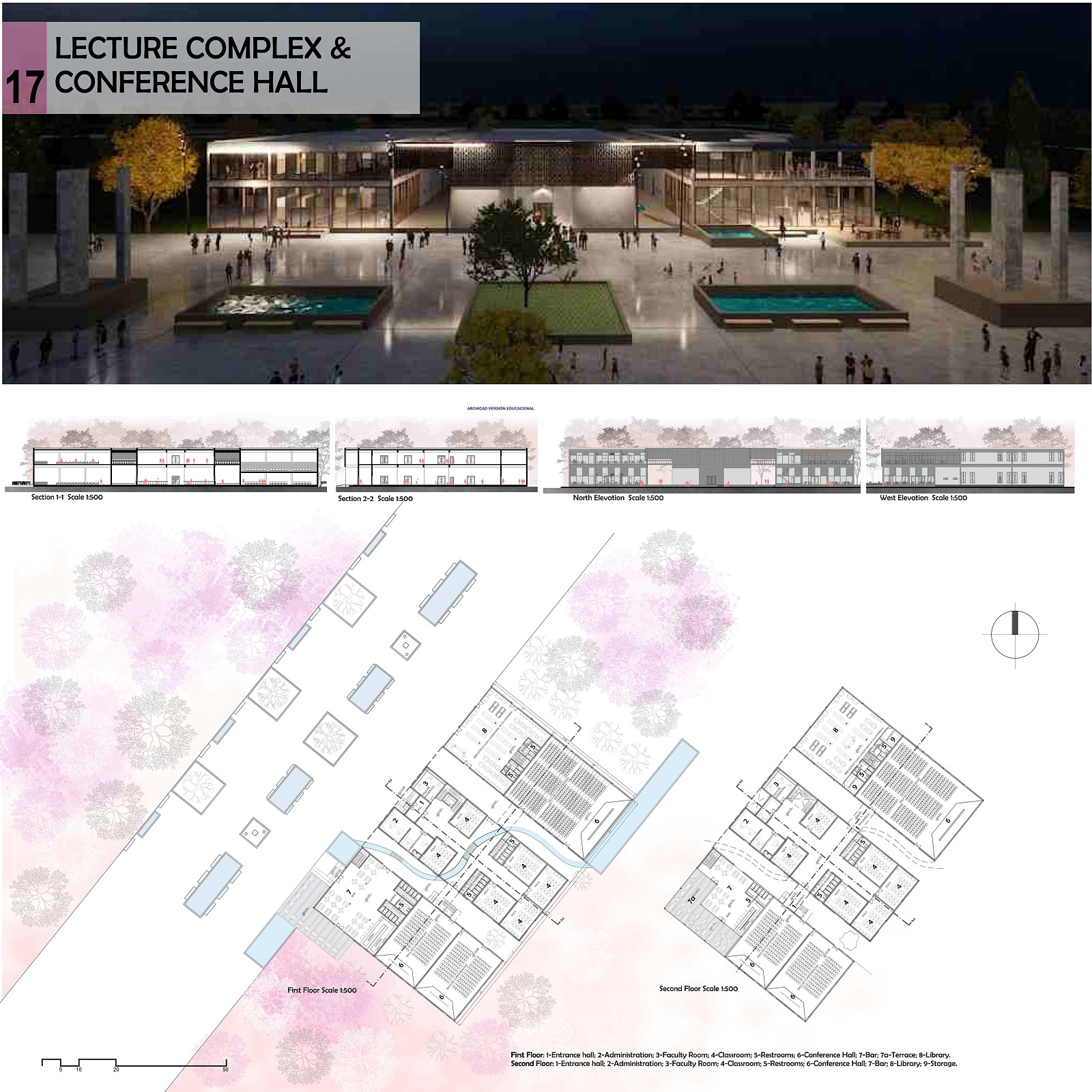
The project is organized around the Interpretation Center, which opens onto the Plaza de la Memoria (Memory Square), creating an outdoor space for reflection. The complex is completed by two complementary buildings: a concert hall and a classroom pavilion, which host artistic and educational programs. Although each building possesses its own specific characteristics, the C.I.M. stands as the head of the complex and is organized across three levels. Ground floor (access level): transition and reception spaces that connect the lobby with exhibition areas, archives, research sectors, and public zones. Upper floors: exhibition areas, immersive rooms, and spaces for reflection. The floor plan layout offers programmatic flexibility, allowing it to accommodate both permanent and traveling exhibitions while maintaining a clear circulation axis. The volume is strategically located, aiming to blend into the landscape as a landmark of memory; the metallic skin unifies the three levels into a single architectural piece, transforming the building into an urban lantern by night and an object of sober presence by day
Technical information
The material strategy embodies the concepts of permanence and transparency. The primary structures are developed in reinforced concrete, while steel and glass articulate the complementary sectors, seeking a clear contrast between opaque and translucent surfaces. For its part, the Center for the Interpretation of Memory (C.I.M.) is distinguished by a predominantly glazed enclosure with a metallic structure, wrapped in an oxide-toned microperforated metal skin. This envelope unifies the building into a single textured volume, granting it a distinctly monumental scale and identity

Copyright © 2026 INSPIRELI | All rights reserved. Use of this website signifies your agreement to the Terms of Use, Privacy Policy, and use of cookies.