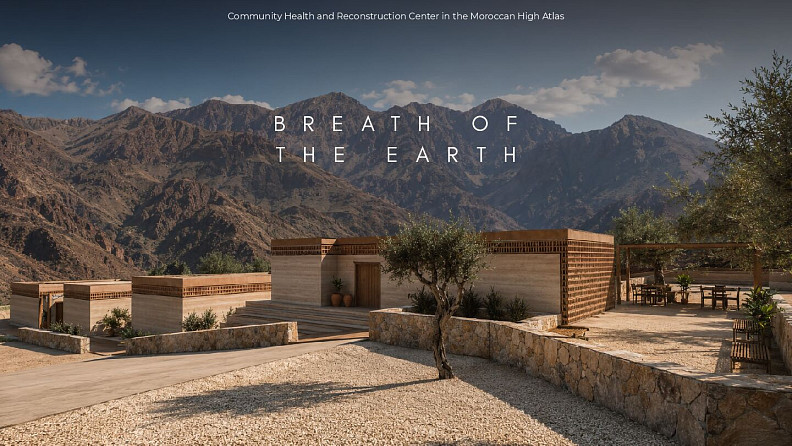
Breath Of The Earth


Project idea
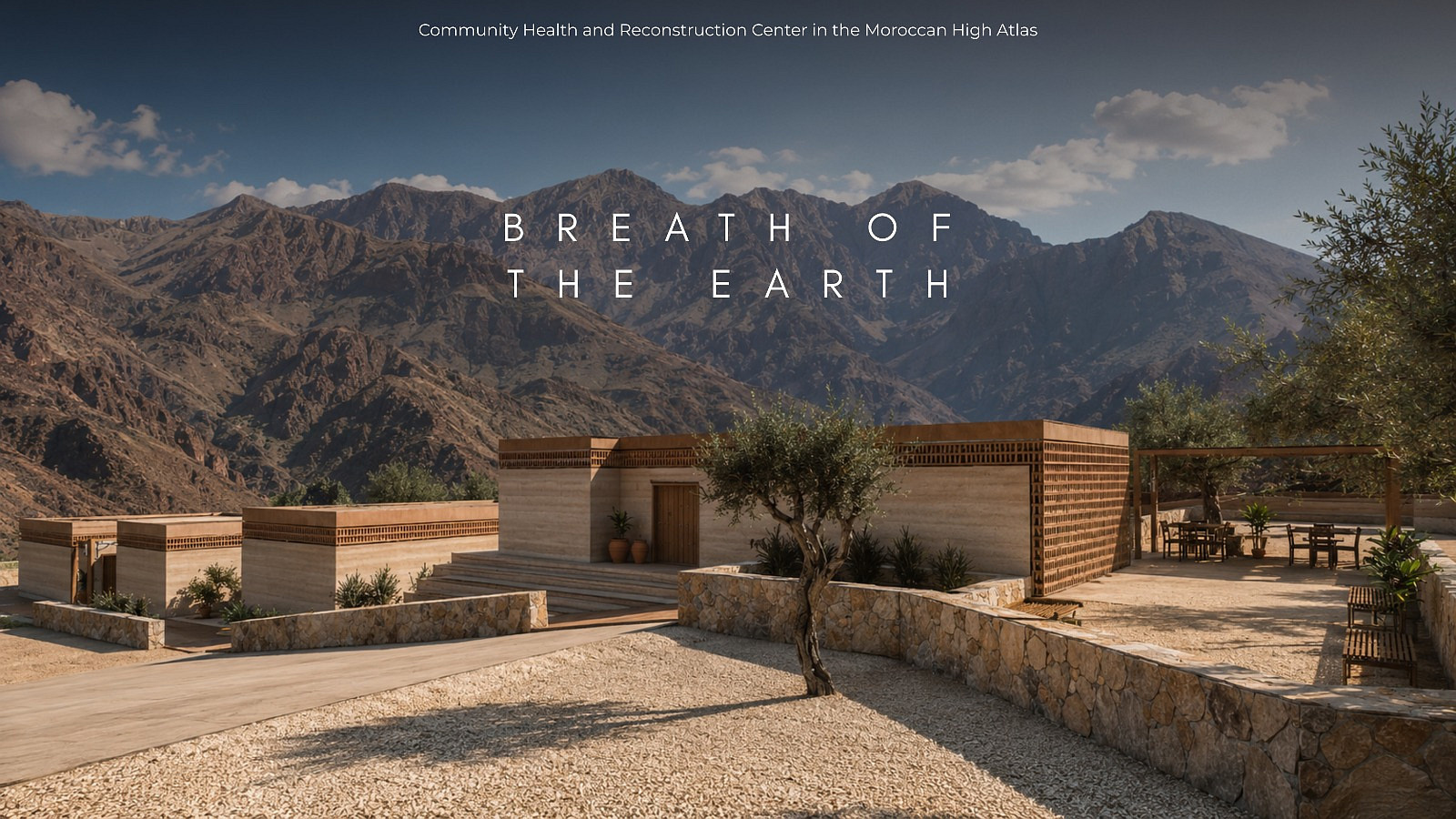
The idea behind Breath of the Earth emerged from the need to rethink healthcare infrastructure in the High Atlas Mountains after the devastating 2023 earthquake. In many villages, the destruction of buildings also meant the loss of access to essential medical services, creating an urgent need for spaces that could support both physical recovery and long-term community resilience.
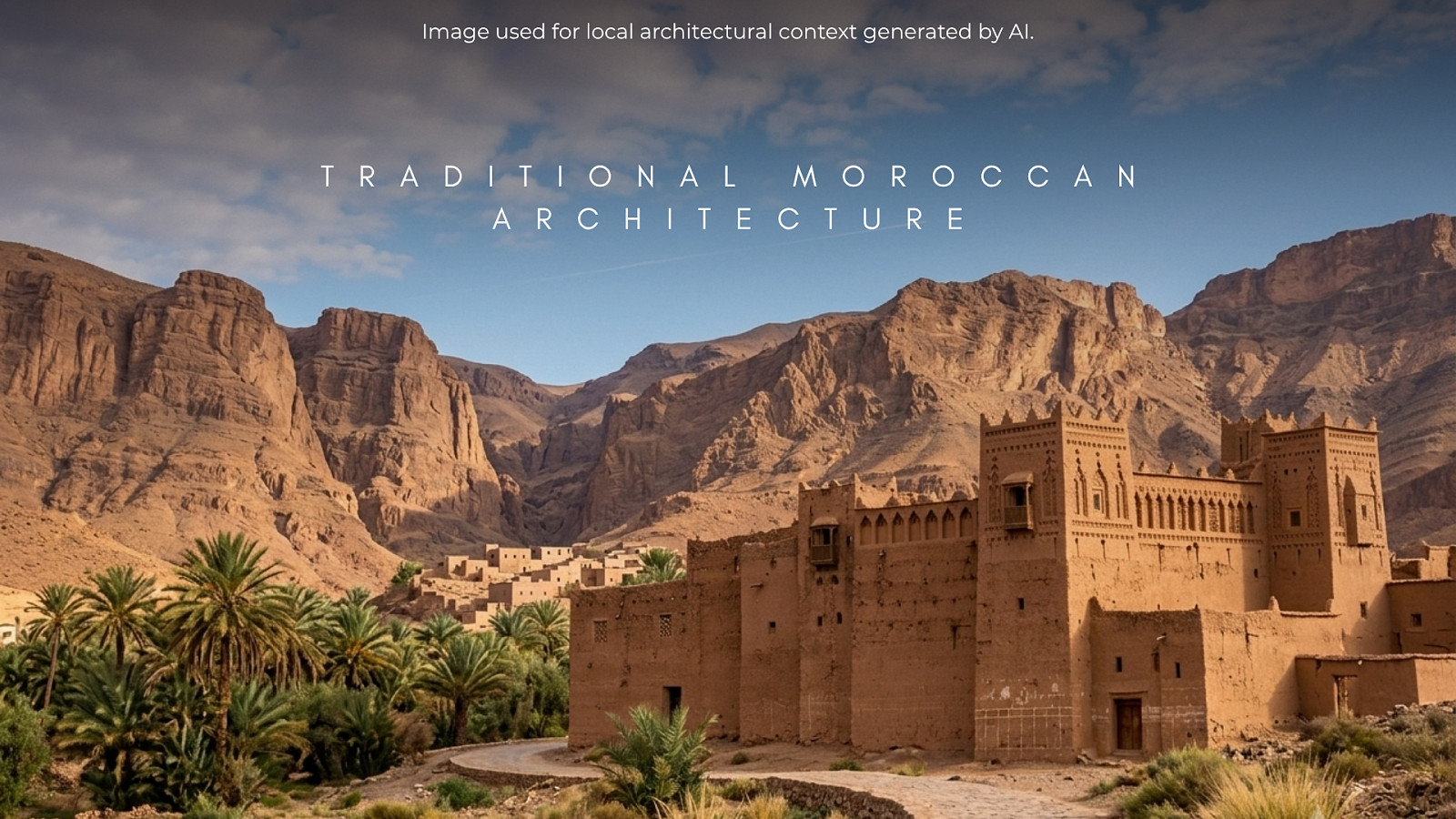
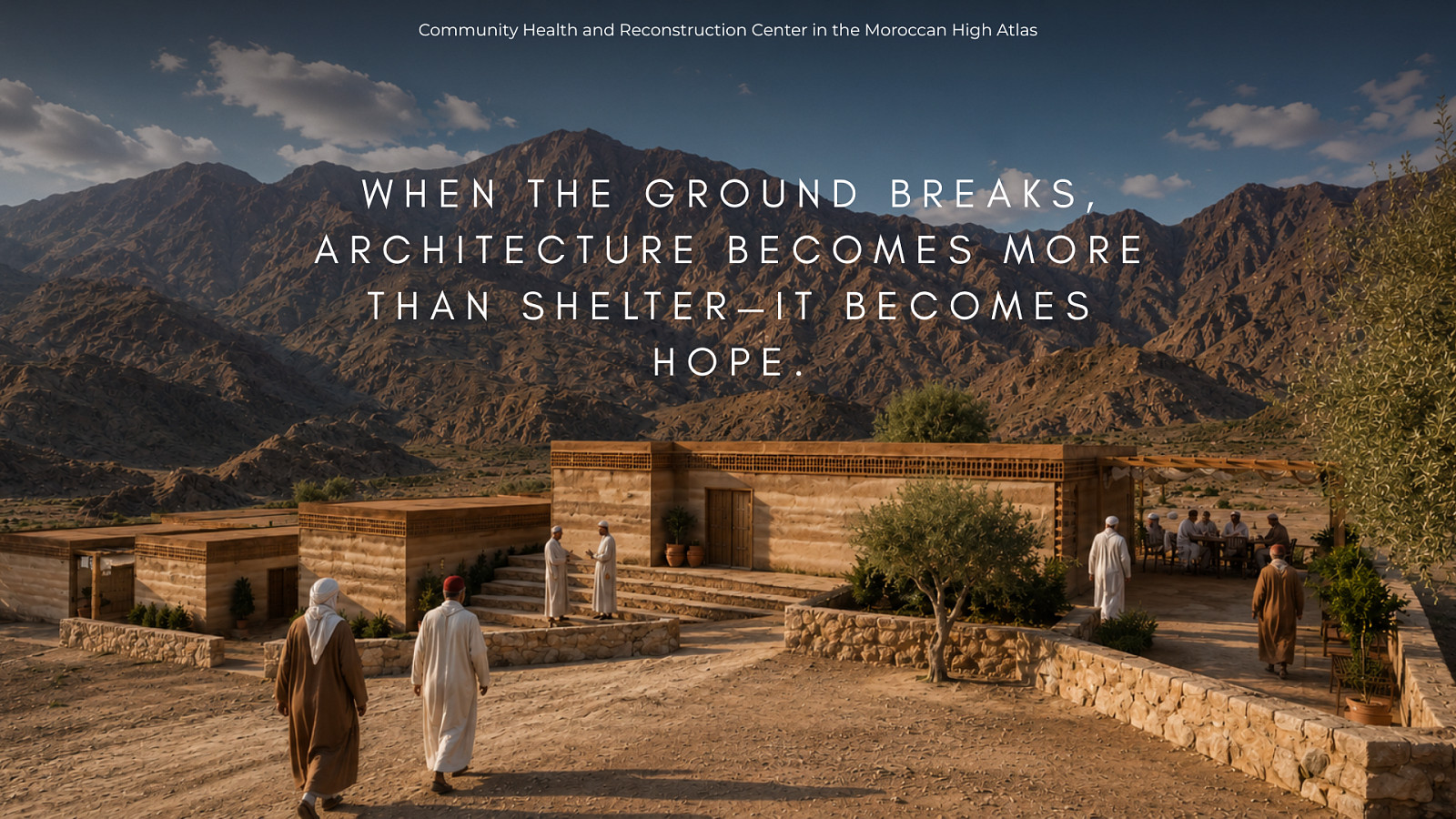
Rather than designing a conventional clinic, the project seeks to create a place that feels familiar and welcoming. Its spatial organization draws inspiration from traditional Berber settlements, where buildings are grouped around shared outdoor spaces and daily life unfolds between architecture and landscape.
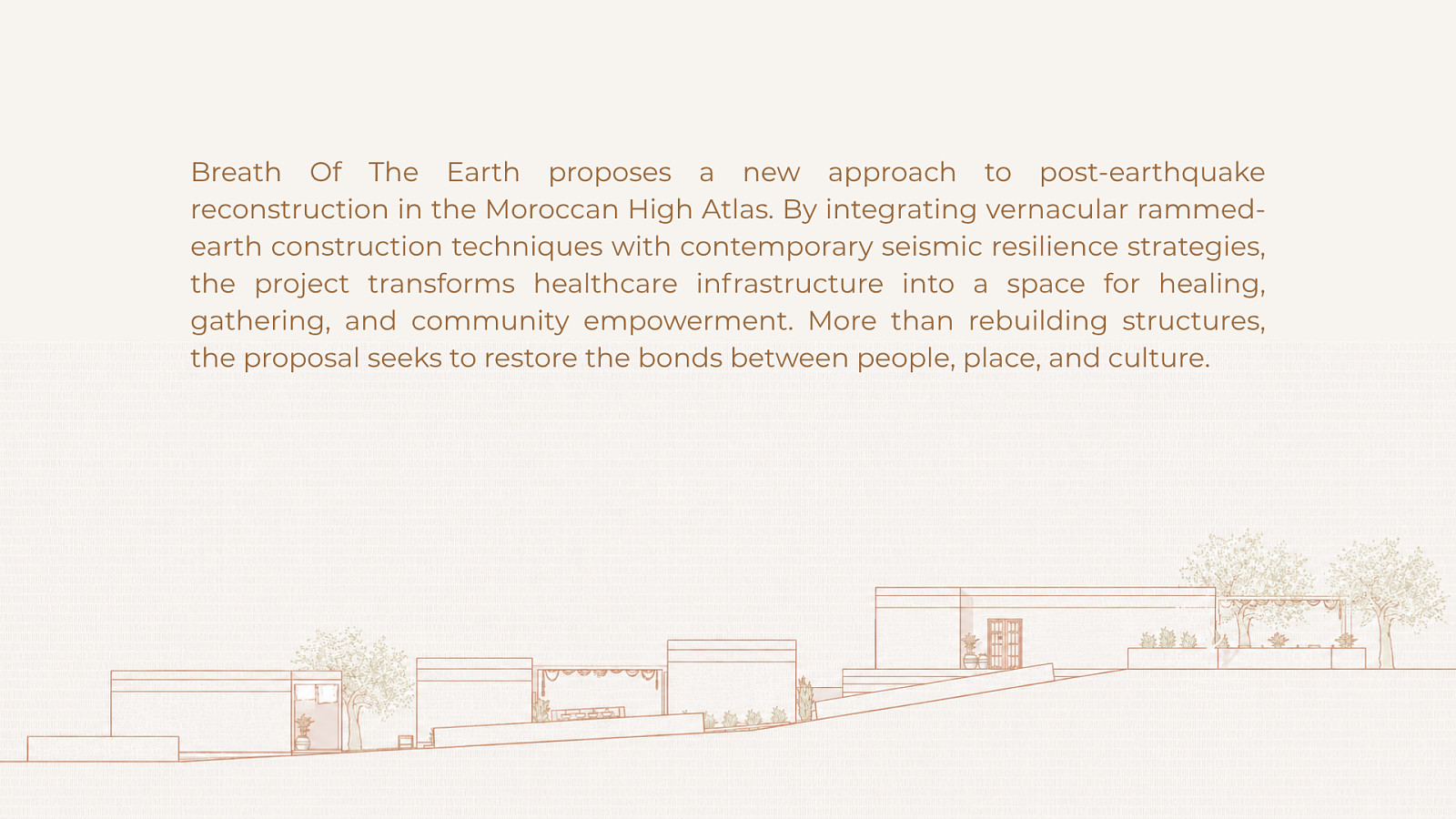
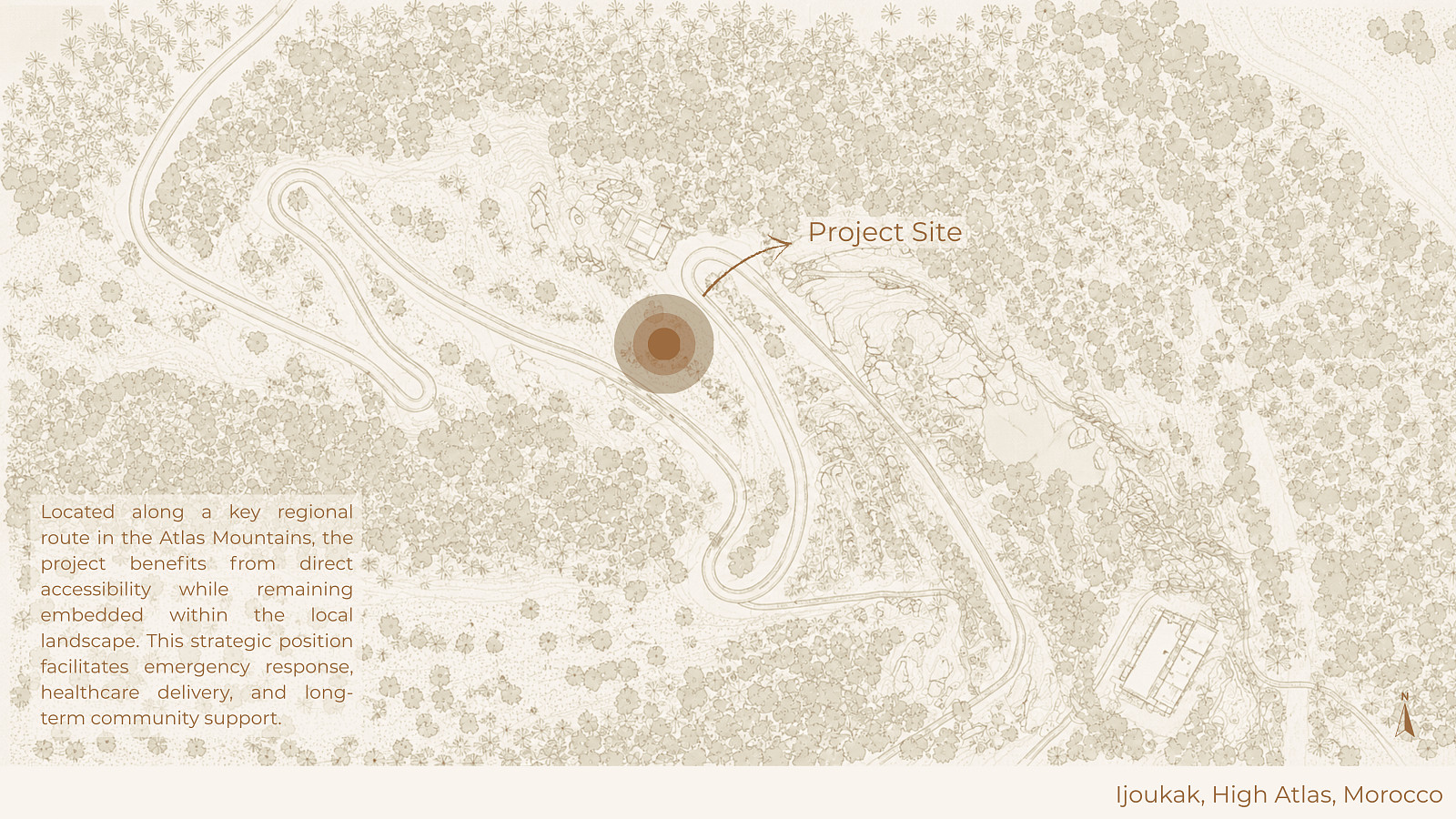
Located on a sloping site near a regional road, the project takes advantage of both accessibility and its connection to the surrounding mountains. The volumes are intentionally fragmented and arranged around a sequence of courtyards, allowing the building to follow the natural topography while creating a human-scale environment. The result is a healthcare facility that belongs to its place, rooted in local culture, shaped by the land, and designed to support healing in its broadest sense.
Project description
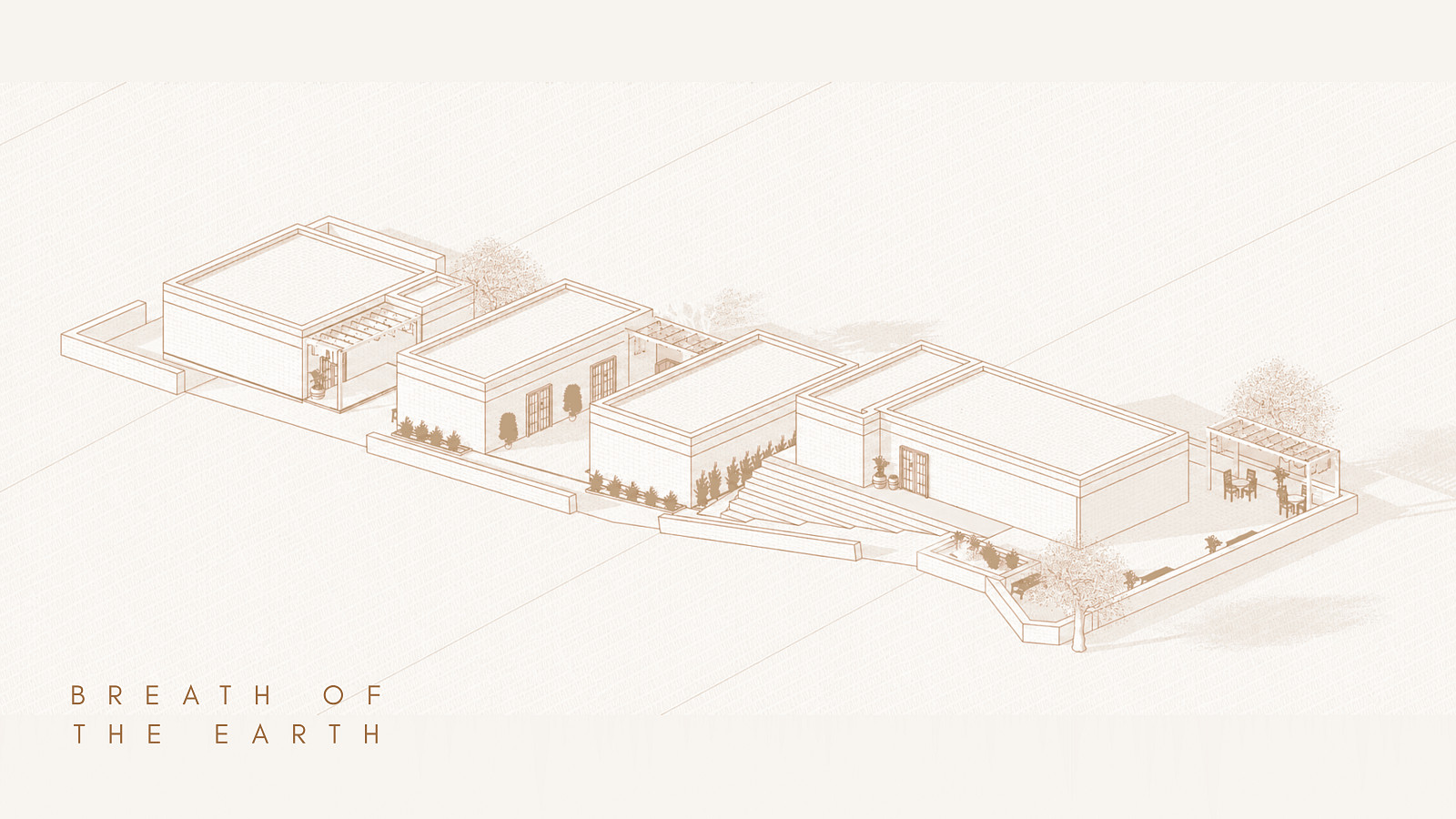
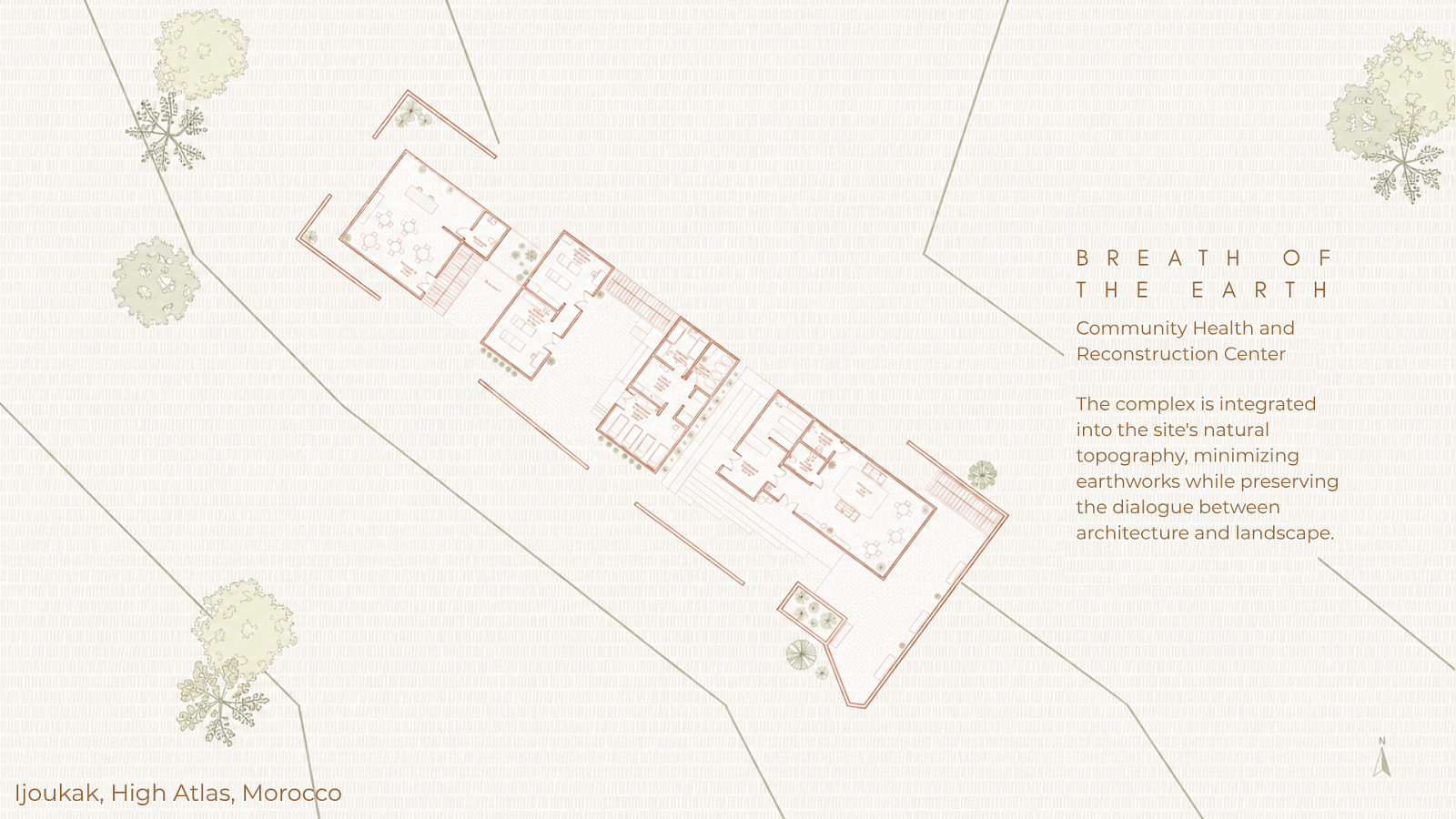
The project is organized as a series of interconnected volumes, each dedicated to a specific function while remaining part of a cohesive whole. This arrangement helps break down the scale of the building and creates an atmosphere that feels closer to a small village than to a traditional healthcare facility.
The program includes a reception and triage area, medical consultation rooms, observation and recovery spaces, maternal and neonatal care facilities, a pharmacy, and clinical support areas for storage and maintenance. At the end of the sequence, a Community Hub provides space for education, training, social interaction, and collective activities.
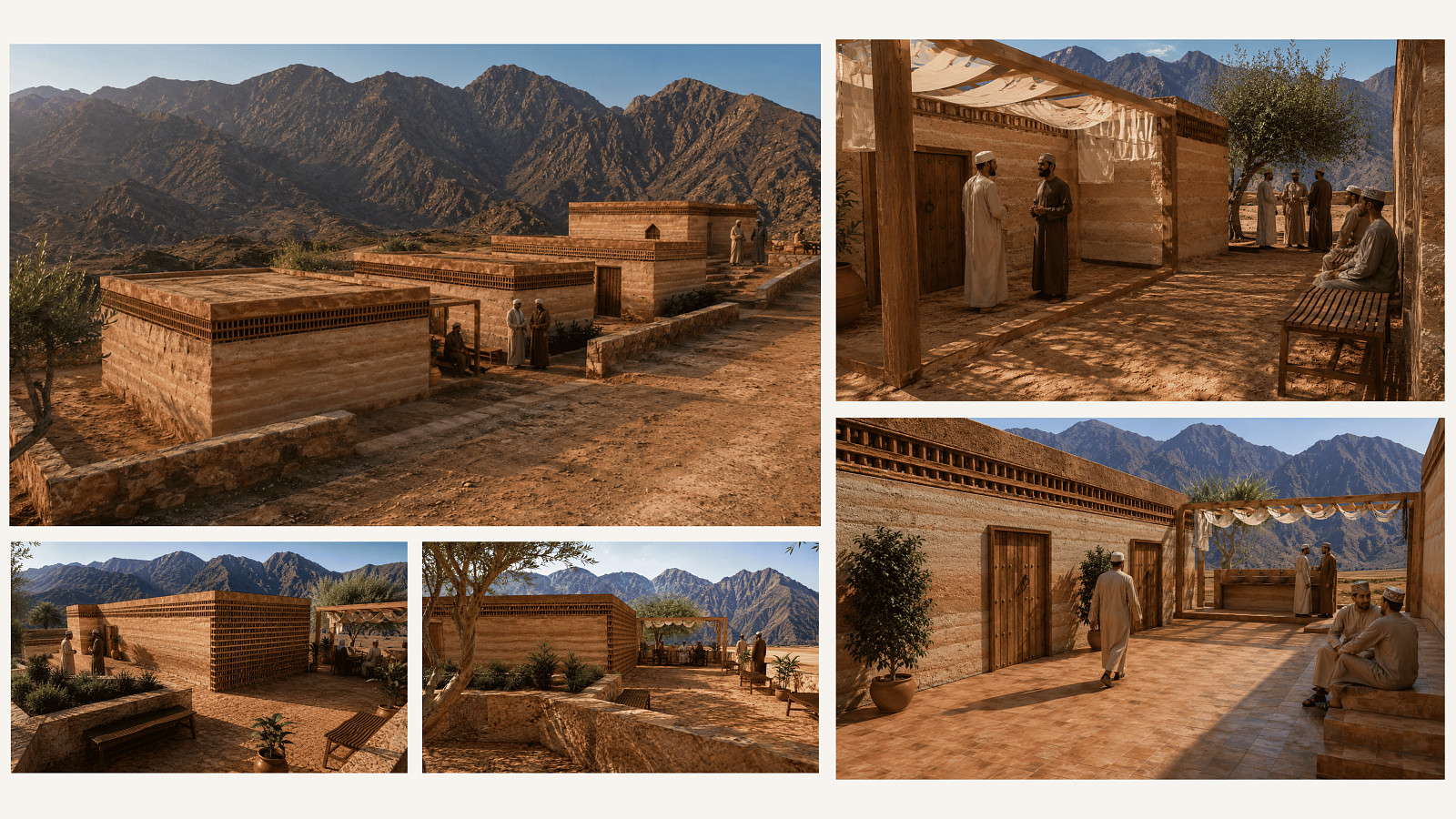
Three courtyards are distributed throughout the complex. The first two act as transitional spaces between the healthcare units, bringing daylight and natural ventilation deep into the building. The third courtyard extends the Community Hub and becomes an outdoor place for gathering, resting, and community life. Together, these spaces strengthen the relationship between people, architecture, and the surrounding landscape.
Technical information
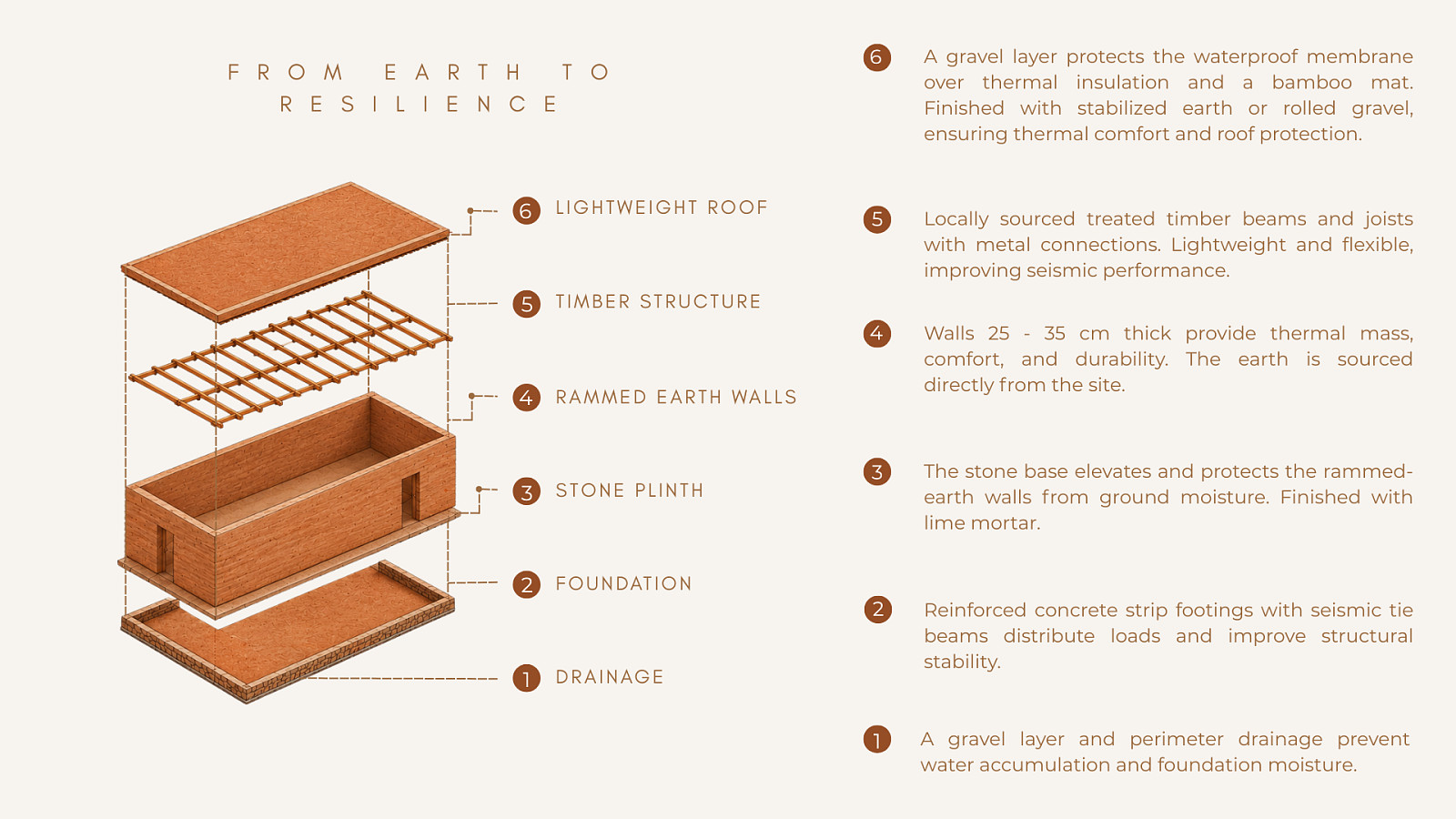
Environmental performance is achieved primarily through passive design strategies. The thermal mass of the rammed-earth walls helps stabilize indoor temperatures throughout the year, reducing the impact of the hot days and cold nights that characterize the High Atlas climate.
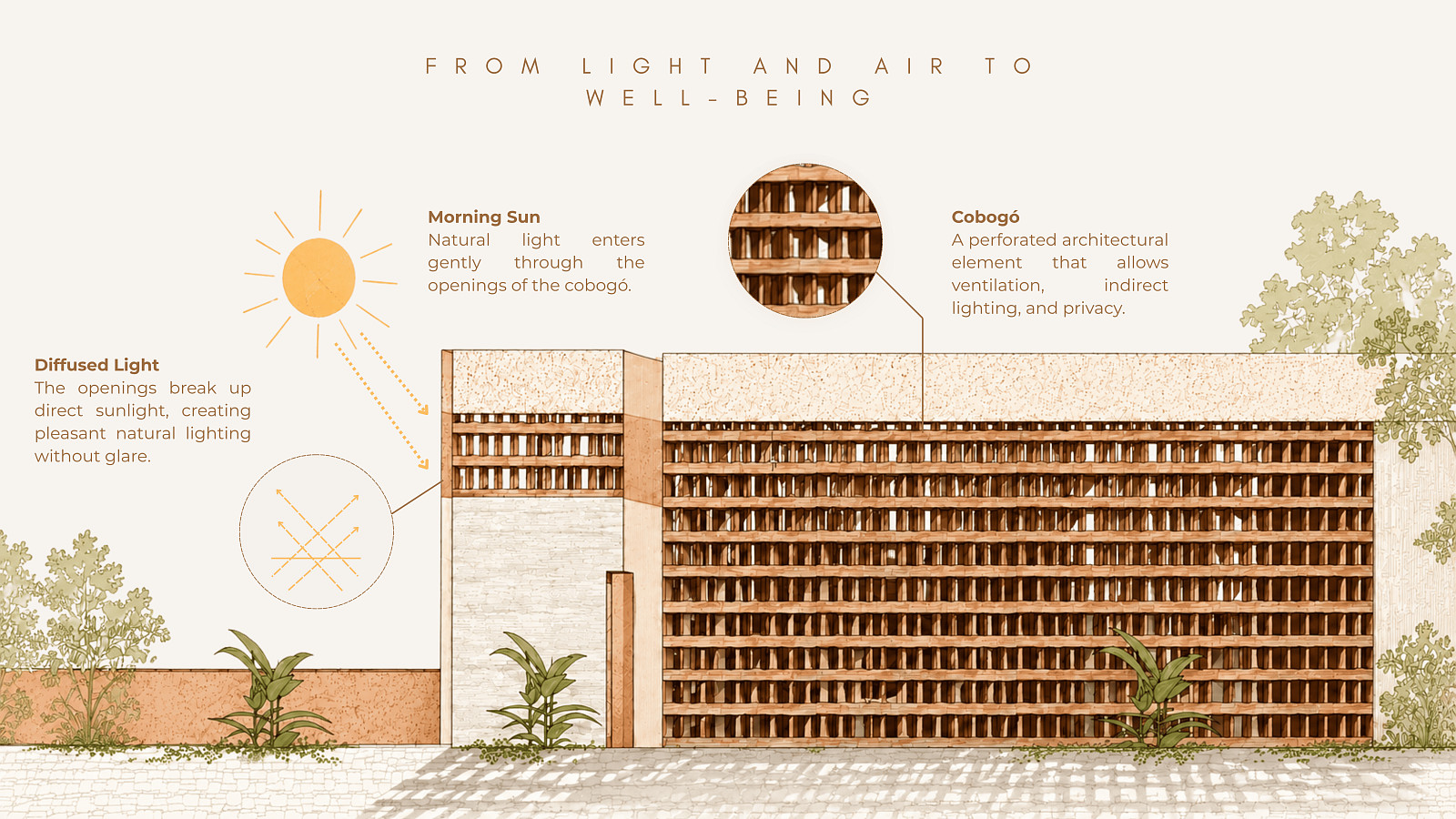
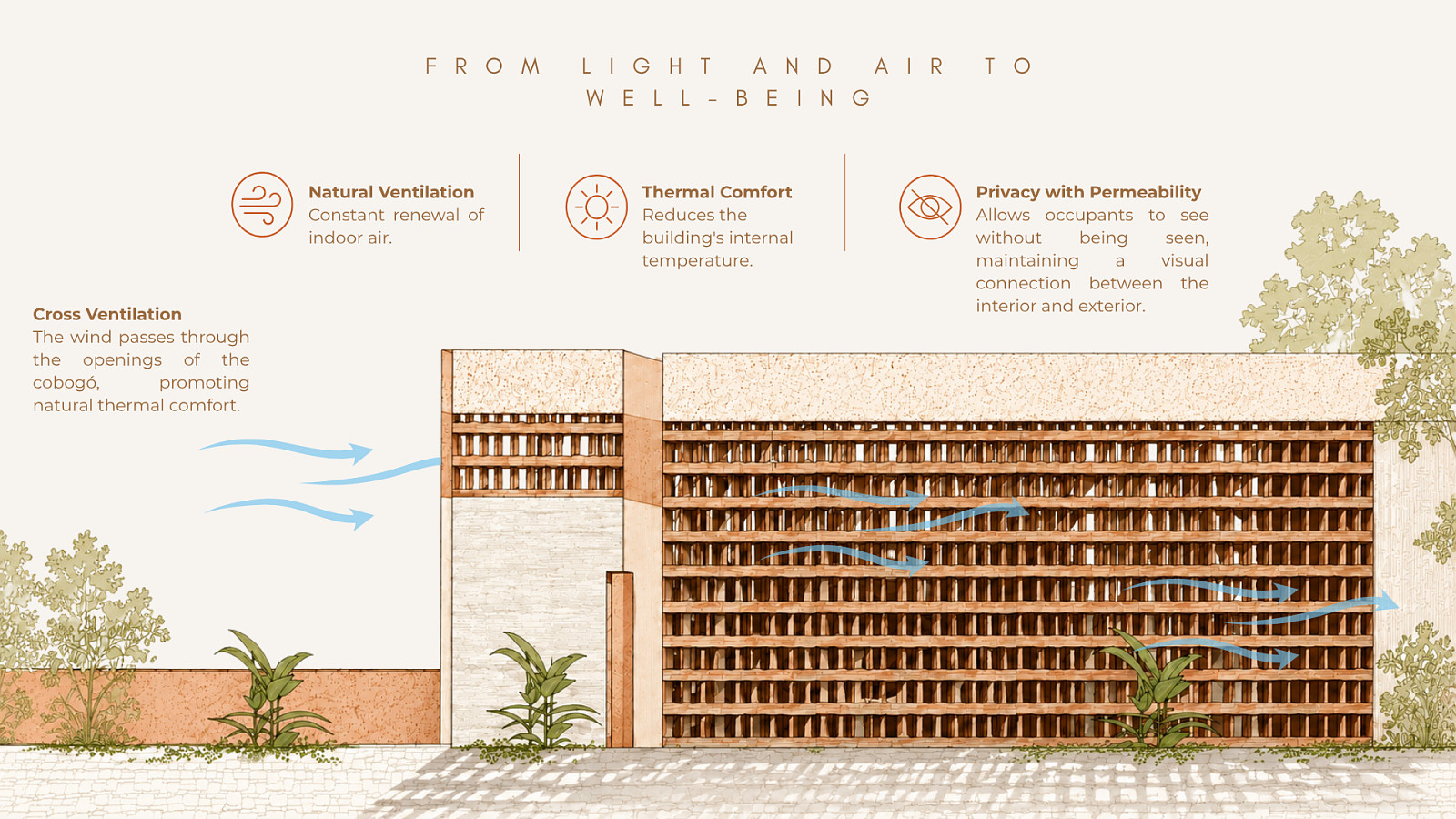
One of the defining elements of the project is the use of ceramic cobogós positioned near the top of the walls. Originally developed in Brazil, the cobogó is reinterpreted here as a simple but effective response to local environmental conditions. It allows air and soft daylight to enter the building while avoiding large openings that would expose interior spaces to excessive solar radiation and dust.
This decision was influenced by the architecture of traditional Atlas settlements. In many villages, openings are intentionally small and carefully placed. The goal is not only to control sunlight, but also to protect interiors from strong winds and airborne dust, which are common in the region.
The cobogó follows the same logic. Its small openings encourage natural ventilation while filtering light and creating a more protected indoor environment. At the same time, it introduces a subtle cultural dialogue between two regions that share similar climatic challenges despite being geographically distant.
Produced with locally available ceramic materials, the element can be manufactured using simple construction techniques and integrated into the reconstruction process. In this way, a Brazilian architectural invention becomes a tool for resilience in the Moroccan Atlas, demonstrating how vernacular knowledge can travel, adapt, and generate new architectural possibilities.
Documentation

Copyright © 2026 INSPIRELI | All rights reserved. Use of this website signifies your agreement to the Terms of Use, Privacy Policy, and use of cookies.
